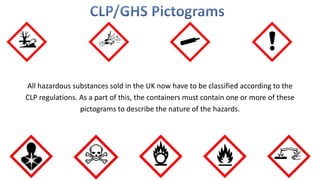
All hazardous substances sold in the UK now have to be classified according to the
CLP regulations. As a part of this, the containers must contain one or more of these
pictograms to describe the nature of the hazards.
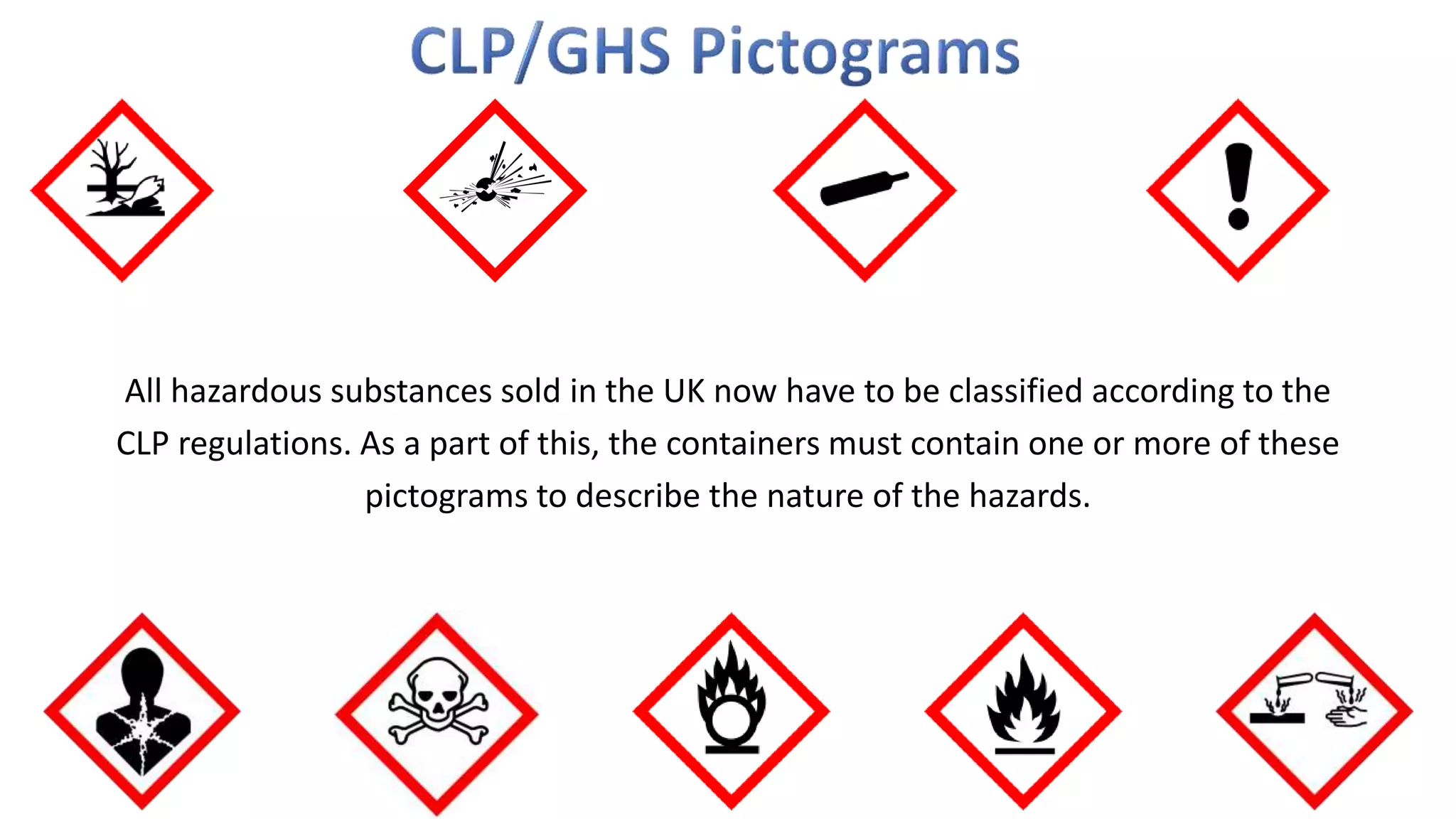
GHS01 Explosive
This label applies to substances
that are explosive, self-reactive
or to some organic peroxides.
eg 2,4-dinitrophenylhydrazine
(2,4-DNPH)
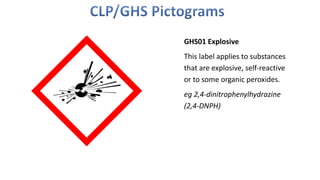
GHS02 Flammable
This label applies to flammable
solids, liquids and gases. It
includes pyrophoric and self-
heating substances as well as
organic peroxides that are not
explosive
eg ethanol, propanone
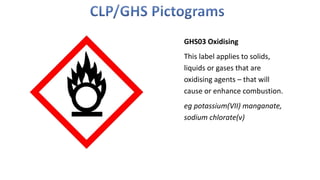
GHS03 Oxidising
This label applies to solids,
liquids or gases that are
oxidising agents – that will
cause or enhance combustion.
eg potassium(VII) manganate,
sodium chlorate(v)
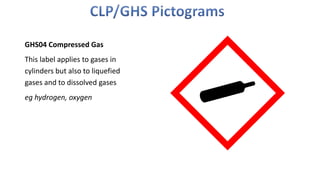
GHS04 Compressed Gas
This label applies to gases in
cylinders but also to liquefied
gases and to dissolved gases
eg hydrogen, oxygen
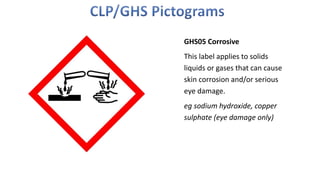
GHS05 Corrosive
This label applies to solids
liquids or gases that can cause
skin corrosion and/or serious
eye damage.
eg sodium hydroxide, copper
sulphate (eye damage only)
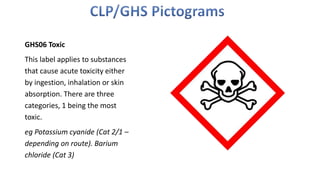
GHS06 Toxic
This label applies to substances
that cause acute toxicity either
by ingestion, inhalation or skin
absorption. There are three
categories, 1 being the most
toxic.
eg Potassium cyanide (Cat 2/1 –
depending on route). Barium
chloride (Cat 3)
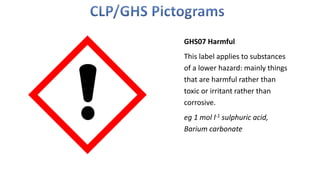
GHS07 Harmful
This label applies to substances
of a lower hazard: mainly things
that are harmful rather than
toxic or irritant rather than
corrosive.
eg 1 mol l-1 sulphuric acid,
Barium carbonate
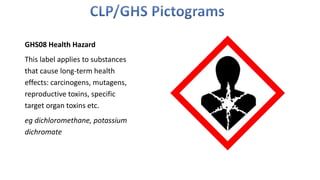
GHS08 Health Hazard
This label applies to substances
that cause long-term health
effects: carcinogens, mutagens,
reproductive toxins, specific
target organ toxins etc.
eg dichloromethane, potassium
dichromate
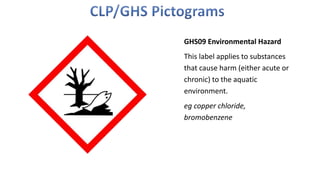
GHS09 Environmental Hazard
This label applies to substances
that cause harm (either acute or
chronic) to the aquatic
environment.
eg copper chloride,
bromobenzene

GhS symbols

  • 1.
    All hazardous substancessold in the UK now have to be classified according to the CLP regulations. As a part of this, the containers must contain one or more of these pictograms to describe the nature of the hazards.
  • 2.
    GHS01 Explosive This labelapplies to substances that are explosive, self-reactive or to some organic peroxides. eg 2,4-dinitrophenylhydrazine (2,4-DNPH)
  • 3.
    GHS02 Flammable This labelapplies to flammable solids, liquids and gases. It includes pyrophoric and self- heating substances as well as organic peroxides that are not explosive eg ethanol, propanone
  • 4.
    GHS03 Oxidising This labelapplies to solids, liquids or gases that are oxidising agents – that will cause or enhance combustion. eg potassium(VII) manganate, sodium chlorate(v)
  • 5.
    GHS04 Compressed Gas Thislabel applies to gases in cylinders but also to liquefied gases and to dissolved gases eg hydrogen, oxygen
  • 6.
    GHS05 Corrosive This labelapplies to solids liquids or gases that can cause skin corrosion and/or serious eye damage. eg sodium hydroxide, copper sulphate (eye damage only)
  • 7.
    GHS06 Toxic This labelapplies to substances that cause acute toxicity either by ingestion, inhalation or skin absorption. There are three categories, 1 being the most toxic. eg Potassium cyanide (Cat 2/1 – depending on route). Barium chloride (Cat 3)
  • 8.
    GHS07 Harmful This labelapplies to substances of a lower hazard: mainly things that are harmful rather than toxic or irritant rather than corrosive. eg 1 mol l-1 sulphuric acid, Barium carbonate
  • 9.
    GHS08 Health Hazard Thislabel applies to substances that cause long-term health effects: carcinogens, mutagens, reproductive toxins, specific target organ toxins etc. eg dichloromethane, potassium dichromate
  • 10.
    GHS09 Environmental Hazard Thislabel applies to substances that cause harm (either acute or chronic) to the aquatic environment. eg copper chloride, bromobenzene