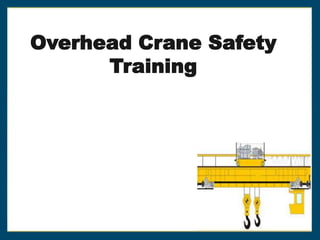
Overhead Crane Safety
Training
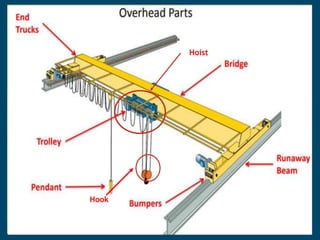
Hoist
Hook
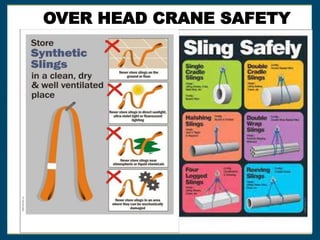
OVER HEAD CRANE SAFETY
Daily Operator Inspection
Requirements
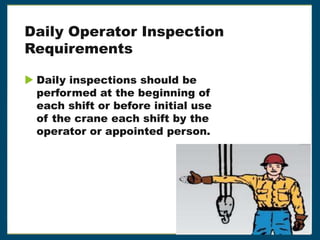
 Daily inspections should be
performed at the beginning of
each shift or before initial use
of the crane each shift by the
operator or appointed person.
Daily Operator Inspection
Requirements
 Make sure crane or hoist is not
tagged out. If a tag is in place, it
is usually located at the power
disconnect to the runway or on
the pushbutton station.
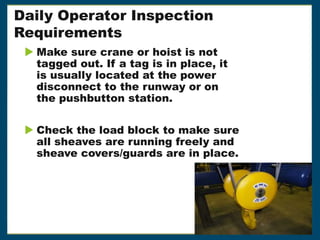
 Check the load block to make sure
all sheaves are running freely and
sheave covers/guards are in place.
Daily Operator Inspection
Requirements
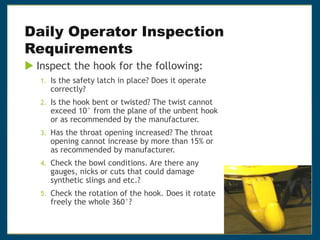
 Inspect the hook for the following:
1. Is the safety latch in place? Does it operate
correctly?
2. Is the hook bent or twisted? The twist cannot
exceed 10° from the plane of the unbent hook
or as recommended by the manufacturer.
3. Has the throat opening increased? The throat
opening cannot increase by more than 15% or
as recommended by manufacturer.
4. Check the bowl conditions. Are there any
gauges, nicks or cuts that could damage
synthetic slings and etc.?
5. Check the rotation of the hook. Does it rotate
freely the whole 360°?
Daily Operator Inspection
Requirements
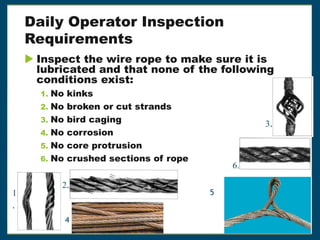
 Inspect the wire rope to make sure it is
lubricated and that none of the following
conditions exist:
1. No kinks
2. No broken or cut strands
3. No bird caging
4. No corrosion
5. No core protrusion
6. No crushed sections of rope
1
.
2.
3.
6.
4
5
Daily Operator Inspection
Requirements
 Inspect the control device to
make sure all warning labels are
in place and there are no cracks
or missing bolts in the case.
 All Switches in good working
conditions.
Daily Operator Inspection
Requirements
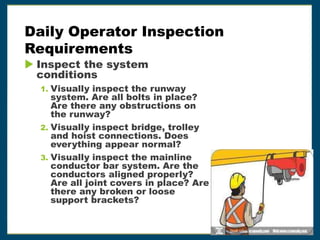
 Inspect the system
conditions
1. Visually inspect the runway
system. Are all bolts in place?
Are there any obstructions on
the runway?
2. Visually inspect bridge, trolley
and hoist connections. Does
everything appear normal?
3. Visually inspect the mainline
conductor bar system. Are the
conductors aligned properly?
Are all joint covers in place? Are
there any broken or loose
support brackets?
Daily Operator Inspection
Requirements
 If any damage or malfunctions are noted during the
daily inspection, the operator shall immediately advise
the appointed person so corrective action can be
taken.
 If a malfunction occurs during operation, the operator
shall immediately advise the appointed person so
corrective action can be taken.
 If corrective action has not been completed by the end
of the shift, the operator will advise the operator or
operators of the next shift that corrective action is
required and verify the crane is tagged out with an out
of order sign.
Periodic Inspection
 In addition to daily inspections, OSHA also
requires periodic inspections of overhead
cranes. The definition and frequency of
periodic inspections are defined in the
coming slides.
Periodic Inspection
 A periodic inspection is a detailed visual and
operational inspection whereby individual
components are examined to determine their
condition. The periodic inspection is performed as
often as quarterly and is based on service,
environmental and application factors as
determined by a qualified person or as outlined in
the following table.
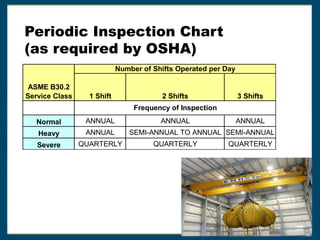
Periodic Inspection Chart
(as required by OSHA)
ASME B30.2
Service Class 1 Shift 2 Shifts 3 Shifts
Normal ANNUAL ANNUAL ANNUAL
Heavy ANNUAL SEMI-ANNUAL TO ANNUAL SEMI-ANNUAL
Severe QUARTERLY QUARTERLY QUARTERLY
Number of Shifts Operated per Day
Frequency of Inspection
Periodic Inspection Items
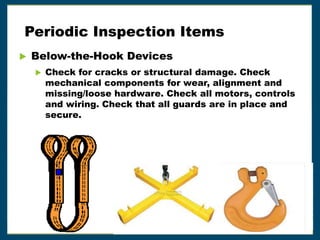
 Below-the-Hook Devices
 Check for cracks or structural damage. Check
mechanical components for wear, alignment and
missing/loose hardware. Check all motors, controls
and wiring. Check that all guards are in place and
secure.
Operational Safety
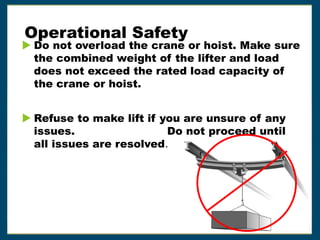
 Do not overload the crane or hoist. Make sure
the combined weight of the lifter and load
does not exceed the rated load capacity of
the crane or hoist.
 Refuse to make lift if you are unsure of any
issues. Do not proceed until
all issues are resolved.
Operational Safety
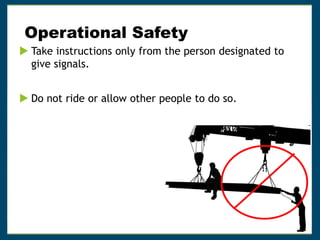
 Take instructions only from the person designated to
give signals.
 Do not ride or allow other people to do so.
Operational Safety
 To pick up a load, move the crane and
hoist/hook directly above the load to
eliminate the possibility of side
loading and minimize load swing.
Operational Safety
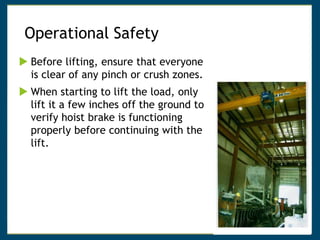
 Before lifting, ensure that everyone
is clear of any pinch or crush zones.
 When starting to lift the load, only
lift it a few inches off the ground to
verify hoist brake is functioning
properly before continuing with the
lift.
Operational Safety
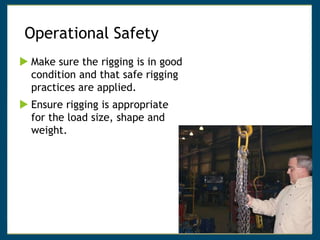
 Make sure the rigging is in good
condition and that safe rigging
practices are applied.
 Ensure rigging is appropriate
for the load size, shape and
weight.
Operational Safety
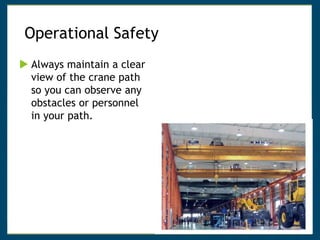
 Always maintain a clear
view of the crane path
so you can observe any
obstacles or personnel
in your path.
Operational Safety
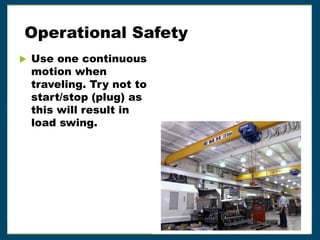
 Use one continuous
motion when
traveling. Try not to
start/stop (plug) as
this will result in
load swing.
Operational Safety –
Moving a Load
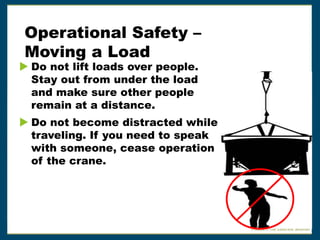
 Do not lift loads over people.
Stay out from under the load
and make sure other people
remain at a distance.
 Do not become distracted while
traveling. If you need to speak
with someone, cease operation
of the crane.
Operational Safety
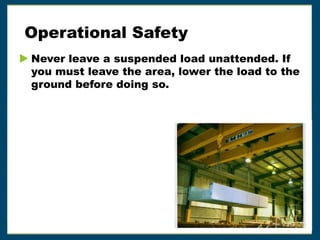
 Never leave a suspended load unattended. If
you must leave the area, lower the load to the
ground before doing so.
Operational Safety –
Moving a Load
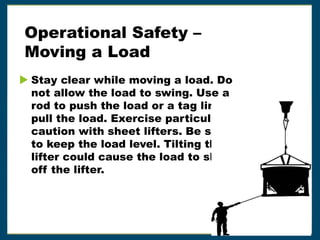
 Stay clear while moving a load. Do
not allow the load to swing. Use a
rod to push the load or a tag line to
pull the load. Exercise particular
caution with sheet lifters. Be sure
to keep the load level. Tilting the
lifter could cause the load to slide
off the lifter.
Operational Safety
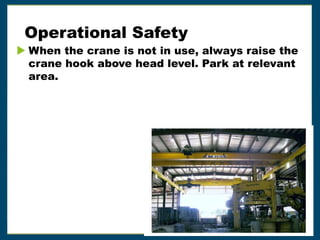
 When the crane is not in use, always raise the
crane hook above head level. Park at relevant
area.
Recommended Forms
 Maintenance Log
 Frequent Daily Check List
 OSHA Crane Inspection
Report
 Operator Training
Questionnaire
Recommended Forms
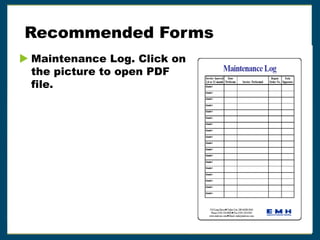
 Maintenance Log. Click on
the picture to open PDF
file.
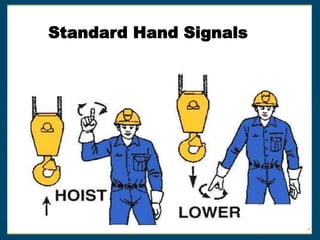
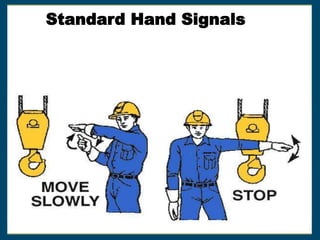
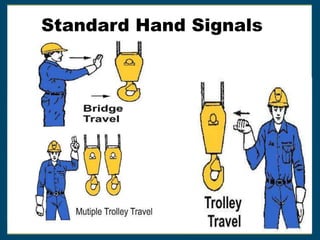
Standard Hand Signals
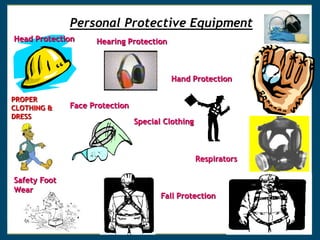
Personal Protective Equipment
Head Protection
PROPER
CLOTHING &
DRESS
Safety Foot
Wear
Hearing Protection
Face Protection
Hand Protection
Respirators
Fall Protection
Special Clothing
THANK YOU!!!

Overhead-Cranes safety training.ppt

  • 1.
  • 2.
  • 3.
  • 4.
    Daily Operator Inspection Requirements Daily inspections should be performed at the beginning of each shift or before initial use of the crane each shift by the operator or appointed person.
  • 5.
    Daily Operator Inspection Requirements Make sure crane or hoist is not tagged out. If a tag is in place, it is usually located at the power disconnect to the runway or on the pushbutton station.  Check the load block to make sure all sheaves are running freely and sheave covers/guards are in place.
  • 6.
    Daily Operator Inspection Requirements Inspect the hook for the following: 1. Is the safety latch in place? Does it operate correctly? 2. Is the hook bent or twisted? The twist cannot exceed 10° from the plane of the unbent hook or as recommended by the manufacturer. 3. Has the throat opening increased? The throat opening cannot increase by more than 15% or as recommended by manufacturer. 4. Check the bowl conditions. Are there any gauges, nicks or cuts that could damage synthetic slings and etc.? 5. Check the rotation of the hook. Does it rotate freely the whole 360°?
  • 7.
    Daily Operator Inspection Requirements Inspect the wire rope to make sure it is lubricated and that none of the following conditions exist: 1. No kinks 2. No broken or cut strands 3. No bird caging 4. No corrosion 5. No core protrusion 6. No crushed sections of rope 1 . 2. 3. 6. 4 5
  • 8.
    Daily Operator Inspection Requirements Inspect the control device to make sure all warning labels are in place and there are no cracks or missing bolts in the case.  All Switches in good working conditions.
  • 9.
    Daily Operator Inspection Requirements Inspect the system conditions 1. Visually inspect the runway system. Are all bolts in place? Are there any obstructions on the runway? 2. Visually inspect bridge, trolley and hoist connections. Does everything appear normal? 3. Visually inspect the mainline conductor bar system. Are the conductors aligned properly? Are all joint covers in place? Are there any broken or loose support brackets?
  • 10.
    Daily Operator Inspection Requirements If any damage or malfunctions are noted during the daily inspection, the operator shall immediately advise the appointed person so corrective action can be taken.  If a malfunction occurs during operation, the operator shall immediately advise the appointed person so corrective action can be taken.  If corrective action has not been completed by the end of the shift, the operator will advise the operator or operators of the next shift that corrective action is required and verify the crane is tagged out with an out of order sign.
  • 11.
    Periodic Inspection  Inaddition to daily inspections, OSHA also requires periodic inspections of overhead cranes. The definition and frequency of periodic inspections are defined in the coming slides.
  • 12.
    Periodic Inspection  Aperiodic inspection is a detailed visual and operational inspection whereby individual components are examined to determine their condition. The periodic inspection is performed as often as quarterly and is based on service, environmental and application factors as determined by a qualified person or as outlined in the following table.
  • 13.
    Periodic Inspection Chart (asrequired by OSHA) ASME B30.2 Service Class 1 Shift 2 Shifts 3 Shifts Normal ANNUAL ANNUAL ANNUAL Heavy ANNUAL SEMI-ANNUAL TO ANNUAL SEMI-ANNUAL Severe QUARTERLY QUARTERLY QUARTERLY Number of Shifts Operated per Day Frequency of Inspection
  • 14.
    Periodic Inspection Items Below-the-Hook Devices  Check for cracks or structural damage. Check mechanical components for wear, alignment and missing/loose hardware. Check all motors, controls and wiring. Check that all guards are in place and secure.
  • 15.
    Operational Safety  Donot overload the crane or hoist. Make sure the combined weight of the lifter and load does not exceed the rated load capacity of the crane or hoist.  Refuse to make lift if you are unsure of any issues. Do not proceed until all issues are resolved.
  • 16.
    Operational Safety  Takeinstructions only from the person designated to give signals.  Do not ride or allow other people to do so.
  • 17.
    Operational Safety  Topick up a load, move the crane and hoist/hook directly above the load to eliminate the possibility of side loading and minimize load swing.
  • 18.
    Operational Safety  Beforelifting, ensure that everyone is clear of any pinch or crush zones.  When starting to lift the load, only lift it a few inches off the ground to verify hoist brake is functioning properly before continuing with the lift.
  • 19.
    Operational Safety  Makesure the rigging is in good condition and that safe rigging practices are applied.  Ensure rigging is appropriate for the load size, shape and weight.
  • 20.
    Operational Safety  Alwaysmaintain a clear view of the crane path so you can observe any obstacles or personnel in your path.
  • 21.
    Operational Safety  Useone continuous motion when traveling. Try not to start/stop (plug) as this will result in load swing.
  • 22.
    Operational Safety – Movinga Load  Do not lift loads over people. Stay out from under the load and make sure other people remain at a distance.  Do not become distracted while traveling. If you need to speak with someone, cease operation of the crane.
  • 23.
    Operational Safety  Neverleave a suspended load unattended. If you must leave the area, lower the load to the ground before doing so.
  • 24.
    Operational Safety – Movinga Load  Stay clear while moving a load. Do not allow the load to swing. Use a rod to push the load or a tag line to pull the load. Exercise particular caution with sheet lifters. Be sure to keep the load level. Tilting the lifter could cause the load to slide off the lifter.
  • 25.
    Operational Safety  Whenthe crane is not in use, always raise the crane hook above head level. Park at relevant area.
  • 26.
    Recommended Forms  MaintenanceLog  Frequent Daily Check List  OSHA Crane Inspection Report  Operator Training Questionnaire
  • 27.
    Recommended Forms  MaintenanceLog. Click on the picture to open PDF file.
  • 28.
  • 29.
  • 30.
  • 31.
    Personal Protective Equipment HeadProtection PROPER CLOTHING & DRESS Safety Foot Wear Hearing Protection Face Protection Hand Protection Respirators Fall Protection Special Clothing
  • 32.