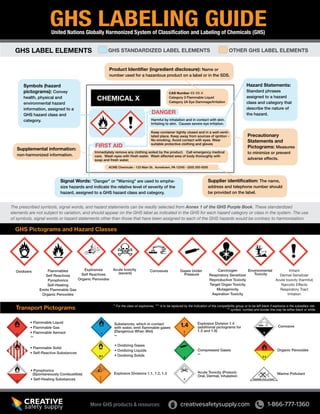
GHS LABELING GUIDE
United Nations Globally Harmonized System of Classification and Labeling of Chemicals (GHS)

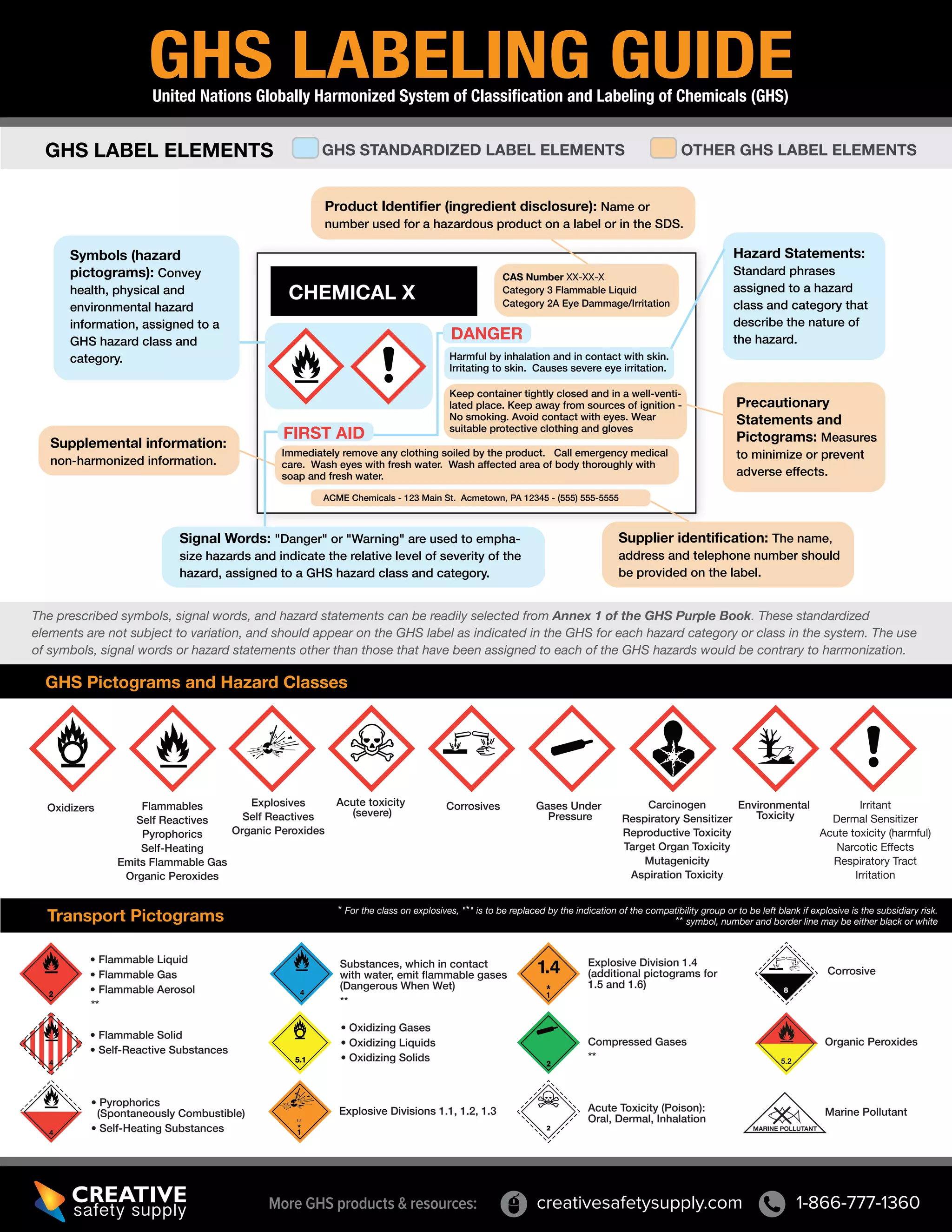
GHS LABEL ELEMENTS

GHS STANDARDIZED LABEL ELEMENTS

OTHER GHS LABEL ELEMENTS

Product Identifier (ingredient disclosure): Name or

number used for a hazardous product on a label or in the SDS.

Symbols (hazard
pictograms): Convey

health, physical and
environmental hazard
information, assigned to a
GHS hazard class and
category.

Supplemental information:
non-harmonized information.

Hazard Statements:
CAS Number XX-XX-X
Category 3 Flammable Liquid
Category 2A Eye Dammage/Irritation

CHEMICAL X

DANGER
Harmful by inhalation and in contact with skin.
Irritating to skin. Causes severe eye irritation.

FIRST AID

Keep container tightly closed and in a well-ventilated place. Keep away from sources of ignition No smoking. Avoid contact with eyes. Wear
suitable protective clothing and gloves

Immediately remove any clothing soiled by the product. Call emergency medical
care. Wash eyes with fresh water. Wash affected area of body thoroughly with
soap and fresh water.

Standard phrases
assigned to a hazard
class and category that
describe the nature of
the hazard.

Precautionary
Statements and
Pictograms: Measures
to minimize or prevent
adverse effects.

ACME Chemicals - 123 Main St. Acmetown, PA 12345 - (555) 555-5555

Supplier identification: The name,
address and telephone number should
be provided on the label.

Signal Words: "Danger" or "Warning" are used to empha-

size hazards and indicate the relative level of severity of the
hazard, assigned to a GHS hazard class and category.

The prescribed symbols, signal words, and hazard statements can be readily selected from Annex 1 of the GHS Purple Book. These standardized
elements are not subject to variation, and should appear on the GHS label as indicated in the GHS for each hazard category or class in the system. The use
of symbols, signal words or hazard statements other than those that have been assigned to each of the GHS hazards would be contrary to harmonization.

GHS Pictograms and Hazard Classes

Oxidizers

Explosives
Flammables
Self Reactives
Self Reactives
Organic Peroxides
Pyrophorics
Self-Heating
Emits Flammable Gas
Organic Peroxides

Transport Pictograms

Acute toxicity
(severe)

Corrosives

Gases Under
Pressure

Carcinogen
Environmental
Irritant
Toxicity
Respiratory Sensitizer
Dermal Sensitizer
Reproductive Toxicity
Acute toxicity (harmful)
Target Organ Toxicity
Narcotic Effects
Mutagenicity
Respiratory Tract
Aspiration Toxicity
Irritation

* For the class on explosives, "*" is to be replaced by the indication of the compatibility group or to be left blank if explosive is the subsidiary risk.
** symbol, number and border line may be either black or white

• Flammable Liquid
• Flammable Gas
• Flammable Aerosol

Substances, which in contact
with water, emit flammable gases
(Dangerous When Wet)

Explosive Division 1.4
(additional pictograms for
1.5 and 1.6)

Corrosive

• Flammable Solid
• Self-Reactive Substances

• Oxidizing Gases
• Oxidizing Liquids
• Oxidizing Solids

Compressed Gases

Organic Peroxides

• Pyrophorics
(Spontaneously Combustible)
• Self-Heating Substances

Explosive Divisions 1.1, 1.2, 1.3

Acute Toxicity (Poison):
Oral, Dermal, Inhalation

Marine Pollutant

More GHS products & resources:

creativesafetysupply.com

1-866-777-1360
GHS LABELING GUIDE
United Nations Globally Harmonized System of Classification and Labeling of Chemicals (GHS)

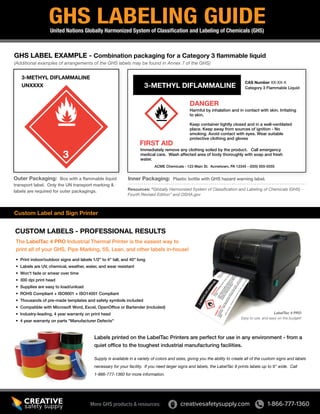
GHS LABEL EXAMPLE - Combination packaging for a Category 3 flammable liquid
(Additional examples of arrangements of the GHS labels may be found in Annex 7 of the GHS)

3-METHYL DIFLAMMALINE
UNXXXX

3-METHYL DIFLAMMALINE

CAS Number XX-XX-X
Category 3 Flammable Liquid

DANGER

Harmful by inhalation and in contact with skin. Irritating
to skin.
Keep container tightly closed and in a well-ventilated
place. Keep away from sources of ignition - No
smoking. Avoid contact with eyes. Wear suitable
protective clothing and gloves

FIRST AID

Immediately remove any clothing soiled by the product. Call emergency
medical care. Wash affected area of body thoroughly with soap and fresh
water.
ACME Chemicals - 123 Main St. Acmetown, PA 12345 - (555) 555-5555

Outer Packaging: Box with a flammable liquid
transport label. Only the UN transport marking &
labels are required for outer packagings.

Inner Packaging: Plastic bottle with GHS hazard warning label.
Resources: “Globally Harmonized System of Classification and Labeling of Chemicals (GHS) Fourth Revised Edition” and OSHA.gov

Custom Label and Sign Printer

CUSTOM LABELS - PROFESSIONAL RESULTS
The LabelTac 4 PRO Industrial Thermal Printer is the easiest way to
print all of your GHS, Pipe Marking, 5S, Lean, and other labels in-house!
• Print indoor/outdoor signs and labels 1/2” to 4" tall, and 40" long
• Labels are UV, chemical, weather, water, and wear resistant
• Won't fade or smear over time
• 300 dpi print head
• Supplies are easy to load/unload
• ROHS Compliant + ISO9001 + ISO14001 Compliant
• Thousands of pre-made templates and safety symbols included
• Compatible with Microsoft Word, Excel, OpenOffice or Bartender (included)
• Industry-leading, 4 year warranty on print head
• 4 year warranty on parts "Manufacturer Defects"

LabelTac 4 PRO
Easy to use, and easy on the budget!

Labels printed on the LabelTac Printers are perfect for use in any environment - from a
quiet office to the toughest industrial manufacturing facilities.
Supply is available in a variety of colors and sizes, giving you the ability to create all of the custom signs and labels
necessary for your facility. If you need larger signs and labels, the LabelTac 9 prints labels up to 9” wide. Call
1-866-777-1360 for more information.

More GHS products & resources:

creativesafetysupply.com

1-866-777-1360

Ghs labeling-guide and Label Printer

  • 1.
    GHS LABELING GUIDE UnitedNations Globally Harmonized System of Classification and Labeling of Chemicals (GHS) GHS LABEL ELEMENTS GHS STANDARDIZED LABEL ELEMENTS OTHER GHS LABEL ELEMENTS Product Identifier (ingredient disclosure): Name or number used for a hazardous product on a label or in the SDS. Symbols (hazard pictograms): Convey health, physical and environmental hazard information, assigned to a GHS hazard class and category. Supplemental information: non-harmonized information. Hazard Statements: CAS Number XX-XX-X Category 3 Flammable Liquid Category 2A Eye Dammage/Irritation CHEMICAL X DANGER Harmful by inhalation and in contact with skin. Irritating to skin. Causes severe eye irritation. FIRST AID Keep container tightly closed and in a well-ventilated place. Keep away from sources of ignition No smoking. Avoid contact with eyes. Wear suitable protective clothing and gloves Immediately remove any clothing soiled by the product. Call emergency medical care. Wash eyes with fresh water. Wash affected area of body thoroughly with soap and fresh water. Standard phrases assigned to a hazard class and category that describe the nature of the hazard. Precautionary Statements and Pictograms: Measures to minimize or prevent adverse effects. ACME Chemicals - 123 Main St. Acmetown, PA 12345 - (555) 555-5555 Supplier identification: The name, address and telephone number should be provided on the label. Signal Words: "Danger" or "Warning" are used to empha- size hazards and indicate the relative level of severity of the hazard, assigned to a GHS hazard class and category. The prescribed symbols, signal words, and hazard statements can be readily selected from Annex 1 of the GHS Purple Book. These standardized elements are not subject to variation, and should appear on the GHS label as indicated in the GHS for each hazard category or class in the system. The use of symbols, signal words or hazard statements other than those that have been assigned to each of the GHS hazards would be contrary to harmonization. GHS Pictograms and Hazard Classes Oxidizers Explosives Flammables Self Reactives Self Reactives Organic Peroxides Pyrophorics Self-Heating Emits Flammable Gas Organic Peroxides Transport Pictograms Acute toxicity (severe) Corrosives Gases Under Pressure Carcinogen Environmental Irritant Toxicity Respiratory Sensitizer Dermal Sensitizer Reproductive Toxicity Acute toxicity (harmful) Target Organ Toxicity Narcotic Effects Mutagenicity Respiratory Tract Aspiration Toxicity Irritation * For the class on explosives, "*" is to be replaced by the indication of the compatibility group or to be left blank if explosive is the subsidiary risk. ** symbol, number and border line may be either black or white • Flammable Liquid • Flammable Gas • Flammable Aerosol Substances, which in contact with water, emit flammable gases (Dangerous When Wet) Explosive Division 1.4 (additional pictograms for 1.5 and 1.6) Corrosive • Flammable Solid • Self-Reactive Substances • Oxidizing Gases • Oxidizing Liquids • Oxidizing Solids Compressed Gases Organic Peroxides • Pyrophorics (Spontaneously Combustible) • Self-Heating Substances Explosive Divisions 1.1, 1.2, 1.3 Acute Toxicity (Poison): Oral, Dermal, Inhalation Marine Pollutant More GHS products & resources: creativesafetysupply.com 1-866-777-1360
  • 2.
    GHS LABELING GUIDE UnitedNations Globally Harmonized System of Classification and Labeling of Chemicals (GHS) GHS LABEL EXAMPLE - Combination packaging for a Category 3 flammable liquid (Additional examples of arrangements of the GHS labels may be found in Annex 7 of the GHS) 3-METHYL DIFLAMMALINE UNXXXX 3-METHYL DIFLAMMALINE CAS Number XX-XX-X Category 3 Flammable Liquid DANGER Harmful by inhalation and in contact with skin. Irritating to skin. Keep container tightly closed and in a well-ventilated place. Keep away from sources of ignition - No smoking. Avoid contact with eyes. Wear suitable protective clothing and gloves FIRST AID Immediately remove any clothing soiled by the product. Call emergency medical care. Wash affected area of body thoroughly with soap and fresh water. ACME Chemicals - 123 Main St. Acmetown, PA 12345 - (555) 555-5555 Outer Packaging: Box with a flammable liquid transport label. Only the UN transport marking & labels are required for outer packagings. Inner Packaging: Plastic bottle with GHS hazard warning label. Resources: “Globally Harmonized System of Classification and Labeling of Chemicals (GHS) Fourth Revised Edition” and OSHA.gov Custom Label and Sign Printer CUSTOM LABELS - PROFESSIONAL RESULTS The LabelTac 4 PRO Industrial Thermal Printer is the easiest way to print all of your GHS, Pipe Marking, 5S, Lean, and other labels in-house! • Print indoor/outdoor signs and labels 1/2” to 4" tall, and 40" long • Labels are UV, chemical, weather, water, and wear resistant • Won't fade or smear over time • 300 dpi print head • Supplies are easy to load/unload • ROHS Compliant + ISO9001 + ISO14001 Compliant • Thousands of pre-made templates and safety symbols included • Compatible with Microsoft Word, Excel, OpenOffice or Bartender (included) • Industry-leading, 4 year warranty on print head • 4 year warranty on parts "Manufacturer Defects" LabelTac 4 PRO Easy to use, and easy on the budget! Labels printed on the LabelTac Printers are perfect for use in any environment - from a quiet office to the toughest industrial manufacturing facilities. Supply is available in a variety of colors and sizes, giving you the ability to create all of the custom signs and labels necessary for your facility. If you need larger signs and labels, the LabelTac 9 prints labels up to 9” wide. Call 1-866-777-1360 for more information. More GHS products & resources: creativesafetysupply.com 1-866-777-1360