Ruchira Ghosh
Regional Director, South Asia
Cambridge International Examinations
Getting In, Getting On
Univariety Conference 2016
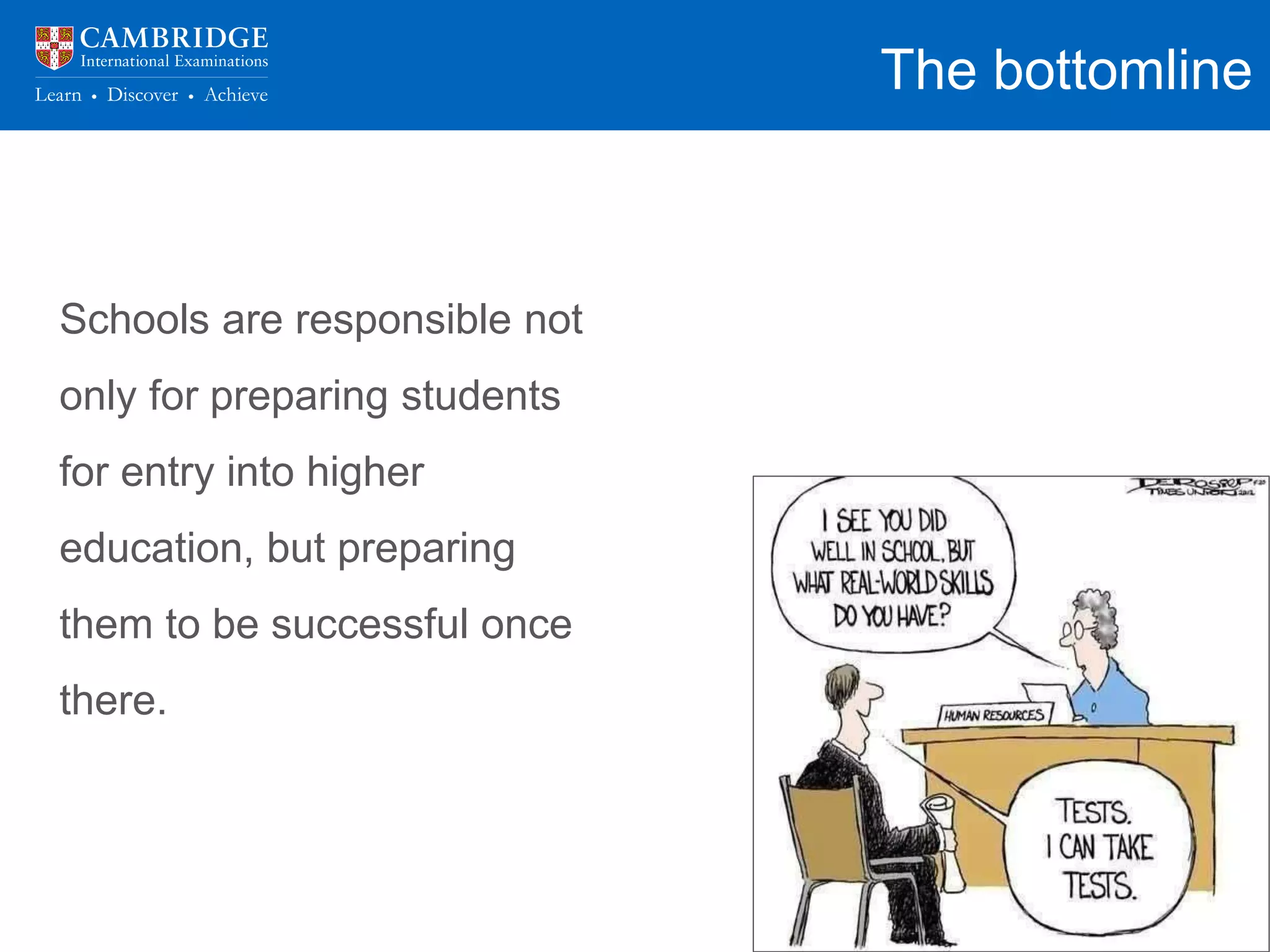
Schools are responsible not
only for preparing students
for entry into higher
education, but preparing
them to be successful once
there.
The bottomline
What universities want…
 Content knowledge
 Independent learning skills
 Ability to organise thoughts and
information
 Research skills
 Higher order thinking
 Technology skills
 Agility and adaptability
How are schools doing?
 Flexibility and choice of subjects
 Access to up-to-date syllabuses
 Pedagogies catering to learner
styles and abilities
 Projects; experiential learning
 Fit for purpose assessments
 University and industry
connections
“When students have reached the stage of owning their progress and learning before leaving
school, then we know they are equipped for university.” Capetown International School Head
Getting In,
Getting On
A Cambridge Perspective
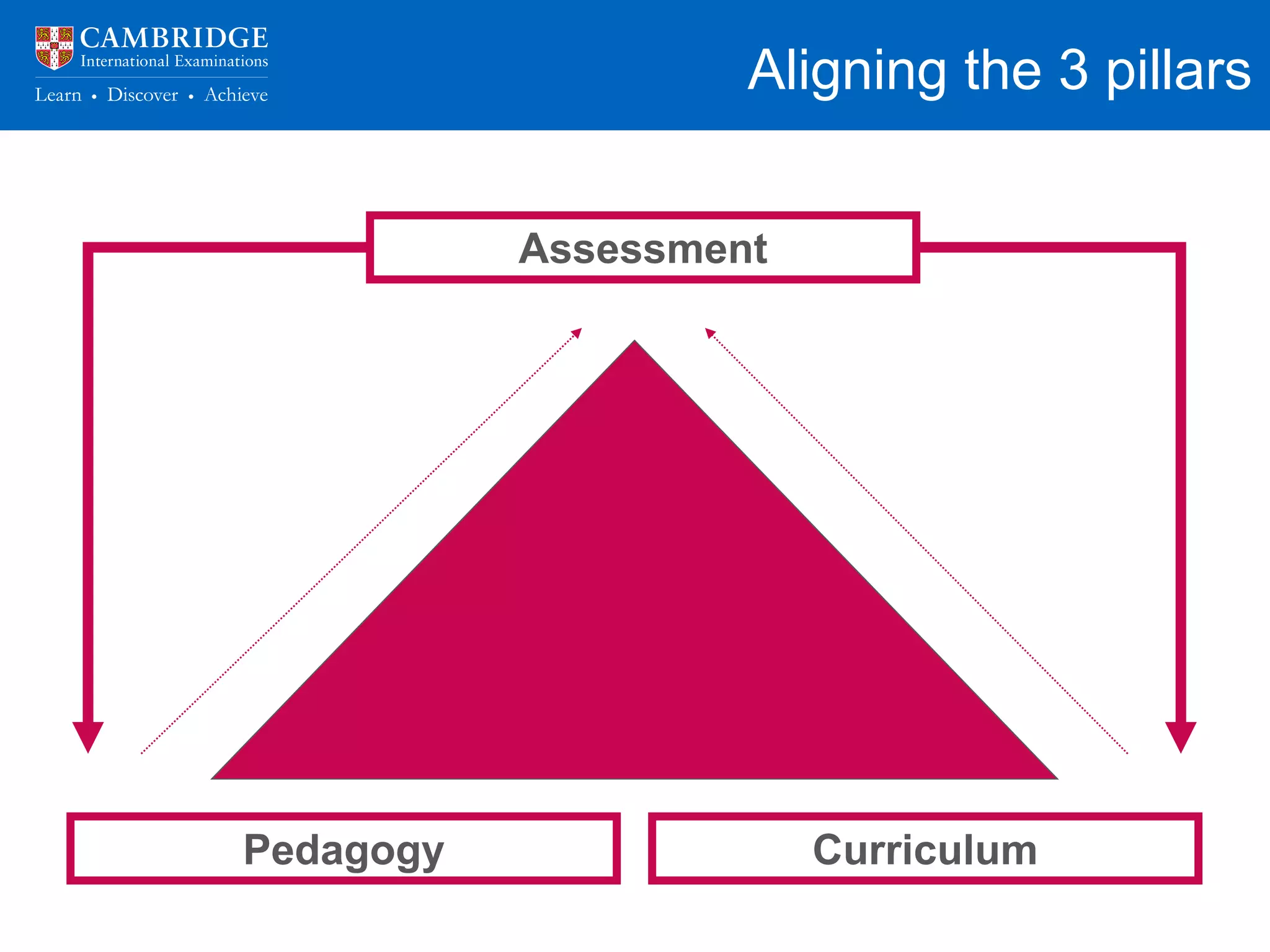
Aligning the 3 pillars
Assessment
Pedagogy Curriculum
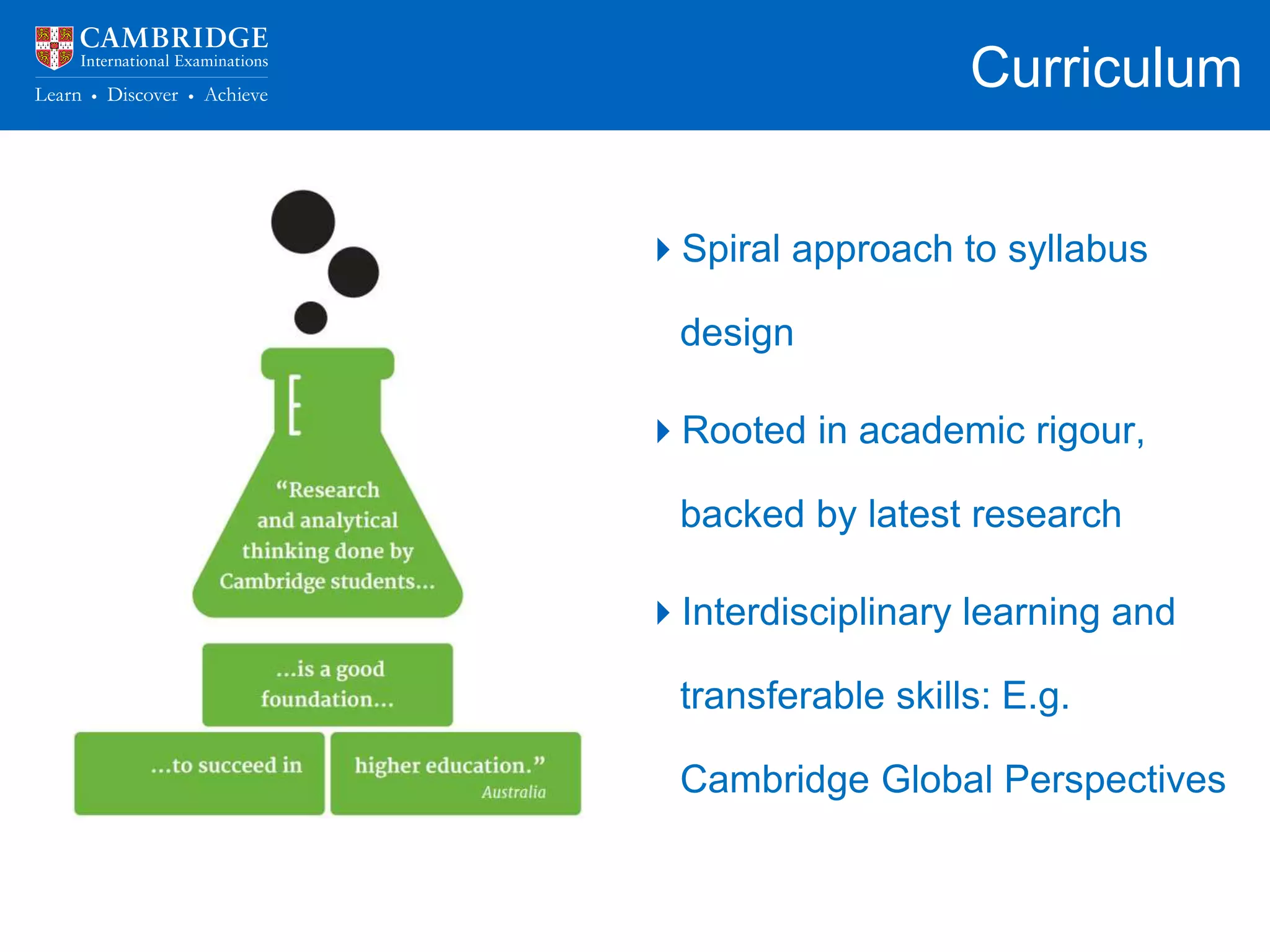
Curriculum
School curriculum should allow
students to:
• Build on their previous learning
• Make connections across
content areas
• Apply their knowledge in
unfamiliar circumstances
Spiral approach to syllabus
design
Rooted in academic rigour,
backed by latest research
Interdisciplinary learning and
transferable skills: E.g.
Cambridge Global Perspectives
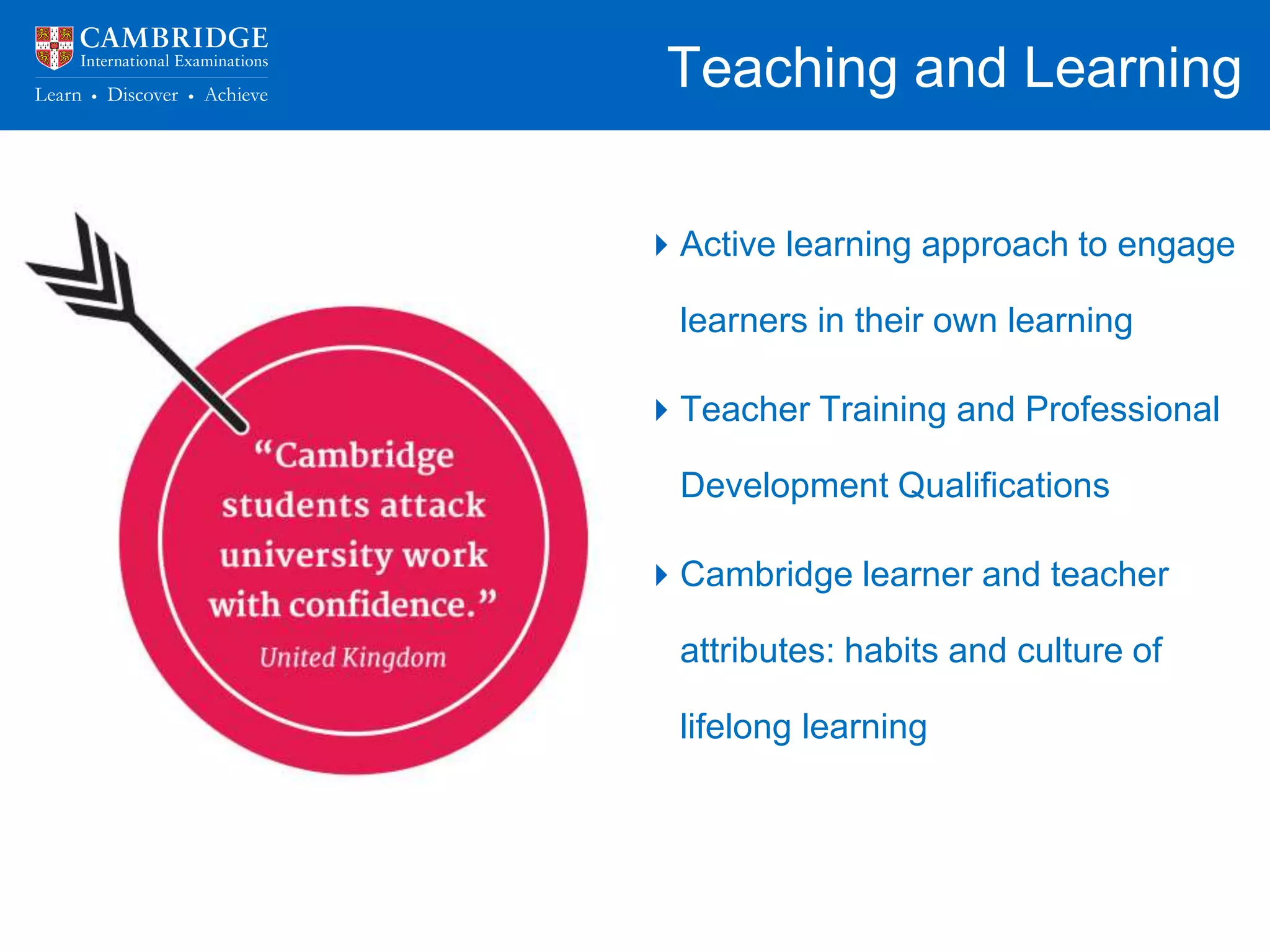
Teaching and Learning
Teachers have a responsibility to:
• Provide opportunities, tasks and
instruction that foster deep learning
• Help students build connections
between what they are learning
• Challenge, stretch and inspire
learners
• Reflect upon and improve their own
knowledge and practice
Active learning approach to engage
learners in their own learning
Teacher Training and Professional
Development Qualifications
Cambridge learner and teacher
attributes: habits and culture of
lifelong learning
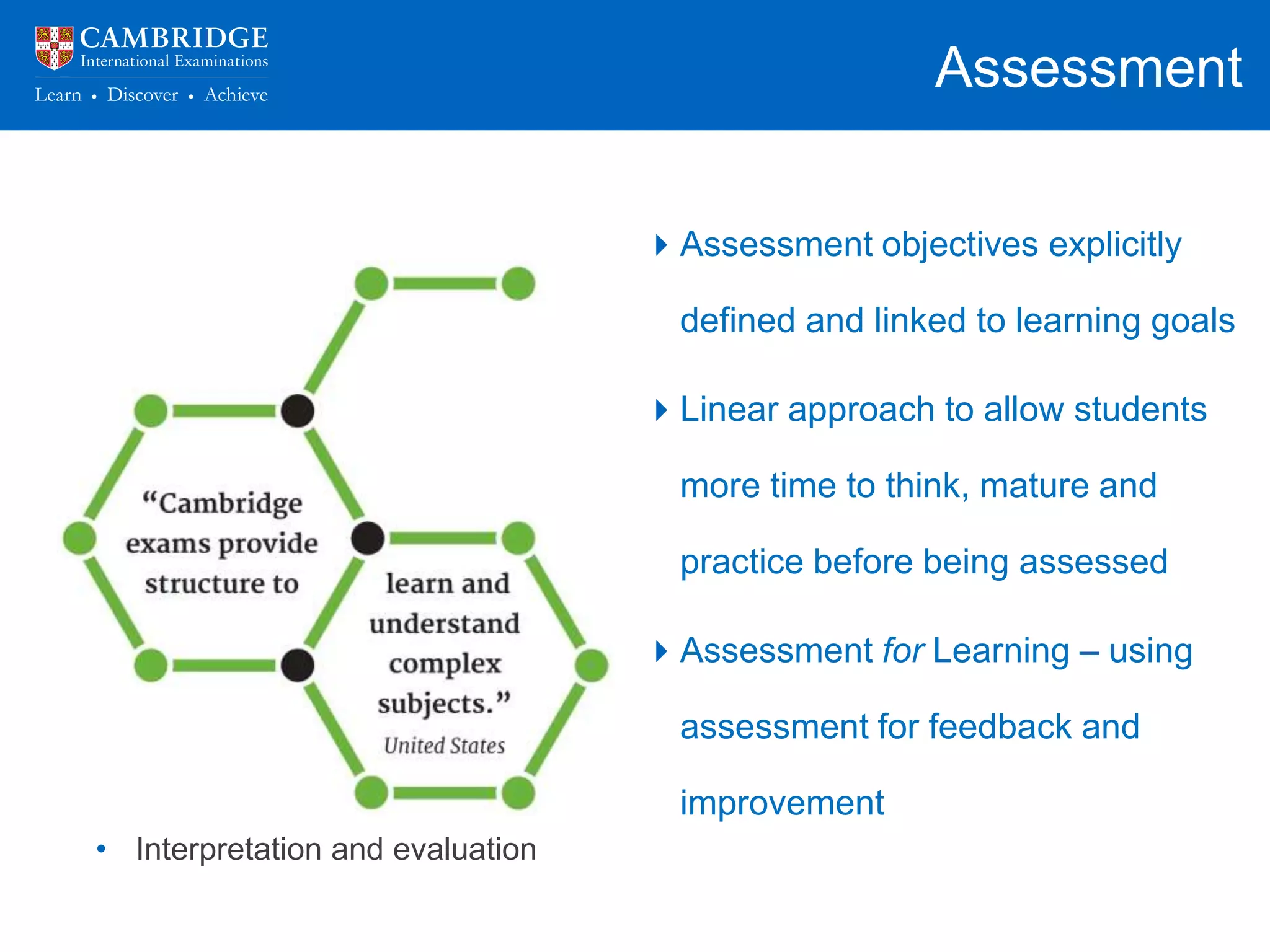
Assessment
• What we assess and how we
assess has a backwash effect on
curriculum and pedagogy
• Assessment practices that provide
a positive backwash effect:
• Questions/ tasks focusing on
higher order thinking skills
• Problem solving
• Application of knowledge
• Interpretation and evaluation
Assessment objectives explicitly
defined and linked to learning goals
Linear approach to allow students
more time to think, mature and
practice before being assessed
Assessment for Learning – using
assessment for feedback and
improvement
The bottomline
Thank you
Ruchira Ghosh
ghosh.r@cie.org.uk

Getting in, Getting on

  • 1.
    Ruchira Ghosh Regional Director,South Asia Cambridge International Examinations Getting In, Getting On Univariety Conference 2016
  • 2.
    Schools are responsiblenot only for preparing students for entry into higher education, but preparing them to be successful once there. The bottomline
  • 3.
    What universities want… Content knowledge  Independent learning skills  Ability to organise thoughts and information  Research skills  Higher order thinking  Technology skills  Agility and adaptability How are schools doing?  Flexibility and choice of subjects  Access to up-to-date syllabuses  Pedagogies catering to learner styles and abilities  Projects; experiential learning  Fit for purpose assessments  University and industry connections “When students have reached the stage of owning their progress and learning before leaving school, then we know they are equipped for university.” Capetown International School Head
  • 4.
    Getting In, Getting On ACambridge Perspective
  • 5.
    Aligning the 3pillars Assessment Pedagogy Curriculum
  • 6.
    Curriculum School curriculum shouldallow students to: • Build on their previous learning • Make connections across content areas • Apply their knowledge in unfamiliar circumstances Spiral approach to syllabus design Rooted in academic rigour, backed by latest research Interdisciplinary learning and transferable skills: E.g. Cambridge Global Perspectives
  • 7.
    Teaching and Learning Teachershave a responsibility to: • Provide opportunities, tasks and instruction that foster deep learning • Help students build connections between what they are learning • Challenge, stretch and inspire learners • Reflect upon and improve their own knowledge and practice Active learning approach to engage learners in their own learning Teacher Training and Professional Development Qualifications Cambridge learner and teacher attributes: habits and culture of lifelong learning
  • 8.
    Assessment • What weassess and how we assess has a backwash effect on curriculum and pedagogy • Assessment practices that provide a positive backwash effect: • Questions/ tasks focusing on higher order thinking skills • Problem solving • Application of knowledge • Interpretation and evaluation Assessment objectives explicitly defined and linked to learning goals Linear approach to allow students more time to think, mature and practice before being assessed Assessment for Learning – using assessment for feedback and improvement
  • 9.
  • 10.

Editor's Notes