

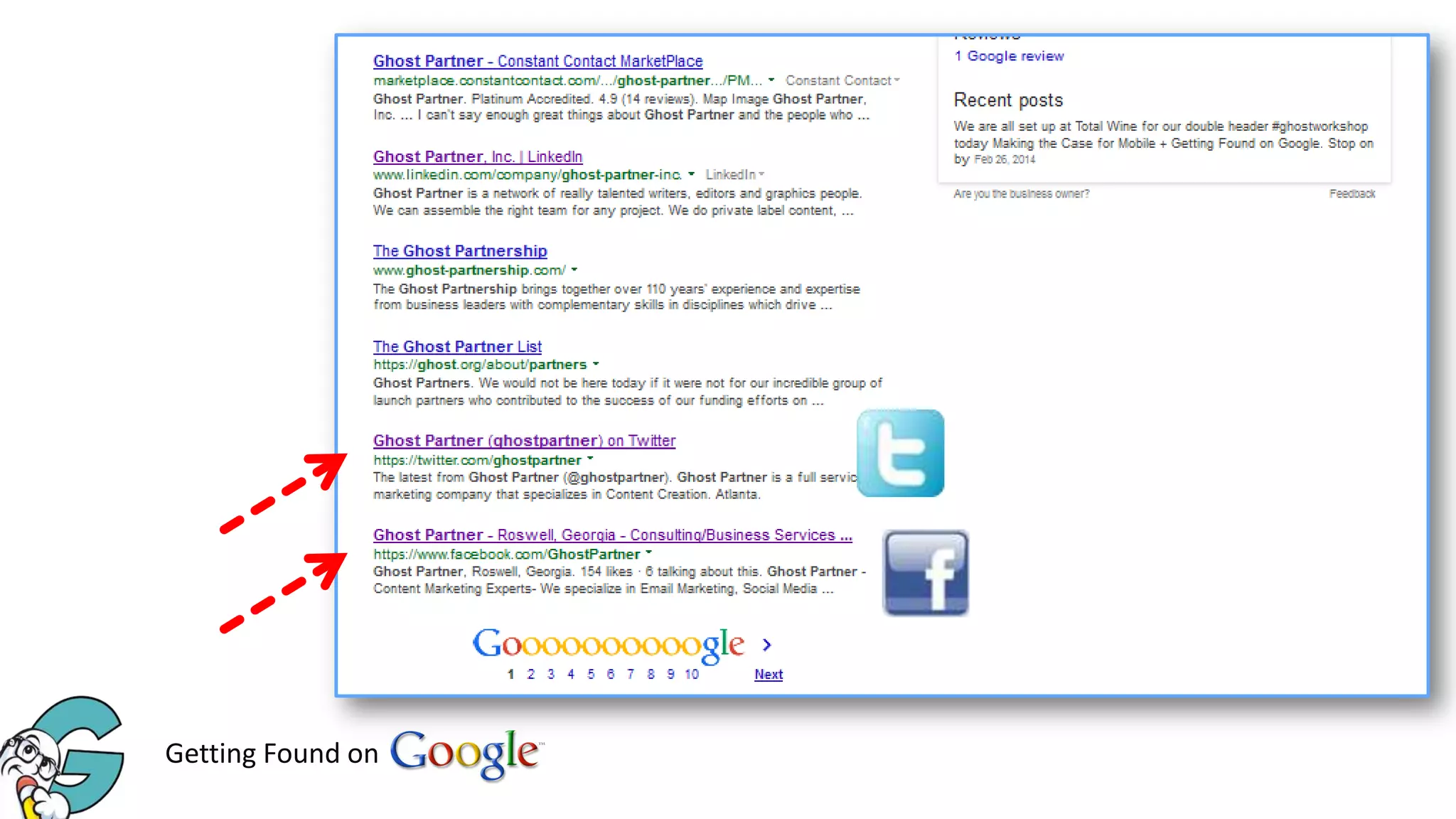
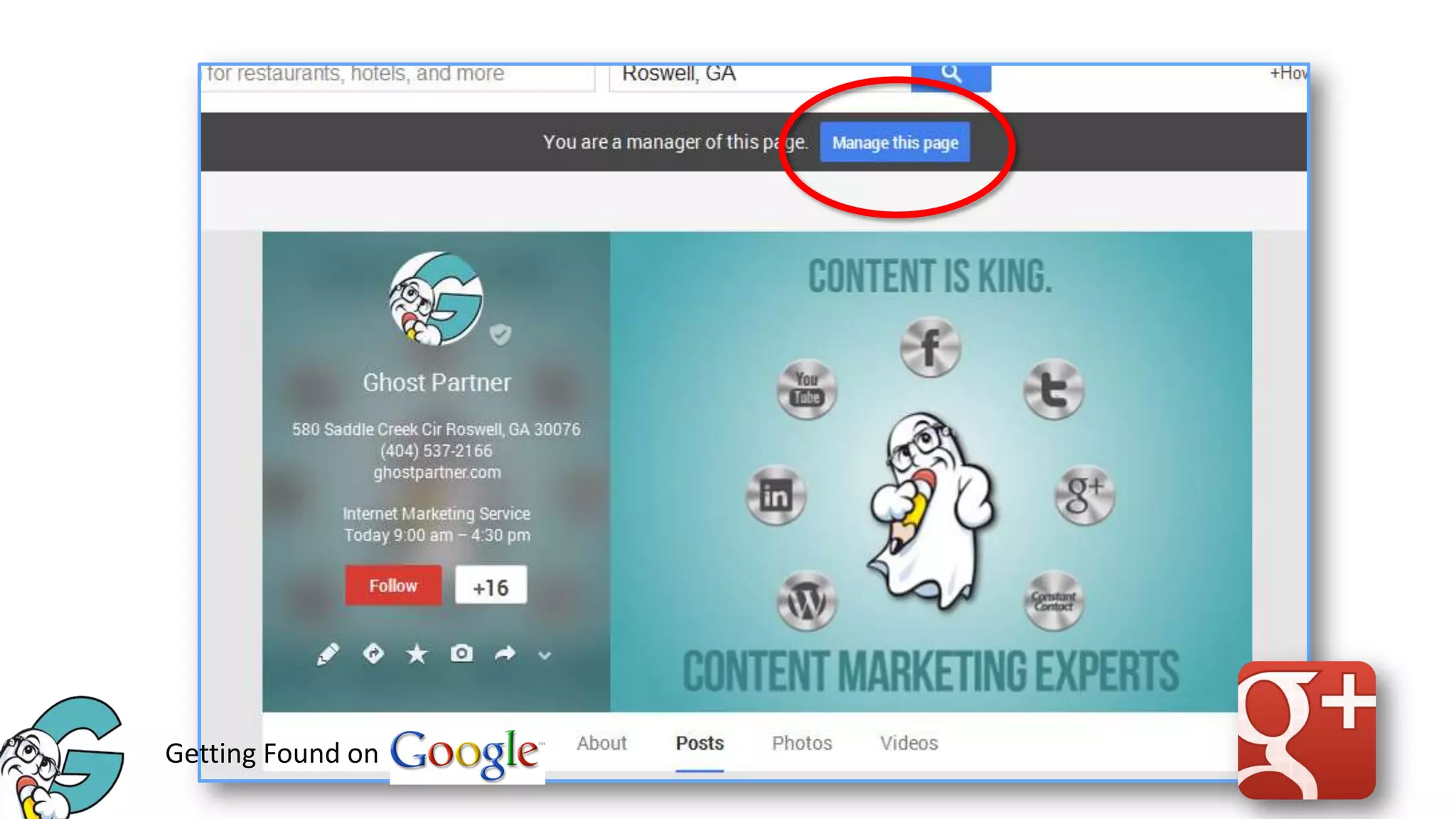


Getting Found on
Boo
Engage
your clients

Content Marketing:
Email marketing | Company newsletters | Social Media strategy & marketing | SEO | Websites | Blog content
Anything that has writing
Getting Found on
Search Engine Optimization (SEO) is the process of affecting
the visibility of a website or a web page in a search engine's
"natural" or un-paid ("organic") search results. In general, the
earlier (or higher ranked on the search results page), and
more frequently a site appears in the search results list, the
more visitors it will receive from the search engine's users.

Getting Found on
Search engine optimization (SEO) is the process of affecting
the visibility of a website or a web page in a search engine's
"natural" or un-paid ("organic") search results. In general, the
earlier (or higher ranked on the search results page), and
more frequently a site appears in the search results list, the
more visitors it will receive from the search engine's users.

Getting Found on
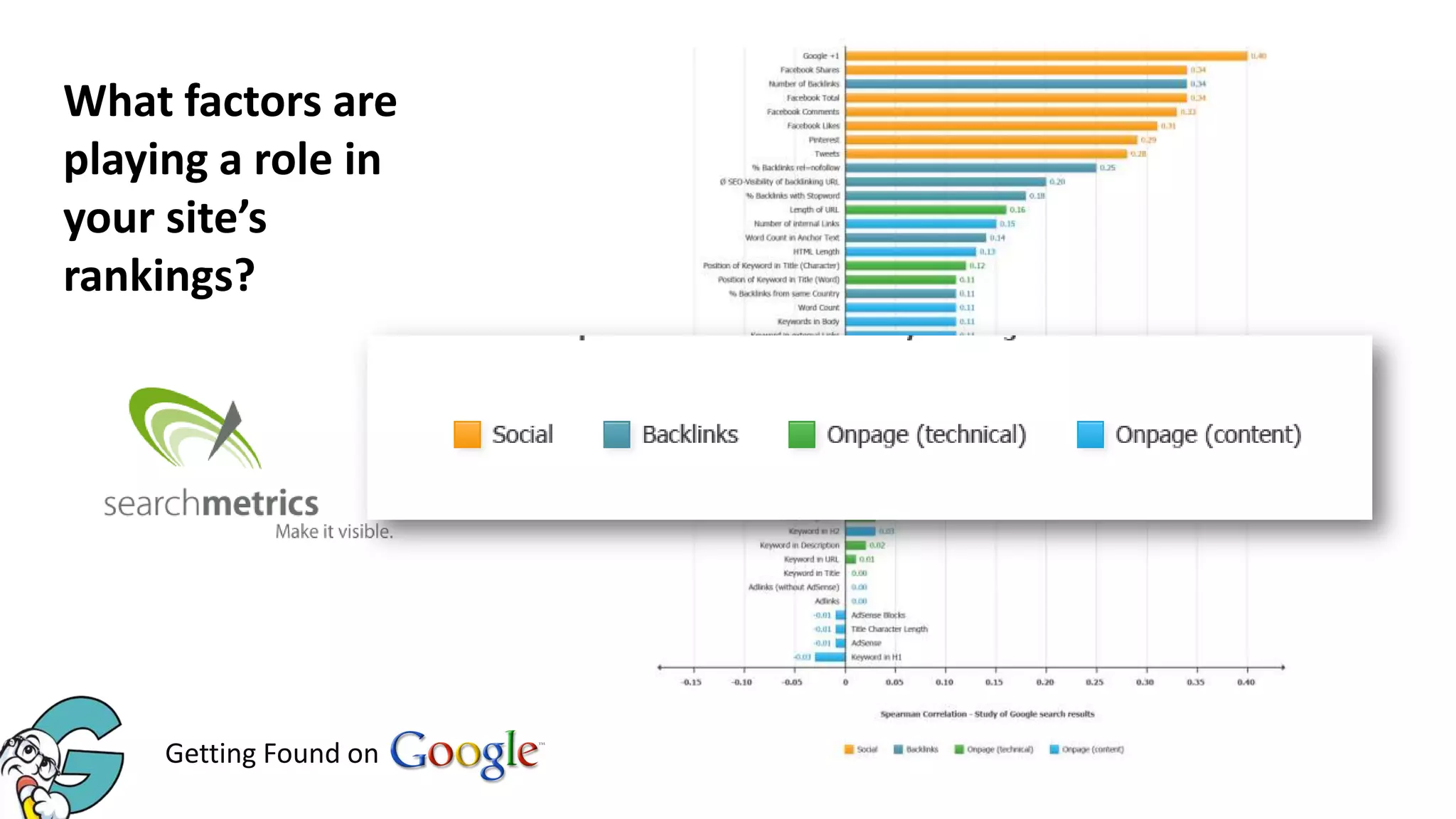
What factors are
playing a role in
your site’s
rankings?

Getting Found on
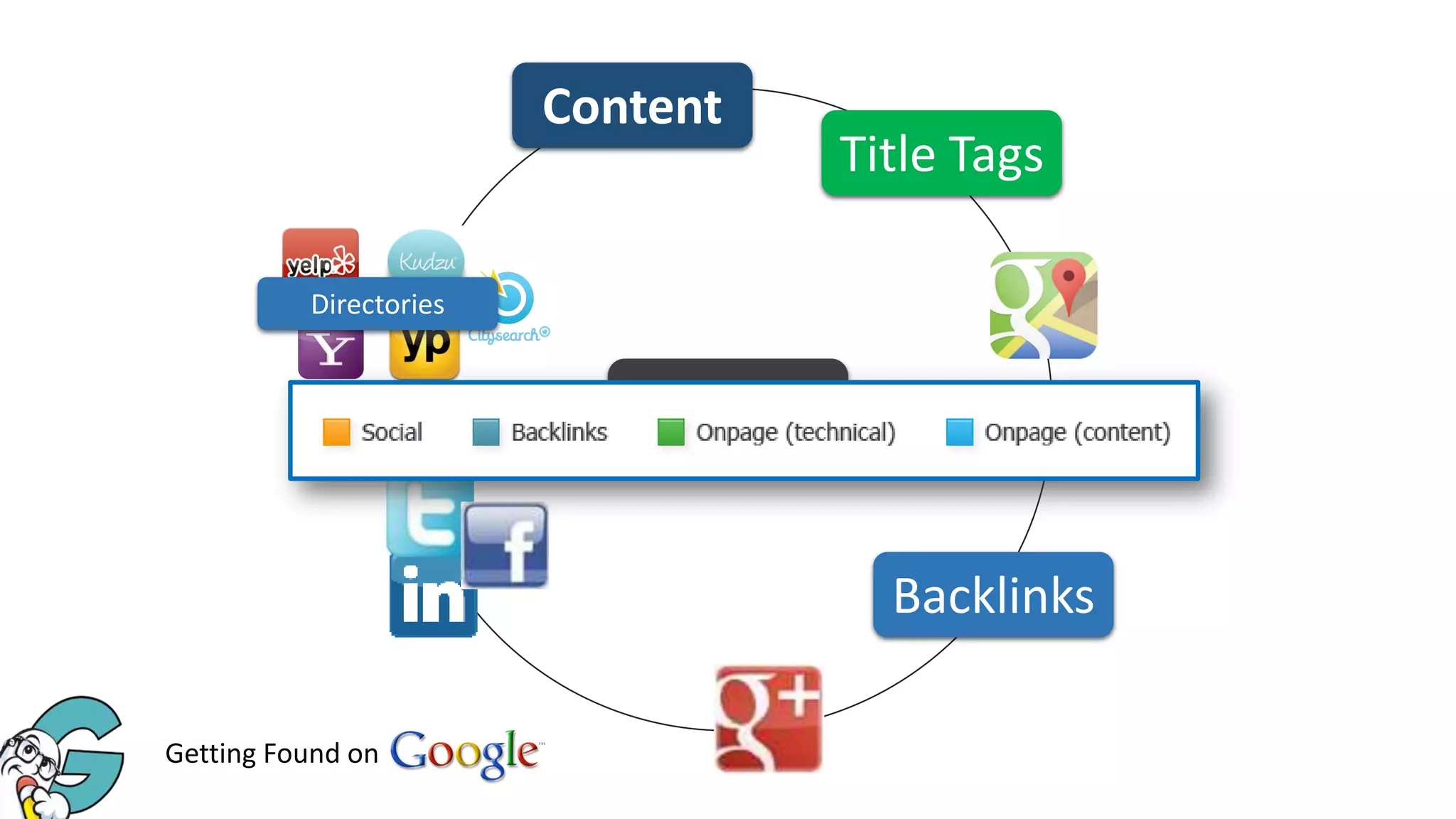
Content

Title Tags

Directories

SEO
Backlinks
Getting Found on
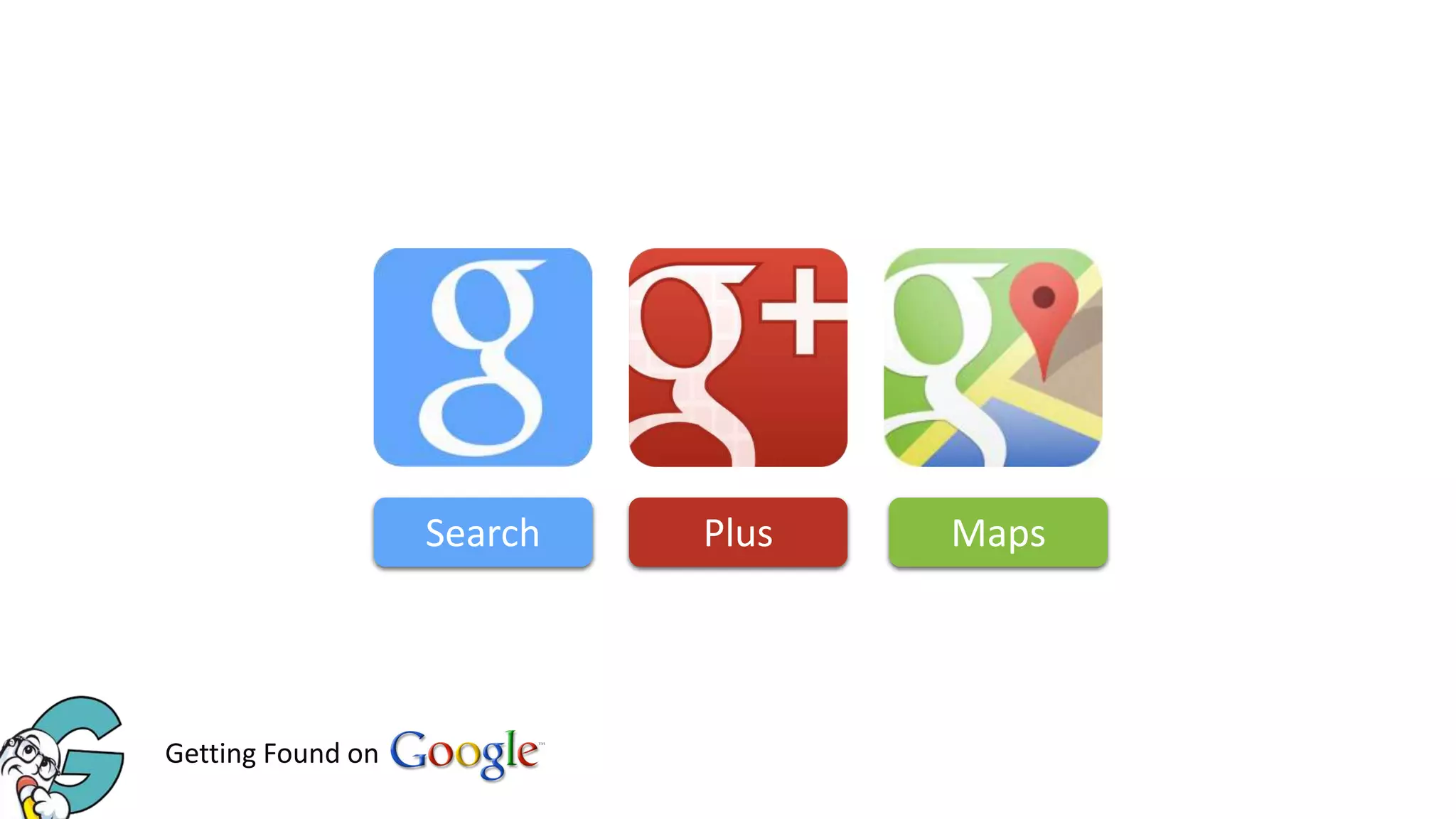
Search

Getting Found on

Plus

Maps
Getting Found on
Getting Found on
Getting Found on
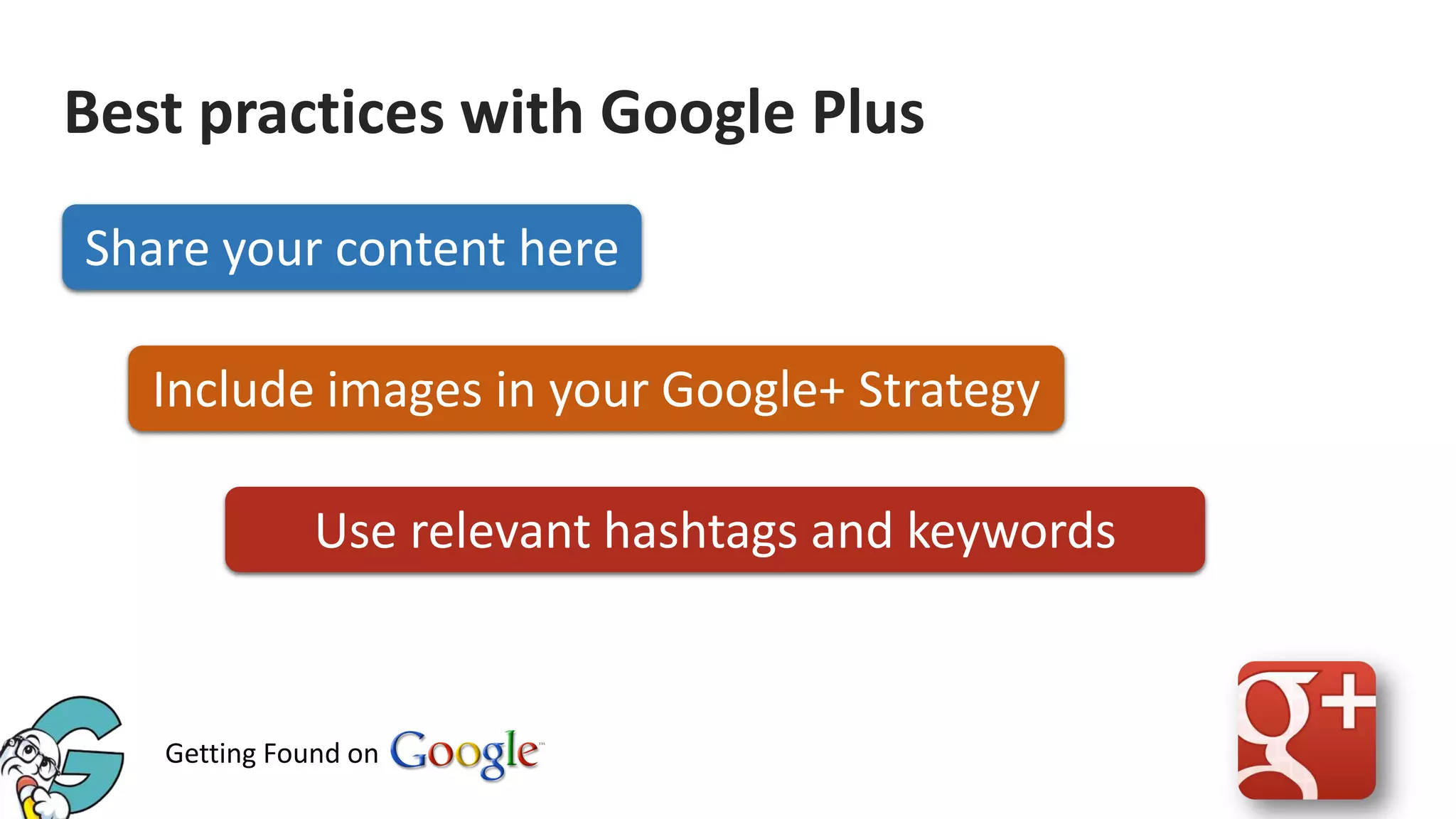
Best practices with Google Plus
Share your content here
Include images in your Google+ Strategy

Use relevant hashtags and keywords

Getting Found on
Backlinks
also known as incoming links, inbound links, inlinks, and
inward links, are incoming links to a website or web page. In
basic link terminology, a backlink is any link received by a web
node (web page, directory, website, or top level domain) from
another web node.

Getting Found on
Backlinks
A great source of backlinks?

Getting Found on
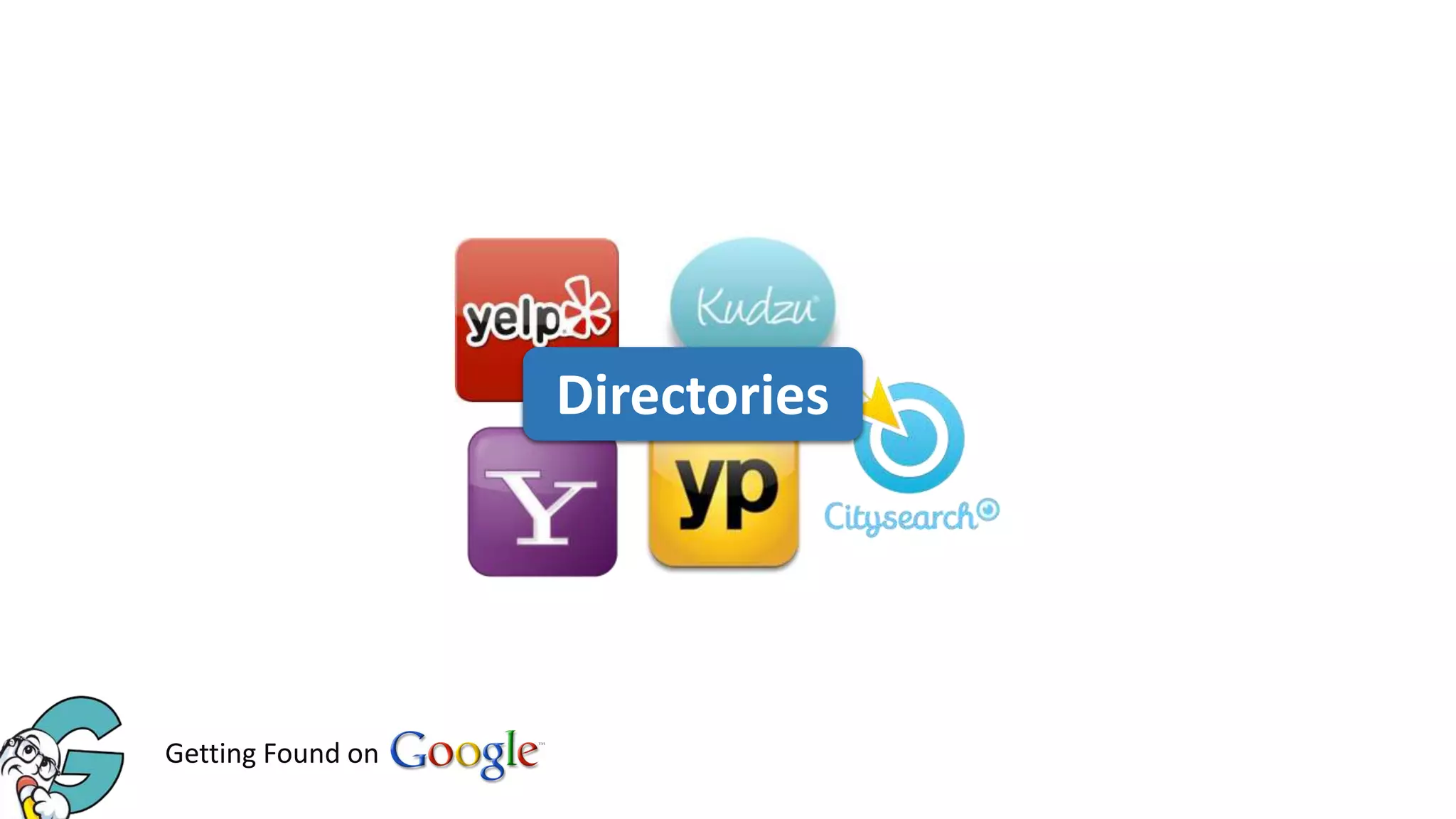
Directories

Getting Found on
Getting Found on

Directories
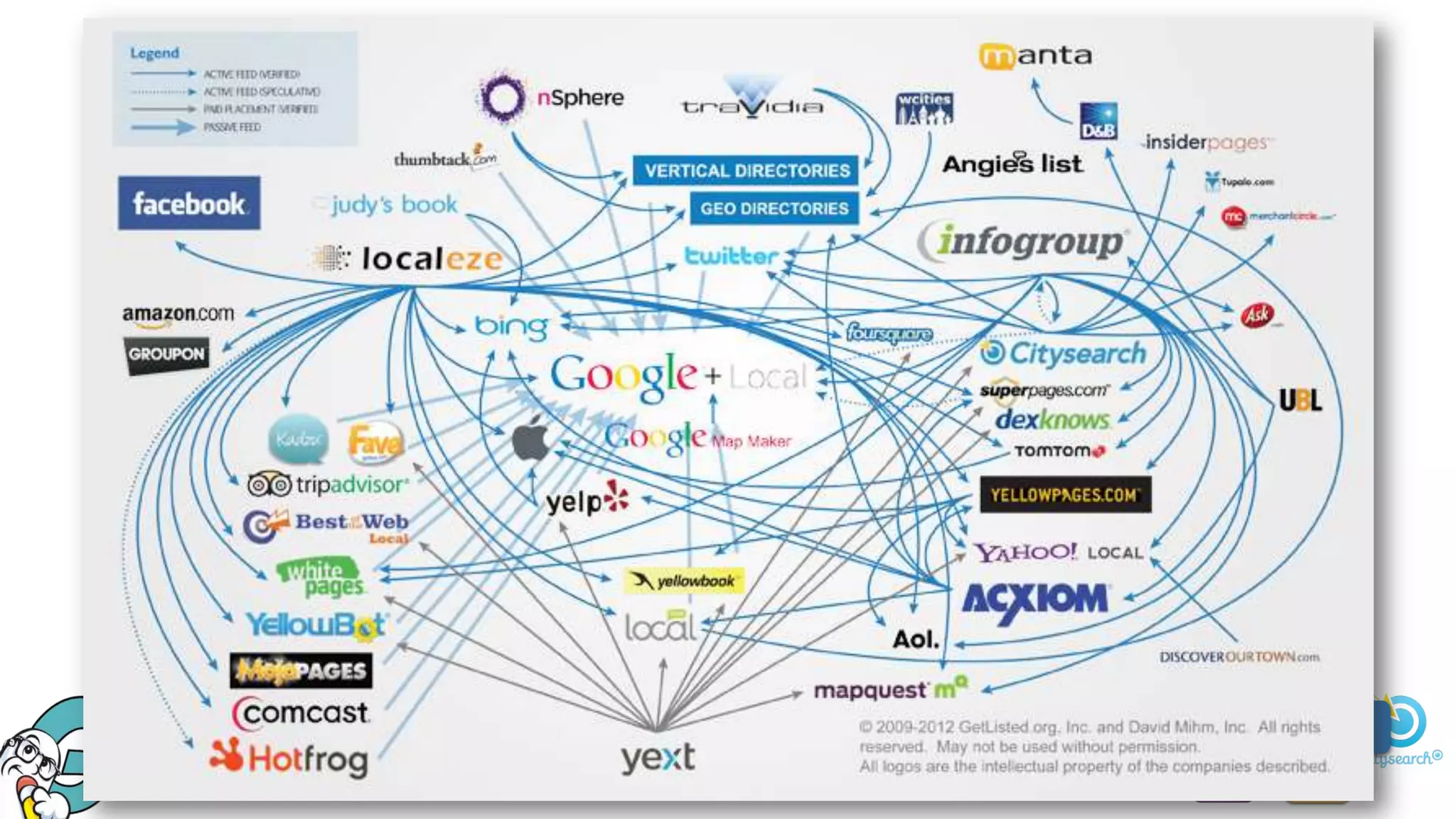
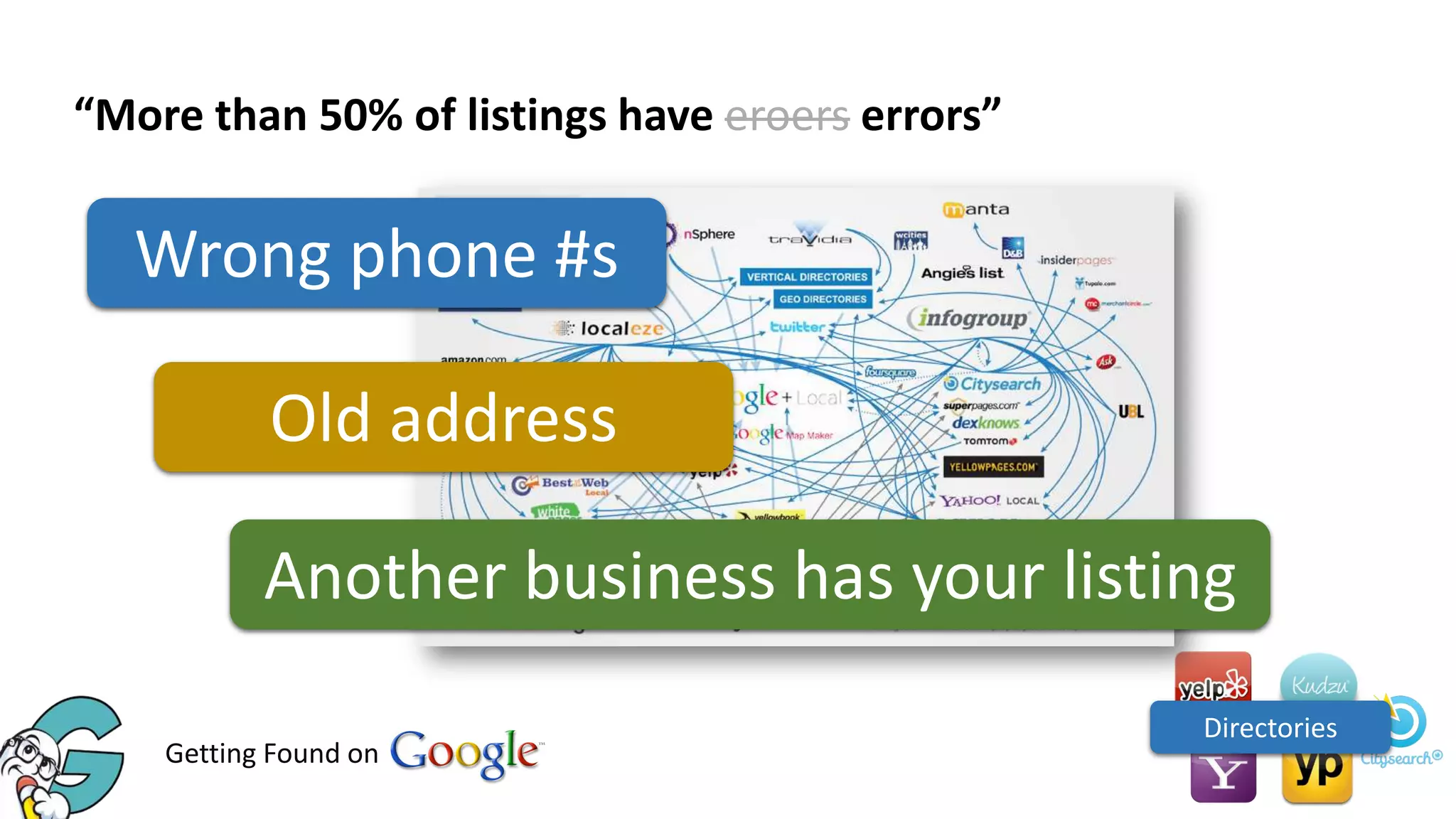
“More than 50% of listings have eroers errors”

Wrong phone #s

Old address
Another business has your listing
Getting Found on

Directories
“Reviews are the currency of the internet”

Getting Found on

Directories
Get Social

Getting Found on

Directories
Get Social
Optimize your social media profiles
Optimize your social media content/updates

Business
name, keywords

Build links by making shareable content

Getting Found on

Directories
Get Social

Getting Found on

Directories
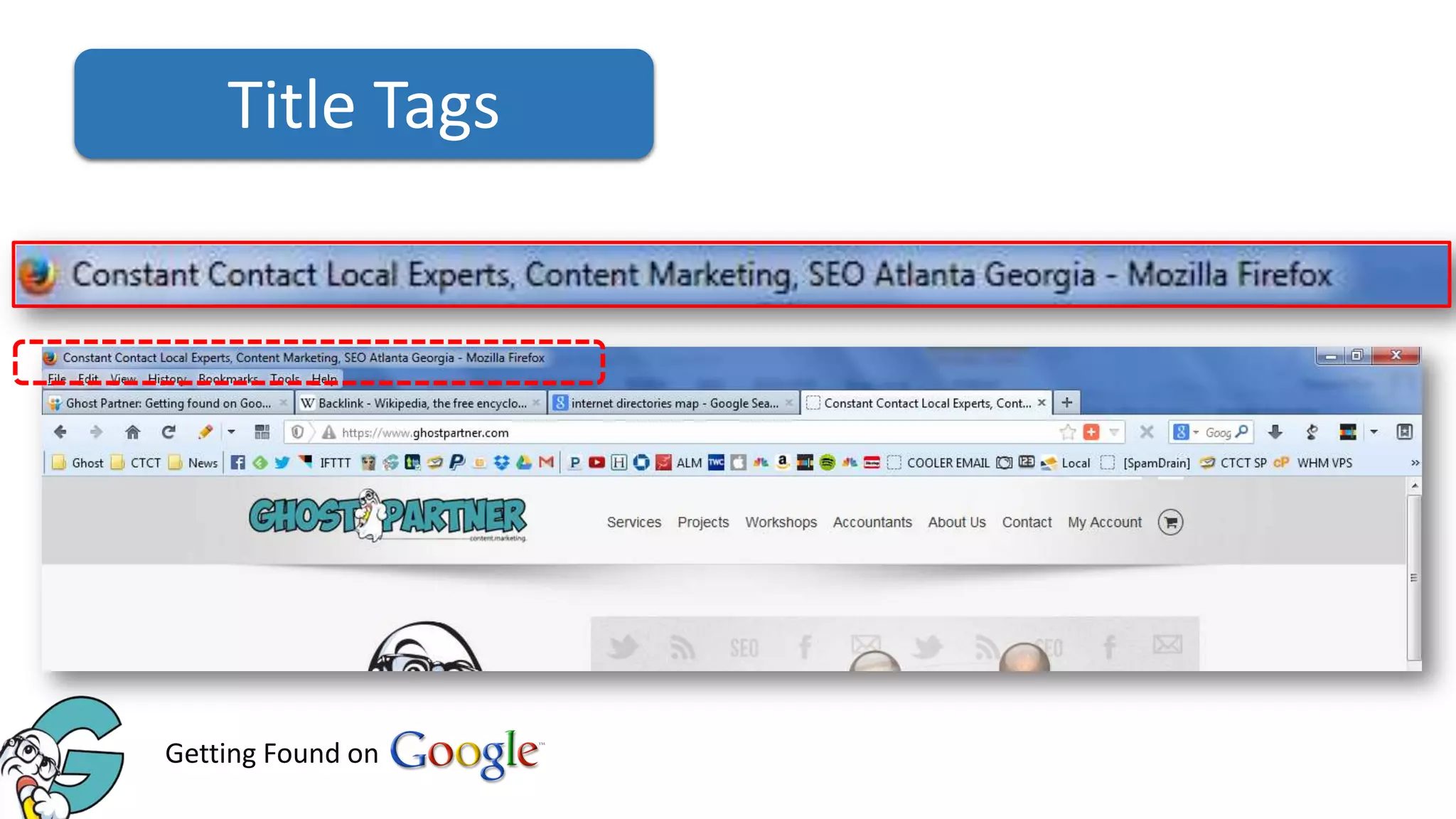
Title Tags

Getting Found on
Title Tags

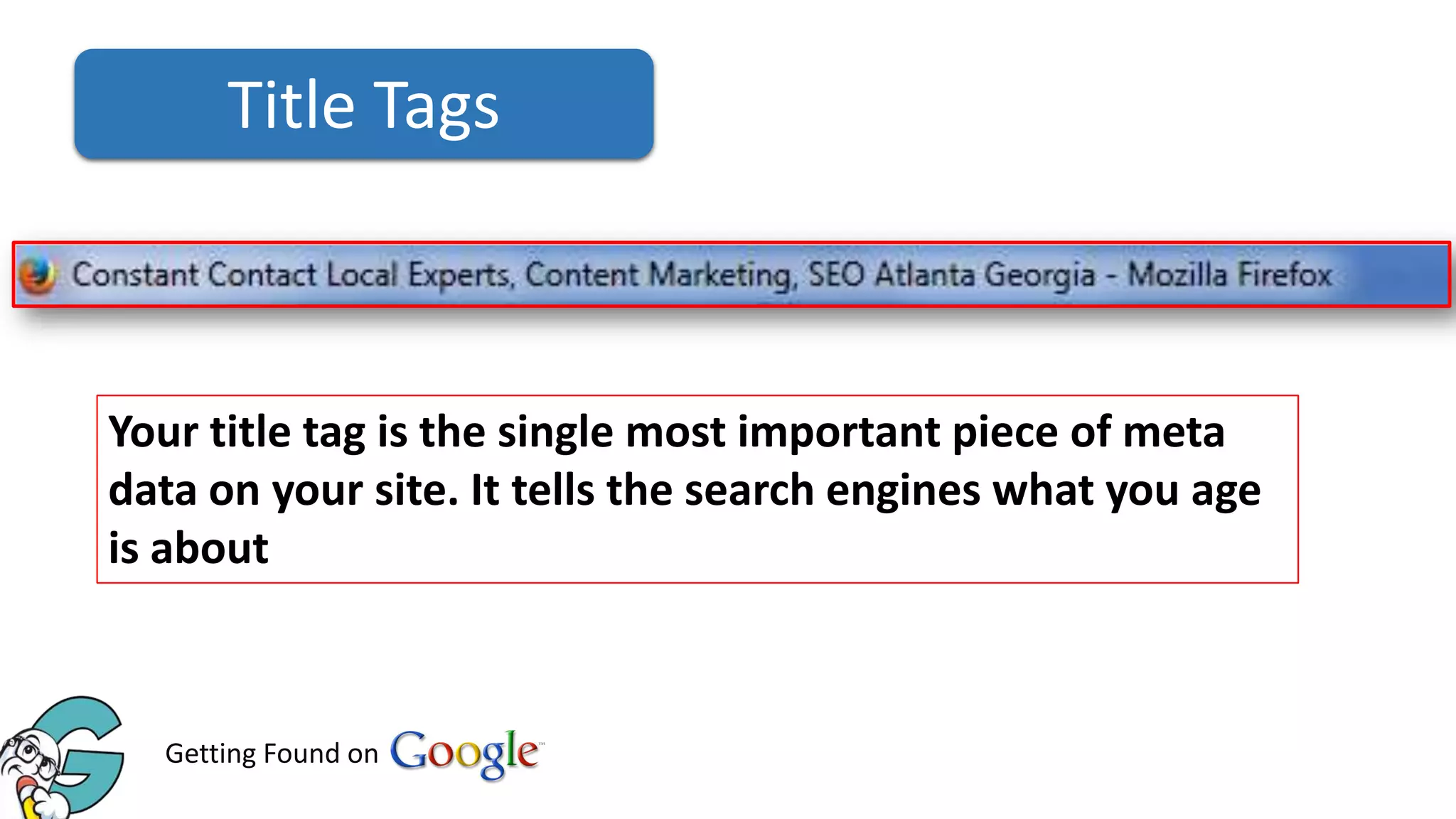
Your title tag is the single most important piece of meta
data on your site. It tells the search engines what you age
is about

Getting Found on
Content

Getting Found on
Content

Google wants Fresh, Original, Relevant content. Period.

Getting Found on
Content is King for SEO Results
As Google has changed and refined its
ranking algorithms over the years, one
thing has become more and more clear:
Google ranks websites, blogs and social
media based on content quality. The
more relevant, original and educational
that content is, the higher your site’s
ranking will be.
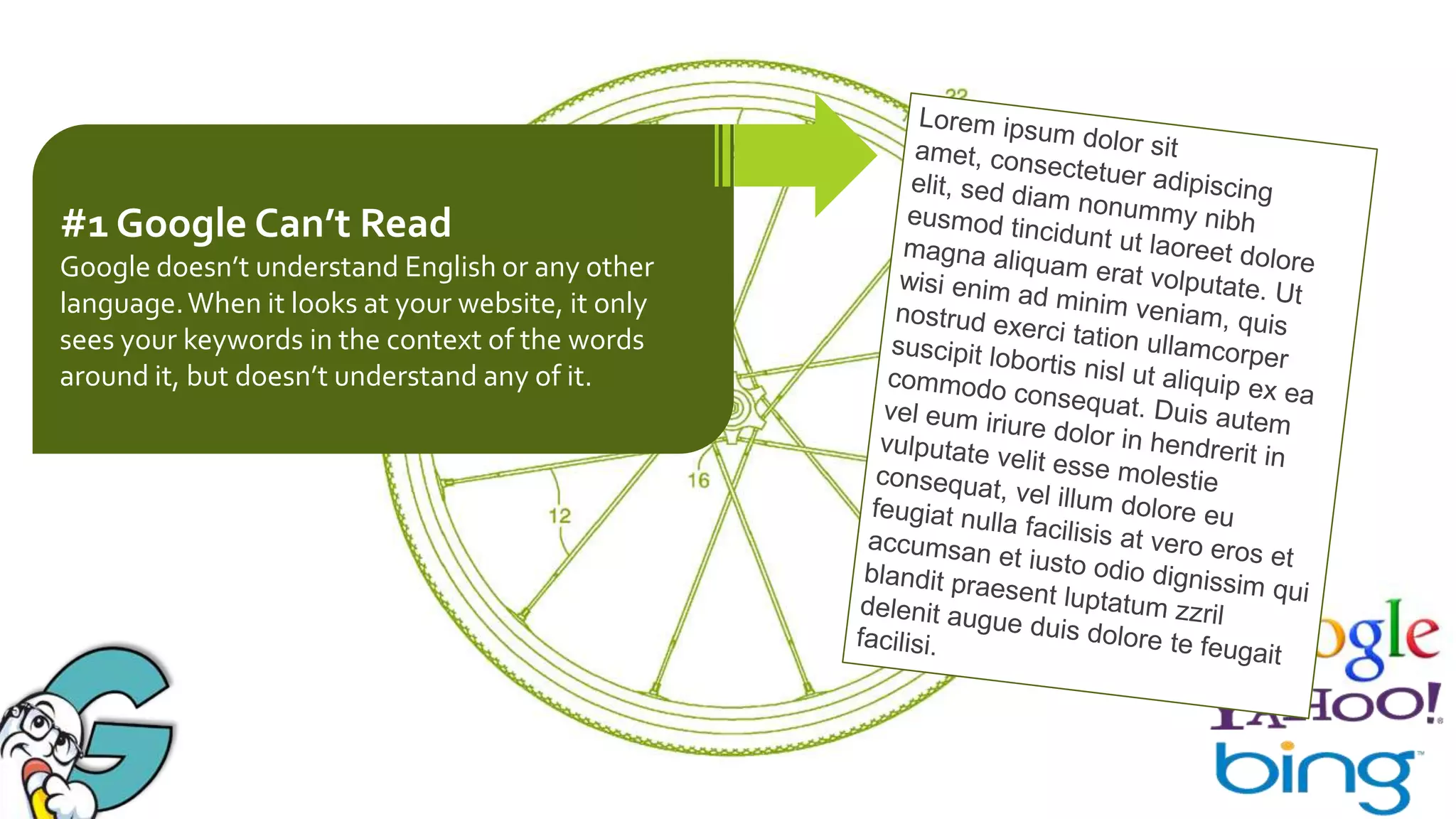
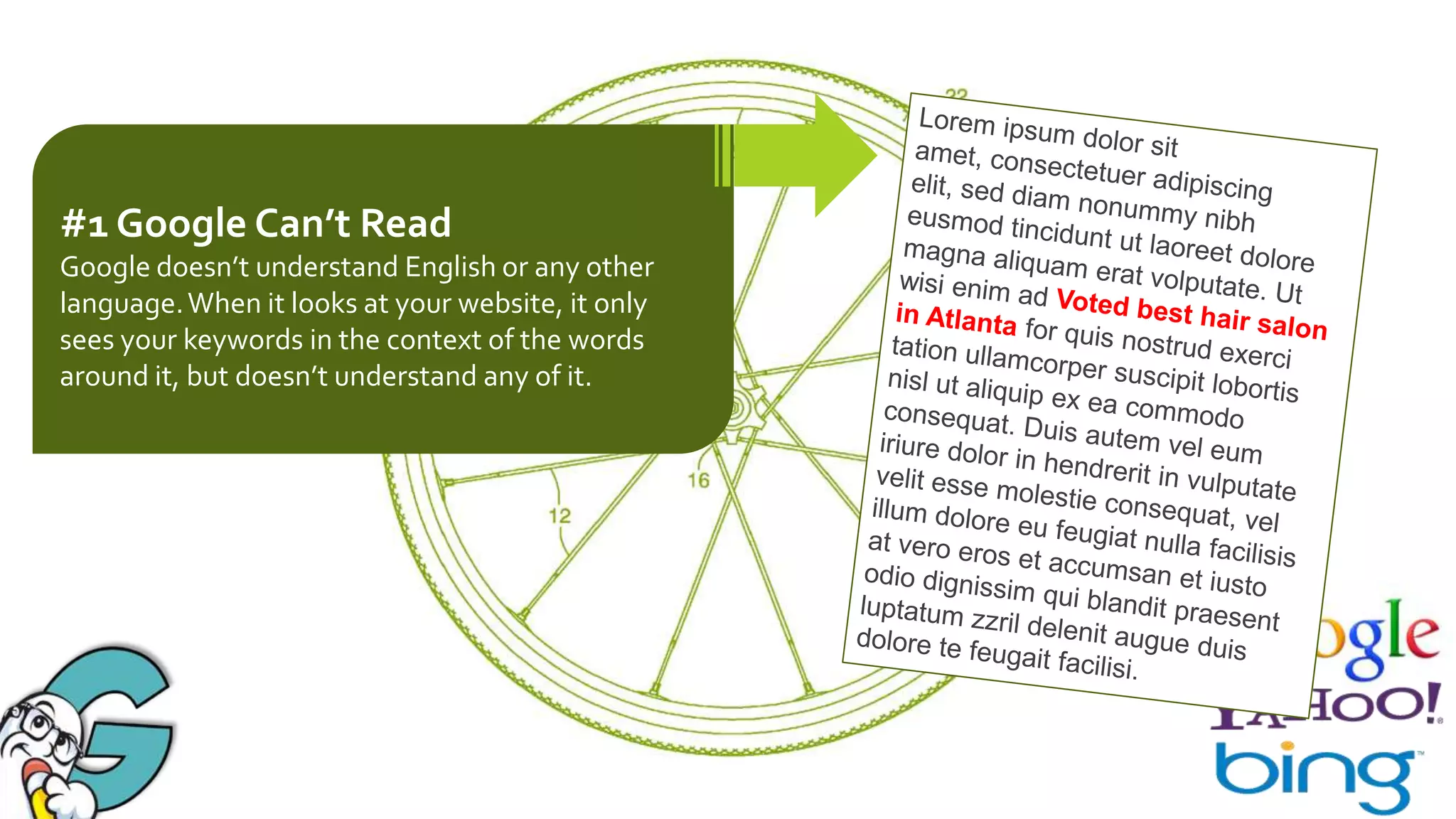
#1 Google Can’t Read
Google doesn’t understand English or any other
language. When it looks at your website, it only
sees your keywords in the context of the words
around it, but doesn’t understand any of it.
#1 Google Can’t Read
Google doesn’t understand English or any other
language. When it looks at your website, it only
sees your keywords in the context of the words
around it, but doesn’t understand any of it.
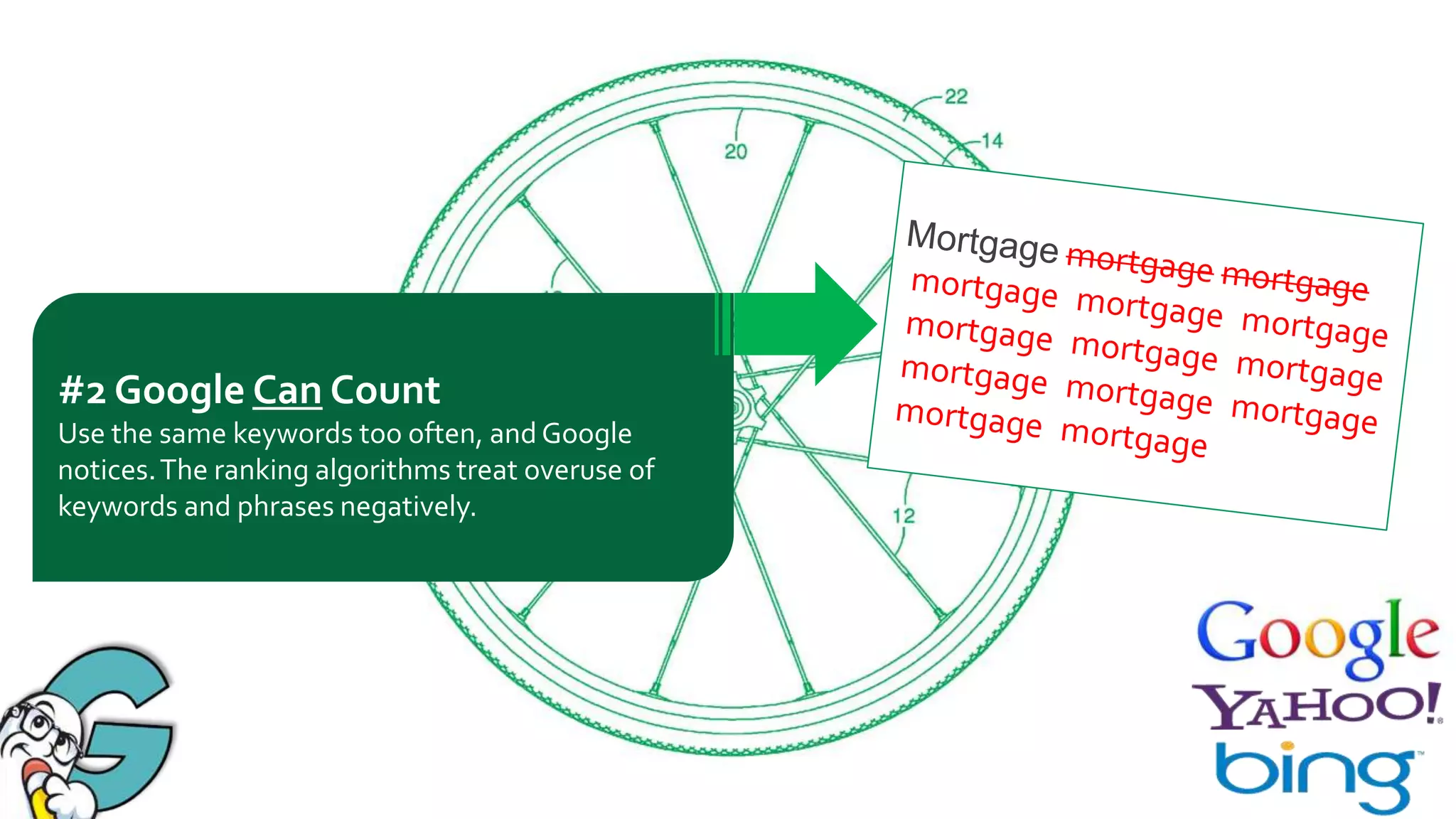
#2 Google Can Count
Use the same keywords too often, and Google
notices. The ranking algorithms treat overuse of
keywords and phrases negatively.
#3 Google Can Compare
Google’s massive database operations mean that it
checks to see if your content is duplicated
elsewhere. Google rewards fresh, original content
with higher rankings and ranks unoriginal content
lower.
#4 Google Likes New Content
Google values fresh, recent and updated
content highly when it ranks websites. Stale
content gets lower rankings.

#3 Google Can Compare
Google’s massive database operations mean that it
checks to see if your content is duplicated
elsewhere. Google rewards fresh, original content
with higher rankings and ranks unoriginal content
lower.
#4 Google Likes New Content
Google values fresh, recent and updated
content highly when it ranks websites. Stale
content gets lower rankings.

#3 Google Can Compare
Google’s massive database operations mean that it
checks to see if your content is duplicated
elsewhere. Google rewards fresh, original content
with higher rankings and ranks unoriginal content
lower.

#5 Google Watches Users
Google’s algorithms are based on how users treat results and how they use websites. A high
bounce rate, for example, occurs when website visitors leave a site soon after landing on it.
Google gives sites with low bounce rates higher rankings, since longer visits are evidence of
high content quality. Its algorithms measure user behavior to judge website quality.
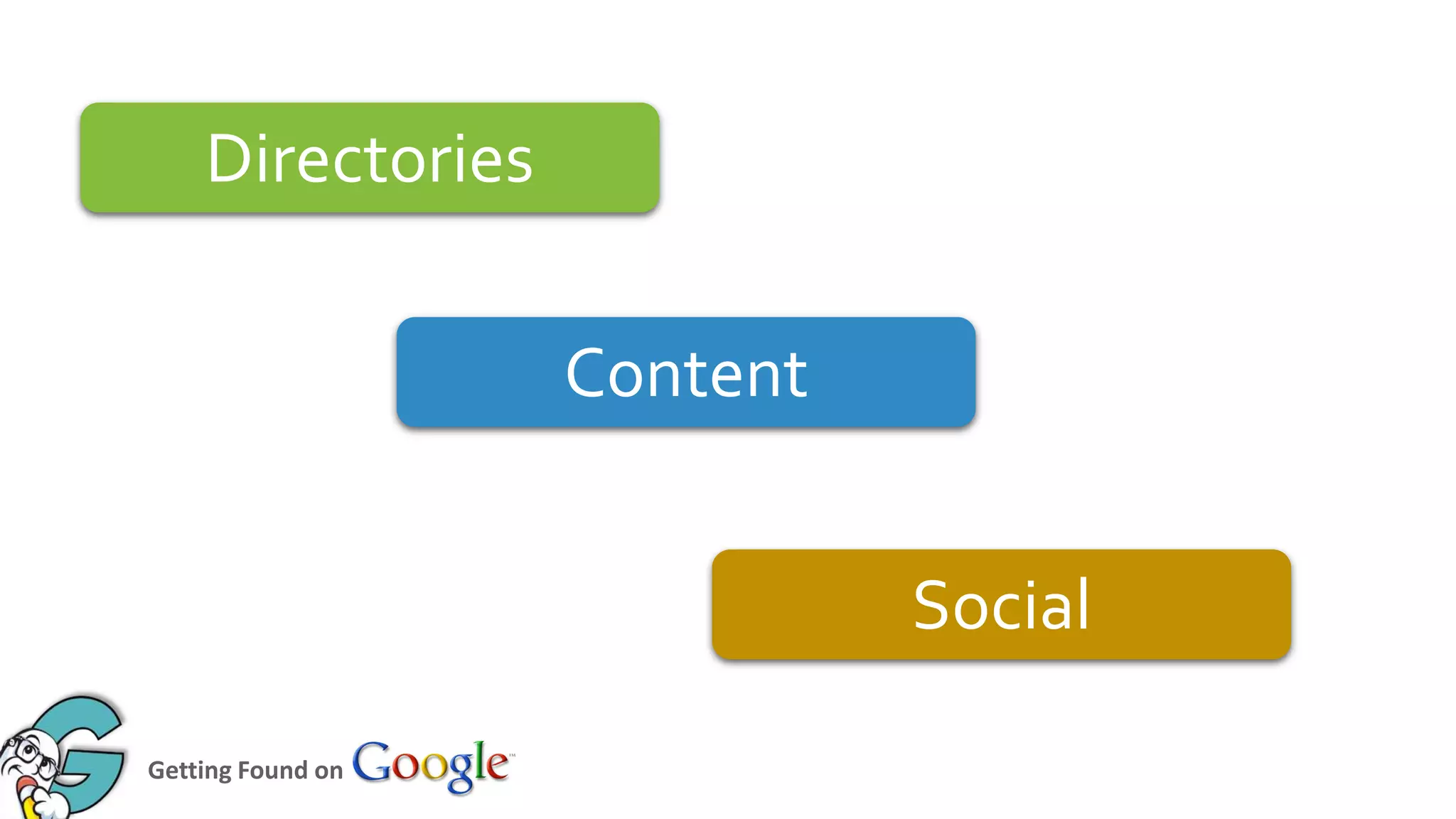
Directories
Content

Social
Getting Found on
36
March Workshops
“Getting Started with Constant Contact”
Thursday March 13th, 9:30-11:30am
Chambrel Senior Center, Roswell GA
~~~~~~~~~~~~~~~~~~~~

Workshop + Wine
Free Wine Tasting after workshop

Wednesday March 27th, 6:30-8:30pm

Total Wine by Perimeter Mall
Getting Found on
37
Q&A
Getting Found on
Thank You
& Goodbye

Getting found on Google by Howard Flint of Ghost Partner, Inc.

  • 1.
  • 2.
  • 3.
    Engage your clients Content Marketing: Emailmarketing | Company newsletters | Social Media strategy & marketing | SEO | Websites | Blog content Anything that has writing
  • 4.
  • 5.
    Search Engine Optimization(SEO) is the process of affecting the visibility of a website or a web page in a search engine's "natural" or un-paid ("organic") search results. In general, the earlier (or higher ranked on the search results page), and more frequently a site appears in the search results list, the more visitors it will receive from the search engine's users. Getting Found on
  • 6.
    Search engine optimization(SEO) is the process of affecting the visibility of a website or a web page in a search engine's "natural" or un-paid ("organic") search results. In general, the earlier (or higher ranked on the search results page), and more frequently a site appears in the search results list, the more visitors it will receive from the search engine's users. Getting Found on
  • 7.
    What factors are playinga role in your site’s rankings? Getting Found on
  • 8.
  • 9.
  • 10.
  • 11.
  • 12.
  • 13.
    Best practices withGoogle Plus Share your content here Include images in your Google+ Strategy Use relevant hashtags and keywords Getting Found on
  • 14.
    Backlinks also known asincoming links, inbound links, inlinks, and inward links, are incoming links to a website or web page. In basic link terminology, a backlink is any link received by a web node (web page, directory, website, or top level domain) from another web node. Getting Found on
  • 15.
    Backlinks A great sourceof backlinks? Getting Found on
  • 16.
  • 17.
  • 18.
    “More than 50%of listings have eroers errors” Wrong phone #s Old address Another business has your listing Getting Found on Directories
  • 19.
    “Reviews are thecurrency of the internet” Getting Found on Directories
  • 20.
  • 21.
    Get Social Optimize yoursocial media profiles Optimize your social media content/updates Business name, keywords Build links by making shareable content Getting Found on Directories
  • 22.
  • 23.
  • 24.
    Title Tags Your titletag is the single most important piece of meta data on your site. It tells the search engines what you age is about Getting Found on
  • 25.
  • 26.
    Content Google wants Fresh,Original, Relevant content. Period. Getting Found on
  • 28.
    Content is Kingfor SEO Results As Google has changed and refined its ranking algorithms over the years, one thing has become more and more clear: Google ranks websites, blogs and social media based on content quality. The more relevant, original and educational that content is, the higher your site’s ranking will be.
  • 29.
    #1 Google Can’tRead Google doesn’t understand English or any other language. When it looks at your website, it only sees your keywords in the context of the words around it, but doesn’t understand any of it.
  • 30.
    #1 Google Can’tRead Google doesn’t understand English or any other language. When it looks at your website, it only sees your keywords in the context of the words around it, but doesn’t understand any of it.
  • 31.
    #2 Google CanCount Use the same keywords too often, and Google notices. The ranking algorithms treat overuse of keywords and phrases negatively.
  • 32.
    #3 Google CanCompare Google’s massive database operations mean that it checks to see if your content is duplicated elsewhere. Google rewards fresh, original content with higher rankings and ranks unoriginal content lower.
  • 33.
    #4 Google LikesNew Content Google values fresh, recent and updated content highly when it ranks websites. Stale content gets lower rankings. #3 Google Can Compare Google’s massive database operations mean that it checks to see if your content is duplicated elsewhere. Google rewards fresh, original content with higher rankings and ranks unoriginal content lower.
  • 34.
    #4 Google LikesNew Content Google values fresh, recent and updated content highly when it ranks websites. Stale content gets lower rankings. #3 Google Can Compare Google’s massive database operations mean that it checks to see if your content is duplicated elsewhere. Google rewards fresh, original content with higher rankings and ranks unoriginal content lower. #5 Google Watches Users Google’s algorithms are based on how users treat results and how they use websites. A high bounce rate, for example, occurs when website visitors leave a site soon after landing on it. Google gives sites with low bounce rates higher rankings, since longer visits are evidence of high content quality. Its algorithms measure user behavior to judge website quality.
  • 35.
  • 36.
    March Workshops “Getting Startedwith Constant Contact” Thursday March 13th, 9:30-11:30am Chambrel Senior Center, Roswell GA ~~~~~~~~~~~~~~~~~~~~ Workshop + Wine Free Wine Tasting after workshop Wednesday March 27th, 6:30-8:30pm Total Wine by Perimeter Mall Getting Found on 37
  • 37.
  • 38.