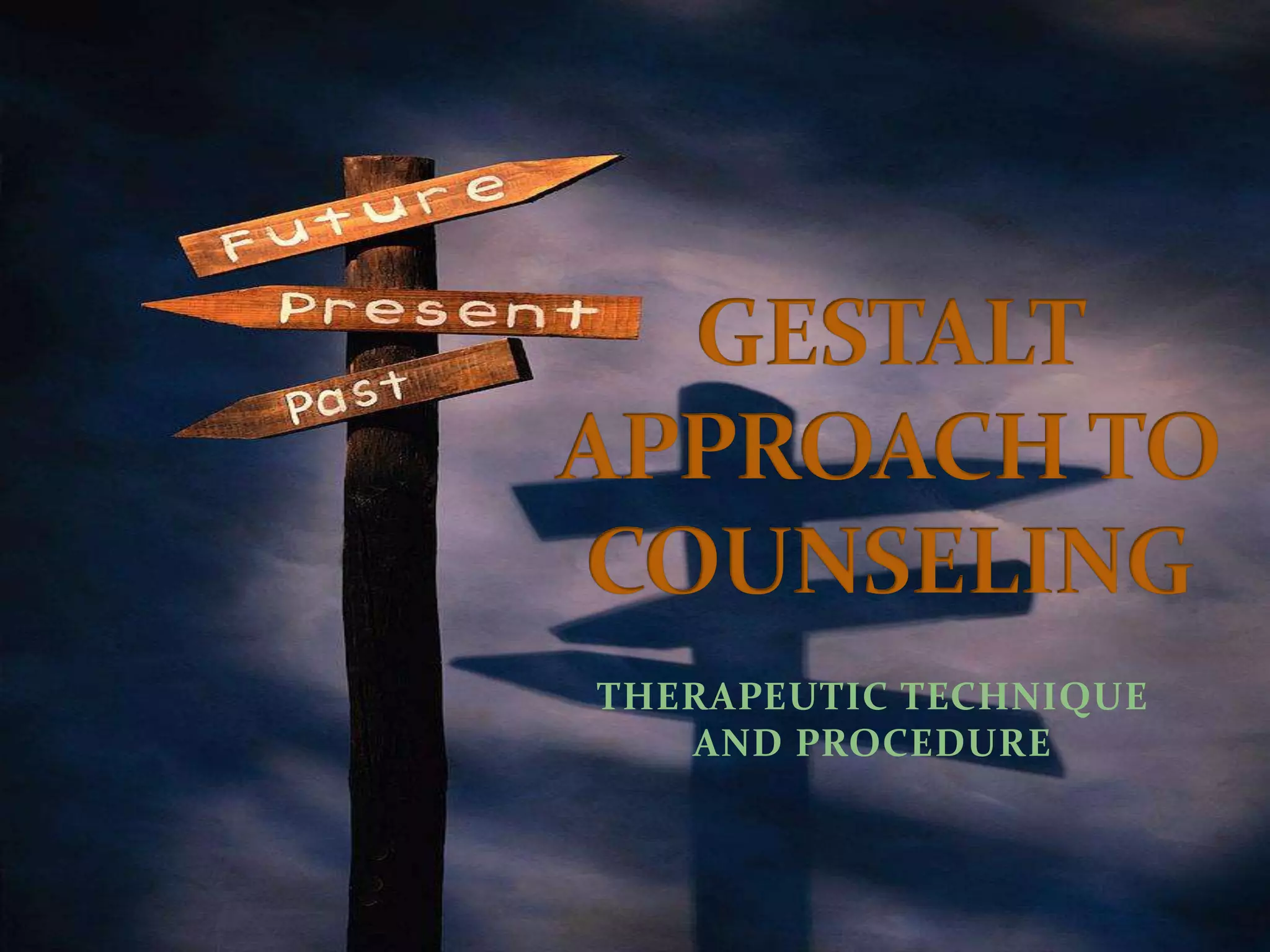
THERAPEUTIC TECHNIQUE
   AND PROCEDURE
EXERCISES are ready-made techniques that are
 sometimes used to make something happen in a
 therapy session or to achieve goal. It serves as
 catalyst for individual work or for promoting
 interaction among members of the therapy group
 (Corey, 2009).
EXPERIMENT grows out of the interaction between
 the client and therapist in a dialogic process;
 cornerstone of dialogic process.


It heightens the client’s awareness and
  understanding through experience (Frew, 2008)
An EXERCISE or technique is a performed experiment
 with specific learning goals….An EXPERIMENT, on the
 other hand, flows directly from psychotherapy theory
 and is crafted to fit the individual as he or she exist in
 the here and now (Melnick and Nevis, 2005).
EXPERIMENT
 Avenue for clients to live experientially
 A creative adventure where clients can themselves
  behaviorally
 Invites clients to engage in experiments that lead to
  fresh emotional experience and new insight
  (Strumpfel & Goldman, 2002)
 Determines what does or does not fit for the client
  through their own awareness (Yontef, 1993)
It brings out some kind of internal conflict by making
   the struggle an actual process (Polster, 1987)
FORMS OF GESTALT EXPERIMENT ACCORDING TO
 POLSTER

 Imagining a future encounter


 Setting up a dialogue between a client and some
 significant person in his/her life

 Dramatizing the memory of a painful event


 Reliving a particularly profound early experience in the
 present
 Assuming the identity of ones mother or father
 through role playing

 Focusing on gestures, postures, and other non verbal
 signs of inner expression

 Carrying on a dialogue between two conflicting
 aspects within the person
 To be sensitive enough to know when to leave the
 client alone

 To derive maximum benefit from Gestalt experiment,
 the practitioner must be sensitive to introducing them
 at the right time and in a appropriate manner

 The nature of the experiment depends on the
 individual’s problems, what the person is experiencing,
 and the life experiences that both the client and the
 therapist bring the session
 Experiments require the client’s active role in self-
  exploration

 Gestalt experiment work best when the therapist is
  respectful of the client’s cultural background and is in
  good contact with the person

 If the therapist meets with hesitation, it is good idea to
  explore its meaning for the client
 It is important that the therapist be flexible in using
  technique, paying particular attention to how the
  client is responding

 The counselor should be ready to scale down tasks so
  that the client has a good chance to succeed in his/her
  effort

 The therapist needs to learn which experiment can be
  best be practiced in the session itself and which can
  best be performed outside
 To bring about integrated functioning and acceptance
 of aspects of one’s personality that have been
 disowned and denied
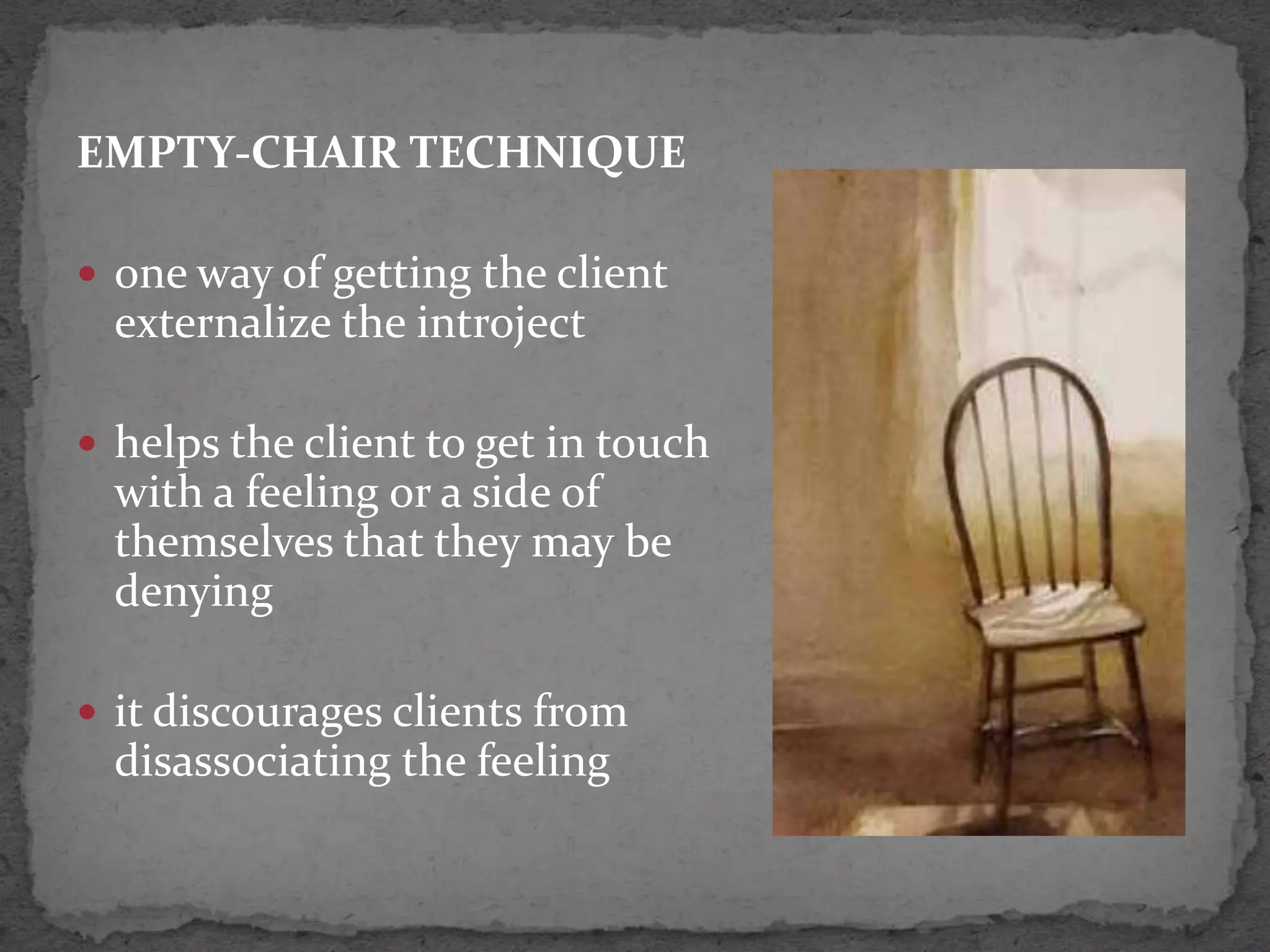
EMPTY-CHAIR TECHNIQUE

 one way of getting the client
  externalize the introject

 helps the client to get in touch
  with a feeling or a side of
  themselves that they may be
  denying

 it discourages clients from
  disassociating the feeling
 involves asking a person in a group to go up to others
  in the group and either speak to or do something with
  each person.

 to confront, to risk, to disclose the self, to experiment
  with new behavior, and to grow and change.
 to represent reversals of underlying and latent
  impulses

 “plunging the client into the part of themselves that
  have been submerged and denied”

 to help clients accept certain personal attributes that
  they try to deny
 Prepares the client to in their social role


 Increases awareness on how they try to meet the
  expectation of others, of the degree to which they want
  to be approved, accepted, and like, and of the extent to
  which they go attain acceptance
 Aims the client to become more aware of the subtle
 signals and cues they are sending through boy
 language.
 urges the client to stay with their feelings and
  encourage them to go deeper into the feeling or
  behavior they wish to avoid
 It brings back the dream to life and relieve them as
 though they are happening now.

 The dream is acted out in the present, and the dreamer
 becomes part of his/her own dream.
Emphasizes helping people incorporate and
 accept all aspects of life.

Helps client focus on resolving areas of
 unfinished business.

The approach is flexible and not limited to a
 few technique.
Primary emphasizes on doing rather than
 talking

Appropriate for certain affective disorder,
 anxiety states, somatoform disorder, etc.
 Gestalt is versatile.

Gestalt approach to counseling

  • 1.
  • 2.
    EXERCISES are ready-madetechniques that are sometimes used to make something happen in a therapy session or to achieve goal. It serves as catalyst for individual work or for promoting interaction among members of the therapy group (Corey, 2009).
  • 3.
    EXPERIMENT grows outof the interaction between the client and therapist in a dialogic process; cornerstone of dialogic process. It heightens the client’s awareness and understanding through experience (Frew, 2008)
  • 4.
    An EXERCISE ortechnique is a performed experiment with specific learning goals….An EXPERIMENT, on the other hand, flows directly from psychotherapy theory and is crafted to fit the individual as he or she exist in the here and now (Melnick and Nevis, 2005).
  • 5.
    EXPERIMENT  Avenue forclients to live experientially  A creative adventure where clients can themselves behaviorally  Invites clients to engage in experiments that lead to fresh emotional experience and new insight (Strumpfel & Goldman, 2002)  Determines what does or does not fit for the client through their own awareness (Yontef, 1993)
  • 6.
    It brings outsome kind of internal conflict by making the struggle an actual process (Polster, 1987)
  • 7.
    FORMS OF GESTALTEXPERIMENT ACCORDING TO POLSTER  Imagining a future encounter  Setting up a dialogue between a client and some significant person in his/her life  Dramatizing the memory of a painful event  Reliving a particularly profound early experience in the present
  • 8.
     Assuming theidentity of ones mother or father through role playing  Focusing on gestures, postures, and other non verbal signs of inner expression  Carrying on a dialogue between two conflicting aspects within the person
  • 10.
     To besensitive enough to know when to leave the client alone  To derive maximum benefit from Gestalt experiment, the practitioner must be sensitive to introducing them at the right time and in a appropriate manner  The nature of the experiment depends on the individual’s problems, what the person is experiencing, and the life experiences that both the client and the therapist bring the session
  • 11.
     Experiments requirethe client’s active role in self- exploration  Gestalt experiment work best when the therapist is respectful of the client’s cultural background and is in good contact with the person  If the therapist meets with hesitation, it is good idea to explore its meaning for the client
  • 12.
     It isimportant that the therapist be flexible in using technique, paying particular attention to how the client is responding  The counselor should be ready to scale down tasks so that the client has a good chance to succeed in his/her effort  The therapist needs to learn which experiment can be best be practiced in the session itself and which can best be performed outside
  • 14.
     To bringabout integrated functioning and acceptance of aspects of one’s personality that have been disowned and denied
  • 15.
    EMPTY-CHAIR TECHNIQUE  oneway of getting the client externalize the introject  helps the client to get in touch with a feeling or a side of themselves that they may be denying  it discourages clients from disassociating the feeling
  • 16.
     involves askinga person in a group to go up to others in the group and either speak to or do something with each person.  to confront, to risk, to disclose the self, to experiment with new behavior, and to grow and change.
  • 17.
     to representreversals of underlying and latent impulses  “plunging the client into the part of themselves that have been submerged and denied”  to help clients accept certain personal attributes that they try to deny
  • 18.
     Prepares theclient to in their social role  Increases awareness on how they try to meet the expectation of others, of the degree to which they want to be approved, accepted, and like, and of the extent to which they go attain acceptance
  • 19.
     Aims theclient to become more aware of the subtle signals and cues they are sending through boy language.
  • 20.
     urges theclient to stay with their feelings and encourage them to go deeper into the feeling or behavior they wish to avoid
  • 21.
     It bringsback the dream to life and relieve them as though they are happening now.  The dream is acted out in the present, and the dreamer becomes part of his/her own dream.
  • 23.
    Emphasizes helping peopleincorporate and accept all aspects of life. Helps client focus on resolving areas of unfinished business. The approach is flexible and not limited to a few technique.
  • 24.
    Primary emphasizes ondoing rather than talking Appropriate for certain affective disorder, anxiety states, somatoform disorder, etc. Gestalt is versatile.