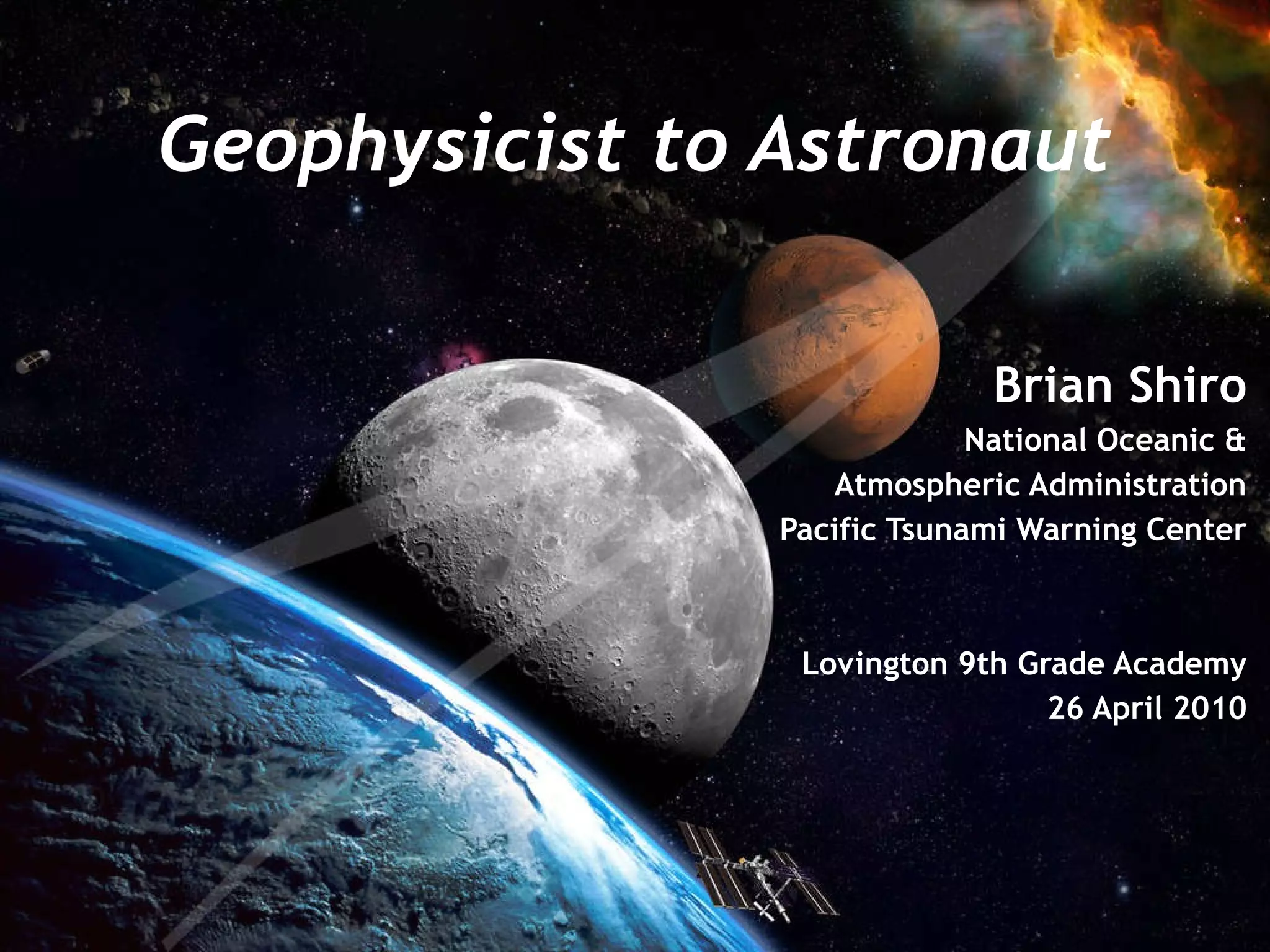
Geophysicist to Astronaut Brian Shiro National Oceanic & Atmospheric Administration Pacific Tsunami Warning Center Lovington 9th Grade Academy 26 April 2010
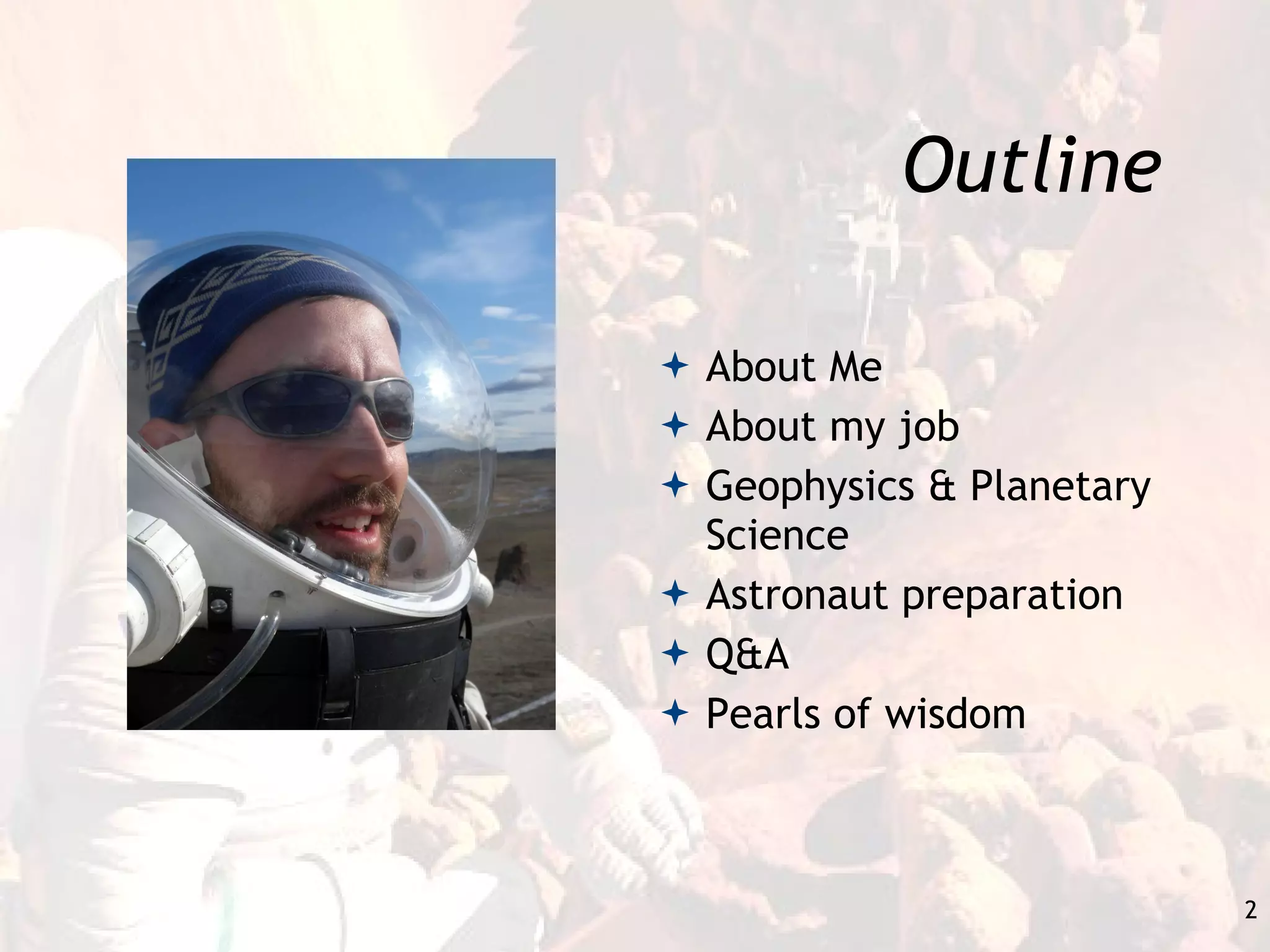
Outline About Me About my job  Geophysics & Planetary Science Astronaut preparation Q&A Pearls of wisdom
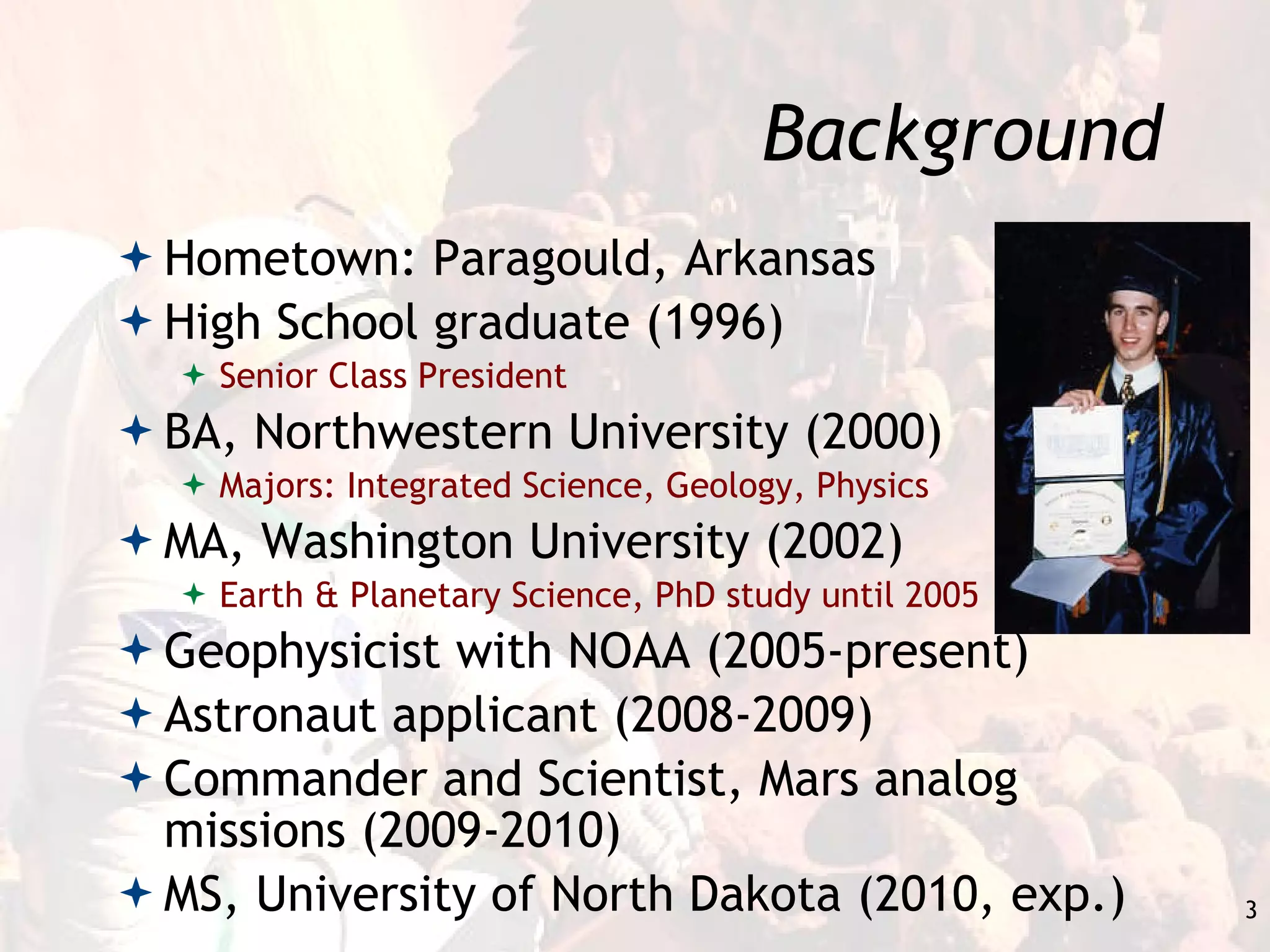
Background Hometown: Paragould, Arkansas High School graduate (1996) Senior Class President BA, Northwestern University (2000) Majors: Integrated Science, Geology, Physics MA, Washington University (2002) Earth & Planetary Science, PhD study until 2005 Geophysicist with NOAA (2005-present) Astronaut applicant (2008-2009) Commander and Scientist, Mars analog missions (2009-2010) MS, University of North Dakota (2010, exp.)
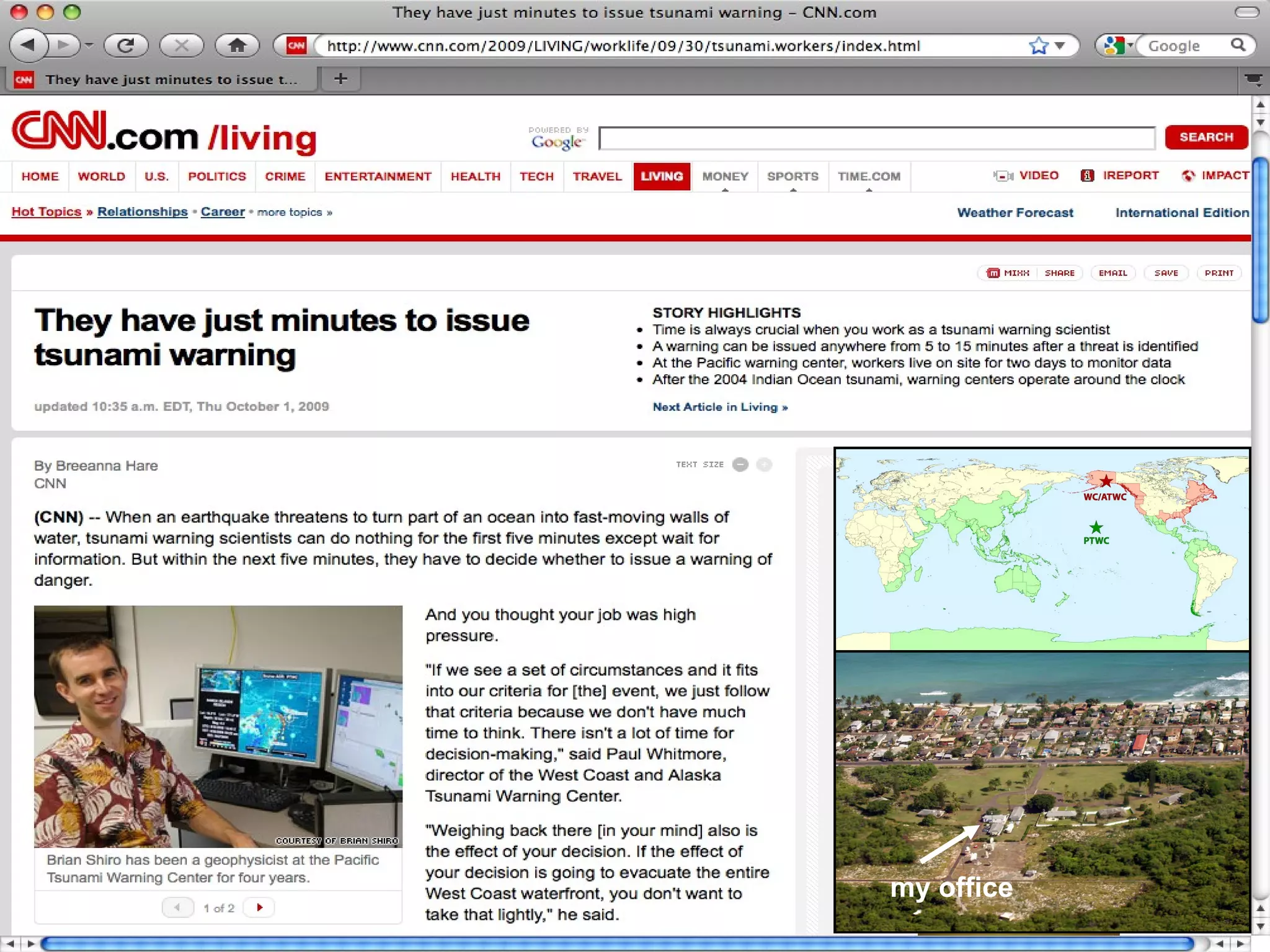
My job my office
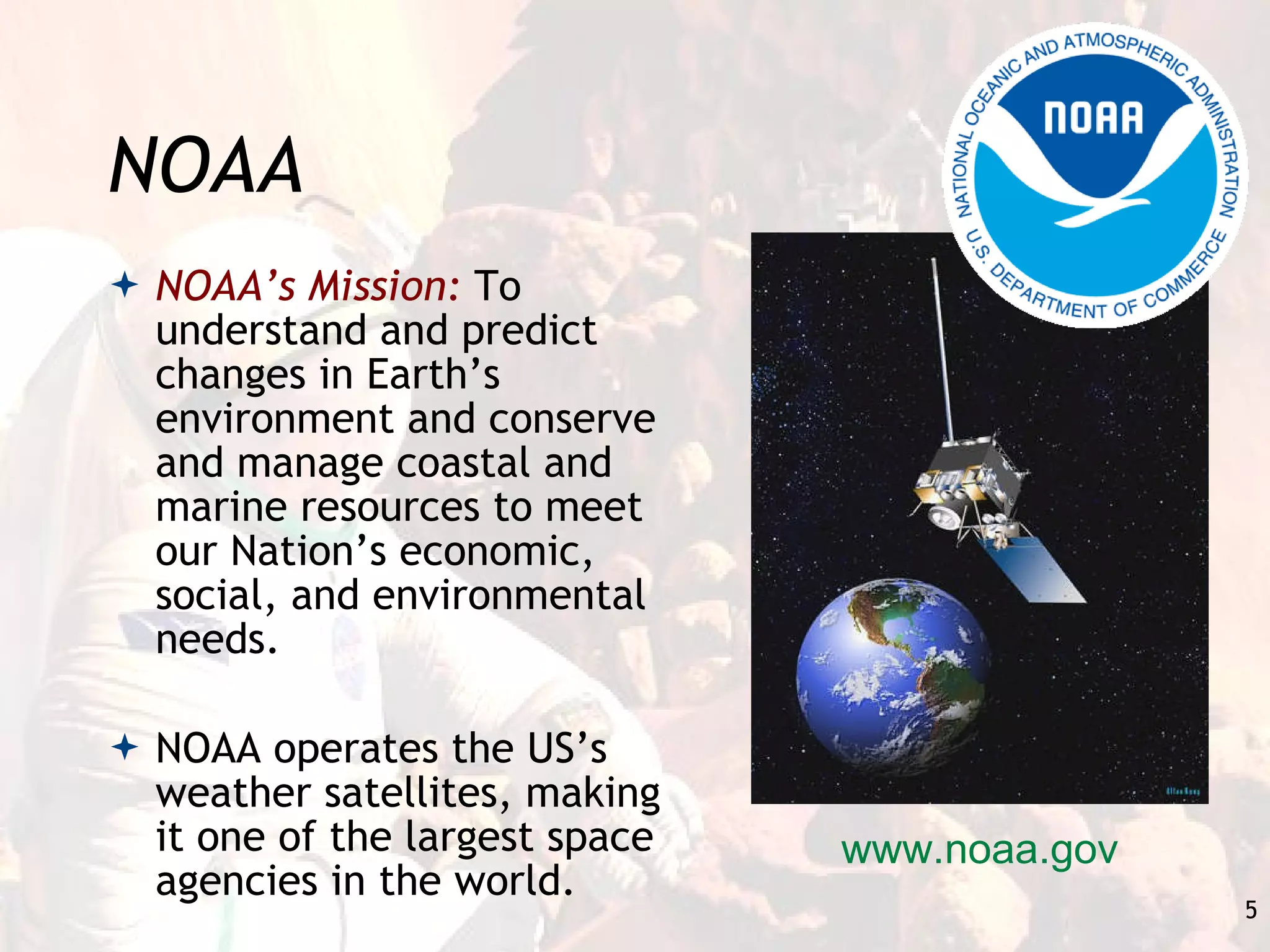
NOAA NOAA’s Mission:  To understand and predict changes in Earth’s environment and conserve and manage coastal and marine resources to meet our Nation’s economic, social, and environmental needs. NOAA operates the US’s weather satellites, making it one of the largest space agencies in the world. www.noaa.gov
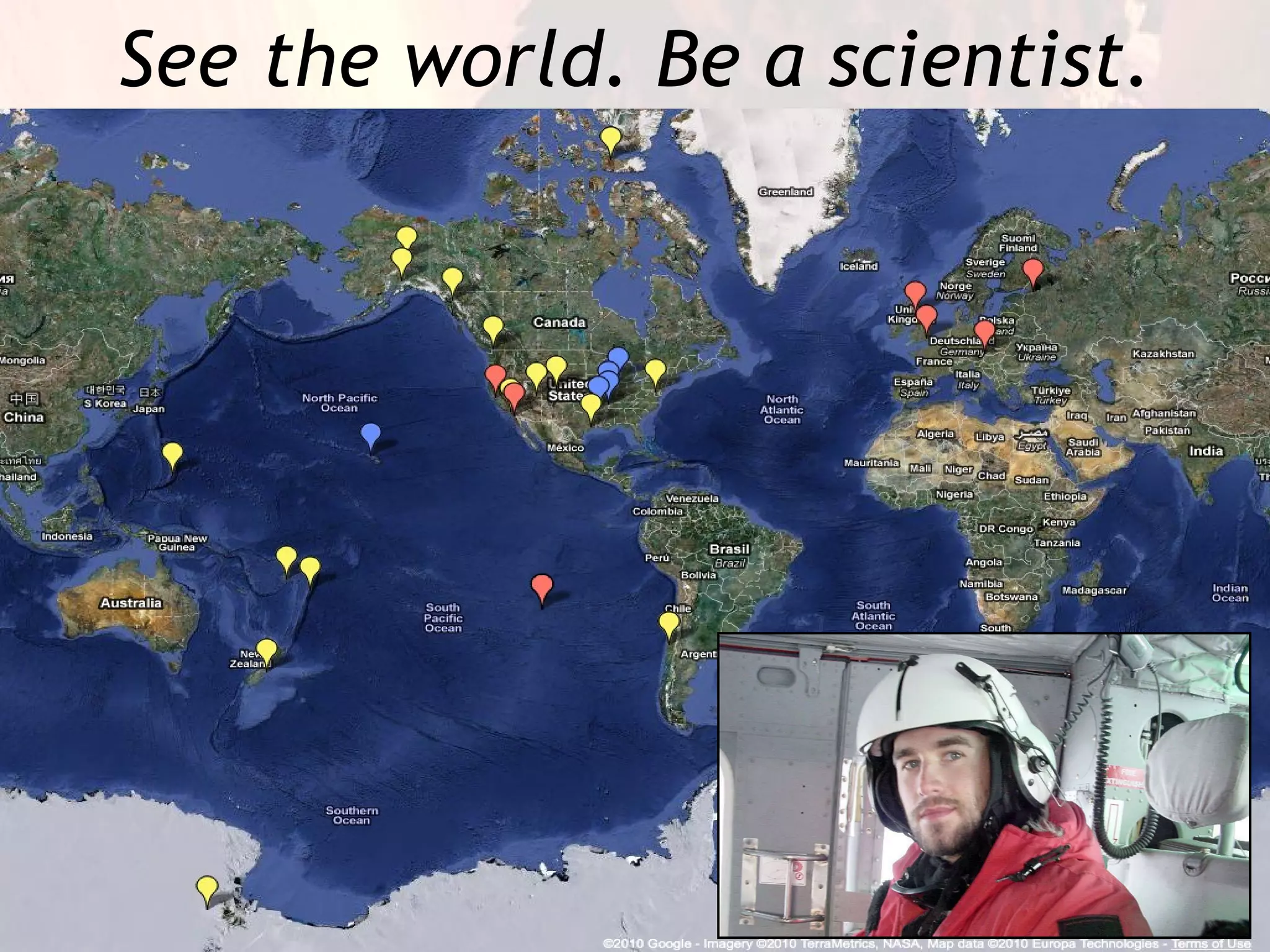
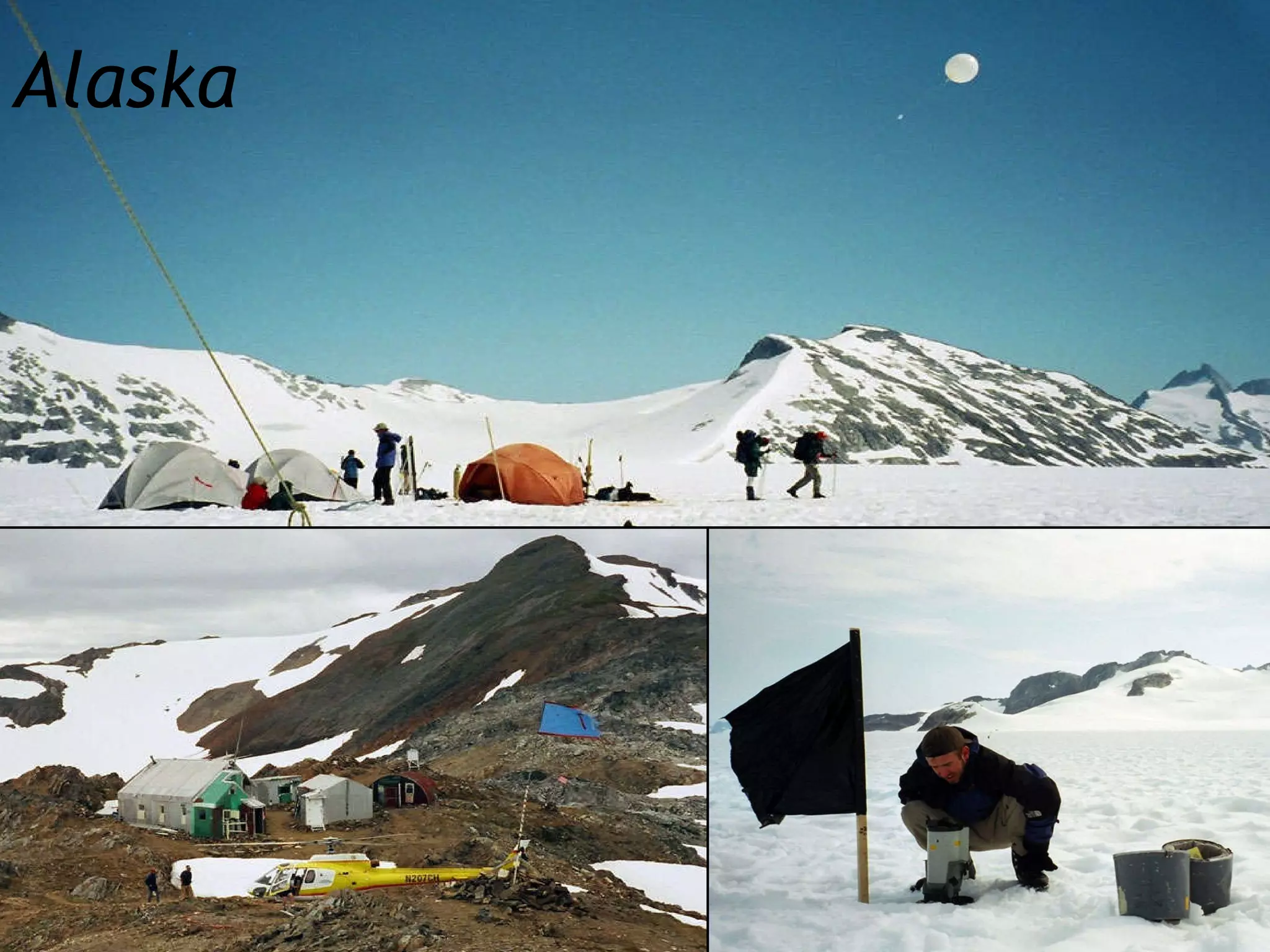
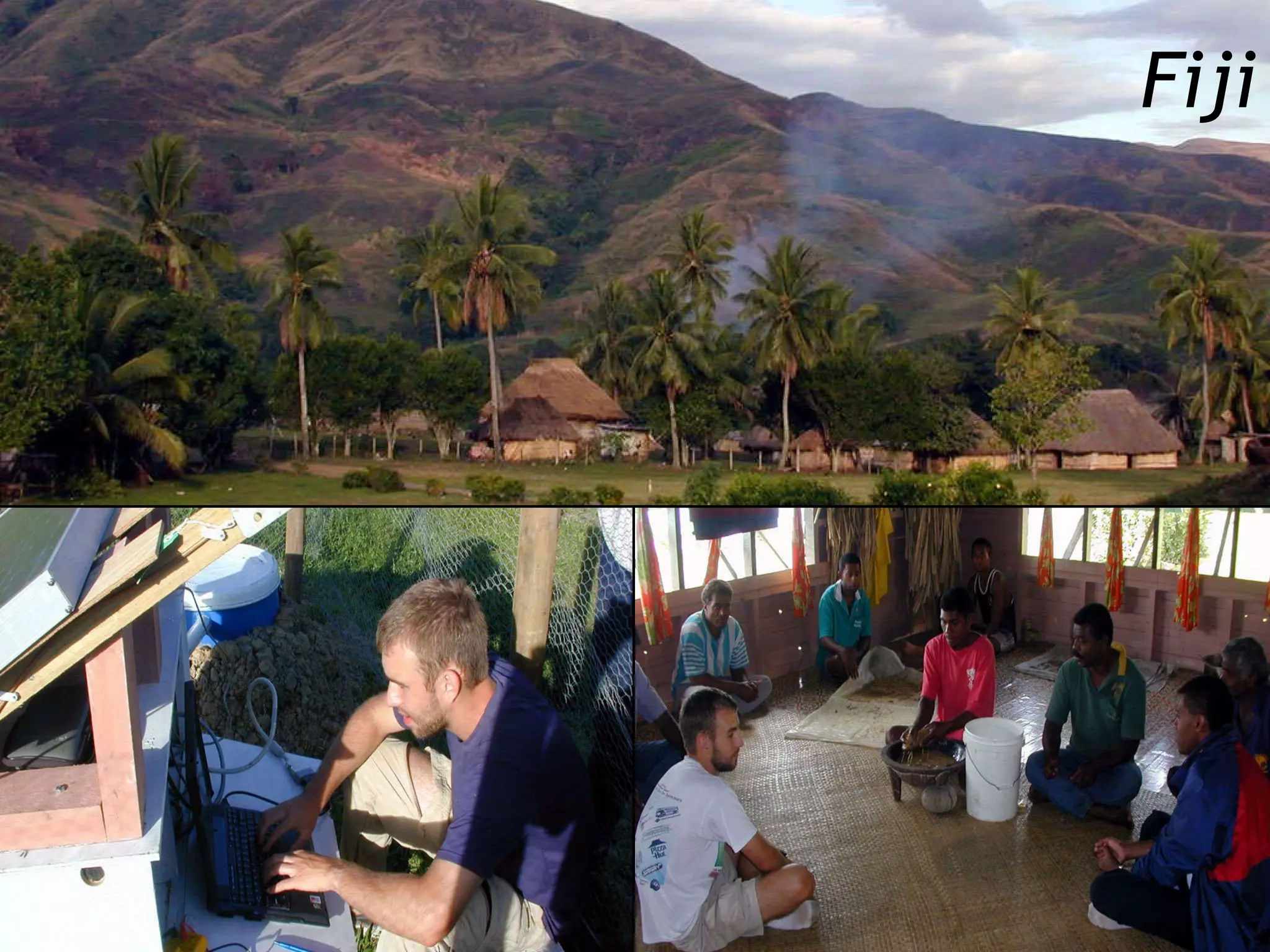
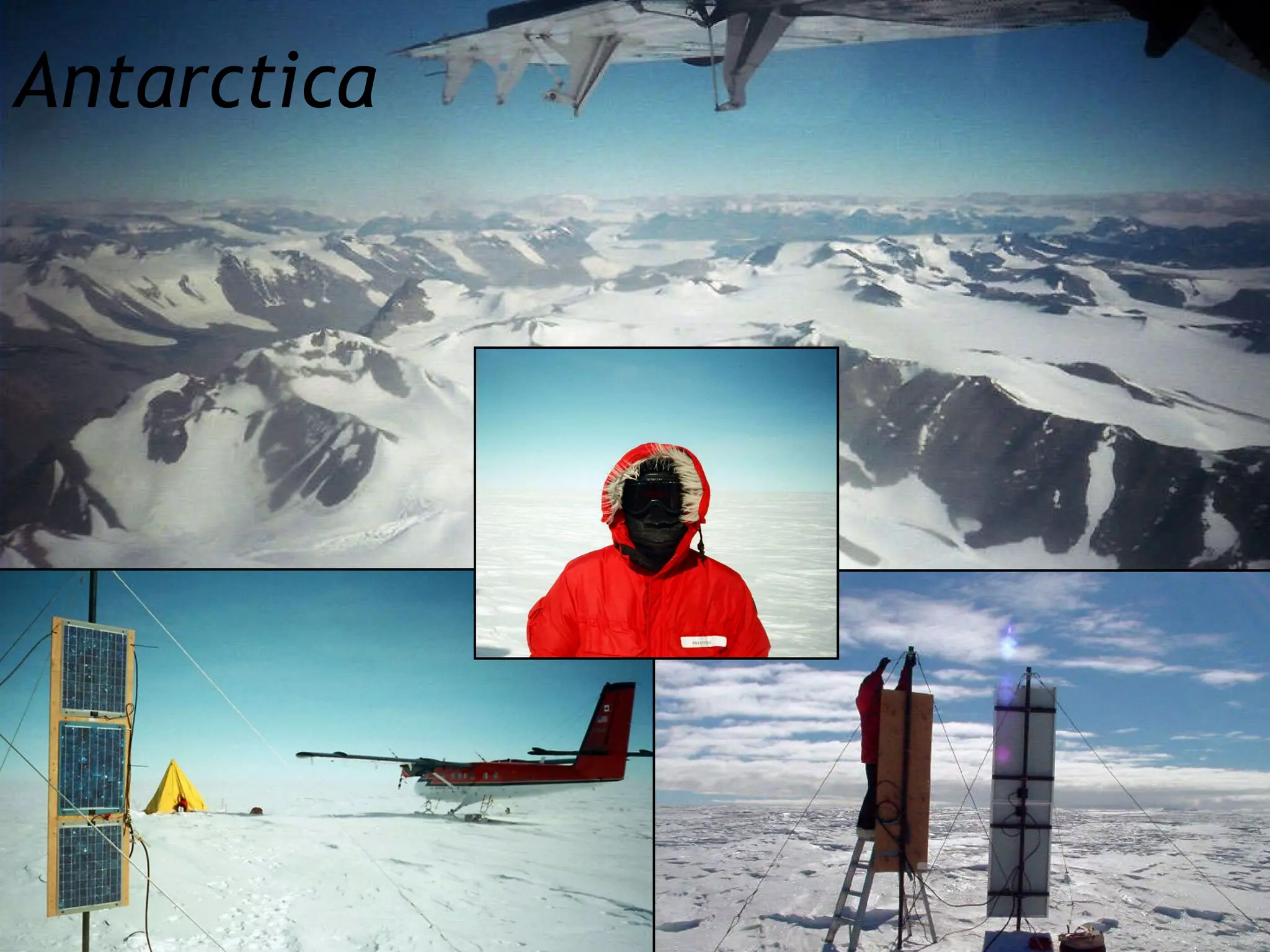
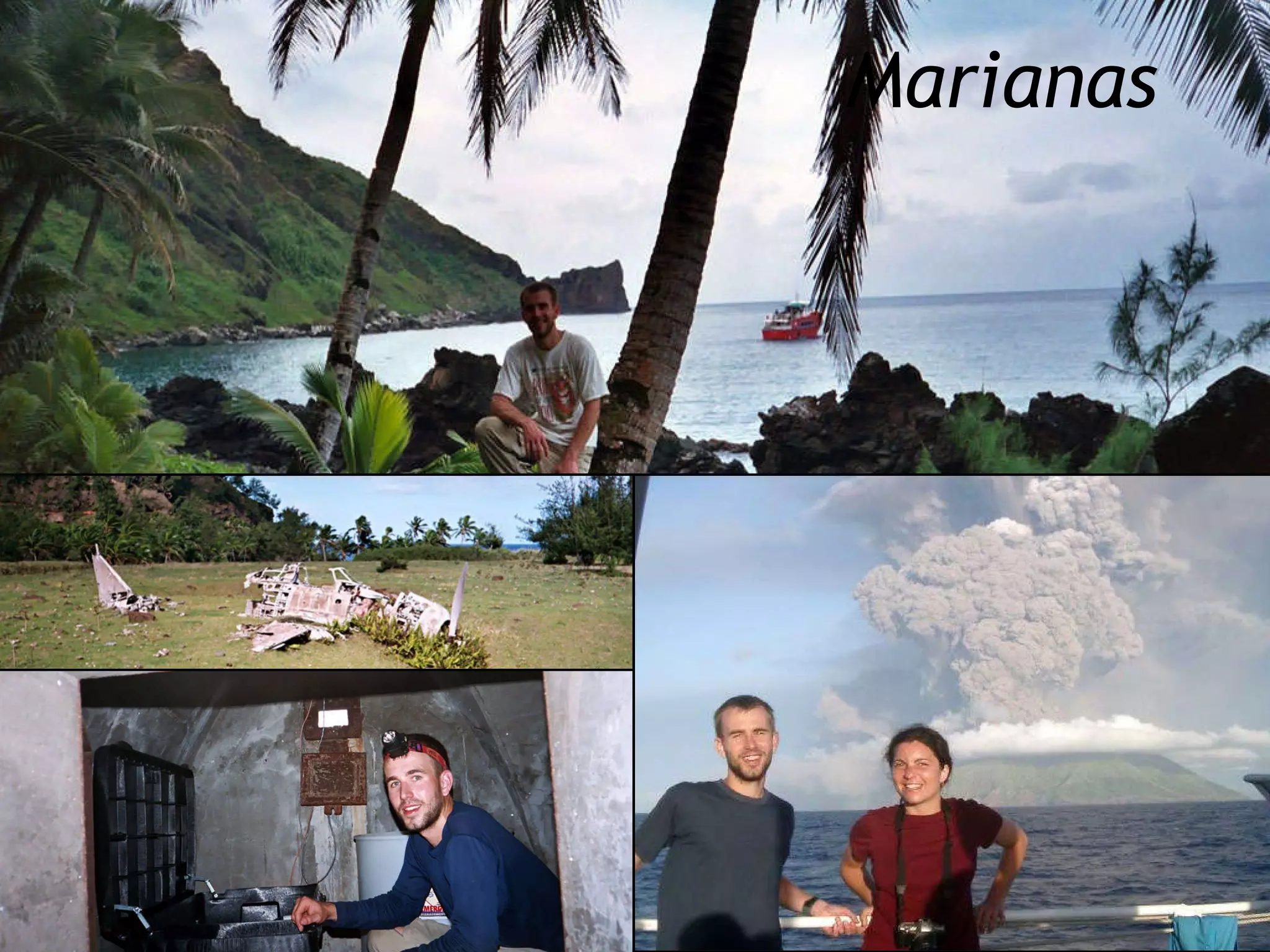
See the world. Be a scientist.
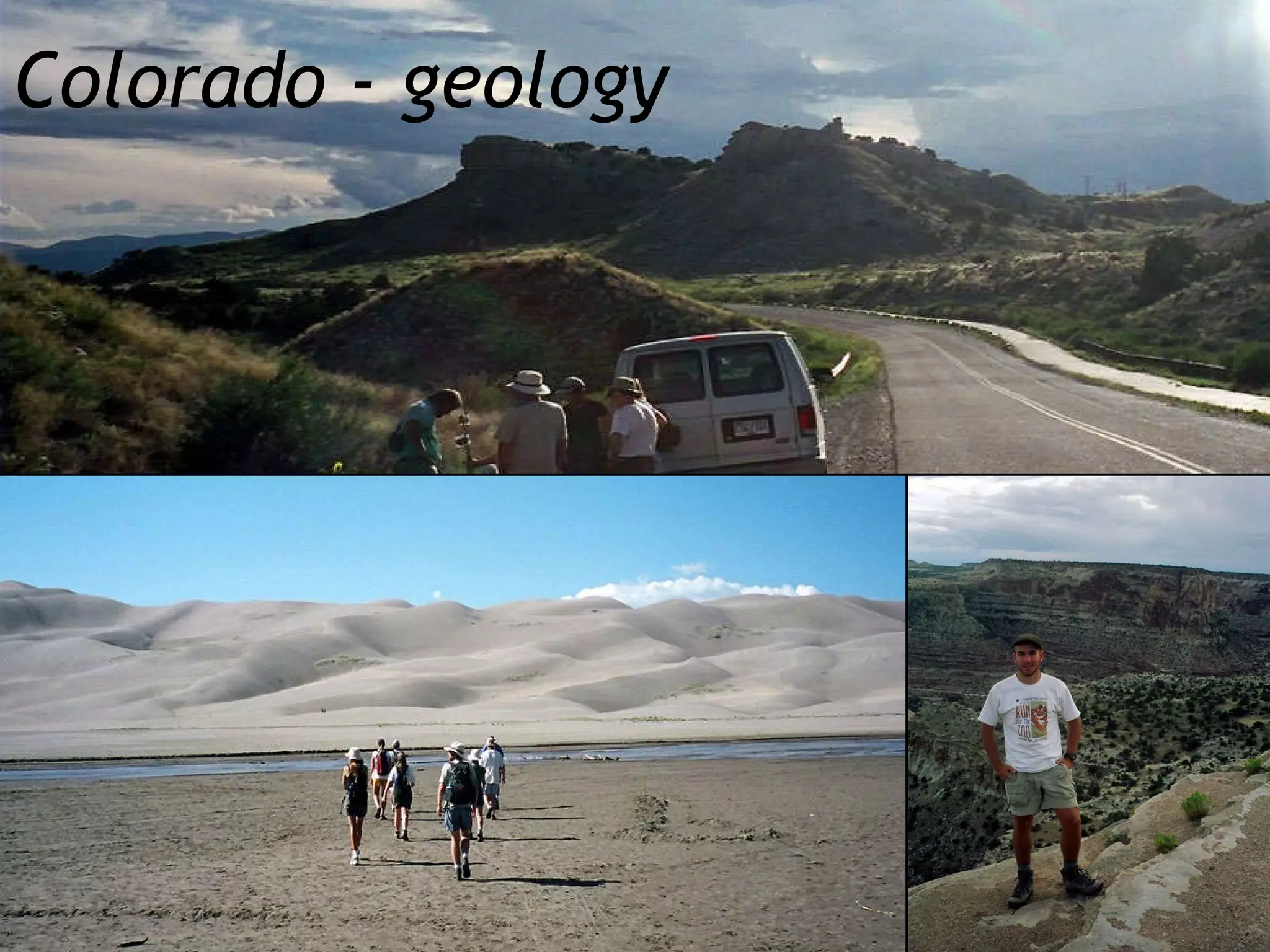
Colorado - geology
Alaska
Fiji
Antarctica
Marianas
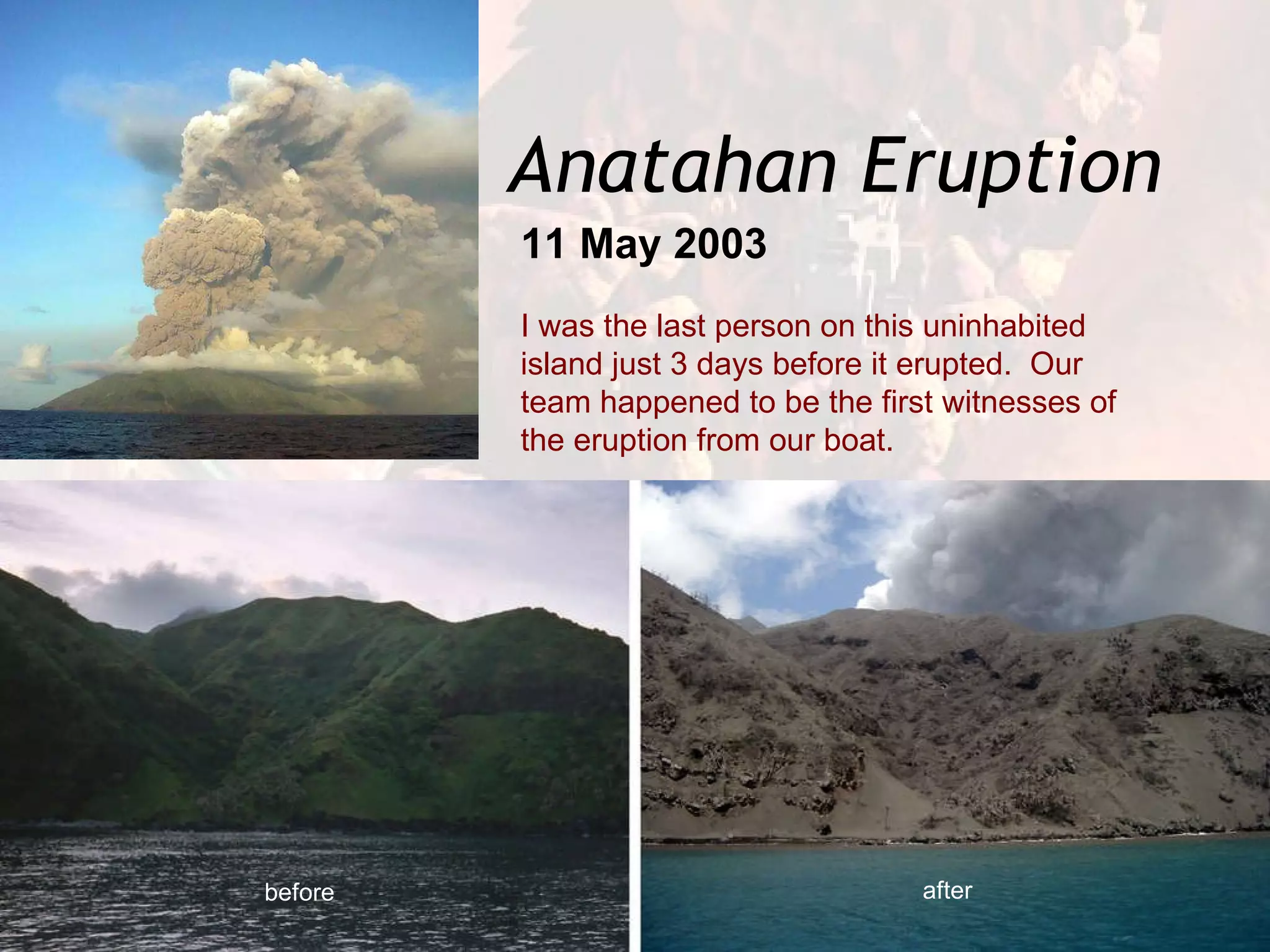
Anatahan Eruption 11 May 2003 I was the last person on this uninhabited island just 3 days before it erupted.  Our team happened to be the first witnesses of the eruption from our boat. before after
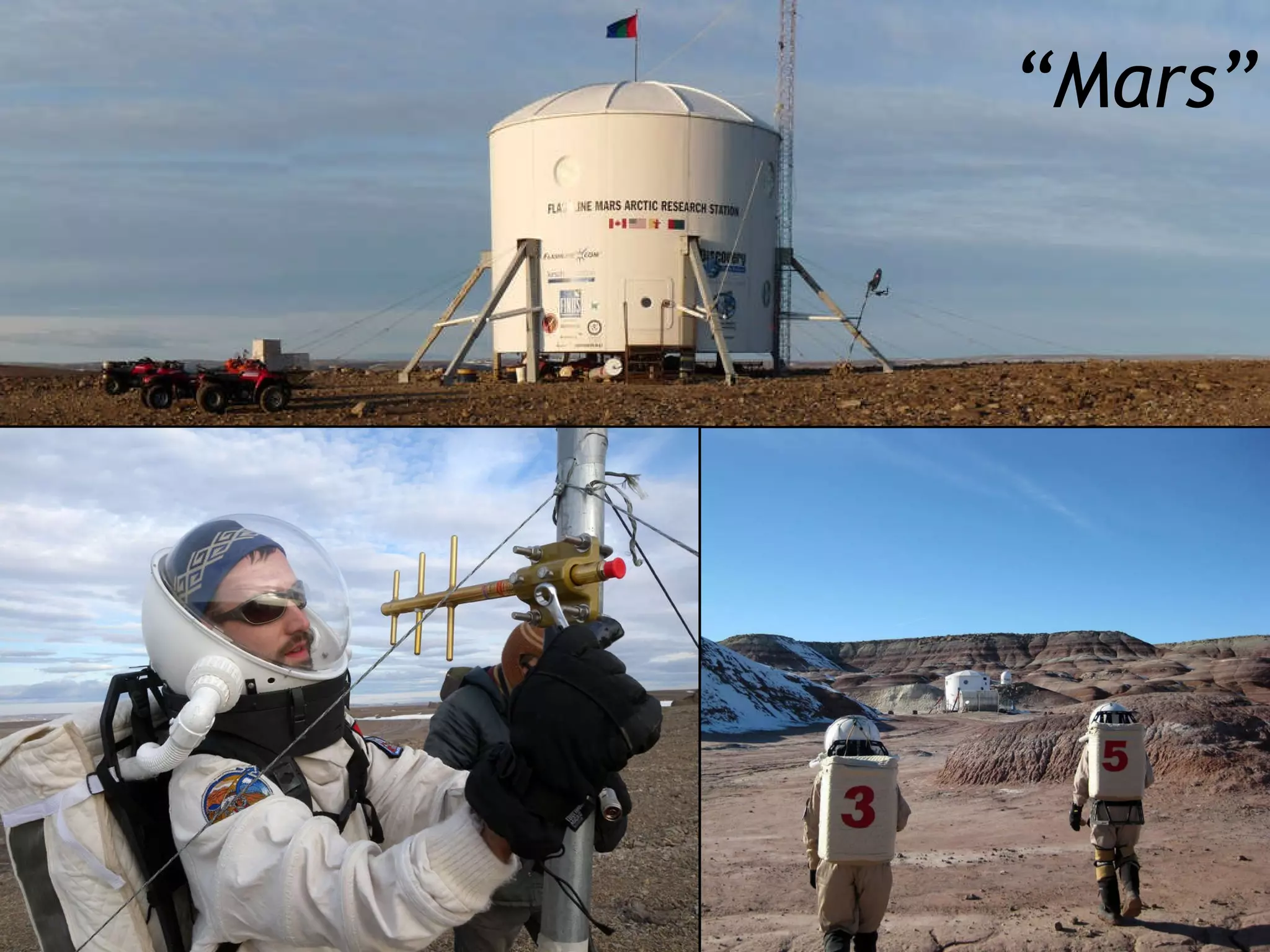
“Mars”
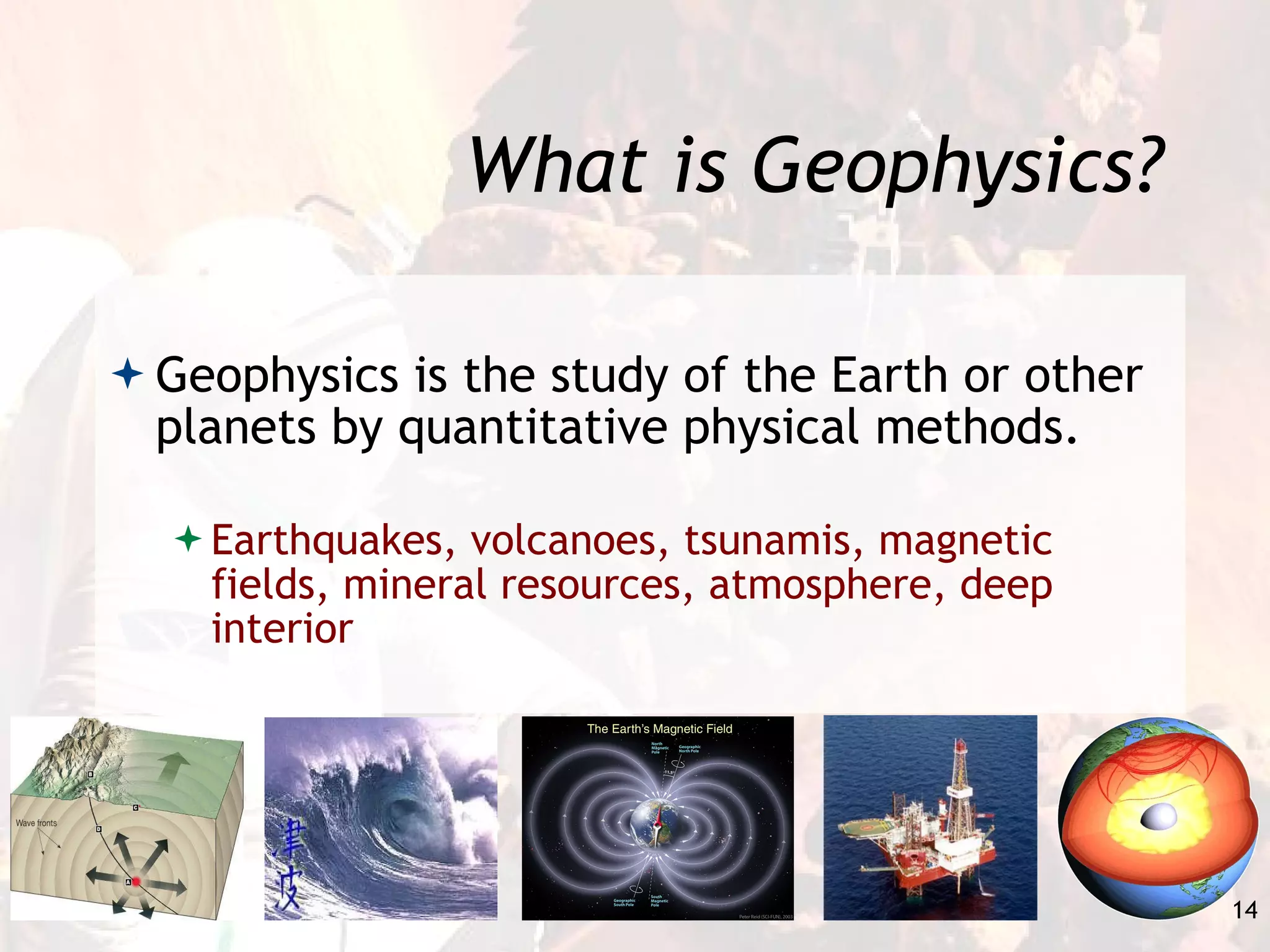
What is Geophysics? Geophysics is the study of the Earth or other planets by quantitative physical methods. Earthquakes, volcanoes, tsunamis, magnetic fields, mineral resources, atmosphere, deep interior
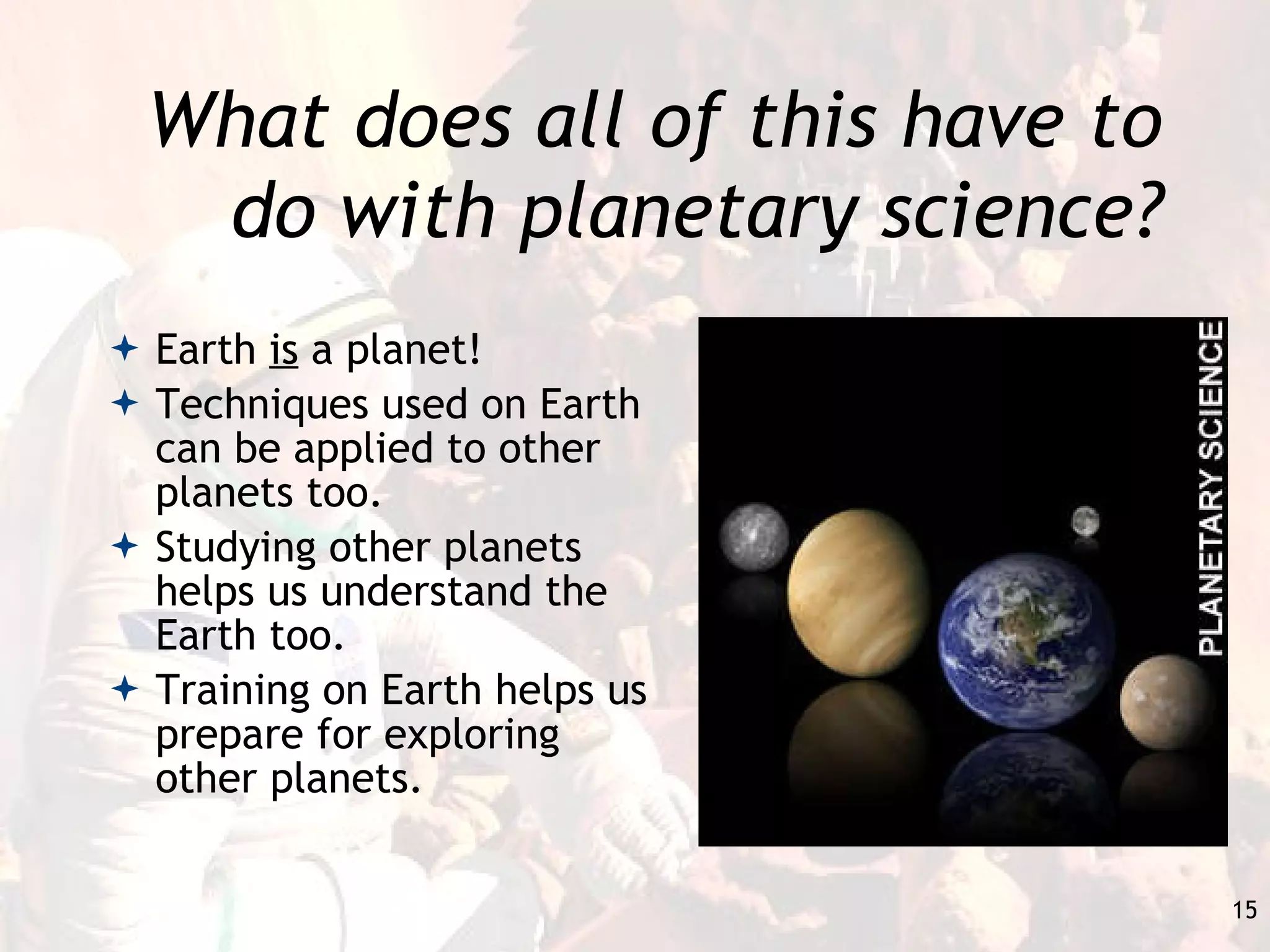
What does all of this have to do with planetary science? Earth  is  a planet! Techniques used on Earth can be applied to other planets too. Studying other planets helps us understand the Earth too. Training on Earth helps us prepare for exploring other planets.
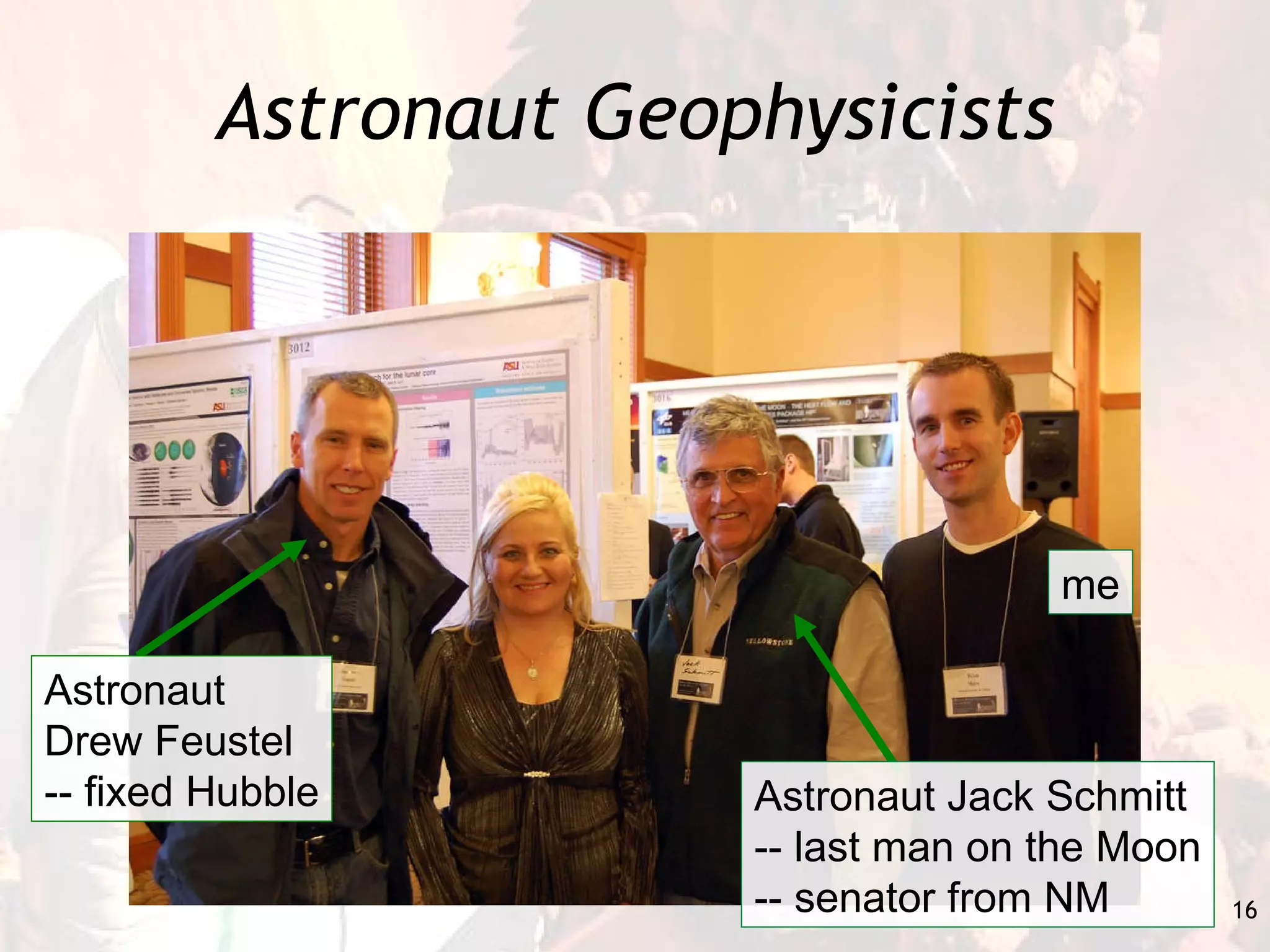
Astronaut Geophysicists Astronaut Drew Feustel -- fixed Hubble Astronaut Jack Schmitt -- last man on the Moon -- senator from NM me
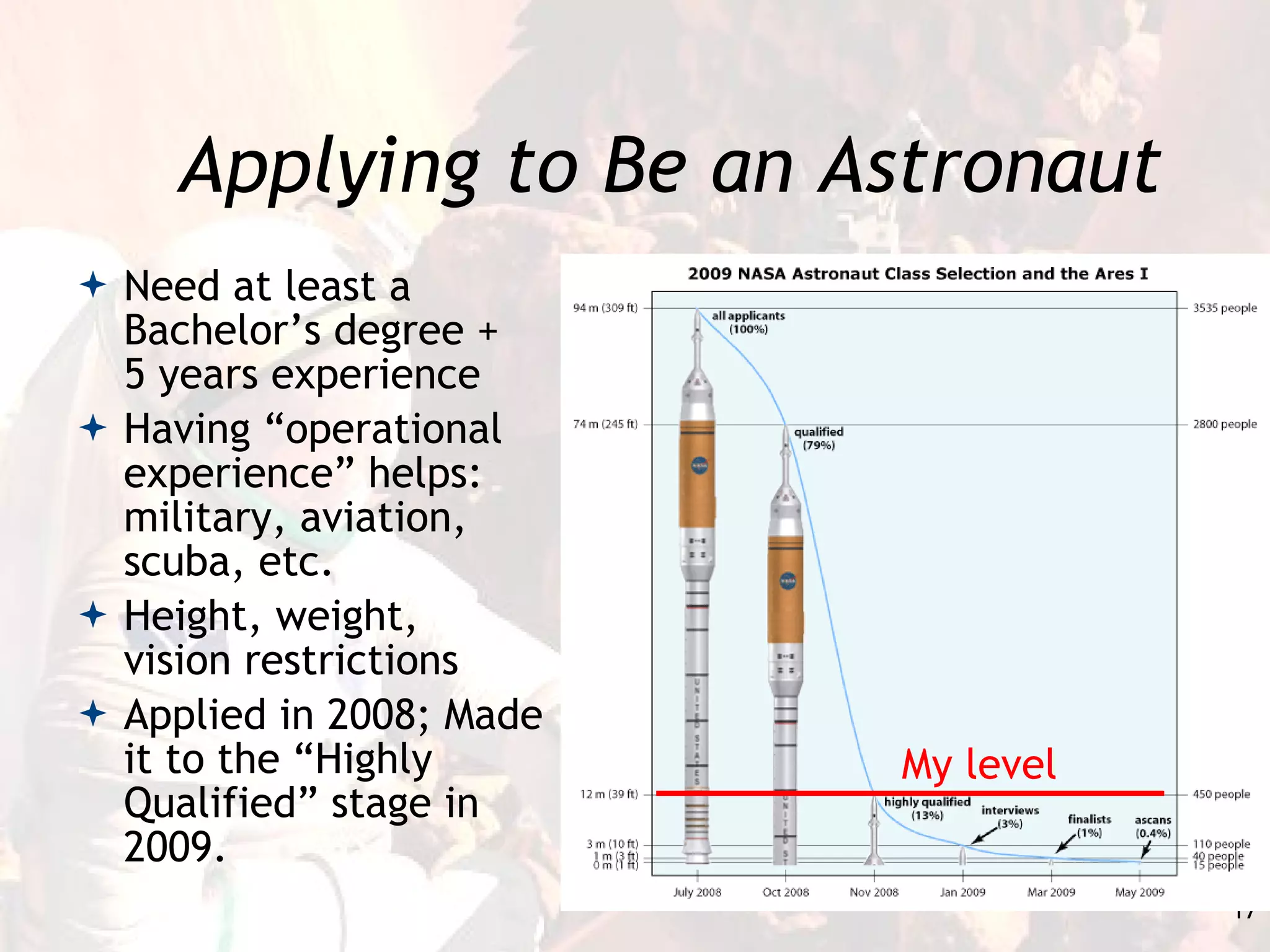
Applying to Be an Astronaut Need at least a Bachelor’s degree +  5 years experience Having “operational experience” helps: military, aviation, scuba, etc. Height, weight,  vision restrictions Applied in 2008; Made it to the “Highly Qualified” stage in 2009. My level
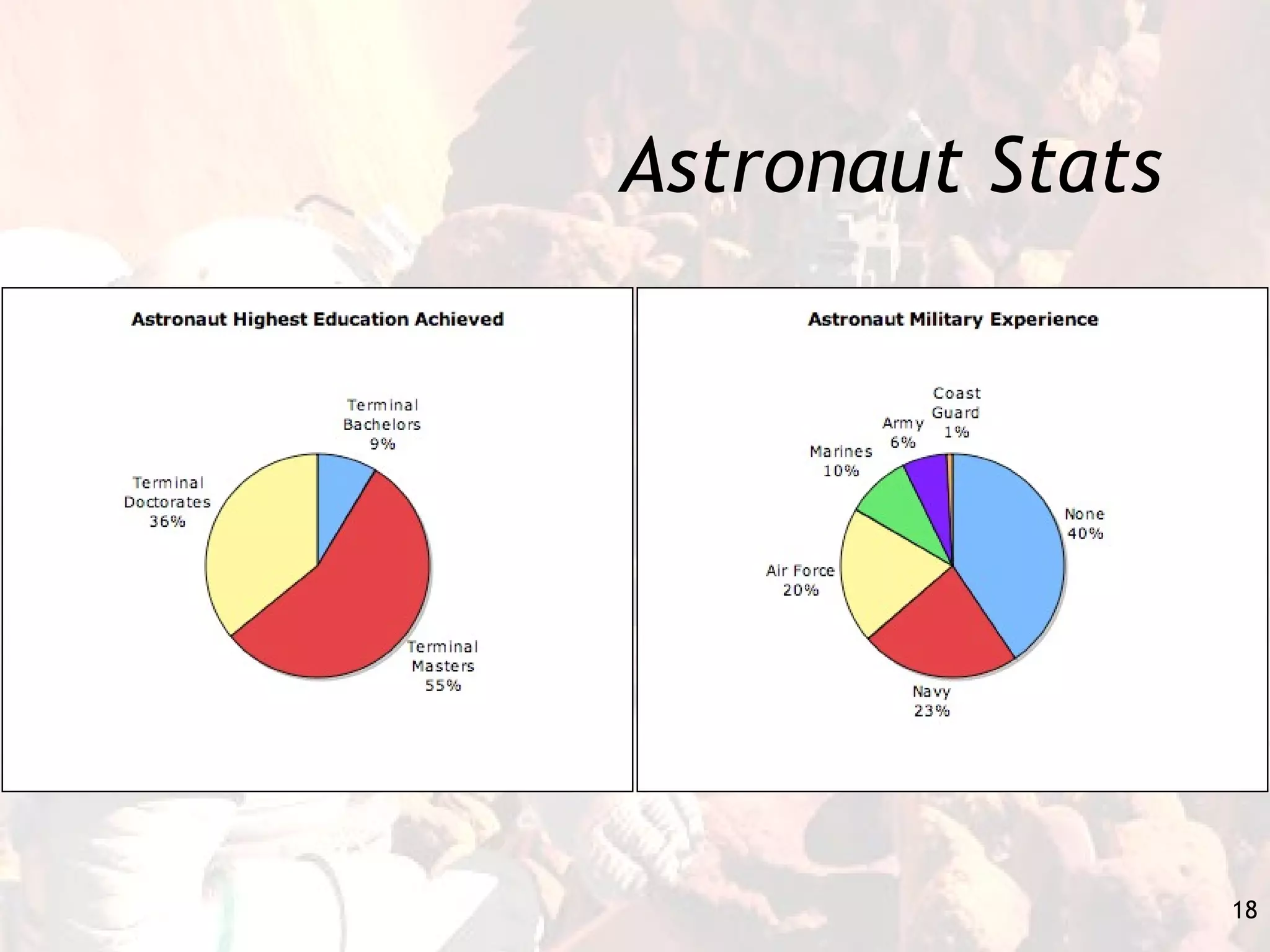
Astronaut Stats
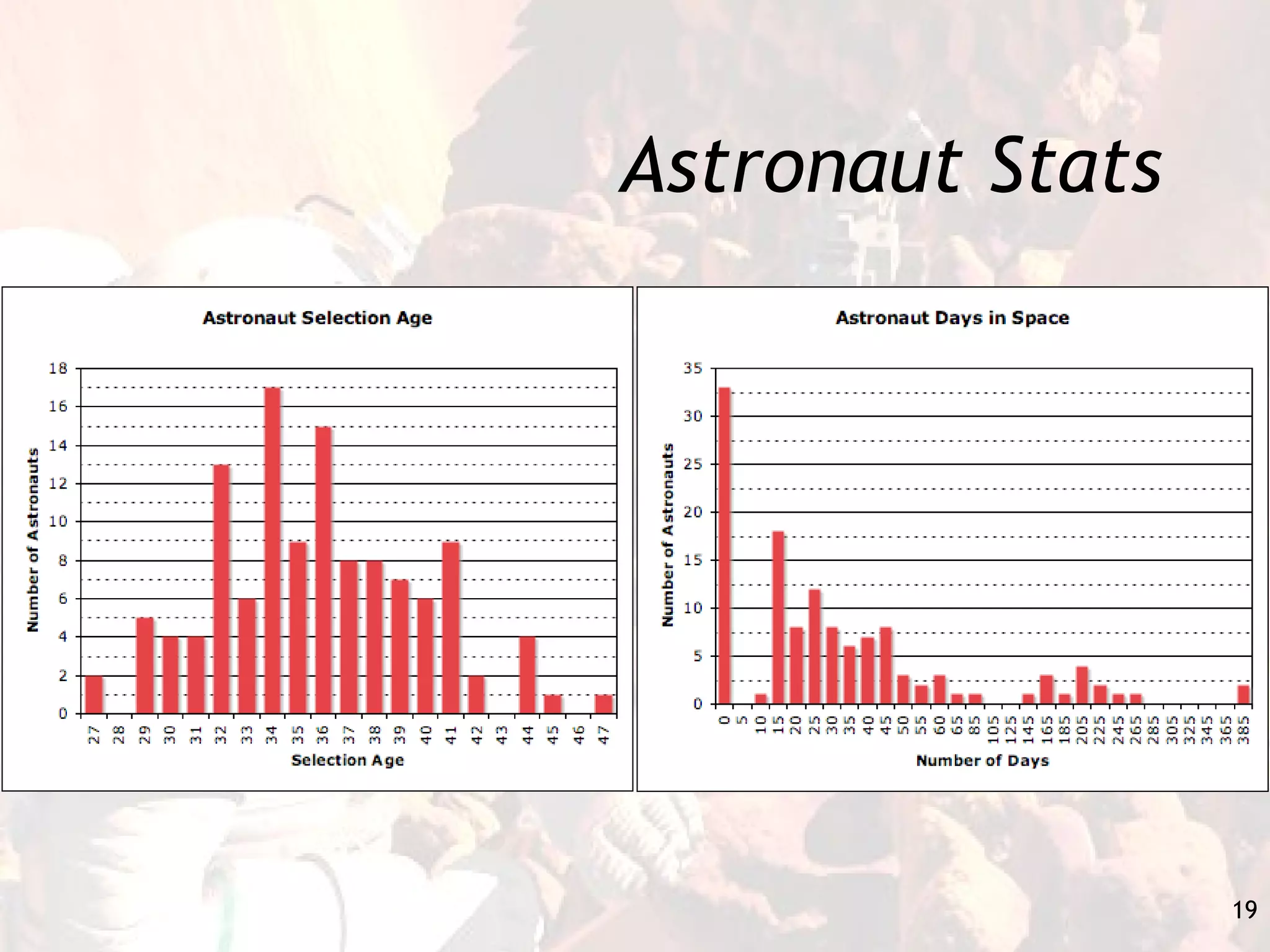
Astronaut Stats
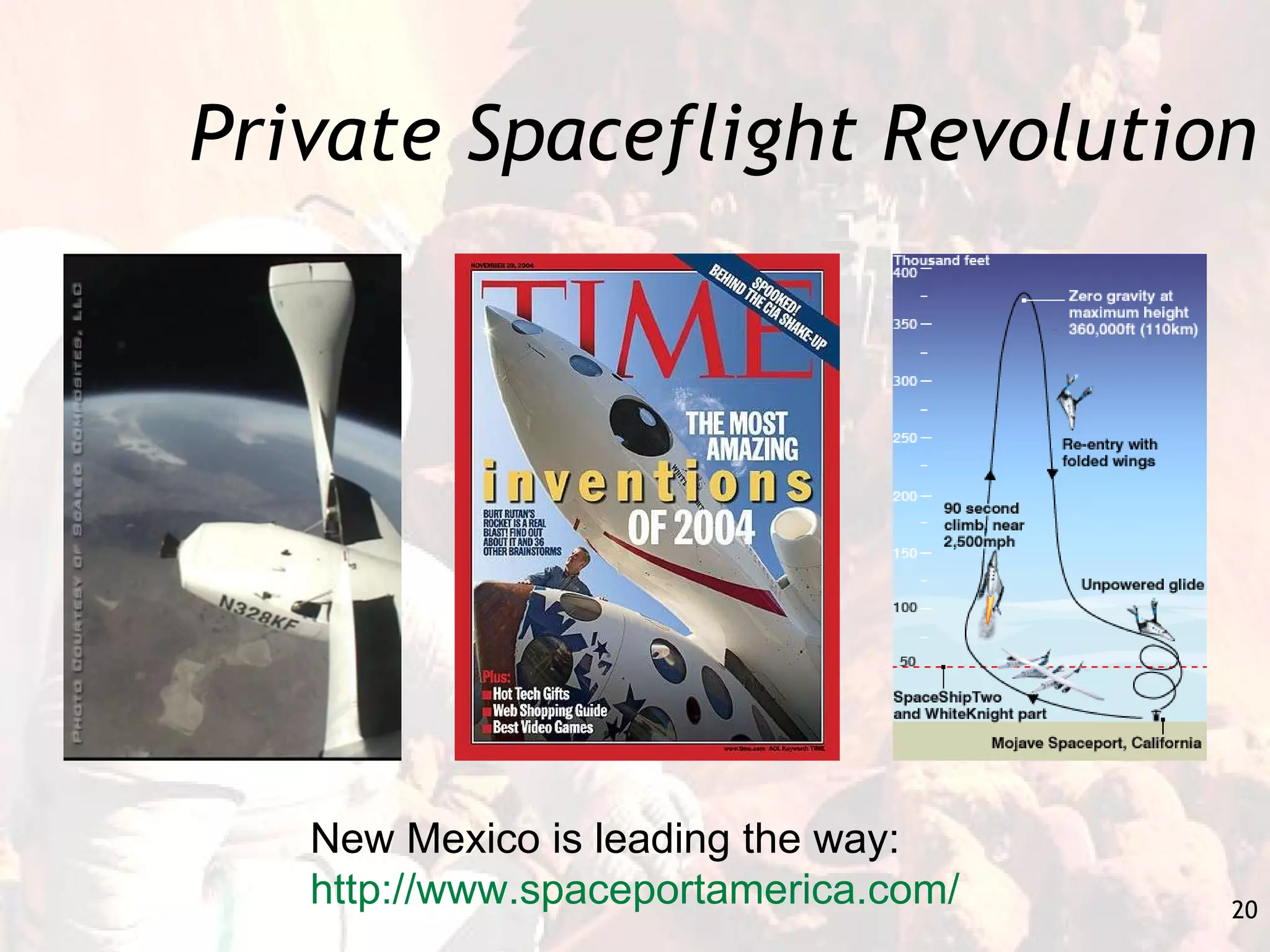
Private Spaceflight Revolution New Mexico is leading the way: http://www.spaceportamerica.com/
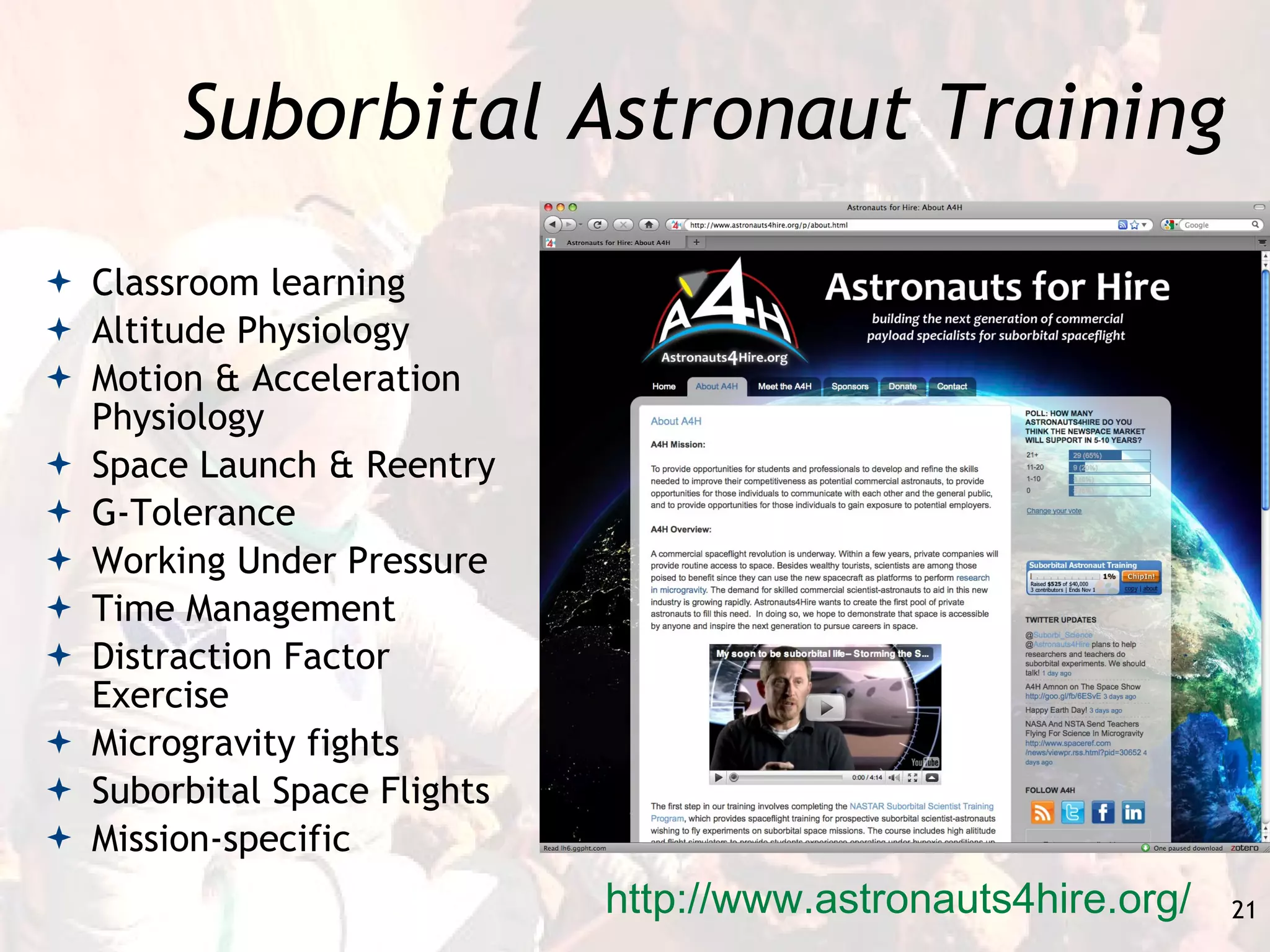
Suborbital Astronaut Training Classroom learning Altitude Physiology Motion & Acceleration Physiology Space Launch & Reentry G-Tolerance Working Under Pressure Time Management Distraction Factor Exercise Microgravity fights Suborbital Space Flights Mission-specific http://www.astronauts4hire.org/
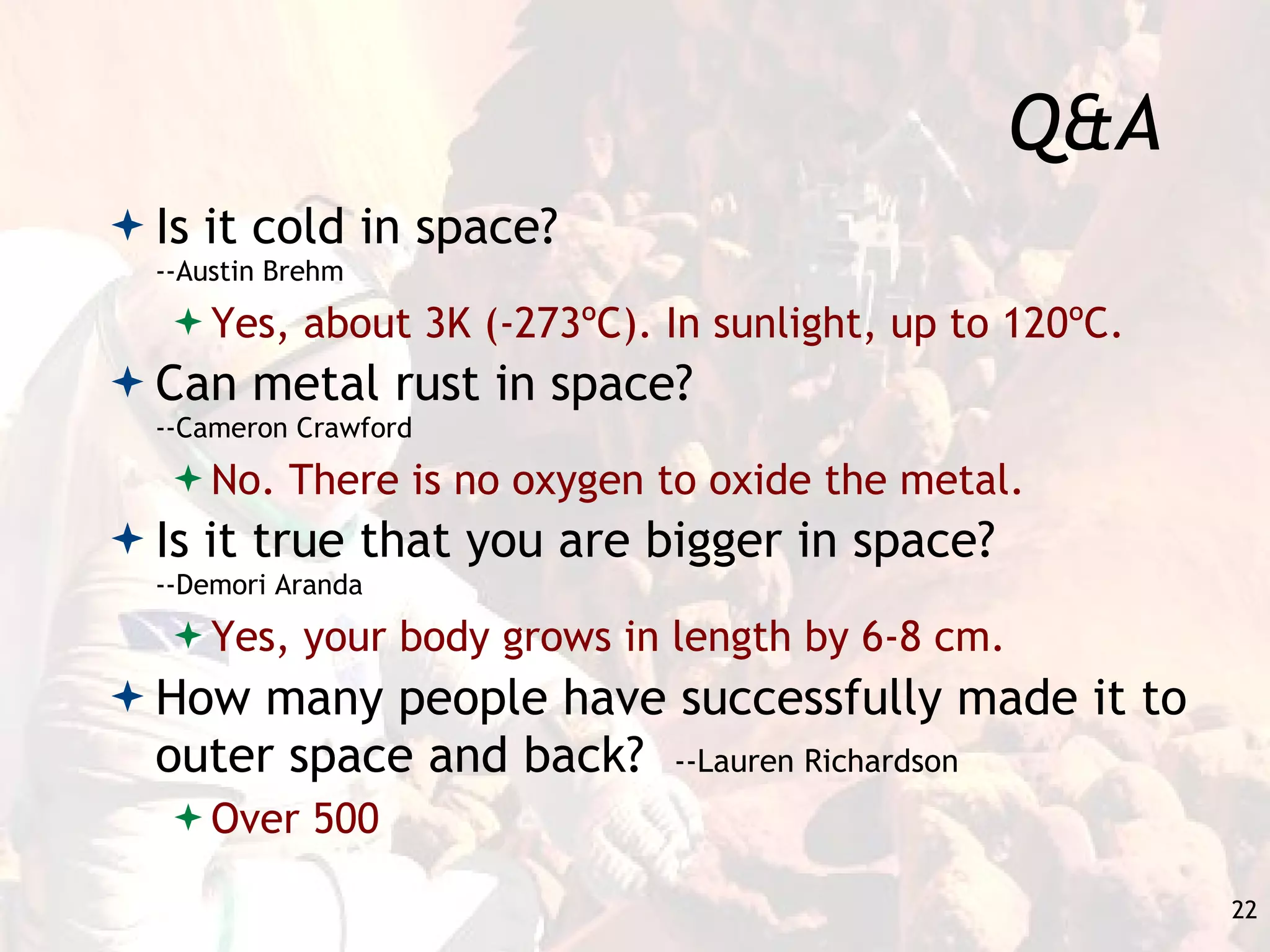
Q&A Is it cold in space?  --Austin Brehm Yes, about 3K (-273ºC). In sunlight, up to 120ºC. Can metal rust in space?  --Cameron Crawford No. There is no oxygen to oxide the metal. Is it true that you are bigger in space?  --Demori Aranda Yes, your body grows in length by 6-8 cm. How many people have successfully made it to outer space and back?  --Lauren Richardson Over 500
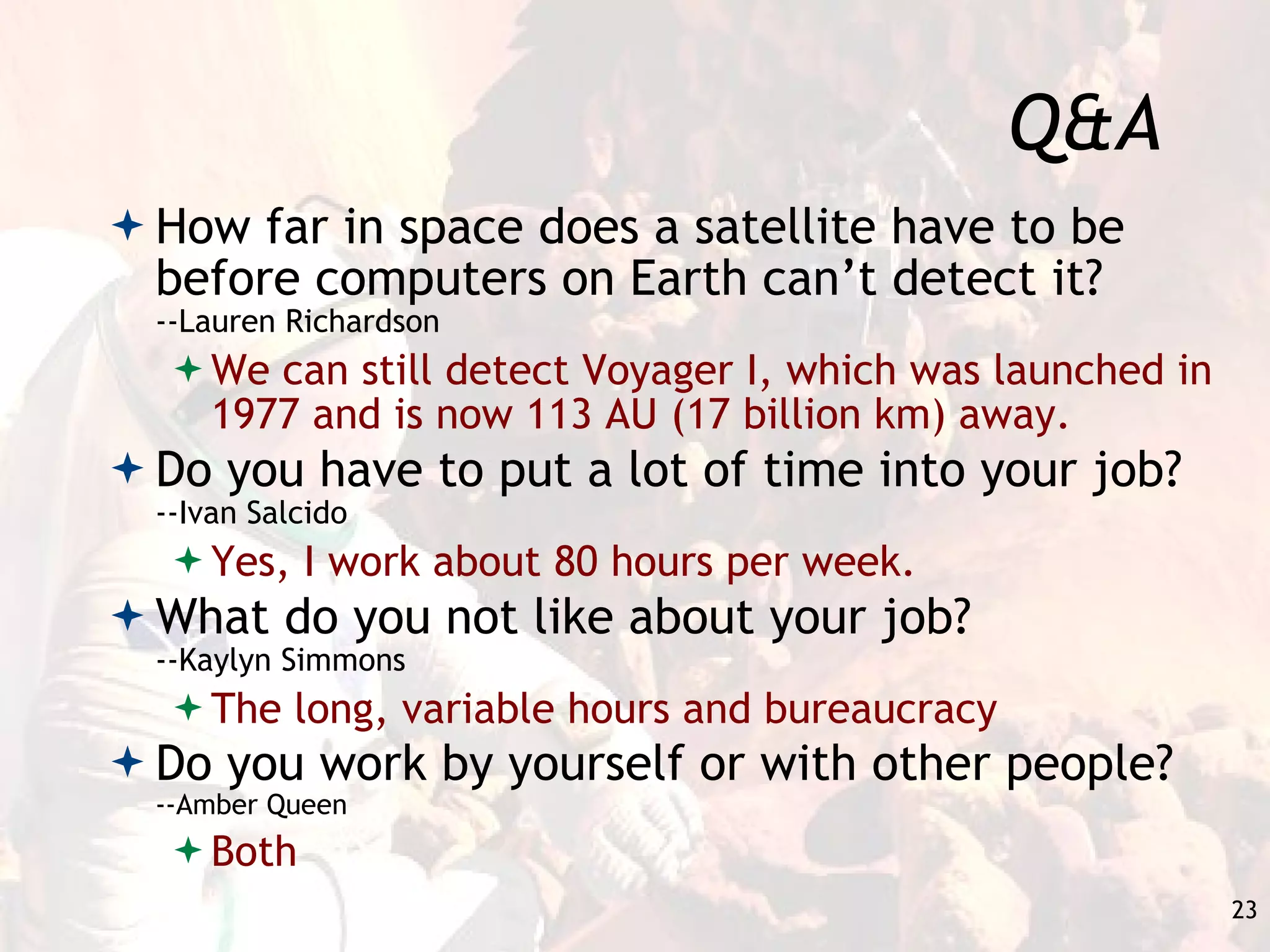
Q&A How far in space does a satellite have to be before computers on Earth can’t detect it?  --Lauren Richardson We can still detect Voyager I, which was launched in 1977 and is now 113 AU (17 billion km) away. Do you have to put a lot of time into your job?  --Ivan Salcido Yes, I work about 80 hours per week. What do you not like about your job?  --Kaylyn Simmons The long, variable hours and bureaucracy Do you work by yourself or with other people?  --Amber Queen Both
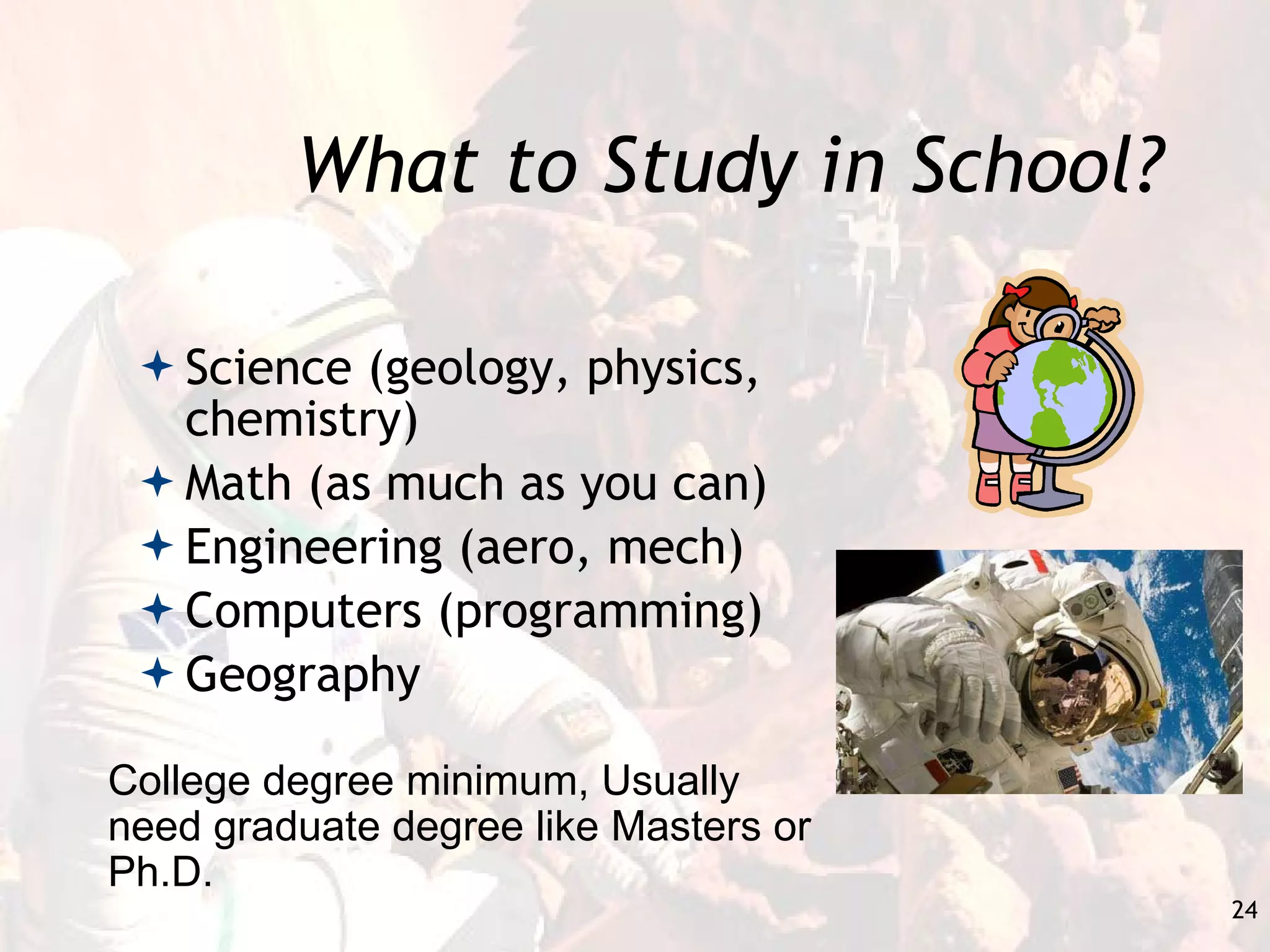
What to Study in School? Science (geology, physics, chemistry) Math (as much as you can) Engineering (aero, mech) Computers (programming) Geography College degree minimum, Usually need graduate degree like Masters or Ph.D.
Life Lessons Go to college away from home.  Stay in the dorm at least a year. Consider taking a year off before or after college. Travel as much as you can.  Nothing helps you grow more. Try a variety of fields of study.  Summer schools and internships are a good way to do this. Be flexible, but always have a long range plan. Anything that can go wrong will, but learn and move on.
Recommended Reading The Seven Habits Highly Effective People by Stephen Covey Now What?: The Young Person's Guide to Choosing the Perfect Career by Nicholas Lore Put Your Science to Work: The Take-Charge Career Guide for Scientists by Peter Fiske Naked Earth: The New Geophysics by Shawna Vogel The Alchemist by Paulo Coelho Discoveries in Planetary Science http://dps.aas.org/education/dpsdisc/
Thanks! Contact: Brian Shiro email:  [email_address]  or  [email_address] blog:  http://www.astronautforhire.com twitter: @brianshiro
 

Geophysicist to Astronaut

  • 1.
    Geophysicist to AstronautBrian Shiro National Oceanic & Atmospheric Administration Pacific Tsunami Warning Center Lovington 9th Grade Academy 26 April 2010
  • 2.
    Outline About MeAbout my job Geophysics & Planetary Science Astronaut preparation Q&A Pearls of wisdom
  • 3.
    Background Hometown: Paragould,Arkansas High School graduate (1996) Senior Class President BA, Northwestern University (2000) Majors: Integrated Science, Geology, Physics MA, Washington University (2002) Earth & Planetary Science, PhD study until 2005 Geophysicist with NOAA (2005-present) Astronaut applicant (2008-2009) Commander and Scientist, Mars analog missions (2009-2010) MS, University of North Dakota (2010, exp.)
  • 4.
    My job myoffice
  • 5.
    NOAA NOAA’s Mission: To understand and predict changes in Earth’s environment and conserve and manage coastal and marine resources to meet our Nation’s economic, social, and environmental needs. NOAA operates the US’s weather satellites, making it one of the largest space agencies in the world. www.noaa.gov
  • 6.
    See the world.Be a scientist.
  • 7.
  • 8.
  • 9.
  • 10.
  • 11.
  • 12.
    Anatahan Eruption 11May 2003 I was the last person on this uninhabited island just 3 days before it erupted. Our team happened to be the first witnesses of the eruption from our boat. before after
  • 13.
  • 14.
    What is Geophysics?Geophysics is the study of the Earth or other planets by quantitative physical methods. Earthquakes, volcanoes, tsunamis, magnetic fields, mineral resources, atmosphere, deep interior
  • 15.
    What does allof this have to do with planetary science? Earth is a planet! Techniques used on Earth can be applied to other planets too. Studying other planets helps us understand the Earth too. Training on Earth helps us prepare for exploring other planets.
  • 16.
    Astronaut Geophysicists AstronautDrew Feustel -- fixed Hubble Astronaut Jack Schmitt -- last man on the Moon -- senator from NM me
  • 17.
    Applying to Bean Astronaut Need at least a Bachelor’s degree + 5 years experience Having “operational experience” helps: military, aviation, scuba, etc. Height, weight, vision restrictions Applied in 2008; Made it to the “Highly Qualified” stage in 2009. My level
  • 18.
  • 19.
  • 20.
    Private Spaceflight RevolutionNew Mexico is leading the way: http://www.spaceportamerica.com/
  • 21.
    Suborbital Astronaut TrainingClassroom learning Altitude Physiology Motion & Acceleration Physiology Space Launch & Reentry G-Tolerance Working Under Pressure Time Management Distraction Factor Exercise Microgravity fights Suborbital Space Flights Mission-specific http://www.astronauts4hire.org/
  • 22.
    Q&A Is itcold in space? --Austin Brehm Yes, about 3K (-273ºC). In sunlight, up to 120ºC. Can metal rust in space? --Cameron Crawford No. There is no oxygen to oxide the metal. Is it true that you are bigger in space? --Demori Aranda Yes, your body grows in length by 6-8 cm. How many people have successfully made it to outer space and back? --Lauren Richardson Over 500
  • 23.
    Q&A How farin space does a satellite have to be before computers on Earth can’t detect it? --Lauren Richardson We can still detect Voyager I, which was launched in 1977 and is now 113 AU (17 billion km) away. Do you have to put a lot of time into your job? --Ivan Salcido Yes, I work about 80 hours per week. What do you not like about your job? --Kaylyn Simmons The long, variable hours and bureaucracy Do you work by yourself or with other people? --Amber Queen Both
  • 24.
    What to Studyin School? Science (geology, physics, chemistry) Math (as much as you can) Engineering (aero, mech) Computers (programming) Geography College degree minimum, Usually need graduate degree like Masters or Ph.D.
  • 25.
    Life Lessons Goto college away from home. Stay in the dorm at least a year. Consider taking a year off before or after college. Travel as much as you can. Nothing helps you grow more. Try a variety of fields of study. Summer schools and internships are a good way to do this. Be flexible, but always have a long range plan. Anything that can go wrong will, but learn and move on.
  • 26.
    Recommended Reading TheSeven Habits Highly Effective People by Stephen Covey Now What?: The Young Person's Guide to Choosing the Perfect Career by Nicholas Lore Put Your Science to Work: The Take-Charge Career Guide for Scientists by Peter Fiske Naked Earth: The New Geophysics by Shawna Vogel The Alchemist by Paulo Coelho Discoveries in Planetary Science http://dps.aas.org/education/dpsdisc/
  • 27.
    Thanks! Contact: BrianShiro email: [email_address] or [email_address] blog: http://www.astronautforhire.com twitter: @brianshiro
  • 28.

Editor's Notes