The Planets


A Quick Tour, With Lots of Pictures!
We are here!
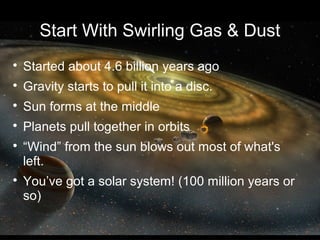
Start With Swirling Gas & Dust

    Started about 4.6 billion years ago

    Gravity starts to pull it into a disc.

    Sun forms at the middle

    Planets pull together in orbits

    “Wind” from the sun blows out most of what's
    left.

    You’ve got a solar system! (100 million years or
    so)
The Sun

    Holds the solar system together
    (gravity!)

    Contains over 99% of the solar
    system's mass (“stuff”)

    Runs on nuclear fusion

    Has solar flares, coronal mass
    ejections

    Core: 27 million degrees
    Surface: 10,000 degrees
    Corona: 3.5 million degrees
Solar eruption, 12/31/2012
 See the video at:
 http://www.nasa.gov/mission_pages/sdo/news/solar-ballet2.html
Comparing the Planets


How far apart are they? See:
http://www.northern-stars.com/solar_system_distance_scal.htm
Mercury

    Closest planet to the sun (29-43 million miles)

    Hot on one side (800 degrees), cold on the other (-290 degrees)

    Slightly larger than our moon

    Almost no atmosphere, but there is ice!

    1 day there = 58.7 earth days

    1 year there = 88 earth days

    50 lb kid here = 19 lbs there
Venus

    HOT! 880 degrees

    “Super dense atmosphere: carbon dioxide, nitrogen, sulfuric
    acid.

    Just a little smaller than Earth.

    Spins backwards! The sun rises in the west, sets in east

    50 lb kid on Earth = 45.5 lbs there.

    One year there = 243 days here

    One day there = 117 days here

    Landers last about 2 hours--then the atmosphere destroys them!

    http://www.planetary.org/explore/space-topics/space-missions/missions-to-venus-m
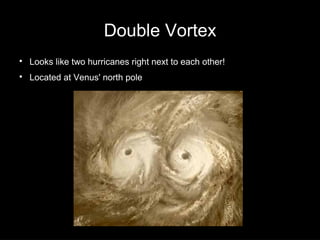
Double Vortex

    Looks like two hurricanes right next to each other!

    Located at Venus' north pole
Venus' Transit of 2012



    http://player.vimeo.com/video/43696319
Earth: You know this place!

    About 93 million miles from the sun

    Our atmosphere and magnetic field keep us safe from solar wind,
    radiation, etc.

    1 year = 365.25 days

    1 day = 23.93 hours

    We've got a moon!
How we got the moon (maybe)



    “Giant impactor theory”
Mars

    Averages 143 million miles from the Sun

    About ½ as large as Earth

    Thin atmosphere, very cold!

    “Rusty,” surface makes it look red

    Two moons (captured asteroids?)

    Craters, volcanoes, ice (used to have rivers/oceans?)

    Lots of rovers/landers: Curiosity is the most recent
Cool stuff on Mars

    Olympus Mons (the largest volcano in the solar
    system!)
Vallis Marinaris


    Giant canyon

    2500 miles long, 310 miles wide, 4 miles deep

    10 times longer
    3 times deeper
    than the Grand Canyon!

    Thought to have been made by “rift faults,” possibly deepened by
    flowing water.
Polar Ice Caps
Jupiter
• The largest planet: 1300 times larger than earth!
• About 480 million miles from the sun
• First of the gas giants—mostly hydrogen & helium (may have a solid
  core)
• Intense weather! Red spot = 300 year-old storm!
• 63 moons
• Very thin rings
• 1 year=almost 12 earth years
• 1 day = about 10 hours
• 50 pound kid would weigh 125 pounds!
Comet impact (1994)
Saturn
• Second largest planet
• About 885 million miles from the sun
• Rings! Made mostly of ice, 3/5 mile thick.
• Comets, asteroids & broken-up moons
• 53 moons
•
Rings: Close up
Uranus

• “Tipped over” in its orbit (hit by a planet?)
• About 1.8 billion miles from sun
• 63 times larger than earth
• Blue because of methane gas
• Pretty cold: -357 degrees!
• 50 lb kid = 45 lbs on Uranus
• 27 moons, very thin rings
Neptune
• About 2.8 billion miles from the sun
• Also blue from methane
• 1 year = 164 years
• 1 day = 16 hours
• COLD: -353 degrees
• 50 lb kid = 57 lbs
Great Dark Spots


• Storms, like Jupiter’s
  Great Red Spot
• Don't last as long as the
  GRS
What about Pluto?
Dwarf Planets
Ceres, Pluto, Eris, Makemake and
Haumea
Don't quite make it as full “planets
May Ceres, Pluto, Eris, Makemake and Haumea.
    be over 100!
More Info
http://solarsystem.nasa.gov

Planets

  • 1.
    The Planets A QuickTour, With Lots of Pictures!
  • 2.
  • 3.
    Start With SwirlingGas & Dust  Started about 4.6 billion years ago  Gravity starts to pull it into a disc.  Sun forms at the middle  Planets pull together in orbits  “Wind” from the sun blows out most of what's left.  You’ve got a solar system! (100 million years or so)
  • 4.
    The Sun  Holds the solar system together (gravity!)  Contains over 99% of the solar system's mass (“stuff”)  Runs on nuclear fusion  Has solar flares, coronal mass ejections  Core: 27 million degrees Surface: 10,000 degrees Corona: 3.5 million degrees
  • 5.
    Solar eruption, 12/31/2012 See the video at: http://www.nasa.gov/mission_pages/sdo/news/solar-ballet2.html
  • 6.
    Comparing the Planets Howfar apart are they? See: http://www.northern-stars.com/solar_system_distance_scal.htm
  • 7.
    Mercury  Closest planet to the sun (29-43 million miles)  Hot on one side (800 degrees), cold on the other (-290 degrees)  Slightly larger than our moon  Almost no atmosphere, but there is ice!  1 day there = 58.7 earth days  1 year there = 88 earth days  50 lb kid here = 19 lbs there
  • 9.
    Venus  HOT! 880 degrees  “Super dense atmosphere: carbon dioxide, nitrogen, sulfuric acid.  Just a little smaller than Earth.  Spins backwards! The sun rises in the west, sets in east  50 lb kid on Earth = 45.5 lbs there.  One year there = 243 days here  One day there = 117 days here  Landers last about 2 hours--then the atmosphere destroys them!  http://www.planetary.org/explore/space-topics/space-missions/missions-to-venus-m
  • 10.
    Double Vortex  Looks like two hurricanes right next to each other!  Located at Venus' north pole
  • 11.
    Venus' Transit of2012  http://player.vimeo.com/video/43696319
  • 12.
    Earth: You knowthis place!  About 93 million miles from the sun  Our atmosphere and magnetic field keep us safe from solar wind, radiation, etc.  1 year = 365.25 days  1 day = 23.93 hours  We've got a moon!
  • 13.
    How we gotthe moon (maybe)  “Giant impactor theory”
  • 14.
    Mars  Averages 143 million miles from the Sun  About ½ as large as Earth  Thin atmosphere, very cold!  “Rusty,” surface makes it look red  Two moons (captured asteroids?)  Craters, volcanoes, ice (used to have rivers/oceans?)  Lots of rovers/landers: Curiosity is the most recent
  • 15.
    Cool stuff onMars  Olympus Mons (the largest volcano in the solar system!)
  • 16.
    Vallis Marinaris  Giant canyon  2500 miles long, 310 miles wide, 4 miles deep  10 times longer 3 times deeper than the Grand Canyon!  Thought to have been made by “rift faults,” possibly deepened by flowing water.
  • 17.
  • 18.
    Jupiter • The largestplanet: 1300 times larger than earth! • About 480 million miles from the sun • First of the gas giants—mostly hydrogen & helium (may have a solid core) • Intense weather! Red spot = 300 year-old storm! • 63 moons • Very thin rings • 1 year=almost 12 earth years • 1 day = about 10 hours • 50 pound kid would weigh 125 pounds!
  • 19.
  • 20.
    Saturn • Second largestplanet • About 885 million miles from the sun • Rings! Made mostly of ice, 3/5 mile thick. • Comets, asteroids & broken-up moons • 53 moons •
  • 21.
  • 22.
    Uranus • “Tipped over”in its orbit (hit by a planet?) • About 1.8 billion miles from sun • 63 times larger than earth • Blue because of methane gas • Pretty cold: -357 degrees! • 50 lb kid = 45 lbs on Uranus • 27 moons, very thin rings
  • 23.
    Neptune • About 2.8billion miles from the sun • Also blue from methane • 1 year = 164 years • 1 day = 16 hours • COLD: -353 degrees • 50 lb kid = 57 lbs
  • 24.
    Great Dark Spots •Storms, like Jupiter’s Great Red Spot • Don't last as long as the GRS
  • 25.
  • 26.
    Dwarf Planets Ceres, Pluto,Eris, Makemake and Haumea Don't quite make it as full “planets May Ceres, Pluto, Eris, Makemake and Haumea. be over 100!
  • 27.