IGCSE GEOGRAPHY
33. TOURISM
TRENDS IN TOURISM
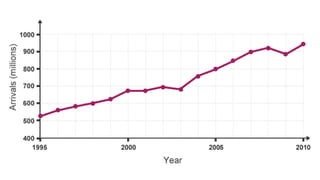
In 2010, 940 million people were recorded as arriving in a
country from abroad because of tourism.
This is worth $919 billion dollars, making tourism one of the
world's largest industries.
Tourism is also one of the world's fastest-growing industries.
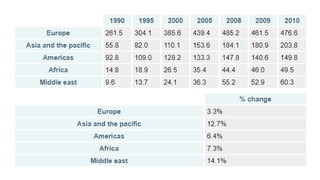
In 2010, the Middle East and Asia had the greatest growth of
tourists.
Europe still has the greatest number of tourists - nearly 500
million in 2010.
The tourism industry therefore is very important to economic
growth as well as the environment.
Tourism can help a country's economy and infrastructure.
For example it provides jobs. Some countries such as the
Caribbean have tourism as their main source of income.
There are many factors that help explain the growth in
tourism:
• More affluence - since 1950 people have become wealthier.
There is more disposable income. People also now have paid
time off work for holidays.
• Greater awareness - through advertising or television
programmes people are more aware of how and where they
can spend their free time.
• More car ownership - more families own a car. This gives
greater freedom to choose when and where to spend time.
• Improvements in technology - travelling today is much
quicker. Motorways and aircraft have helped reduce the time
it takes to get to different countries. Travelling by air has
become more accessible as you can book on line and choose
more budget options.
• More leisure time - people have paid holidays from work (on
average three weeks per year are paid). Also people who are
retired remain active for longer. There is also a trend to take
more than one holiday in a year.
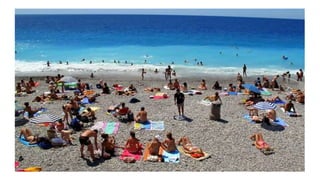
• More choice - in the past seaside holidays and package
holidays were the most popular. The industry is seeing more
people look at ecotourism and more unusual holiday
destinations.
GEOGRAPHY IGCSE: TOURISM - TRENDS

GEOGRAPHY IGCSE: TOURISM - TRENDS

  • 1.
  • 2.
    In 2010, 940million people were recorded as arriving in a country from abroad because of tourism. This is worth $919 billion dollars, making tourism one of the world's largest industries.
  • 4.
    Tourism is alsoone of the world's fastest-growing industries. In 2010, the Middle East and Asia had the greatest growth of tourists. Europe still has the greatest number of tourists - nearly 500 million in 2010.
  • 6.
    The tourism industrytherefore is very important to economic growth as well as the environment. Tourism can help a country's economy and infrastructure. For example it provides jobs. Some countries such as the Caribbean have tourism as their main source of income.
  • 7.
    There are manyfactors that help explain the growth in tourism: • More affluence - since 1950 people have become wealthier. There is more disposable income. People also now have paid time off work for holidays. • Greater awareness - through advertising or television programmes people are more aware of how and where they can spend their free time. • More car ownership - more families own a car. This gives greater freedom to choose when and where to spend time.
  • 8.
    • Improvements intechnology - travelling today is much quicker. Motorways and aircraft have helped reduce the time it takes to get to different countries. Travelling by air has become more accessible as you can book on line and choose more budget options. • More leisure time - people have paid holidays from work (on average three weeks per year are paid). Also people who are retired remain active for longer. There is also a trend to take more than one holiday in a year. • More choice - in the past seaside holidays and package holidays were the most popular. The industry is seeing more people look at ecotourism and more unusual holiday destinations.