CLASS VIII
GEOGRAPHY
Chapter 1
Resources
Miss. Pooja K More
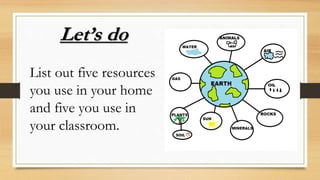
Let’s do
List out five resources
you use in your home
and five you use in
your classroom.
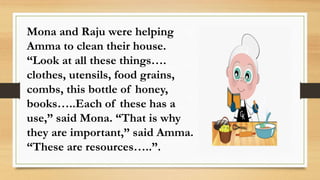
Mona and Raju were helping
Amma to clean their house.
“Look at all these things….
clothes, utensils, food grains,
combs, this bottle of honey,
books…..Each of these has a
use,” said Mona. “That is why
they are important,” said Amma.
“These are resources…..”.
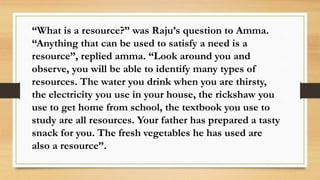
“What is a resource?” was Raju’s question to Amma.
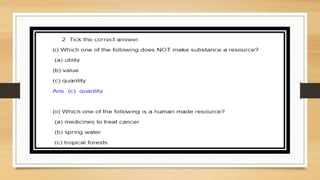
“Anything that can be used to satisfy a need is a
resource”, replied amma. “Look around you and
observe, you will be able to identify many types of
resources. The water you drink when you are thirsty,
the electricity you use in your house, the rickshaw you
use to get home from school, the textbook you use to
study are all resources. Your father has prepared a tasty
snack for you. The fresh vegetables he has used are
also a resource”.
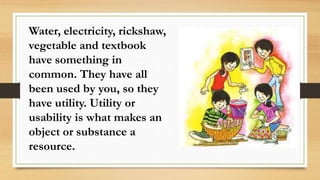
Water, electricity, rickshaw,
vegetable and textbook
have something in
common. They have all
been used by you, so they
have utility. Utility or
usability is what makes an
object or substance a
resource.
“How does something
become a resource?” Raju
now wanted to know. Amma
told the children that things
become resources only when
they have a value. “Its use or
utility gives it a value. All
resources have some value.”
said Amma.
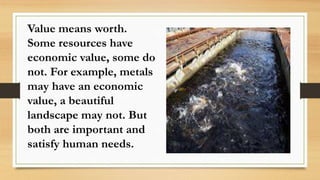
Value means worth.
Some resources have
economic value, some do
not. For example, metals
may have an economic
value, a beautiful
landscape may not. But
both are important and
satisfy human needs.
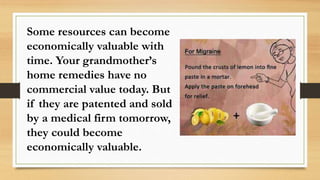
Some resources can become
economically valuable with
time. Your grandmother’s
home remedies have no
commercial value today. But
if they are patented and sold
by a medical firm tomorrow,
they could become
economically valuable.
Glossary
Patent: It
means the
exclusive right
over any idea or
invention.
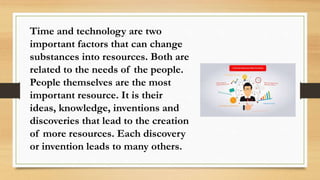
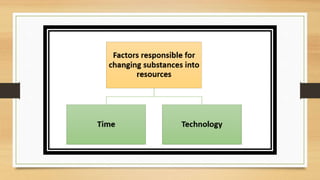
Time and technology are two
important factors that can change
substances into resources. Both are
related to the needs of the people.
People themselves are the most
important resource. It is their
ideas, knowledge, inventions and
discoveries that lead to the creation
of more resources. Each discovery
or invention leads to many others.
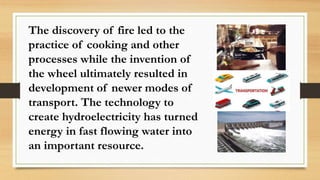
The discovery of fire led to the
practice of cooking and other
processes while the invention of
the wheel ultimately resulted in
development of newer modes of
transport. The technology to
create hydroelectricity has turned
energy in fast flowing water into
an important resource.
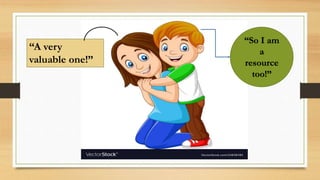
“A very
valuable one!”
“So I am
a
resource
too!”
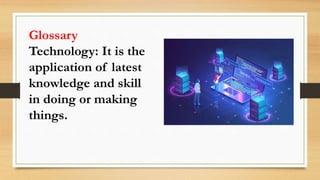
Glossary
Technology: It is the
application of latest
knowledge and skill
in doing or making
things.
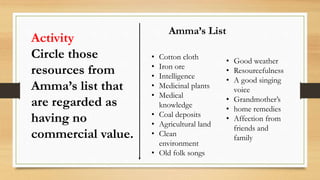
Activity
Circle those
resources from
Amma’s list that
are regarded as
having no
commercial value.
Amma’s List
• Cotton cloth
• Iron ore
• Intelligence
• Medicinal plants
• Medical
knowledge
• Coal deposits
• Agricultural land
• Clean
environment
• Old folk songs
• Good weather
• Resourcefulness
• A good singing
voice
• Grandmother’s
• home remedies
• Affection from
friends and
family
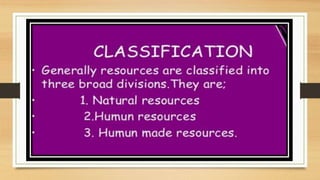
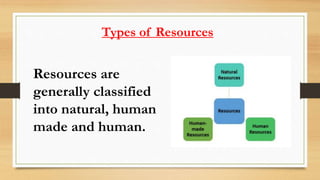
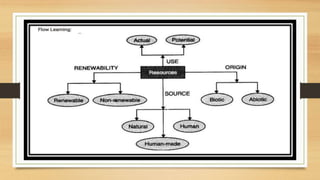
Types of Resources
Resources are
generally classified
into natural, human
made and human.
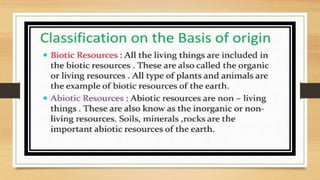
Natural Resources
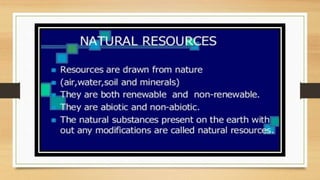
Resources that are drawn from Nature and used
without much modification are called natural resources.
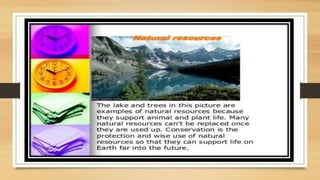
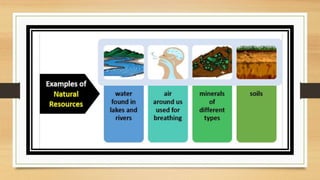
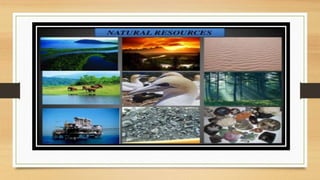
The air we breathe, the water in our rivers and lakes, the
soils, minerals are all natural resources. Many of these
resources are free gifts of nature and can be used
directly. In some cases tools and technology may be
needed to use a natural resource in the best possible
way.
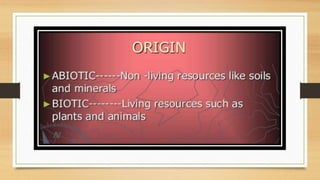
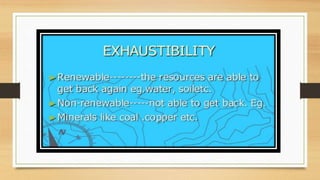
Natural resources can be broadly categorised into
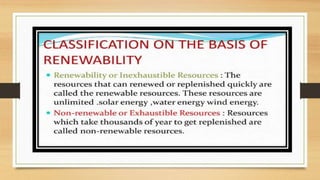
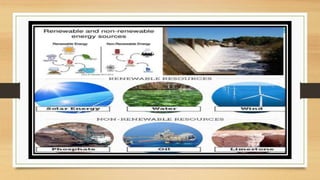
renewable and non-renewable resources. Renewable
resources are those which get renewed or replenished
quickly. Some of these are unlimited and are not affected
by human activities, such as solar and wind energy. Yet
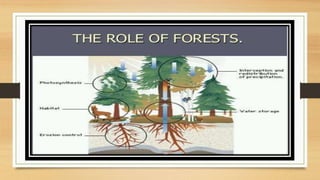
careless use of certain renewable resources like water, soil
and forest can affect their stock. Water seems to be an
unlimited renewable resource. But shortage and drying up
of natural water sources is a major problem in many parts
of the world today
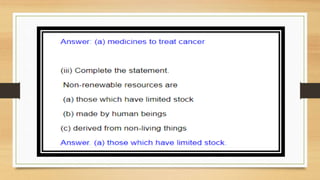
Non-renewable resources are those which have a
limited stock. Once the stocks are exhausted it
may take thousands of years to be renewed or
replenished. Since this period is much more than
human life spans, such resources are considered
non-renewable. Coal, petroleum and natural gas
are some examples.
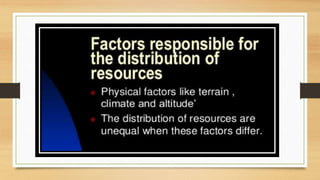
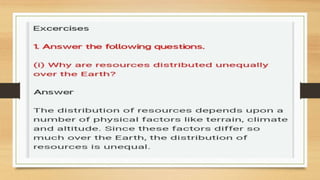
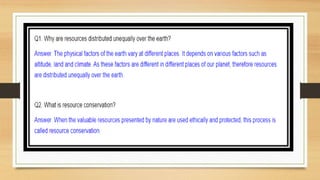
• The distribution of natural resources
depends upon number of physical factors
like terrain, climate and altitude.
• The distribution of resources is unequal
because these factors differ so much over
the earth.
Glossary
Stock of Resource
It is the amount of resources available for
use.
Let’s do
Think of a few renewable resources and mention
how their stock may get affected by overuse.
Human Made Resources
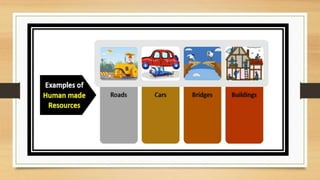
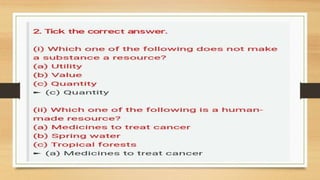
Sometimes, natural substances become resources only
when their original form has been changed. Iron ore
was not a resource until people learnt to extract iron
from it. People use natural resources to make
buildings, bridges, roads, machinery and vehicles,
which are known as human made resources.
Technology is also a human made resource.
“So people like us use natural resources to
make human made resources,” said Mona
nodding in understanding. “Yes,” said Raju.
Let’s do
Make a list of five human
made resources that you can
observe around you.
Human Resources
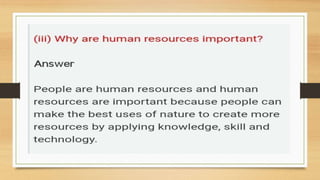
People can make the best use of nature to create
more resources when they have the knowledge, skill
and the technology to do so. That is why human
beings are a special resource. People are human
resources. Education and health help in making
people a valuable resource. Improving the quality of
people’s skills so that they are able to create more
resources is known as human resource development.
Read and Ponder:
Humans are interdependent on each other.
Farmers provide food grains for every one.
Scientists suggest various means to combat
problems related to agriculture and improve farm
production.
Do you know?
Human Resource refers to the number (quantity) and
abilities (mental and physical) of the people. Though,
there are differing views regarding treatment of
humans as a resource, one cannot deny the fact that it
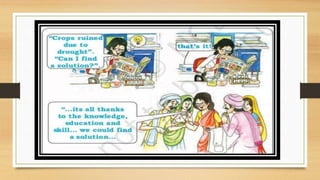
is the skills of human that help in transfering the
physical material into a valuable resource.
Conserving Resources
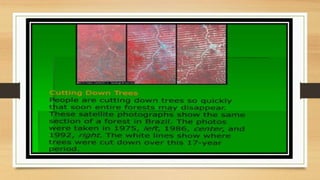
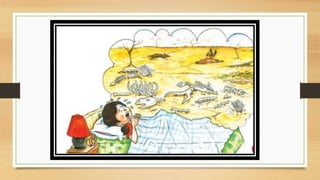
Mona had a nightmare. She dreamt that all the water on
the earth had dried up and all the trees cut down. There
was no shade and nothing to eat or drink. People were
suffering and roaming around desperately looking for
food and shade. She told her mother about the dream.
“Amma can this really happen?” she asked.
“Yes,” Amma replied.
“If we are not careful then even renewable
resources can become very scarce and the non-
renewable ones can definitely get exhausted”.
“What can we do about it,” Raju asked.
“Lots,” replied Amma.
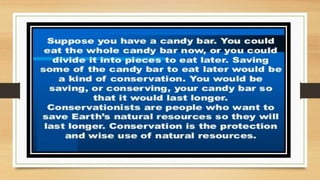
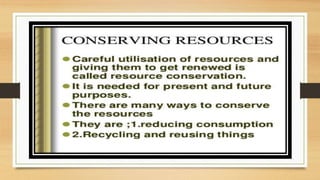
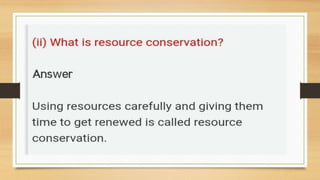
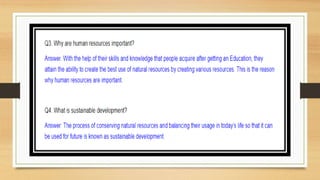
Using resources carefully and giving them time to
get renewed is called resource conservation.
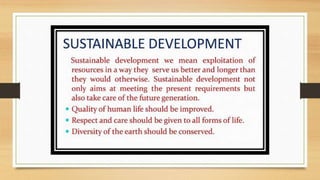
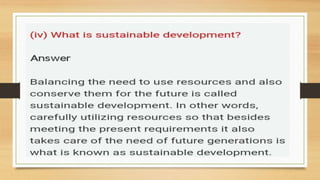
Balancing the need to use resources and also
conserve them for the future is called sustainable
development. There are many ways of conserving
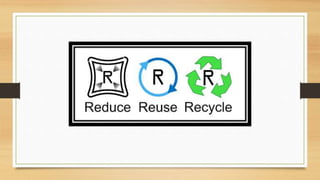
resources. Each person can contribute by reducing
consumption, recycling and reusing thing.
Ultimately it makes a difference because all our lives
are linked.
Glossary
Sustainable Development
Carefully utilising resources so that
besides meeting the requirements of
the present, also takes care of future
generations.
That evening the children and their friends made
packets and shopping bags out of old
newspapers, discarded clothes and baskets from
bamboo sticks. “We will give a few to every
family we know,” said Mona. “After all it is for a
very good cause,” said Mustafa, “To save our
resources and to keep our earth alive”.
“I am going to be very careful not to waste
paper,” said Jessy. “Many trees are cut
down to make paper,” she explained. “I
will see that electricity is not wasted in my
house,” shouted Mustafa. “Electricity
comes from water and coal.”
“I will make sure that water is not wasted at
home,” said Asha. “Every drop of water is
precious” “Together we can make a difference!”
chorused the children. These are some of the
things Mona, Raju and their friends did. What
about you? How are you going to help in
conserving resources?
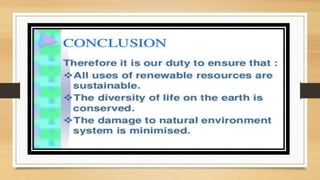
The future of our planet and its people is linked with our
ability to maintain and preserve the life support system that
nature provides. Therefore it is our duty to ensure that : • all
uses of renewable resources are sustainable • the diversity of
life on the earth is conserved • the damage to natural
environmental system is minimised.
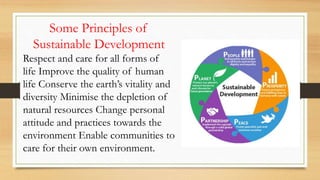
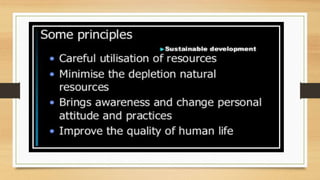
Some Principles of
Sustainable Development
Respect and care for all forms of
life Improve the quality of human
life Conserve the earth’s vitality and
diversity Minimise the depletion of
natural resources Change personal
attitude and practices towards the
environment Enable communities to
care for their own environment.
GEOGRAPHY: Chapter 1- Resources (CBSE Board)

GEOGRAPHY: Chapter 1- Resources (CBSE Board)

  • 1.
  • 2.
    Let’s do List outfive resources you use in your home and five you use in your classroom.
  • 3.
    Mona and Rajuwere helping Amma to clean their house. “Look at all these things…. clothes, utensils, food grains, combs, this bottle of honey, books…..Each of these has a use,” said Mona. “That is why they are important,” said Amma. “These are resources…..”.
  • 4.
    “What is aresource?” was Raju’s question to Amma. “Anything that can be used to satisfy a need is a resource”, replied amma. “Look around you and observe, you will be able to identify many types of resources. The water you drink when you are thirsty, the electricity you use in your house, the rickshaw you use to get home from school, the textbook you use to study are all resources. Your father has prepared a tasty snack for you. The fresh vegetables he has used are also a resource”.
  • 5.
    Water, electricity, rickshaw, vegetableand textbook have something in common. They have all been used by you, so they have utility. Utility or usability is what makes an object or substance a resource.
  • 6.
    “How does something becomea resource?” Raju now wanted to know. Amma told the children that things become resources only when they have a value. “Its use or utility gives it a value. All resources have some value.” said Amma.
  • 7.
    Value means worth. Someresources have economic value, some do not. For example, metals may have an economic value, a beautiful landscape may not. But both are important and satisfy human needs.
  • 8.
    Some resources canbecome economically valuable with time. Your grandmother’s home remedies have no commercial value today. But if they are patented and sold by a medical firm tomorrow, they could become economically valuable.
  • 9.
    Glossary Patent: It means the exclusiveright over any idea or invention.
  • 10.
    Time and technologyare two important factors that can change substances into resources. Both are related to the needs of the people. People themselves are the most important resource. It is their ideas, knowledge, inventions and discoveries that lead to the creation of more resources. Each discovery or invention leads to many others.
  • 11.
    The discovery offire led to the practice of cooking and other processes while the invention of the wheel ultimately resulted in development of newer modes of transport. The technology to create hydroelectricity has turned energy in fast flowing water into an important resource.
  • 12.
    “A very valuable one!” “SoI am a resource too!”
  • 15.
    Glossary Technology: It isthe application of latest knowledge and skill in doing or making things.
  • 16.
    Activity Circle those resources from Amma’slist that are regarded as having no commercial value. Amma’s List • Cotton cloth • Iron ore • Intelligence • Medicinal plants • Medical knowledge • Coal deposits • Agricultural land • Clean environment • Old folk songs • Good weather • Resourcefulness • A good singing voice • Grandmother’s • home remedies • Affection from friends and family
  • 18.
    Types of Resources Resourcesare generally classified into natural, human made and human.
  • 19.
    Natural Resources Resources thatare drawn from Nature and used without much modification are called natural resources. The air we breathe, the water in our rivers and lakes, the soils, minerals are all natural resources. Many of these resources are free gifts of nature and can be used directly. In some cases tools and technology may be needed to use a natural resource in the best possible way.
  • 20.
    Natural resources canbe broadly categorised into renewable and non-renewable resources. Renewable resources are those which get renewed or replenished quickly. Some of these are unlimited and are not affected by human activities, such as solar and wind energy. Yet careless use of certain renewable resources like water, soil and forest can affect their stock. Water seems to be an unlimited renewable resource. But shortage and drying up of natural water sources is a major problem in many parts of the world today
  • 21.
    Non-renewable resources arethose which have a limited stock. Once the stocks are exhausted it may take thousands of years to be renewed or replenished. Since this period is much more than human life spans, such resources are considered non-renewable. Coal, petroleum and natural gas are some examples.
  • 22.
    • The distributionof natural resources depends upon number of physical factors like terrain, climate and altitude. • The distribution of resources is unequal because these factors differ so much over the earth.
  • 33.
    Glossary Stock of Resource Itis the amount of resources available for use.
  • 34.
    Let’s do Think ofa few renewable resources and mention how their stock may get affected by overuse.
  • 35.
    Human Made Resources Sometimes,natural substances become resources only when their original form has been changed. Iron ore was not a resource until people learnt to extract iron from it. People use natural resources to make buildings, bridges, roads, machinery and vehicles, which are known as human made resources. Technology is also a human made resource.
  • 36.
    “So people likeus use natural resources to make human made resources,” said Mona nodding in understanding. “Yes,” said Raju.
  • 37.
    Let’s do Make alist of five human made resources that you can observe around you.
  • 38.
    Human Resources People canmake the best use of nature to create more resources when they have the knowledge, skill and the technology to do so. That is why human beings are a special resource. People are human resources. Education and health help in making people a valuable resource. Improving the quality of people’s skills so that they are able to create more resources is known as human resource development.
  • 40.
    Read and Ponder: Humansare interdependent on each other. Farmers provide food grains for every one. Scientists suggest various means to combat problems related to agriculture and improve farm production.
  • 42.
    Do you know? HumanResource refers to the number (quantity) and abilities (mental and physical) of the people. Though, there are differing views regarding treatment of humans as a resource, one cannot deny the fact that it is the skills of human that help in transfering the physical material into a valuable resource.
  • 55.
    Conserving Resources Mona hada nightmare. She dreamt that all the water on the earth had dried up and all the trees cut down. There was no shade and nothing to eat or drink. People were suffering and roaming around desperately looking for food and shade. She told her mother about the dream. “Amma can this really happen?” she asked.
  • 56.
    “Yes,” Amma replied. “Ifwe are not careful then even renewable resources can become very scarce and the non- renewable ones can definitely get exhausted”. “What can we do about it,” Raju asked. “Lots,” replied Amma.
  • 57.
    Using resources carefullyand giving them time to get renewed is called resource conservation. Balancing the need to use resources and also conserve them for the future is called sustainable development. There are many ways of conserving resources. Each person can contribute by reducing consumption, recycling and reusing thing. Ultimately it makes a difference because all our lives are linked.
  • 58.
    Glossary Sustainable Development Carefully utilisingresources so that besides meeting the requirements of the present, also takes care of future generations.
  • 59.
    That evening thechildren and their friends made packets and shopping bags out of old newspapers, discarded clothes and baskets from bamboo sticks. “We will give a few to every family we know,” said Mona. “After all it is for a very good cause,” said Mustafa, “To save our resources and to keep our earth alive”.
  • 60.
    “I am goingto be very careful not to waste paper,” said Jessy. “Many trees are cut down to make paper,” she explained. “I will see that electricity is not wasted in my house,” shouted Mustafa. “Electricity comes from water and coal.”
  • 61.
    “I will makesure that water is not wasted at home,” said Asha. “Every drop of water is precious” “Together we can make a difference!” chorused the children. These are some of the things Mona, Raju and their friends did. What about you? How are you going to help in conserving resources?
  • 62.
    The future ofour planet and its people is linked with our ability to maintain and preserve the life support system that nature provides. Therefore it is our duty to ensure that : • all uses of renewable resources are sustainable • the diversity of life on the earth is conserved • the damage to natural environmental system is minimised.
  • 65.
    Some Principles of SustainableDevelopment Respect and care for all forms of life Improve the quality of human life Conserve the earth’s vitality and diversity Minimise the depletion of natural resources Change personal attitude and practices towards the environment Enable communities to care for their own environment.