GISH(Genomic In-Situ
Hybridization)
AREEBA FATIMA
2015-UAM-240
CYTOGENETICS AND EVOLUTION OF CROP PLANTS
Outline
 What is GISH?
 Who was developed this technique?
 How we apply this technique on sample?
 How many steps?
 Why we use this technique?
What is GISH(Genomic In-Situ
Hybridization)?
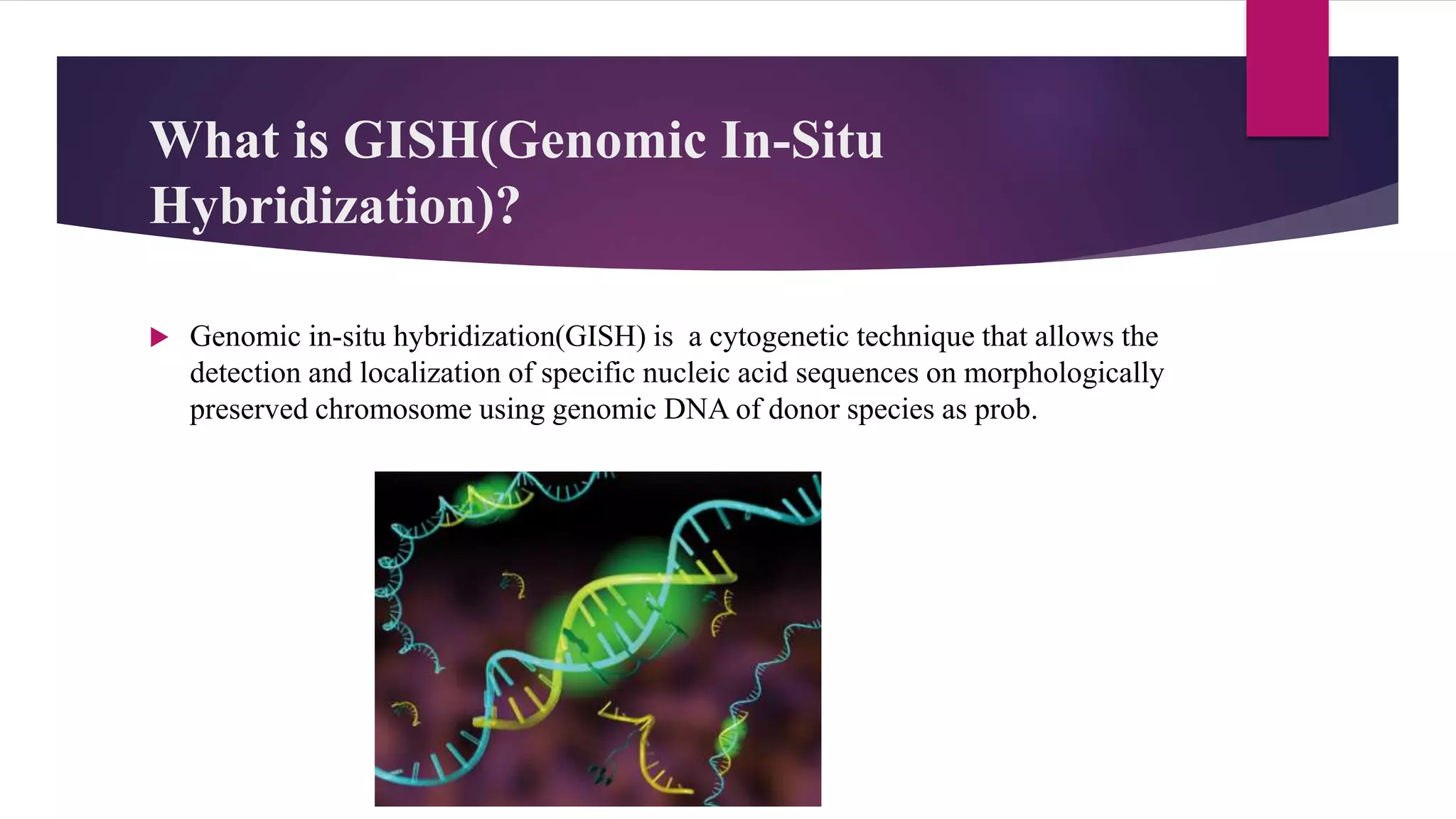
 Genomic in-situ hybridization(GISH) is a cytogenetic technique that allows the
detection and localization of specific nucleic acid sequences on morphologically
preserved chromosome using genomic DNA of donor species as prob.
Introduction
 GISH is quick, accurate, sensitive,
informative and a comparative
approach.
 GISH technique is an advancement in
the fluorescence in situ hybridization
(FISH) technique.
Background
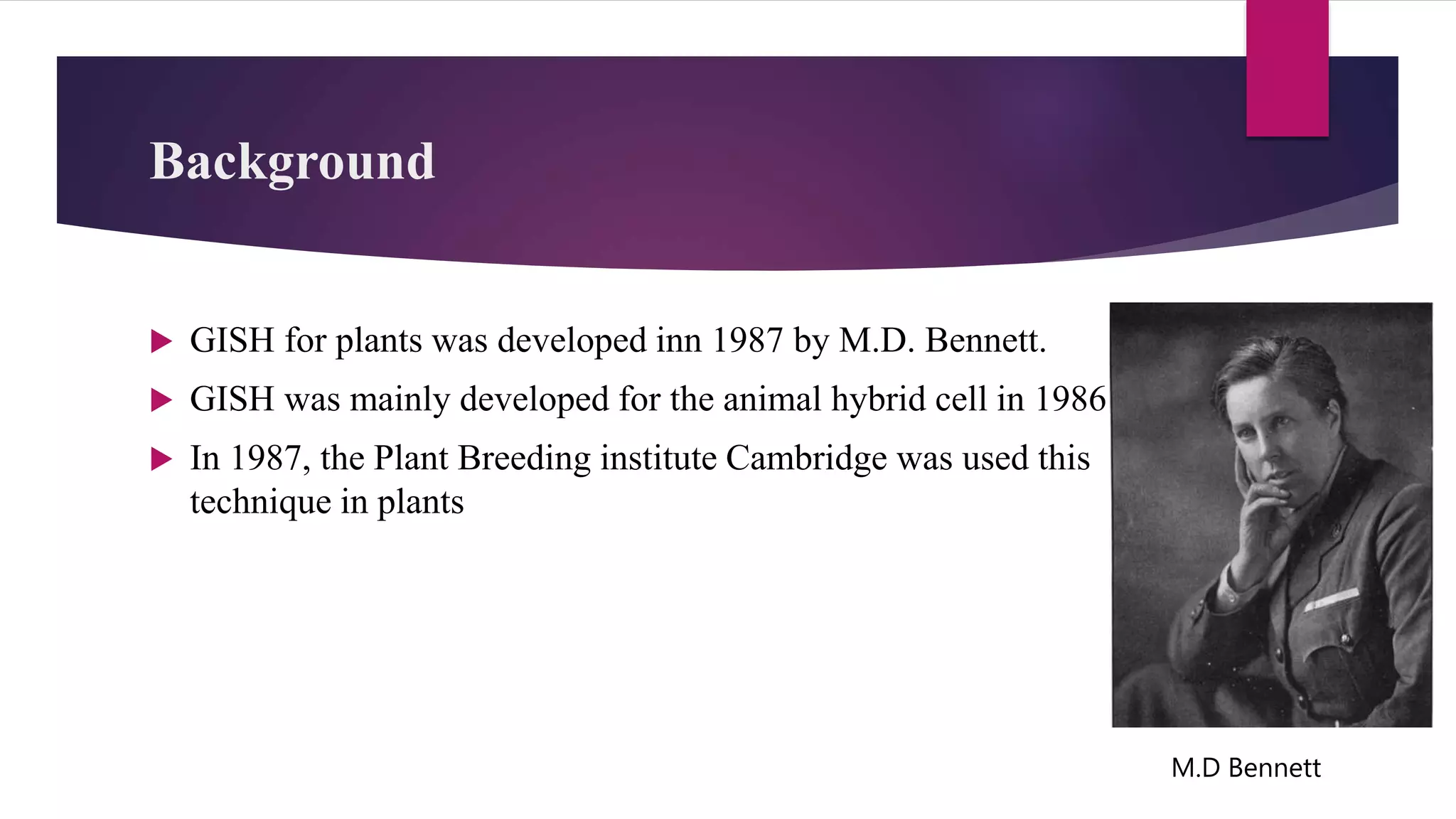
 GISH for plants was developed inn 1987 by M.D. Bennett.
 GISH was mainly developed for the animal hybrid cell in 1986
 In 1987, the Plant Breeding institute Cambridge was used this
technique in plants
M.D Bennett
Principle
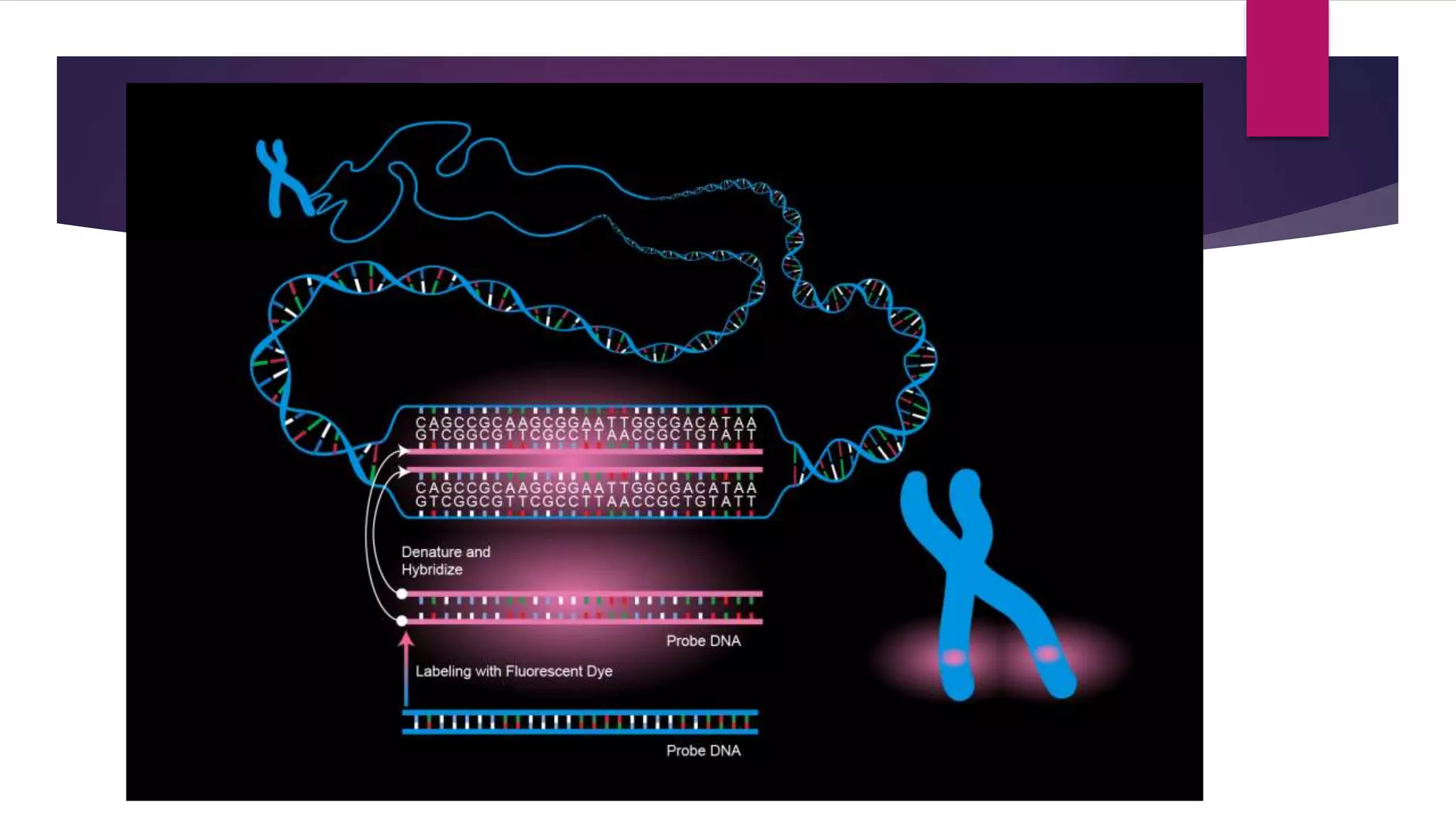
 This technique involves the extraction of labeling DNA of one
organism and to use as a probe to target the genome of another
organism.
 The part of genome that are similar to the probe hybridize to from a
probe target complex.
Steps
 Take probe DNA
 Blocking DNA fragmentation
 Preparation of slide
 Denaturation of probe and blocking DNA in the hybridization mixture
 Addition of probe and blocking DNA with the hybridization mixture
 Chromosome DNA denaturation
 Hybridization of blocking DNA and probe in the target sequence of the chromosome
 Detection of the probe in the chromosome of one parent
 Chromosome DNA molecule of thee second parent related to the unlabeled blocking DNA
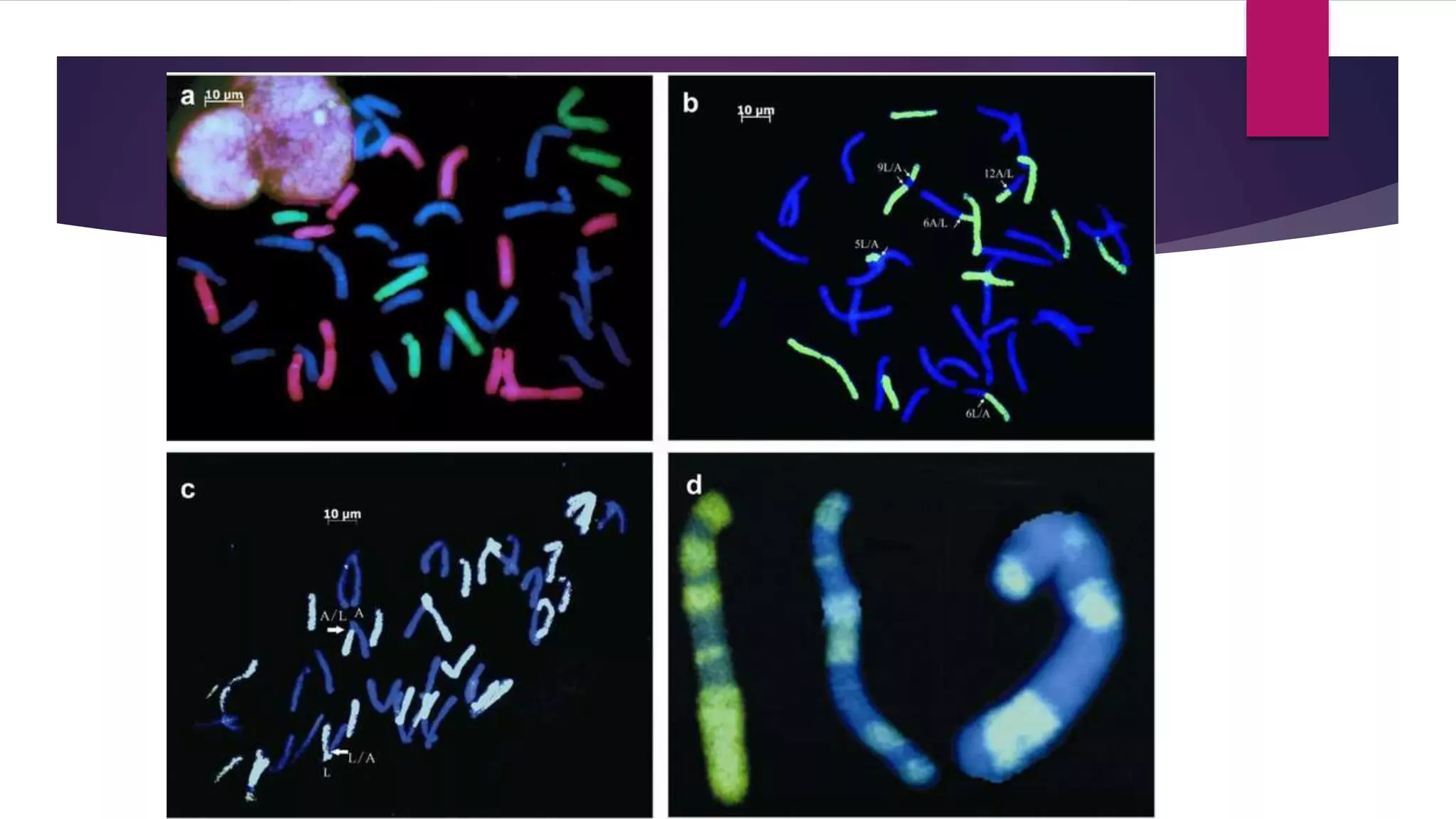
 Visualization of hybridization signals associated to a probe(green) in fluorescence microscope.
 Unmarked chromosome are visualized with blue color.
Why we do GISH?
 It is used to identify chromosomal rearrangements in cancer patients.
 Chromosomal identification in cell.
 Detect the specific nucleotide sequence within cell and tissues.
 Unique point among the studies of cell, biology, cytogenetics and molecular genetics
 It is possible to detect single copy sequence on chromosome with probes.
 genomic in situ hybridization (GISH) is a potentially powerful tool for studying genome
evolution and biosystematics
 It will useful for investigating the origins of wild and cultivated polyploid plant species
Thank you

Genomic in-situ hybridization (GISH)

  • 1.
  • 2.
    Outline  What isGISH?  Who was developed this technique?  How we apply this technique on sample?  How many steps?  Why we use this technique?
  • 3.
    What is GISH(GenomicIn-Situ Hybridization)?  Genomic in-situ hybridization(GISH) is a cytogenetic technique that allows the detection and localization of specific nucleic acid sequences on morphologically preserved chromosome using genomic DNA of donor species as prob.
  • 4.
    Introduction  GISH isquick, accurate, sensitive, informative and a comparative approach.  GISH technique is an advancement in the fluorescence in situ hybridization (FISH) technique.
  • 6.
    Background  GISH forplants was developed inn 1987 by M.D. Bennett.  GISH was mainly developed for the animal hybrid cell in 1986  In 1987, the Plant Breeding institute Cambridge was used this technique in plants M.D Bennett
  • 7.
    Principle  This techniqueinvolves the extraction of labeling DNA of one organism and to use as a probe to target the genome of another organism.  The part of genome that are similar to the probe hybridize to from a probe target complex.
  • 8.
    Steps  Take probeDNA  Blocking DNA fragmentation  Preparation of slide  Denaturation of probe and blocking DNA in the hybridization mixture  Addition of probe and blocking DNA with the hybridization mixture  Chromosome DNA denaturation  Hybridization of blocking DNA and probe in the target sequence of the chromosome  Detection of the probe in the chromosome of one parent  Chromosome DNA molecule of thee second parent related to the unlabeled blocking DNA  Visualization of hybridization signals associated to a probe(green) in fluorescence microscope.  Unmarked chromosome are visualized with blue color.
  • 11.
    Why we doGISH?  It is used to identify chromosomal rearrangements in cancer patients.  Chromosomal identification in cell.  Detect the specific nucleotide sequence within cell and tissues.  Unique point among the studies of cell, biology, cytogenetics and molecular genetics  It is possible to detect single copy sequence on chromosome with probes.  genomic in situ hybridization (GISH) is a potentially powerful tool for studying genome evolution and biosystematics  It will useful for investigating the origins of wild and cultivated polyploid plant species
  • 12.