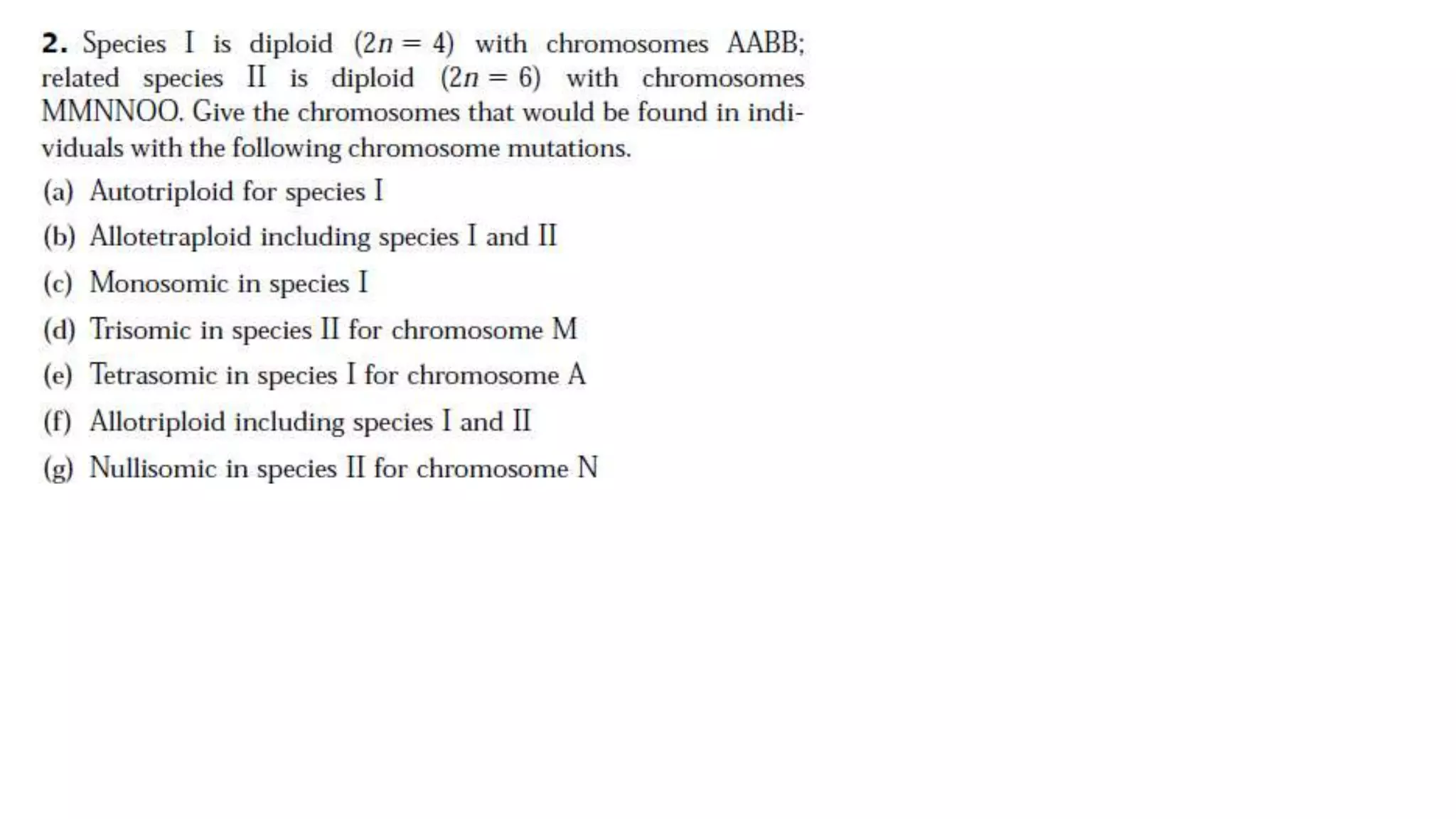
Genetics and Variations
Presented by
Sciencealaya Learning Classes
Reference- Genetics Benjamin, Klug and Cummings. Mauseth Botany and Google images.
Concepts
■ Inheritance is governed by information stored in discrete factors called genes.
■ Genes are transmitted from generation to generation on vehicles called
chromosomes.
■ During gamete formation, chromosomes are distributed according to
postulates first described by Gregor Mendel, based on his nineteenth-century
research with the garden pea.
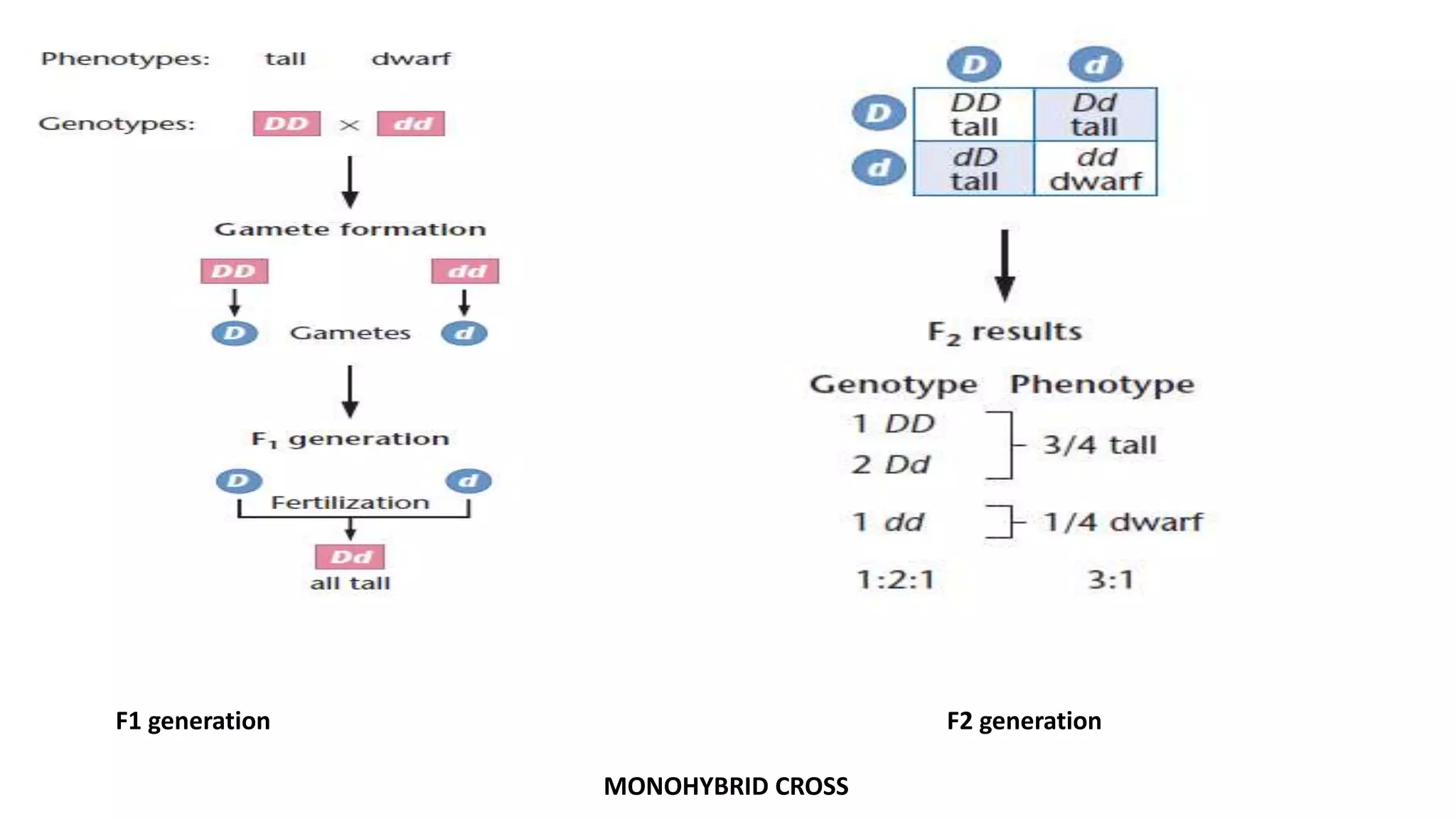
F1 generation
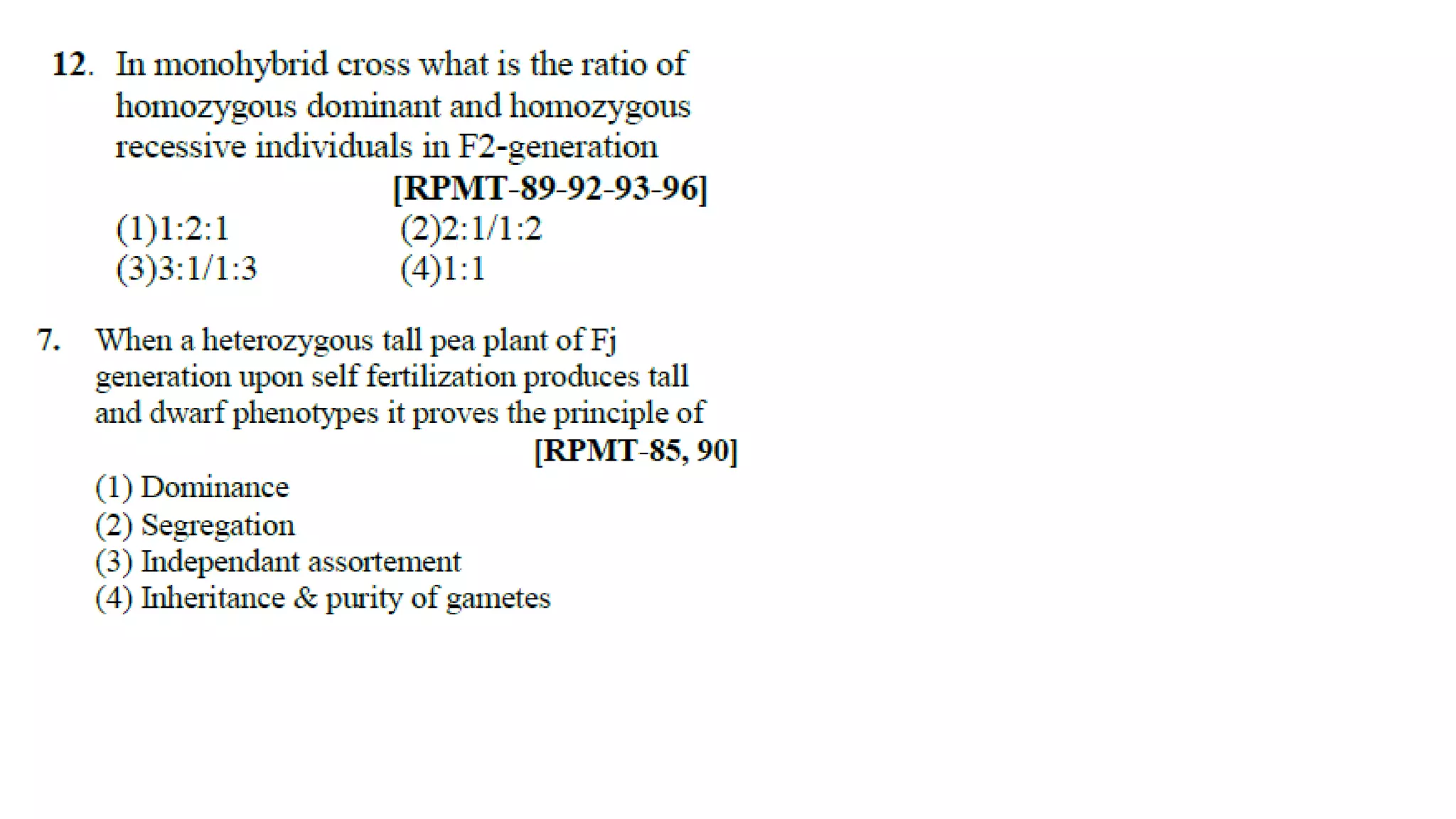
MONOHYBRID CROSS
F2 generation
Monohybrid cross-------- mendels two lays
• Law of dominance • Law of segregation
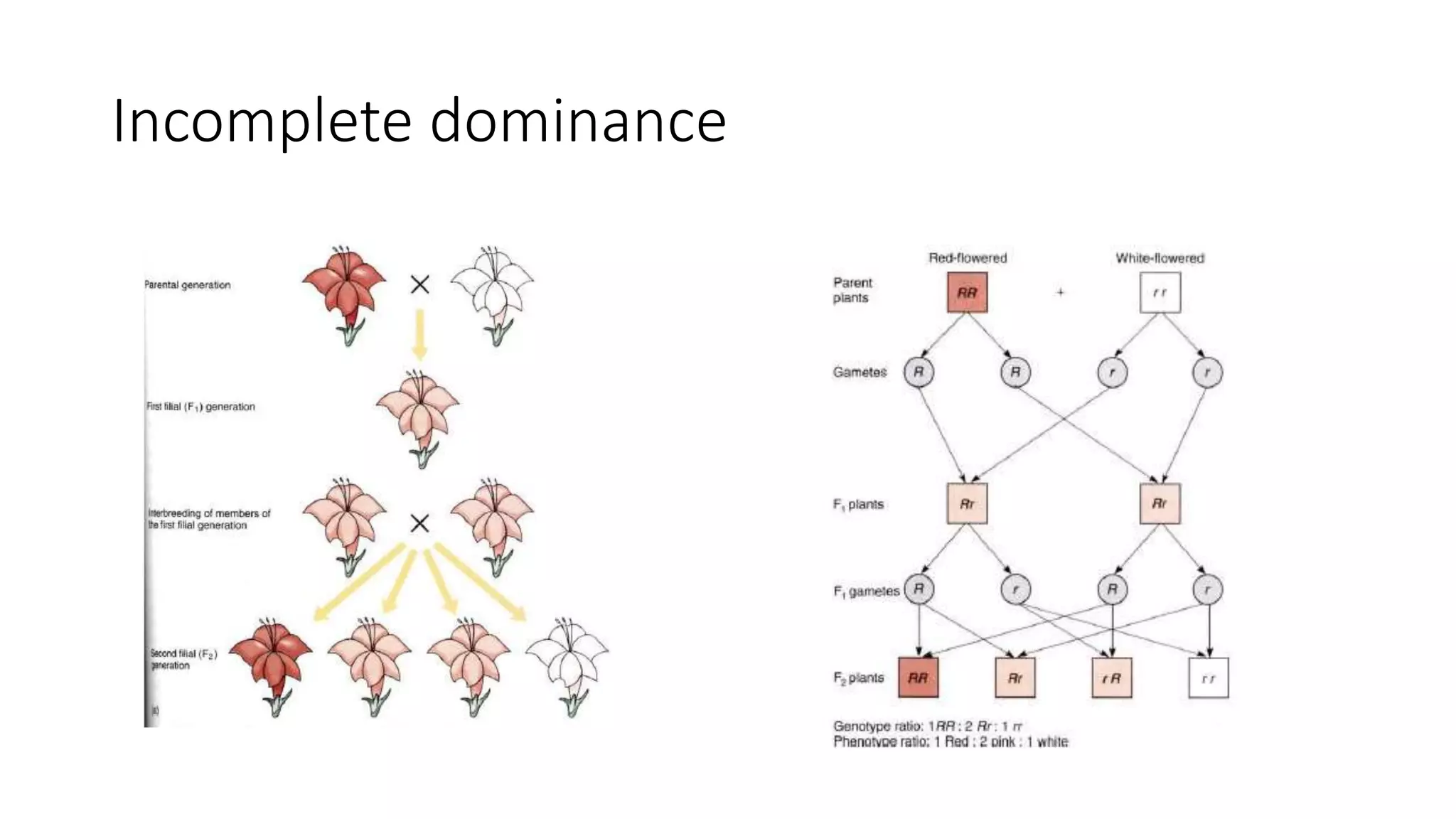
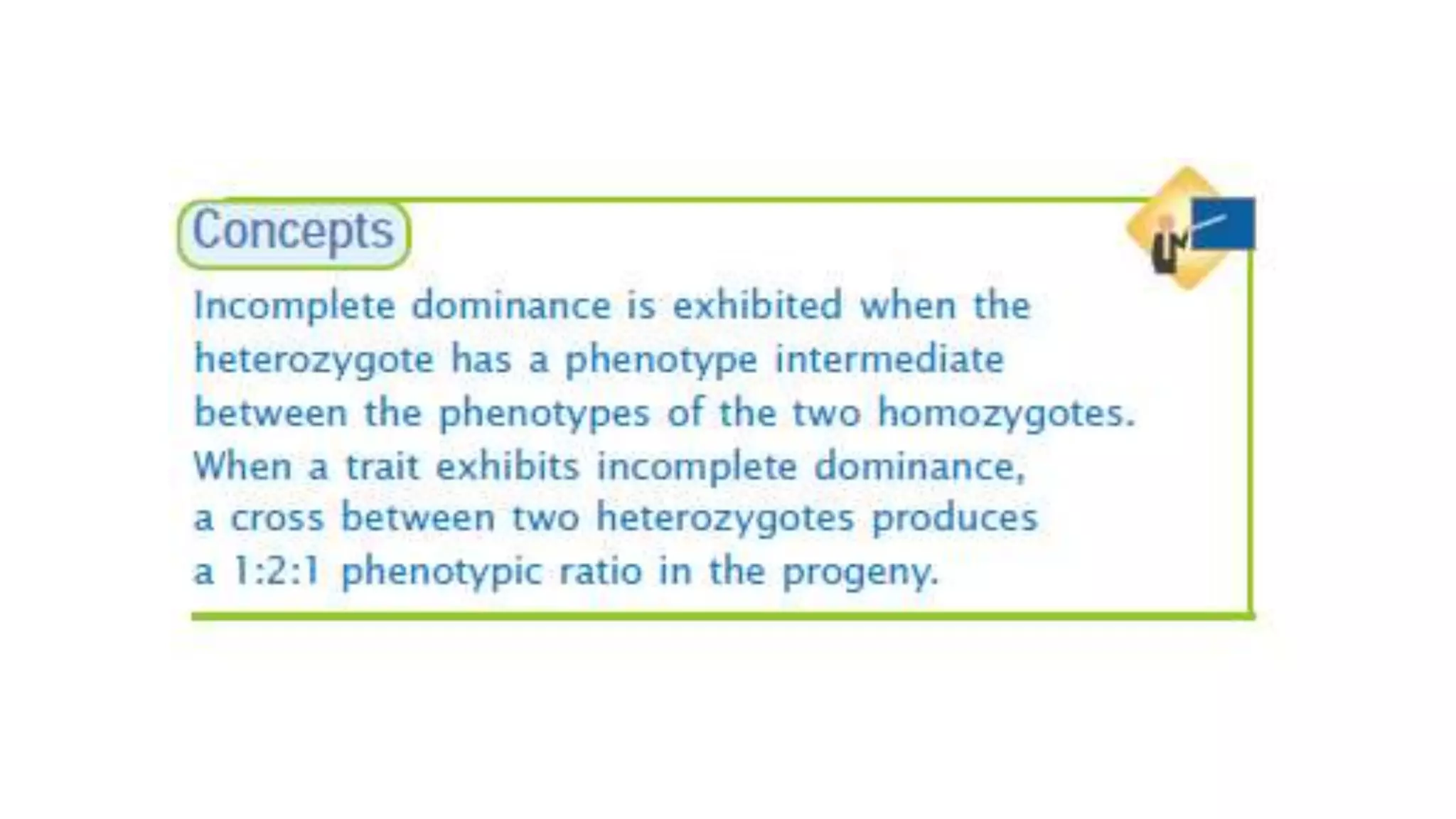
Incomplete dominance
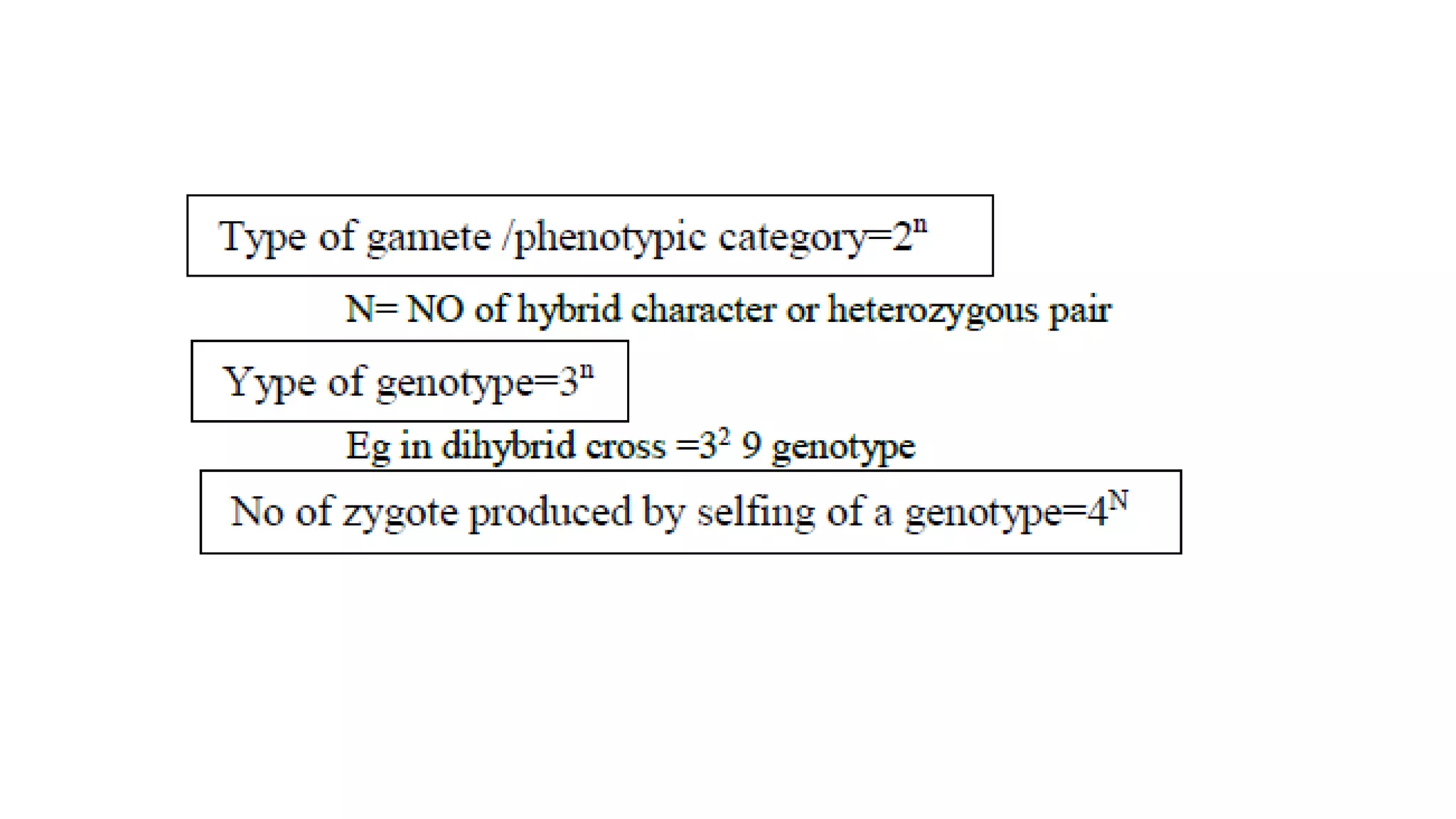
Dihybrid cross
Genotype and phenotype ratio of F2 generation
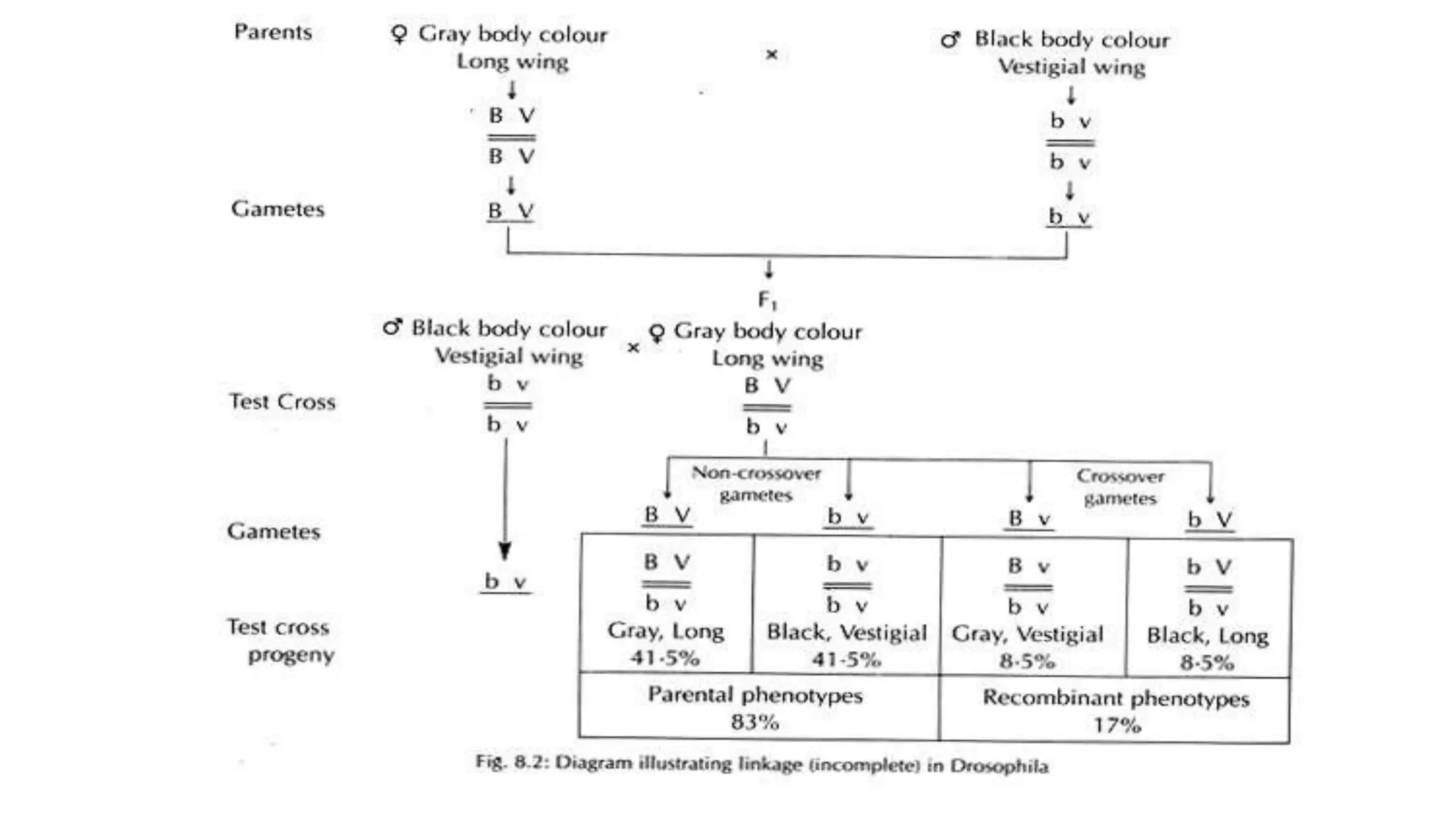
Linkage
• Complete Linkage
1- Genes located on same
chromosome.
2- Do not exhibit detectable
crossing over.
3- Test-cross reveals the effect of
linkage.
4- 0% recombination, 100%
parental.
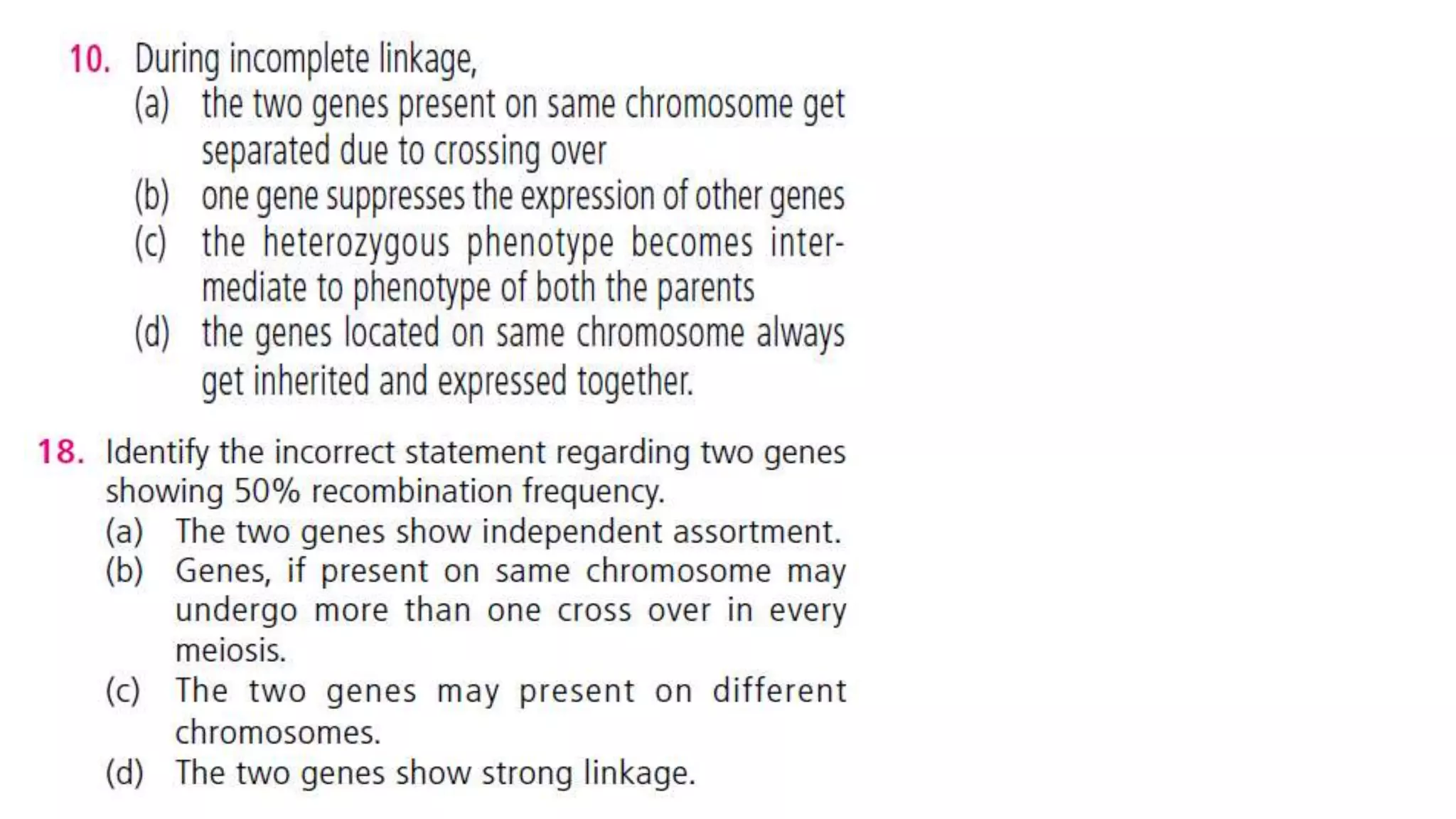
• Incomplete linkage
1- Detectable crossing over in
chromosome.
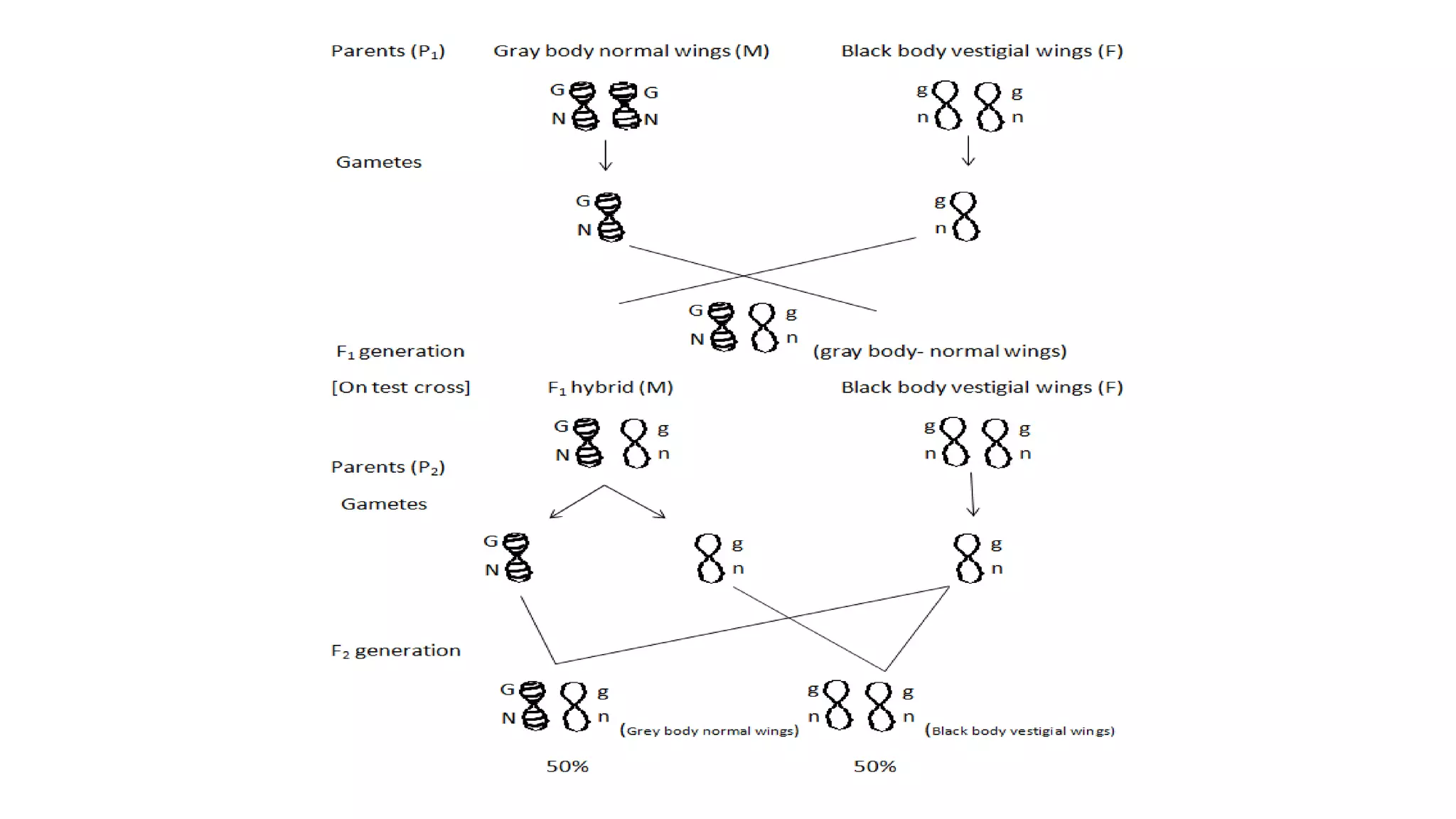
2- Test cross reveals effect of
incomplete linkage.
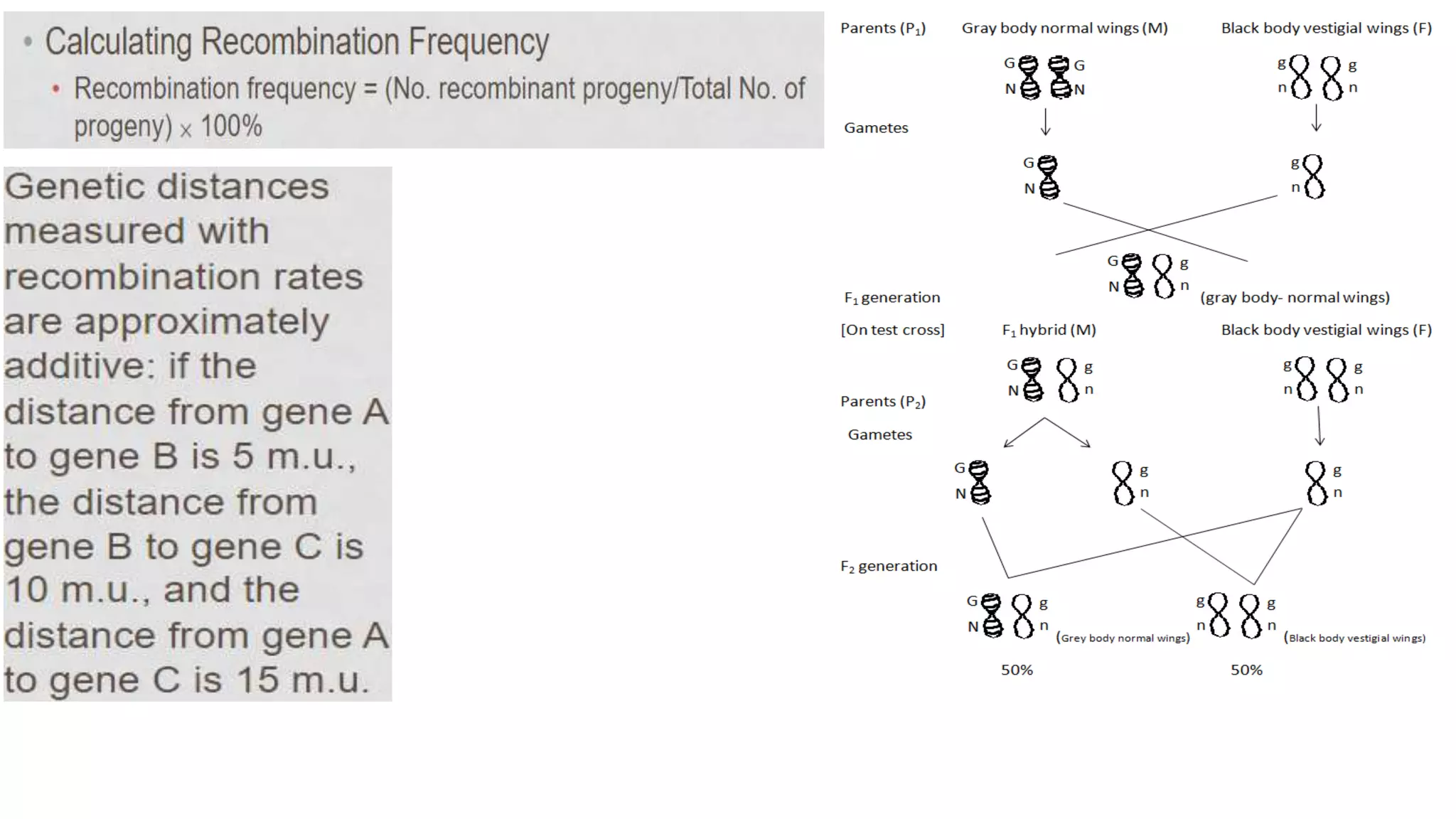
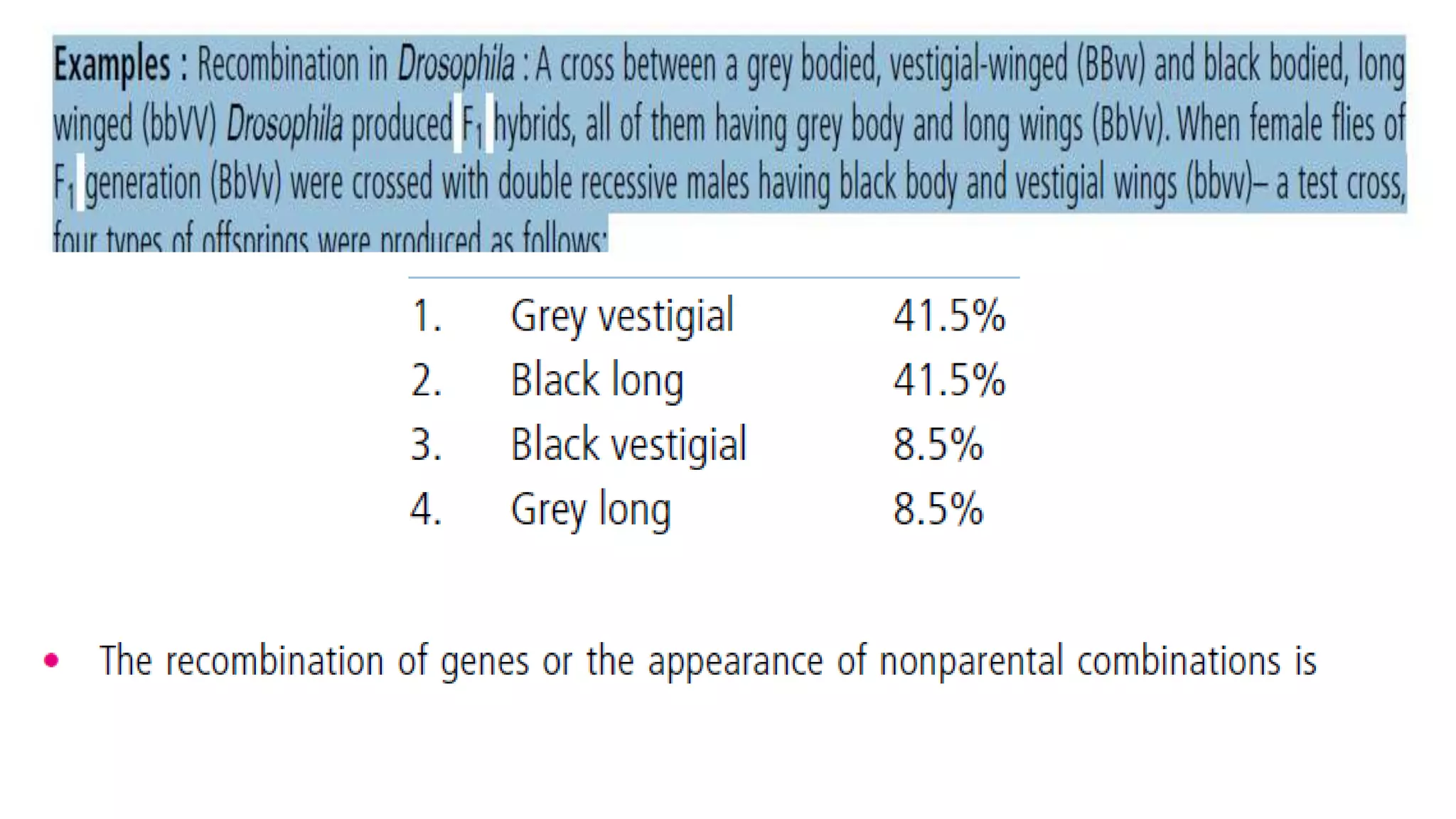
3- Recombination %=
Parental %=
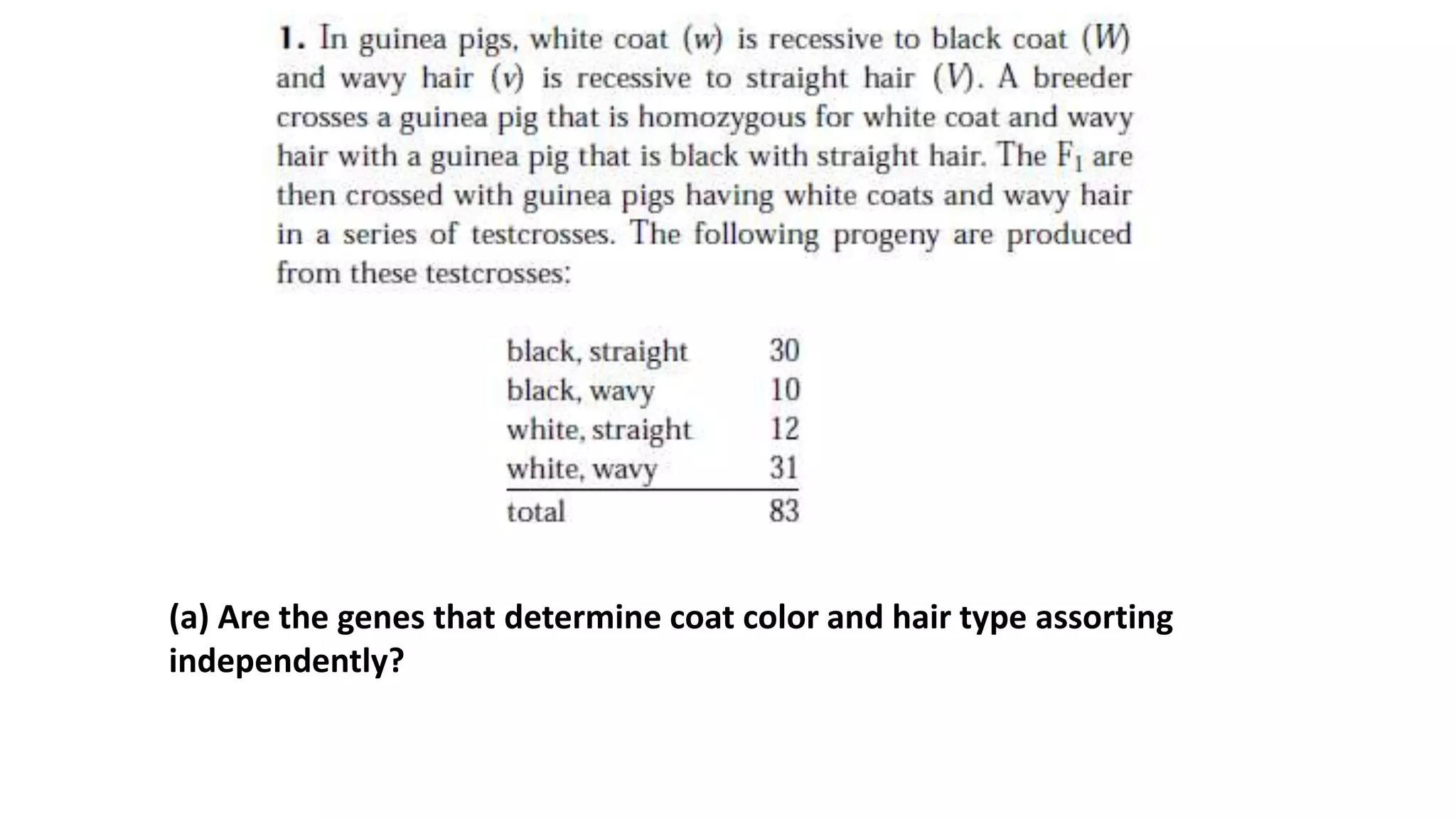
(a) Are the genes that determine coat color and hair type assorting
independently?
Multiple Allele
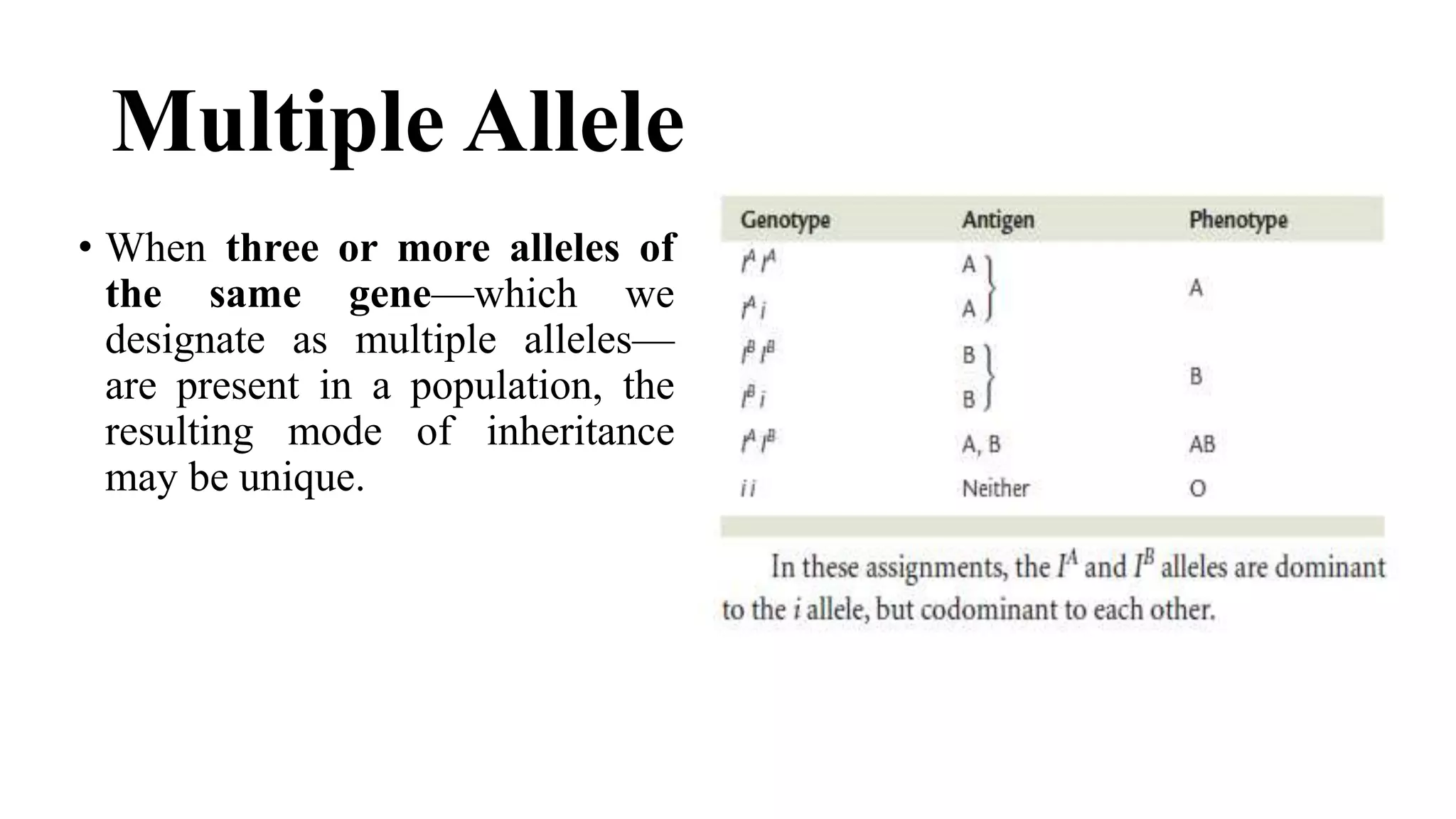
• When three or more alleles of
the same gene—which we
designate as multiple alleles—
are present in a population, the
resulting mode of inheritance
may be unique.
Neet questions
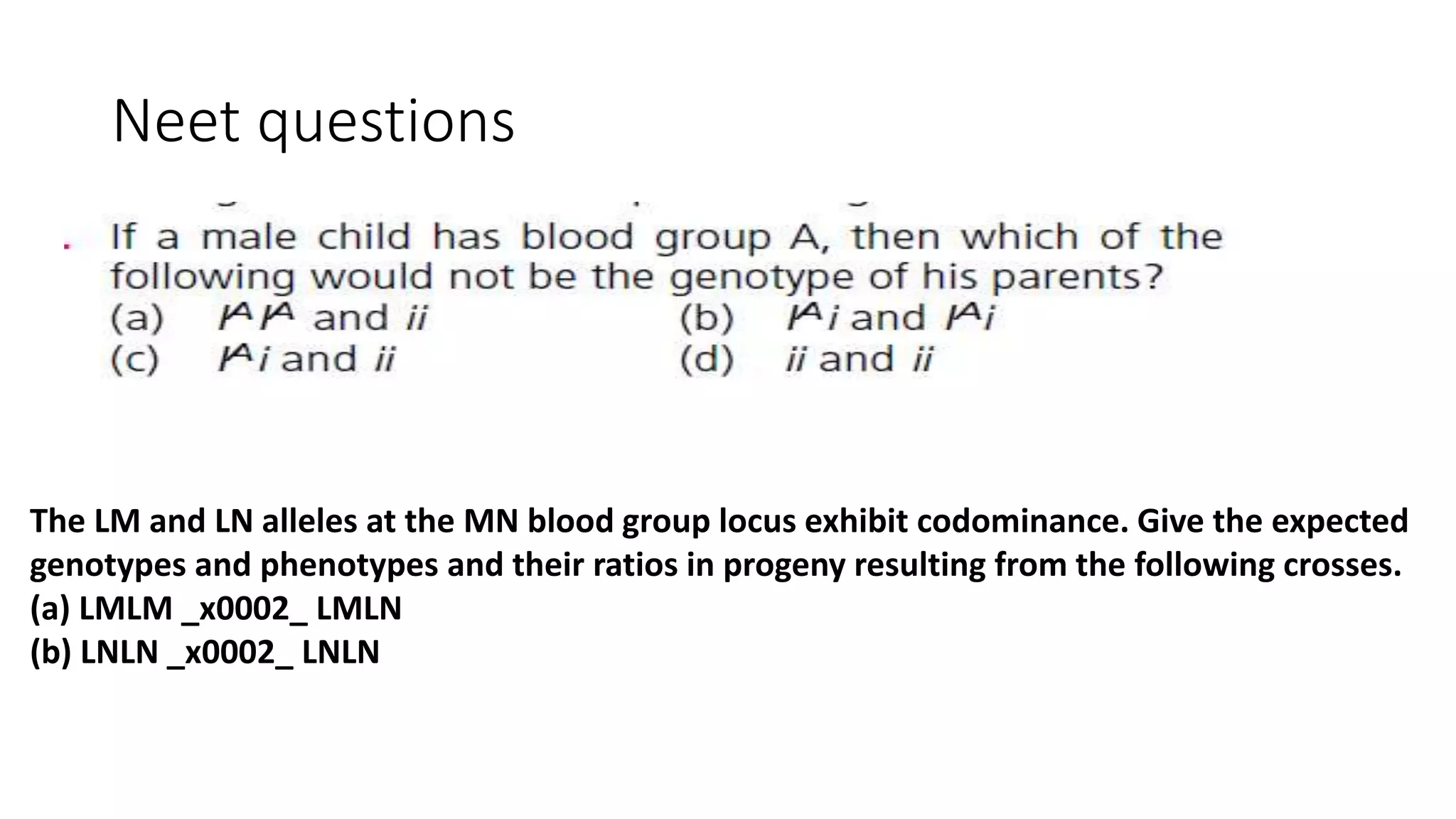
The LM and LN alleles at the MN blood group locus exhibit codominance. Give the expected
genotypes and phenotypes and their ratios in progeny resulting from the following crosses.
(a) LMLM _x0002_ LMLN
(b) LNLN _x0002_ LNLN
Pleiotropy
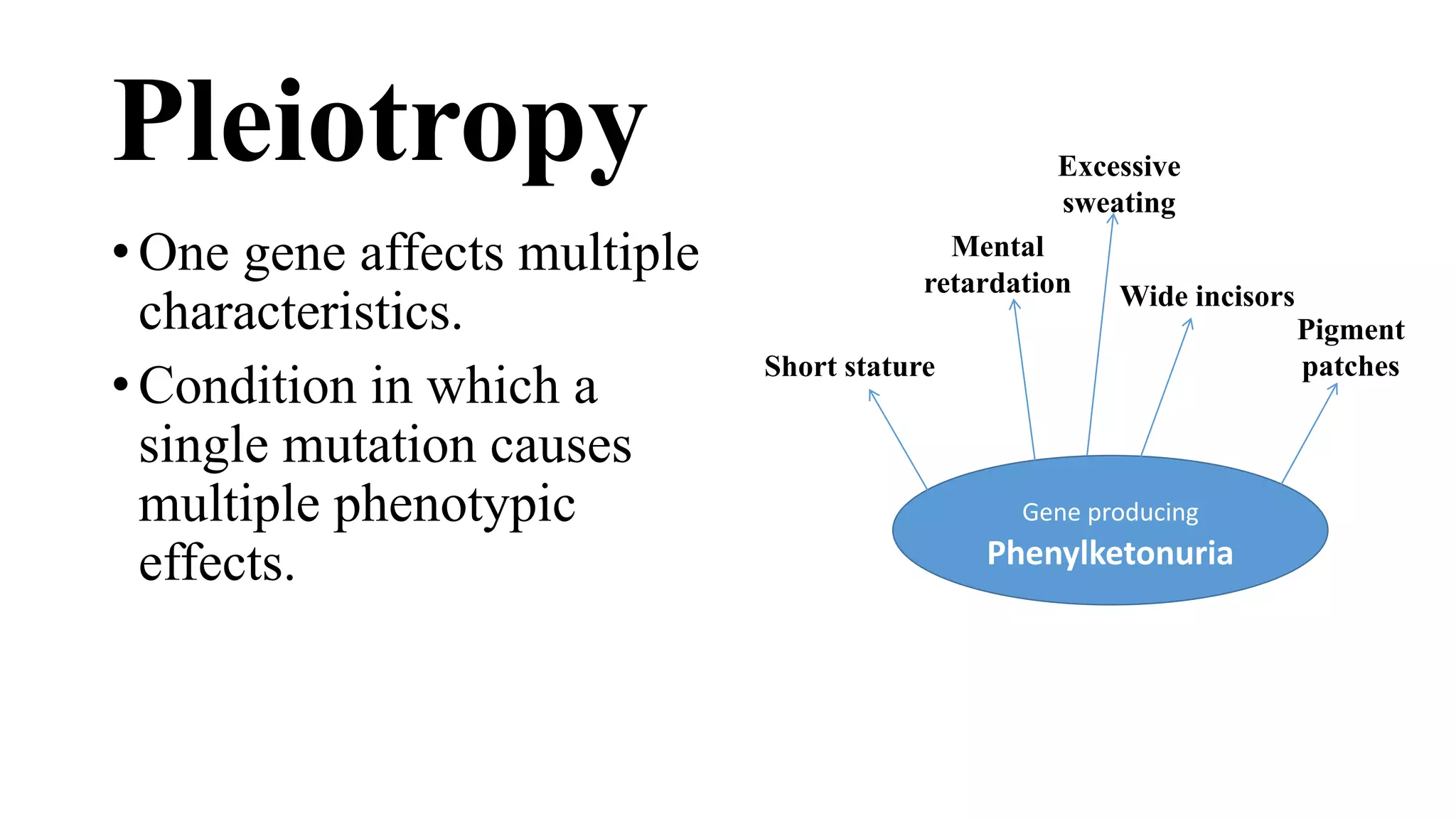
• One gene affects multiple
characteristics.
• Condition in which a
single mutation causes
multiple phenotypic
effects.
Gene producing
Phenylketonuria
Short stature
Mental
retardation Wide incisors
Pigment
patches
Excessive
sweating
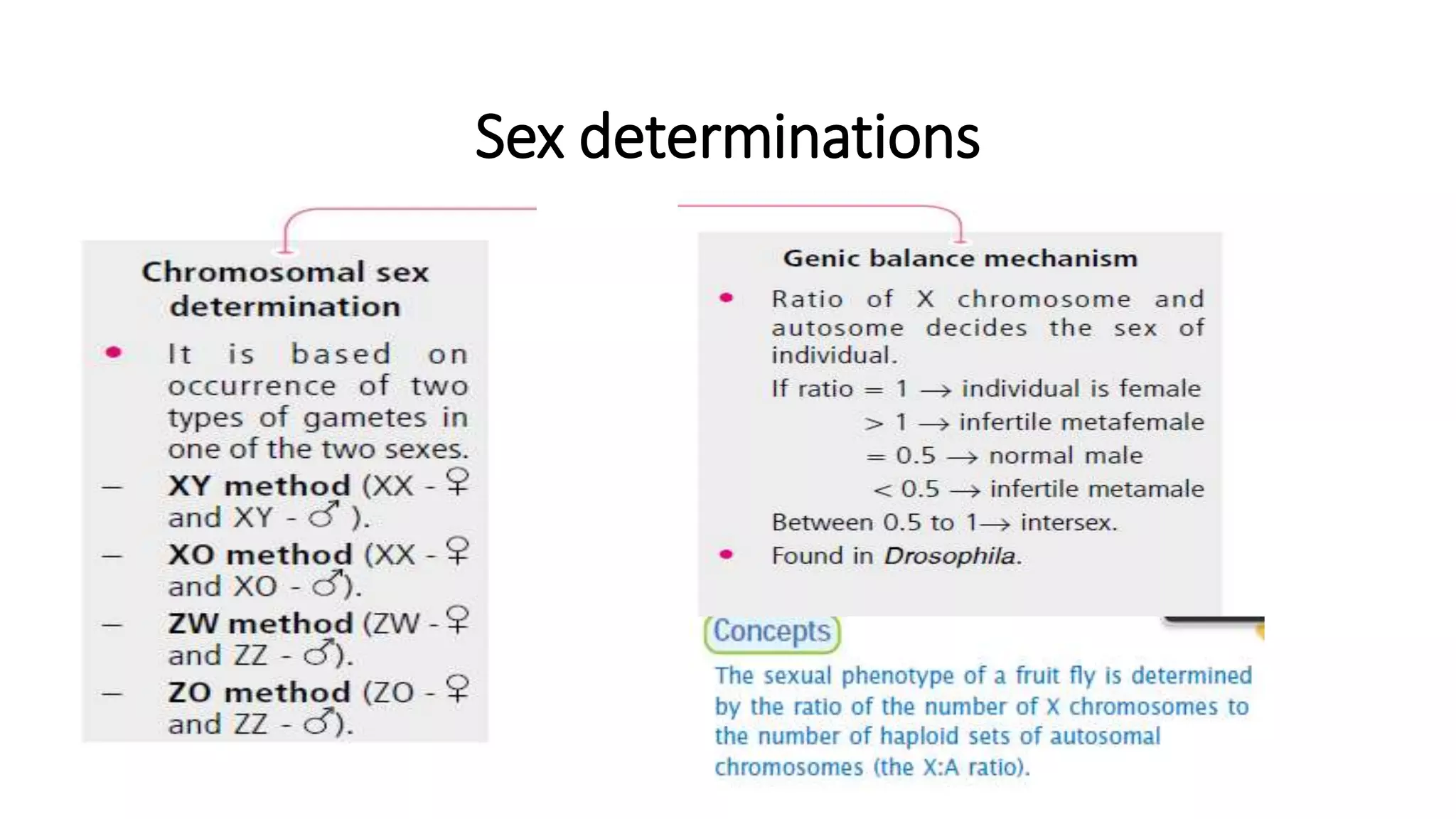
Sex determinations
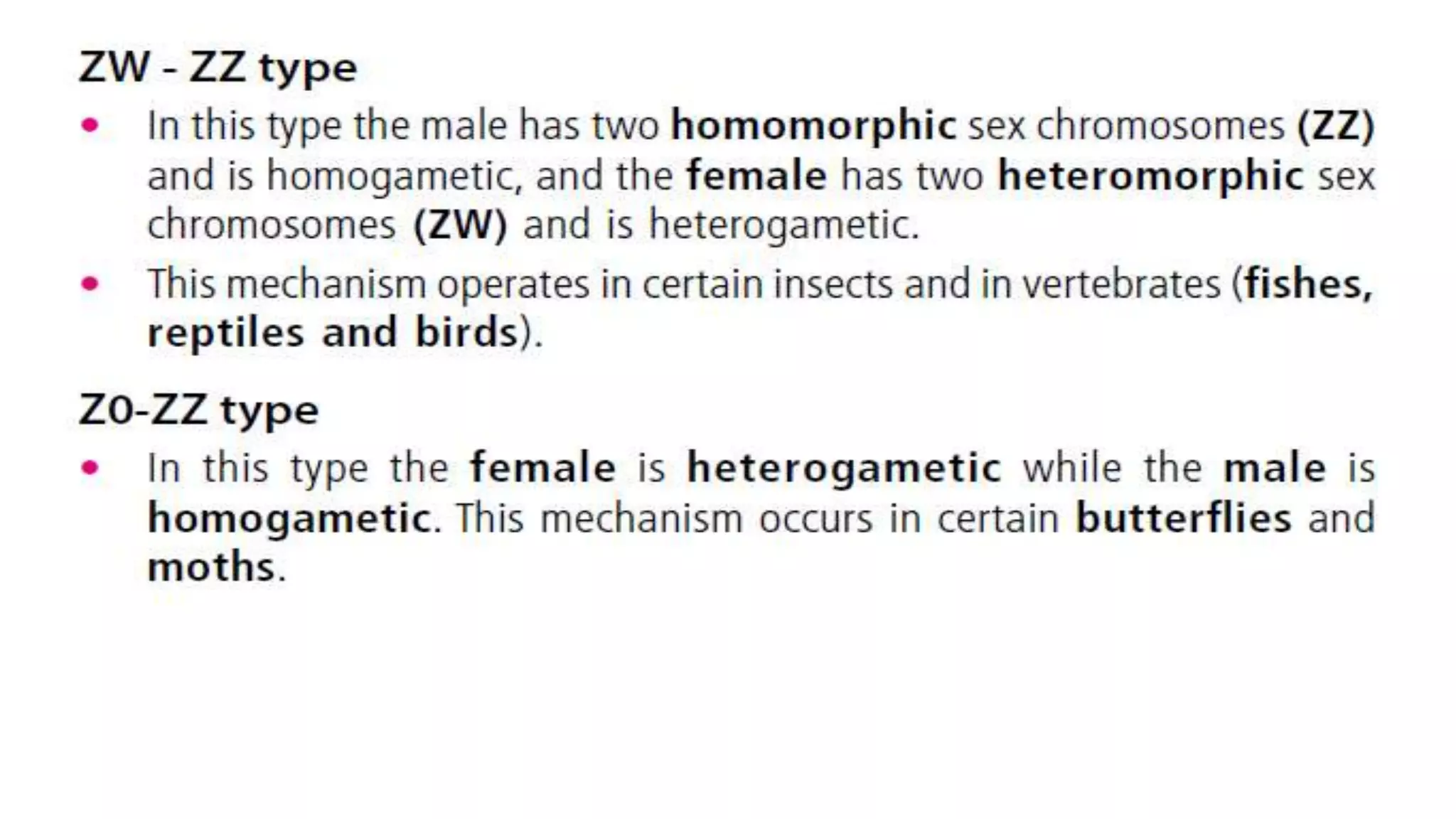
XX – XY type is found in mammals and some insects.
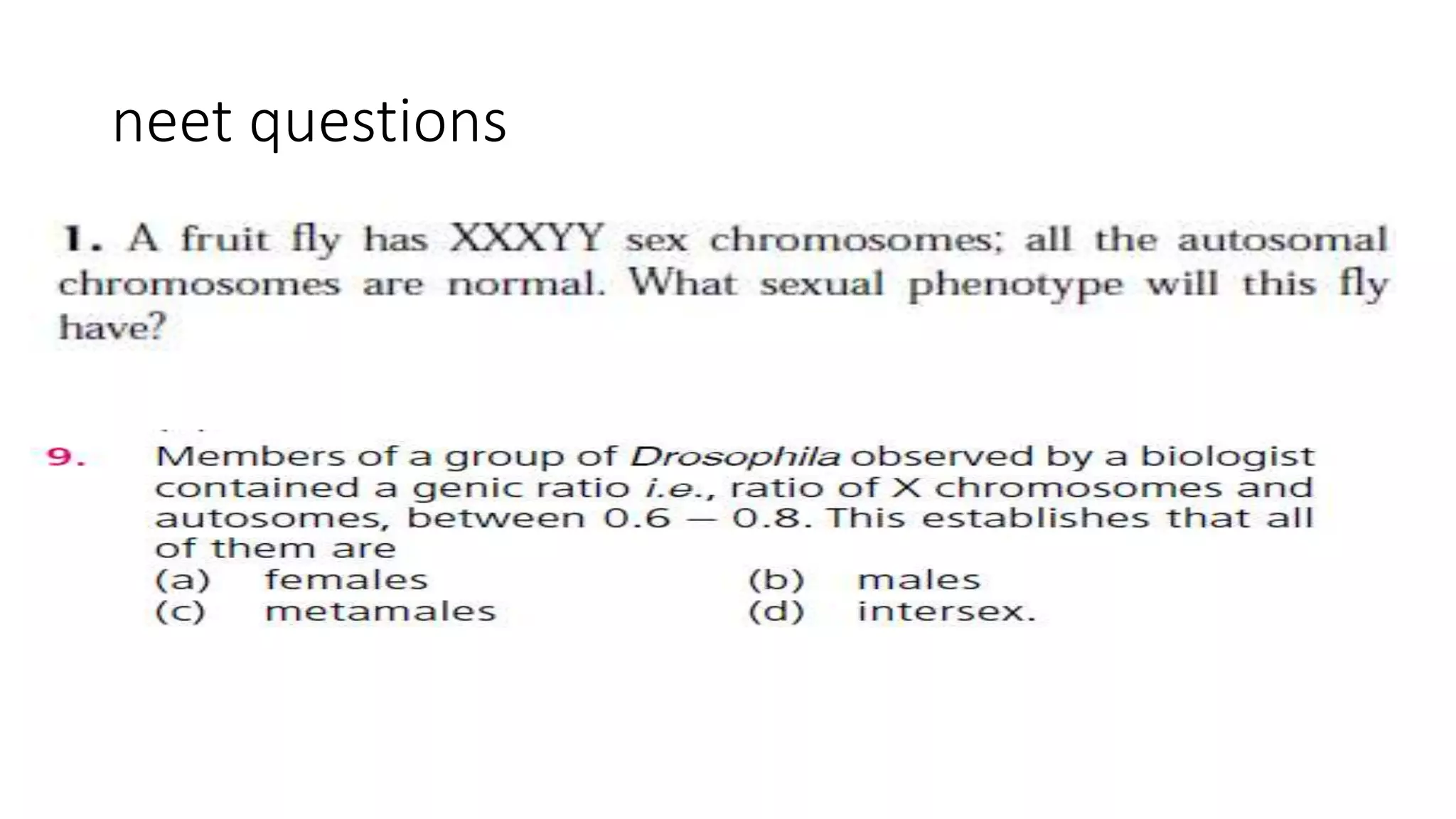
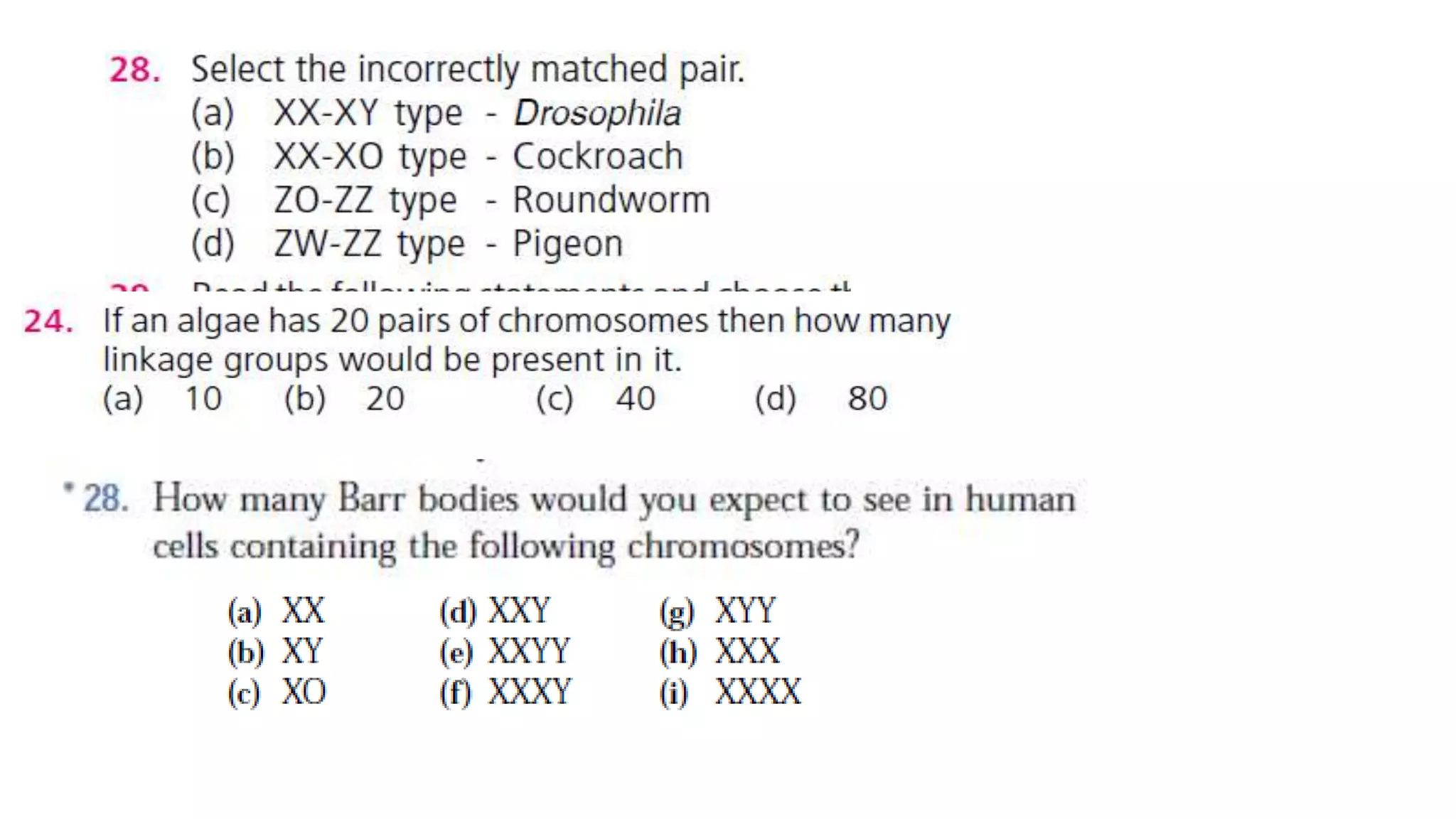
neet questions
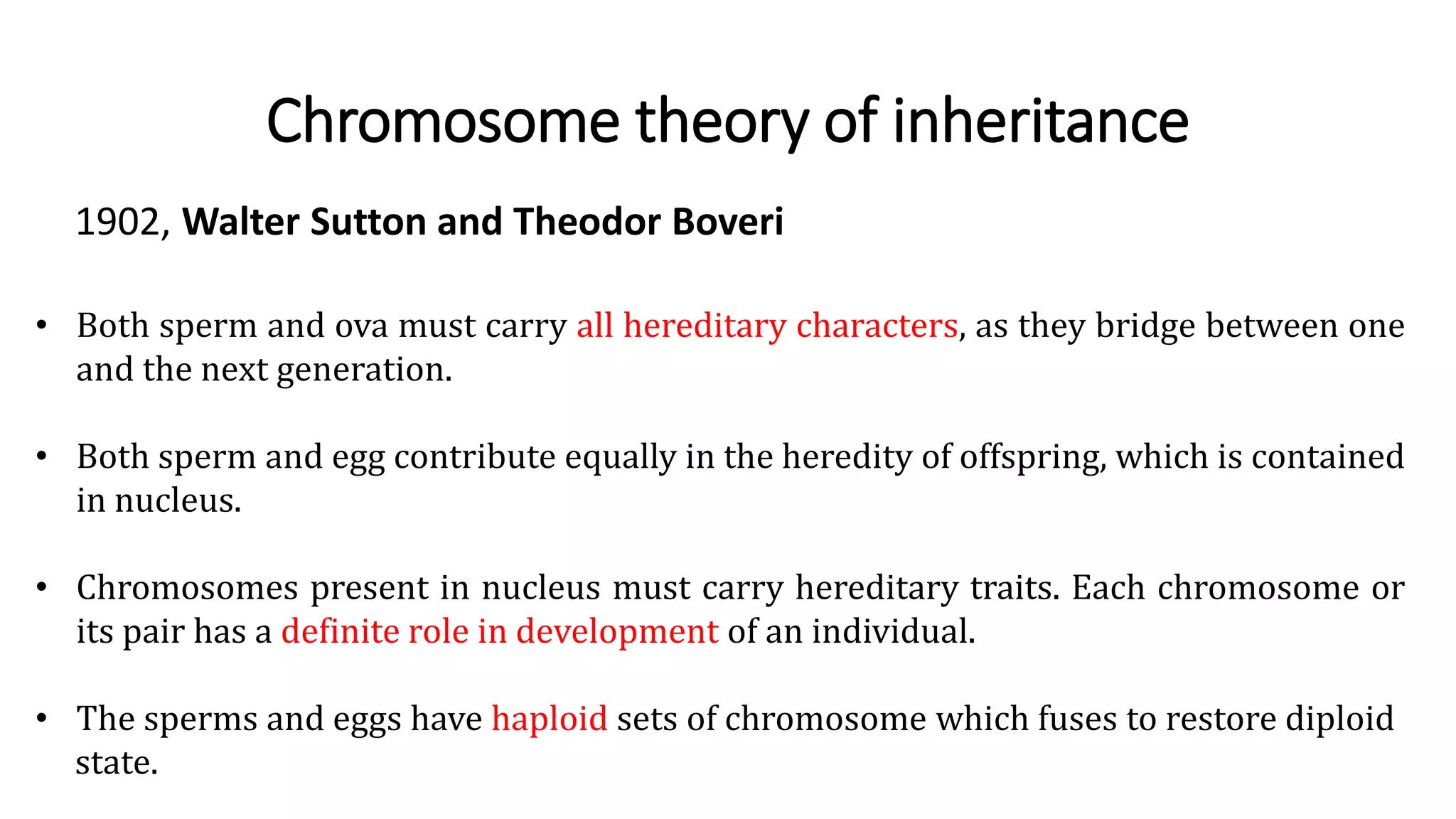
Chromosome theory of inheritance
1902, Walter Sutton and Theodor Boveri
• Both sperm and ova must carry all hereditary characters, as they bridge between one
and the next generation.
• Both sperm and egg contribute equally in the heredity of offspring, which is contained
in nucleus.
• Chromosomes present in nucleus must carry hereditary traits. Each chromosome or
its pair has a definite role in development of an individual.
• The sperms and eggs have haploid sets of chromosome which fuses to restore diploid
state.
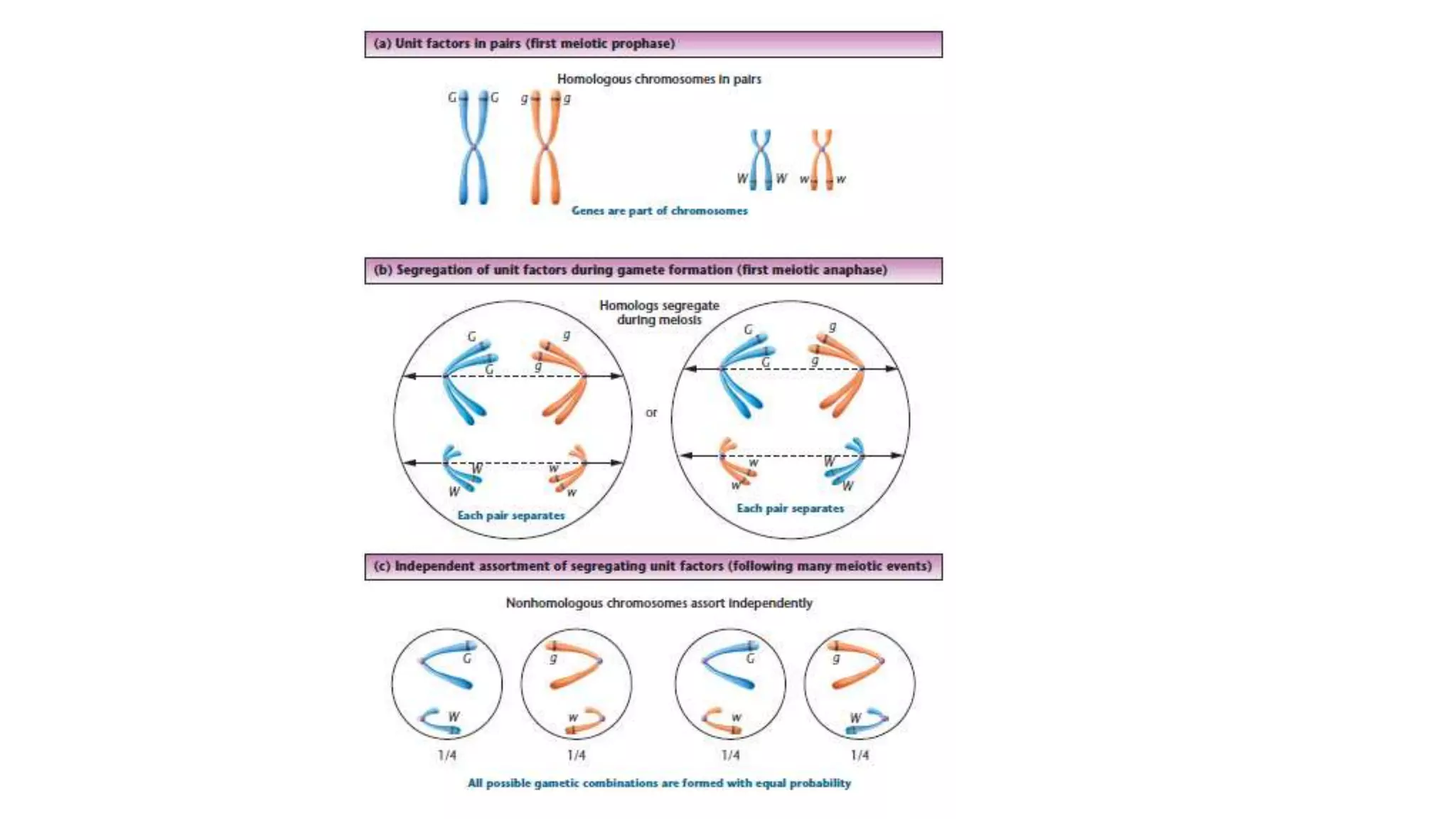
• Homologous chromosomes synapse during meiosis and get separated to pass into
different cells that forms the basis for segregation and independent assortment.
• The chromosome retain their number, structure and individuality throughout the life
of organism and form generation to generations.
• The two genes or chromosomes neither get lost nor mixed up. They behave as units.
• Both chromosome as well as genes occur in pairs in somatic or diploid cells. A
gamete contains only one chormosome of a type and only one of the two alleles of
trait.
Binomial Theorem
Using the formula, let’s determine the probability that in a family with five
children, 3 will be males and 2 females.
Sex-limited inheritance : A trait that is expressed in only one sex even though the trait
may not be X-linked.
.Sex-influenced inheritance: Phenotypic expression conditioned by the sex of the
individual. A heterozygote may express one phenotype in one sex and an alternate
phenotype in the other sex (e.g., pattern baldness in humans).
Gene related disorders
• Sickle-cell anemia is caused by a mutant form of
hemoglobin, the protein that transports oxygen
from the lungs to cells in the body.
• Hemoglobin is a composite molecule made up of
two different polypeptides, a-globin and b-globin,
each encoded by a different gene.
• Each functional hemoglobin molecule contains
two a-globin and two b-globin chains. In sickle-
cell anemia, a mutation in the gene encoding b-
globin causes an amino acid substitution in 1 of
the 146 amino acids in the protein.
mutation in sickle-cell anemia consists of a change in one DNA nucleotide, which
leads to a change in codon 6 in mRNA from GAG to GUG, which in turn changes
amino acid number 6 in b-globin from glutamic acid to valine.
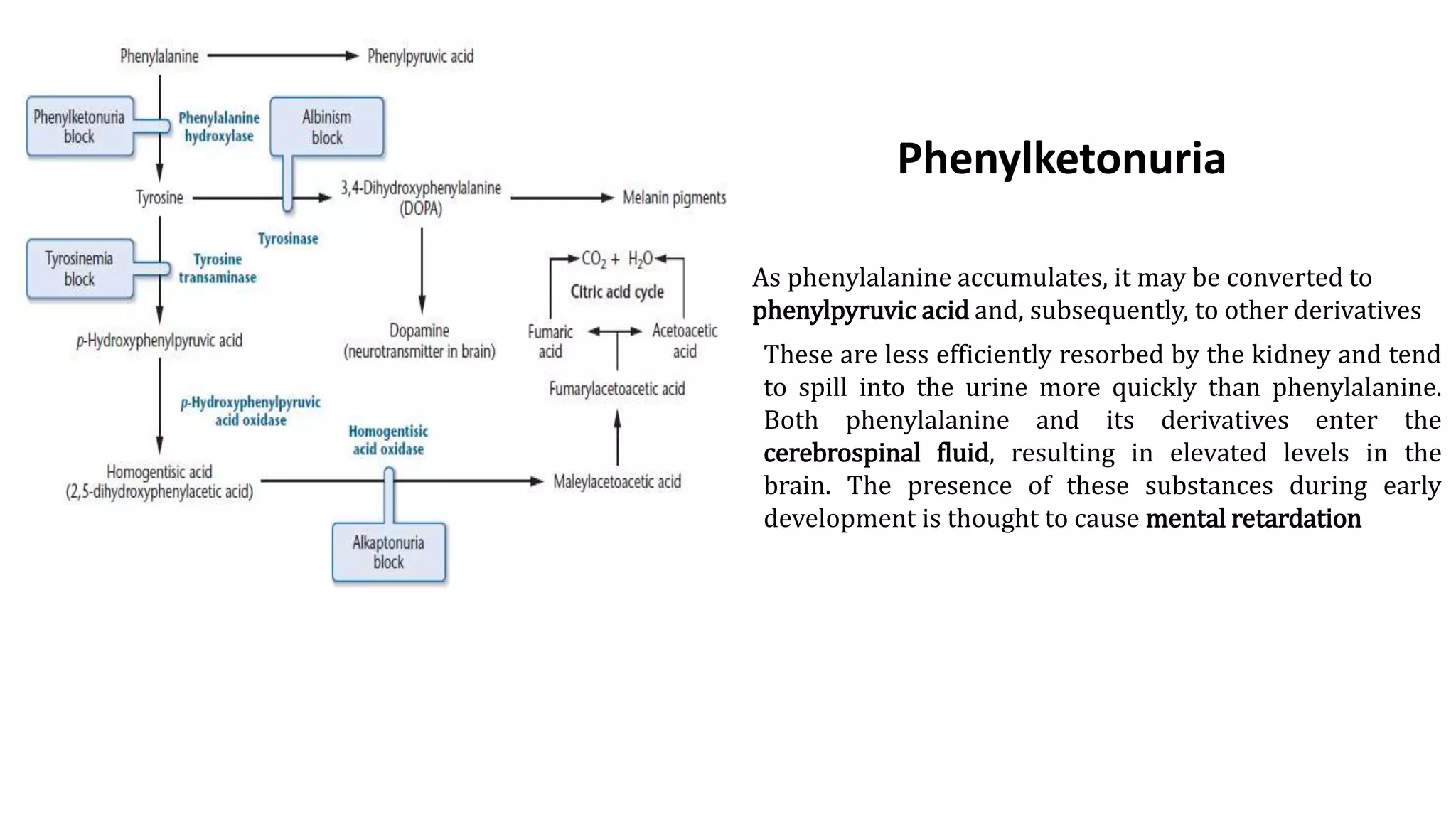
Phenylketonuria
As phenylalanine accumulates, it may be converted to
phenylpyruvic acid and, subsequently, to other derivatives
These are less efficiently resorbed by the kidney and tend
to spill into the urine more quickly than phenylalanine.
Both phenylalanine and its derivatives enter the
cerebrospinal fluid, resulting in elevated levels in the
brain. The presence of these substances during early
development is thought to cause mental retardation
Hemophilia
• One cause of hemophilia is a defect in blood-clotting factor VIII, the product
of an X-linked gene.
• Defeciency of plasma thromoplastin or antihaemophilia globulin during
which exposed blood doesnot clot.
Criss-cross inheritance
1. Father of Child is colour blind and mother is carrier for colourblindness, the
probability of the child being colour blind is (NCERT fingertips)
a. 25 %
b. 50 %
c. 100 %
d. 75%
2. An individual affected by PKU lacks an enzyme that converts amino
acid..................................... into ........................................ (NCERT Fingertips)
a. Tyrosine, Phenylalanine
b. Phenylalanine, Tyrosine
c. Homogenestic acid, Phenylalanine
d. Homogenestic acid, Tyrosine
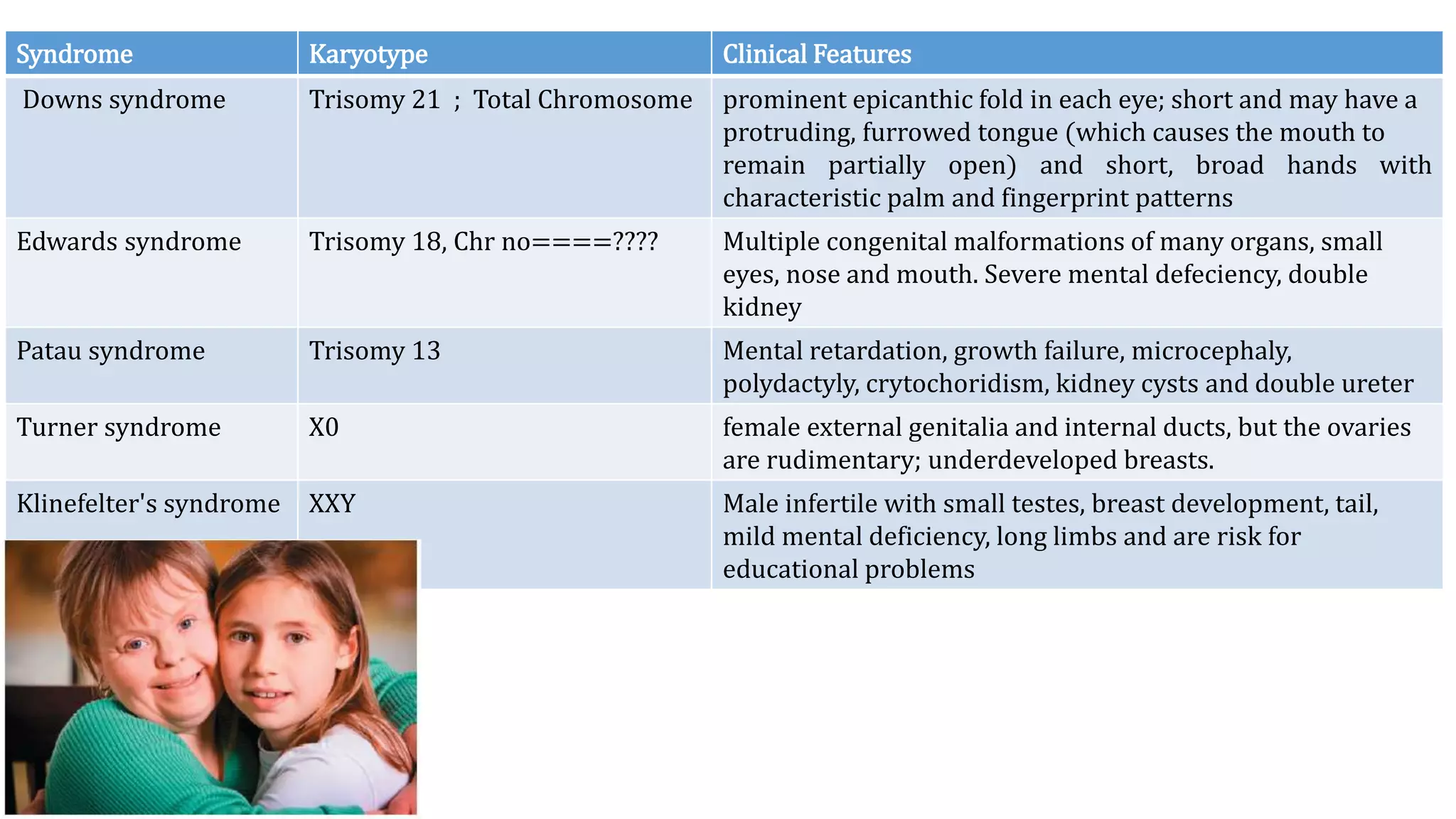
Syndrome Karyotype Clinical Features
Downs syndrome Trisomy 21 ; Total Chromosome prominent epicanthic fold in each eye; short and may have a
protruding, furrowed tongue (which causes the mouth to
remain partially open) and short, broad hands with
characteristic palm and fingerprint patterns
Edwards syndrome Trisomy 18, Chr no====???? Multiple congenital malformations of many organs, small
eyes, nose and mouth. Severe mental defeciency, double
kidney
Patau syndrome Trisomy 13 Mental retardation, growth failure, microcephaly,
polydactyly, crytochoridism, kidney cysts and double ureter
Turner syndrome X0 female external genitalia and internal ducts, but the ovaries
are rudimentary; underdeveloped breasts.
Klinefelter's syndrome XXY Male infertile with small testes, breast development, tail,
mild mental deficiency, long limbs and are risk for
educational problems
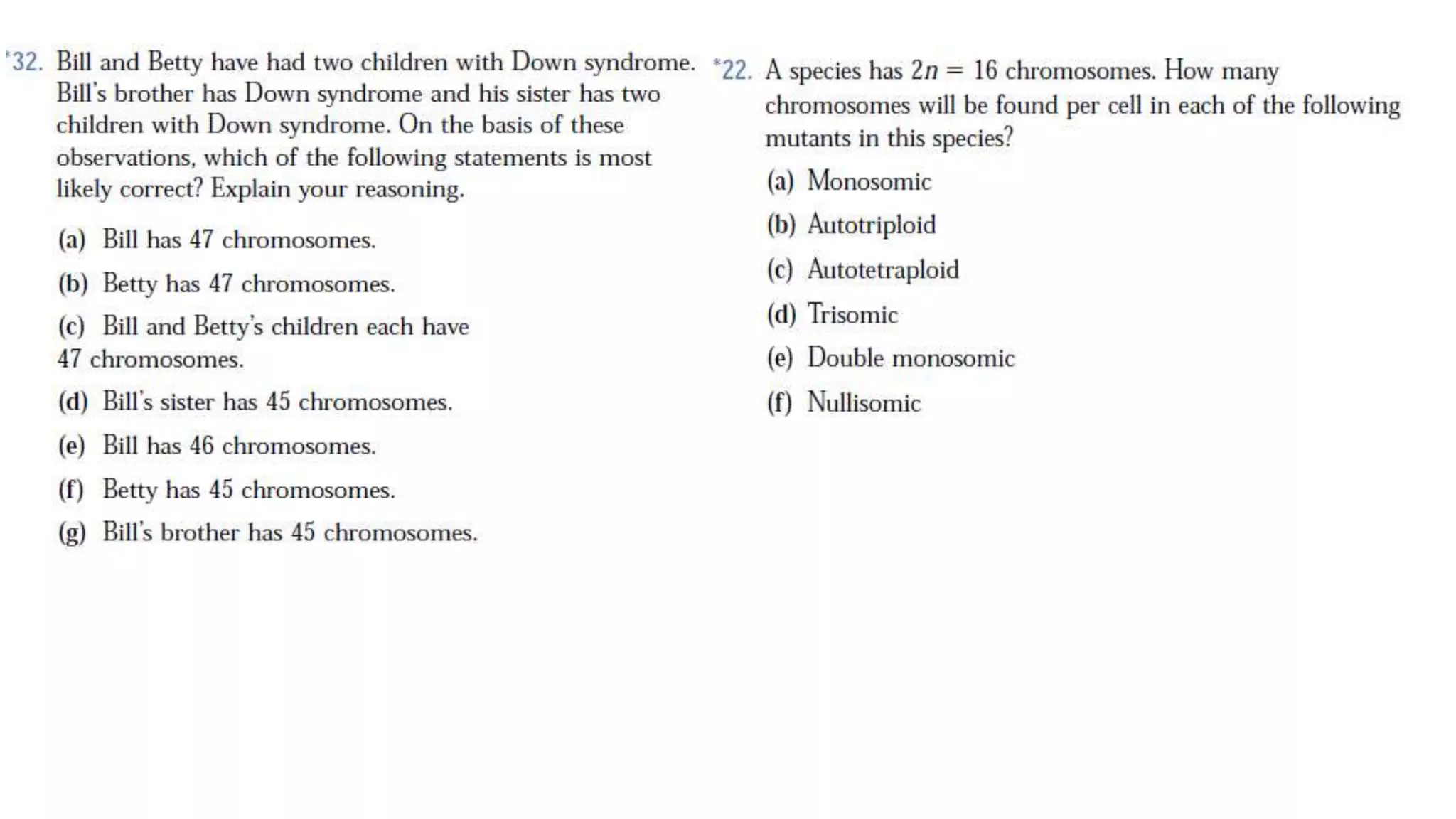
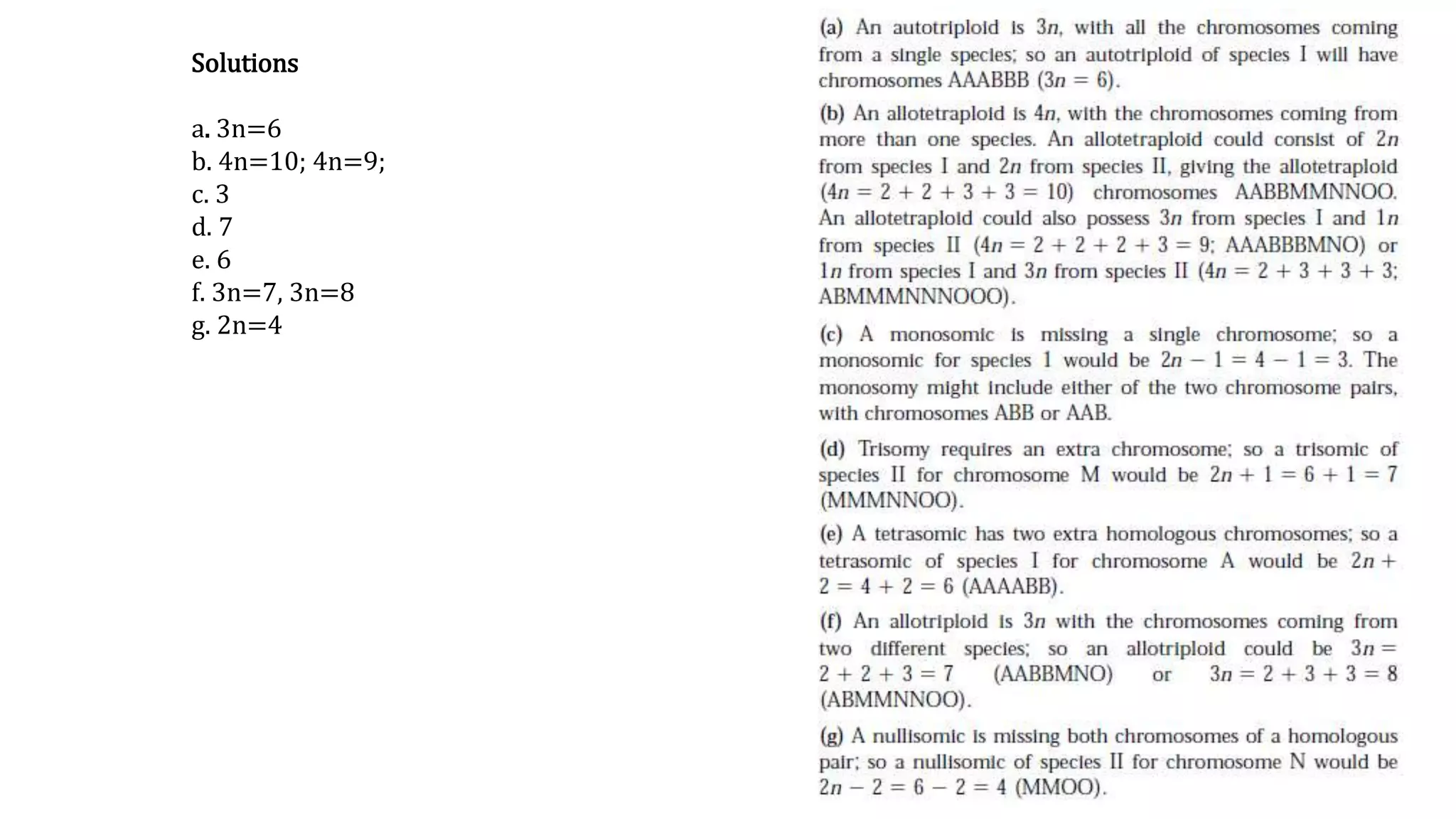
Solutions
a. 3n=6
b. 4n=10; 4n=9;
c. 3
d. 7
e. 6
f. 3n=7, 3n=8
g. 2n=4
Genetics and variations

Genetics and variations

  • 1.
    Genetics and Variations Presentedby Sciencealaya Learning Classes Reference- Genetics Benjamin, Klug and Cummings. Mauseth Botany and Google images.
  • 2.
    Concepts ■ Inheritance isgoverned by information stored in discrete factors called genes. ■ Genes are transmitted from generation to generation on vehicles called chromosomes. ■ During gamete formation, chromosomes are distributed according to postulates first described by Gregor Mendel, based on his nineteenth-century research with the garden pea.
  • 4.
  • 5.
    Monohybrid cross-------- mendelstwo lays • Law of dominance • Law of segregation
  • 7.
  • 11.
  • 12.
    Genotype and phenotyperatio of F2 generation
  • 14.
    Linkage • Complete Linkage 1-Genes located on same chromosome. 2- Do not exhibit detectable crossing over. 3- Test-cross reveals the effect of linkage. 4- 0% recombination, 100% parental. • Incomplete linkage 1- Detectable crossing over in chromosome. 2- Test cross reveals effect of incomplete linkage. 3- Recombination %= Parental %=
  • 19.
    (a) Are thegenes that determine coat color and hair type assorting independently?
  • 21.
    Multiple Allele • Whenthree or more alleles of the same gene—which we designate as multiple alleles— are present in a population, the resulting mode of inheritance may be unique.
  • 22.
    Neet questions The LMand LN alleles at the MN blood group locus exhibit codominance. Give the expected genotypes and phenotypes and their ratios in progeny resulting from the following crosses. (a) LMLM _x0002_ LMLN (b) LNLN _x0002_ LNLN
  • 23.
    Pleiotropy • One geneaffects multiple characteristics. • Condition in which a single mutation causes multiple phenotypic effects. Gene producing Phenylketonuria Short stature Mental retardation Wide incisors Pigment patches Excessive sweating
  • 24.
  • 25.
    XX – XYtype is found in mammals and some insects.
  • 28.
  • 30.
    Chromosome theory ofinheritance 1902, Walter Sutton and Theodor Boveri • Both sperm and ova must carry all hereditary characters, as they bridge between one and the next generation. • Both sperm and egg contribute equally in the heredity of offspring, which is contained in nucleus. • Chromosomes present in nucleus must carry hereditary traits. Each chromosome or its pair has a definite role in development of an individual. • The sperms and eggs have haploid sets of chromosome which fuses to restore diploid state.
  • 31.
    • Homologous chromosomessynapse during meiosis and get separated to pass into different cells that forms the basis for segregation and independent assortment. • The chromosome retain their number, structure and individuality throughout the life of organism and form generation to generations. • The two genes or chromosomes neither get lost nor mixed up. They behave as units. • Both chromosome as well as genes occur in pairs in somatic or diploid cells. A gamete contains only one chormosome of a type and only one of the two alleles of trait.
  • 33.
    Binomial Theorem Using theformula, let’s determine the probability that in a family with five children, 3 will be males and 2 females.
  • 35.
    Sex-limited inheritance :A trait that is expressed in only one sex even though the trait may not be X-linked.
  • 36.
    .Sex-influenced inheritance: Phenotypicexpression conditioned by the sex of the individual. A heterozygote may express one phenotype in one sex and an alternate phenotype in the other sex (e.g., pattern baldness in humans).
  • 37.
  • 38.
    • Sickle-cell anemiais caused by a mutant form of hemoglobin, the protein that transports oxygen from the lungs to cells in the body. • Hemoglobin is a composite molecule made up of two different polypeptides, a-globin and b-globin, each encoded by a different gene. • Each functional hemoglobin molecule contains two a-globin and two b-globin chains. In sickle- cell anemia, a mutation in the gene encoding b- globin causes an amino acid substitution in 1 of the 146 amino acids in the protein. mutation in sickle-cell anemia consists of a change in one DNA nucleotide, which leads to a change in codon 6 in mRNA from GAG to GUG, which in turn changes amino acid number 6 in b-globin from glutamic acid to valine.
  • 41.
    Phenylketonuria As phenylalanine accumulates,it may be converted to phenylpyruvic acid and, subsequently, to other derivatives These are less efficiently resorbed by the kidney and tend to spill into the urine more quickly than phenylalanine. Both phenylalanine and its derivatives enter the cerebrospinal fluid, resulting in elevated levels in the brain. The presence of these substances during early development is thought to cause mental retardation
  • 42.
    Hemophilia • One causeof hemophilia is a defect in blood-clotting factor VIII, the product of an X-linked gene. • Defeciency of plasma thromoplastin or antihaemophilia globulin during which exposed blood doesnot clot. Criss-cross inheritance
  • 43.
    1. Father ofChild is colour blind and mother is carrier for colourblindness, the probability of the child being colour blind is (NCERT fingertips) a. 25 % b. 50 % c. 100 % d. 75% 2. An individual affected by PKU lacks an enzyme that converts amino acid..................................... into ........................................ (NCERT Fingertips) a. Tyrosine, Phenylalanine b. Phenylalanine, Tyrosine c. Homogenestic acid, Phenylalanine d. Homogenestic acid, Tyrosine
  • 46.
    Syndrome Karyotype ClinicalFeatures Downs syndrome Trisomy 21 ; Total Chromosome prominent epicanthic fold in each eye; short and may have a protruding, furrowed tongue (which causes the mouth to remain partially open) and short, broad hands with characteristic palm and fingerprint patterns Edwards syndrome Trisomy 18, Chr no====???? Multiple congenital malformations of many organs, small eyes, nose and mouth. Severe mental defeciency, double kidney Patau syndrome Trisomy 13 Mental retardation, growth failure, microcephaly, polydactyly, crytochoridism, kidney cysts and double ureter Turner syndrome X0 female external genitalia and internal ducts, but the ovaries are rudimentary; underdeveloped breasts. Klinefelter's syndrome XXY Male infertile with small testes, breast development, tail, mild mental deficiency, long limbs and are risk for educational problems
  • 49.
    Solutions a. 3n=6 b. 4n=10;4n=9; c. 3 d. 7 e. 6 f. 3n=7, 3n=8 g. 2n=4