 A mutation is a change in a gene
 A mutation can only be inherited in it
  occurs in a sex cell
 Effects of mutations can be:
    › Positive
    › Negative
    › Neutral
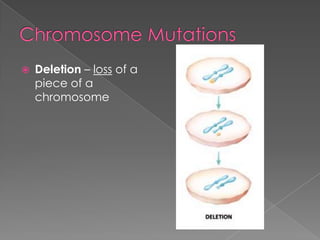
   Deletion – loss of a
    piece of a
    chromosome
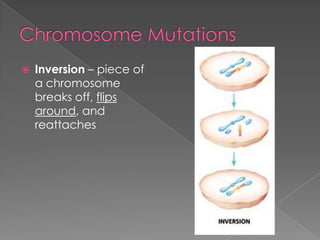
   Inversion – piece of
    a chromosome
    breaks off, flips
    around, and
    reattaches
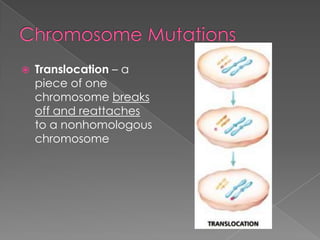
   Translocation – a
    piece of one
    chromosome breaks
    off and reattaches
    to a nonhomologous
    chromosome
   Nondisjunction – chromosome fails to
    separate from its homologue during
    meiosis
   Point Mutation – one nucleotide is
    changed in the DNA sequence
    › Substitution
    › Deletion
    › Insertion
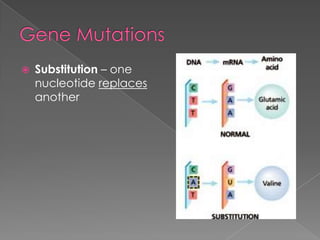
   Substitution – one
    nucleotide replaces
    another
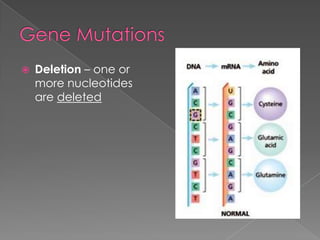
   Deletion – one or
    more nucleotides
    are deleted
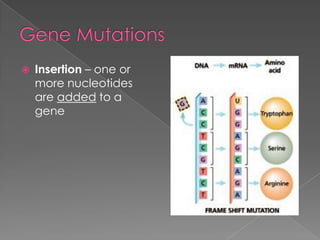
   Insertion – one or
    more nucleotides
    are added to a
    gene
   Deletion and insertion mutations can
    both result in frameshift mutations, where
    all amino acids downstream change
   Genetic screening – examination of a
    person’s genetic makeup
    › Karyotypes, tests for proteins, DNA tests
   More than 200 genetic disorders can
    now be detected in the fetus
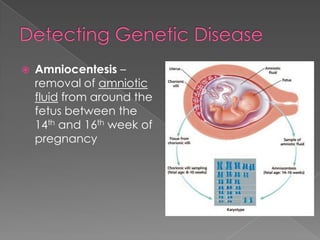
   Amniocentesis –
    removal of amniotic
    fluid from around the
    fetus between the
    14th and 16th week of
    pregnancy
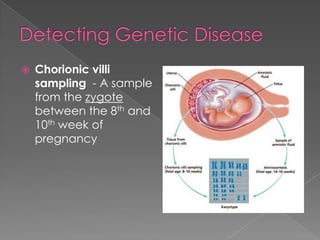
   Chorionic villi
    sampling - A sample
    from the zygote
    between the 8th and
    10th week of
    pregnancy
   Genetic counseling – the process of
    informing a person or couple about their
    genetic makeup
    › Informs individuals about problems that
      might affect their offspring
    › Predicts the likelihood that a couple will
      produce an affected child
 Treat the symptoms
 Prevent symptoms
   Gene therapy – technique that places a
    healthy copy of a gene into the cells of
    a person whose copy of the gene is
    defective

Genetic diseases presentation

  • 2.
     A mutationis a change in a gene  A mutation can only be inherited in it occurs in a sex cell  Effects of mutations can be: › Positive › Negative › Neutral
  • 3.
     Deletion – loss of a piece of a chromosome
  • 4.
     Inversion – piece of a chromosome breaks off, flips around, and reattaches
  • 5.
     Translocation – a piece of one chromosome breaks off and reattaches to a nonhomologous chromosome
  • 6.
     Nondisjunction – chromosome fails to separate from its homologue during meiosis
  • 7.
     Point Mutation – one nucleotide is changed in the DNA sequence › Substitution › Deletion › Insertion
  • 8.
     Substitution – one nucleotide replaces another
  • 9.
     Deletion – one or more nucleotides are deleted
  • 10.
     Insertion – one or more nucleotides are added to a gene
  • 11.
     Deletion and insertion mutations can both result in frameshift mutations, where all amino acids downstream change
  • 12.
     Genetic screening – examination of a person’s genetic makeup › Karyotypes, tests for proteins, DNA tests  More than 200 genetic disorders can now be detected in the fetus
  • 13.
     Amniocentesis – removal of amniotic fluid from around the fetus between the 14th and 16th week of pregnancy
  • 14.
     Chorionic villi sampling - A sample from the zygote between the 8th and 10th week of pregnancy
  • 15.
     Genetic counseling – the process of informing a person or couple about their genetic makeup › Informs individuals about problems that might affect their offspring › Predicts the likelihood that a couple will produce an affected child
  • 16.
     Treat thesymptoms  Prevent symptoms
  • 17.
     Gene therapy – technique that places a healthy copy of a gene into the cells of a person whose copy of the gene is defective