Genetic Diseases
5. Hemophilia
 Excessive bleeding due to failures in blood
clotting
 Usually occurs in males
 Problem with blood-clotting factors
 Some of the symptoms are:
Bleeding after receiving vaccination
Prolonged bleeding after circumcision
Prolonged bleeding after umbilical cord is cut
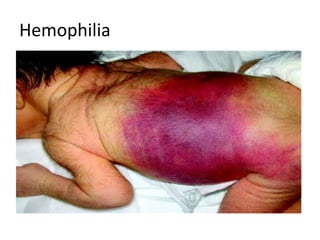
Hemophilia
Hemophilia
 Symptoms:
Bleeding into a joint/muscle that causes pain
and swelling
Abdominal bleeding after an injury/surgery
Easy bruising
Frequent nosebleeds
Blood in urine
Bleeding after dental work
Hemophilia
 Clotting-factor replacement therapy injected
on a regular basis or when needed
Genetic Diseases
6. Diabetes
 Inability to 1) metabolize sugar properly
2) deficiency of effective circulating
insulin
 Type 1/Insulin-Dependent: inability of the
pancreas to produce insulin
 Type 2/Non-Insulin-Dependent: inability of the
insulin to exert its normal physiological actions
Diabetes
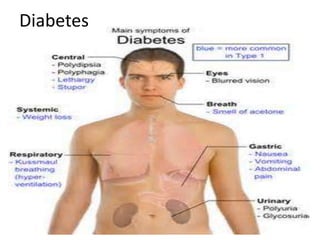
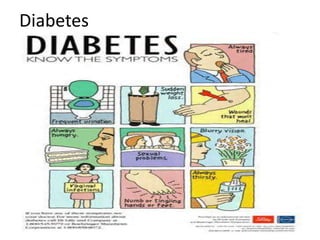
 Symptoms:
Excessive urination, thirst, weight loss
 Both hereditary and environmental factors can
lead to its development and progression
Diabetes
Diabetes
Genetic Diseases
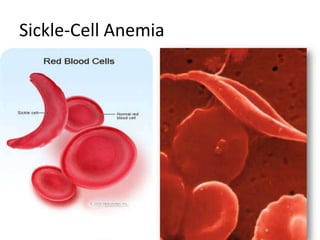
7. Sickle-Cell Anemia
 Red blood cells are long and curved like a
sickle
 Cannot pass through small capillaries, so
oxygen cannot reach all parts of the body
 Also block the passage way of white blood
cells
 May die from infection before the age of 20
 Common among African Americans
Sickle-Cell Anemia
Genetic Diseases
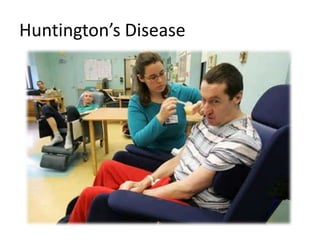
8. Huntington’s Disease
 Dominant gene found on chromosome 4
 Progressive degeneration of the nervous
system
 Nerve cells begin to deteriorate during middle
age
 Muscle spasms, depression, significant
changes in personality
Huntington’s Disease
Causes of Genetic Abnormalities
1. Mutation in the chemical structure of one or
more genes
2. Mutation brought about by environmental
hazards
e.g. toxic industrial waste, radiation

Genetic diseases

  • 1.
    Genetic Diseases 5. Hemophilia Excessive bleeding due to failures in blood clotting  Usually occurs in males  Problem with blood-clotting factors  Some of the symptoms are: Bleeding after receiving vaccination Prolonged bleeding after circumcision Prolonged bleeding after umbilical cord is cut
  • 2.
  • 3.
    Hemophilia  Symptoms: Bleeding intoa joint/muscle that causes pain and swelling Abdominal bleeding after an injury/surgery Easy bruising Frequent nosebleeds Blood in urine Bleeding after dental work
  • 4.
    Hemophilia  Clotting-factor replacementtherapy injected on a regular basis or when needed
  • 5.
    Genetic Diseases 6. Diabetes Inability to 1) metabolize sugar properly 2) deficiency of effective circulating insulin  Type 1/Insulin-Dependent: inability of the pancreas to produce insulin  Type 2/Non-Insulin-Dependent: inability of the insulin to exert its normal physiological actions
  • 6.
    Diabetes  Symptoms: Excessive urination,thirst, weight loss  Both hereditary and environmental factors can lead to its development and progression
  • 7.
  • 8.
  • 9.
    Genetic Diseases 7. Sickle-CellAnemia  Red blood cells are long and curved like a sickle  Cannot pass through small capillaries, so oxygen cannot reach all parts of the body  Also block the passage way of white blood cells  May die from infection before the age of 20  Common among African Americans
  • 10.
  • 11.
    Genetic Diseases 8. Huntington’sDisease  Dominant gene found on chromosome 4  Progressive degeneration of the nervous system  Nerve cells begin to deteriorate during middle age  Muscle spasms, depression, significant changes in personality
  • 12.
  • 13.
    Causes of GeneticAbnormalities 1. Mutation in the chemical structure of one or more genes 2. Mutation brought about by environmental hazards e.g. toxic industrial waste, radiation