





Gene Therapy
“A promising future to
Diseases Treatment”
GENE:
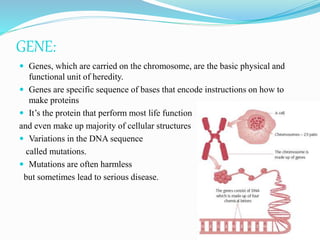
 Genes, which are carried on the chromosome, are the basic physical and
functional unit of heredity.
 Genes are specific sequence of bases that encode instructions on how to
make proteins
 It’s the protein that perform most life function
and even make up majority of cellular structures
 Variations in the DNA sequence
called mutations.
 Mutations are often harmless
but sometimes lead to serious disease.
Gene therapy:
 Gene therapy is the insertion of genes into a cell to treat a disease in which
a defective mutant allele is replaced with a functional one
 DNA is used as a therapeutic agent
 Some common approaches:
i. Replacing an abnormal gene with a healthy copy of the gene.
ii. Inactivating an abnormal gene that is functioning improperly.
iii. Introducing a new gene into the body to help fight a disease.
How It Works?
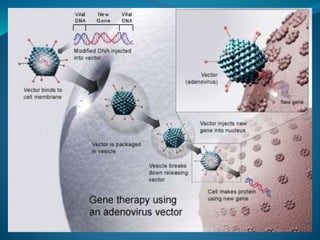
 A carrier called the vector is genetically engineered to deliver the gene.
 Vector delivers the therapeutic gene into a patient’s target cell
 The target cells become infected with the viral vector
 The genetic material is inserted into the target cell by vector
 Functional proteins are created from the therapeutic gene causing the cell to
return to a normal state
History:
 1960:
The concepts of Gene Therapy was introduced
 1977:
In 1977, scientists were able to use gene therapy technique to deliver a gene
into cells of mammals.
 1990:
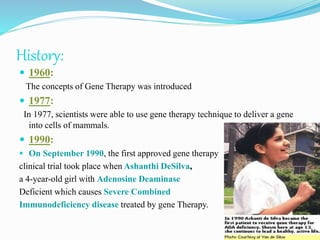
 On September 1990, the first approved gene therapy
clinical trial took place when Ashanthi DeSilva,
a 4-year-old girl with Adenosine Deaminase
Deficient which causes Severe Combined
Immunodeficiency disease treated by gene Therapy.
History:
 New gene therapy approach repairs errors in messenger RNA derived from
defective genes. This technique has the potential to treat the blood disorder
Thalassemia, Cystic fibrosis, and some cancers
 Sickle cell disease is successfully treated in mice
 1992:
Doctor Claudio Bordignon working at the Vita-Salute San Raffaele
University Italy performed the first procedure of gene therapy using
hematopoietic stem cells to correct hereditary diseases
 1999:
Gene therapy suffered a major setback with the Death of Jesse Gelsinger in a
gene-therapy experiment in the United States
History:
 2003: In Los Angeles research team inserted genes into brain .The transfer
of gene into brain is a significant achievement for Parkinson’s and other
such diseases.
 2006: Scientists at the National Institutes of Health (Bethesda, Maryland)
have successfully treated metastatic Melanoma in two patients. This study
demonstrated that gene therapy can be effective in treating cancer.
 2007- 2011: Research is still ongoing and the number of diseases that has
been treated successfully by gene therapy increases, like:
 Retinal disease
 Colour blindness
 Adrenoleukodystrophy
 2011: Medical community accepted that it can cure HIV as in 2008, Gero
Hutter has cured a man from HIV using gene therapy
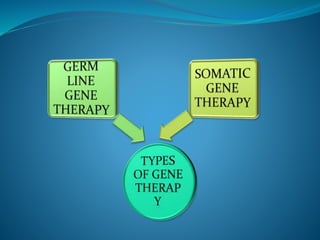
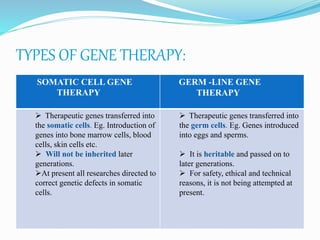
TYPES OF GENE THERAPY:
SOMATIC CELL GENE
THERAPY
GERM -LINE GENE
THERAPY
 Therapeutic genes transferred into
the somatic cells. Eg. Introduction of
genes into bone marrow cells, blood
cells, skin cells etc.
 Will not be inherited later
generations.
At present all researches directed to
correct genetic defects in somatic
cells.
 Therapeutic genes transferred into
the germ cells. Eg. Genes introduced
into eggs and sperms.
 It is heritable and passed on to
later generations.
 For safety, ethical and technical
reasons, it is not being attempted at
present.
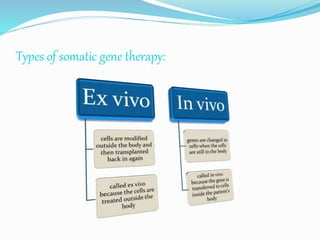
Types of somatic gene therapy:
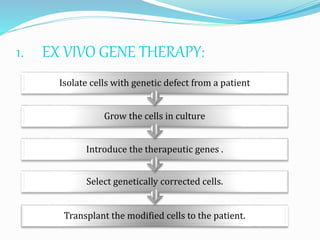
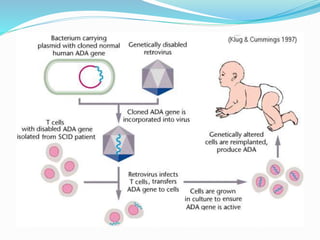
1. EX VIVO GENE THERAPY:
Transplant the modified cells to the patient.
Select genetically corrected cells.
Introduce the therapeutic genes .
Grow the cells in culture
Isolate cells with genetic defect from a patient
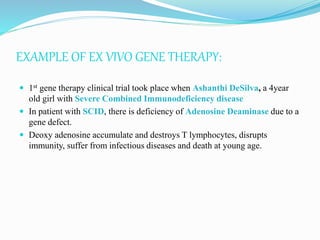
EXAMPLE OF EX VIVO GENE THERAPY:
 1st gene therapy clinical trial took place when Ashanthi DeSilva, a 4year
old girl with Severe Combined Immunodeficiency disease
 In patient with SCID, there is deficiency of Adenosine Deaminase due to a
gene defect.
 Deoxy adenosine accumulate and destroys T lymphocytes, disrupts
immunity, suffer from infectious diseases and death at young age.
2. IN VIVO GENE THERAPY:
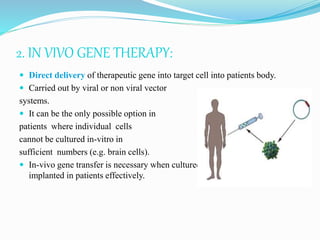
 Direct delivery of therapeutic gene into target cell into patients body.
 Carried out by viral or non viral vector
systems.
 It can be the only possible option in
patients where individual cells
cannot be cultured in-vitro in
sufficient numbers (e.g. brain cells).
 In-vivo gene transfer is necessary when cultured cells cannot be re-
implanted in patients effectively.
Example of invivo gene therapy:
Therapy for cystic fibrosis:
 In patients with cystic fibrosis, a protein called cystic fibrosis
transmembrane regulator (CFTR) is absent due to a gene defect.
 In the absence of CFTR chloride ions concentrate within the cells and it
draws water from surrounding.
 This leads to the accumulation of sticky mucous in respiratory tract and
lungs.
 Treated by in-vivo replacement of defective gene by adenovirus vector.
1. VIRAL VECTOR
2. NON VIRAL VECTOR
VECTORS:
 DNA is a large, long, fragile molecule easily degraded by serum nucleases
and intracellular nucleases. Therefore needs to be compacted and protected.
 So delivery is aided by a vector which safely delivers to target cells.
 Vectors are the vehicles used to carry the desired gene to the target cells.
 They may be:
 Viral vectors
 Non viral vectors.
1. VIRAL VECTOR:
 Virus bind to their hosts and introduce their genetic material into the
host cell.
 Viruses used as vectors are altered.
 Altered virus should transfer helpful genes to cells but should not multiply
or produce disease.
 Viruses bind to the cell surface receptors of cell membrane and deliver its
genetic contents.
 The cell will use the inserted gene to produce a therapeutic protein.
Desirable characteristics of virus:
Some important characters of virus to be vector
in gene therapy are:
 Safety: by deleting the viral genome critical for viral replication.
 Low toxicity.
 Should efficiently deliver genes
 should not induce an allergic reaction or inflammation
 Tissue tropism (cell type specificity): should be able to target specific cell
types.
 should not elicit immune response in the host.
Types of viruses used:
 To deliver the desired gene clinical trials of Gene Therapy
mostly rely on:
 Retroviruses
 Adenoviruses
 Other viruses used as vectors include adeno-associated viruses,
lentiviruses, pox viruses, alphaviruses, and herpes viruses.
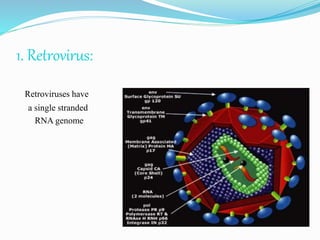
1. Retrovirus:
Retroviruses have
a single stranded
RNA genome
Retrovirus:
Advantages:
 Good at targeting and entering cells
 Can target specific cells through modification of surface proteins
 Can be modified to not replicate within host cells
Disadvantages:
 Can trigger an immune response within the host
 Can't be used to carry larger genes
 No long-term benefits.
 The random insertion of genes can disrupt other genes.
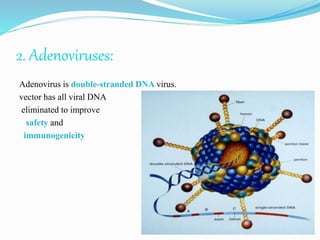
2. Adenoviruses:
Adenovirus is double-stranded DNA virus.
vector has all viral DNA
eliminated to improve
safety and
immunogenicity
Adenovirus:
Advantages:
 Easy production of virus in high titres
 Efficient gene transfer
 Ability to be expressed in both proliferating and non-proliferating cells
Disadvantages:
 Highly antigenic
 Inflammatory response elicited by their injection
 Immune response developed due to the inflammation
 Reduced expression so need frequent doses
3. Adeno-associated virus:
 AAVs are small viruses from the Parvovirus family
 Simple, Non-pathogenic
 Single stranded DNA virus
 Dependent on the helper virus (usually adenovirus) to replicate.
Advantages:
 Persistent expression
 No insertional mutagenesis
 Infect both dividing and nondividing cells
 Safe
Disadvantages:
 Small genome limits size of foreign DNA.
 Low level of gene expression
4. Herpes Simplex Virus:
• Have natural tendency to infect a particular type of cell.
• Infect and persist in nervous cells.
Advantages:
• Large insert size
• Could provide long- term CNS gene expression
Disadvantages:
• System currently under development
• Current vectors provide transient expression
• Low transduction efficiency
2. Nonviral methods:
 Methods of non-viral gene delivery include:
A. Physical approaches
B. Chemical approaches
A. Physical Methods:
 Physical approaches, including
 Nacked DNA injection
 Electroporation
 Gene gun
 Ultrasound
 Hydrodynamic pressure
employ a physical force that permeates the cell membrane and facilitates
intracellular gene transfer
1) Nacked DNA injection:
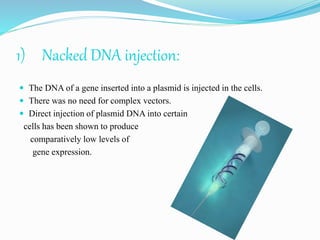
 The DNA of a gene inserted into a plasmid is injected in the cells.
 There was no need for complex vectors.
 Direct injection of plasmid DNA into certain
cells has been shown to produce
comparatively low levels of
gene expression.
2) Electroporation:
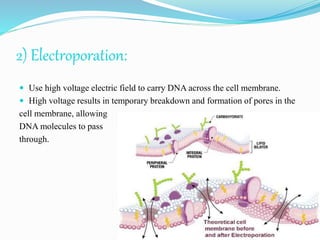
 Use high voltage electric field to carry DNA across the cell membrane.
 High voltage results in temporary breakdown and formation of pores in the
cell membrane, allowing
DNA molecules to pass
through.
3) Gene Gun:
 Delivery with gene gun method also termed ballistic DNA delivery or
DNA-coated particle bombardment
 was first used for gene transfer to plants in 1987.
 Involve coating macromolecule (DNA, RNA) onto micro-carrier particles
such as gold and tungsten
 The particles achieve sufficient speed due to a pressurized inert gas
(generally helium)
 Momentum allows penetration of these particles at a certain speed to a few
millimeters of the tissue and then cellular DNA release
 Due to small size(1µm), the particles easily penetrate the cell
membrane and transport DNA into the cell.
4) Sonoporation:
 Ultrasound applied to the cell which increase the permeability of cell
membrane to macromolecules such as plasmid DNA. therapeutic DNA then
can effectively be transferred into the cell
 Ultrasound creates membrane pores and facilitates intracellular gene
transfer through the membrane pores
 It could become an ideal method for noninvasive gene transfer into cells of
the internal organs.
5) Hydrodynamic pressure:
 Involve rapid injection of a large volume of physiological solution to
increase the permeability of cell membranes of the cell.
 Hydrodynamic pressure created by the injection of the large volume of
DNA solution with blood pressure inside veins increases the permeability of
the capillary endothelium and pores form in the plasma membrane of
parenchyma cells.
 DNA or other related molecules can reach the cell from these pores.
 The principle reason for targeting parenchyma cells:
i. capillary endothelium and parenchyma cells are closely related.
ii. capillary’s thin wall has a stretchable and easily fragmented structure.
 The effectiveness of this method depends on:
i. capillary structure
ii. structure of the cells encircling capillaries
iii. the hydrodynamic force applied
B. Chemical Methods:
1. Lipoplexes:-
 DNA must be protected from damage & its entry into the cell must be
facilitated
 DNA is covered with lipids in an organized structure like a liposome
complexed with DNA it is called a lipoplex
 3 types of lipids:
• anionic
• neutral
• cationic
Anionic and neutral lipids :
Initially were used but ignored later on due to:
 Some toxicity associated with them,
 they are compatible with body fluids
 there was a possibility of adapting them to be tissue specific
 they are complicated and time consuming to produce.
Cationic lipids:
 due to their positive charge naturally complex with the negatively charged DNA.
 Lipoplex interact with the cell membrane followed by endocytosis of the lipoplex
and finally DNA is released into the cytoplasm.
 The cationic lipids also protect against degradation of the DNA by the cell.
2. Polyplexes:
 Complexes of polymers with DNA are called polyplexes
 consist of cationic polymers and their production is regulated by ionic
interactions.
 Co-transfection with endolytic agents such as inactivated adenovirus must
occur (to lyse the endosome that is made during endocytosis, the process by
which the polyplex enters the cell)
3. Encapsulation:
 Involve encapsulation of DNA with a biodegradable polymer.
 Polymers that have an ester linkage in their structures are hydrolytically
degraded to short oligomeric and monomeric compounds which are more
easily discharged from the body
 Degradation mechanism and DNA release can be controlled by changing the
physicochemical characteristics and composition of the polymer
 DNA is protected from enzymatic degradation by encapsulation
Creating new chromosome:
 Researchers are also experimenting with introducing a 47th Artificial
Chromosome into target cells.
 This chromosome would exist autonomously alongside the standard 46, not
affecting their workings or causing any mutation.
 It would be a large vector capable of carrying substantial amount of genetic
code and the body’s immune system would not attack it.
 A problem with this potential method is the difficulty in delivering such a
large molecule to the nucleus of the target cell.
Antisense Technology:
 This method involves the introduction of a single strand DNA or RNA that
is complementary to the sequence of the target gene.
 The complementary antisense nucleic acid bind to the single mRNA
translated from the targeted gene to create a double stranded molecule
 This double stranded molecule will no longer be able to translate.
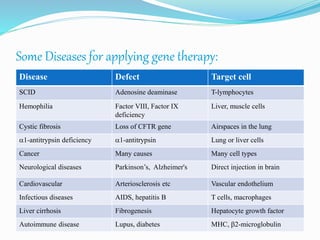
Some Diseases for applying gene therapy:
Disease Defect Target cell
SCID Adenosine deaminase T-lymphocytes
Hemophilia Factor VIII, Factor IX
deficiency
Liver, muscle cells
Cystic fibrosis Loss of CFTR gene Airspaces in the lung
1-antitrypsin deficiency 1-antitrypsin Lung or liver cells
Cancer Many causes Many cell types
Neurological diseases Parkinson’s, Alzheimer's Direct injection in brain
Cardiovascular Arteriosclerosis etc Vascular endothelium
Infectious diseases AIDS, hepatitis B T cells, macrophages
Liver cirrhosis Fibrogenesis Hepatocyte growth factor
Autoimmune disease Lupus, diabetes MHC, 2-microglobulin
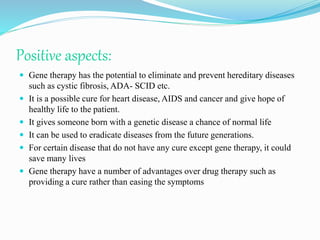
Positive aspects:
 Gene therapy has the potential to eliminate and prevent hereditary diseases
such as cystic fibrosis, ADA- SCID etc.
 It is a possible cure for heart disease, AIDS and cancer and give hope of
healthy life to the patient.
 It gives someone born with a genetic disease a chance of normal life
 It can be used to eradicate diseases from the future generations.
 For certain disease that do not have any cure except gene therapy, it could
save many lives
 Gene therapy have a number of advantages over drug therapy such as
providing a cure rather than easing the symptoms
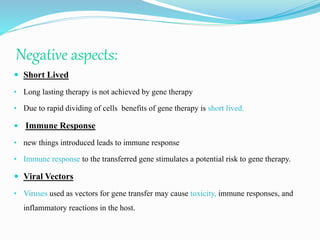
Negative aspects:
 Short Lived
• Long lasting therapy is not achieved by gene therapy
• Due to rapid dividing of cells benefits of gene therapy is short lived.
 Immune Response
• new things introduced leads to immune response
• Immune response to the transferred gene stimulates a potential risk to gene therapy.
 Viral Vectors
• Viruses used as vectors for gene transfer may cause toxicity, immune responses, and
inflammatory reactions in the host.
 Multigene Disorders
• Disorders caused by defects in multiple genes cannot be treated effectively using
gene therapy.
• Heart disease, high blood pressure, Alzheimer’s, arthritis and diabetes are hard to
treat because we need to introduce more than one gene
 Insertional mutagenesis
• The viruses may target the wrong cell.
• If the DNA is integrated in the wrong place in the genome, for example in a tumor
suppressor gene, it could induce a tumor
 Costly:
The treatment is very expensive for the patients. It is not accessible to most people
due to its high cost
ETHICAL Problems:
 Is it interfering with God’s plan?
 How can “good” and “bad” uses of gene therapy be distinguished?
 Who decides which traits are normal and which constitute a disability or
disorder?
 Will the therapy only benefit the wealthy due to its high cost?
 Could the widespread use of gene therapy make the society less accepting
of people who are different?
 Should people be allowed to use gene therapy to enhance basic human traits
such as height, intelligence or athletic ability etc?
 The idea of Germ-line gene therapy is controversial, it might affact the
development of foetus in unexpected way or have long-term side effects that
are not yet known
Future aspects and CONCLUSION:
 Theoretically, gene therapy is the permanent solution for genetic diseases
but has several complexities.
 A breakthrough may come anytime and a day may come when almost every
disease will have a gene therapy
 Current uses of gene therapy focus on treating or curing existing conditions
but in future focus could shift to prevention
 As more of the human genome is understood. With this knowledge in hand,
Gene therapy could be used to head off problems before they occur.
“THANK
YOU”

Gene therapy

  • 2.
    Gene Therapy “A promisingfuture to Diseases Treatment”
  • 3.
    GENE:  Genes, whichare carried on the chromosome, are the basic physical and functional unit of heredity.  Genes are specific sequence of bases that encode instructions on how to make proteins  It’s the protein that perform most life function and even make up majority of cellular structures  Variations in the DNA sequence called mutations.  Mutations are often harmless but sometimes lead to serious disease.
  • 4.
    Gene therapy:  Genetherapy is the insertion of genes into a cell to treat a disease in which a defective mutant allele is replaced with a functional one  DNA is used as a therapeutic agent  Some common approaches: i. Replacing an abnormal gene with a healthy copy of the gene. ii. Inactivating an abnormal gene that is functioning improperly. iii. Introducing a new gene into the body to help fight a disease.
  • 5.
    How It Works? A carrier called the vector is genetically engineered to deliver the gene.  Vector delivers the therapeutic gene into a patient’s target cell  The target cells become infected with the viral vector  The genetic material is inserted into the target cell by vector  Functional proteins are created from the therapeutic gene causing the cell to return to a normal state
  • 7.
    History:  1960: The conceptsof Gene Therapy was introduced  1977: In 1977, scientists were able to use gene therapy technique to deliver a gene into cells of mammals.  1990:  On September 1990, the first approved gene therapy clinical trial took place when Ashanthi DeSilva, a 4-year-old girl with Adenosine Deaminase Deficient which causes Severe Combined Immunodeficiency disease treated by gene Therapy.
  • 8.
    History:  New genetherapy approach repairs errors in messenger RNA derived from defective genes. This technique has the potential to treat the blood disorder Thalassemia, Cystic fibrosis, and some cancers  Sickle cell disease is successfully treated in mice  1992: Doctor Claudio Bordignon working at the Vita-Salute San Raffaele University Italy performed the first procedure of gene therapy using hematopoietic stem cells to correct hereditary diseases  1999: Gene therapy suffered a major setback with the Death of Jesse Gelsinger in a gene-therapy experiment in the United States
  • 9.
    History:  2003: InLos Angeles research team inserted genes into brain .The transfer of gene into brain is a significant achievement for Parkinson’s and other such diseases.  2006: Scientists at the National Institutes of Health (Bethesda, Maryland) have successfully treated metastatic Melanoma in two patients. This study demonstrated that gene therapy can be effective in treating cancer.  2007- 2011: Research is still ongoing and the number of diseases that has been treated successfully by gene therapy increases, like:  Retinal disease  Colour blindness  Adrenoleukodystrophy  2011: Medical community accepted that it can cure HIV as in 2008, Gero Hutter has cured a man from HIV using gene therapy
  • 12.
    TYPES OF GENETHERAPY: SOMATIC CELL GENE THERAPY GERM -LINE GENE THERAPY  Therapeutic genes transferred into the somatic cells. Eg. Introduction of genes into bone marrow cells, blood cells, skin cells etc.  Will not be inherited later generations. At present all researches directed to correct genetic defects in somatic cells.  Therapeutic genes transferred into the germ cells. Eg. Genes introduced into eggs and sperms.  It is heritable and passed on to later generations.  For safety, ethical and technical reasons, it is not being attempted at present.
  • 13.
    Types of somaticgene therapy:
  • 14.
    1. EX VIVOGENE THERAPY: Transplant the modified cells to the patient. Select genetically corrected cells. Introduce the therapeutic genes . Grow the cells in culture Isolate cells with genetic defect from a patient
  • 15.
    EXAMPLE OF EXVIVO GENE THERAPY:  1st gene therapy clinical trial took place when Ashanthi DeSilva, a 4year old girl with Severe Combined Immunodeficiency disease  In patient with SCID, there is deficiency of Adenosine Deaminase due to a gene defect.  Deoxy adenosine accumulate and destroys T lymphocytes, disrupts immunity, suffer from infectious diseases and death at young age.
  • 17.
    2. IN VIVOGENE THERAPY:  Direct delivery of therapeutic gene into target cell into patients body.  Carried out by viral or non viral vector systems.  It can be the only possible option in patients where individual cells cannot be cultured in-vitro in sufficient numbers (e.g. brain cells).  In-vivo gene transfer is necessary when cultured cells cannot be re- implanted in patients effectively.
  • 18.
    Example of invivogene therapy: Therapy for cystic fibrosis:  In patients with cystic fibrosis, a protein called cystic fibrosis transmembrane regulator (CFTR) is absent due to a gene defect.  In the absence of CFTR chloride ions concentrate within the cells and it draws water from surrounding.  This leads to the accumulation of sticky mucous in respiratory tract and lungs.  Treated by in-vivo replacement of defective gene by adenovirus vector.
  • 20.
    1. VIRAL VECTOR 2.NON VIRAL VECTOR
  • 21.
    VECTORS:  DNA isa large, long, fragile molecule easily degraded by serum nucleases and intracellular nucleases. Therefore needs to be compacted and protected.  So delivery is aided by a vector which safely delivers to target cells.  Vectors are the vehicles used to carry the desired gene to the target cells.  They may be:  Viral vectors  Non viral vectors.
  • 23.
    1. VIRAL VECTOR: Virus bind to their hosts and introduce their genetic material into the host cell.  Viruses used as vectors are altered.  Altered virus should transfer helpful genes to cells but should not multiply or produce disease.  Viruses bind to the cell surface receptors of cell membrane and deliver its genetic contents.  The cell will use the inserted gene to produce a therapeutic protein.
  • 24.
    Desirable characteristics ofvirus: Some important characters of virus to be vector in gene therapy are:  Safety: by deleting the viral genome critical for viral replication.  Low toxicity.  Should efficiently deliver genes  should not induce an allergic reaction or inflammation  Tissue tropism (cell type specificity): should be able to target specific cell types.  should not elicit immune response in the host.
  • 25.
    Types of virusesused:  To deliver the desired gene clinical trials of Gene Therapy mostly rely on:  Retroviruses  Adenoviruses  Other viruses used as vectors include adeno-associated viruses, lentiviruses, pox viruses, alphaviruses, and herpes viruses.
  • 26.
    1. Retrovirus: Retroviruses have asingle stranded RNA genome
  • 27.
    Retrovirus: Advantages:  Good attargeting and entering cells  Can target specific cells through modification of surface proteins  Can be modified to not replicate within host cells Disadvantages:  Can trigger an immune response within the host  Can't be used to carry larger genes  No long-term benefits.  The random insertion of genes can disrupt other genes.
  • 28.
    2. Adenoviruses: Adenovirus isdouble-stranded DNA virus. vector has all viral DNA eliminated to improve safety and immunogenicity
  • 30.
    Adenovirus: Advantages:  Easy productionof virus in high titres  Efficient gene transfer  Ability to be expressed in both proliferating and non-proliferating cells Disadvantages:  Highly antigenic  Inflammatory response elicited by their injection  Immune response developed due to the inflammation  Reduced expression so need frequent doses
  • 31.
    3. Adeno-associated virus: AAVs are small viruses from the Parvovirus family  Simple, Non-pathogenic  Single stranded DNA virus  Dependent on the helper virus (usually adenovirus) to replicate. Advantages:  Persistent expression  No insertional mutagenesis  Infect both dividing and nondividing cells  Safe Disadvantages:  Small genome limits size of foreign DNA.  Low level of gene expression
  • 32.
    4. Herpes SimplexVirus: • Have natural tendency to infect a particular type of cell. • Infect and persist in nervous cells. Advantages: • Large insert size • Could provide long- term CNS gene expression Disadvantages: • System currently under development • Current vectors provide transient expression • Low transduction efficiency
  • 34.
    2. Nonviral methods: Methods of non-viral gene delivery include: A. Physical approaches B. Chemical approaches
  • 35.
    A. Physical Methods: Physical approaches, including  Nacked DNA injection  Electroporation  Gene gun  Ultrasound  Hydrodynamic pressure employ a physical force that permeates the cell membrane and facilitates intracellular gene transfer
  • 36.
    1) Nacked DNAinjection:  The DNA of a gene inserted into a plasmid is injected in the cells.  There was no need for complex vectors.  Direct injection of plasmid DNA into certain cells has been shown to produce comparatively low levels of gene expression.
  • 37.
    2) Electroporation:  Usehigh voltage electric field to carry DNA across the cell membrane.  High voltage results in temporary breakdown and formation of pores in the cell membrane, allowing DNA molecules to pass through.
  • 38.
    3) Gene Gun: Delivery with gene gun method also termed ballistic DNA delivery or DNA-coated particle bombardment  was first used for gene transfer to plants in 1987.  Involve coating macromolecule (DNA, RNA) onto micro-carrier particles such as gold and tungsten  The particles achieve sufficient speed due to a pressurized inert gas (generally helium)  Momentum allows penetration of these particles at a certain speed to a few millimeters of the tissue and then cellular DNA release  Due to small size(1µm), the particles easily penetrate the cell membrane and transport DNA into the cell.
  • 39.
    4) Sonoporation:  Ultrasoundapplied to the cell which increase the permeability of cell membrane to macromolecules such as plasmid DNA. therapeutic DNA then can effectively be transferred into the cell  Ultrasound creates membrane pores and facilitates intracellular gene transfer through the membrane pores  It could become an ideal method for noninvasive gene transfer into cells of the internal organs.
  • 40.
    5) Hydrodynamic pressure: Involve rapid injection of a large volume of physiological solution to increase the permeability of cell membranes of the cell.  Hydrodynamic pressure created by the injection of the large volume of DNA solution with blood pressure inside veins increases the permeability of the capillary endothelium and pores form in the plasma membrane of parenchyma cells.  DNA or other related molecules can reach the cell from these pores.  The principle reason for targeting parenchyma cells: i. capillary endothelium and parenchyma cells are closely related. ii. capillary’s thin wall has a stretchable and easily fragmented structure.  The effectiveness of this method depends on: i. capillary structure ii. structure of the cells encircling capillaries iii. the hydrodynamic force applied
  • 41.
    B. Chemical Methods: 1.Lipoplexes:-  DNA must be protected from damage & its entry into the cell must be facilitated  DNA is covered with lipids in an organized structure like a liposome complexed with DNA it is called a lipoplex  3 types of lipids: • anionic • neutral • cationic
  • 42.
    Anionic and neutrallipids : Initially were used but ignored later on due to:  Some toxicity associated with them,  they are compatible with body fluids  there was a possibility of adapting them to be tissue specific  they are complicated and time consuming to produce. Cationic lipids:  due to their positive charge naturally complex with the negatively charged DNA.  Lipoplex interact with the cell membrane followed by endocytosis of the lipoplex and finally DNA is released into the cytoplasm.  The cationic lipids also protect against degradation of the DNA by the cell.
  • 43.
    2. Polyplexes:  Complexesof polymers with DNA are called polyplexes  consist of cationic polymers and their production is regulated by ionic interactions.  Co-transfection with endolytic agents such as inactivated adenovirus must occur (to lyse the endosome that is made during endocytosis, the process by which the polyplex enters the cell)
  • 44.
    3. Encapsulation:  Involveencapsulation of DNA with a biodegradable polymer.  Polymers that have an ester linkage in their structures are hydrolytically degraded to short oligomeric and monomeric compounds which are more easily discharged from the body  Degradation mechanism and DNA release can be controlled by changing the physicochemical characteristics and composition of the polymer  DNA is protected from enzymatic degradation by encapsulation
  • 45.
    Creating new chromosome: Researchers are also experimenting with introducing a 47th Artificial Chromosome into target cells.  This chromosome would exist autonomously alongside the standard 46, not affecting their workings or causing any mutation.  It would be a large vector capable of carrying substantial amount of genetic code and the body’s immune system would not attack it.  A problem with this potential method is the difficulty in delivering such a large molecule to the nucleus of the target cell.
  • 46.
    Antisense Technology:  Thismethod involves the introduction of a single strand DNA or RNA that is complementary to the sequence of the target gene.  The complementary antisense nucleic acid bind to the single mRNA translated from the targeted gene to create a double stranded molecule  This double stranded molecule will no longer be able to translate.
  • 47.
    Some Diseases forapplying gene therapy: Disease Defect Target cell SCID Adenosine deaminase T-lymphocytes Hemophilia Factor VIII, Factor IX deficiency Liver, muscle cells Cystic fibrosis Loss of CFTR gene Airspaces in the lung 1-antitrypsin deficiency 1-antitrypsin Lung or liver cells Cancer Many causes Many cell types Neurological diseases Parkinson’s, Alzheimer's Direct injection in brain Cardiovascular Arteriosclerosis etc Vascular endothelium Infectious diseases AIDS, hepatitis B T cells, macrophages Liver cirrhosis Fibrogenesis Hepatocyte growth factor Autoimmune disease Lupus, diabetes MHC, 2-microglobulin
  • 48.
    Positive aspects:  Genetherapy has the potential to eliminate and prevent hereditary diseases such as cystic fibrosis, ADA- SCID etc.  It is a possible cure for heart disease, AIDS and cancer and give hope of healthy life to the patient.  It gives someone born with a genetic disease a chance of normal life  It can be used to eradicate diseases from the future generations.  For certain disease that do not have any cure except gene therapy, it could save many lives  Gene therapy have a number of advantages over drug therapy such as providing a cure rather than easing the symptoms
  • 49.
    Negative aspects:  ShortLived • Long lasting therapy is not achieved by gene therapy • Due to rapid dividing of cells benefits of gene therapy is short lived.  Immune Response • new things introduced leads to immune response • Immune response to the transferred gene stimulates a potential risk to gene therapy.  Viral Vectors • Viruses used as vectors for gene transfer may cause toxicity, immune responses, and inflammatory reactions in the host.
  • 50.
     Multigene Disorders •Disorders caused by defects in multiple genes cannot be treated effectively using gene therapy. • Heart disease, high blood pressure, Alzheimer’s, arthritis and diabetes are hard to treat because we need to introduce more than one gene  Insertional mutagenesis • The viruses may target the wrong cell. • If the DNA is integrated in the wrong place in the genome, for example in a tumor suppressor gene, it could induce a tumor  Costly: The treatment is very expensive for the patients. It is not accessible to most people due to its high cost
  • 51.
    ETHICAL Problems:  Isit interfering with God’s plan?  How can “good” and “bad” uses of gene therapy be distinguished?  Who decides which traits are normal and which constitute a disability or disorder?  Will the therapy only benefit the wealthy due to its high cost?  Could the widespread use of gene therapy make the society less accepting of people who are different?  Should people be allowed to use gene therapy to enhance basic human traits such as height, intelligence or athletic ability etc?  The idea of Germ-line gene therapy is controversial, it might affact the development of foetus in unexpected way or have long-term side effects that are not yet known
  • 52.
    Future aspects andCONCLUSION:  Theoretically, gene therapy is the permanent solution for genetic diseases but has several complexities.  A breakthrough may come anytime and a day may come when almost every disease will have a gene therapy  Current uses of gene therapy focus on treating or curing existing conditions but in future focus could shift to prevention  As more of the human genome is understood. With this knowledge in hand, Gene therapy could be used to head off problems before they occur.
  • 53.