Download to read offline
![5
steroids may methylate by histones and regulate gene
protein production in endless cascades.
Hypothesis
It is our hypothesis that gene expression is controlled, not
just by the shear presence of steroid hormones in the
blood, but by the frequency and amplitude of hormone
production within the body. Steroid hormones are known
to control the cell’s regulatory systems through
modification of gene expression. It is also well known that
all steroid hormones follow consistent rhythmic patterns
of production driven by environmental cues. When these
templates are disrupted by aging, pharmaceutical, or
environmental interference, they may shutdown or reverse
gene expression. We further hypothesize that this may
lead to the diseases of cancer, heart disease, diabetes, or
osteoporosis in aging. Below, we elucidate by example
some of these effects of deregulated hormones,
specifically in women (estradiol and progesterone). We
also propose a basic genomic experiment that will confirm
how the pulsatility and amplitude of hormone dosing can
affect the activation of specific regulatory gene products
such as BCL-2 and P53.
It is our belief that the deviation from the normal
rhythmic template of exposure to steroid hormones in men
and women can cause a regulatory chaos on the cellular
level via the 3 mechanisms outlined above, which
manifests itself in many ways including breast cancer and
other peri-menopausal symptoms. Because of the nature of
steroid hormones, static dosing of synthetic hormones-like
drugs (the standard of care in Hormone Replacement
Therapy) does not take into account natural rhythmic
production, which provide cells with the proper signaling
to produce gene products necessary for homeostasis.
Discussion: Genomic consequences of
eroded estrogen cycles
Since steroid hormones are critical to gene regulation, we
focused on just estrogen as an example of the major
consequences of eroded hormone cycles. The menstrual
cycle in women produces greatly varying levels
(amplitudes) of hormones (specifically estrogen and
progesterone) in a pulsating fashion over 28 days. These
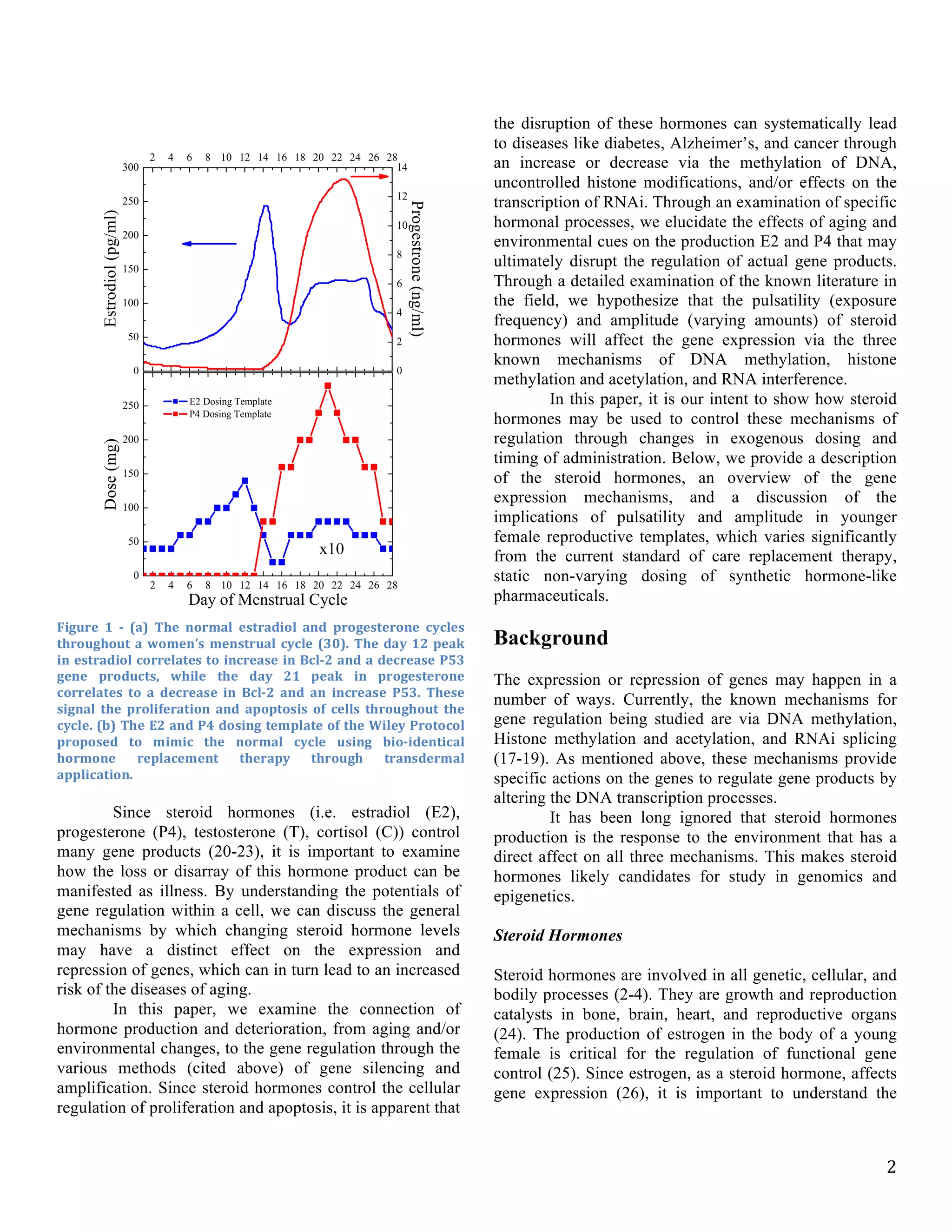
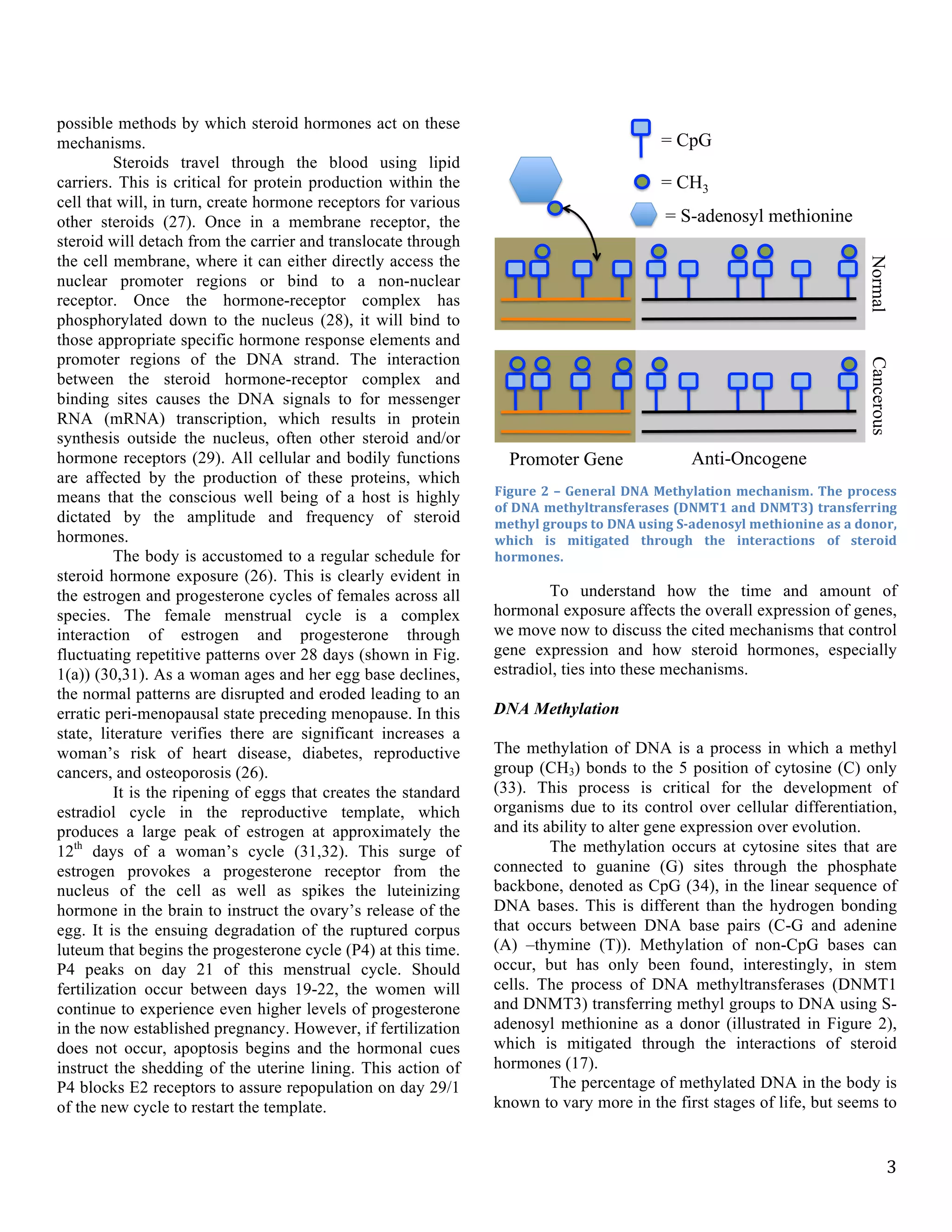
hormones affect gene products through methylation of
DNA or histones or through gene silencing via RNAi
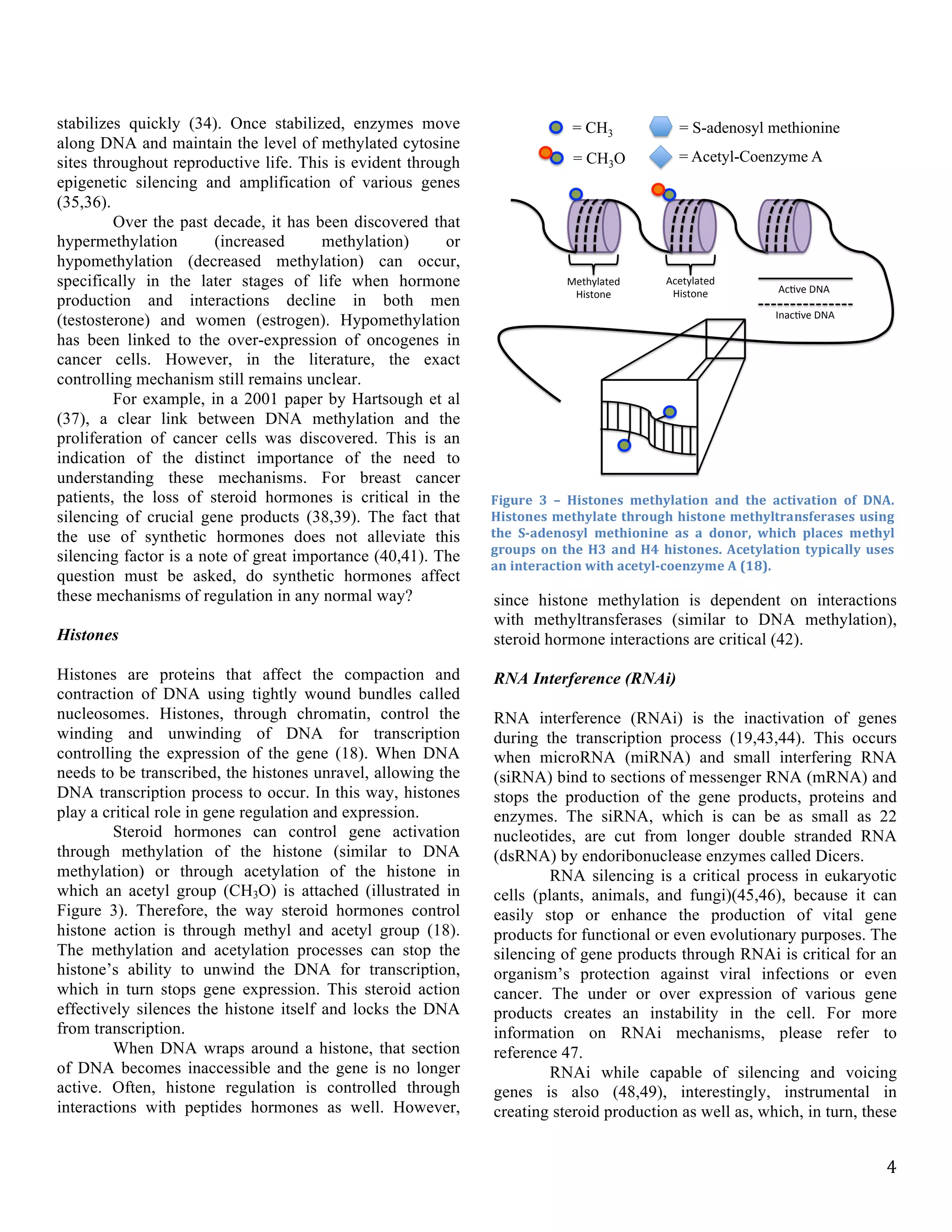
(Figures 2 and 3). Since the onset of peri-menopause
signals wild fluctuations in estrogen production, it is
reasonable to assume that the ensuing control of gene
expression also deeply affected adversely (shown in Fig.
4).
The normal cycles of estrogen and progesterone
manifest predictable regulatory gene expression through
the repression or expression of genes like P53 and Bcl-2
and their gene products, which are timed throughout the
cycle as well as initiating cascades of other functional
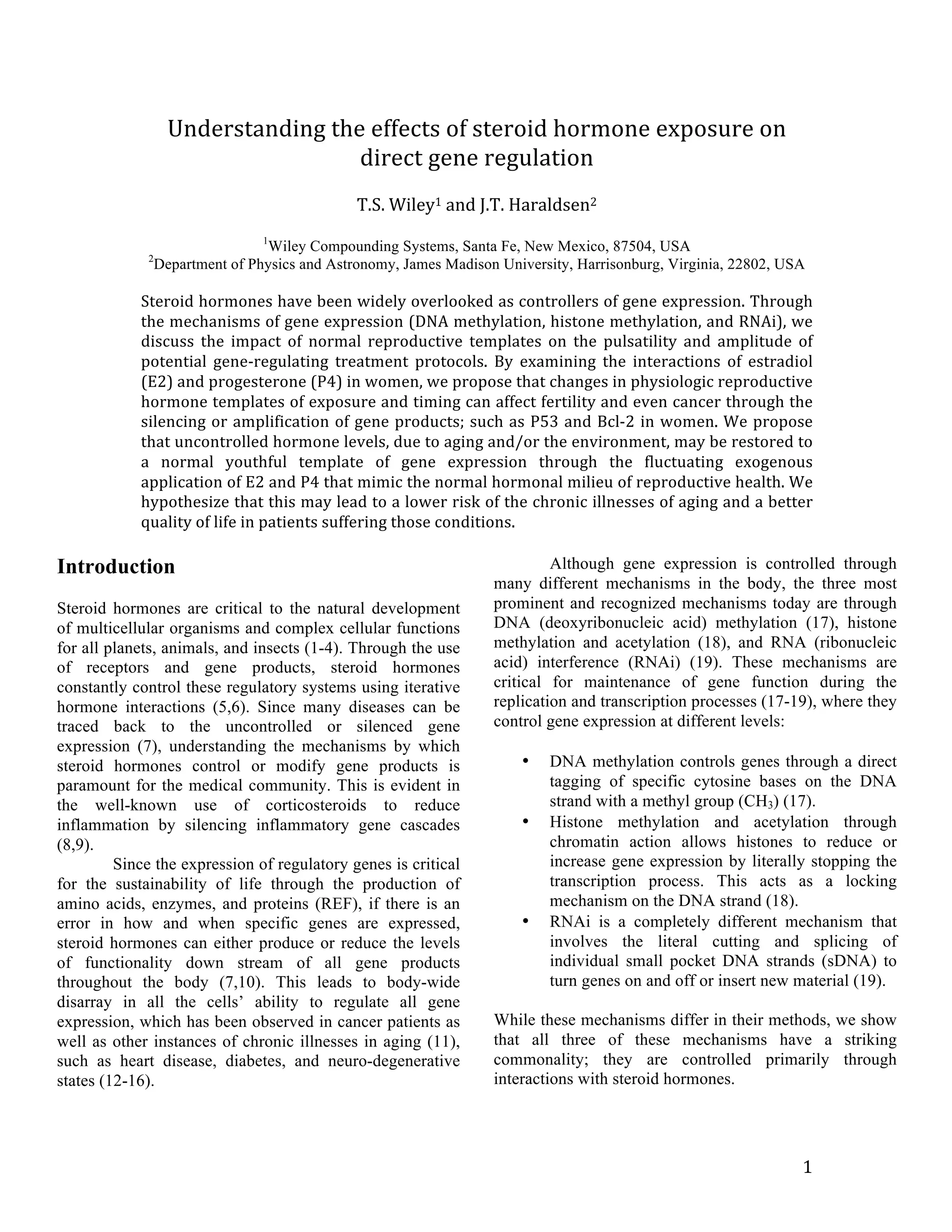
gene products. As shown in figure 1(a), the normal cycle
consists of an estrogen peak on day 12. This produces an
increase in Bcl-2 (!) until day 12 and a decrease in P53
("). On day 21, the progesterone peaks and commands
the cells to begin apoptosis and signals a decrease in Bcl-2
(") by blocking E2 and an increase in P53 (!). This
allows for regulation and control of the increase and
decrease of cells all over the body.
The hormone cycle signals cells to proliferate and
when apoptosis should occur for normal functioning. As a
woman enters peri-menopause, these signals can be
interrupted due to the body’s inability to produce normal
estrogen and progesterone peaks. Therefore, the body’s
clinical response is one of chaos, which produces hot
flashes, mood swings, irritability, and loss of libido.
However, physically the signals regulating proliferation
and apoptosis have also deteriorated, which can lead to
uncontrolled cell growth known as cancer or osteoporosis.
Studies show that static replacement of hormones
is unsuccessful in the long term in helping women with
symptoms as well any amelioration of the disease process
in aging. These studies have also shown that static dosing
can accurately increase cardiac risk. Therefore, we
conjecture that by following the body’s normal and
Childhood
Puberty
Peri-
menopause
Menopause
Reproductive Years
Estrogen Levels
Relative Cancer Rate
0 60504012 13 Age (years)
Figure
4
–
An
illustration
of
the
estrogen
in
urine
and
relative
cancer
rate
as
a
function
of
age
[52].
As
age
increases
and
a
woman’s
estrogen
level
begins
to
decrease,
her
relative
cancer
risk
begins
to
increase
as
gene
expression
becomes
irregular.](https://image.slidesharecdn.com/geneexpressionthroughdosing-semifinal-140319135909-phpapp02/75/Understanding-the-effects-of-steroid-hormone-exposure-on-direct-gene-regulation-5-2048.jpg)

The document discusses the effects of steroid hormone exposure on direct gene regulation through three main mechanisms: DNA methylation, histone methylation and acetylation, and RNA interference. It proposes that changes in physiologic reproductive hormone templates of exposure and timing, such as seen in the normal female menstrual cycle, can affect fertility and cancer risk by silencing or amplifying gene products. Specifically, it hypothesizes that mimicking the normal fluctuating estradiol and progesterone cycles through exogenous hormone replacement therapy may help restore normal gene expression and lower risks of chronic illnesses.


