

1
Genetic & Epigenetic factors
Can we minimize it?
“Inheritance” in images, from Darwin’s
“tree of life” to DNA’s iconic
crystallography to the epigenetic dynamics
However, the script needs to be
interpreted and receives meaning only
from the interplay with the environment
Things become more complex with the
discovery of DNA’s inherited mutations to
“metabolism”,
with transposable elements, repair,
methylation, miRNA, &
histone acetylation,
i.e. INTERPLAY WITH THE (internal and external)
ENVIRONMENT
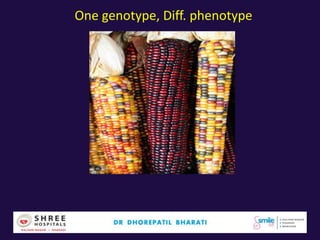
One genotype, Diff. phenotype
outline
• Genetic aspects
• Epigenetic aspects
• How can we minimize?
Infertility genetic counseling aims to answer
two fundamental questions
1. Does the infertility have a genetic origin
and is it related to inheritance?
2. Does the procedure used in infertility
treatment increase the risk of genetic
disorders in the child?
Does the infertility have a genetic origin
and is it related to inheritance?
• Male Infertility…Genetic Factors..Common
• Female Infertility..Genetic Factors.Less common
• Recurrent Pregnancy loss.. Chromosomal
abnormalities in 5-6 % of males or females
Male Infertility
• Azoospermia Obstructive.. Congenital
bilateral/unilateral absence of
vas deferens :CFTR mutation
Nonobstructive
Y microdeletion
Chromosomal Abnormality
• Oligospermia
• Normal sperm count.. Chromosomal abnormality
Azoospermia : Obstructive
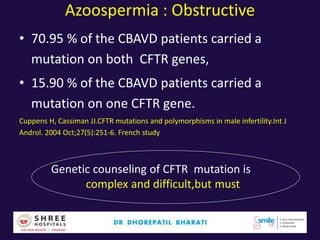
• 70.95 % of the CBAVD patients carried a
mutation on both CFTR genes,
• 15.90 % of the CBAVD patients carried a
mutation on one CFTR gene.
Cuppens H, Cassiman JJ.CFTR mutations and polymorphisms in male infertility.Int J
Androl. 2004 Oct;27(5):251-6. French study
Genetic counseling of CFTR mutation is
complex and difficult,but must
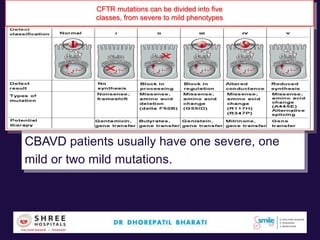
CBAVD patients usually have one severe, one
mild or two mild mutations.
CFTR mutations can be divided into five
classes, from severe to mild phenotypes
• The female partner of the CBAVD patient carrying CFTR
mutation should be screened for the mutations in CFTR
gene before ART procedures.
• When both partners are carriers of CFTR mutations, PGD
or prenatal diagnosis for CF should strongly be
recommended during genetic counseling as the fetus is at
risk of CF disease.
Azoospermia : non Obstructive
• The frequency of chromosomal disorders is
15-20 % in nonobstructive azoospermia patients
• Johnson MD: Genetic risks of intracytoplasmic sperm injection in the treatment of male
infertility: recommendationsfor genetic counseling and screening. Fertil Steril 1998; 70:
• Sex chromosome aneuploidies and
translocations are the most common
chromosomal abnormalities
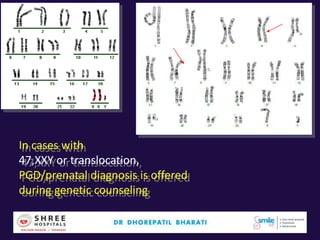
In cases with
47,XXY or translocation,
PGD/prenatal diagnosis is offered
during genetic counseling
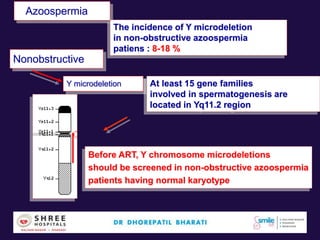
Azoospermia
Nonobstructive
Y microdeletion
The incidence of Y microdeletion
in non-obstructive azoospermia
patiens : 8-18 %
At least 15 gene families
involved in spermatogenesis are
located in Yq11.2 region
Before ART, Y chromosome microdeletions
should be screened in non-obstructive azoospermia
patients having normal karyotype
1
2
3
4
5
6
7
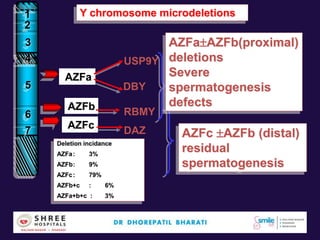
AZFa
AZFb
AZFc
USP9Y
DBY
RBMY
DAZ
AZFaAZFb(proximal)
deletions
Severe
spermatogenesis
defects
AZFc AZFb (distal)
residual
spermatogenesis
Y chromosome microdeletions
Deletion incidance
AZFa: 3%
AZFb: 9%
AZFc: 79%
AZFb+c : 6%
AZFa+b+c : 3%
• During genetic counseling it should be
explained that the male offspring of the Y
microdeletion patients undergoing ART
will also have Y microdeletion.
• It has been reported that microdeletion
region may expand and may also occur
de-novo after ICSI procedure
Lee SH, Ahn SY, Lee KW, Kwack K, Jun HS, Cha KY. Intracytoplasmic sperm injection
may lead to Vertical transmission, expansion, and de novo occurrence of Y-chromosome
microdeletions in male fetuses.Fertil Steril. 2006 May;85(5):1512-5.
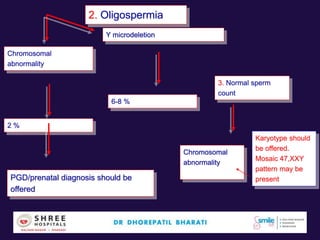
2. Oligospermia
Chromosomal
abnormality
Y microdeletion
2 %
6-8 %
PGD/prenatal diagnosis should be
offered
3. Normal sperm
count
Chromosomal
abnormality
Karyotype should
be offered.
Mosaic 47,XXY
pattern may be
present
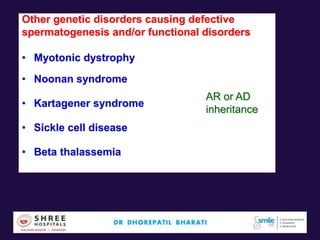
Other genetic disorders causing defective
spermatogenesis and/or functional disorders
• Myotonic dystrophy
• Noonan syndrome
• Kartagener syndrome
• Sickle cell disease
• Beta thalassemia
AR or AD
inheritance
Female Infertility
• Genetic reasons are less
• Major issues..
• Advanced age
• POF..Fragile X Carrier,X chromosome
abnormalities…To identify them..and offer a
good chance in that short window period is a
challenge
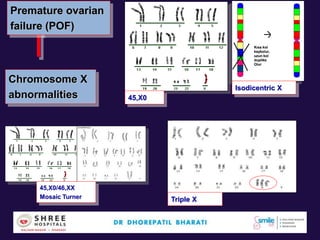
Chromosome X
abnormalities 45,X0
Kısa kol
kaybolur,
uzun kol
duplike
Olur
Isodicentric X
Triple X
45,X0/46,XX
Mosaic Turner
Premature ovarian
failure (POF)
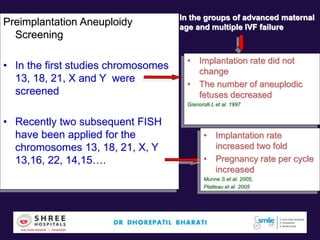
Preimplantation Aneuploidy
Screening
• In the first studies chromosomes
13, 18, 21, X and Y were
screened
• Recently two subsequent FISH
have been applied for the
chromosomes 13, 18, 21, X, Y
13,16, 22, 14,15….
• Implantation rate did not
change
• The number of aneuplodic
fetuses decreased
Gianorolli L et al. 1997
• Implantation rate
increased two fold
• Pregnancy rate per cycle
increased
Munne S et al. 2005,
Platteau et al. 2005
In the groups of advanced maternal
age and multiple IVF failure
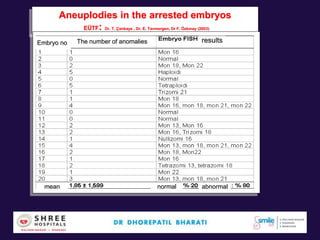
Aneuplodies in the arrested embryos
EÜTF: Dr. T. Çankaya , Dr. E. Tavmergen, Dr F. Özkınay (2003)
resultsThe number of anomalies
mean normal abnormal
Embryo no
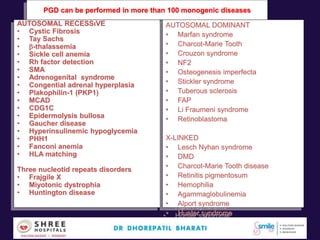
PGD can be performed in more than 100 monogenic diseases
AUTOSOMAL RECESSıVE
• Cystic Fibrosis
• Tay Sachs
• -thalassemia
• Sickle cell anemia
• Rh factor detection
• SMA
• Adrenogenital syndrome
• Congential adrenal hyperplasia
• Plakophilin-1 (PKP1)
• MCAD
• CDG1C
• Epidermolysis bullosa
• Gaucher disease
• Hyperinsulinemic hypoglycemia
• PHH1
• Fanconi anemia
• HLA matching
Three nucleotid repeats disorders
• Frajgile X
• Miyotonic dystrophia
• Huntington disease
AUTOSOMAL DOMINANT
• Marfan syndrome
• Charcot-Marie Tooth
• Crouzon syndrome
• NF2
• Osteogenesis imperfecta
• Stickler syndrome
• Tuberous sclerosis
• FAP
• Li Fraumeni syndrome
• Retinoblastoma
X-LINKED
• Lesch Nyhan syndrome
• DMD
• Charcot-Marie Tooth disease
• Retinitis pigmentosum
• Hemophilia
• Agammaglobulinemia
• Alport syndrome
• Hunter syndrome
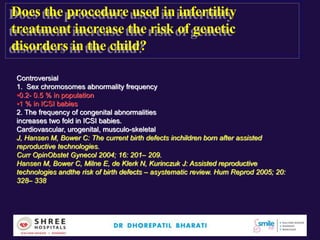
Does the procedure used in infertility
treatment increase the risk of genetic
disorders in the child?
Controversial
1. Sex chromosomes abnormality frequency
•0.2- 0.5 % in population
•1 % in ICSI babies
2. The frequency of congenital abnormalities
increases two fold in ICSI babies.
Cardiovascular, urogenital, musculo-skeletal
J, Hansen M, Bower C: The current birth defects inchildren born after assisted
reproductive technologies.
Curr OpinObstet Gynecol 2004; 16: 201– 209.
Hansen M, Bower C, Milne E, de Klerk N, Kurinczuk J: Assisted reproductive
technologies andthe risk of birth defects – asystematic review. Hum Reprod 2005; 20:
328– 338
Epigenetic factors
1. Before fertilization ,during gametogenesis
2. Certain paternal and maternal genes are
imprinted reversibly.
Paternal imprinting
Maternal imprinting
ART procedures may disturb genomic imprinting
mechanisms?
The risk of imprinting disorders increases.
e.g. Angelman, Prader Willi, Beckwith Wiedemann
What is Epigenetics?
• Epigenetics is the study of inherited changes in phenotype (appearance)
or gene expression caused by mechanisms other than changes in the
underlying DNA sequence.
• These changes may remain through cell divisions for the remainder of
the cell's life and may also last for multiple generations.
• Changes in gene expression that do not involve alterations in DNA base
sequence
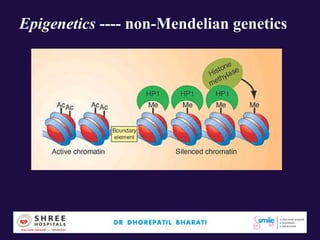
Epigenetics ---- non-Mendelian genetics
Epigenetic Modifications
•DNA Methylation
•Histone Modification (e.g. Acetylation, methylation)
•Non-coding RNAs (e.g. microRNA)
•All Regulate Gene Expression
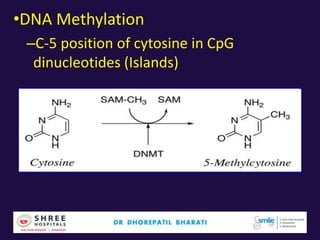
•DNA Methylation
–C-5 position of cytosine in CpG
dinucleotides (Islands)
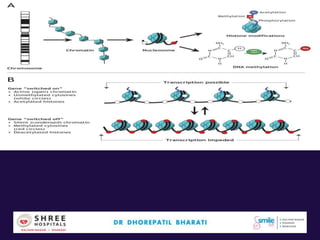
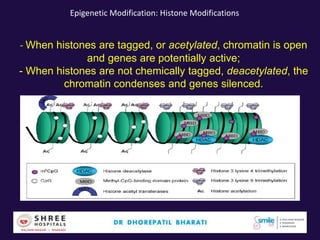
- When histones are tagged, or acetylated, chromatin is open
and genes are potentially active;
- When histones are not chemically tagged, deacetylated, the
chromatin condenses and genes silenced.
Epigenetic Modification: Histone Modifications
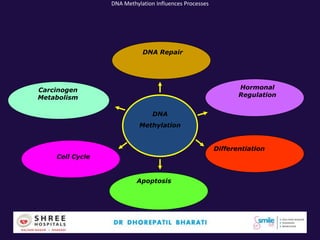
DNA Methylation Influences Processes
DNA Repair
Hormonal
Regulation
Carcinogen
Metabolism
Apoptosis
Differentiation
Cell Cycle
DNA
Methylation
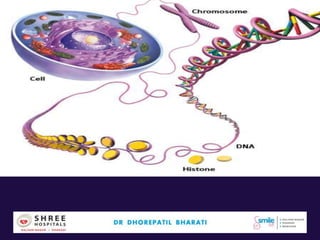
• DNA methylation and histone modifications, and chromatin remodeling,
such as repositioning of nucleosomes.
These heritable modifications are collectively termed “epigenetic codes”
(reviewed in Richards and Elgin, 2002).
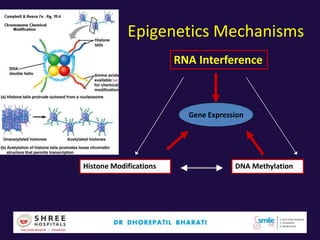
Epigenetics Mechanisms
Gene Expression
RNA Interference
Histone Modifications DNA Methylation
Three significant developmental windows are likely to be
sensitive to exogenous signals that may alter epigenetic
profiles with impact on reproduction and fertility
1.Reprogramming of the germ line during PGC erasure‐
2.DNA methylation establishment during oocyte growth
and maturation
3.Reprogramming in first cell cycle – meiosis and mitosis
in transition
• These windows all involve dramatic changes in DNA
methylation
Developmental origins of adult disease
An adverse periconceptional and intrauterine
environment is associated with epigenetic
malprogramming of the fetal metabolism and
predisposition to chronic, in particular metabolic
disorders later in life (“Barker hypothesis”).
The epigenome appears is most plastic in the late
stages of oocyte and the early stages of embryo
development.
Suboptimal conditions during oocyte and embryo
development may lead to persistent changes in the
epigenome influencing disease susceptibilities later in
life.
Gluckman et al., Nat. Rev. Endocrinol. 5, 401-408, 2009 Lehnen et al., Mol.
Hum. Reprod., 2013
Clinical implications
• Infertility Treatments..Ovulation Induction
• In vitro Embryo culture system
• Preimplantaion period
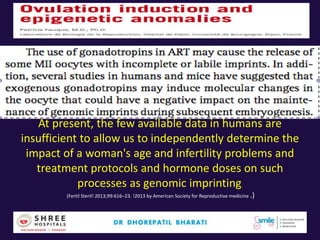
At present, the few available data in humans are
insufficient to allow us to independently determine the
impact of a woman's age and infertility problems and
treatment protocols and hormone doses on such
processes as genomic imprinting.
(Fertil Steril! 2013;99:616–23. !2013 by American Society for Reproductive medicine .)
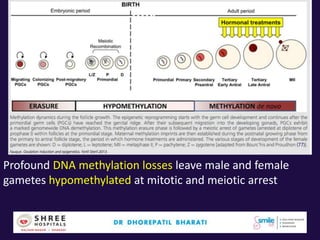
Profound DNA methylation losses leave male and female
gametes hypomethylated at mitotic and meiotic arrest
Epidemiological data
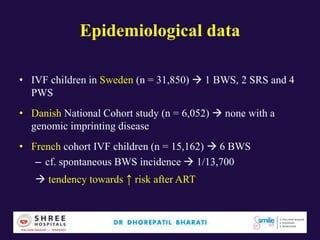
• IVF children in Sweden (n = 31,850)  1 BWS, 2 SRS and 4
PWS
• Danish National Cohort study (n = 6,052)  none with a
genomic imprinting disease
• French cohort IVF children (n = 15,162)  6 BWS
– cf. spontaneous BWS incidence  1/13,700
 tendency towards ↑ risk after ART
Epigenetic aspects of ART in human
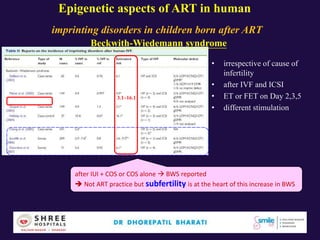
• irrespective of cause of
infertility
• after IVF and ICSI
• ET or FET on Day 2,3,5
• different stimulation
imprinting disorders in children born after ART
3.1~16.1
after IUI + COS or COS alone  BWS reported
 Not ART practice but subfertility is at the heart of this increase in BWS
Beckwith-Wiedemann syndrome
Angelman syndrome (AS)
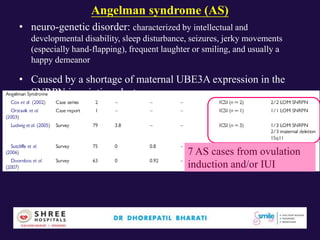
• neuro-genetic disorder: characterized by intellectual and
developmental disability, sleep disturbance, seizures, jerky movements
(especially hand-flapping), frequent laughter or smiling, and usually a
happy demeanor
• Caused by a shortage of maternal UBE3A expression in the
SNRPN imprinting cluster
7 AS cases from ovulation
induction and/or IUI
Silver-Russell Syndrome (SRS)
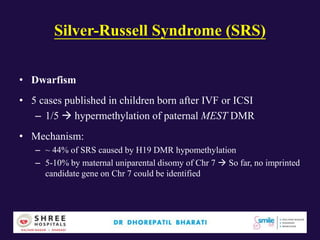
• Dwarfism
• 5 cases published in children born after IVF or ICSI
– 1/5  hypermethylation of paternal MEST DMR
• Mechanism:
– ~ 44% of SRS caused by H19 DMR hypomethylation
– 5-10% by maternal uniparental disomy of Chr 7  So far, no imprinted
candidate gene on Chr 7 could be identified
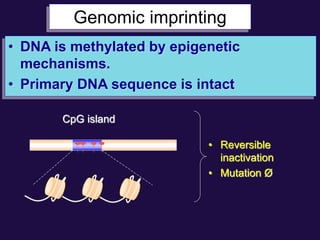
Genomic imprinting
• DNA is methylated by epigenetic
mechanisms.
• Primary DNA sequence is intact
CpG island
• Reversible
inactivation
• Mutation Ø
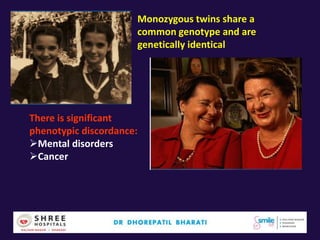
Monozygous twins share a
common genotype and are
genetically identical
There is significant
phenotypic discordance:
Mental disorders
Cancer
• Both maternal and paternal genomic
materials are needed for normal fetal
development.
• Paternal genomic material:
Extraembrionic structures
• Maternal genomic material :
Fetal development
DNA Is Not Destiny …The new science of epigenetics
rewrites the rules of disease, heredity, and identity
Epigenetic inheritance is an essential mechanism that
allows the stable propagation of gene activity states from
one generation of cells to the next.
Artificial environment during ART procedures
may disturb the imprinting mechanisms in
gamets and imprinting disorders may occur in
the fetus
Clinical presentation
• ↑ risk of childhood cancer
• macroglossia
• macrosomia (birth weight and length > 90th percentile)
• midline abdominal wall defects
(omphalocele/exomphalos, umbilical hernia, diastasis
recti)
• ear creases or ear pits
• neonatal hypoglycemia
• Today a successful pregnancy is mainly
defined by the outcome at birth, however we
also have to consider the consequences of
ART conditions for later life.
Take home message
• ART can induce epigenetic variation that might be
transmitted to the next generation.
• Ovulation induction and in vitro culture..needs to
be revisited
• DMR methylation defects are associated with poor
spermatogenesis !!
• A multigenerational study of systematic ART on
epigenetic parameter is lacking.
55

Genetic & Epigenetic Factors

  • 1.
  • 2.
    Genetic & Epigeneticfactors Can we minimize it?
  • 3.
    “Inheritance” in images,from Darwin’s “tree of life” to DNA’s iconic crystallography to the epigenetic dynamics However, the script needs to be interpreted and receives meaning only from the interplay with the environment
  • 4.
    Things become morecomplex with the discovery of DNA’s inherited mutations to “metabolism”, with transposable elements, repair, methylation, miRNA, & histone acetylation, i.e. INTERPLAY WITH THE (internal and external) ENVIRONMENT
  • 5.
  • 6.
    outline • Genetic aspects •Epigenetic aspects • How can we minimize?
  • 7.
    Infertility genetic counselingaims to answer two fundamental questions 1. Does the infertility have a genetic origin and is it related to inheritance? 2. Does the procedure used in infertility treatment increase the risk of genetic disorders in the child?
  • 8.
    Does the infertilityhave a genetic origin and is it related to inheritance? • Male Infertility…Genetic Factors..Common • Female Infertility..Genetic Factors.Less common • Recurrent Pregnancy loss.. Chromosomal abnormalities in 5-6 % of males or females
  • 9.
    Male Infertility • AzoospermiaObstructive.. Congenital bilateral/unilateral absence of vas deferens :CFTR mutation Nonobstructive Y microdeletion Chromosomal Abnormality • Oligospermia • Normal sperm count.. Chromosomal abnormality
  • 10.
    Azoospermia : Obstructive •70.95 % of the CBAVD patients carried a mutation on both CFTR genes, • 15.90 % of the CBAVD patients carried a mutation on one CFTR gene. Cuppens H, Cassiman JJ.CFTR mutations and polymorphisms in male infertility.Int J Androl. 2004 Oct;27(5):251-6. French study Genetic counseling of CFTR mutation is complex and difficult,but must
  • 11.
    CBAVD patients usuallyhave one severe, one mild or two mild mutations. CFTR mutations can be divided into five classes, from severe to mild phenotypes
  • 12.
    • The femalepartner of the CBAVD patient carrying CFTR mutation should be screened for the mutations in CFTR gene before ART procedures. • When both partners are carriers of CFTR mutations, PGD or prenatal diagnosis for CF should strongly be recommended during genetic counseling as the fetus is at risk of CF disease.
  • 13.
    Azoospermia : nonObstructive • The frequency of chromosomal disorders is 15-20 % in nonobstructive azoospermia patients • Johnson MD: Genetic risks of intracytoplasmic sperm injection in the treatment of male infertility: recommendationsfor genetic counseling and screening. Fertil Steril 1998; 70: • Sex chromosome aneuploidies and translocations are the most common chromosomal abnormalities
  • 14.
    In cases with 47,XXYor translocation, PGD/prenatal diagnosis is offered during genetic counseling
  • 15.
    Azoospermia Nonobstructive Y microdeletion The incidenceof Y microdeletion in non-obstructive azoospermia patiens : 8-18 % At least 15 gene families involved in spermatogenesis are located in Yq11.2 region Before ART, Y chromosome microdeletions should be screened in non-obstructive azoospermia patients having normal karyotype
  • 16.
  • 17.
    • During geneticcounseling it should be explained that the male offspring of the Y microdeletion patients undergoing ART will also have Y microdeletion. • It has been reported that microdeletion region may expand and may also occur de-novo after ICSI procedure Lee SH, Ahn SY, Lee KW, Kwack K, Jun HS, Cha KY. Intracytoplasmic sperm injection may lead to Vertical transmission, expansion, and de novo occurrence of Y-chromosome microdeletions in male fetuses.Fertil Steril. 2006 May;85(5):1512-5.
  • 18.
    2. Oligospermia Chromosomal abnormality Y microdeletion 2% 6-8 % PGD/prenatal diagnosis should be offered 3. Normal sperm count Chromosomal abnormality Karyotype should be offered. Mosaic 47,XXY pattern may be present
  • 19.
    Other genetic disorderscausing defective spermatogenesis and/or functional disorders • Myotonic dystrophy • Noonan syndrome • Kartagener syndrome • Sickle cell disease • Beta thalassemia AR or AD inheritance
  • 20.
    Female Infertility • Geneticreasons are less • Major issues.. • Advanced age • POF..Fragile X Carrier,X chromosome abnormalities…To identify them..and offer a good chance in that short window period is a challenge
  • 21.
    Chromosome X abnormalities 45,X0 Kısakol kaybolur, uzun kol duplike Olur Isodicentric X Triple X 45,X0/46,XX Mosaic Turner Premature ovarian failure (POF)
  • 22.
    Preimplantation Aneuploidy Screening • Inthe first studies chromosomes 13, 18, 21, X and Y were screened • Recently two subsequent FISH have been applied for the chromosomes 13, 18, 21, X, Y 13,16, 22, 14,15…. • Implantation rate did not change • The number of aneuplodic fetuses decreased Gianorolli L et al. 1997 • Implantation rate increased two fold • Pregnancy rate per cycle increased Munne S et al. 2005, Platteau et al. 2005 In the groups of advanced maternal age and multiple IVF failure
  • 23.
    Aneuplodies in thearrested embryos EÜTF: Dr. T. Çankaya , Dr. E. Tavmergen, Dr F. Özkınay (2003) resultsThe number of anomalies mean normal abnormal Embryo no
  • 24.
    PGD can beperformed in more than 100 monogenic diseases AUTOSOMAL RECESSıVE • Cystic Fibrosis • Tay Sachs • -thalassemia • Sickle cell anemia • Rh factor detection • SMA • Adrenogenital syndrome • Congential adrenal hyperplasia • Plakophilin-1 (PKP1) • MCAD • CDG1C • Epidermolysis bullosa • Gaucher disease • Hyperinsulinemic hypoglycemia • PHH1 • Fanconi anemia • HLA matching Three nucleotid repeats disorders • Frajgile X • Miyotonic dystrophia • Huntington disease AUTOSOMAL DOMINANT • Marfan syndrome • Charcot-Marie Tooth • Crouzon syndrome • NF2 • Osteogenesis imperfecta • Stickler syndrome • Tuberous sclerosis • FAP • Li Fraumeni syndrome • Retinoblastoma X-LINKED • Lesch Nyhan syndrome • DMD • Charcot-Marie Tooth disease • Retinitis pigmentosum • Hemophilia • Agammaglobulinemia • Alport syndrome • Hunter syndrome
  • 25.
    Does the procedureused in infertility treatment increase the risk of genetic disorders in the child? Controversial 1. Sex chromosomes abnormality frequency •0.2- 0.5 % in population •1 % in ICSI babies 2. The frequency of congenital abnormalities increases two fold in ICSI babies. Cardiovascular, urogenital, musculo-skeletal J, Hansen M, Bower C: The current birth defects inchildren born after assisted reproductive technologies. Curr OpinObstet Gynecol 2004; 16: 201– 209. Hansen M, Bower C, Milne E, de Klerk N, Kurinczuk J: Assisted reproductive technologies andthe risk of birth defects – asystematic review. Hum Reprod 2005; 20: 328– 338
  • 26.
    Epigenetic factors 1. Beforefertilization ,during gametogenesis 2. Certain paternal and maternal genes are imprinted reversibly. Paternal imprinting Maternal imprinting ART procedures may disturb genomic imprinting mechanisms? The risk of imprinting disorders increases. e.g. Angelman, Prader Willi, Beckwith Wiedemann
  • 27.
    What is Epigenetics? •Epigenetics is the study of inherited changes in phenotype (appearance) or gene expression caused by mechanisms other than changes in the underlying DNA sequence. • These changes may remain through cell divisions for the remainder of the cell's life and may also last for multiple generations. • Changes in gene expression that do not involve alterations in DNA base sequence
  • 29.
  • 31.
    Epigenetic Modifications •DNA Methylation •HistoneModification (e.g. Acetylation, methylation) •Non-coding RNAs (e.g. microRNA) •All Regulate Gene Expression
  • 32.
    •DNA Methylation –C-5 positionof cytosine in CpG dinucleotides (Islands)
  • 33.
    - When histonesare tagged, or acetylated, chromatin is open and genes are potentially active; - When histones are not chemically tagged, deacetylated, the chromatin condenses and genes silenced. Epigenetic Modification: Histone Modifications
  • 34.
    DNA Methylation InfluencesProcesses DNA Repair Hormonal Regulation Carcinogen Metabolism Apoptosis Differentiation Cell Cycle DNA Methylation
  • 35.
    • DNA methylationand histone modifications, and chromatin remodeling, such as repositioning of nucleosomes. These heritable modifications are collectively termed “epigenetic codes” (reviewed in Richards and Elgin, 2002).
  • 36.
    Epigenetics Mechanisms Gene Expression RNAInterference Histone Modifications DNA Methylation
  • 37.
    Three significant developmentalwindows are likely to be sensitive to exogenous signals that may alter epigenetic profiles with impact on reproduction and fertility 1.Reprogramming of the germ line during PGC erasure‐ 2.DNA methylation establishment during oocyte growth and maturation 3.Reprogramming in first cell cycle – meiosis and mitosis in transition • These windows all involve dramatic changes in DNA methylation
  • 38.
    Developmental origins ofadult disease An adverse periconceptional and intrauterine environment is associated with epigenetic malprogramming of the fetal metabolism and predisposition to chronic, in particular metabolic disorders later in life (“Barker hypothesis”). The epigenome appears is most plastic in the late stages of oocyte and the early stages of embryo development. Suboptimal conditions during oocyte and embryo development may lead to persistent changes in the epigenome influencing disease susceptibilities later in life. Gluckman et al., Nat. Rev. Endocrinol. 5, 401-408, 2009 Lehnen et al., Mol. Hum. Reprod., 2013
  • 39.
    Clinical implications • InfertilityTreatments..Ovulation Induction • In vitro Embryo culture system • Preimplantaion period
  • 40.
    At present, thefew available data in humans are insufficient to allow us to independently determine the impact of a woman's age and infertility problems and treatment protocols and hormone doses on such processes as genomic imprinting. (Fertil Steril! 2013;99:616–23. !2013 by American Society for Reproductive medicine .)
  • 41.
    Profound DNA methylationlosses leave male and female gametes hypomethylated at mitotic and meiotic arrest
  • 42.
    Epidemiological data • IVFchildren in Sweden (n = 31,850)  1 BWS, 2 SRS and 4 PWS • Danish National Cohort study (n = 6,052)  none with a genomic imprinting disease • French cohort IVF children (n = 15,162)  6 BWS – cf. spontaneous BWS incidence  1/13,700  tendency towards ↑ risk after ART
  • 43.
    Epigenetic aspects ofART in human • irrespective of cause of infertility • after IVF and ICSI • ET or FET on Day 2,3,5 • different stimulation imprinting disorders in children born after ART 3.1~16.1 after IUI + COS or COS alone  BWS reported  Not ART practice but subfertility is at the heart of this increase in BWS Beckwith-Wiedemann syndrome
  • 44.
    Angelman syndrome (AS) •neuro-genetic disorder: characterized by intellectual and developmental disability, sleep disturbance, seizures, jerky movements (especially hand-flapping), frequent laughter or smiling, and usually a happy demeanor • Caused by a shortage of maternal UBE3A expression in the SNRPN imprinting cluster 7 AS cases from ovulation induction and/or IUI
  • 45.
    Silver-Russell Syndrome (SRS) •Dwarfism • 5 cases published in children born after IVF or ICSI – 1/5  hypermethylation of paternal MEST DMR • Mechanism: – ~ 44% of SRS caused by H19 DMR hypomethylation – 5-10% by maternal uniparental disomy of Chr 7  So far, no imprinted candidate gene on Chr 7 could be identified
  • 46.
    Genomic imprinting • DNAis methylated by epigenetic mechanisms. • Primary DNA sequence is intact CpG island • Reversible inactivation • Mutation Ø
  • 47.
    Monozygous twins sharea common genotype and are genetically identical There is significant phenotypic discordance: Mental disorders Cancer
  • 48.
    • Both maternaland paternal genomic materials are needed for normal fetal development. • Paternal genomic material: Extraembrionic structures • Maternal genomic material : Fetal development
  • 49.
    DNA Is NotDestiny …The new science of epigenetics rewrites the rules of disease, heredity, and identity Epigenetic inheritance is an essential mechanism that allows the stable propagation of gene activity states from one generation of cells to the next.
  • 50.
    Artificial environment duringART procedures may disturb the imprinting mechanisms in gamets and imprinting disorders may occur in the fetus
  • 51.
    Clinical presentation • ↑risk of childhood cancer • macroglossia • macrosomia (birth weight and length > 90th percentile) • midline abdominal wall defects (omphalocele/exomphalos, umbilical hernia, diastasis recti) • ear creases or ear pits • neonatal hypoglycemia
  • 52.
    • Today asuccessful pregnancy is mainly defined by the outcome at birth, however we also have to consider the consequences of ART conditions for later life.
  • 53.
    Take home message •ART can induce epigenetic variation that might be transmitted to the next generation. • Ovulation induction and in vitro culture..needs to be revisited • DMR methylation defects are associated with poor spermatogenesis !! • A multigenerational study of systematic ART on epigenetic parameter is lacking.
  • 54.