



A PRESENTATION BY
AMANINDER SANDHU
B.ED 1ST ,SLDAV COLLEGE
(AMBALA CITY)
GENDER IDENTITY
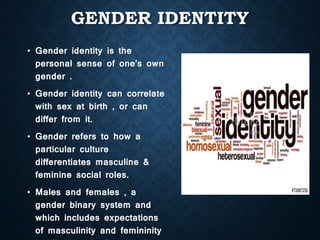
• Gender identity is the
personal sense of one’s own
gender .
• Gender identity can correlate
with sex at birth , or can
differ from it.
• Gender refers to how a
particular culture
differentiates masculine &
feminine social roles.
• Males and females , a
gender binary system and
which includes expectations
of masculinity and femininity
UNDERSTANDINGGENDERCANBEBROKENINTO
4 PARTS:
• Understanding the concept of gender .
• Learning gender role standards and
stereotypes .
• Identifying with parents .
• Forming gender preferences .
Biological Factors :
 Several prenatal , biological factors ,including
genes and hormones , may effect gender identity .
 The biochemical theory of gender identity suggests
that people acquire gender identities through such
factors rather than socialization .
 Hormonal influences are also complex ; sex
determining hormones are produced at an early
stage of fetal development
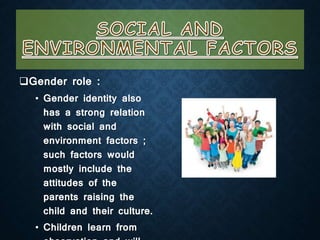
Gender role :
• Gender identity also
has a strong relation
with social and
environment factors ;
such factors would
mostly include the
attitudes of the
parents raising the
child and their culture.
• Children learn from
IDENTITY WORK IS GENDERED DURING A WORK
TRANSITION IN 3 WAYS :
• Career transition is the area where gender identity work is
prevalent , career changed is the moving from a victim
position and adopting temporary position as an active and
heroic career .
• Need of career change can happen when the reason for not
being able to feel authentic at work , due to gender .
• The struggle between conflicting identity , position may
invoke negotiation between an identity position in which one
has been placed .
NATURE Vs NATURE
Social factors which may influence gender identity include
ideas regarding gender roles conveyed by family , authority
figures, mass media, and other influential people in child’s
life .
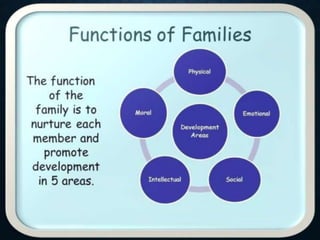
•Role Of Family
The family is the most important social
group in society. It’s also the most
important influences in a child’s life. The
family plays an essential role in child’s :
> In Education , Physical and
Emotional Needs.
> In Protection and Material Support.
> In Nurture, Love and give Emotional
Support. > In
Spiritual Guidance.
# FROM GENERATION TO GENERATION
CHILDREN INTERIORIZE THEIR
PARENT’S MODEL DIFFERENT THINGS .
EACH PARTNER HAS ESTABLISHED
THEIR RESPECTIVE RESPONSIBILITIES .
• With changing tradition the roles of gender are
also changing & seems to be difficult .
• Women become more ambitious and independent
& men are more emotional and involved in
household tasks .
• Most of men consider woman’s career as a
conflicting sources because they think women will
neglect their family, increase in professional
competition &risk of deterioration of marital
• In many societies family system is gender
biased & everyone has their specific roles.
• But in today’s modern life women & men share
their responsibilities & do everything mutually
whether it is household work or professional.
• All live together , take decisions together
criticizing and encouraging mutually & yet
being independent and responsible .
• The modern social structure sees both
men and women as equal partners of
the society with equal rights , status
and responsibilities .
• The aspect of equality will give rise to
certain issues too ,’who is to direct?
who is to directed?’
• If not handled well , the family become
• # Family is not just an
institution of many people
living together under one roof
; but the union of similar
minded and mutually loving
people bound with certain
duties & responsibilities.
• #the gender role structure
was designed to help the
people accept their duties . But
today , both parents are
working and earning . Now the
role of homemaker becomes
no one’s responsibilities.
• Mediaand gender refers to the relationship between
mediaand gender , and howgender is represented
withinmedia.
• These platforms include but are not limitedto film
,television ,journalism and video games.
• Initiatives and resources exist to promotegender
equalityand reinforce women’sempowerment in the
mediaindustryand representations.
• Numbers of women in
media professions, such
as journalism, is
growing ; however, the
media is and has been
statistically dominated
by men , who hold the
vast majority of power
positions
• Studies show that men
are more likely to be
quoted than women in
the media , and more
likely to cover “serious
” topics .
• Studies have found that although the number of women
working in the media has been increasing globally , the
top positions are still very male dominated.
• Female journalists are more likely to be assigned ‘soft’
subjects such as family , lifestyle, fashion and arts
• The ‘hard’ news, politics and the economy, is much less
likely to be written or covered by women.
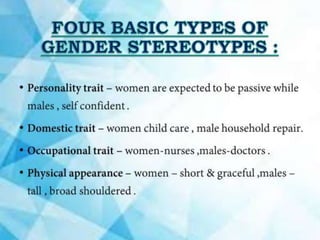
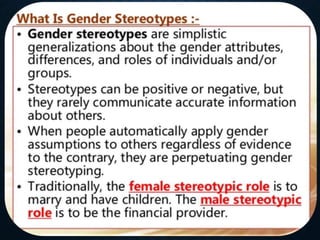
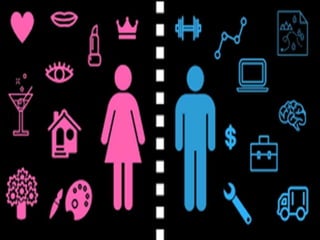
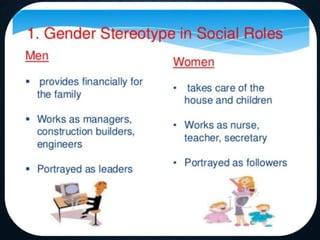
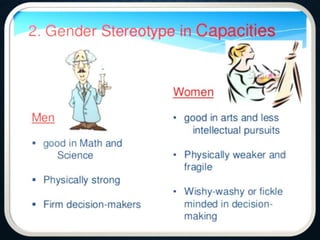
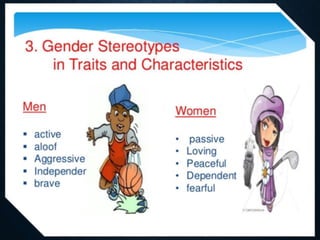
GENDER STEREOTYPES
GENDER ROLES AND
STEREOTYPES
• Creating a school that nurtures
academic achievement , provides
physical and emotional safety and
welcomes all students and families are
goals common to all educators.
• One way to do this is to create a gender
expansion environment where all the
students can thrive and learn to their
fullest potential.
• There are to traits or characters that
are exclusively possessed by boys or
girls.
Health impact of stereotypes
• For both boys and girls , the more traditional
assumption about what it means to be and how
you should behave as a girl , the rates of
depression.
• Holding these very traditional stereotypes about
yourself as a boy or a girl is not healthy at all .
Gender identity & Roles

Gender identity & Roles

  • 1.
    A PRESENTATION BY AMANINDERSANDHU B.ED 1ST ,SLDAV COLLEGE (AMBALA CITY)
  • 4.
    GENDER IDENTITY • Genderidentity is the personal sense of one’s own gender . • Gender identity can correlate with sex at birth , or can differ from it. • Gender refers to how a particular culture differentiates masculine & feminine social roles. • Males and females , a gender binary system and which includes expectations of masculinity and femininity
  • 6.
    UNDERSTANDINGGENDERCANBEBROKENINTO 4 PARTS: • Understandingthe concept of gender . • Learning gender role standards and stereotypes . • Identifying with parents . • Forming gender preferences .
  • 7.
    Biological Factors : Several prenatal , biological factors ,including genes and hormones , may effect gender identity .  The biochemical theory of gender identity suggests that people acquire gender identities through such factors rather than socialization .  Hormonal influences are also complex ; sex determining hormones are produced at an early stage of fetal development
  • 8.
    Gender role : •Gender identity also has a strong relation with social and environment factors ; such factors would mostly include the attitudes of the parents raising the child and their culture. • Children learn from
  • 9.
    IDENTITY WORK ISGENDERED DURING A WORK TRANSITION IN 3 WAYS : • Career transition is the area where gender identity work is prevalent , career changed is the moving from a victim position and adopting temporary position as an active and heroic career . • Need of career change can happen when the reason for not being able to feel authentic at work , due to gender . • The struggle between conflicting identity , position may invoke negotiation between an identity position in which one has been placed . NATURE Vs NATURE Social factors which may influence gender identity include ideas regarding gender roles conveyed by family , authority figures, mass media, and other influential people in child’s life .
  • 11.
    •Role Of Family Thefamily is the most important social group in society. It’s also the most important influences in a child’s life. The family plays an essential role in child’s : > In Education , Physical and Emotional Needs. > In Protection and Material Support. > In Nurture, Love and give Emotional Support. > In Spiritual Guidance.
  • 12.
    # FROM GENERATIONTO GENERATION CHILDREN INTERIORIZE THEIR PARENT’S MODEL DIFFERENT THINGS . EACH PARTNER HAS ESTABLISHED THEIR RESPECTIVE RESPONSIBILITIES . • With changing tradition the roles of gender are also changing & seems to be difficult . • Women become more ambitious and independent & men are more emotional and involved in household tasks . • Most of men consider woman’s career as a conflicting sources because they think women will neglect their family, increase in professional competition &risk of deterioration of marital
  • 15.
    • In manysocieties family system is gender biased & everyone has their specific roles. • But in today’s modern life women & men share their responsibilities & do everything mutually whether it is household work or professional. • All live together , take decisions together criticizing and encouraging mutually & yet being independent and responsible .
  • 16.
    • The modernsocial structure sees both men and women as equal partners of the society with equal rights , status and responsibilities . • The aspect of equality will give rise to certain issues too ,’who is to direct? who is to directed?’ • If not handled well , the family become
  • 17.
    • # Familyis not just an institution of many people living together under one roof ; but the union of similar minded and mutually loving people bound with certain duties & responsibilities. • #the gender role structure was designed to help the people accept their duties . But today , both parents are working and earning . Now the role of homemaker becomes no one’s responsibilities.
  • 19.
    • Mediaand genderrefers to the relationship between mediaand gender , and howgender is represented withinmedia. • These platforms include but are not limitedto film ,television ,journalism and video games. • Initiatives and resources exist to promotegender equalityand reinforce women’sempowerment in the mediaindustryand representations.
  • 20.
    • Numbers ofwomen in media professions, such as journalism, is growing ; however, the media is and has been statistically dominated by men , who hold the vast majority of power positions • Studies show that men are more likely to be quoted than women in the media , and more likely to cover “serious ” topics .
  • 21.
    • Studies havefound that although the number of women working in the media has been increasing globally , the top positions are still very male dominated. • Female journalists are more likely to be assigned ‘soft’ subjects such as family , lifestyle, fashion and arts • The ‘hard’ news, politics and the economy, is much less likely to be written or covered by women.
  • 22.
  • 31.
    GENDER ROLES AND STEREOTYPES •Creating a school that nurtures academic achievement , provides physical and emotional safety and welcomes all students and families are goals common to all educators. • One way to do this is to create a gender expansion environment where all the students can thrive and learn to their fullest potential. • There are to traits or characters that are exclusively possessed by boys or girls.
  • 32.
    Health impact ofstereotypes • For both boys and girls , the more traditional assumption about what it means to be and how you should behave as a girl , the rates of depression. • Holding these very traditional stereotypes about yourself as a boy or a girl is not healthy at all .