Introducing	
  OpenQuake,	
  the	
  
interac4ve	
  pla7orm	
  for	
  collabora4ve	
  
earthquake	
  risk	
  assessment	
  
Helen	
  Crowley	
  
23rd	
  July	
  2014	
  –	
  10th	
  U.S.	
  Na4onal	
  Conference	
  on	
  Earthquake	
  Engineering	


@GEMwrld	
   	
  #10NCEE	


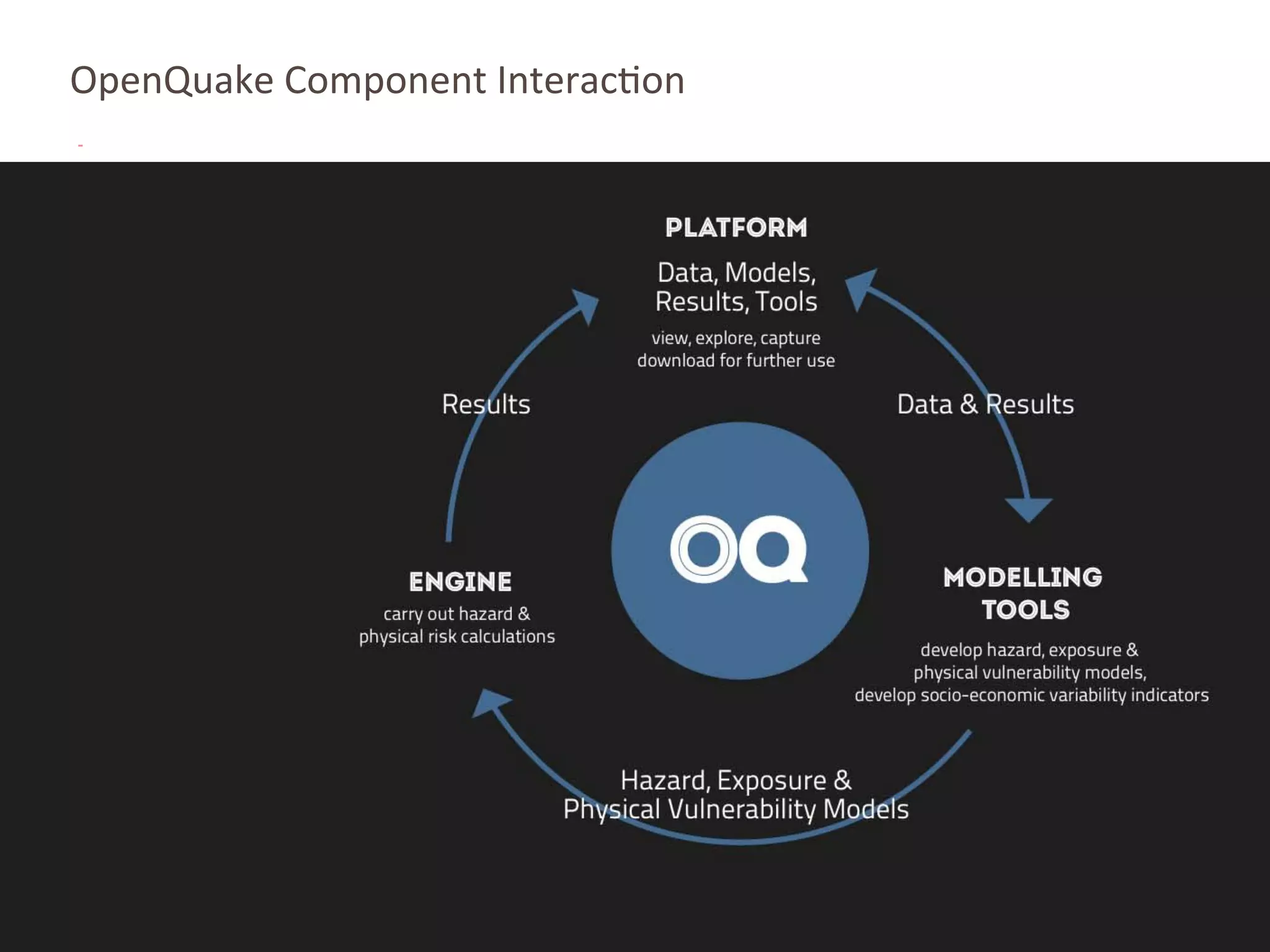
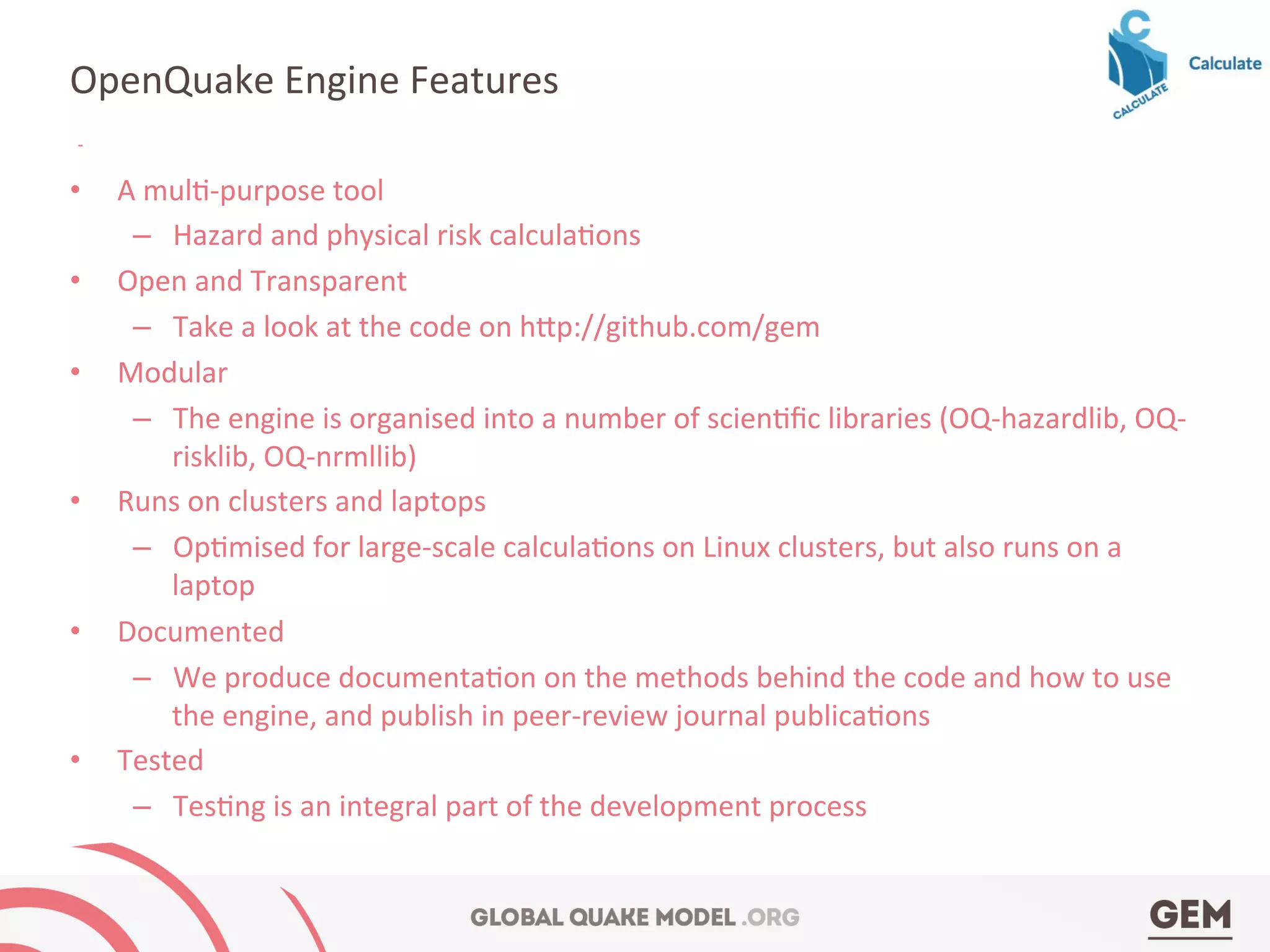
OpenQuake	
  Components	
  and	
  Status	
  
•  OpenQuake	
  pla7orm	
  
–  Web-­‐based	
  access	
  to	
  engine,	
  data,	
  models,	
  results	
  and	
  tools	
  
–  Work	
  in	
  progress,	
  v1.0	
  release	
  end	
  2014	
  
•  OpenQuake	
  engine	
  	
  
–  Calculate	
  seismic	
  hazard	
  and	
  physical	
  risk	
  
–  v1.0	
  released	
  in	
  June	
  2013	
  
–  Development	
  con4nues	
  
•  OpenQuake	
  desktop	
  tools	
  
–  Prepare	
  input	
  models	
  for	
  OpenQuake	
  engine	
  
–  Social	
  Vulnerability	
  and	
  Integrated	
  Risk	
  models	
  
–  Work	
  in	
  progress,	
  v1.0	
  release	
  end	
  2014	
  
Dr	
  Christopher	
  Burton	
  
Session	
  W35,	
  Wednesday	
  
5:30	
  –	
  6:45pm	
  
OpenQuake	
  Component	
  Interac4on	
  
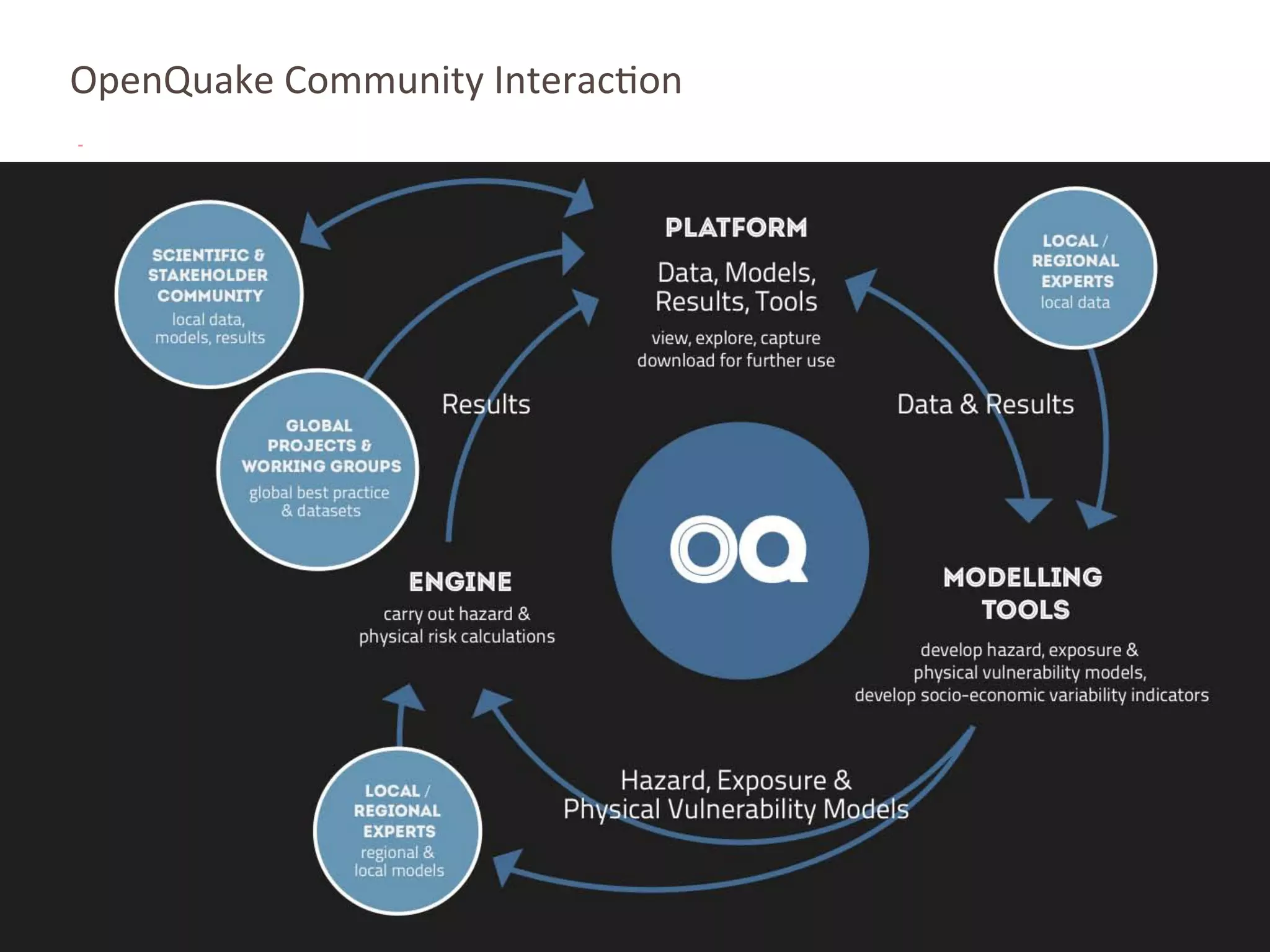
OpenQuake	
  Community	
  Interac4on	
  
•  A	
  mul4-­‐purpose	
  tool	
  
–  Hazard	
  and	
  physical	
  risk	
  calcula4ons	
  
•  Open	
  and	
  Transparent	
  
–  Take	
  a	
  look	
  at	
  the	
  code	
  on	
  h^p://github.com/gem	
  	
  
•  Modular	
  	
  
–  The	
  engine	
  is	
  organised	
  into	
  a	
  number	
  of	
  scien4fic	
  libraries	
  (OQ-­‐hazardlib,	
  OQ-­‐
risklib,	
  OQ-­‐nrmllib)	
  
•  Runs	
  on	
  clusters	
  and	
  laptops	
  
–  Op4mised	
  for	
  large-­‐scale	
  calcula4ons	
  on	
  Linux	
  clusters,	
  but	
  also	
  runs	
  on	
  a	
  
laptop	
  
•  Documented	
  
–  We	
  produce	
  documenta4on	
  on	
  the	
  methods	
  behind	
  the	
  code	
  and	
  how	
  to	
  use	
  
the	
  engine,	
  and	
  publish	
  in	
  peer-­‐review	
  journal	
  publica4ons	
  
•  Tested	
  
–  Tes4ng	
  is	
  an	
  integral	
  part	
  of	
  the	
  development	
  process	
  
OpenQuake	
  Engine	
  Features	
  
•  Calculators:	
  
–  Classical	
  Probabilis4c	
  Seismic	
  Hazard	
  (PSHA)	
  and	
  Risk	
  Analysis	
  (PSRA)	
  
–  Event-­‐based	
  PSHA	
  and	
  PSRA	
  
–  Scenario	
  hazard,	
  damage	
  and	
  loss	
  assessment	
  
–  Disaggrega4on	
  of	
  hazard,	
  damage	
  and	
  losses	
  
–  Retrofigng	
  cost-­‐benefit	
  analysis	
  
OpenQuake	
  Engine	
  Features	
  
ative examples
(a)
Hazard curves as obtained from the LogicTreeCase2 demo. Solid gray lines
represent individual hazard curves from the different logic tree path (a total
of 324 curves). The red dashed line represents the mean hazard curve, while
5
6
7
Magnitude
5
6
7
Magnitude
20
30
40
50
60
70
80
90
100
110
120
130
140
Distance [km]
20
30
40
50
60
70
80
90
100
110
120
130
140
Distance [km]
−3
−2
−1
0
1
2
3
Epsilon
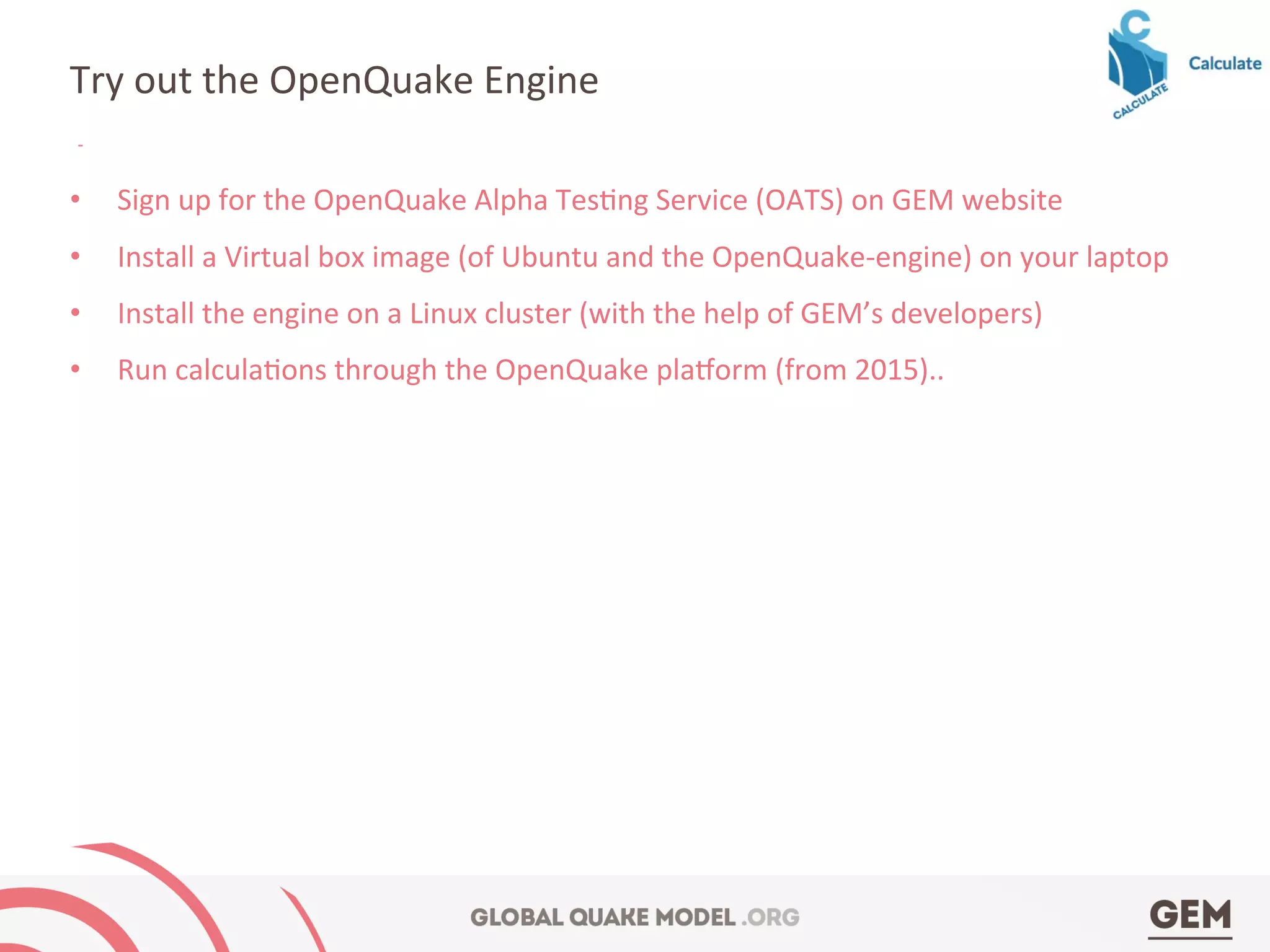
•  Sign	
  up	
  for	
  the	
  OpenQuake	
  Alpha	
  Tes4ng	
  Service	
  (OATS)	
  on	
  GEM	
  website	
  
•  Install	
  a	
  Virtual	
  box	
  image	
  (of	
  Ubuntu	
  and	
  the	
  OpenQuake-­‐engine)	
  on	
  your	
  laptop	
  
•  Install	
  the	
  engine	
  on	
  a	
  Linux	
  cluster	
  (with	
  the	
  help	
  of	
  GEM’s	
  developers)	
  
•  Run	
  calcula4ons	
  through	
  the	
  OpenQuake	
  pla7orm	
  (from	
  2015)..	
  
Try	
  out	
  the	
  OpenQuake	
  Engine	
  
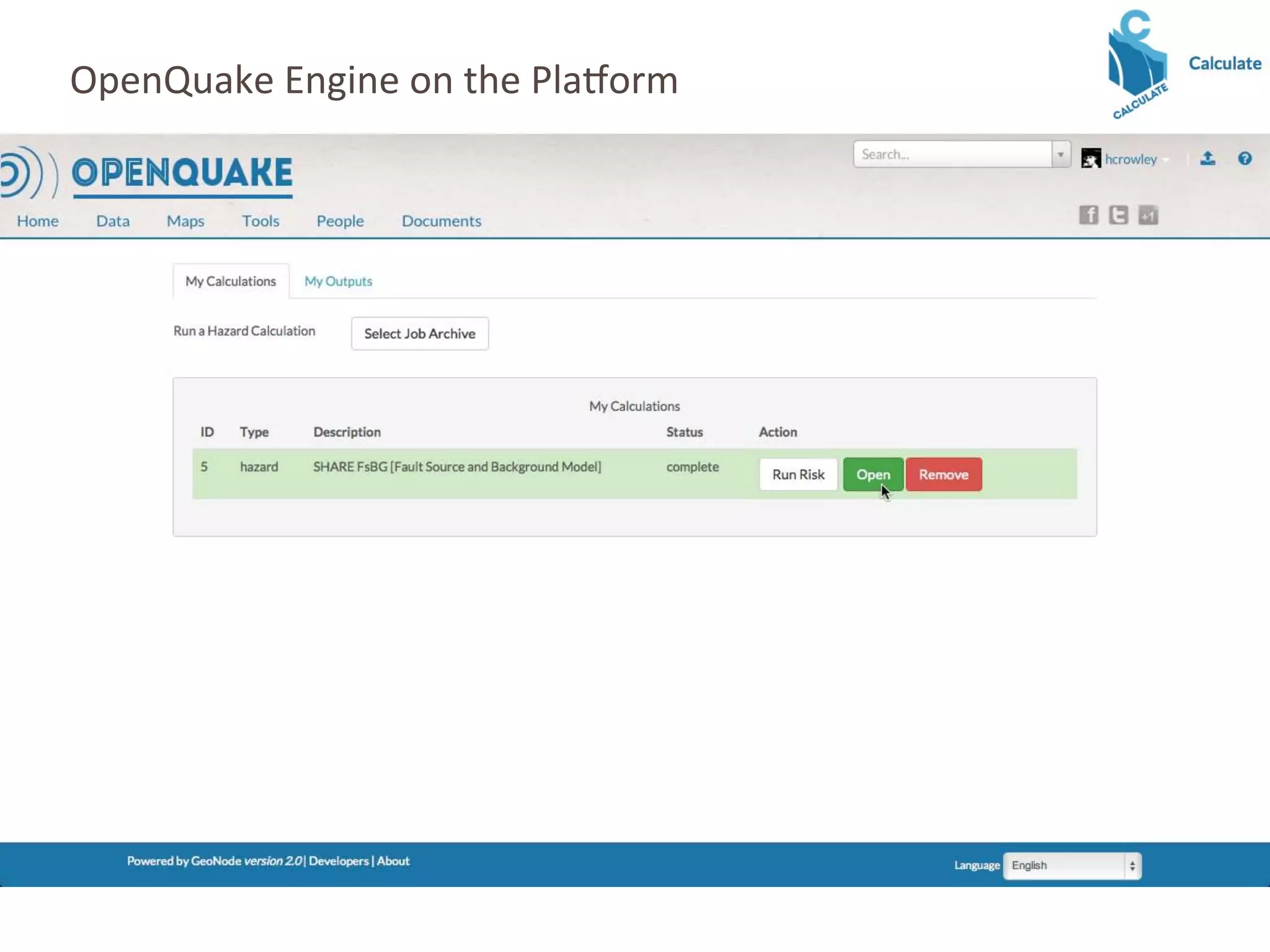
OpenQuake	
  Engine	
  on	
  the	
  Pla7orm	
  
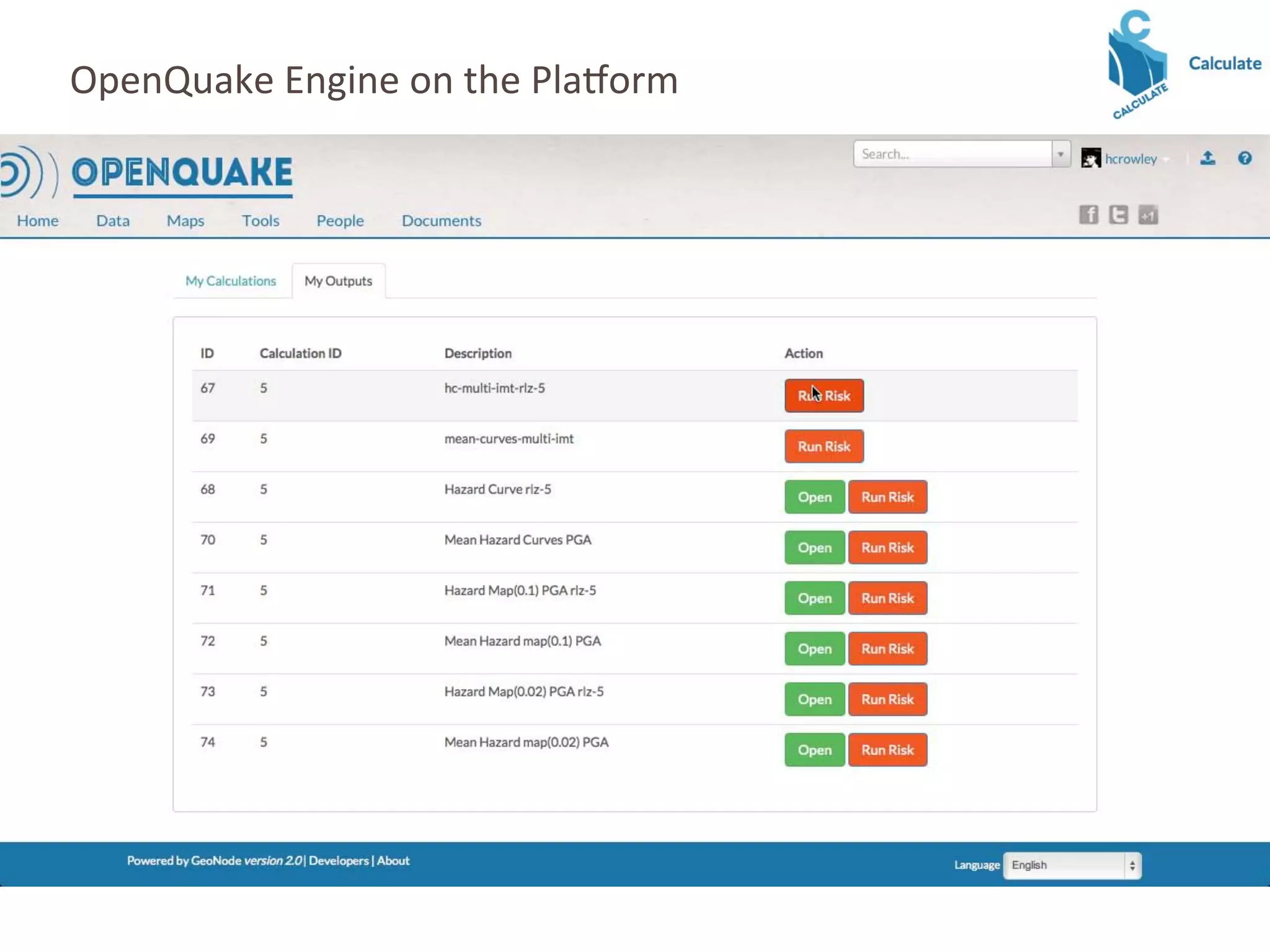
OpenQuake	
  Engine	
  on	
  the	
  Pla7orm	
  
OpenQuake	
  Engine	
  on	
  the	
  Pla7orm	
  
OpenQuake	
  Engine	
  on	
  the	
  Pla7orm	
  
GEM	
  Data	
  and	
  Models	
  on	
  the	
  Pla7orm	
  
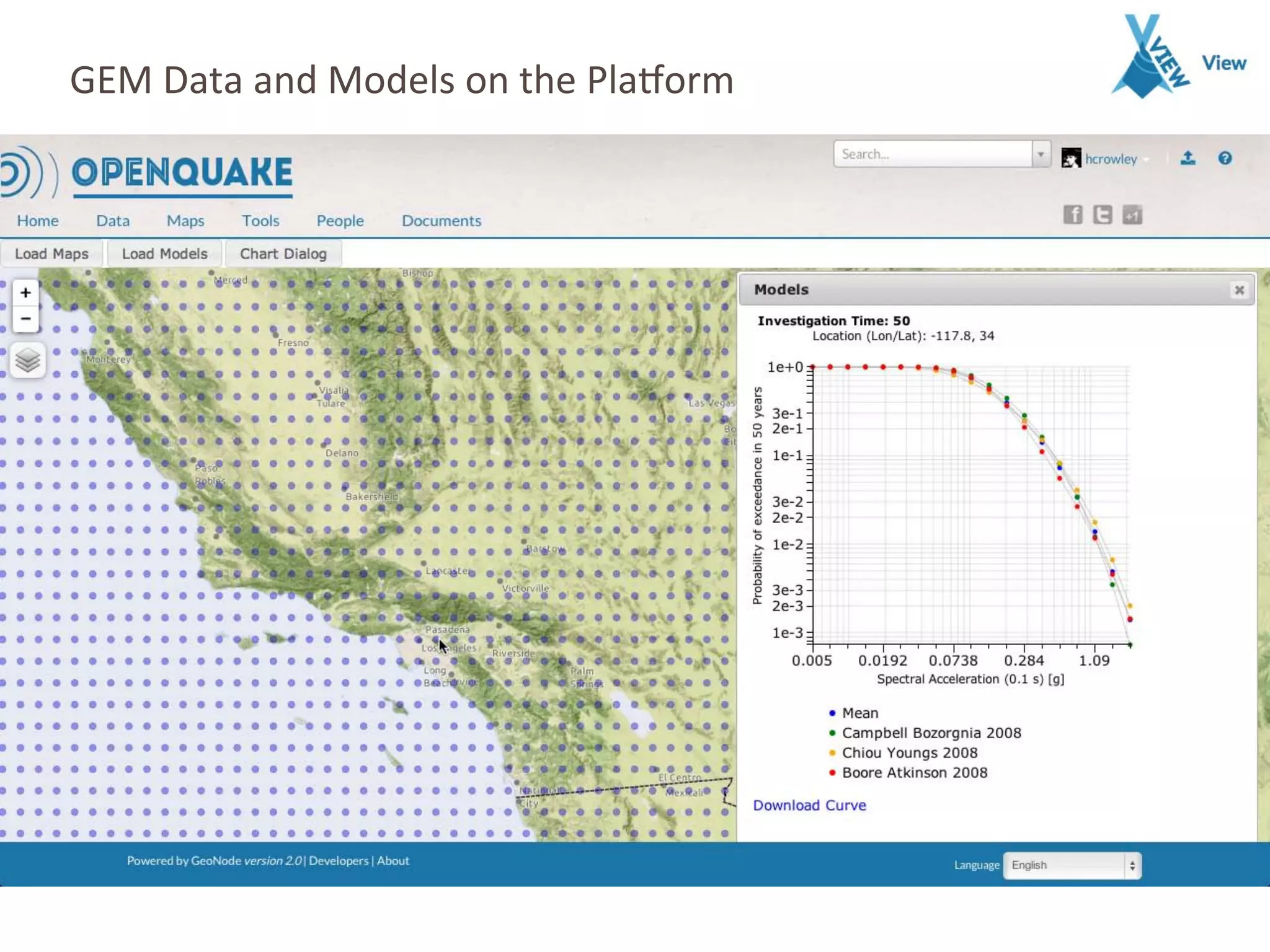
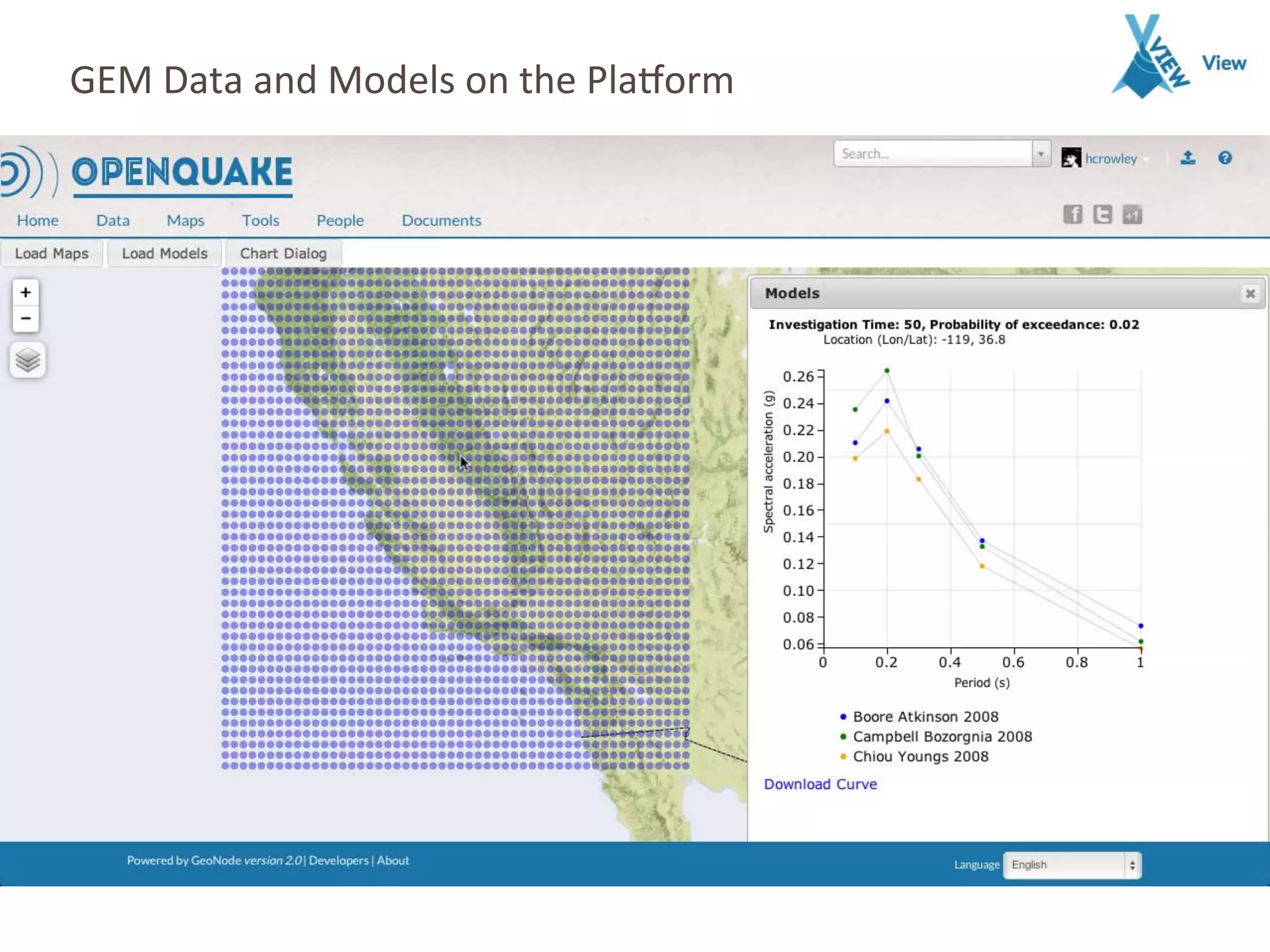
Hazard	
  results	
  of	
  interest	
  to	
  engineers	
  
GEM	
  Data	
  and	
  Models	
  on	
  the	
  Pla7orm	
  
GEM	
  Data	
  and	
  Models	
  on	
  the	
  Pla7orm	
  
GEM	
  Data	
  and	
  Models	
  on	
  the	
  Pla7orm	
  
GEM	
  Data	
  and	
  Models	
  on	
  the	
  Pla7orm	
  
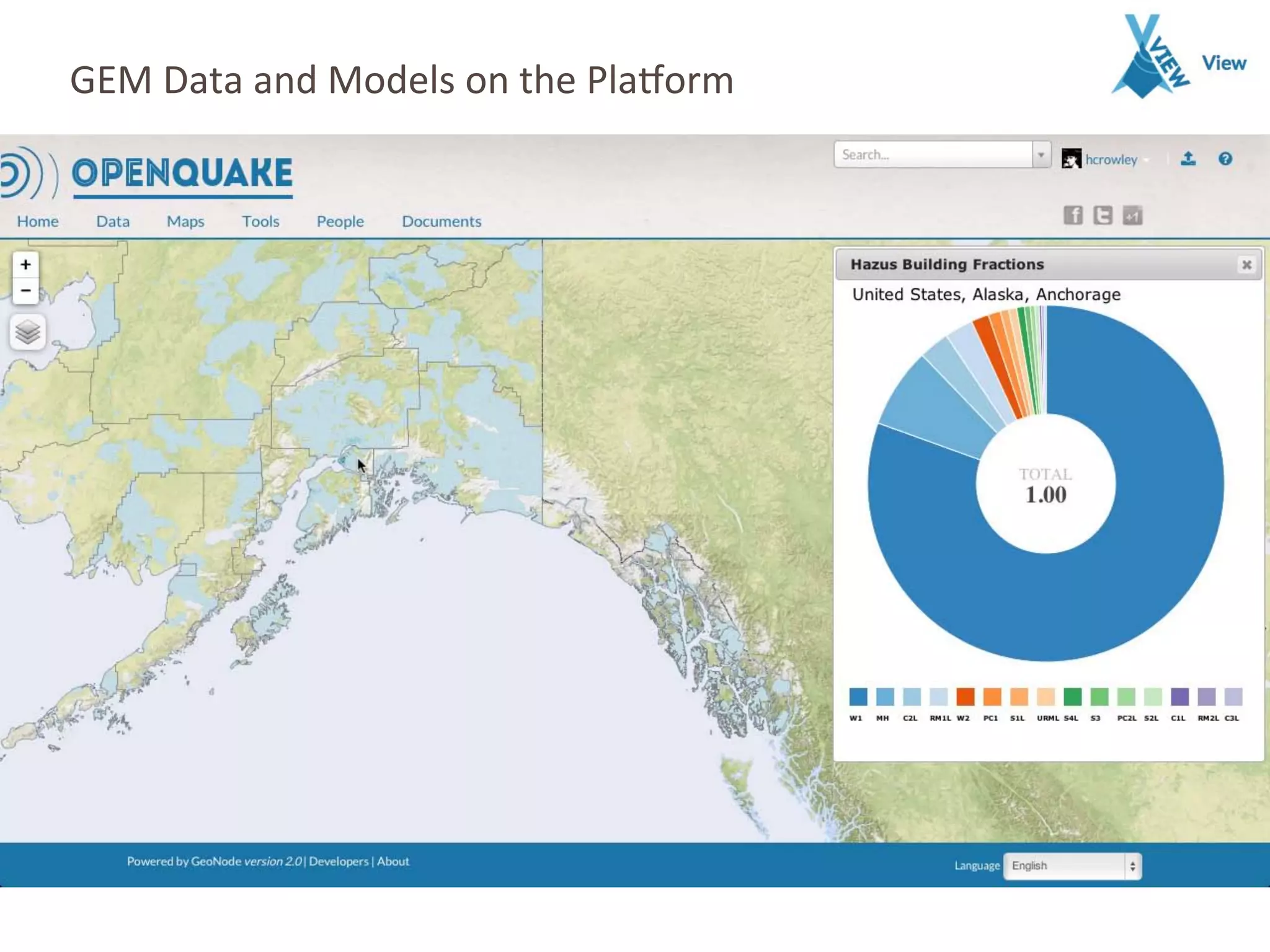
Building	
  and	
  popula4on	
  exposure	
  data	
  
GEM	
  Data	
  and	
  Models	
  on	
  the	
  Pla7orm	
  
GEM	
  Data	
  and	
  Models	
  on	
  the	
  Pla7orm	
  
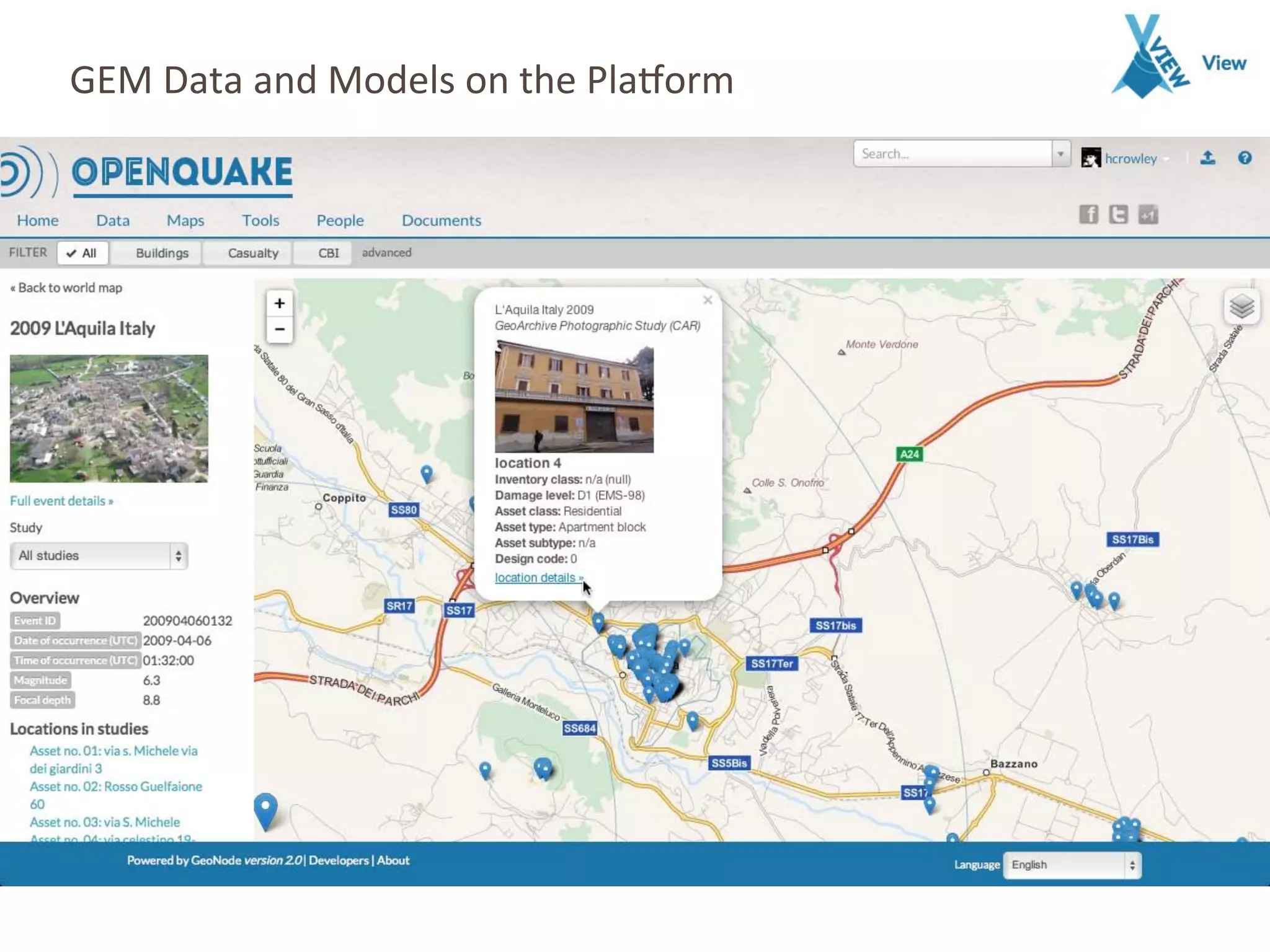
Earthquake	
  consequence	
  data	
  
GEM	
  Data	
  and	
  Models	
  on	
  the	
  Pla7orm	
  
GEM	
  Data	
  and	
  Models	
  on	
  the	
  Pla7orm	
  
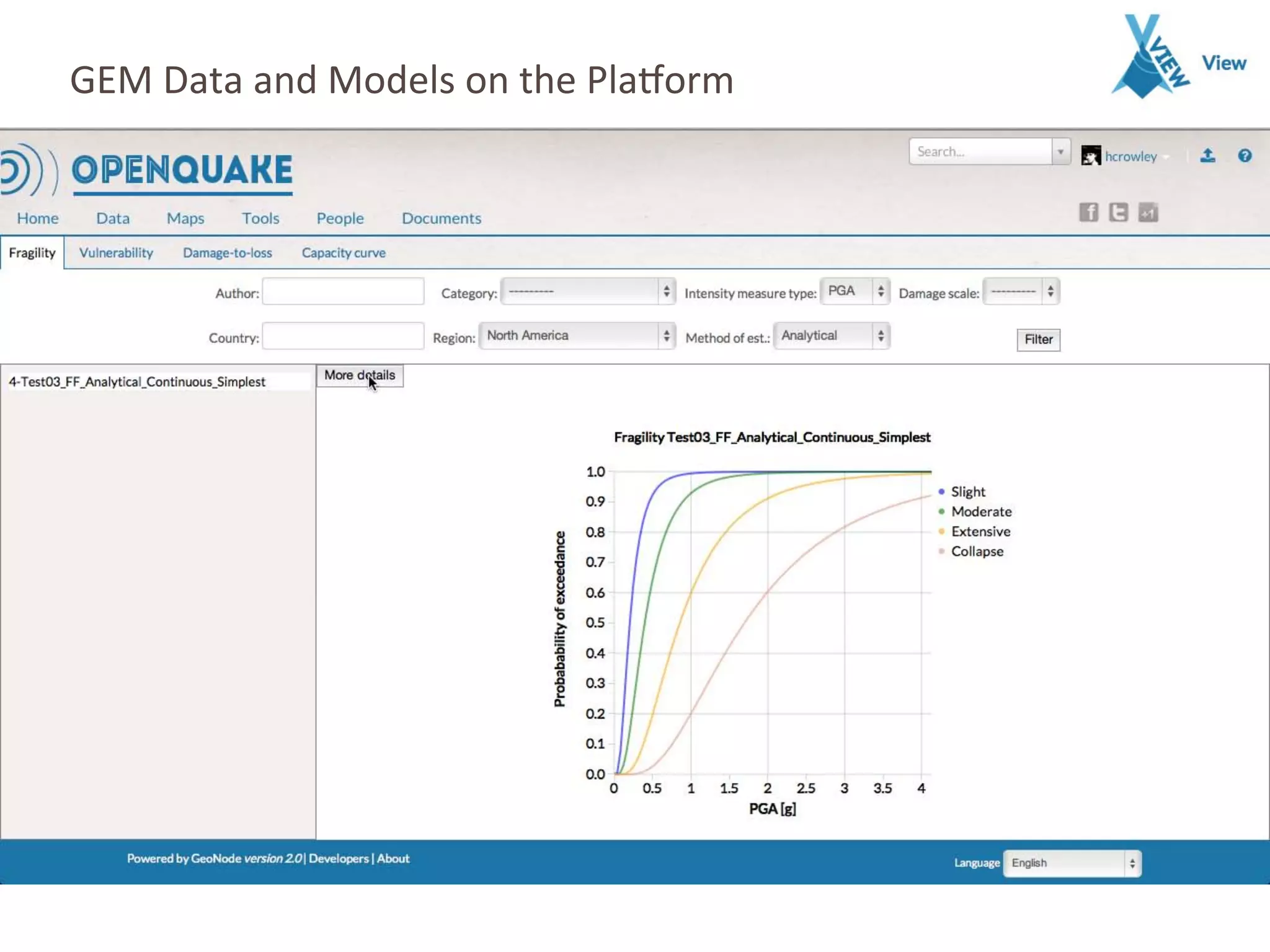
Building	
  vulnerability	
  data	
  
GEM	
  Data	
  and	
  Models	
  on	
  the	
  Pla7orm	
  
GEM	
  Data	
  and	
  Models	
  on	
  the	
  Pla7orm	
  
GEM	
  Data	
  and	
  Models	
  on	
  the	
  Pla7orm	
  
GEM	
  Data	
  and	
  Models	
  on	
  the	
  Pla7orm	
  
GEM	
  Community	
  on	
  the	
  the	
  Pla7orm	
  
Session	
  presenta4ons	
  on	
  the	
  GEM	
  website	
  
Except where otherwise noted, this work is licensed under:
creativecommons.org/licenses/by-nc-nd/4.0/
Please attribute to the GEM Foundation with a link to -
www.globalearthquakemodel.org
Title of slide image can go here

Introducing OpenQuake, the interactive platform for collaborative earthquake risk assessment

  • 1.
    Introducing  OpenQuake,  the   interac4ve  pla7orm  for  collabora4ve   earthquake  risk  assessment   Helen  Crowley   23rd  July  2014  –  10th  U.S.  Na4onal  Conference  on  Earthquake  Engineering       @GEMwrld    #10NCEE      
  • 2.
    OpenQuake  Components  and  Status   •  OpenQuake  pla7orm   –  Web-­‐based  access  to  engine,  data,  models,  results  and  tools   –  Work  in  progress,  v1.0  release  end  2014   •  OpenQuake  engine     –  Calculate  seismic  hazard  and  physical  risk   –  v1.0  released  in  June  2013   –  Development  con4nues   •  OpenQuake  desktop  tools   –  Prepare  input  models  for  OpenQuake  engine   –  Social  Vulnerability  and  Integrated  Risk  models   –  Work  in  progress,  v1.0  release  end  2014   Dr  Christopher  Burton   Session  W35,  Wednesday   5:30  –  6:45pm  
  • 3.
  • 4.
  • 5.
    •  A  mul4-­‐purpose  tool   –  Hazard  and  physical  risk  calcula4ons   •  Open  and  Transparent   –  Take  a  look  at  the  code  on  h^p://github.com/gem     •  Modular     –  The  engine  is  organised  into  a  number  of  scien4fic  libraries  (OQ-­‐hazardlib,  OQ-­‐ risklib,  OQ-­‐nrmllib)   •  Runs  on  clusters  and  laptops   –  Op4mised  for  large-­‐scale  calcula4ons  on  Linux  clusters,  but  also  runs  on  a   laptop   •  Documented   –  We  produce  documenta4on  on  the  methods  behind  the  code  and  how  to  use   the  engine,  and  publish  in  peer-­‐review  journal  publica4ons   •  Tested   –  Tes4ng  is  an  integral  part  of  the  development  process   OpenQuake  Engine  Features  
  • 6.
    •  Calculators:   – Classical  Probabilis4c  Seismic  Hazard  (PSHA)  and  Risk  Analysis  (PSRA)   –  Event-­‐based  PSHA  and  PSRA   –  Scenario  hazard,  damage  and  loss  assessment   –  Disaggrega4on  of  hazard,  damage  and  losses   –  Retrofigng  cost-­‐benefit  analysis   OpenQuake  Engine  Features   ative examples (a) Hazard curves as obtained from the LogicTreeCase2 demo. Solid gray lines represent individual hazard curves from the different logic tree path (a total of 324 curves). The red dashed line represents the mean hazard curve, while 5 6 7 Magnitude 5 6 7 Magnitude 20 30 40 50 60 70 80 90 100 110 120 130 140 Distance [km] 20 30 40 50 60 70 80 90 100 110 120 130 140 Distance [km] −3 −2 −1 0 1 2 3 Epsilon
  • 7.
    •  Sign  up  for  the  OpenQuake  Alpha  Tes4ng  Service  (OATS)  on  GEM  website   •  Install  a  Virtual  box  image  (of  Ubuntu  and  the  OpenQuake-­‐engine)  on  your  laptop   •  Install  the  engine  on  a  Linux  cluster  (with  the  help  of  GEM’s  developers)   •  Run  calcula4ons  through  the  OpenQuake  pla7orm  (from  2015)..   Try  out  the  OpenQuake  Engine  
  • 8.
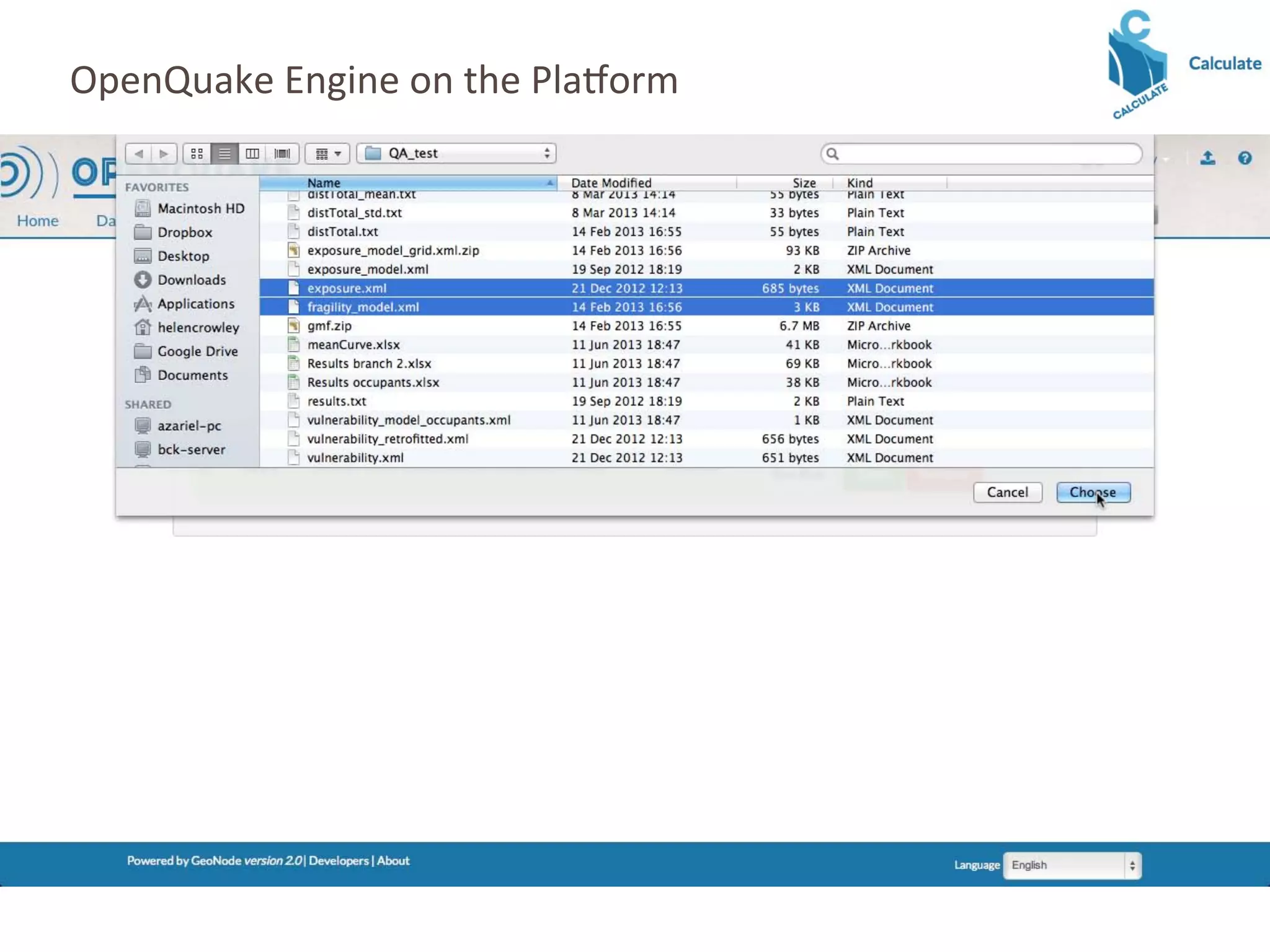
    OpenQuake  Engine  on  the  Pla7orm  
  • 9.
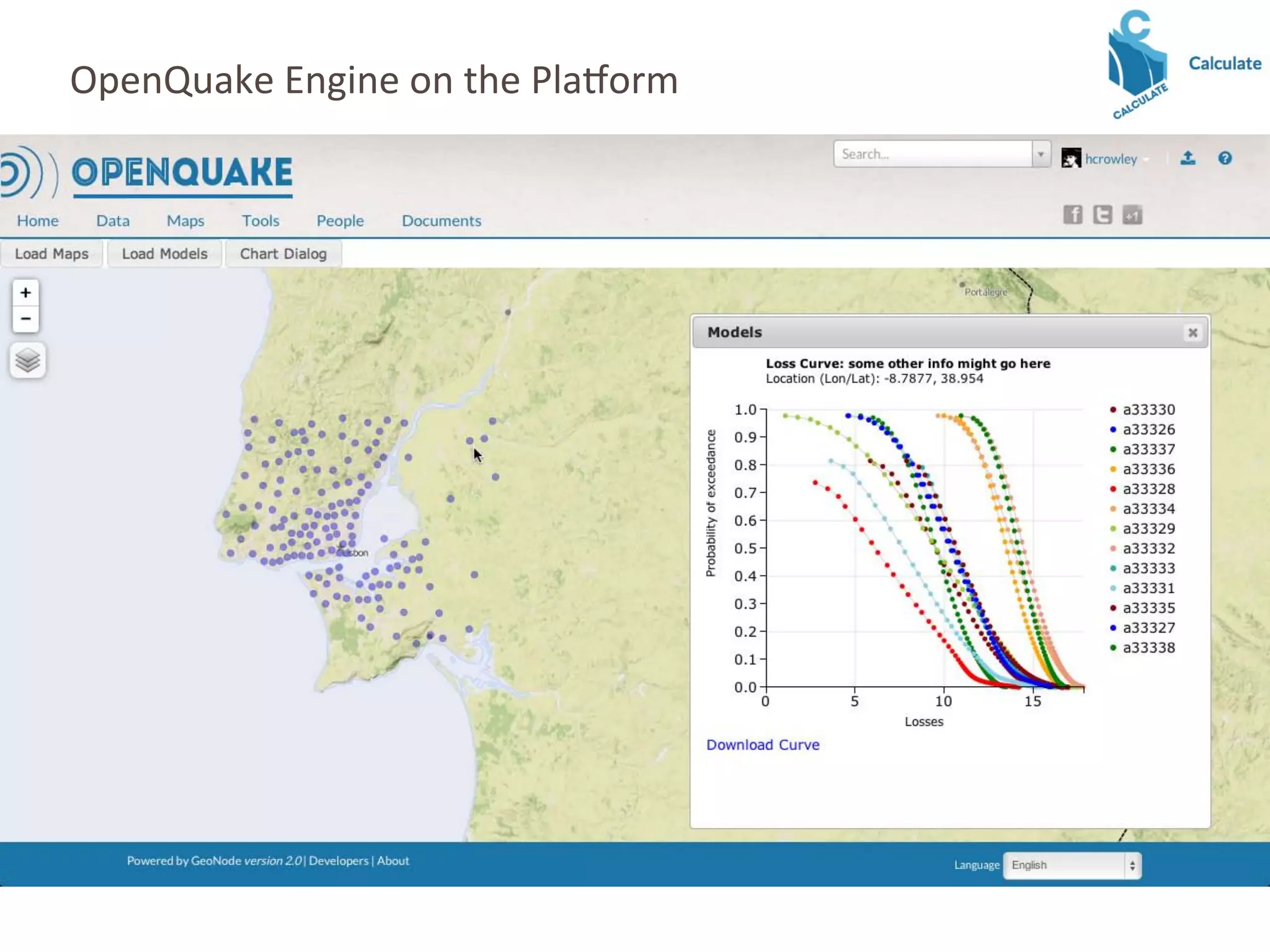
    OpenQuake  Engine  on  the  Pla7orm  
  • 10.
    OpenQuake  Engine  on  the  Pla7orm  
  • 11.
    OpenQuake  Engine  on  the  Pla7orm  
  • 12.
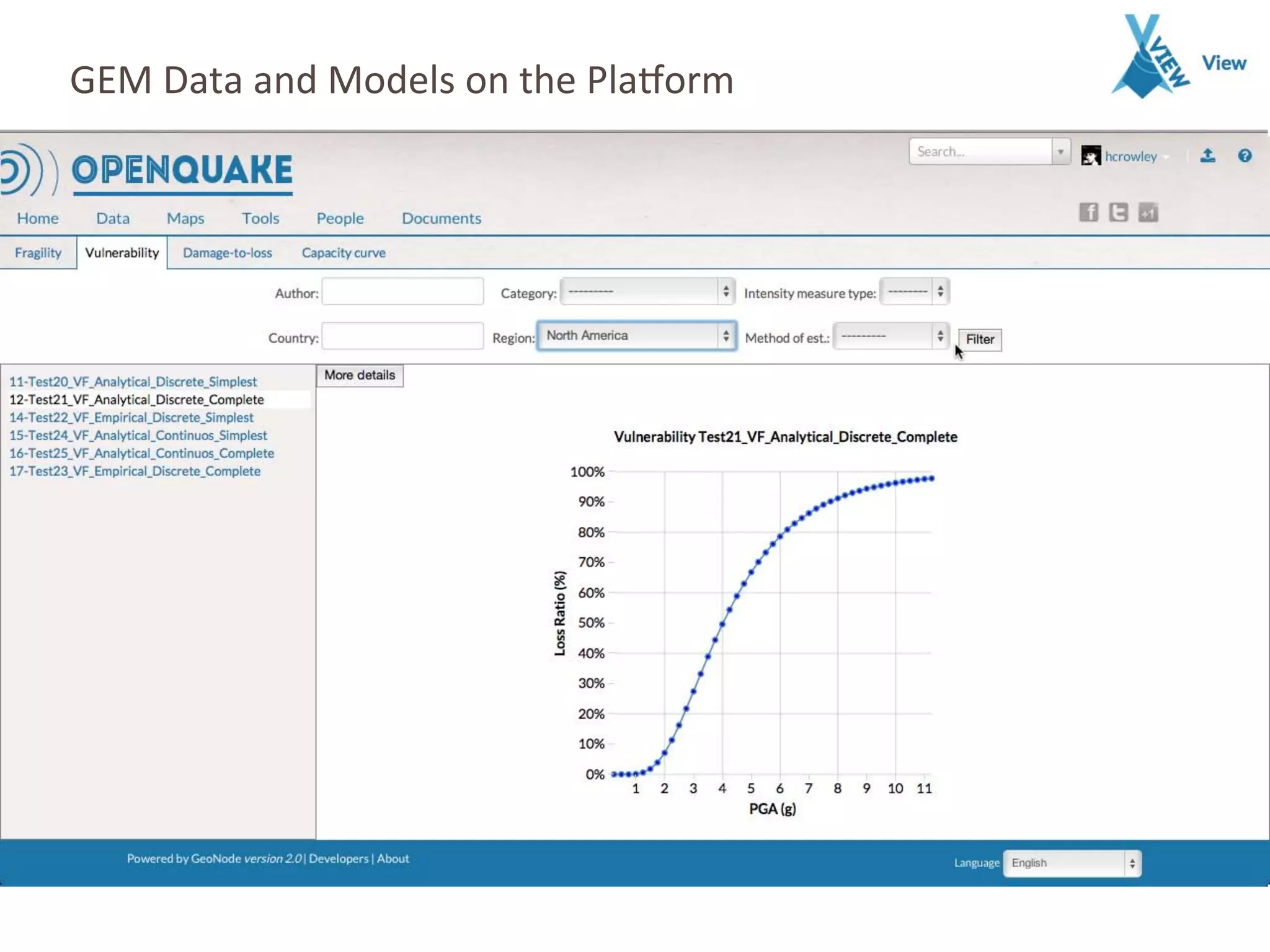
    GEM  Data  and  Models  on  the  Pla7orm   Hazard  results  of  interest  to  engineers  
  • 13.
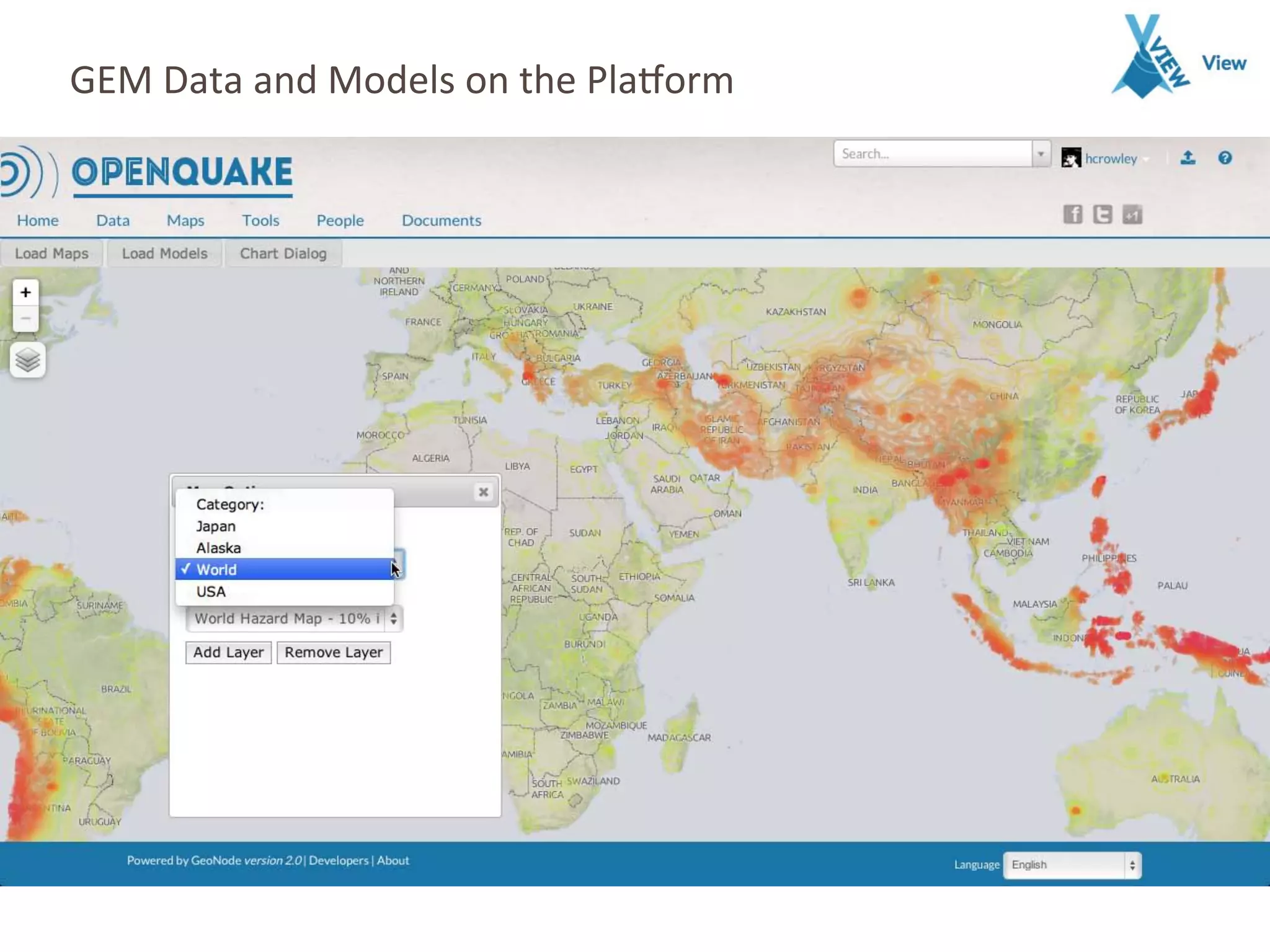
    GEM  Data  and  Models  on  the  Pla7orm  
  • 14.
    GEM  Data  and  Models  on  the  Pla7orm  
  • 15.
    GEM  Data  and  Models  on  the  Pla7orm  
  • 16.
    GEM  Data  and  Models  on  the  Pla7orm   Building  and  popula4on  exposure  data  
  • 17.
    GEM  Data  and  Models  on  the  Pla7orm  
  • 18.
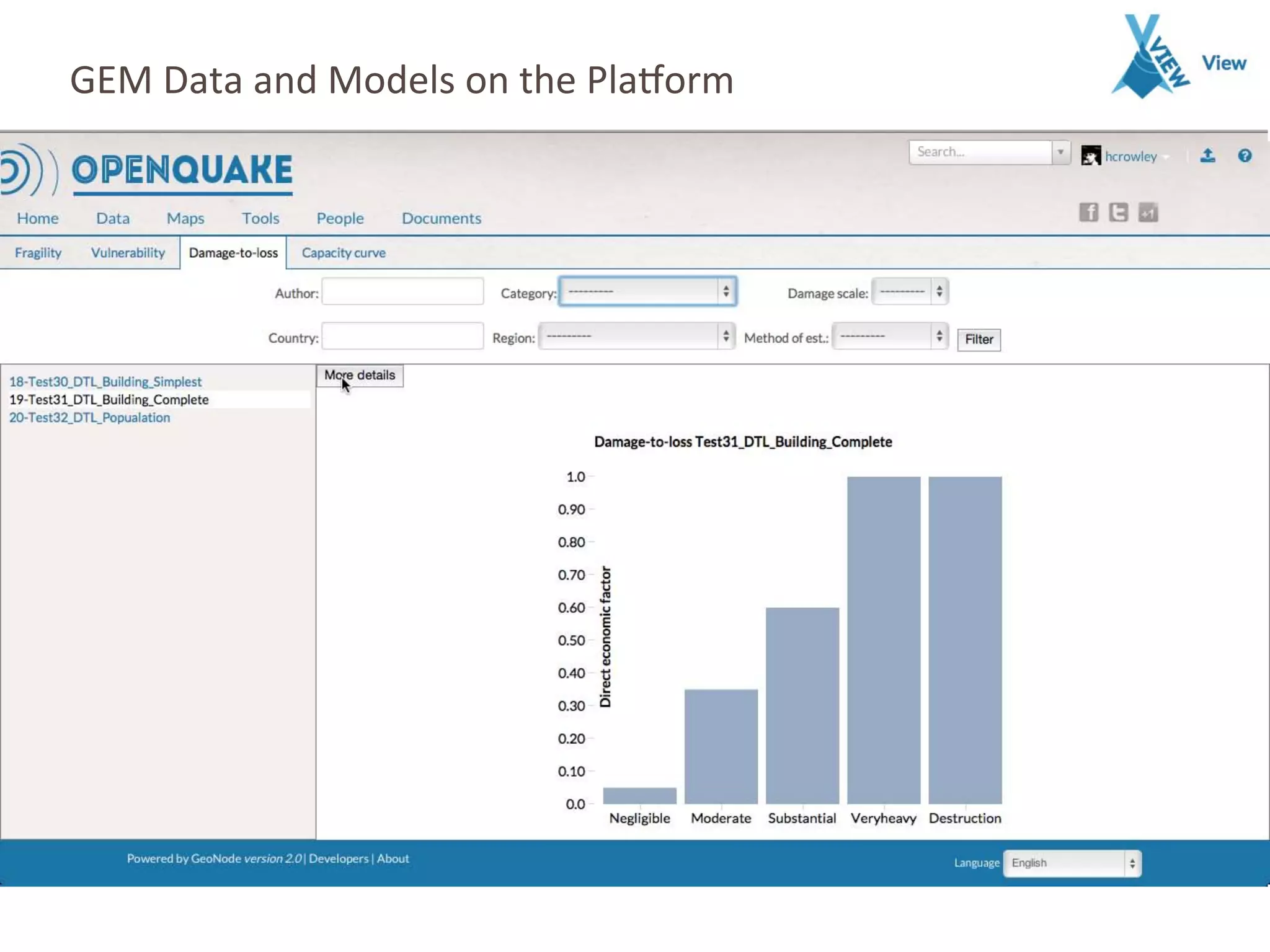
    GEM  Data  and  Models  on  the  Pla7orm   Earthquake  consequence  data  
  • 19.
    GEM  Data  and  Models  on  the  Pla7orm  
  • 20.
    GEM  Data  and  Models  on  the  Pla7orm   Building  vulnerability  data  
  • 21.
    GEM  Data  and  Models  on  the  Pla7orm  
  • 22.
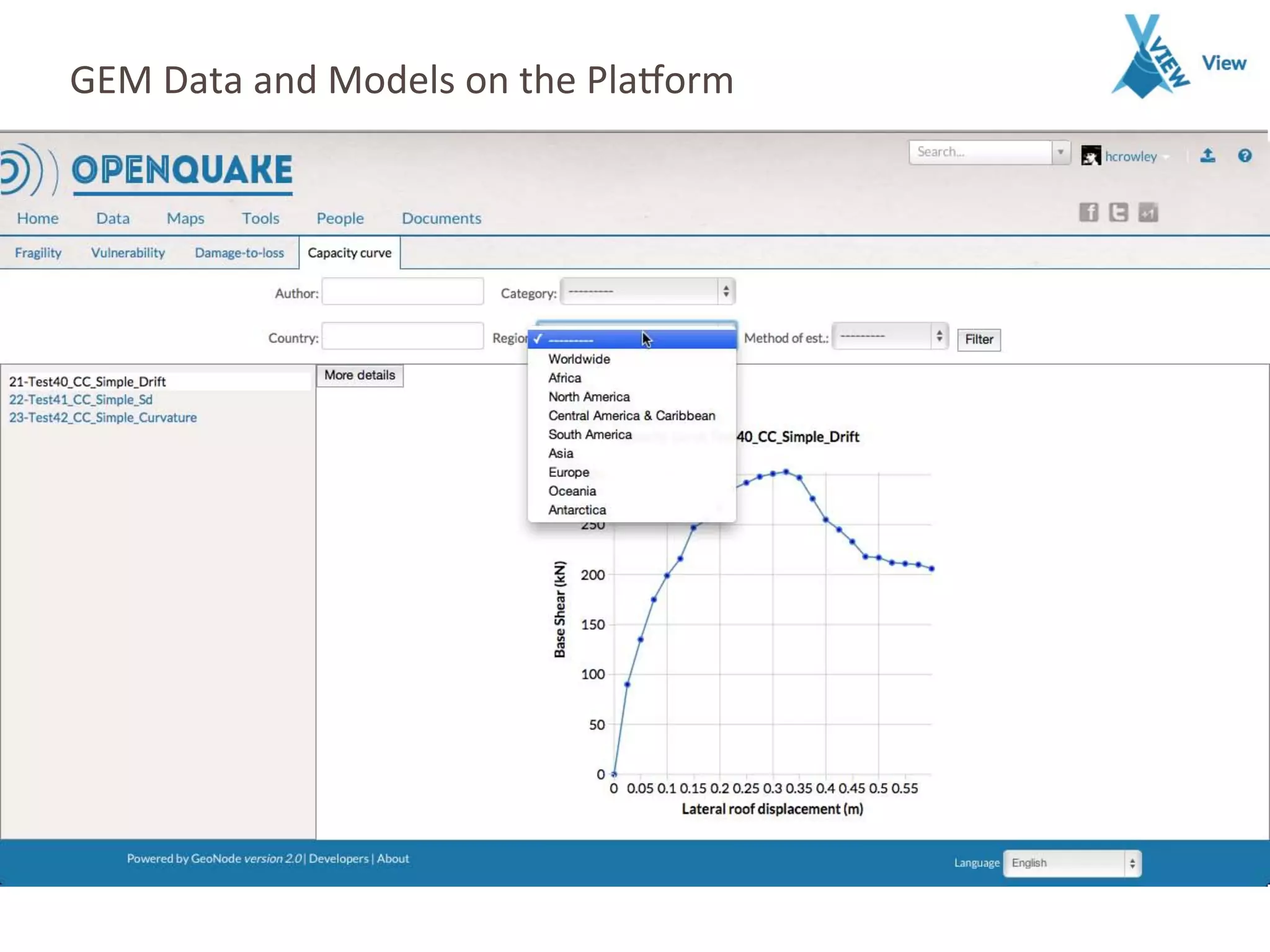
    GEM  Data  and  Models  on  the  Pla7orm  
  • 23.
    GEM  Data  and  Models  on  the  Pla7orm  
  • 24.
    GEM  Data  and  Models  on  the  Pla7orm  
  • 25.
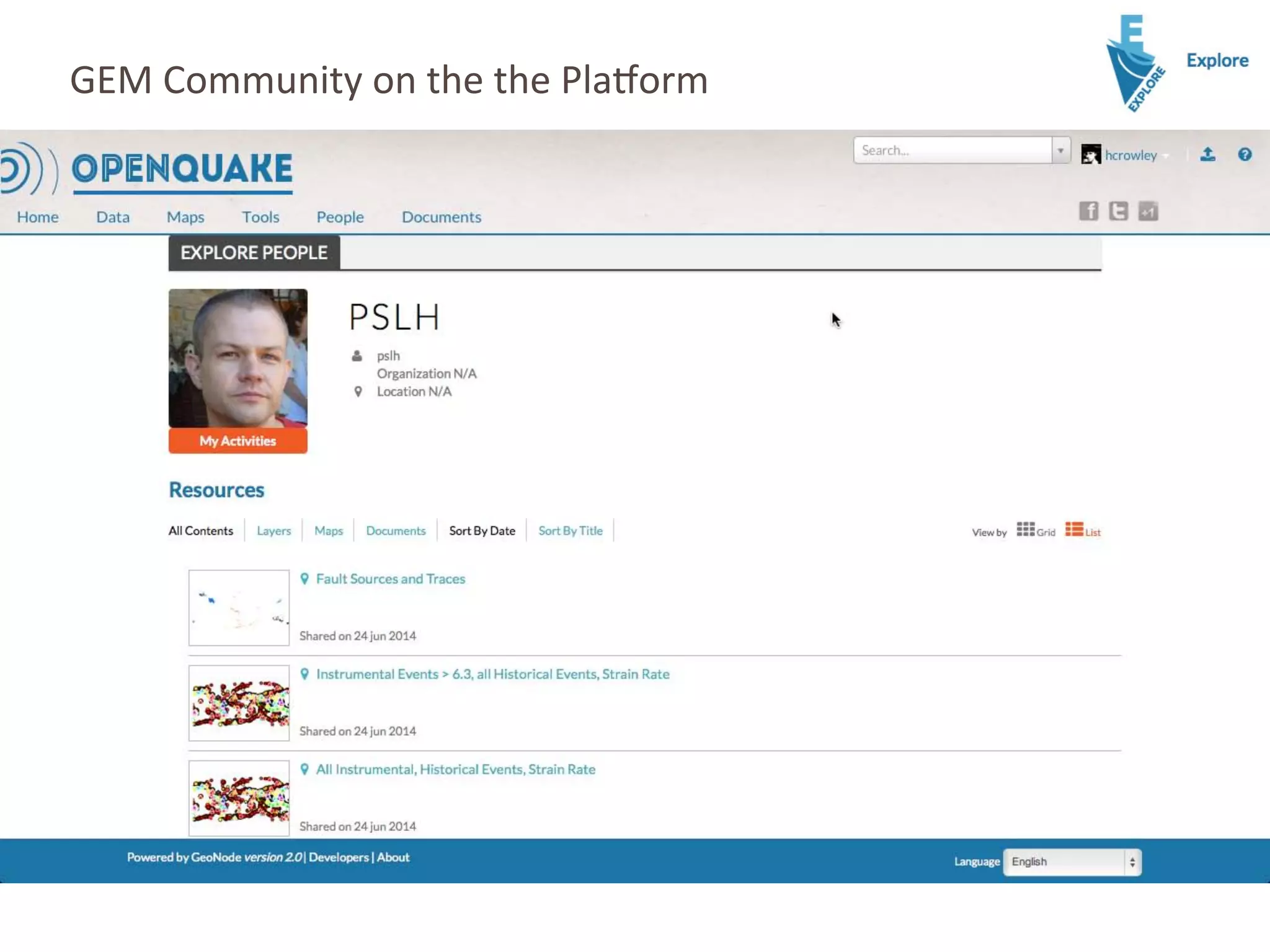
    GEM  Community  on  the  the  Pla7orm  
  • 26.
    Session  presenta4ons  on  the  GEM  website  
  • 27.
    Except where otherwisenoted, this work is licensed under: creativecommons.org/licenses/by-nc-nd/4.0/ Please attribute to the GEM Foundation with a link to - www.globalearthquakemodel.org
  • 28.
    Title of slideimage can go here