Presented by: Pragya Rajat Pandey
NUTRITIONAL BEHAVIOR IN
PREGNANCY
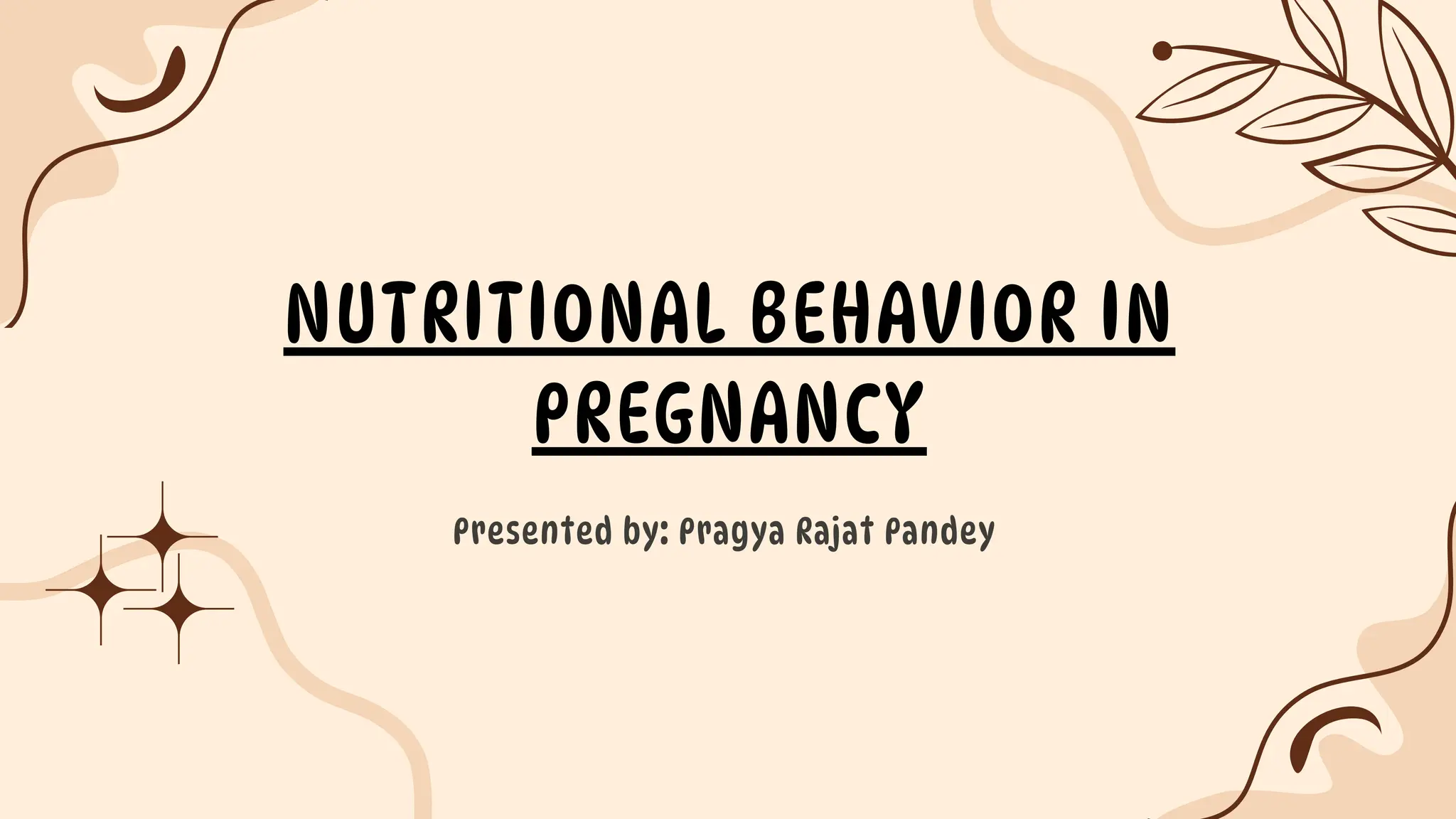
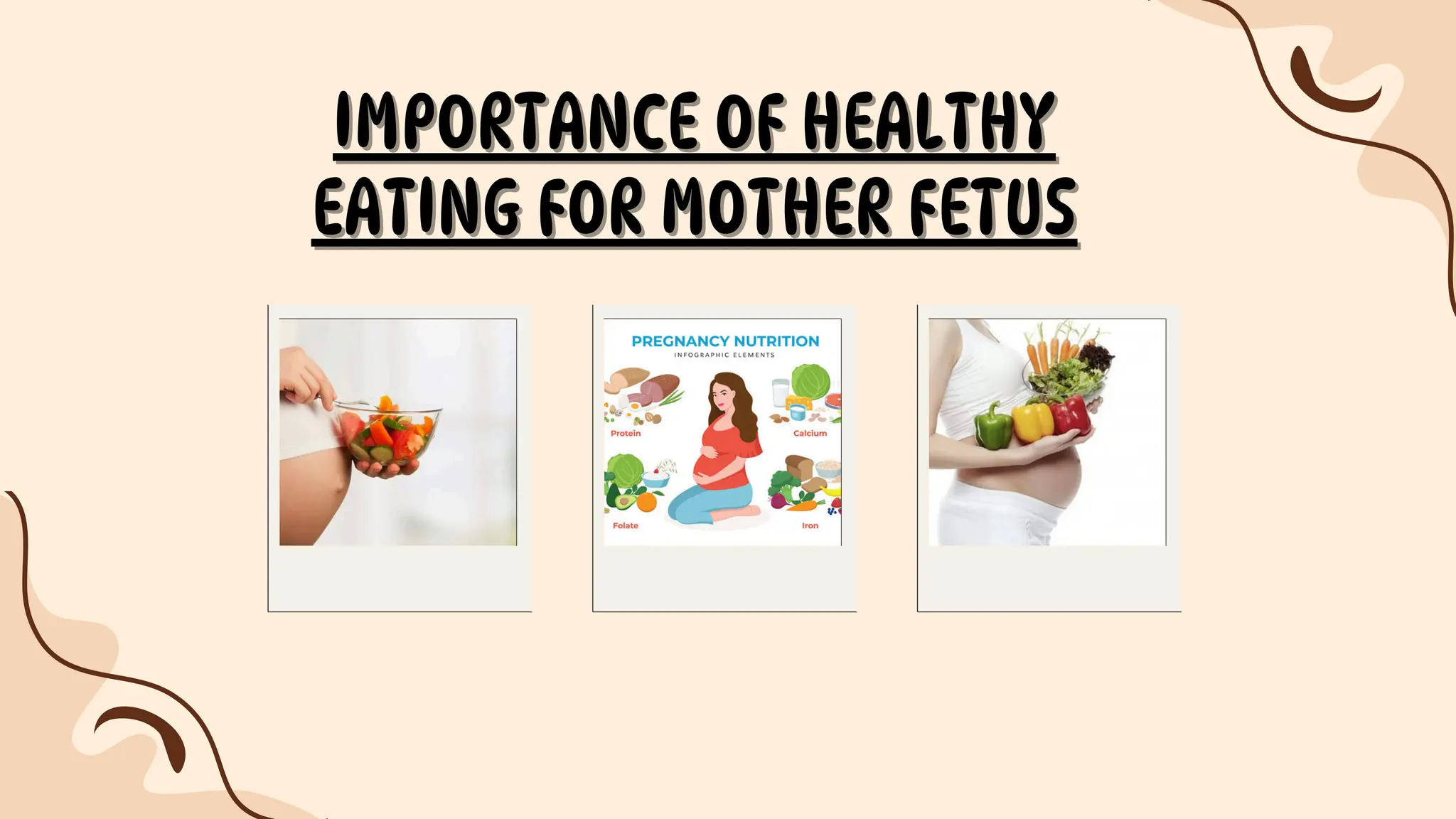
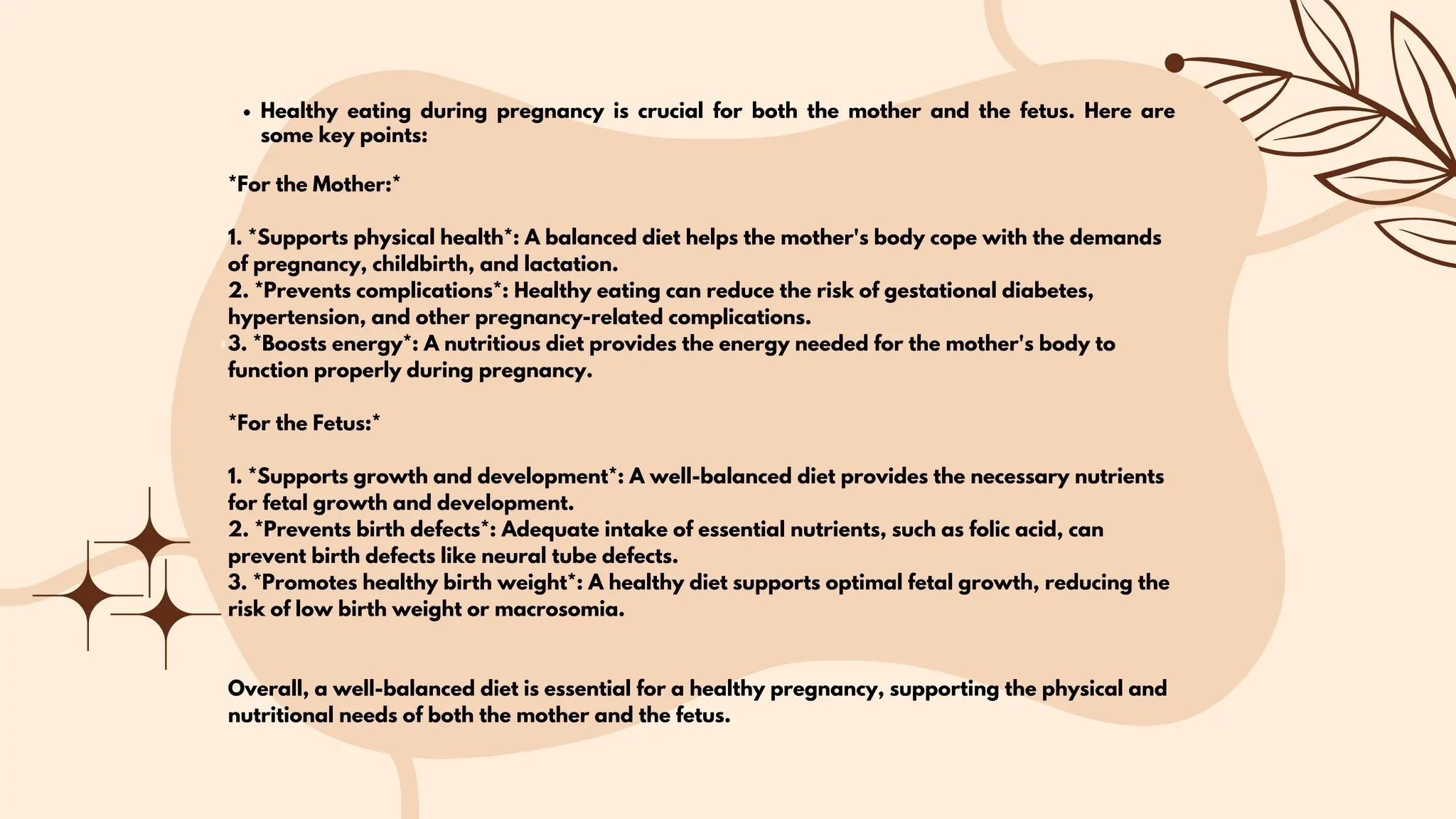
IMPORTANCE OF HEALTHY
EATING FOR MOTHER FETUS
Healthy eating during pregnancy is crucial for both the mother and the fetus. Here are
some key points:
*For the Mother:*
1. *Supports physical health*: A balanced diet helps the mother's body cope with the demands
of pregnancy, childbirth, and lactation.
2. *Prevents complications*: Healthy eating can reduce the risk of gestational diabetes,
hypertension, and other pregnancy-related complications.
3. *Boosts energy*: A nutritious diet provides the energy needed for the mother's body to
function properly during pregnancy.
*For the Fetus:*
1. *Supports growth and development*: A well-balanced diet provides the necessary nutrients
for fetal growth and development.
2. *Prevents birth defects*: Adequate intake of essential nutrients, such as folic acid, can
prevent birth defects like neural tube defects.
3. *Promotes healthy birth weight*: A healthy diet supports optimal fetal growth, reducing the
risk of low birth weight or macrosomia.
Overall, a well-balanced diet is essential for a healthy pregnancy, supporting the physical and
nutritional needs of both the mother and the fetus.
"Welcome to our discussion on nutrition during pregnancy. As we
explore the importance of healthy eating for both mother and fetus,
we'll examine the key nutrients, dietary recommendations, and
benefits of a balanced diet. A well-nourished mother is better
equipped to support her baby's growth and development, reducing
the risk of complications and promoting a healthy pregnancy
outcome. Let's dive into the world of prenatal nutrition and discover
how healthy eating can make a positive impact on mother and baby."
INTRODUCTION
KEY NUTRIENTS
Here are some key nutrients essential for a healthy pregnancy:
1. *Folic Acid*: Prevents neural tube defects (NTDs) and supports fetal brain development. Found in leafy greens, fortified
cereals, and legumes.
2. *Iron*: Supports fetal brain and placental development, prevents anemia. Found in red meat, poultry, fish, beans, and
fortified cereals.
3. *Calcium*: Crucial for fetal bone development and maternal bone health. Found in dairy products, leafy greens, and
fortified plant-based milk.
4. *Protein*: Supports fetal growth and development. Found in lean meats, fish, eggs, beans, and nuts.
5. *Omega-3 Fatty Acids*: Important for fetal brain and retina development. Found in fatty fish, flaxseeds, and walnuts.
6. *Vitamin D*: Supports bone health and immune function. Found in fatty fish, fortified dairy products, and sunlight
exposure.
7. *Fiber*: Helps prevent constipation and supports healthy digestion. Found in fruits, vegetables, whole grains, and legumes.
These nutrients play a vital role in supporting the health and development of both the mother and the fetus during
pregnancy.
DIETARY RECOMMENDATIONS
Here are some dietary recommendations for pregnant women:
*General Guidelines:*
1. *Eat a variety of foods*: Include a wide range of fruits, vegetables,
whole grains, lean proteins, and healthy fats.
2. *Stay hydrated*: Drink plenty of water throughout the day.
3. *Choose whole foods*: Prioritize whole, unprocessed foods over
processed and packaged ones.
FOOD SAFETY
Food safety is crucial during pregnancy to prevent foodborne
illnesses that can harm both the mother and the fetus. Here are some
key food safety tips for pregnant women:
*Foods to Avoid:*
1. *Raw or undercooked meat, poultry, and eggs*: Risk of Salmonella,
E. coli, and Listeria.
2. *Raw or undercooked fish and seafood*: Risk of Salmonella, Vibrio,
and parasites.
3. *Unpasteurized dairy products and juices*: Risk of Salmonella, E.
coli, and Listeria.
4. *Soft cheeses and deli meats*: Risk of Listeria.
5. *High-risk foods*: Avoid foods like raw sprouts, refrigerated
smoked seafood.
Here are some common concerns related to nutrition and diet during pregnancy:
*Common Concerns:*
1. *Nausea and Vomiting*: Managing morning sickness and staying hydrated.
2. *Constipation*: Increasing fiber intake and staying hydrated.
3. *Weight Gain*: Balancing weight gain with fetal growth and maternal health.
4. *Food Cravings and Aversions*: Managing cravings and aversions while maintaining a balanced
diet.
5. *Gestational Diabetes*: Managing blood sugar levels through diet and lifestyle changes.
6. *Preeclampsia*: Reducing risk through a balanced diet and healthy lifestyle.
7. *Nutrient Deficiencies*: Ensuring adequate intake of essential nutrients like folic acid, iron,
and calcium.
COMMON CONCERNS
Here's a possible conclusion for a presentation or discussion on
nutrition during pregnancy:
"In conclusion, a well-balanced diet is essential for a healthy
pregnancy. By focusing on key nutrients, dietary
recommendations, and food safety, pregnant women can support
their health and the health of their developing baby. By
managing common concerns and staying informed, women can
reduce their risk of complications and promote a positive
pregnancy outcome. Prioritizing nutrition and health during
pregnancy sets the stage for a healthy start in life for both
mother and baby."
CONCLUSION
THANK
YOU

Nutritional behavior in pregnancy presented by Pragya Rajat Pandey

  • 1.
    Presented by: PragyaRajat Pandey NUTRITIONAL BEHAVIOR IN PREGNANCY
  • 2.
    IMPORTANCE OF HEALTHY IMPORTANCEOF HEALTHY EATING FOR MOTHER FETUS EATING FOR MOTHER FETUS
  • 3.
    Healthy eating duringpregnancy is crucial for both the mother and the fetus. Here are some key points: *For the Mother:* 1. *Supports physical health*: A balanced diet helps the mother's body cope with the demands of pregnancy, childbirth, and lactation. 2. *Prevents complications*: Healthy eating can reduce the risk of gestational diabetes, hypertension, and other pregnancy-related complications. 3. *Boosts energy*: A nutritious diet provides the energy needed for the mother's body to function properly during pregnancy. *For the Fetus:* 1. *Supports growth and development*: A well-balanced diet provides the necessary nutrients for fetal growth and development. 2. *Prevents birth defects*: Adequate intake of essential nutrients, such as folic acid, can prevent birth defects like neural tube defects. 3. *Promotes healthy birth weight*: A healthy diet supports optimal fetal growth, reducing the risk of low birth weight or macrosomia. Overall, a well-balanced diet is essential for a healthy pregnancy, supporting the physical and nutritional needs of both the mother and the fetus.
  • 4.
    "Welcome to ourdiscussion on nutrition during pregnancy. As we explore the importance of healthy eating for both mother and fetus, we'll examine the key nutrients, dietary recommendations, and benefits of a balanced diet. A well-nourished mother is better equipped to support her baby's growth and development, reducing the risk of complications and promoting a healthy pregnancy outcome. Let's dive into the world of prenatal nutrition and discover how healthy eating can make a positive impact on mother and baby." INTRODUCTION
  • 5.
    KEY NUTRIENTS Here aresome key nutrients essential for a healthy pregnancy: 1. *Folic Acid*: Prevents neural tube defects (NTDs) and supports fetal brain development. Found in leafy greens, fortified cereals, and legumes. 2. *Iron*: Supports fetal brain and placental development, prevents anemia. Found in red meat, poultry, fish, beans, and fortified cereals. 3. *Calcium*: Crucial for fetal bone development and maternal bone health. Found in dairy products, leafy greens, and fortified plant-based milk. 4. *Protein*: Supports fetal growth and development. Found in lean meats, fish, eggs, beans, and nuts. 5. *Omega-3 Fatty Acids*: Important for fetal brain and retina development. Found in fatty fish, flaxseeds, and walnuts. 6. *Vitamin D*: Supports bone health and immune function. Found in fatty fish, fortified dairy products, and sunlight exposure. 7. *Fiber*: Helps prevent constipation and supports healthy digestion. Found in fruits, vegetables, whole grains, and legumes. These nutrients play a vital role in supporting the health and development of both the mother and the fetus during pregnancy.
  • 6.
    DIETARY RECOMMENDATIONS Here aresome dietary recommendations for pregnant women: *General Guidelines:* 1. *Eat a variety of foods*: Include a wide range of fruits, vegetables, whole grains, lean proteins, and healthy fats. 2. *Stay hydrated*: Drink plenty of water throughout the day. 3. *Choose whole foods*: Prioritize whole, unprocessed foods over processed and packaged ones.
  • 7.
    FOOD SAFETY Food safetyis crucial during pregnancy to prevent foodborne illnesses that can harm both the mother and the fetus. Here are some key food safety tips for pregnant women: *Foods to Avoid:* 1. *Raw or undercooked meat, poultry, and eggs*: Risk of Salmonella, E. coli, and Listeria. 2. *Raw or undercooked fish and seafood*: Risk of Salmonella, Vibrio, and parasites. 3. *Unpasteurized dairy products and juices*: Risk of Salmonella, E. coli, and Listeria. 4. *Soft cheeses and deli meats*: Risk of Listeria. 5. *High-risk foods*: Avoid foods like raw sprouts, refrigerated smoked seafood.
  • 8.
    Here are somecommon concerns related to nutrition and diet during pregnancy: *Common Concerns:* 1. *Nausea and Vomiting*: Managing morning sickness and staying hydrated. 2. *Constipation*: Increasing fiber intake and staying hydrated. 3. *Weight Gain*: Balancing weight gain with fetal growth and maternal health. 4. *Food Cravings and Aversions*: Managing cravings and aversions while maintaining a balanced diet. 5. *Gestational Diabetes*: Managing blood sugar levels through diet and lifestyle changes. 6. *Preeclampsia*: Reducing risk through a balanced diet and healthy lifestyle. 7. *Nutrient Deficiencies*: Ensuring adequate intake of essential nutrients like folic acid, iron, and calcium. COMMON CONCERNS
  • 9.
    Here's a possibleconclusion for a presentation or discussion on nutrition during pregnancy: "In conclusion, a well-balanced diet is essential for a healthy pregnancy. By focusing on key nutrients, dietary recommendations, and food safety, pregnant women can support their health and the health of their developing baby. By managing common concerns and staying informed, women can reduce their risk of complications and promote a positive pregnancy outcome. Prioritizing nutrition and health during pregnancy sets the stage for a healthy start in life for both mother and baby." CONCLUSION
  • 10.