Jordan, Cailee, Alexa, Kate, Tiffany
Childhood Obesity
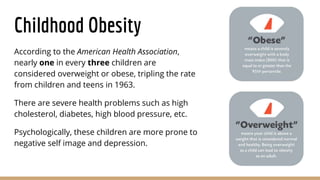
According to the American Health Association,
nearly one in every three children are
considered overweight or obese, tripling the rate
from children and teens in 1963.
There are severe health problems such as high
cholesterol, diabetes, high blood pressure, etc.
Psychologically, these children are more prone to
negative self image and depression.
Audience
- Parents (wide-range)
- Parents are the primary factors in shaping children’s diets
- All parents because obesity is prevalent in all ages and races etc.
- Our hope is that educating the parents will help shape the
children’s diets when they are old enough to make their
own decisions regarding food
Major Factors
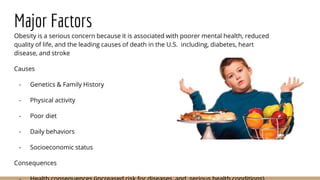
Obesity is a serious concern because it is associated with poorer mental health, reduced
quality of life, and the leading causes of death in the U.S. including, diabetes, heart
disease, and stroke
Causes
- Genetics & Family History
- Physical activity
- Poor diet
- Daily behaviors
- Socioeconomic status
Consequences
What Parents Need to DO...
There are many ways to encourage healthy eating habits and a healthy lifestyle in
order to avoid obesity.
1. Encourage drinking lots of water throughout the day
2. Serving reasonable serving sizes for meals
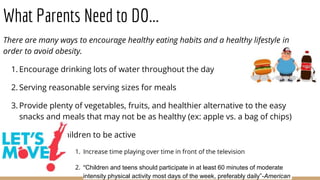
3. Provide plenty of vegetables, fruits, and healthier alternative to the easy
snacks and meals that may not be as healthy (ex: apple vs. a bag of chips)
4. Encourage children to be active
1. Increase time playing over time in front of the television
2. “Children and teens should participate in at least 60 minutes of moderate
intensity physical activity most days of the week, preferably daily”-American
Next steps for research and practice
More psychological/developmental research on children and creating habits,
forming specific preferences for healthier food
Increased accessibility to healthier food/options for all families
Making the community aware and active in the healthy living lifestyles. Making
healthy food options in school, allowing moments of activity throughout the
day.
Farmers markets allow for healthy fresh options that are locally grown
Make free drinking water available to students, and limit the sale of drinks
with added sugars in school
Create and maintain safe neighborhoods for physical activity
List of resources
http://www.heart.org/HEARTORG/HealthyLiving/Healt
hyKids/ChildhoodObesity/What-is-childhood-
obesity_UCM_304347_Article.jsp#.WKyxLSMrJ68
https://www.cdc.gov/nchs/data/hus/2015/059.pdf
https://www.cdc.gov/obesity/adult/causes.html
https://www.aap.org/en-us/about-the-aap/aap-press-
room/Pages/Parents-TV-Viewing-Habits-Influence-Kids-
Screen-Time.aspx

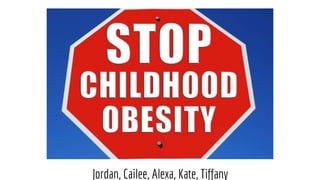
Stop Childhood Obesity

  • 1.
  • 2.
    Childhood Obesity According tothe American Health Association, nearly one in every three children are considered overweight or obese, tripling the rate from children and teens in 1963. There are severe health problems such as high cholesterol, diabetes, high blood pressure, etc. Psychologically, these children are more prone to negative self image and depression.
  • 3.
    Audience - Parents (wide-range) -Parents are the primary factors in shaping children’s diets - All parents because obesity is prevalent in all ages and races etc. - Our hope is that educating the parents will help shape the children’s diets when they are old enough to make their own decisions regarding food
  • 4.
    Major Factors Obesity isa serious concern because it is associated with poorer mental health, reduced quality of life, and the leading causes of death in the U.S. including, diabetes, heart disease, and stroke Causes - Genetics & Family History - Physical activity - Poor diet - Daily behaviors - Socioeconomic status Consequences
  • 5.
    What Parents Needto DO... There are many ways to encourage healthy eating habits and a healthy lifestyle in order to avoid obesity. 1. Encourage drinking lots of water throughout the day 2. Serving reasonable serving sizes for meals 3. Provide plenty of vegetables, fruits, and healthier alternative to the easy snacks and meals that may not be as healthy (ex: apple vs. a bag of chips) 4. Encourage children to be active 1. Increase time playing over time in front of the television 2. “Children and teens should participate in at least 60 minutes of moderate intensity physical activity most days of the week, preferably daily”-American
  • 6.
    Next steps forresearch and practice More psychological/developmental research on children and creating habits, forming specific preferences for healthier food Increased accessibility to healthier food/options for all families Making the community aware and active in the healthy living lifestyles. Making healthy food options in school, allowing moments of activity throughout the day. Farmers markets allow for healthy fresh options that are locally grown Make free drinking water available to students, and limit the sale of drinks with added sugars in school Create and maintain safe neighborhoods for physical activity
  • 7.