IBM Global Business Services

 IBM Institute for Business Value


                                                                                                                                                   Electronics


 Rebooting the electronics industry
 New innovations are vital to address unprecedented economic challenges

 The reeling financial markets are challenging global                                      intelligent, interactive electronic devices – from the largest
 business leaders to aggressively rethink their strategies.                                flat-panel television to the smallest radio-frequency identifi-
 Across the electronics industry, effects are likely to be quite                           cation tag – is here to stay. To operate efficiently in the new
 different, reflecting the enormous diversity of the industry                              economic environment, electronics companies will need to
 itself. From consumer electronics to medical devices,                                     respond decisively to the sharp downturn by staying true to
 industry sub-segments will have to respond – each in its                                  the industry’s renowned reputation for valuing innovation.
 own way – to lower consumer spending and stricter access
 to capital.                                                                               The sub-segments of the electronics industry each play a
                                                                                           role in the business ecosystem. While semiconductors give
 At the same time, the Internet has permanently changed                                    intelligence to devices, some electronics products serve
 not just our everyday lives, but also society at large and                                as stand-alone finished goods and others provide input
 how enterprises operate around the world. The desire for                                  components for other industries (see Figure 1).

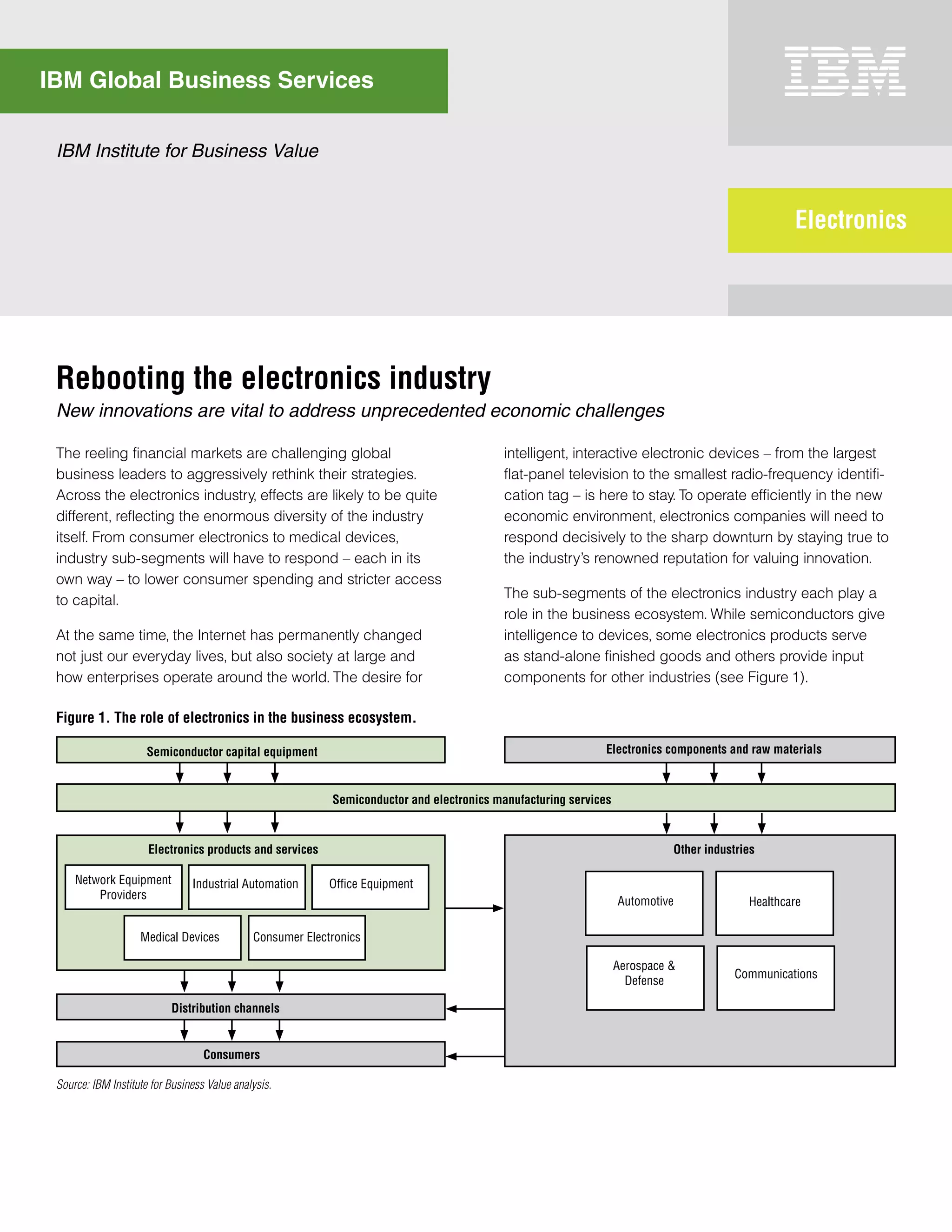
 Figure 1. The role of electronics in the business ecosystem.

                      Semiconductor capital equipment                                                          Electronics components and raw materials


                                                            Semiconductor and electronics manufacturing services


                      Electronics products and services                                                                      Other industries

     Network Equipment          Industrial Automation       Office Equipment
         Providers
                                                                                                                   Automotive              Healthcare

                    Medical Devices           Consumer Electronics

                                                                                                                   Aerospace &
                                                                                                                                         Communications
                                                                                                                     Defense

                           Distribution channels


                                   Consumers

 Source: IBM Institute for Business Value analysis.
Opting for innovation: Industry outlooks by sub-                Potential innovations: With the growing demand for
segment                                                         clean energy, photovoltaic cells represent a tremendous
To help global business leaders gain a broad view of the        opportunity for semiconductor companies to use their
diverse electronics industry, and to help them plot their       manufacturing capacity and know-how in a related product
future innovation courses, IBM has prepared quick outlooks      category. Also, new intelligent consumer and commercial
for selected industry sub-segments: semiconductor,              devices will require custom chipsets that require substantial
Network Equipment Providers, Industrial Automation, office      design capability. These areas may well entice those
equipment, medical devices and Consumer Electronics.            companies that choose to defer capital investment, but are
                                                                willing to explore new revenue opportunities.
Semiconductor: To fab or not to fab?
                                                                Network Equipment Providers: Consolidation
Impact: The semiconductor sub-segment is hugely
fragmented, with hundreds of players of various sizes that
                                                                continues
are focused on a wide range of product types and market         Impact: The Network Equipment Provider (NEP)
niches. The segment is already in a cyclical down-cycle,        sub-segment derives its sales from the build-out or upgrade
awash in excess capacity and government incentives for          of telecommunication infrastructures. Its customer base of
building even more. From DRAMs to processors, pricing           telcos will likely defer investment in infrastructure programs
is in a free-fall.1 With many of the costs in semiconductor     in a tight credit market. Even as demand for bandwidth
manufacturing fixed, marginal cost for additional chips is      appears to be insatiable, a sharp drop in capital spending is
low. Because of this, we may see substantial price fluctua-     expected to force NEPs to sharpen their value propositions
tions before the economic downturn reverses.                    for the latest voice and data technologies.

For the time being, foundries are expected to make minimal      The new economic environment may test which NEP can
investments, and we may see technology node delays since        control costs and survive in the long run. Telcos will be
customers will likely avoid being part of the risk during an    looking for cost savings through supply chain efficiency,
economic downturn. In addition, we may see manufacturing        and the savings can be significant. In Australia, Telstra
consolidate as companies transition to fabless design           recently completed a major supply chain overhaul that
houses instead.                                                 slashed inventories by 50 percent and eliminated over 2,000
                                                                suppliers.4 Repeat that process worldwide and a significant
Outlook: In spite of the short-term troubles, the long-term     decrease in the number of remaining NEPs is possible.
outlook for the semiconductor industry is very strong.
Demand for chips and advanced technology, and the               Also, since telcos have consolidated substantially in recent
spread of electronics into nearly every product seems           years, they are now poised to make coordinated buying
unstoppable. And with each succeeding generation of             decisions as merged enterprises. They come from a
technology, the number of players who can afford the            strong negotiating position and are ready to benefit from
exponentially increasing table stakes in this business has      economies of scale, seeking equipment providers that can
been dropping to about half that in the prior generation.2      match their sizes. As a result, NEPs are facing more pricing
                                                                pressures and are entering their own periods of consolida-
Recent big private equity investments in the space appear       tion.5
to be a vote of confidence in this scenario. Semiconductor
consolidation is likely to attract private equity investors,    Outlook: In spite of cost pressures and likely consolidation,
with their long-term outlooks. For a few players already        there are a few bright spots where NEPs can seek revenue
heavily invested in the space, the choice will be to exit now   opportunities in both the consumer and enterprise markets.
at big losses or hang on and wait for signs of an upswing.      Competition among cable, DSL and other broadband
We believe that with over US$450 billion in raised – but        providers is set to intensify in the next couple of years as
uninvested – capital, private equity firms will choose the      consumer demand for bandwidth – both fixed and mobile
latter.3


2
– seems insatiable. Bandwidth caps and speed restrictions      develop additional services that will improve their clients’
may fall by the wayside as telcos chase consumer revenue       total cost of ownership. By analyzing their maintenance
and try to offset rapidly declining landline revenue.6         trends and data, IA companies will be able to create new
                                                               offerings that off-load risk from their clients and lock out
Enterprises, though generally cutting costs, may also spend    after-market service and parts competitors as well, thereby
on selected investments. Those that enable telecommuting,      improving margins.
remote working, and post-merger integration money-savers
are likely to get the most attention. Many enterprises are     Potential innovations: IA companies can explore water
looking at saving money by mobilizing employees and            and energy management improvements for existing
then giving them a single broadband path for voice, instant    manufacturing processes used at factories. Not only
messaging, and enterprise data. The savings on office          could such solutions reduce operating costs, but also
space and operating costs are big, but it requires an          help factories follow the growing trends among industrial
investment to be enabled. NEPs may be able to capitalize       companies to implement environmentally responsible
on these opportunities by fulfilling these enterprise needs.   programs. In turn, IA companies can establish their
                                                               reputations as global companies that are committed to
Potential innovations: A “green” supply chain has the          sustainability.
potential of providing NEPs with significant cost savings.
Many of the major NEPs are based in Europe, where the          Office Equipment: Upgrades deferred pending
government and its people have been more advanced in           better times
addressing environmental issues. NEPs can save money
                                                               Impact: Unlike some other parts of the electronics industry,
by reducing heating and cooling costs during the manufac-
                                                               the office equipment sub-segment is already highly consoli-
turing process. They can also provide stronger business
                                                               dated, both in computing as well as printing, scanning and
cases to their telco customers if their equipment consumes
                                                               copying. As a result, most players in this sub-segment are
less energy.
                                                               well positioned to weather a period of reduced demand.
                                                               While equipment upgrades are unlikely, office equipment
Industrial Automation: Demand for factory
                                                               companies will continue to service their installed bases at
equipment drops
                                                               customer sites.
Impact: The Industrial Automation (IA) sub-segment is
largely driven by capital expenditures that come from          Outlook: Other changes may have a more profound
factory and office growth and renovation, all of which         effect on the office equipment sub-segment. Foremost
could be quickly and significantly impacted by the credit      is the shifting definition of “the office.” More and more
crunch. With capital investments cut back, companies that      companies are slashing office space and asking workers
specialize in maintenance – rather than new infrastructure     to telecommute, not only to reduce the cost of maintaining
– could stand to benefit most from the new economic            office space, but to improve job satisfaction. That trend,
environment.                                                   combined with the rise of cloud computing and the
                                                               increasing ubiquity of broadband connections, may have a
As orders for new plants decline, IA companies are shifting    much bigger negative impact on the sub-segment than a
their investments from new products to equipment refur-        short-term reduction in demand.
bishment opportunities. Products that improve the return on
investment for refurbishment with lower energy costs should    For parts of the office equipment sub-segment facing
be particularly popular.                                       declining demand, intense market share competition is likely
                                                               in the next few years. To offset some of the price competition
Outlook: Growth is likely to be strongest for those            and pump up demand, office equipment companies are
companies who offer Contractual Service Agreements             buying distributors and service partners. Signing long-term
(CSAs). Operational services now have the opportunity to


                                                                                                                              3
deals now may allow these companies to refresh clients’            is underway. Within two to three years, big changes could
equipment bases and pump up demand at the start of                 affect the sub-segment, primarily driven by healthcare
these contracts. However, with little experience in pricing        changes in the U.S. market, the world’s largest and the
and managing complex multi-year service deals, some                origin of most medical device advances and regulatory
companies may be embracing far more risk than they                 frameworks adapted in other industrialized countries.
understand.                                                        Consequently, medical device makers around the world
                                                                   watch developments in the U.S. system with great interest.
For those office equipment customers that are able to
spend money in the new economic environment, much                  The U.S. healthcare system is near a breaking point in
of it may go into transforming the office from a primary           terms of raising costs, while maintaining quality and access.
workspace to a meeting and collaboration location. Video           Government leaders have proposed various approaches to
projectors, teleconferencing and video-conferencing                overhauling the system. High-cost interventions, including
systems, and “hot desking solutions” – such as call routing        many with advanced medical devices, could be the first
and unassigned workspaces – are all key features of                to suffer during belt tightening. With margins often at 70
the emerging office environment. Color printing is likely          percent and higher, and a dearth of studies to show the
to increase in importance, too. As fewer documents are             added value of the most expensive devices, the industry is
printed, a greater proportion is likely to be for customer         vulnerable to buyer pricing pressure.
presentations and thus designed to impress.
                                                                   In spite of such possible changes, public leaders and their
Potential innovations: The virtual office of tomorrow              constituents are typically slow to agree upon healthcare
will need equipment that can recognize users and their             initiatives to be implemented. We believe the medical device
preferences. Whether to monitor and adjust chair heights           industry will weather the economic downturn quite well
or temperature settings, the next generation of office             overall and do not expect any dramatic change in rates of
equipment may require these and other assorted kinds of            industry consolidation in the near term.
built-in “new intelligence” that can provide greater insights
about helping individuals work more productively.                  Potential innovations: Remote monitoring and disease
                                                                   management systems are an excellent example of how
Medical Devices: Government payers hold                            new intelligence can be integrated into electronics devices.
steady... for now                                                  Historically, the performance and quality of implanted
                                                                   devices have been monitored on a quarterly or annual
Impact: Healthcare remains an industry apart, and conse-
                                                                   basis. Major device manufacturers are looking to expand
quently, so does the medical devices sub-segment. As
                                                                   the range of remote monitoring options for patients and to
countries grow wealthier, demand for healthcare rises much
                                                                   demonstrate that such options can offer clinical benefits.
faster than income. In the developed nations, despite lower
                                                                   Assuming they can show, for example, a reduced level of
population growth rates, aging populations continue to
                                                                   relapses and shorter hospital stays for a range of health
pump up spending. Medical devices, though costly, often
                                                                   conditions from diabetics to heart attacks, demand for these
result in much higher quality of life and fewer hospital visits,
                                                                   devices could take off.
and so have typically seemed immune to market ups and
downs.
                                                                   Consumer Electronics: Price competition
Demand for healthcare and medical devices, is unlikely             intensifies
to face big changes as a result of the credit crunch in            Impact: Even in good times, the Consumer Electronics
the very short term. Governments are the world’s biggest           (CE) space is characterized by deep price competition,
health payers and their access to credit is not in doubt.          compressed product lifecycles, and continuous pressure
This advantage helps to buffer medical device companies            to reduce costs. Diminished consumer credit will arguably
somewhat from the economic downturn.                               lead to a decrease in discretionary spending. Consumers
                                                                   may now perceive the latest CE products – which many
Outlook: While the economic downturn may not have a                would typically purchase at the earliest possible retail avail-
drastic effect on medical device companies, another force


4
ability – to be luxury items they can no longer afford. Price                aside other types of new product introductions. But CE
competition is likely to intensify. Retailers, hoping to attract             companies can differentiate their products by building in
customers with aggressive sales and promotions, will turn                    new intelligence, embedded software to provide users
that pricing pressure on their original equipment manufac-                   with a different value proposition. Improved software
turer (OEM) suppliers.                                                       development methodologies and tools can allow CE
                                                                             companies to re-use embedded software and simplify
Most at risk are Japan’s electronics companies, whose                        customization efforts. Already, we are seeing global
returns on invested capital have been chronically low and                    positioning systems (GPS) that recalculate driving time
whose market shares have been declining for more than                        based on user-generated information, and gardening
a decade.7 The strong yen, currently at a 13-year high                       gadgets that recommend plant selection based on their
against the U.S. dollar, translates into lower profits for those             ability to collect and interpret soil and weather conditions.
Japanese companies that rely on the large U.S. consumer                      These products not only compete on price, but offer unique
market.8                                                                     features to the consumer.
Outlook: The top priority for many CE companies will be to                   As the economic downturn has unfolded, IBM took a look at
cut costs. CE companies will likely look first at back-office                each of these six major industry segments. Looking ahead,
and shared service functions since these activities do not                   we believe three types of behaviors will prevail in electronics
affect relationships with retail partners or product avail-                  (see Figure 2):
ability. CE companies are expected to consolidate back-end
processes in optimal locations and, where possible,                          •	 Consolidators. In the semiconductor and NEP segments,
leverage global resources in low-cost countries.                                we expect significant industry consolidation.
                                                                             •	 Cost Cutters. In the IA and office equipment sectors,
Supply chain management is likely to gain greater attention.
                                                                                some consolidation will occur, but the focus will be cost
Players throughout the extended supply chain will be
                                                                                reduction and operational excellence.
focused on working down existing inventories to alleviate
the need for working capital. Retailers will likely delay or trim            •	 Share Grabbers. In medical devices and CE, increased
orders, OEM companies will aim to reduce output levels, and                     competition for market share is likely, but for different
the effect will ripple out to contract manufacturers in Asia.                   reasons. In medical devices, the competition may be set
                                                                                off by new regulations and payer strategies. In CE, it is
Potential innovations: Products that appeal to the cost-                        expected from intense price pressure and disruptions in
conscious consumer are likely to dominate, often pushing                        the retail environment.

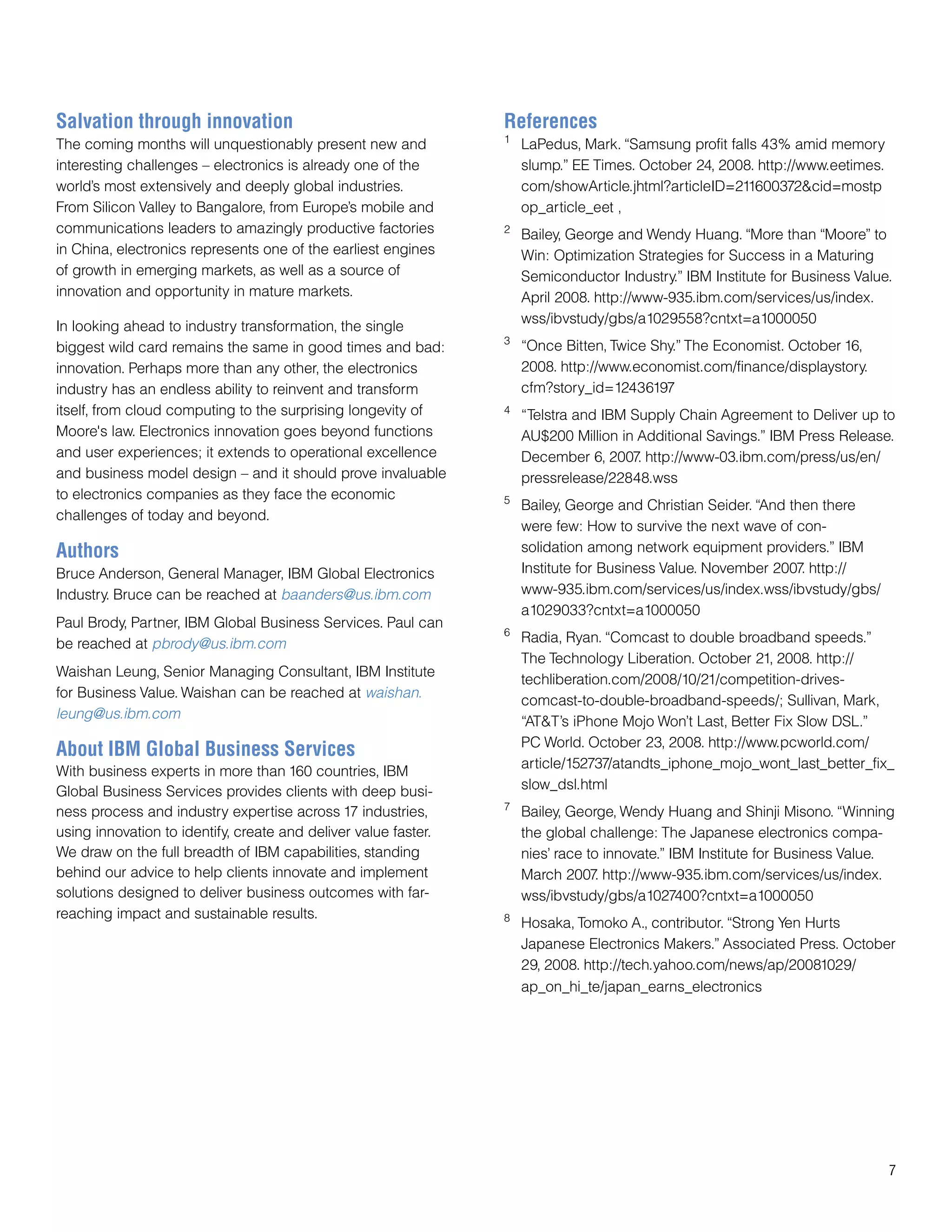
Figure 2. Industry dynamics in electronic sub-segments.
                                                     Network
                                        Semi-        Equipment   Industrial Office        Medical         Consumer
                                        conductors   Providers   Automation Equipment     Devices         Electronics
                  Reliance on capital
                        expenditures

              Reliance on consumer
                           spending

                       Reliance on
               government spending

                Subject to persistent
                     price pressures


                                           “Consolidators”          “Cost Cutters”          “Share Grabbers”


Source: IBM Institute for Business Value analysis.                                                  Low           High


                                                                                                                                             5
Investing for a smart future                                       deepest center of excellence. In a highly dynamic market,
Regardless of the industry dynamics requiring a particular         the additional agility and reduced costs provided by this
sub-segment to focus either on consolidating, cutting costs,       model can help electronics companies sustain perfor-
or grabbing market share, one thing is clear: the electronics      mance without losing touch with their local customers
industry is experiencing constant change and it demands            around the world.
continuous investment. Enterprises that cannot keep                The new economic environment will potentially reshape
investing in their operations may be fated to fall furthest        some industry sub-segments, sometimes under con-
behind during an economic downturn. What’s more, they              ditions of exceptional speed and stress. In these
may miss great opportunities to create the innovations that        conditions, the ability to rapidly execute on separations
can help prepare them for better economic times.                   and integrations will make the difference between thriving
                                                                   in adversity and ending up on the auction block. Typical
For those electronics companies that do continue to invest,
                                                                   merger or separation value creation comes from strong
we foresee three focus areas:
                                                                   integration performance in operations and supply chain
1. New intelligence – Seek ways to help users take advan-          activity. Companies that quickly leverage procurement,
   tage of new sources of information to make better               manufacturing and distribution for efficiency while push-
   choices.                                                        ing products through combined sales channels – by
    New product innovation will likely entail using new intel-     staying close to customer needs – should weather a
    ligence and embedded software to create devices that           downturn better.
    can collect, analyze and present information that better
                                                                 3. Green and beyond – Enact energy, environment and sus-
    helps end users. This will require that electronics com-
                                                                    tainability initiatives.
    panies de-emphasize their traditional focus on hardware
    and focus instead on software development, including           Supply chain management, though much improved
    rigorous requirements management. Long a well-struc-           in recent years, still has many benefits yet to be fully
    tured discipline in industries such as aerospace, defense      exploited, including cost savings from effective water and
    and automotive, requirements management will become            energy management. In the past, the availability of cheap
    a critical competency for electronics companies.               credit made it easy to push inventory ownership off onto
                                                                   suppliers through Vendor Managed Inventory (VMI) pro-
    Coming up with the right requirements is just one of the
                                                                   grams.
    first steps in an end-to-end product development lifecy-
    cle. Strong and consistent execution will remain essential     This made balance sheets more attractive without fixing
    to separate the winners and losers in the new economic         the real problem – a lack of collaboration across the
    environment.                                                   value chain. With suppliers potentially struggling to get
                                                                   the same credit levels now and even beyond, we expect
2. Dynamic enterprise – Adapt faster to customer expecta-
                                                                   companies to start taking the nuts and bolts of sales and
   tions.
                                                                   operations planning much more seriously, and consider
    In recent years, electronics companies have led the trend      how business practices that support global sustainability
    toward global integration. More and more, electronics          can actually be good for the bottom line.
    companies are shifting to a model where major back-
    office functions are globally centralized while sales and
    market-facing activity is localized. This transformation
    has not only helped to slash costs by moving resources
    to their optimal global locations; it has improved skills
    and responsiveness by moving decision-making to the


6
Salvation through innovation                                     References
                                                                 1
The coming months will unquestionably present new and                LaPedus, Mark. “Samsung profit falls 43% amid memory
interesting challenges – electronics is already one of the           slump.” EE Times. October 24, 2008. http://www.eetimes.
world’s most extensively and deeply global industries.               com/showArticle.jhtml?articleID=211600372&cid=mostp
From Silicon Valley to Bangalore, from Europe’s mobile and           op_article_eet ,
communications leaders to amazingly productive factories         2
                                                                     Bailey, George and Wendy Huang. “More than “Moore” to
in China, electronics represents one of the earliest engines         Win: Optimization Strategies for Success in a Maturing
of growth in emerging markets, as well as a source of                Semiconductor Industry.” IBM Institute for Business Value.
innovation and opportunity in mature markets.                        April 2008. http://www-935.ibm.com/services/us/index.
                                                                     wss/ibvstudy/gbs/a1029558?cntxt=a1000050
In looking ahead to industry transformation, the single
                                                                 3
biggest wild card remains the same in good times and bad:            “Once Bitten, Twice Shy.” The Economist. October 16,
innovation. Perhaps more than any other, the electronics             2008. http://www.economist.com/finance/displaystory.
industry has an endless ability to reinvent and transform            cfm?story_id=12436197
itself, from cloud computing to the surprising longevity of      4
                                                                     “Telstra and IBM Supply Chain Agreement to Deliver up to
Moore's law. Electronics innovation goes beyond functions            AU$200 Million in Additional Savings.” IBM Press Release.
and user experiences; it extends to operational excellence           December 6, 2007 http://www-03.ibm.com/press/us/en/
                                                                                       .
and business model design – and it should prove invaluable           pressrelease/22848.wss
to electronics companies as they face the economic               5
                                                                     Bailey, George and Christian Seider. “And then there
challenges of today and beyond.
                                                                     were few: How to survive the next wave of con-
Authors                                                              solidation among network equipment providers.” IBM
Bruce Anderson, General Manager, IBM Global Electronics              Institute for Business Value. November 2007 http://
                                                                                                                 .
Industry. Bruce can be reached at baanders@us.ibm.com                www-935.ibm.com/services/us/index.wss/ibvstudy/gbs/
                                                                     a1029033?cntxt=a1000050
Paul Brody, Partner, IBM Global Business Services. Paul can
                                                                 6
be reached at pbrody@us.ibm.com                                      Radia, Ryan. “Comcast to double broadband speeds.”
                                                                     The Technology Liberation. October 21, 2008. http://
Waishan Leung, Senior Managing Consultant, IBM Institute
                                                                     techliberation.com/2008/10/21/competition-drives-
for Business Value. Waishan can be reached at waishan.
                                                                     comcast-to-double-broadband-speeds/; Sullivan, Mark,
leung@us.ibm.com
                                                                     “AT&T’s iPhone Mojo Won’t Last, Better Fix Slow DSL.”
                                                                     PC World. October 23, 2008. http://www.pcworld.com/
About IBM Global Business Services
                                                                     article/152737/atandts_iphone_mojo_wont_last_better_fix_
With business experts in more than 160 countries, IBM
Global Business Services provides clients with deep busi-            slow_dsl.html
                                                                 7
ness process and industry expertise across 17 industries,            Bailey, George, Wendy Huang and Shinji Misono. “Winning
using innovation to identify, create and deliver value faster.       the global challenge: The Japanese electronics compa-
We draw on the full breadth of IBM capabilities, standing            nies’ race to innovate.” IBM Institute for Business Value.
behind our advice to help clients innovate and implement             March 2007 http://www-935.ibm.com/services/us/index.
                                                                                  .
solutions designed to deliver business outcomes with far-            wss/ibvstudy/gbs/a1027400?cntxt=a1000050
reaching impact and sustainable results.                         8
                                                                     Hosaka, Tomoko A., contributor. “Strong Yen Hurts
                                                                     Japanese Electronics Makers.” Associated Press. October
                                                                     29, 2008. http://tech.yahoo.com/news/ap/20081029/
                                                                     ap_on_hi_te/japan_earns_electronics


                                                                                                                               7
© Copyright IBM Corporation 2008

  IBM Global Services
  Route 100
  Somers, NY 10589
  U.S.A.

  Produced in the United States of America
  November 2008
  All Rights Reserved

  IBM, the IBM logo and ibm.com are trademarks
  or registered trademarks of International Business
  Machines Corporation in the United States,
  other countries, or both. If these and other IBM
  trademarked terms are marked on their first
  occurrence in this information with a trademark
  symbol (® or ™), these symbols indicate U.S.
  registered or common law trademarks owned by
  IBM at the time this information was published. Such
  trademarks may also be registered or common law
  trademarks in other countries. A current list of IBM
  trademarks is available on the Web at “Copyright and
  trademark information” at
  ibm.com/legal/copytrade.shtml

  Other company, product and service names may be
  trademarks or service marks of others.

  References in this publication to IBM products and
  services do not imply that IBM intends to make them
  available in all countries in which IBM operates.


  GBE03119-USEN-00

Rebooting The Electronics Industry After The Economic Crisis

  • 1.
    IBM Global BusinessServices IBM Institute for Business Value Electronics Rebooting the electronics industry New innovations are vital to address unprecedented economic challenges The reeling financial markets are challenging global intelligent, interactive electronic devices – from the largest business leaders to aggressively rethink their strategies. flat-panel television to the smallest radio-frequency identifi- Across the electronics industry, effects are likely to be quite cation tag – is here to stay. To operate efficiently in the new different, reflecting the enormous diversity of the industry economic environment, electronics companies will need to itself. From consumer electronics to medical devices, respond decisively to the sharp downturn by staying true to industry sub-segments will have to respond – each in its the industry’s renowned reputation for valuing innovation. own way – to lower consumer spending and stricter access to capital. The sub-segments of the electronics industry each play a role in the business ecosystem. While semiconductors give At the same time, the Internet has permanently changed intelligence to devices, some electronics products serve not just our everyday lives, but also society at large and as stand-alone finished goods and others provide input how enterprises operate around the world. The desire for components for other industries (see Figure 1). Figure 1. The role of electronics in the business ecosystem. Semiconductor capital equipment Electronics components and raw materials Semiconductor and electronics manufacturing services Electronics products and services Other industries Network Equipment Industrial Automation Office Equipment Providers Automotive Healthcare Medical Devices Consumer Electronics Aerospace & Communications Defense Distribution channels Consumers Source: IBM Institute for Business Value analysis.
  • 2.
    Opting for innovation:Industry outlooks by sub- Potential innovations: With the growing demand for segment clean energy, photovoltaic cells represent a tremendous To help global business leaders gain a broad view of the opportunity for semiconductor companies to use their diverse electronics industry, and to help them plot their manufacturing capacity and know-how in a related product future innovation courses, IBM has prepared quick outlooks category. Also, new intelligent consumer and commercial for selected industry sub-segments: semiconductor, devices will require custom chipsets that require substantial Network Equipment Providers, Industrial Automation, office design capability. These areas may well entice those equipment, medical devices and Consumer Electronics. companies that choose to defer capital investment, but are willing to explore new revenue opportunities. Semiconductor: To fab or not to fab? Network Equipment Providers: Consolidation Impact: The semiconductor sub-segment is hugely fragmented, with hundreds of players of various sizes that continues are focused on a wide range of product types and market Impact: The Network Equipment Provider (NEP) niches. The segment is already in a cyclical down-cycle, sub-segment derives its sales from the build-out or upgrade awash in excess capacity and government incentives for of telecommunication infrastructures. Its customer base of building even more. From DRAMs to processors, pricing telcos will likely defer investment in infrastructure programs is in a free-fall.1 With many of the costs in semiconductor in a tight credit market. Even as demand for bandwidth manufacturing fixed, marginal cost for additional chips is appears to be insatiable, a sharp drop in capital spending is low. Because of this, we may see substantial price fluctua- expected to force NEPs to sharpen their value propositions tions before the economic downturn reverses. for the latest voice and data technologies. For the time being, foundries are expected to make minimal The new economic environment may test which NEP can investments, and we may see technology node delays since control costs and survive in the long run. Telcos will be customers will likely avoid being part of the risk during an looking for cost savings through supply chain efficiency, economic downturn. In addition, we may see manufacturing and the savings can be significant. In Australia, Telstra consolidate as companies transition to fabless design recently completed a major supply chain overhaul that houses instead. slashed inventories by 50 percent and eliminated over 2,000 suppliers.4 Repeat that process worldwide and a significant Outlook: In spite of the short-term troubles, the long-term decrease in the number of remaining NEPs is possible. outlook for the semiconductor industry is very strong. Demand for chips and advanced technology, and the Also, since telcos have consolidated substantially in recent spread of electronics into nearly every product seems years, they are now poised to make coordinated buying unstoppable. And with each succeeding generation of decisions as merged enterprises. They come from a technology, the number of players who can afford the strong negotiating position and are ready to benefit from exponentially increasing table stakes in this business has economies of scale, seeking equipment providers that can been dropping to about half that in the prior generation.2 match their sizes. As a result, NEPs are facing more pricing pressures and are entering their own periods of consolida- Recent big private equity investments in the space appear tion.5 to be a vote of confidence in this scenario. Semiconductor consolidation is likely to attract private equity investors, Outlook: In spite of cost pressures and likely consolidation, with their long-term outlooks. For a few players already there are a few bright spots where NEPs can seek revenue heavily invested in the space, the choice will be to exit now opportunities in both the consumer and enterprise markets. at big losses or hang on and wait for signs of an upswing. Competition among cable, DSL and other broadband We believe that with over US$450 billion in raised – but providers is set to intensify in the next couple of years as uninvested – capital, private equity firms will choose the consumer demand for bandwidth – both fixed and mobile latter.3 2
  • 3.
    – seems insatiable.Bandwidth caps and speed restrictions develop additional services that will improve their clients’ may fall by the wayside as telcos chase consumer revenue total cost of ownership. By analyzing their maintenance and try to offset rapidly declining landline revenue.6 trends and data, IA companies will be able to create new offerings that off-load risk from their clients and lock out Enterprises, though generally cutting costs, may also spend after-market service and parts competitors as well, thereby on selected investments. Those that enable telecommuting, improving margins. remote working, and post-merger integration money-savers are likely to get the most attention. Many enterprises are Potential innovations: IA companies can explore water looking at saving money by mobilizing employees and and energy management improvements for existing then giving them a single broadband path for voice, instant manufacturing processes used at factories. Not only messaging, and enterprise data. The savings on office could such solutions reduce operating costs, but also space and operating costs are big, but it requires an help factories follow the growing trends among industrial investment to be enabled. NEPs may be able to capitalize companies to implement environmentally responsible on these opportunities by fulfilling these enterprise needs. programs. In turn, IA companies can establish their reputations as global companies that are committed to Potential innovations: A “green” supply chain has the sustainability. potential of providing NEPs with significant cost savings. Many of the major NEPs are based in Europe, where the Office Equipment: Upgrades deferred pending government and its people have been more advanced in better times addressing environmental issues. NEPs can save money Impact: Unlike some other parts of the electronics industry, by reducing heating and cooling costs during the manufac- the office equipment sub-segment is already highly consoli- turing process. They can also provide stronger business dated, both in computing as well as printing, scanning and cases to their telco customers if their equipment consumes copying. As a result, most players in this sub-segment are less energy. well positioned to weather a period of reduced demand. While equipment upgrades are unlikely, office equipment Industrial Automation: Demand for factory companies will continue to service their installed bases at equipment drops customer sites. Impact: The Industrial Automation (IA) sub-segment is largely driven by capital expenditures that come from Outlook: Other changes may have a more profound factory and office growth and renovation, all of which effect on the office equipment sub-segment. Foremost could be quickly and significantly impacted by the credit is the shifting definition of “the office.” More and more crunch. With capital investments cut back, companies that companies are slashing office space and asking workers specialize in maintenance – rather than new infrastructure to telecommute, not only to reduce the cost of maintaining – could stand to benefit most from the new economic office space, but to improve job satisfaction. That trend, environment. combined with the rise of cloud computing and the increasing ubiquity of broadband connections, may have a As orders for new plants decline, IA companies are shifting much bigger negative impact on the sub-segment than a their investments from new products to equipment refur- short-term reduction in demand. bishment opportunities. Products that improve the return on investment for refurbishment with lower energy costs should For parts of the office equipment sub-segment facing be particularly popular. declining demand, intense market share competition is likely in the next few years. To offset some of the price competition Outlook: Growth is likely to be strongest for those and pump up demand, office equipment companies are companies who offer Contractual Service Agreements buying distributors and service partners. Signing long-term (CSAs). Operational services now have the opportunity to 3
  • 4.
    deals now mayallow these companies to refresh clients’ is underway. Within two to three years, big changes could equipment bases and pump up demand at the start of affect the sub-segment, primarily driven by healthcare these contracts. However, with little experience in pricing changes in the U.S. market, the world’s largest and the and managing complex multi-year service deals, some origin of most medical device advances and regulatory companies may be embracing far more risk than they frameworks adapted in other industrialized countries. understand. Consequently, medical device makers around the world watch developments in the U.S. system with great interest. For those office equipment customers that are able to spend money in the new economic environment, much The U.S. healthcare system is near a breaking point in of it may go into transforming the office from a primary terms of raising costs, while maintaining quality and access. workspace to a meeting and collaboration location. Video Government leaders have proposed various approaches to projectors, teleconferencing and video-conferencing overhauling the system. High-cost interventions, including systems, and “hot desking solutions” – such as call routing many with advanced medical devices, could be the first and unassigned workspaces – are all key features of to suffer during belt tightening. With margins often at 70 the emerging office environment. Color printing is likely percent and higher, and a dearth of studies to show the to increase in importance, too. As fewer documents are added value of the most expensive devices, the industry is printed, a greater proportion is likely to be for customer vulnerable to buyer pricing pressure. presentations and thus designed to impress. In spite of such possible changes, public leaders and their Potential innovations: The virtual office of tomorrow constituents are typically slow to agree upon healthcare will need equipment that can recognize users and their initiatives to be implemented. We believe the medical device preferences. Whether to monitor and adjust chair heights industry will weather the economic downturn quite well or temperature settings, the next generation of office overall and do not expect any dramatic change in rates of equipment may require these and other assorted kinds of industry consolidation in the near term. built-in “new intelligence” that can provide greater insights about helping individuals work more productively. Potential innovations: Remote monitoring and disease management systems are an excellent example of how Medical Devices: Government payers hold new intelligence can be integrated into electronics devices. steady... for now Historically, the performance and quality of implanted devices have been monitored on a quarterly or annual Impact: Healthcare remains an industry apart, and conse- basis. Major device manufacturers are looking to expand quently, so does the medical devices sub-segment. As the range of remote monitoring options for patients and to countries grow wealthier, demand for healthcare rises much demonstrate that such options can offer clinical benefits. faster than income. In the developed nations, despite lower Assuming they can show, for example, a reduced level of population growth rates, aging populations continue to relapses and shorter hospital stays for a range of health pump up spending. Medical devices, though costly, often conditions from diabetics to heart attacks, demand for these result in much higher quality of life and fewer hospital visits, devices could take off. and so have typically seemed immune to market ups and downs. Consumer Electronics: Price competition Demand for healthcare and medical devices, is unlikely intensifies to face big changes as a result of the credit crunch in Impact: Even in good times, the Consumer Electronics the very short term. Governments are the world’s biggest (CE) space is characterized by deep price competition, health payers and their access to credit is not in doubt. compressed product lifecycles, and continuous pressure This advantage helps to buffer medical device companies to reduce costs. Diminished consumer credit will arguably somewhat from the economic downturn. lead to a decrease in discretionary spending. Consumers may now perceive the latest CE products – which many Outlook: While the economic downturn may not have a would typically purchase at the earliest possible retail avail- drastic effect on medical device companies, another force 4
  • 5.
    ability – tobe luxury items they can no longer afford. Price aside other types of new product introductions. But CE competition is likely to intensify. Retailers, hoping to attract companies can differentiate their products by building in customers with aggressive sales and promotions, will turn new intelligence, embedded software to provide users that pricing pressure on their original equipment manufac- with a different value proposition. Improved software turer (OEM) suppliers. development methodologies and tools can allow CE companies to re-use embedded software and simplify Most at risk are Japan’s electronics companies, whose customization efforts. Already, we are seeing global returns on invested capital have been chronically low and positioning systems (GPS) that recalculate driving time whose market shares have been declining for more than based on user-generated information, and gardening a decade.7 The strong yen, currently at a 13-year high gadgets that recommend plant selection based on their against the U.S. dollar, translates into lower profits for those ability to collect and interpret soil and weather conditions. Japanese companies that rely on the large U.S. consumer These products not only compete on price, but offer unique market.8 features to the consumer. Outlook: The top priority for many CE companies will be to As the economic downturn has unfolded, IBM took a look at cut costs. CE companies will likely look first at back-office each of these six major industry segments. Looking ahead, and shared service functions since these activities do not we believe three types of behaviors will prevail in electronics affect relationships with retail partners or product avail- (see Figure 2): ability. CE companies are expected to consolidate back-end processes in optimal locations and, where possible, • Consolidators. In the semiconductor and NEP segments, leverage global resources in low-cost countries. we expect significant industry consolidation. • Cost Cutters. In the IA and office equipment sectors, Supply chain management is likely to gain greater attention. some consolidation will occur, but the focus will be cost Players throughout the extended supply chain will be reduction and operational excellence. focused on working down existing inventories to alleviate the need for working capital. Retailers will likely delay or trim • Share Grabbers. In medical devices and CE, increased orders, OEM companies will aim to reduce output levels, and competition for market share is likely, but for different the effect will ripple out to contract manufacturers in Asia. reasons. In medical devices, the competition may be set off by new regulations and payer strategies. In CE, it is Potential innovations: Products that appeal to the cost- expected from intense price pressure and disruptions in conscious consumer are likely to dominate, often pushing the retail environment. Figure 2. Industry dynamics in electronic sub-segments. Network Semi- Equipment Industrial Office Medical Consumer conductors Providers Automation Equipment Devices Electronics Reliance on capital expenditures Reliance on consumer spending Reliance on government spending Subject to persistent price pressures “Consolidators” “Cost Cutters” “Share Grabbers” Source: IBM Institute for Business Value analysis. Low High 5
  • 6.
    Investing for asmart future deepest center of excellence. In a highly dynamic market, Regardless of the industry dynamics requiring a particular the additional agility and reduced costs provided by this sub-segment to focus either on consolidating, cutting costs, model can help electronics companies sustain perfor- or grabbing market share, one thing is clear: the electronics mance without losing touch with their local customers industry is experiencing constant change and it demands around the world. continuous investment. Enterprises that cannot keep The new economic environment will potentially reshape investing in their operations may be fated to fall furthest some industry sub-segments, sometimes under con- behind during an economic downturn. What’s more, they ditions of exceptional speed and stress. In these may miss great opportunities to create the innovations that conditions, the ability to rapidly execute on separations can help prepare them for better economic times. and integrations will make the difference between thriving in adversity and ending up on the auction block. Typical For those electronics companies that do continue to invest, merger or separation value creation comes from strong we foresee three focus areas: integration performance in operations and supply chain 1. New intelligence – Seek ways to help users take advan- activity. Companies that quickly leverage procurement, tage of new sources of information to make better manufacturing and distribution for efficiency while push- choices. ing products through combined sales channels – by New product innovation will likely entail using new intel- staying close to customer needs – should weather a ligence and embedded software to create devices that downturn better. can collect, analyze and present information that better 3. Green and beyond – Enact energy, environment and sus- helps end users. This will require that electronics com- tainability initiatives. panies de-emphasize their traditional focus on hardware and focus instead on software development, including Supply chain management, though much improved rigorous requirements management. Long a well-struc- in recent years, still has many benefits yet to be fully tured discipline in industries such as aerospace, defense exploited, including cost savings from effective water and and automotive, requirements management will become energy management. In the past, the availability of cheap a critical competency for electronics companies. credit made it easy to push inventory ownership off onto suppliers through Vendor Managed Inventory (VMI) pro- Coming up with the right requirements is just one of the grams. first steps in an end-to-end product development lifecy- cle. Strong and consistent execution will remain essential This made balance sheets more attractive without fixing to separate the winners and losers in the new economic the real problem – a lack of collaboration across the environment. value chain. With suppliers potentially struggling to get the same credit levels now and even beyond, we expect 2. Dynamic enterprise – Adapt faster to customer expecta- companies to start taking the nuts and bolts of sales and tions. operations planning much more seriously, and consider In recent years, electronics companies have led the trend how business practices that support global sustainability toward global integration. More and more, electronics can actually be good for the bottom line. companies are shifting to a model where major back- office functions are globally centralized while sales and market-facing activity is localized. This transformation has not only helped to slash costs by moving resources to their optimal global locations; it has improved skills and responsiveness by moving decision-making to the 6
  • 7.
    Salvation through innovation References 1 The coming months will unquestionably present new and LaPedus, Mark. “Samsung profit falls 43% amid memory interesting challenges – electronics is already one of the slump.” EE Times. October 24, 2008. http://www.eetimes. world’s most extensively and deeply global industries. com/showArticle.jhtml?articleID=211600372&cid=mostp From Silicon Valley to Bangalore, from Europe’s mobile and op_article_eet , communications leaders to amazingly productive factories 2 Bailey, George and Wendy Huang. “More than “Moore” to in China, electronics represents one of the earliest engines Win: Optimization Strategies for Success in a Maturing of growth in emerging markets, as well as a source of Semiconductor Industry.” IBM Institute for Business Value. innovation and opportunity in mature markets. April 2008. http://www-935.ibm.com/services/us/index. wss/ibvstudy/gbs/a1029558?cntxt=a1000050 In looking ahead to industry transformation, the single 3 biggest wild card remains the same in good times and bad: “Once Bitten, Twice Shy.” The Economist. October 16, innovation. Perhaps more than any other, the electronics 2008. http://www.economist.com/finance/displaystory. industry has an endless ability to reinvent and transform cfm?story_id=12436197 itself, from cloud computing to the surprising longevity of 4 “Telstra and IBM Supply Chain Agreement to Deliver up to Moore's law. Electronics innovation goes beyond functions AU$200 Million in Additional Savings.” IBM Press Release. and user experiences; it extends to operational excellence December 6, 2007 http://www-03.ibm.com/press/us/en/ . and business model design – and it should prove invaluable pressrelease/22848.wss to electronics companies as they face the economic 5 Bailey, George and Christian Seider. “And then there challenges of today and beyond. were few: How to survive the next wave of con- Authors solidation among network equipment providers.” IBM Bruce Anderson, General Manager, IBM Global Electronics Institute for Business Value. November 2007 http:// . Industry. Bruce can be reached at baanders@us.ibm.com www-935.ibm.com/services/us/index.wss/ibvstudy/gbs/ a1029033?cntxt=a1000050 Paul Brody, Partner, IBM Global Business Services. Paul can 6 be reached at pbrody@us.ibm.com Radia, Ryan. “Comcast to double broadband speeds.” The Technology Liberation. October 21, 2008. http:// Waishan Leung, Senior Managing Consultant, IBM Institute techliberation.com/2008/10/21/competition-drives- for Business Value. Waishan can be reached at waishan. comcast-to-double-broadband-speeds/; Sullivan, Mark, leung@us.ibm.com “AT&T’s iPhone Mojo Won’t Last, Better Fix Slow DSL.” PC World. October 23, 2008. http://www.pcworld.com/ About IBM Global Business Services article/152737/atandts_iphone_mojo_wont_last_better_fix_ With business experts in more than 160 countries, IBM Global Business Services provides clients with deep busi- slow_dsl.html 7 ness process and industry expertise across 17 industries, Bailey, George, Wendy Huang and Shinji Misono. “Winning using innovation to identify, create and deliver value faster. the global challenge: The Japanese electronics compa- We draw on the full breadth of IBM capabilities, standing nies’ race to innovate.” IBM Institute for Business Value. behind our advice to help clients innovate and implement March 2007 http://www-935.ibm.com/services/us/index. . solutions designed to deliver business outcomes with far- wss/ibvstudy/gbs/a1027400?cntxt=a1000050 reaching impact and sustainable results. 8 Hosaka, Tomoko A., contributor. “Strong Yen Hurts Japanese Electronics Makers.” Associated Press. October 29, 2008. http://tech.yahoo.com/news/ap/20081029/ ap_on_hi_te/japan_earns_electronics 7
  • 8.
    © Copyright IBMCorporation 2008 IBM Global Services Route 100 Somers, NY 10589 U.S.A. Produced in the United States of America November 2008 All Rights Reserved IBM, the IBM logo and ibm.com are trademarks or registered trademarks of International Business Machines Corporation in the United States, other countries, or both. If these and other IBM trademarked terms are marked on their first occurrence in this information with a trademark symbol (® or ™), these symbols indicate U.S. registered or common law trademarks owned by IBM at the time this information was published. Such trademarks may also be registered or common law trademarks in other countries. A current list of IBM trademarks is available on the Web at “Copyright and trademark information” at ibm.com/legal/copytrade.shtml Other company, product and service names may be trademarks or service marks of others. References in this publication to IBM products and services do not imply that IBM intends to make them available in all countries in which IBM operates. GBE03119-USEN-00