Dr.Prakash Patel
Department of surgery
Government Medical College , Surat
Objectives
 To know the various surgeries performed for gastric
pathology .
 To know to basic principle for gastric surgery
 To know the complications of gastric surgery
 To know the management of complications
GASTRIC SURGERY
 Common surgeries performed on stomach are:
 Gastrotomy
 Gastrostomy
 Gastrectomy
 Vagotomy, surgeries for peptic ulcers and perforation
 Drainage procedures
 Pyloroplasty
 Gastrojejunostomy
 pyloromyotomy
Indications for gastric surgery
 Complicated peptic ulcers
 Surgical management of duodenal ulcers
 Ca.stomach
 Obesity
 Gastro intestinal stromal tumors (GIST)
 Corrosive stricture of stomach
 Zollinger Ellison syndrome
Complicated peptic ulcers
 Indications for Surgical procedures
 Refractory to medical management
 Hemorrhage
 Perforation
 Obstructive symptoms
 Surgical procedures for complicated peptic ulcer
disease
 Vagotomy with drainage
 Billroth II gastrectomy
 Gastrectomy with hemostasis
 Surgery for Ca. stomach
 Radical total gastrectomy
 Radical partial gastrectomy
 Palliative resection
 Bypass
 Surgery for Obesity
 Malabsortives types
 Restrictive types
 Gastric band
 Sleeve gastrectomy
 Gastroplasties
 Mixed
 Gastric bypass
 Biliopancreatic diversion with duodenal switch
SURGICAL MANAGEMENT OF
DUODENAL ULCERS
 Principles
 Reduce acid secretion by dividing vagus nerve-
vagotomy
 Vagotomy denervate stomach and pylorus which will
lead to gastric outlet obstruction.
 So drainage procedure is performed called as
pyloroplasty.
 Two types of surgical procedures
 Truncal vagotomy with pyloroplasty
 Selective vagotomy with pyloroplasty
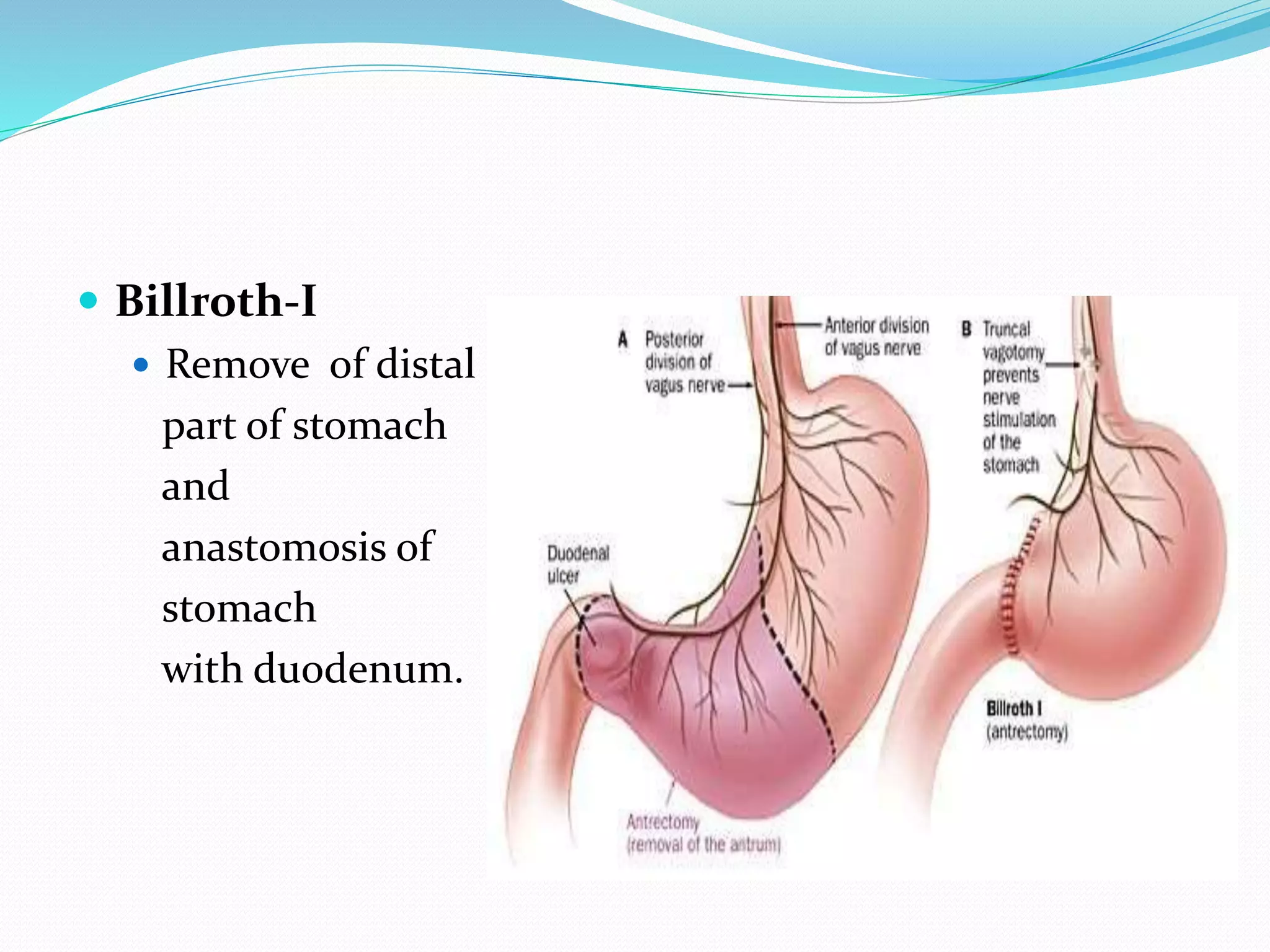
 Billroth-I
 Remove of distal
part of stomach
and
anastomosis of
stomach
with duodenum.
 Billroth II
 Remove distal part of
stomach and perform
gastro – jejunostomy.
Roux en Y anastomosis
Complications of gastric surgery
 Early
 late
Early complications
 Gastrointestinal haemorrhage
 Anastomotic leak
 Pulmonary embolism
 DVT( Deep vein thrombosis)
 Wound infection
 Respiratory insufficiency , pneumonia
 Acute gastroparesis
 Ischemic necrosis of gastric ramnant or anstomotic
site.
 Duodenal stump blow out
Late complications
 Stomal stenosis
 Bowel obstruction, small bowel obstruction
 Internal hernia
 Cholelithiasis
 Micronutrient deficiencies
 Marginal ulcer
 Staple line disruption
 Ventral hernia formation
 Post vagotomy diarrhoea
 Malabsorption of fat soluble vitamins ( vitamin A, D, E
,K )
 Vitamin A deficiency, which causes night blindness
 Vitamin D deficiency , which causes osteoporosis
 Iron defiiciency
 Protein energy malnutrition
 Afferent loop syndrome
 Blind loop syndrome
 Alkaline gastritis
 Stomal ulcers
 Gastrojejunocolic fistula
Vagotomy complications
 Decreased acid secretion
 Faster gastric emptying
 Diarrhoea
 Dumping syndrome
 Gastric outlet obstruction
 Vagotomy denervates from stomach to distal
transverse colon including pancreas and gall bladder.
 Gall bladder denervations leads to stasis and which
increase the chance of gall stones
 Decrease in pancreatic and gallbladder secretions
leads to undigested fat steatorrhoea
 DUMPING SYNDROME
 Early
 Late
 Cardiovascular and GI symptoms due to vagotomy and
pyloroplasty or gastrectomy
 Early dumping syndrome due to Hypovolemia
 Late dumping syndrome due to Hypoglycemia
Complications of gastrectomy
 Anaemia ( intrnsic factor essential for binding of vit
B12 for absorption in terminal ileum)
 Early satiety
 Hypocalcaemia – reduced HCL production interferes
with absorption of calcium and Fe in the duodenum
 Gastric stump carcinoma – due to chronic irritation of
stunp by duodenul secretions
Early Dumping Syndrome
 No intact pylorus leads to dumping of large amount of
chymes , billiary and pancreatic secretions in to the
duodenum at once
 Results in large amount of fluid shift
 Occurs within 40 minutes of ingestion
 Symptoms
 Tachycardia
 Diaphoresis
 Palpitations
 Diarrhoea
 Abdominal pain
Late Dumping Syndrome
 Due to rebound hypoglycaemia
 Occurs 2-4 hours post op
 Symptoms
 tachycardia
 Palpitations
 Diaphoresis
 Dizziness
Afferent Loop Syndrome
 Symptoms show immediately after meal
 Occurs only with billroth II reconstruction.
 Obstruction of afferent loop adjcent to anastomosis.
 Cramping pain
 Vomiting of dark brown bitter tasting material
 Symptoms resolves with vomiting
Blind Loop Syndrome
 After Billroth II than roux en y gastrojejunostomy , also
seen after irradiation or morbid obesity
 Associated with bacterial overgrowth in the limb of
intestine excluded from flow of chyme.
 This limb has bacteria which proliferate and interfere with
folate and vit B12 metabolism, also bacterial overgrowth
causes deconjugation of bile salts – steatorrhoea
 vit B12 deficiency lead to megaloblastic anaemia
 Diarrhoea
 Weight loss
 weakness
Treatment of Blind Loop
Syndrome
 Antibiotics
 Revison surgery or conversion of Billroth I may be
required for some patients
Reccurent Ulcer Disease
 Incomplete vagotomy , posterior vagal trunk or a
branch of this trunk (Criminal nerve of grassi) is left
intact
 Truncal vagotomy + antrectomy ( lowest rate 2%)
 Proximal gastric vagotomy ( highest rate 12%)
 Treatment –
 Endoscopy + congo red dye ( to demonstrate area of
pH drop in gastric mucosa )
 PPI(proton Pump Inhibiter) for long term
 Re operative vagotomy
 Recurrent ulceration despite of verified complete
vagotomy  look for endocrine etiology like family
history of MEN I syndrome , also look for
hyperparathyroidism and Gastrinoma as possible
cause.
GASTRIC SURGERY AND ITS COMPLICATIONS.pptx

GASTRIC SURGERY AND ITS COMPLICATIONS.pptx

  • 1.
    Dr.Prakash Patel Department ofsurgery Government Medical College , Surat
  • 2.
    Objectives  To knowthe various surgeries performed for gastric pathology .  To know to basic principle for gastric surgery  To know the complications of gastric surgery  To know the management of complications
  • 3.
    GASTRIC SURGERY  Commonsurgeries performed on stomach are:  Gastrotomy  Gastrostomy  Gastrectomy  Vagotomy, surgeries for peptic ulcers and perforation  Drainage procedures  Pyloroplasty  Gastrojejunostomy  pyloromyotomy
  • 4.
    Indications for gastricsurgery  Complicated peptic ulcers  Surgical management of duodenal ulcers  Ca.stomach  Obesity  Gastro intestinal stromal tumors (GIST)  Corrosive stricture of stomach  Zollinger Ellison syndrome
  • 5.
    Complicated peptic ulcers Indications for Surgical procedures  Refractory to medical management  Hemorrhage  Perforation  Obstructive symptoms
  • 6.
     Surgical proceduresfor complicated peptic ulcer disease  Vagotomy with drainage  Billroth II gastrectomy  Gastrectomy with hemostasis
  • 7.
     Surgery forCa. stomach  Radical total gastrectomy  Radical partial gastrectomy  Palliative resection  Bypass
  • 8.
     Surgery forObesity  Malabsortives types  Restrictive types  Gastric band  Sleeve gastrectomy  Gastroplasties  Mixed  Gastric bypass  Biliopancreatic diversion with duodenal switch
  • 9.
    SURGICAL MANAGEMENT OF DUODENALULCERS  Principles  Reduce acid secretion by dividing vagus nerve- vagotomy  Vagotomy denervate stomach and pylorus which will lead to gastric outlet obstruction.  So drainage procedure is performed called as pyloroplasty.  Two types of surgical procedures  Truncal vagotomy with pyloroplasty  Selective vagotomy with pyloroplasty
  • 10.
     Billroth-I  Removeof distal part of stomach and anastomosis of stomach with duodenum.
  • 11.
     Billroth II Remove distal part of stomach and perform gastro – jejunostomy.
  • 12.
    Roux en Yanastomosis
  • 13.
    Complications of gastricsurgery  Early  late
  • 14.
    Early complications  Gastrointestinalhaemorrhage  Anastomotic leak  Pulmonary embolism  DVT( Deep vein thrombosis)  Wound infection  Respiratory insufficiency , pneumonia  Acute gastroparesis  Ischemic necrosis of gastric ramnant or anstomotic site.  Duodenal stump blow out
  • 15.
    Late complications  Stomalstenosis  Bowel obstruction, small bowel obstruction  Internal hernia  Cholelithiasis  Micronutrient deficiencies  Marginal ulcer  Staple line disruption  Ventral hernia formation  Post vagotomy diarrhoea
  • 16.
     Malabsorption offat soluble vitamins ( vitamin A, D, E ,K )  Vitamin A deficiency, which causes night blindness  Vitamin D deficiency , which causes osteoporosis  Iron defiiciency  Protein energy malnutrition  Afferent loop syndrome  Blind loop syndrome
  • 17.
     Alkaline gastritis Stomal ulcers  Gastrojejunocolic fistula
  • 18.
    Vagotomy complications  Decreasedacid secretion  Faster gastric emptying  Diarrhoea  Dumping syndrome  Gastric outlet obstruction
  • 19.
     Vagotomy denervatesfrom stomach to distal transverse colon including pancreas and gall bladder.  Gall bladder denervations leads to stasis and which increase the chance of gall stones  Decrease in pancreatic and gallbladder secretions leads to undigested fat steatorrhoea
  • 20.
     DUMPING SYNDROME Early  Late  Cardiovascular and GI symptoms due to vagotomy and pyloroplasty or gastrectomy  Early dumping syndrome due to Hypovolemia  Late dumping syndrome due to Hypoglycemia
  • 21.
    Complications of gastrectomy Anaemia ( intrnsic factor essential for binding of vit B12 for absorption in terminal ileum)  Early satiety  Hypocalcaemia – reduced HCL production interferes with absorption of calcium and Fe in the duodenum  Gastric stump carcinoma – due to chronic irritation of stunp by duodenul secretions
  • 22.
    Early Dumping Syndrome No intact pylorus leads to dumping of large amount of chymes , billiary and pancreatic secretions in to the duodenum at once  Results in large amount of fluid shift  Occurs within 40 minutes of ingestion  Symptoms  Tachycardia  Diaphoresis  Palpitations  Diarrhoea  Abdominal pain
  • 23.
    Late Dumping Syndrome Due to rebound hypoglycaemia  Occurs 2-4 hours post op  Symptoms  tachycardia  Palpitations  Diaphoresis  Dizziness
  • 24.
    Afferent Loop Syndrome Symptoms show immediately after meal  Occurs only with billroth II reconstruction.  Obstruction of afferent loop adjcent to anastomosis.  Cramping pain  Vomiting of dark brown bitter tasting material  Symptoms resolves with vomiting
  • 25.
    Blind Loop Syndrome After Billroth II than roux en y gastrojejunostomy , also seen after irradiation or morbid obesity  Associated with bacterial overgrowth in the limb of intestine excluded from flow of chyme.  This limb has bacteria which proliferate and interfere with folate and vit B12 metabolism, also bacterial overgrowth causes deconjugation of bile salts – steatorrhoea  vit B12 deficiency lead to megaloblastic anaemia  Diarrhoea  Weight loss  weakness
  • 26.
    Treatment of BlindLoop Syndrome  Antibiotics  Revison surgery or conversion of Billroth I may be required for some patients
  • 27.
    Reccurent Ulcer Disease Incomplete vagotomy , posterior vagal trunk or a branch of this trunk (Criminal nerve of grassi) is left intact  Truncal vagotomy + antrectomy ( lowest rate 2%)  Proximal gastric vagotomy ( highest rate 12%)
  • 28.
     Treatment – Endoscopy + congo red dye ( to demonstrate area of pH drop in gastric mucosa )  PPI(proton Pump Inhibiter) for long term  Re operative vagotomy  Recurrent ulceration despite of verified complete vagotomy  look for endocrine etiology like family history of MEN I syndrome , also look for hyperparathyroidism and Gastrinoma as possible cause.