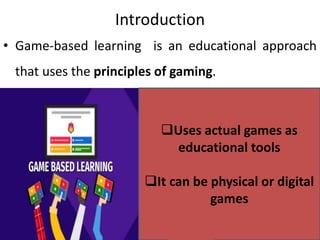
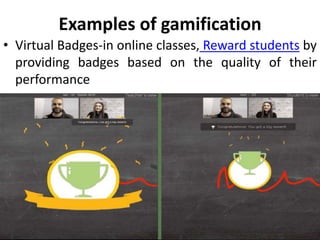
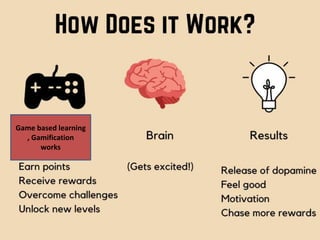
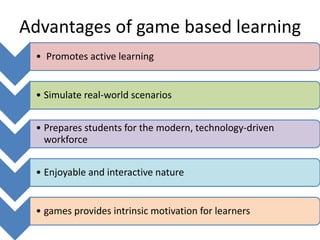
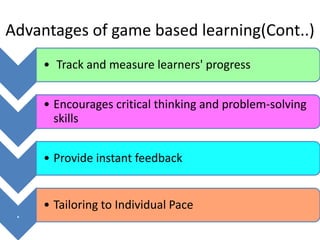
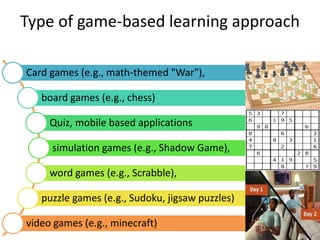
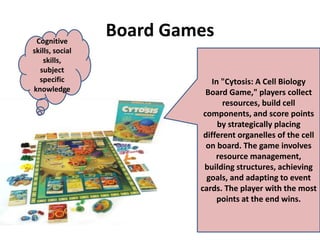
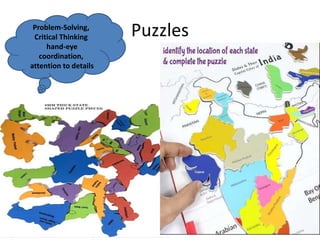
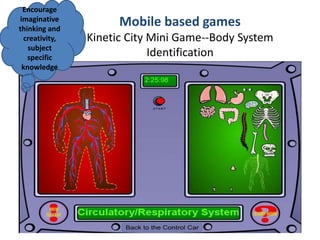
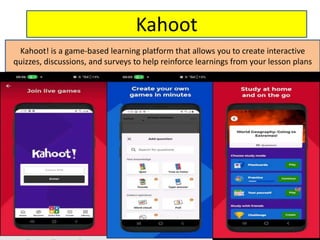
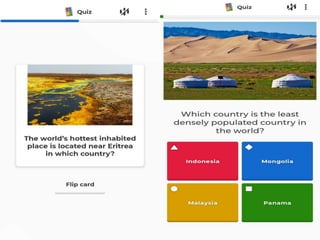
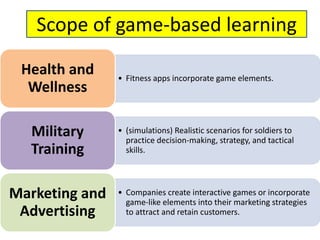
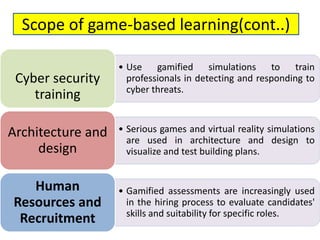
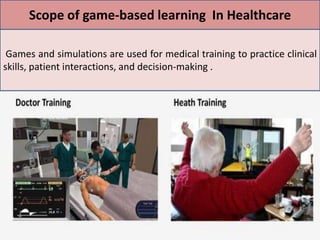
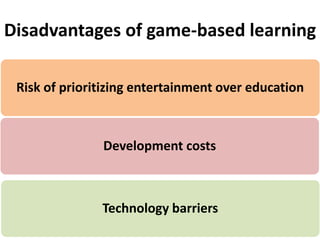
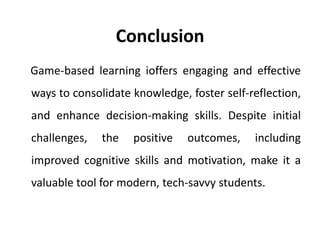
Game-based learning uses principles of gaming to provide an educational approach. It can use actual physical or digital games as educational tools. Gamification adds game elements like points and badges to classroom learning to make it more engaging. Game-based learning promotes active and enjoyable learning while providing feedback and measuring progress. It encourages problem-solving and critical thinking skills. Examples include board, card, puzzle, simulation, and mobile games. While development costs and technology barriers exist, game-based learning offers engaging ways to improve cognitive skills and motivation for students.





![CASE_PRESENTATION_ON_subdural_hematoma(SDH)[1 FINAL PPT]-1.pptx](https://cdn.slidesharecdn.com/ss_thumbnails/casepresentationonsubduralhematomasdh1finalppt-1-260129172522-d405d375-thumbnail.jpg?width=640&height=640&fit=bounds)


