

Future Time Clauses
Teacher Luis
Intermediate Grammar
• When we talk about two events in the future,
we can use one sentence with a future time
clause.
• A future time clause may begin with after, as
soon as, once, or when.
• These time words come before the earlier
action.
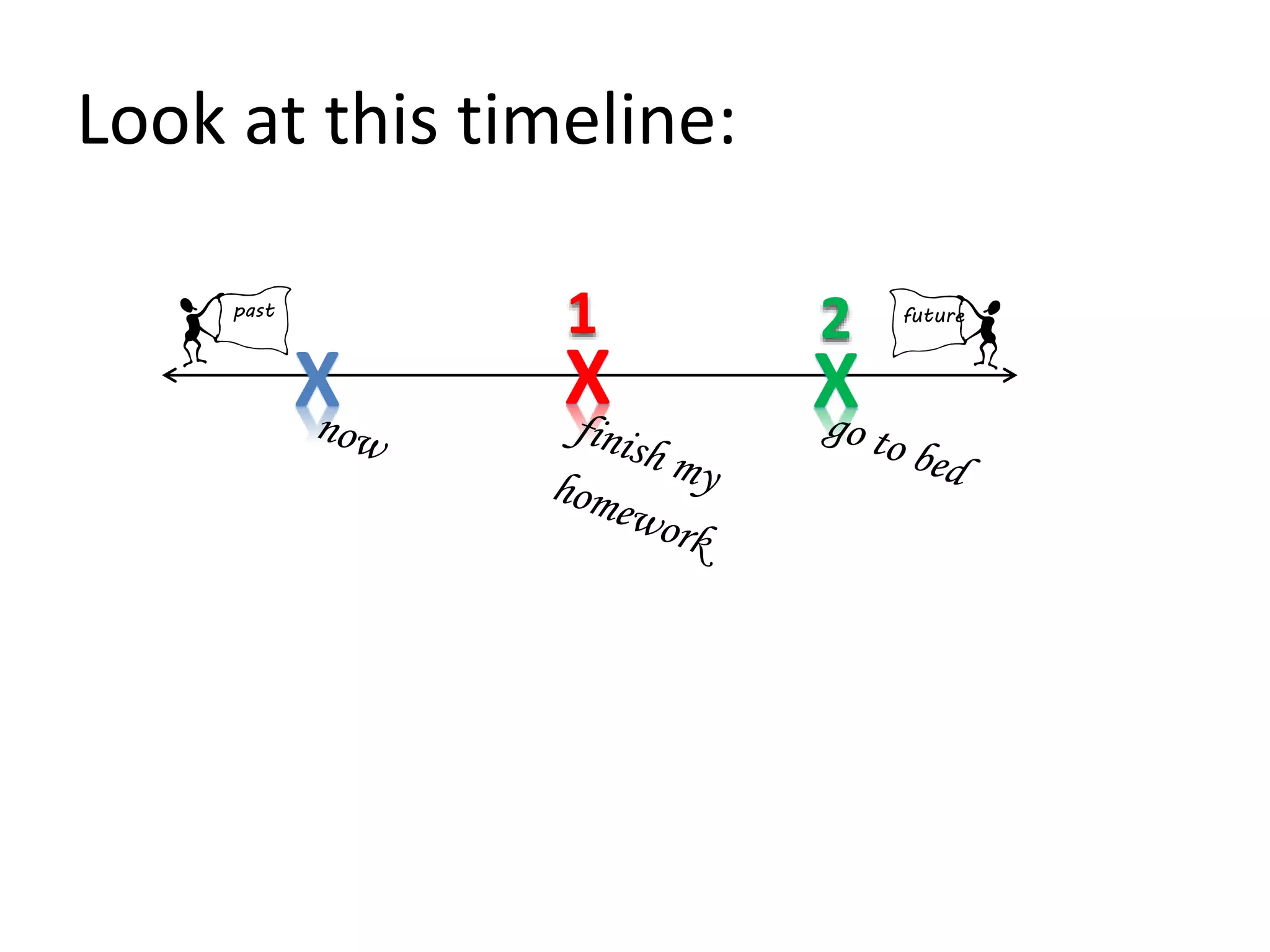
Look at this timeline:
X X X
2past future
1
X X X
2past future
1
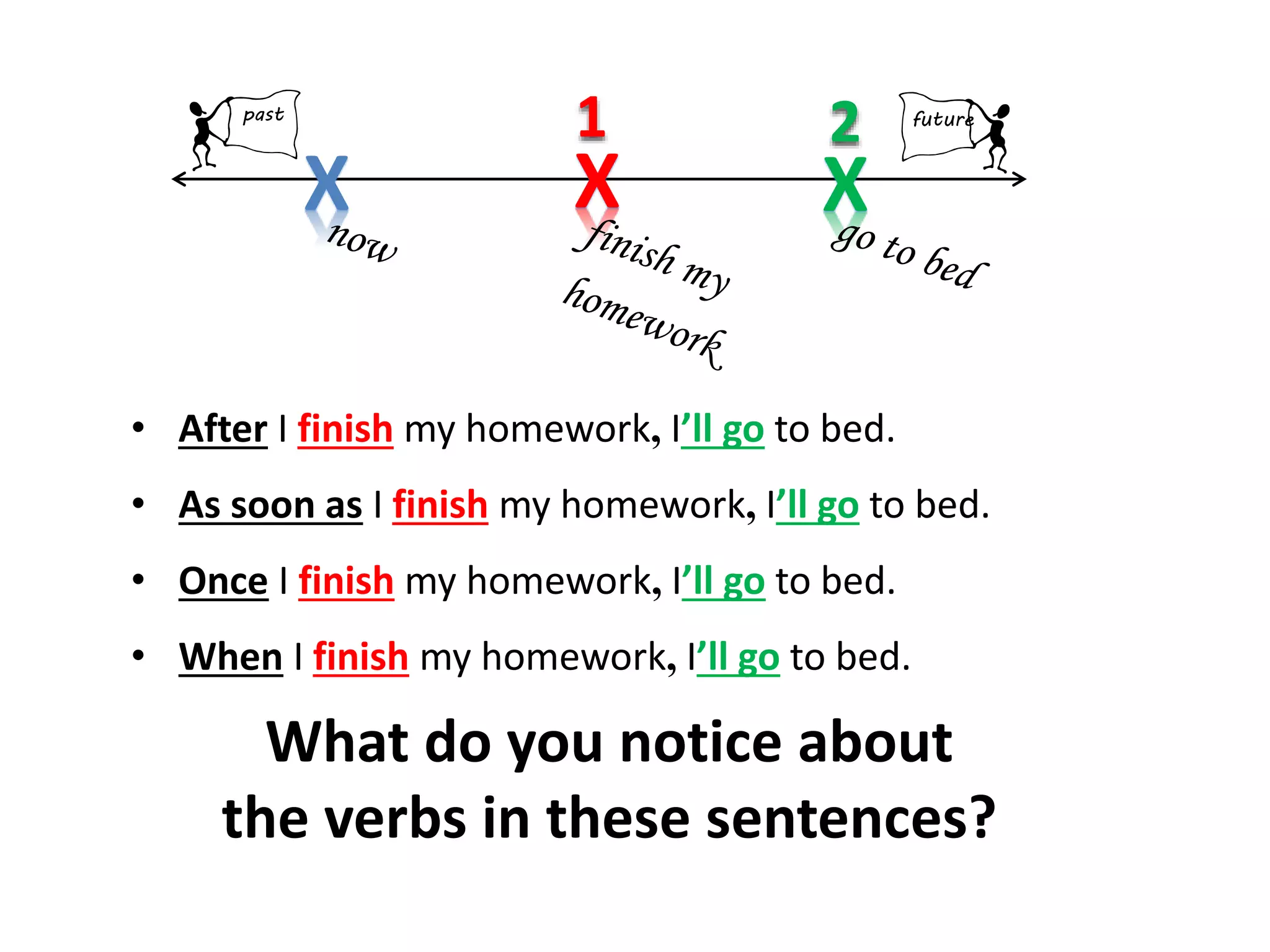
• After I finish my homework, I’ll go to bed.
• As soon as I finish my homework, I’ll go to bed.
• Once I finish my homework, I’ll go to bed.
• When I finish my homework, I’ll go to bed.
What do you notice about
the verbs in these sentences?
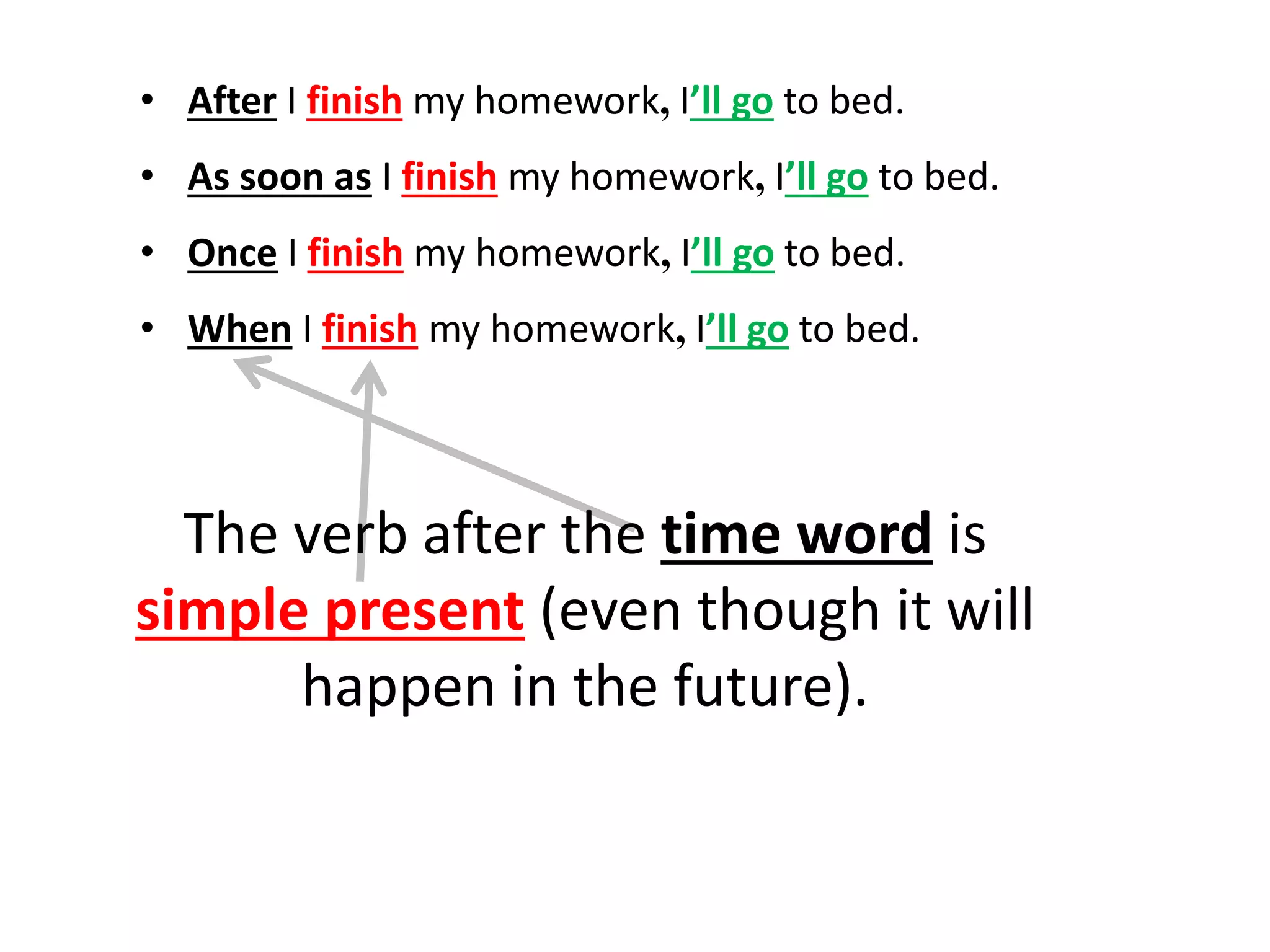
• After I finish my homework, I’ll go to bed.
• As soon as I finish my homework, I’ll go to bed.
• Once I finish my homework, I’ll go to bed.
• When I finish my homework, I’ll go to bed.
The verb after the time word is
simple present (even though it will
happen in the future).
X X X
2past future
1
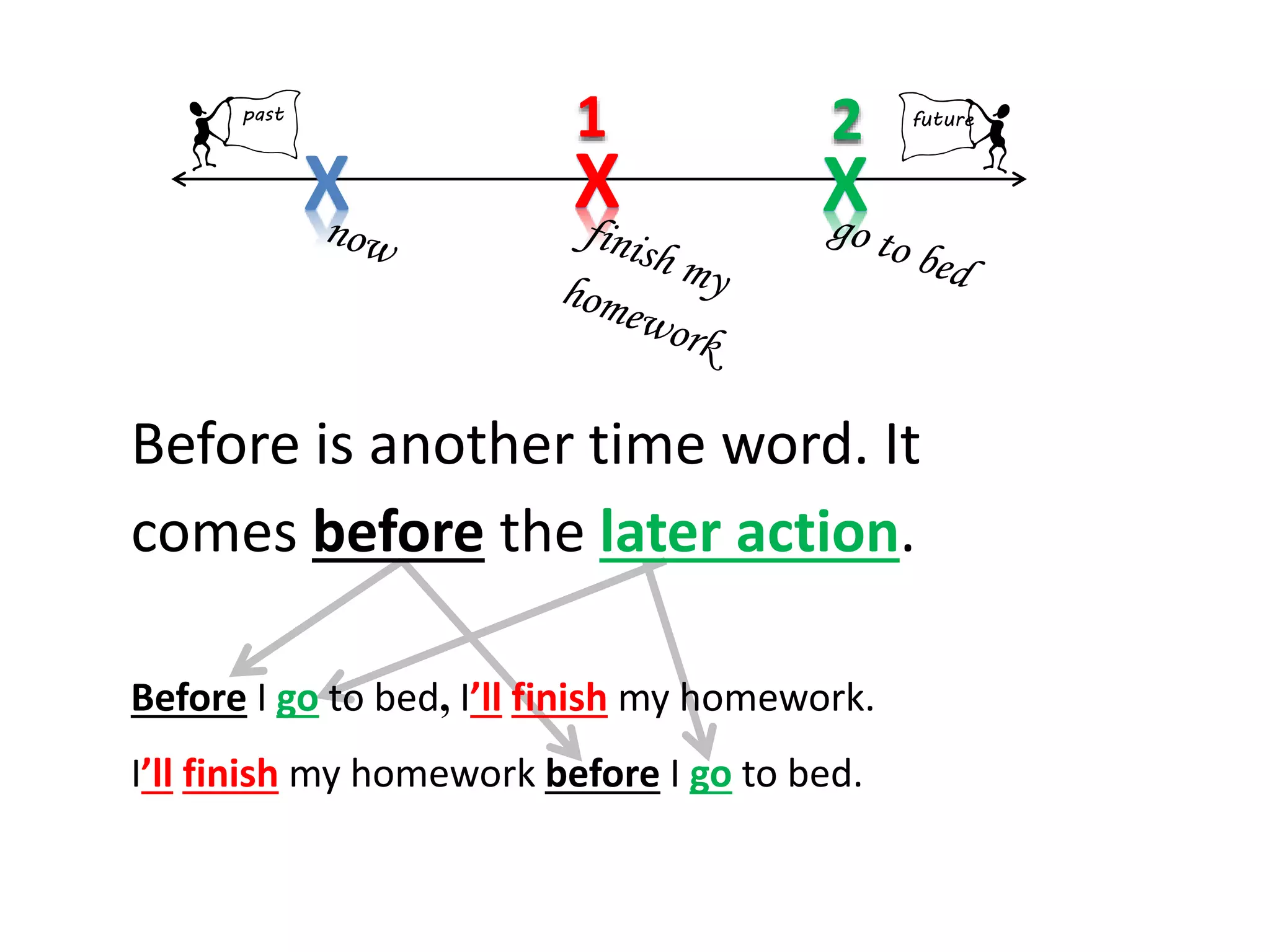
Before is another time word. It
comes before the later action.
Before I go to bed, I’ll finish my homework.
I’ll finish my homework before I go to bed.
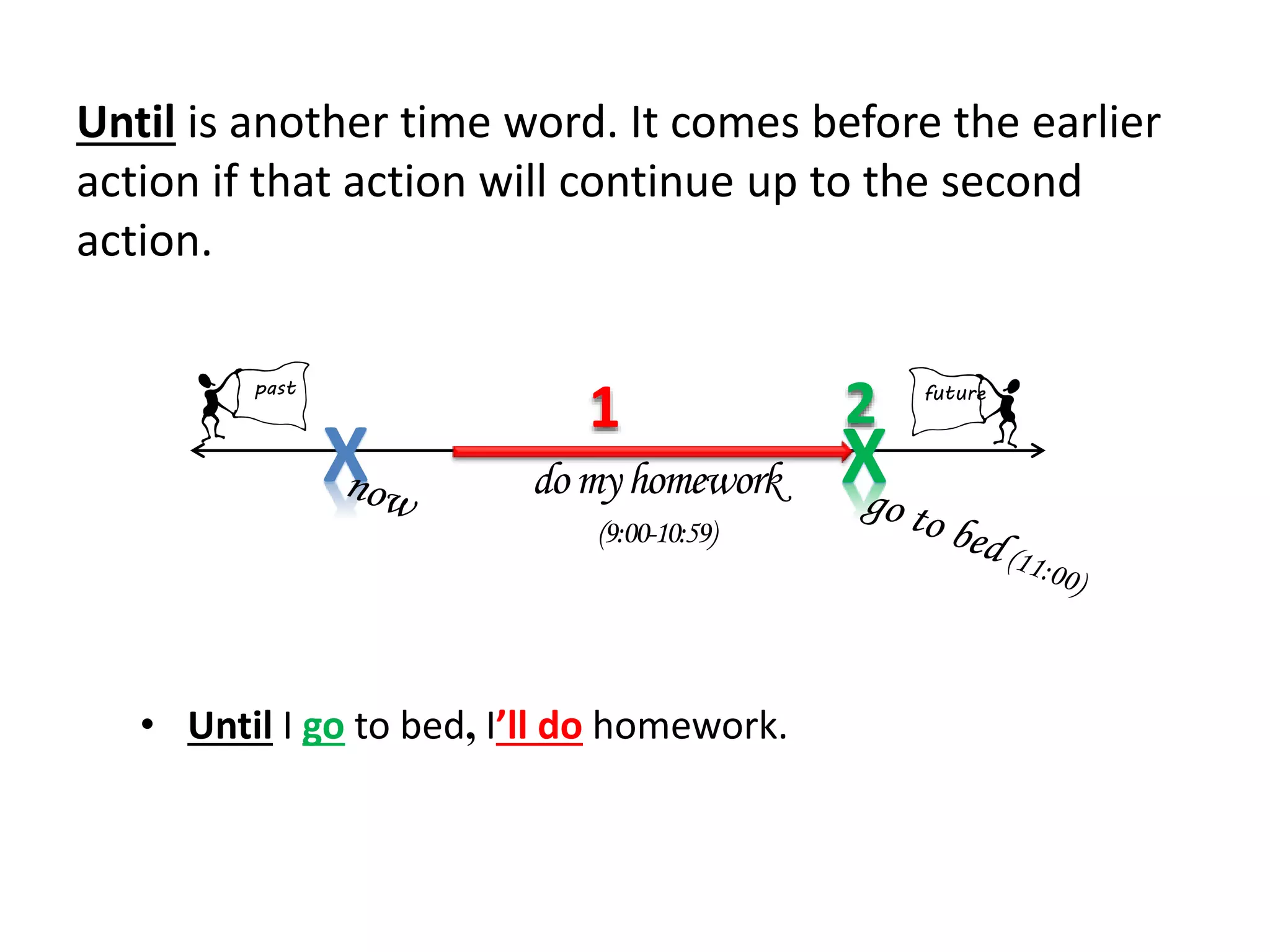
Until is another time word. It comes before the earlier
action if that action will continue up to the second
action.
X Xdomyhomework
(9:00-10:59)
1 2past future
• Until I go to bed, I’ll do homework.
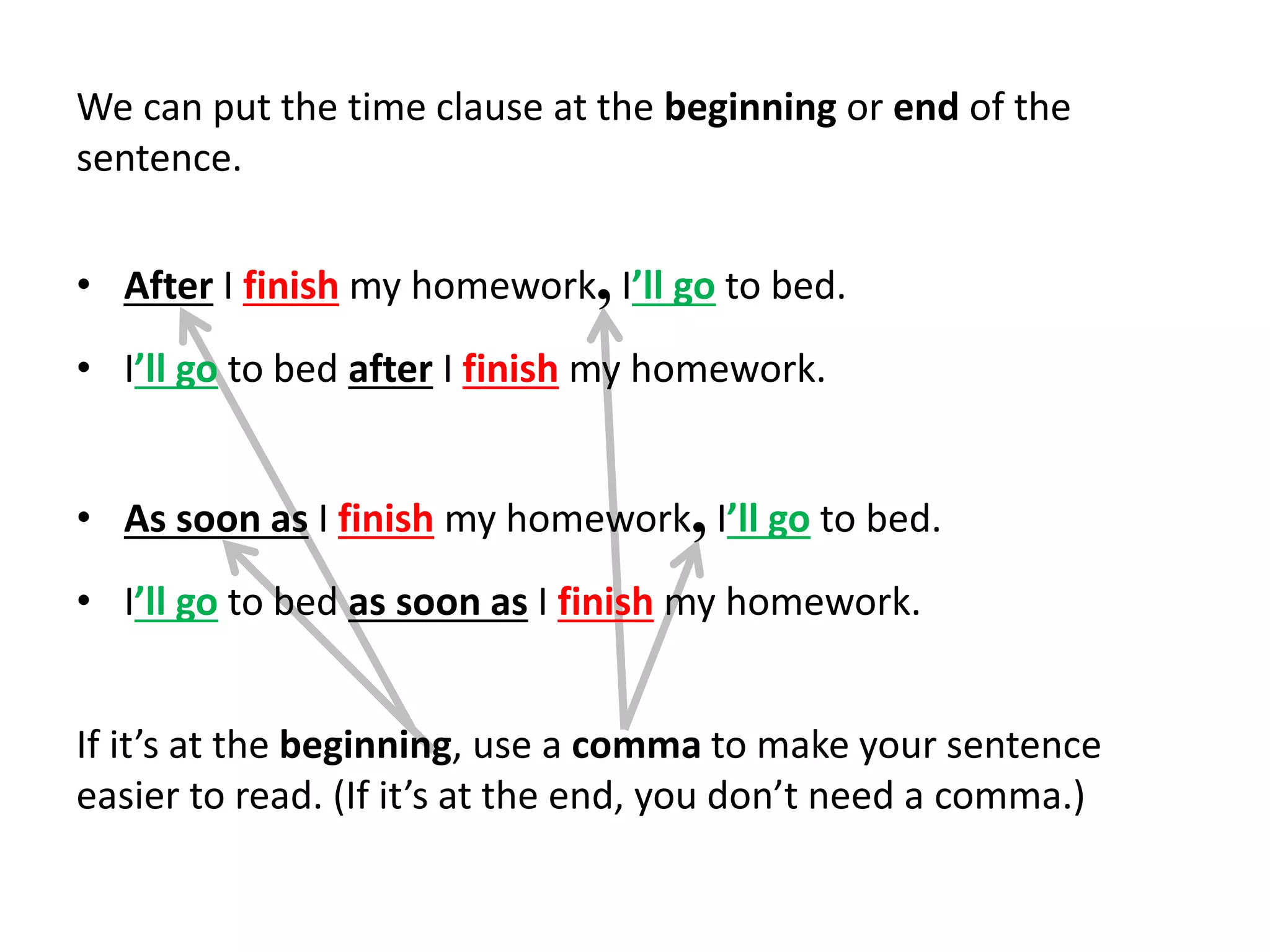
We can put the time clause at the beginning or end of the
sentence.
• After I finish my homework,I’ll go to bed.
• I’ll go to bed after I finish my homework.
• As soon as I finish my homework,I’ll go to bed.
• I’ll go to bed as soon as I finish my homework.
If it’s at the beginning, use a comma to make your sentence
easier to read. (If it’s at the end, you don’t need a comma.)
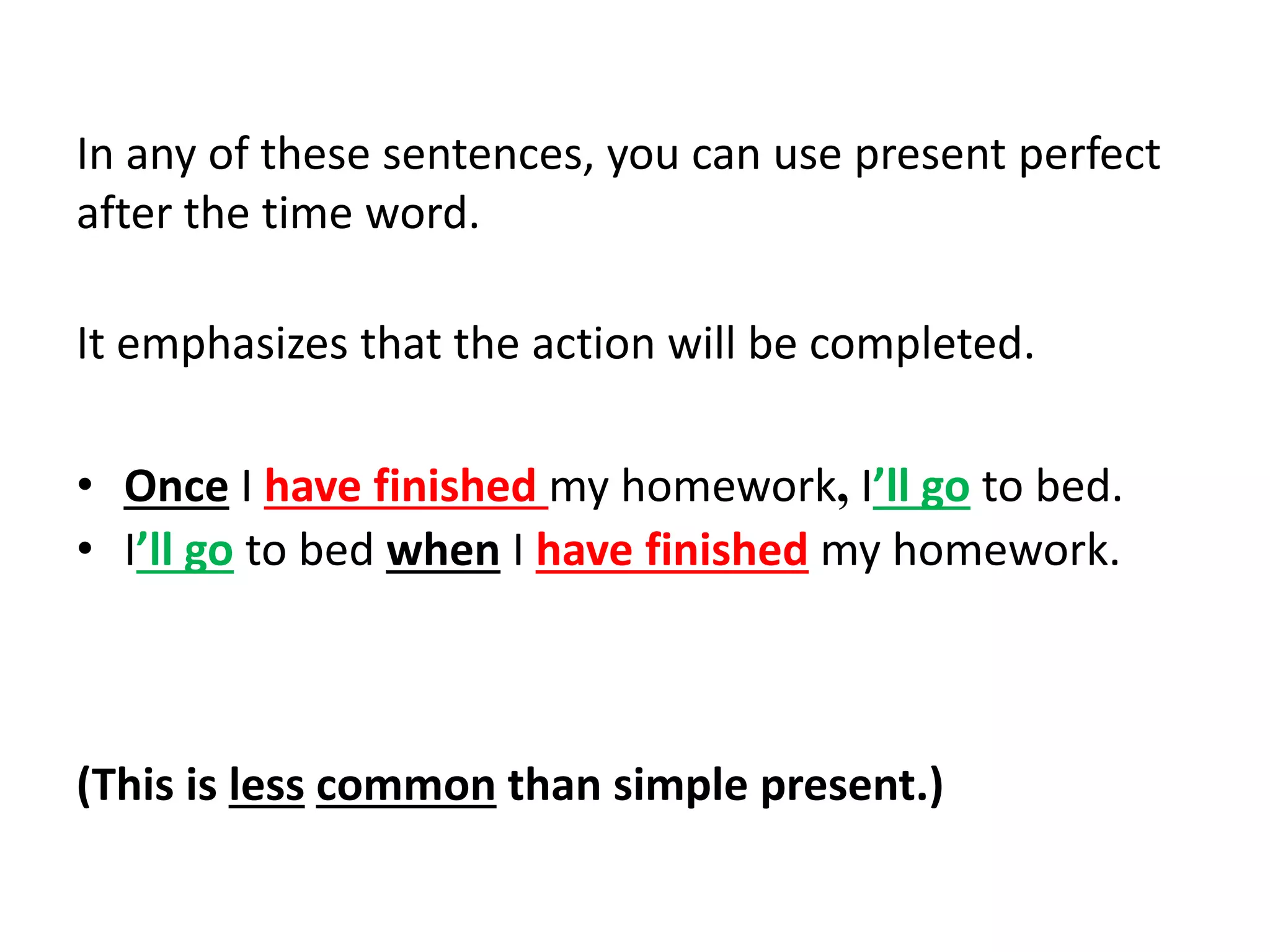
In any of these sentences, you can use present perfect
after the time word.
It emphasizes that the action will be completed.
• Once I have finished my homework, I’ll go to bed.
• I’ll go to bed when I have finished my homework.
(This is less common than simple present.)
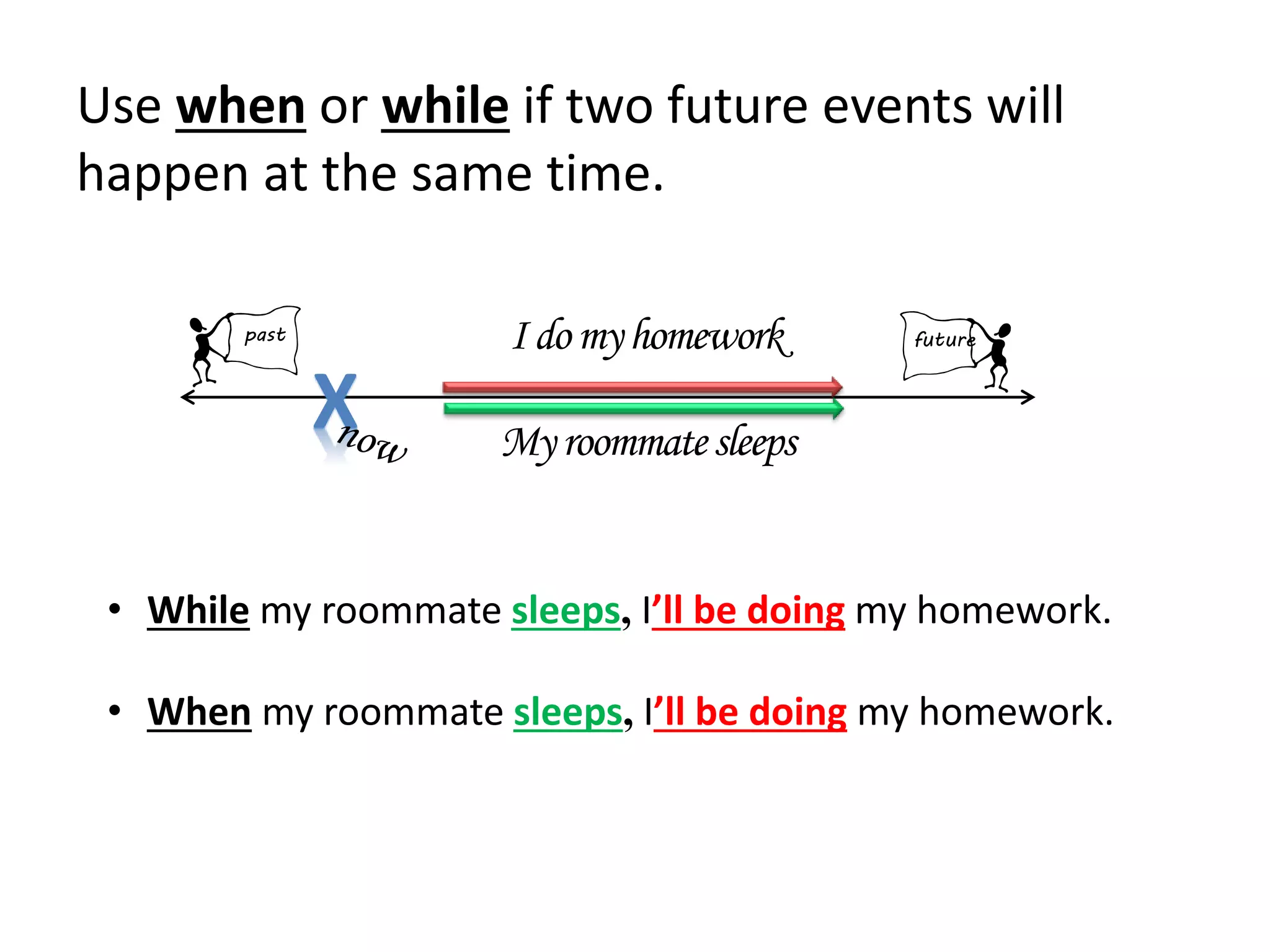
Use when or while if two future events will
happen at the same time.
• While my roommate sleeps, I’ll be doing my homework.
• When my roommate sleeps, I’ll be doing my homework.
X
Idomyhomeworkpast future
Myroommatesleeps
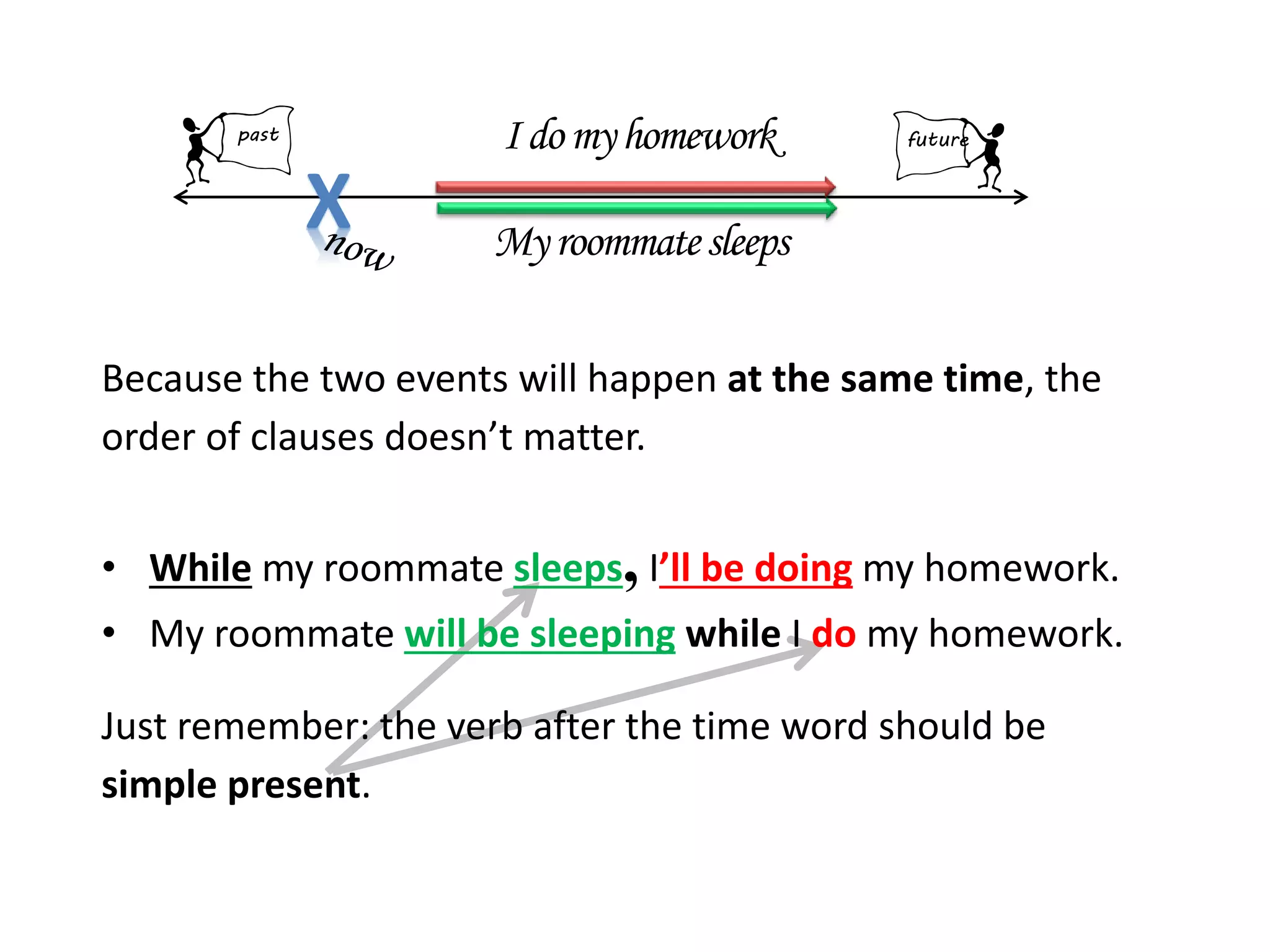
X
Idomyhomeworkpast future
Myroommatesleeps
Because the two events will happen at the same time, the
order of clauses doesn’t matter.
• While my roommate sleeps, I’ll be doing my homework.
• My roommate will be sleeping while I do my homework.
Just remember: the verb after the time word should be
simple present.
Got it? Awesome!
Thanks!

Futuretimeclauses 121002212852-phpapp01

  • 1.
    Future Time Clauses TeacherLuis Intermediate Grammar
  • 2.
    • When wetalk about two events in the future, we can use one sentence with a future time clause. • A future time clause may begin with after, as soon as, once, or when. • These time words come before the earlier action.
  • 3.
    Look at thistimeline: X X X 2past future 1
  • 4.
    X X X 2pastfuture 1 • After I finish my homework, I’ll go to bed. • As soon as I finish my homework, I’ll go to bed. • Once I finish my homework, I’ll go to bed. • When I finish my homework, I’ll go to bed. What do you notice about the verbs in these sentences?
  • 5.
    • After Ifinish my homework, I’ll go to bed. • As soon as I finish my homework, I’ll go to bed. • Once I finish my homework, I’ll go to bed. • When I finish my homework, I’ll go to bed. The verb after the time word is simple present (even though it will happen in the future).
  • 6.
    X X X 2pastfuture 1 Before is another time word. It comes before the later action. Before I go to bed, I’ll finish my homework. I’ll finish my homework before I go to bed.
  • 7.
    Until is anothertime word. It comes before the earlier action if that action will continue up to the second action. X Xdomyhomework (9:00-10:59) 1 2past future • Until I go to bed, I’ll do homework.
  • 8.
    We can putthe time clause at the beginning or end of the sentence. • After I finish my homework,I’ll go to bed. • I’ll go to bed after I finish my homework. • As soon as I finish my homework,I’ll go to bed. • I’ll go to bed as soon as I finish my homework. If it’s at the beginning, use a comma to make your sentence easier to read. (If it’s at the end, you don’t need a comma.)
  • 9.
    In any ofthese sentences, you can use present perfect after the time word. It emphasizes that the action will be completed. • Once I have finished my homework, I’ll go to bed. • I’ll go to bed when I have finished my homework. (This is less common than simple present.)
  • 10.
    Use when orwhile if two future events will happen at the same time. • While my roommate sleeps, I’ll be doing my homework. • When my roommate sleeps, I’ll be doing my homework. X Idomyhomeworkpast future Myroommatesleeps
  • 11.
    X Idomyhomeworkpast future Myroommatesleeps Because thetwo events will happen at the same time, the order of clauses doesn’t matter. • While my roommate sleeps, I’ll be doing my homework. • My roommate will be sleeping while I do my homework. Just remember: the verb after the time word should be simple present.
  • 12.