The passive
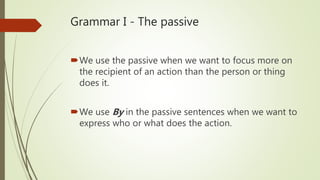
Grammar I - The passive
We use the passive when we want to focus more on
the recipient of an action than the person or thing
does it.
We use By in the passive sentences when we want to
express who or what does the action.
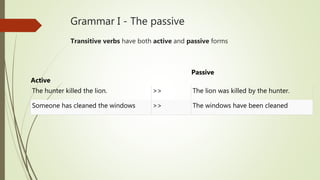
Grammar I - The passive
Transitive verbs have both active and passive forms
Active
Passive
The hunter killed the lion. >> The lion was killed by the hunter.
Someone has cleaned the windows >> The windows have been cleaned
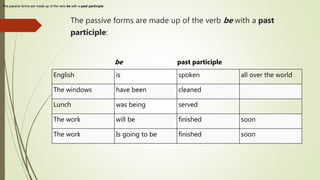
The passive forms are made up of the verb be with a past
participle:
be past participle
English is spoken all over the world
The windows have been cleaned
Lunch was being served
The work will be finished soon
The work Is going to be finished soon
The passive forms are made up of the verb be with a past participle:
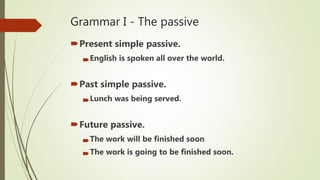
Grammar I - The passive
Present simple passive.
English is spoken all over the world.
Past simple passive.
Lunch was being served.
Future passive.
The work will be finished soon
The work is going to be finished soon.

The passive

  • 1.
  • 2.
    Grammar I -The passive We use the passive when we want to focus more on the recipient of an action than the person or thing does it. We use By in the passive sentences when we want to express who or what does the action.
  • 3.
    Grammar I -The passive Transitive verbs have both active and passive forms Active Passive The hunter killed the lion. >> The lion was killed by the hunter. Someone has cleaned the windows >> The windows have been cleaned
  • 4.
    The passive formsare made up of the verb be with a past participle: be past participle English is spoken all over the world The windows have been cleaned Lunch was being served The work will be finished soon The work Is going to be finished soon The passive forms are made up of the verb be with a past participle:
  • 5.
    Grammar I -The passive Present simple passive. English is spoken all over the world. Past simple passive. Lunch was being served. Future passive. The work will be finished soon The work is going to be finished soon.