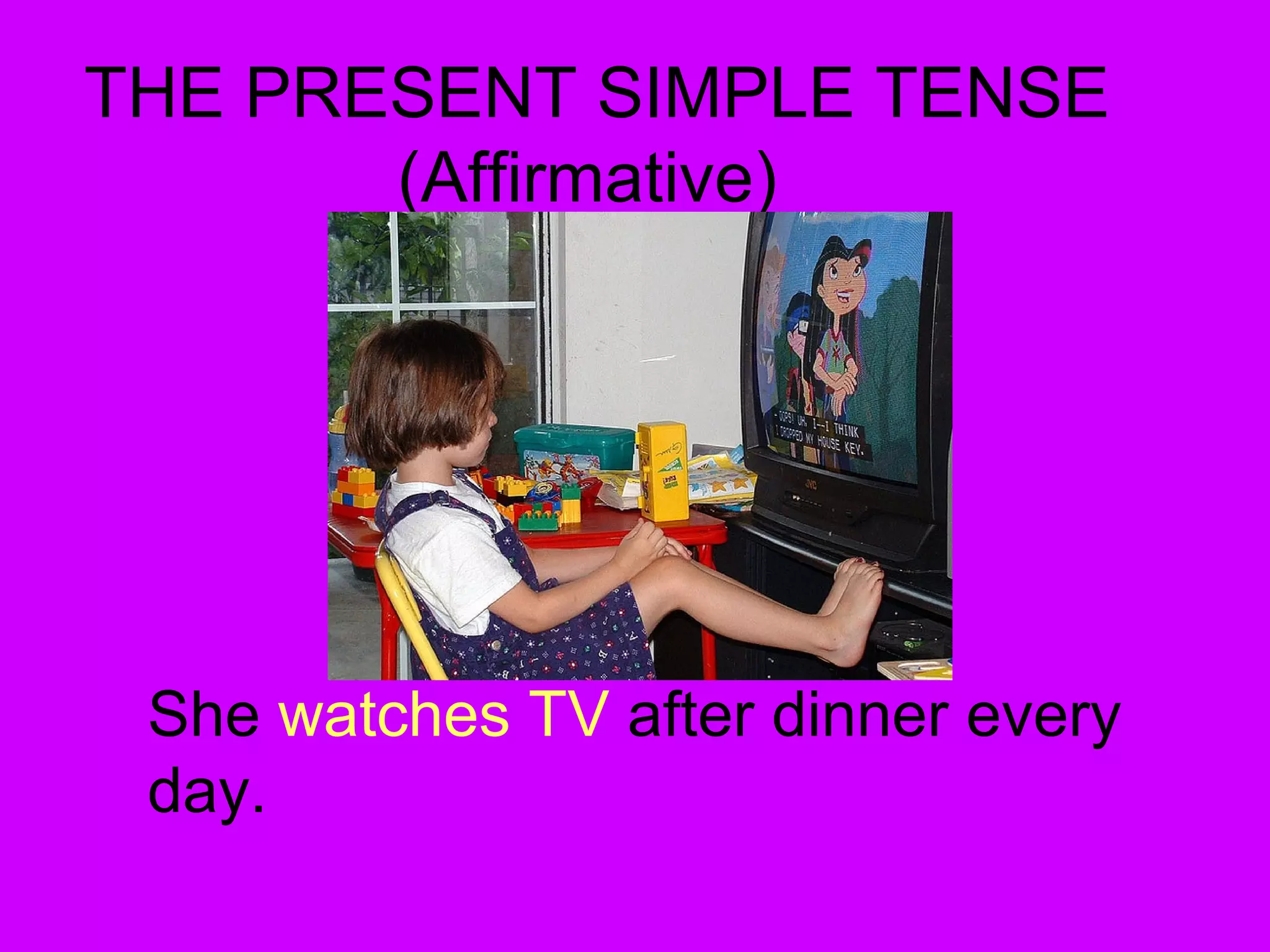

THE PRESENT SIMPLE TENSE 
(Affirmative) 
She watches TV after dinner every 
day.
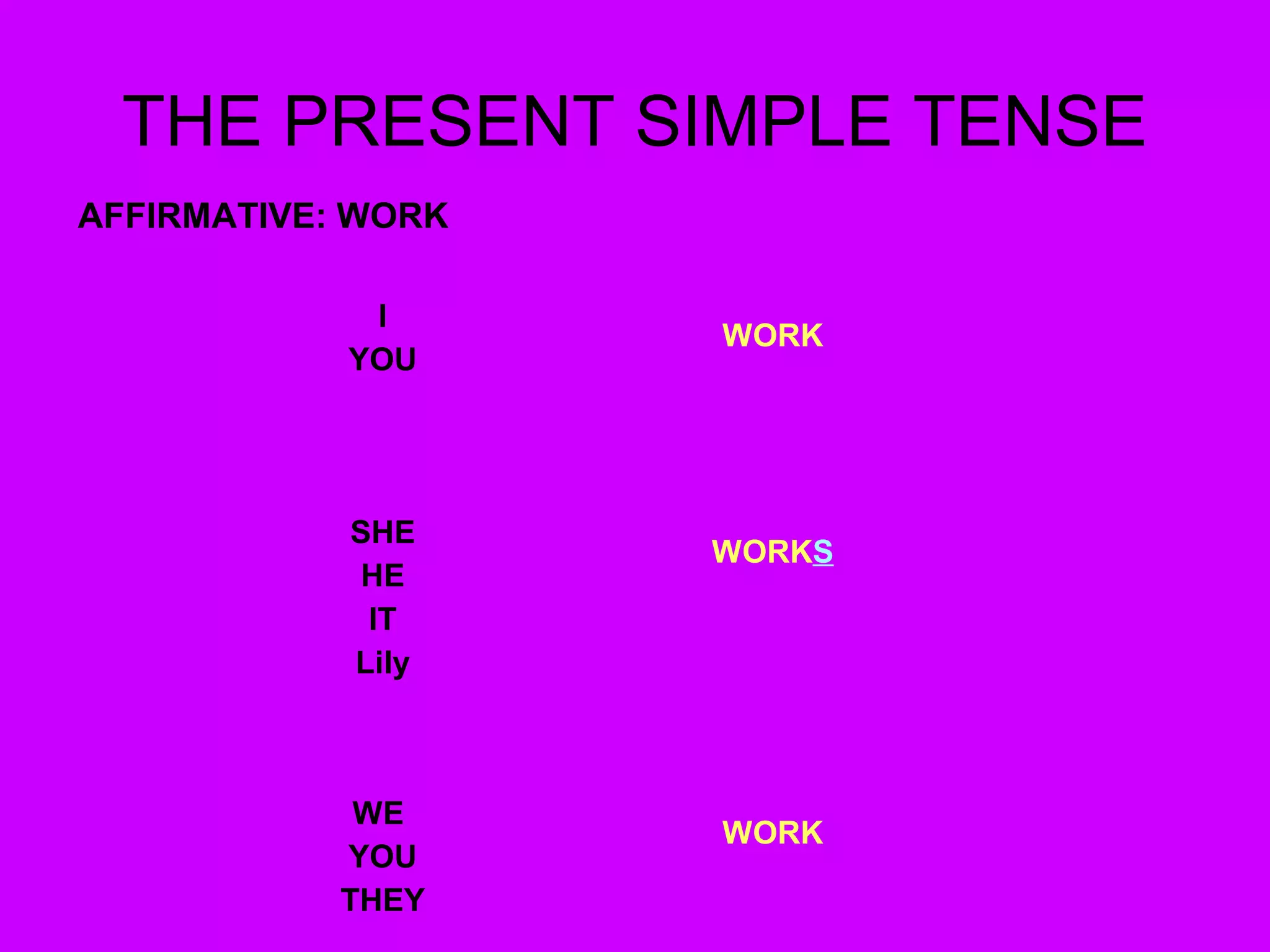
THE PRESENT SIMPLE TENSE 
AFFIRMATIVE: WORK 
I 
YOU 
WORK 
SHE 
HE 
IT 
Lily 
WORKS 
WE 
YOU 
THEY 
WORK
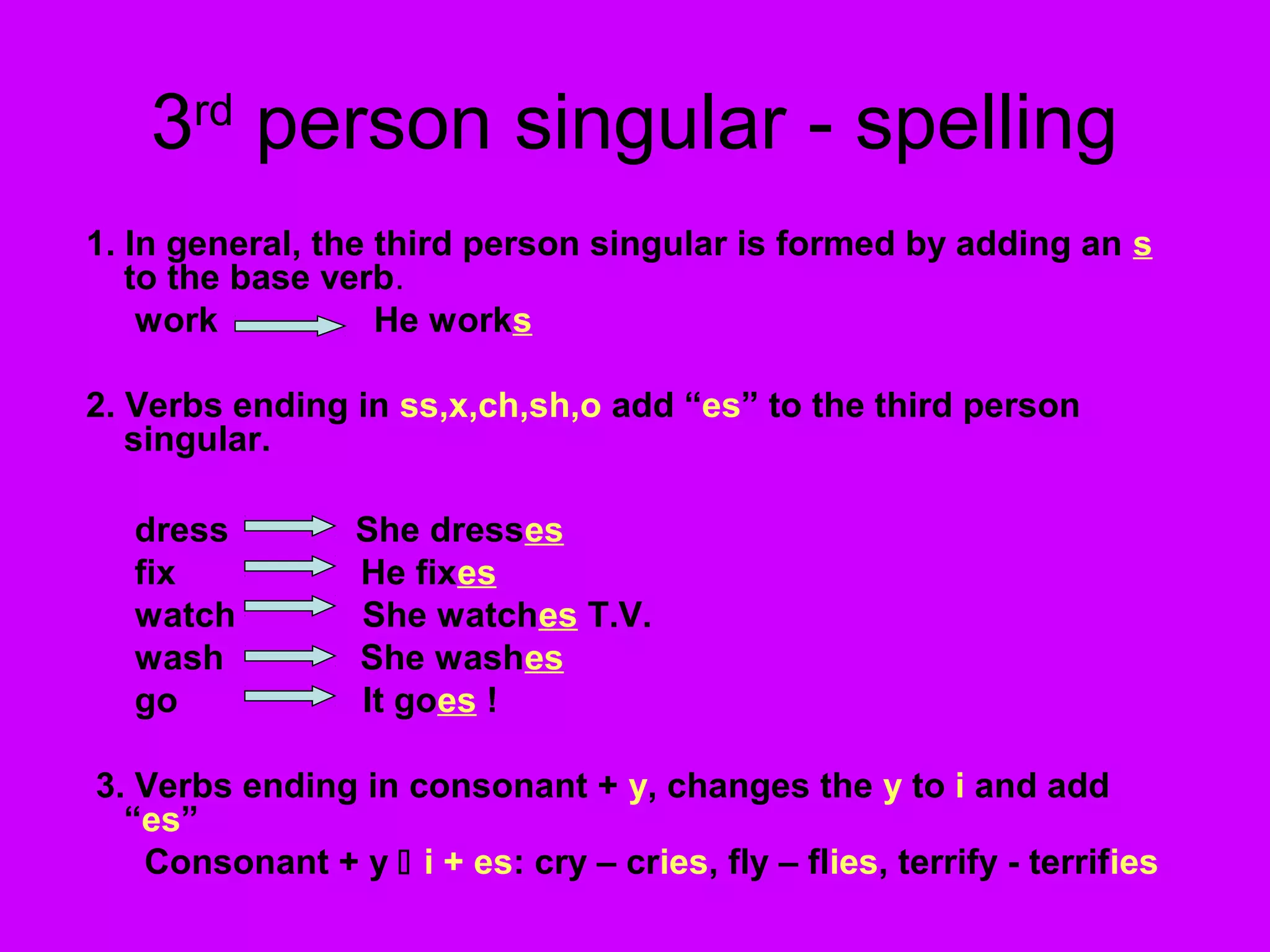
3rd person singular - spelling 
1. In general, the third person singular is formed by adding an s 
to the base verb. 
work He works 
2. Verbs ending in ss,x,ch,sh,o add “es” to the third person 
singular. 
dress She dresses 
fix He fixes 
watch She watches T.V. 
wash She washes 
go It goes ! 
3. Verbs ending in consonant + y, changes the y to i and add 
“es” 
Consonant + y  i + es: cry – cries, fly – flies, terrify - terrifies
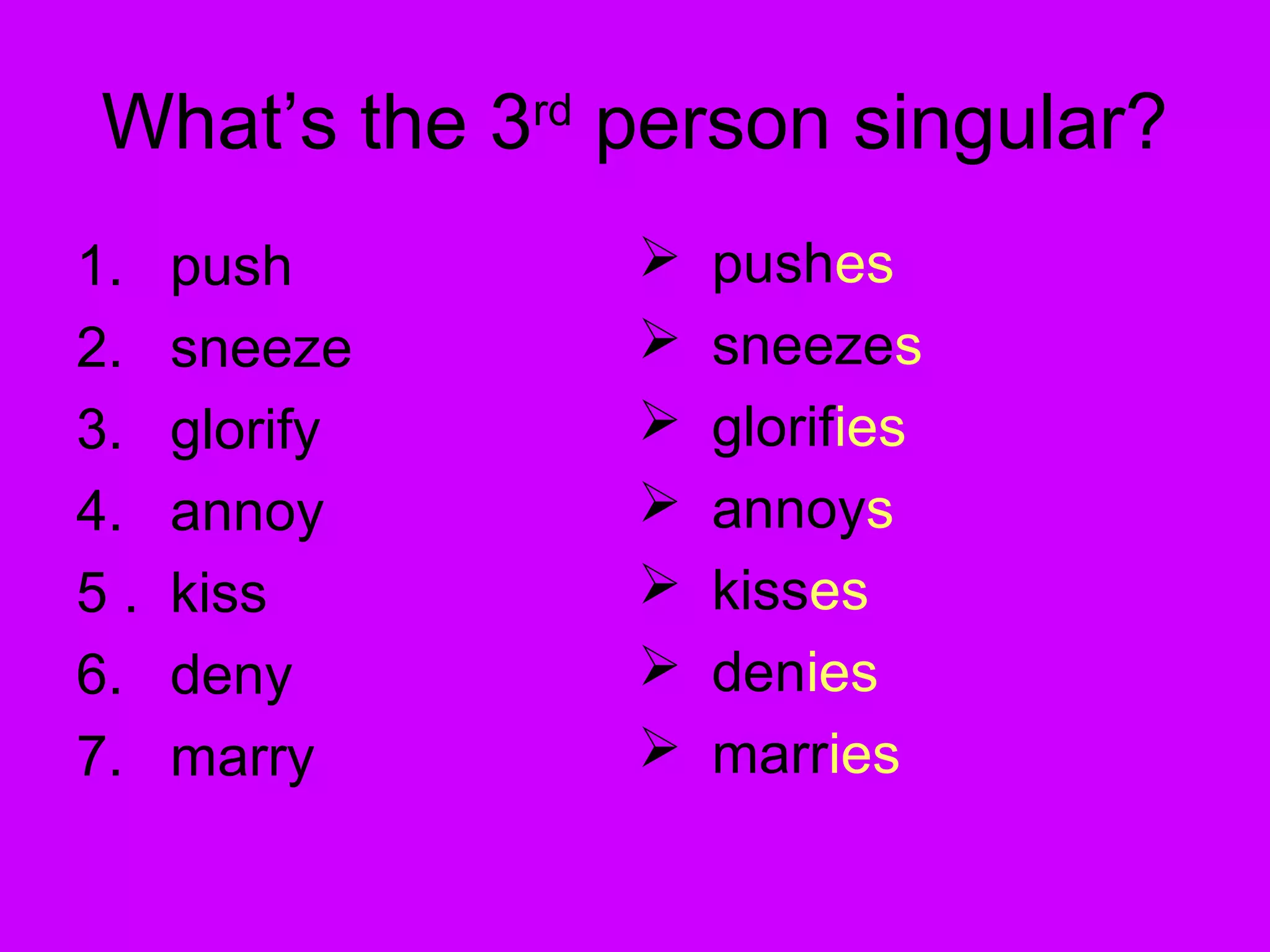
What’s the 3rd person singular? 
1. push 
 pushes 
2. sneeze 
 sneezes 
3. glorify 
 glorifies 
4. annoy 
 annoys 
5 . kiss 
 kisses 
6. deny 
 denies 
7. marry 
 marries
THE PRESENT SIMPLE TENSE 
(Interrogative) 
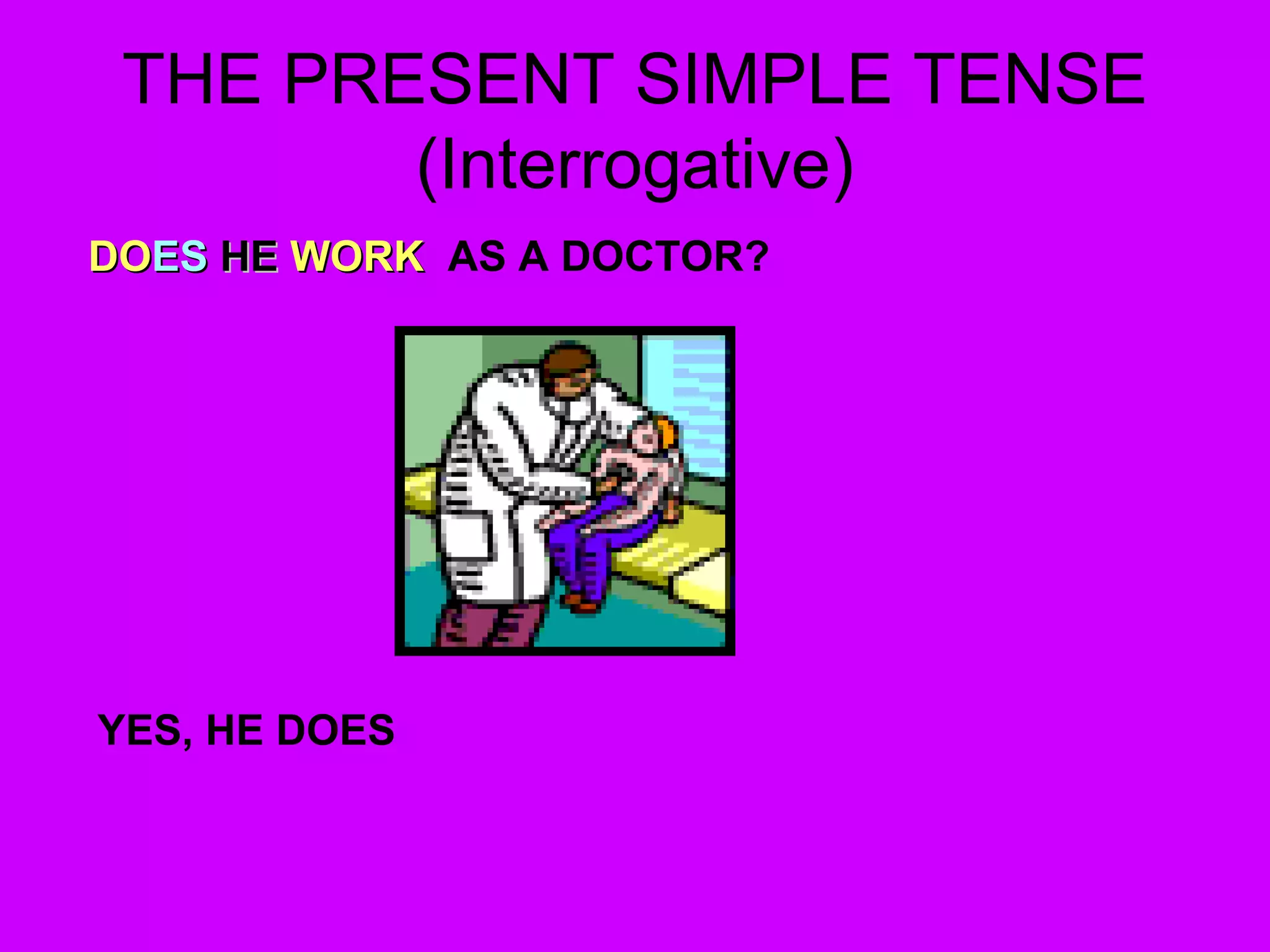
DDOOEESS HHEE WWOORRKK AS A DOCTOR? 
YES, HE DOES
THE PRESENT SIMPLE TENSE 
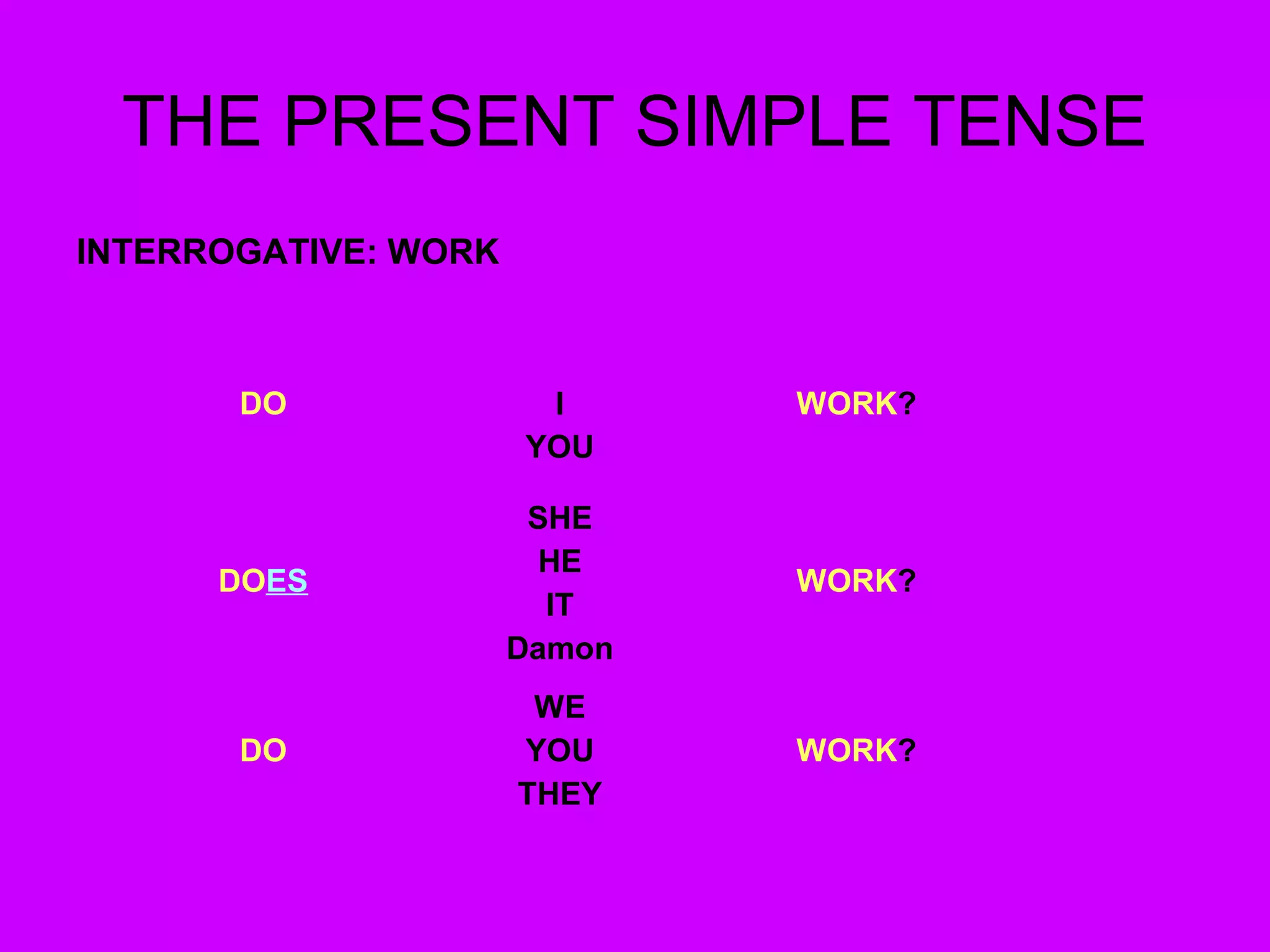
INTERROGATIVE: WORK 
DO I 
YOU 
WORK? 
DOES 
SHE 
HE 
IT 
Damon 
WORK? 
DO 
WE 
YOU 
THEY 
WORK?
THE PRESENT SIMPLE TENSE 
(Negative) 
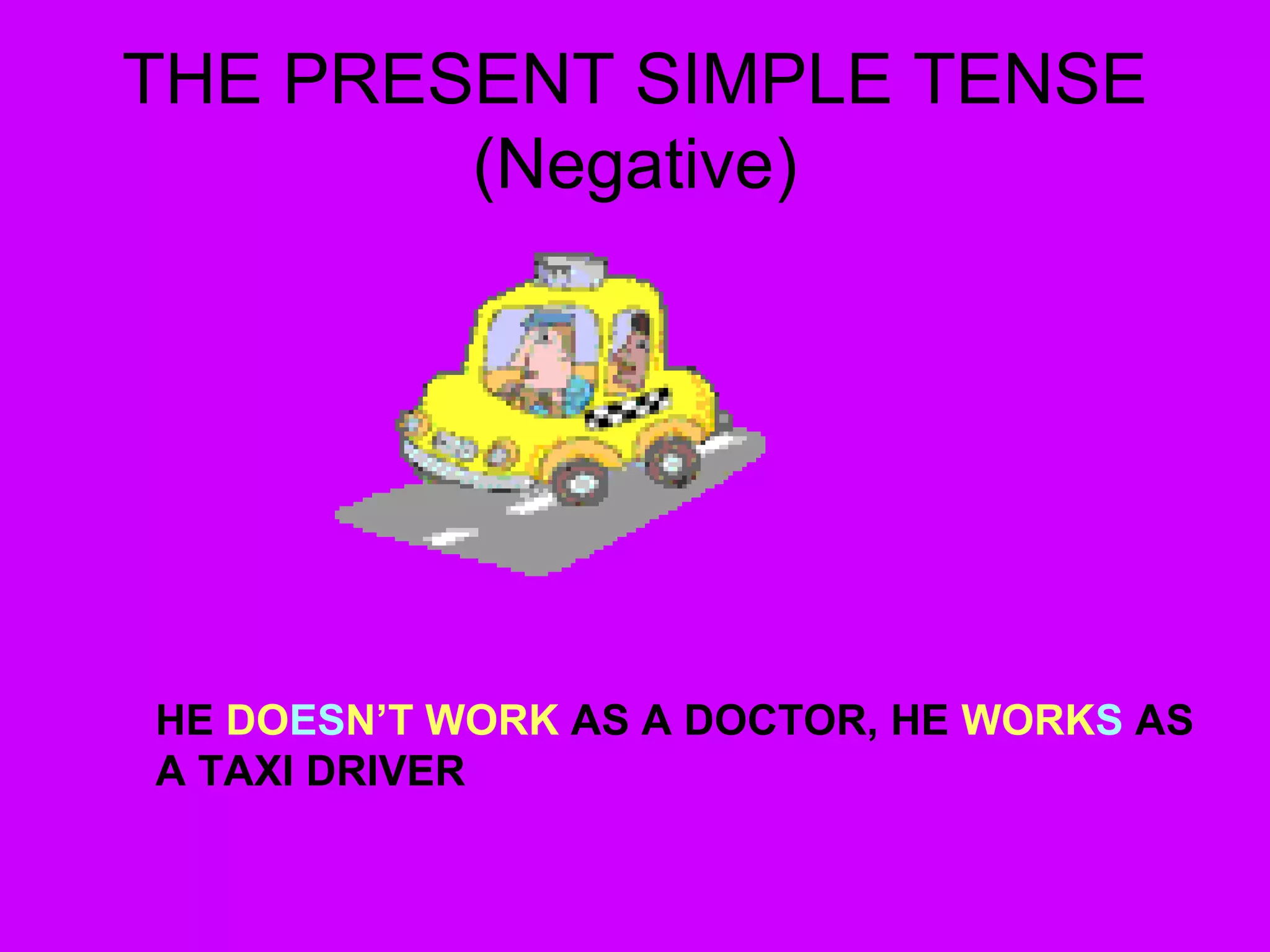
HE DOESN’T WORK AS A DOCTOR, HE WORKS AS 
A TAXI DRIVER
THE PRESENT SIMPLE TENSE 
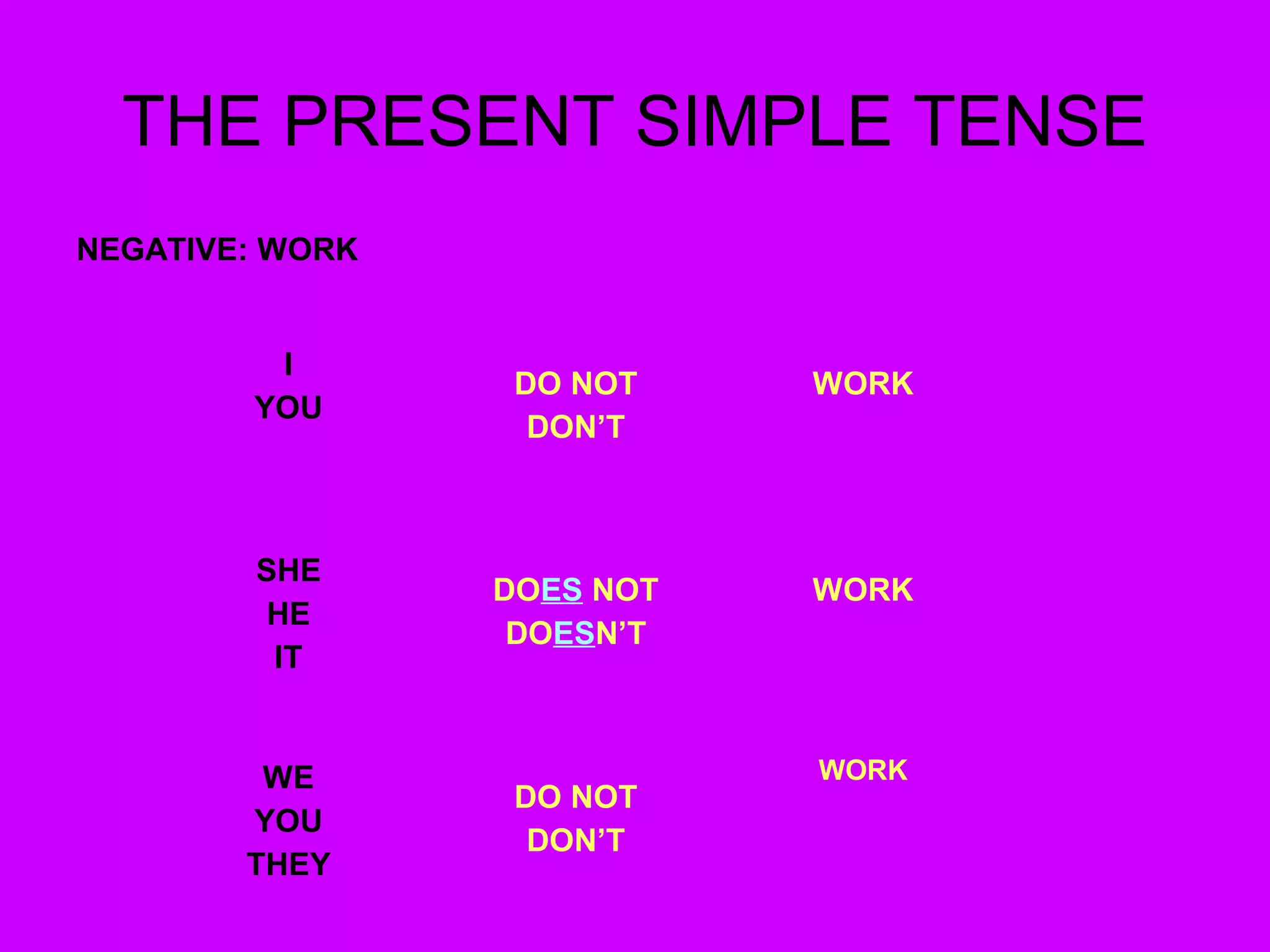
NEGATIVE: WORK 
I 
YOU 
DO NOT 
DON’T 
WORK 
SHE 
HE 
IT 
DOES NOT 
DOESN’T 
WORK 
WE 
YOU 
THEY 
DO NOT 
DON’T 
WORK
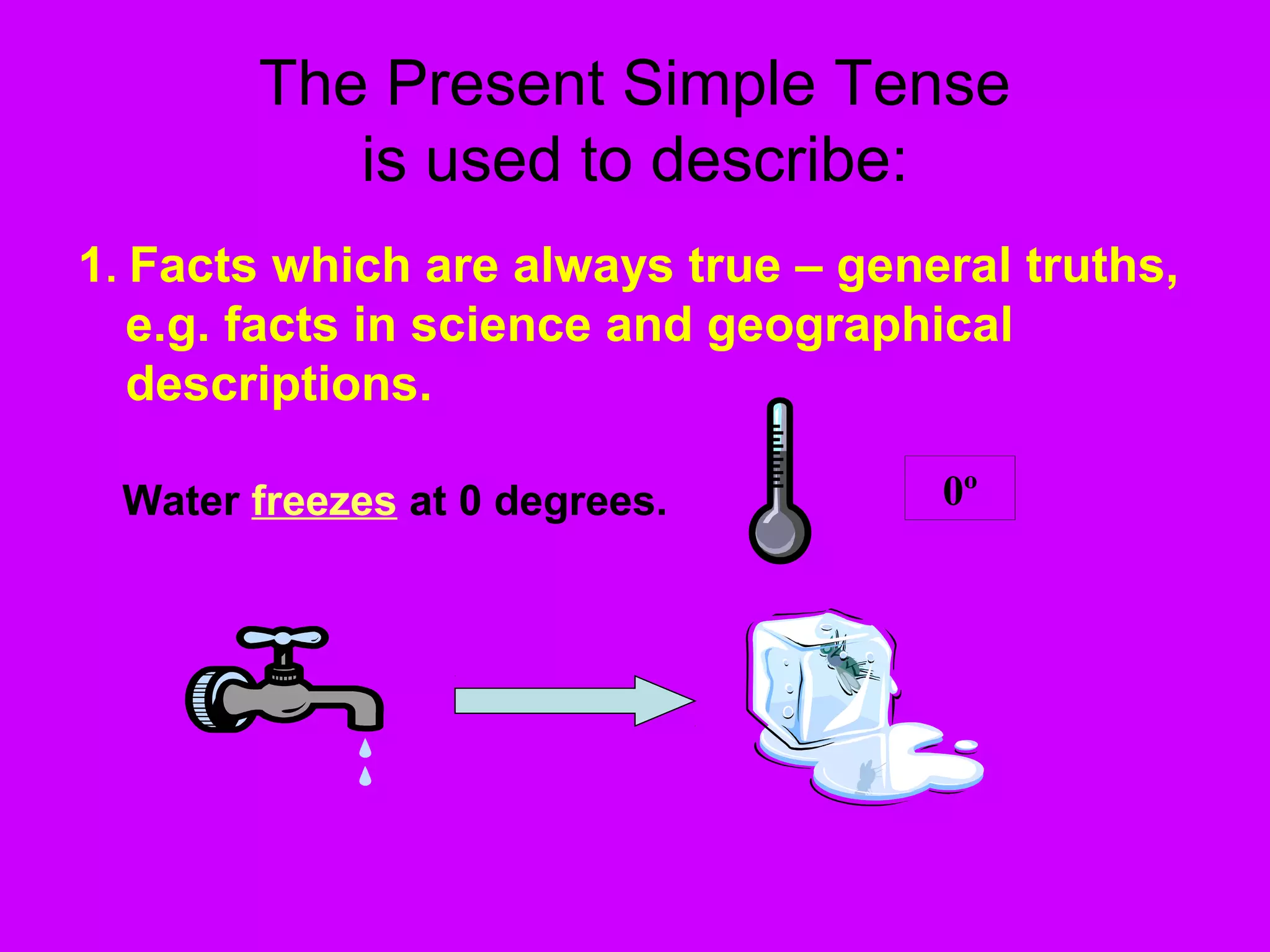
The Present Simple Tense 
is used to describe: 
1. Facts which are always true – general truths, 
e.g. facts in science and geographical 
descriptions. 
Water freezes at 0 degrees. 0º
The Present Simple Tense 
is used to describe: 
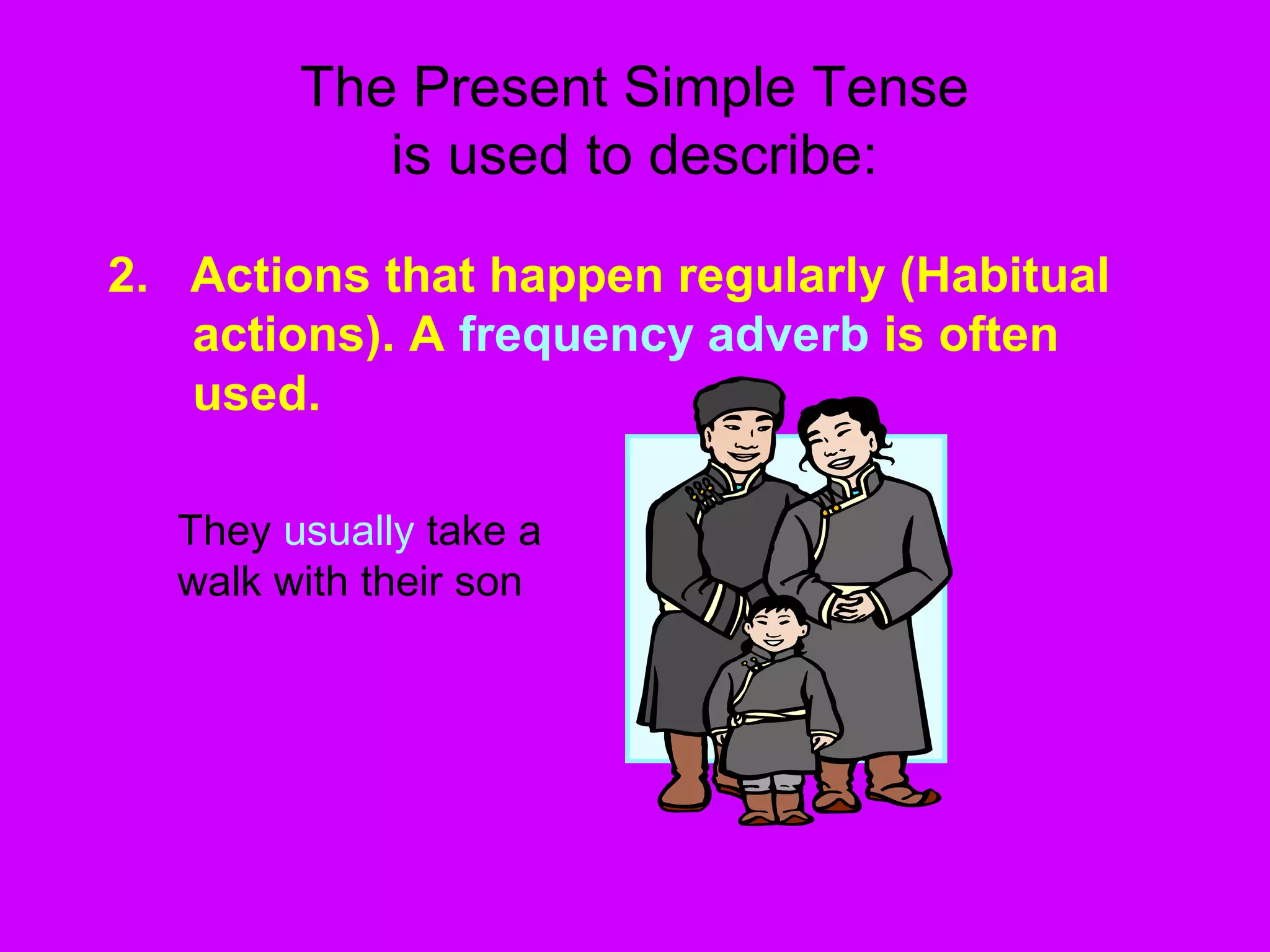
2. Actions that happen regularly (Habitual 
actions). A frequency adverb is often 
used. 
They usually take a 
walk with their son
The Present Simple Tense 
is used to describe: 
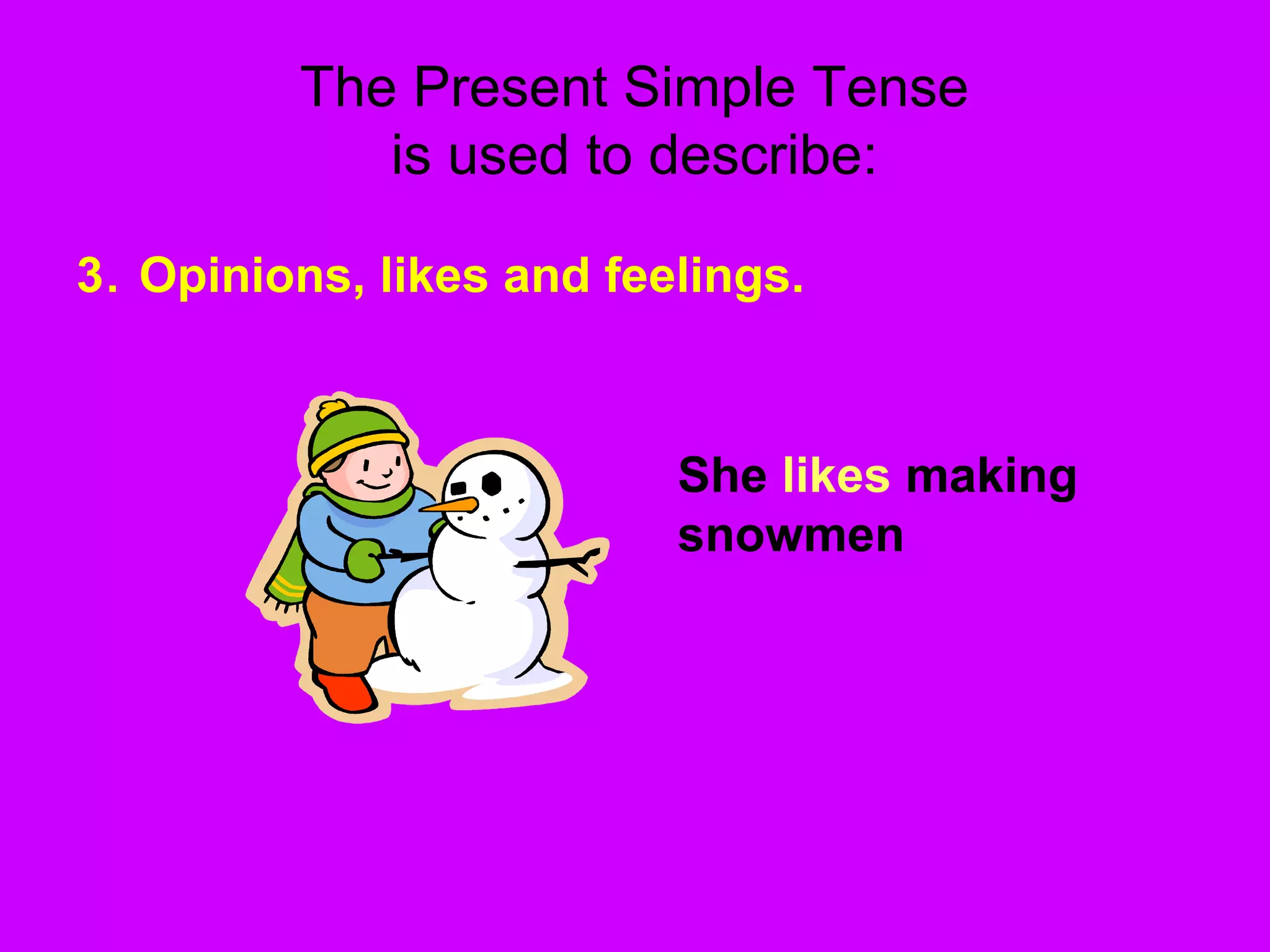
3. Opinions, likes and feelings. 
She likes making 
snowmen
THE PRESENT SIMPLE TENSE 
TIME EXPRESSIONS: 
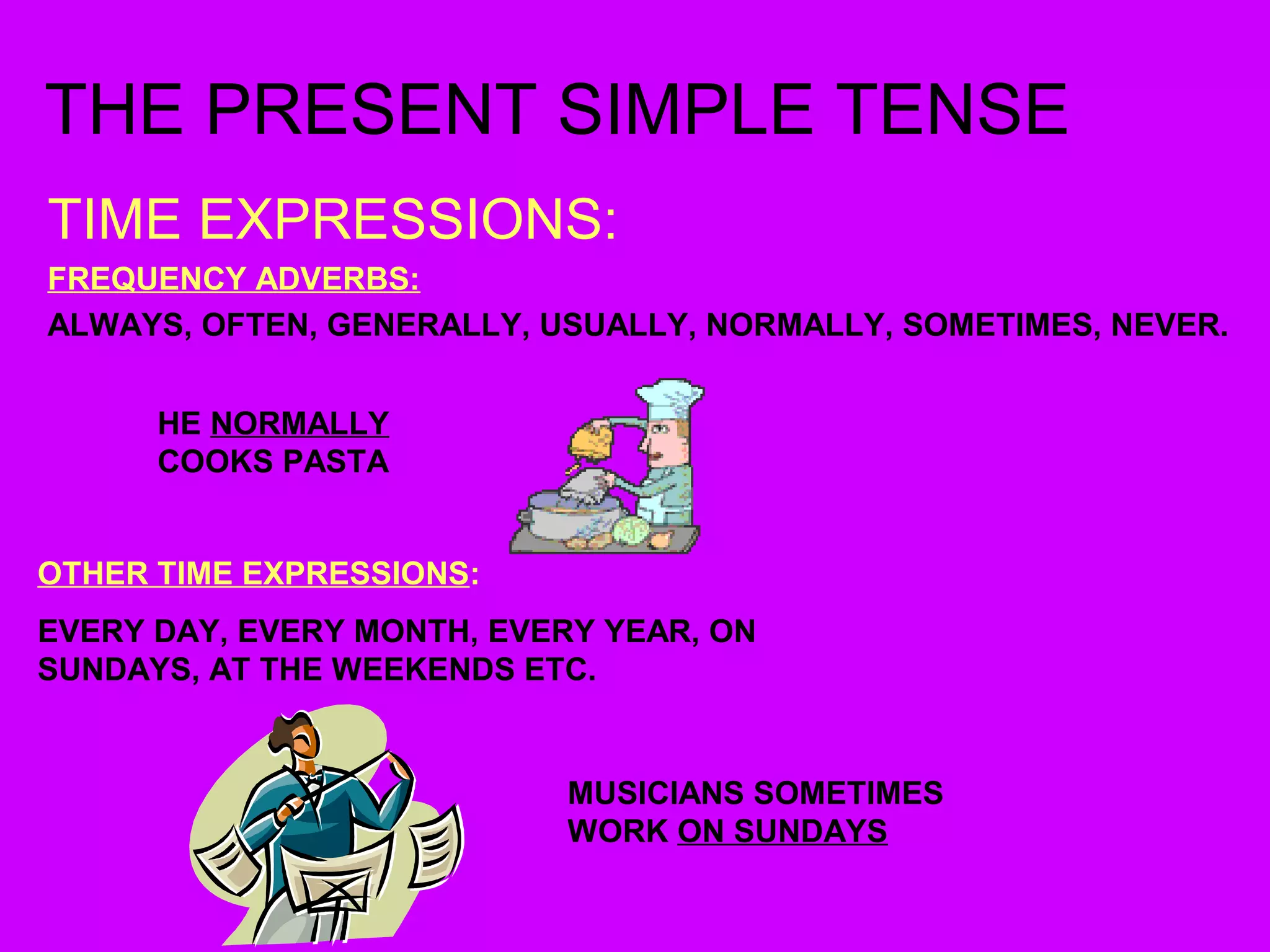
FREQUENCY ADVERBS: 
ALWAYS, OFTEN, GENERALLY, USUALLY, NORMALLY, SOMETIMES, NEVER. 
HE NORMALLY 
COOKS PASTA 
OTHER TIME EXPRESSIONS: 
EVERY DAY, EVERY MONTH, EVERY YEAR, ON 
SUNDAYS, AT THE WEEKENDS ETC. 
MUSICIANS SOMETIMES 
WORK ON SUNDAYS
THE PRESENT CONTINUOUS TENSE 
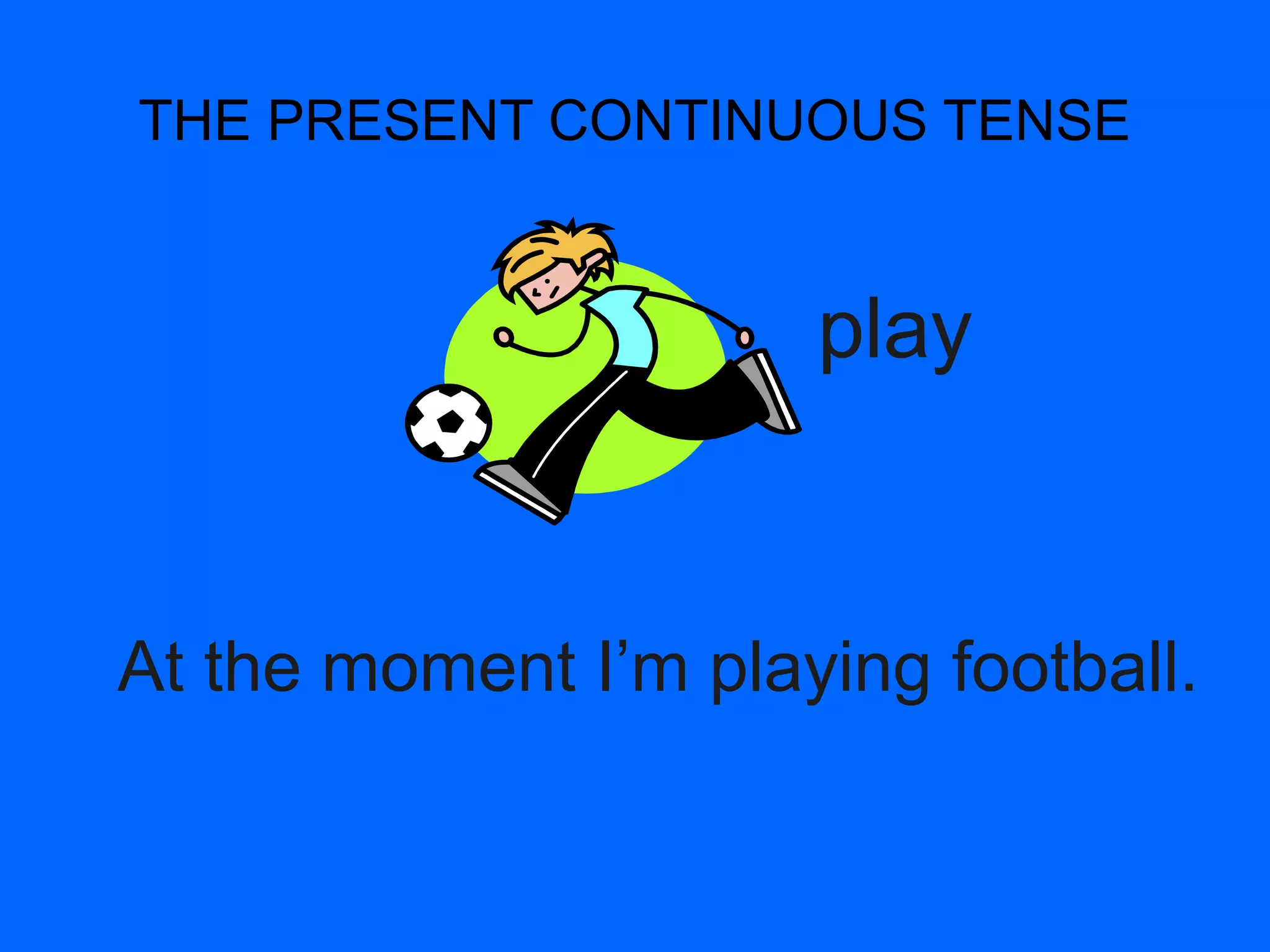
play 
At the moment I’m playing football.
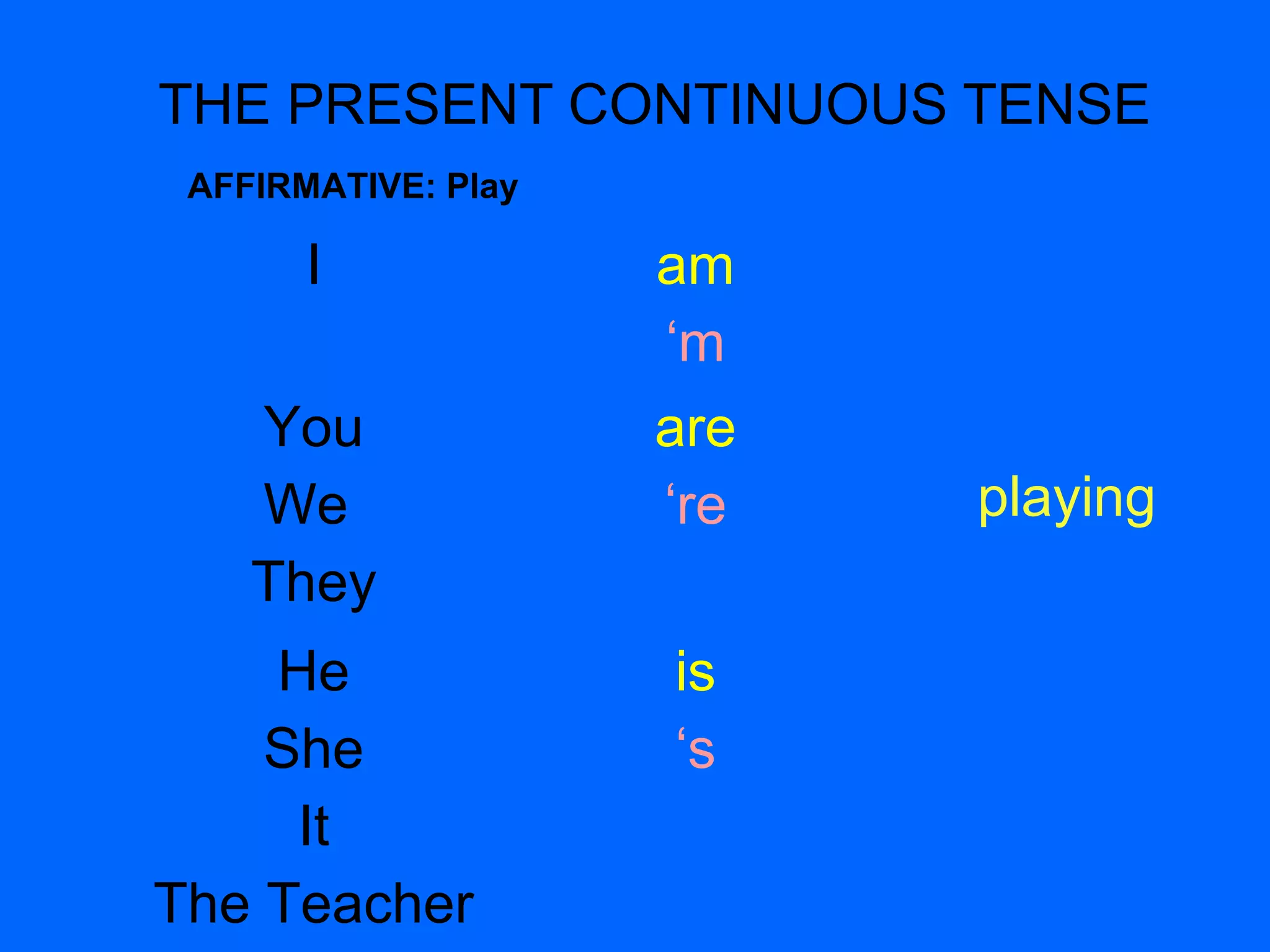
THE PRESENT CONTINUOUS TENSE 
I am 
‘m 
playing 
You 
We 
They 
are 
‘re 
He 
She 
It 
The Teacher 
is 
‘s 
AFFIRMATIVE: Play
THE PRESENT CONTINUOUS TENSE 
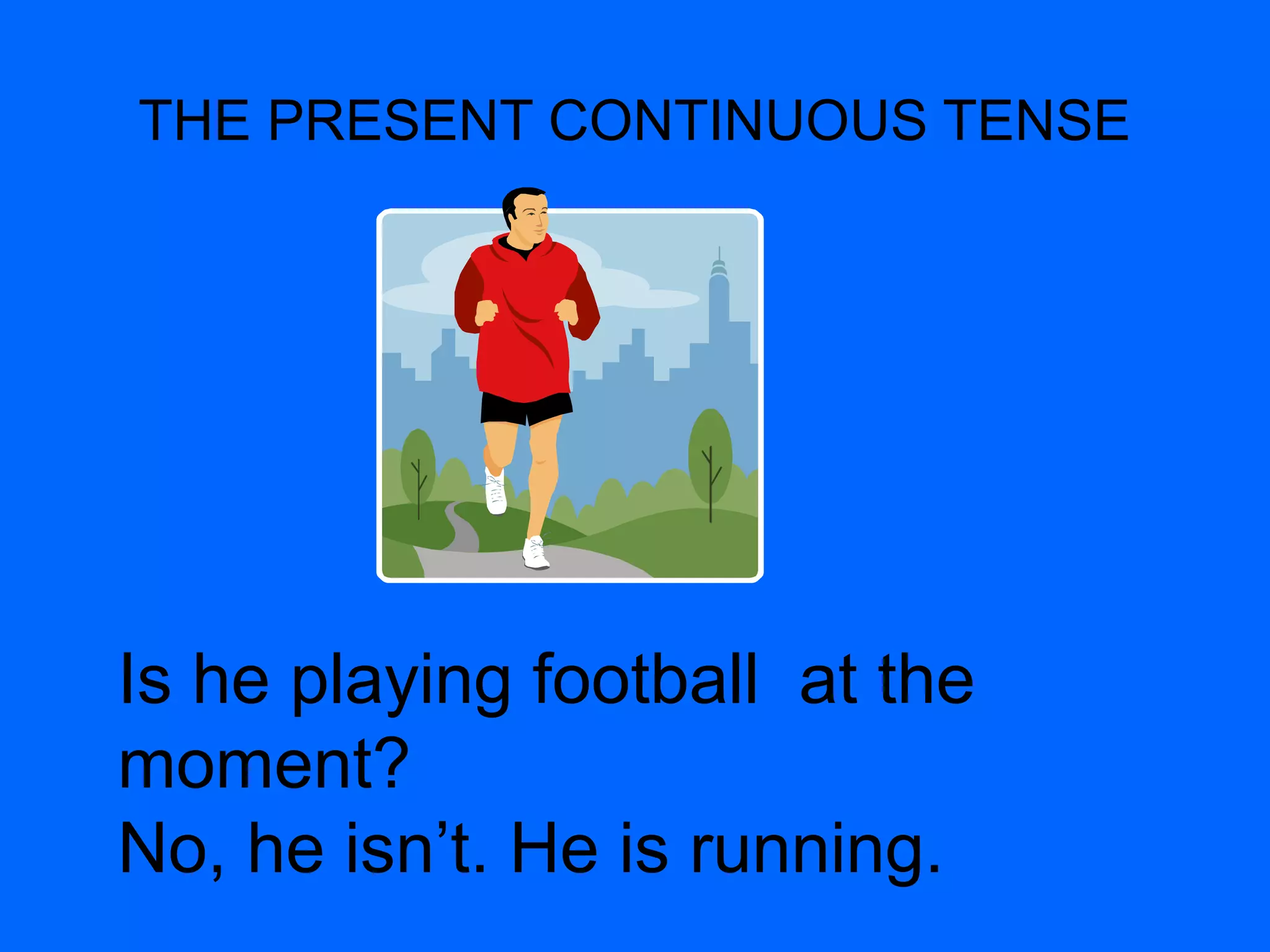
Is he playing football at the 
moment? 
No, he isn’t. He is running.
THE PRESENT CONTINUOUS TENSE 
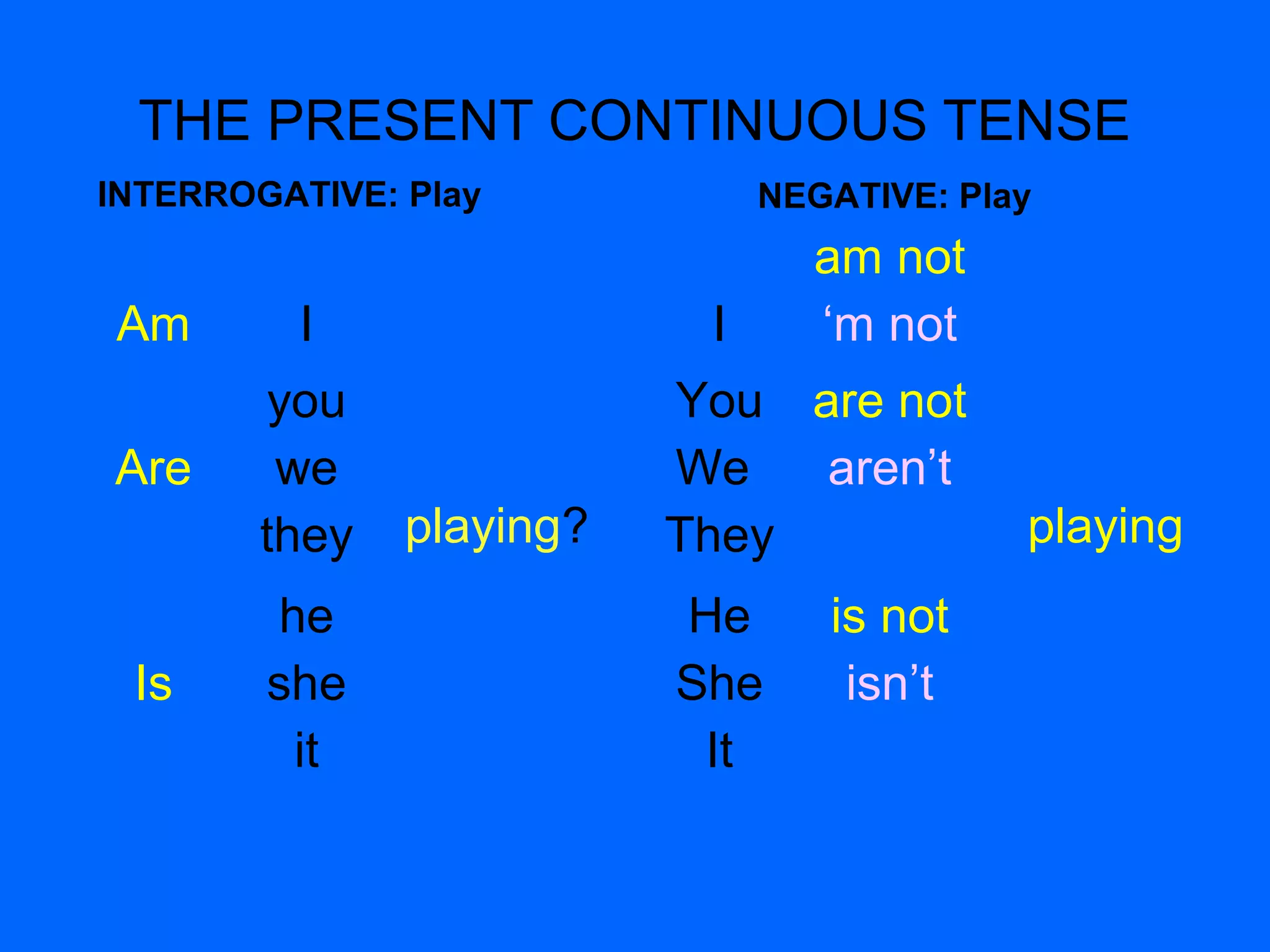
INTERROGATIVE: Play NEGATIVE: Play 
Am I 
playing? 
Are 
you 
we 
they 
Is 
he 
she 
it 
I 
am not 
‘m not 
playing 
You 
We 
They 
are not 
aren’t 
He 
She 
It 
is not 
isn’t
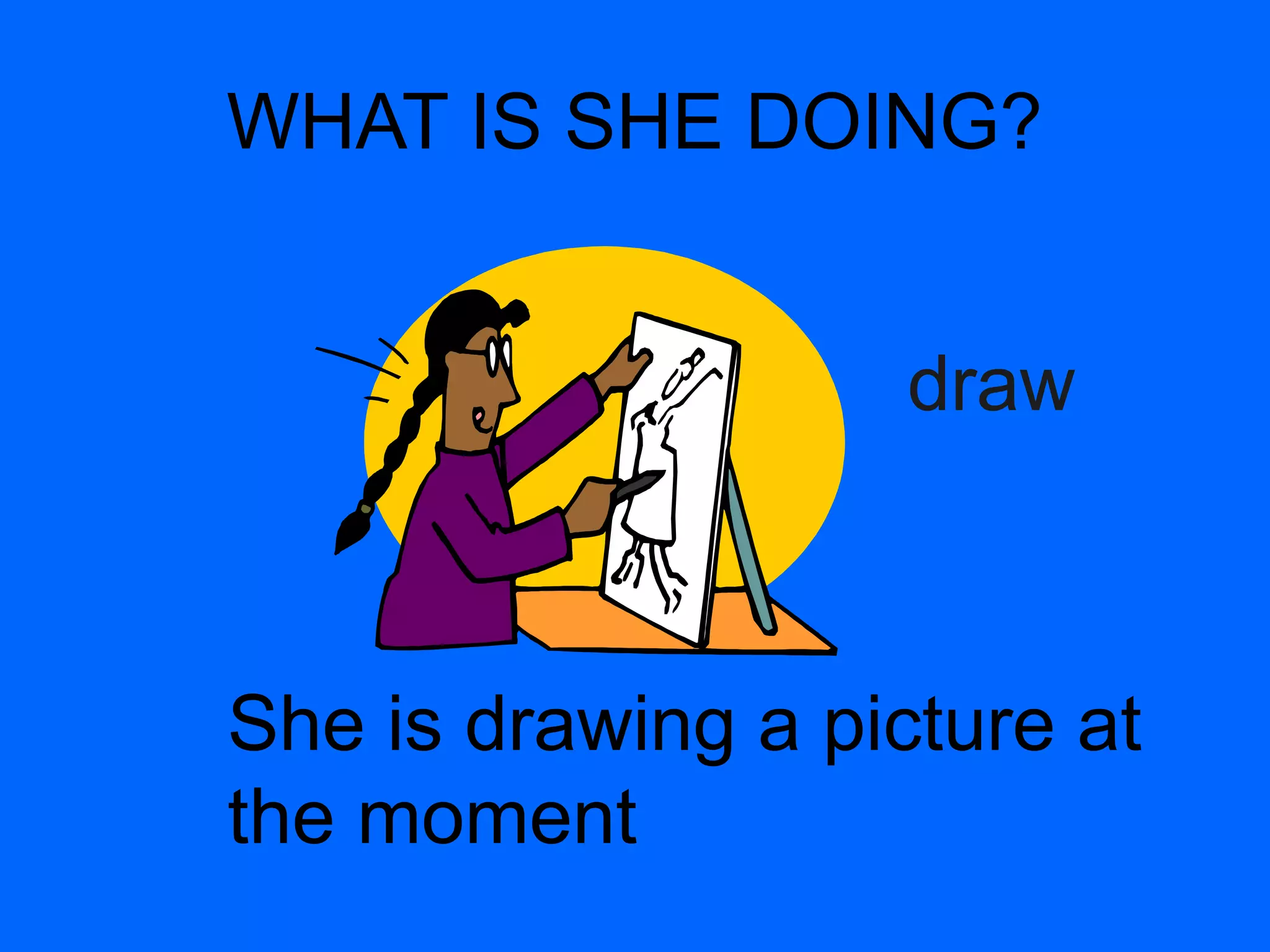
WHAT IS SHE DOING? 
draw 
She is drawing a picture at 
the moment
WHAT IS TWEETY 
DOING? 
IT’S FLYING
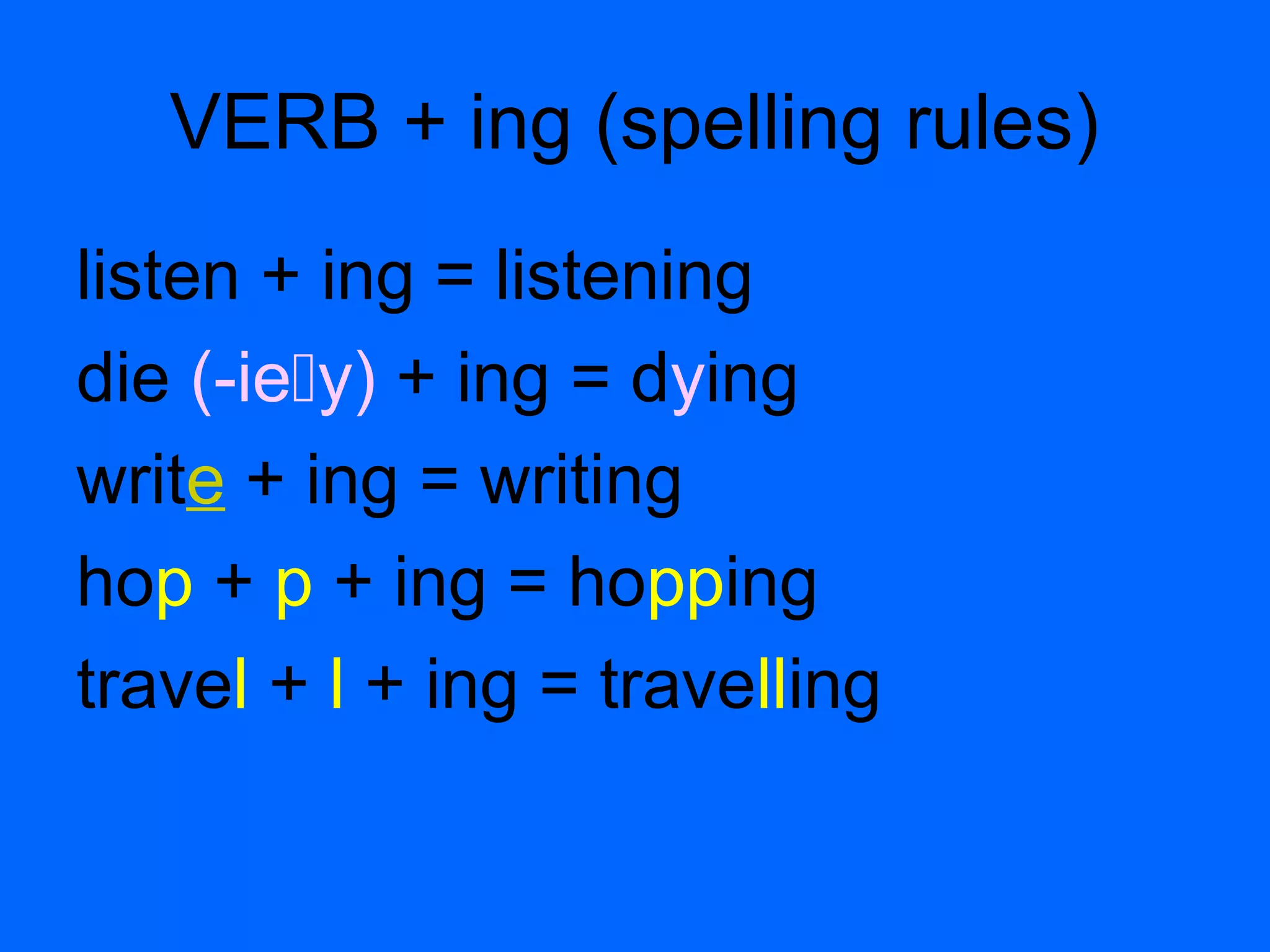
VERB + ing (spelling rules) 
listen + ing = listening 
die (-iey) + ing = dying 
write + ing = writing 
hop + p + ing = hopping 
travel + l + ing = travelling
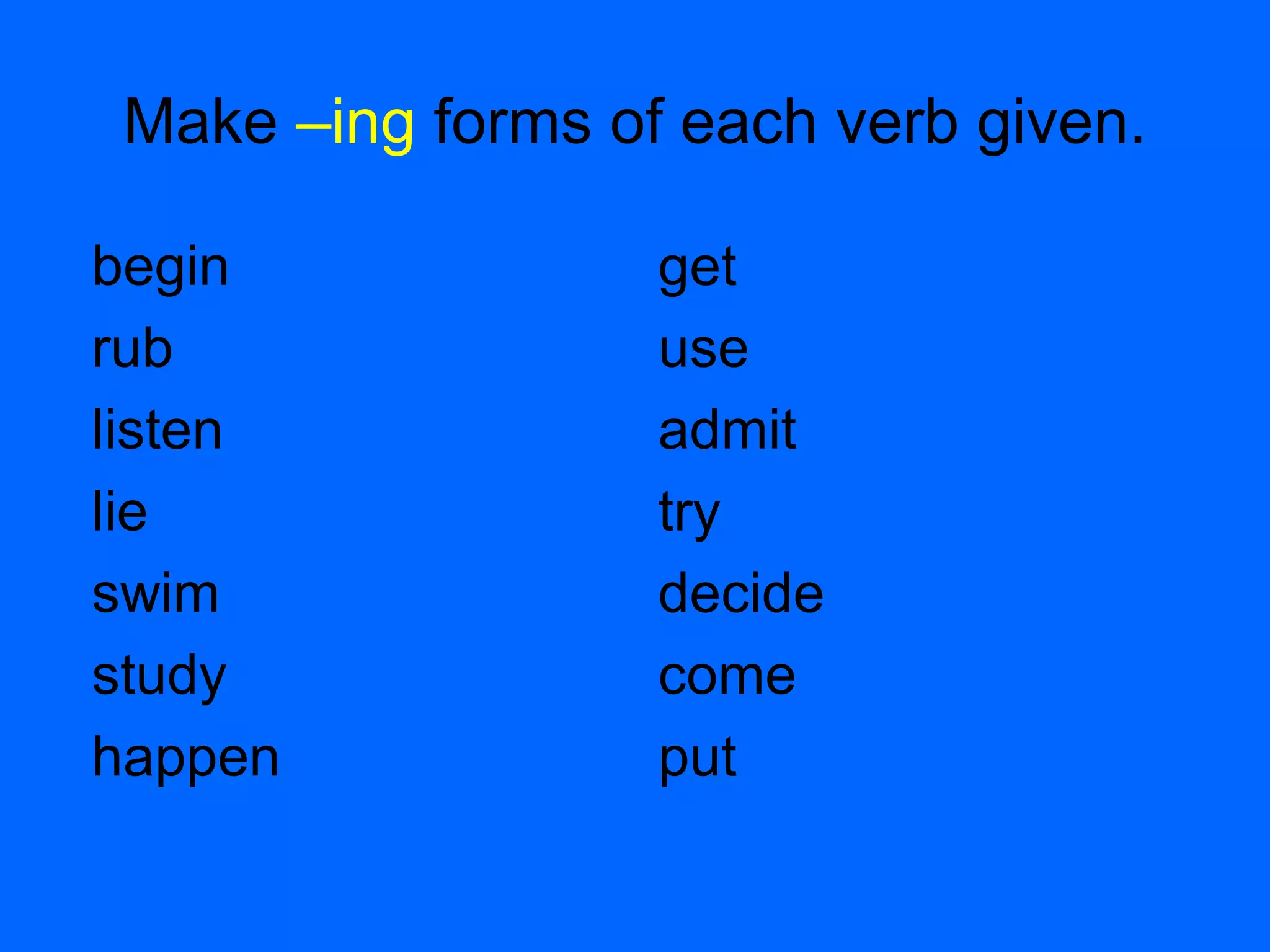
Make –ing forms of each verb given. 
begin 
get 
rub 
use 
listen 
admit 
lie 
try 
swim 
decide 
study 
come 
happen 
put
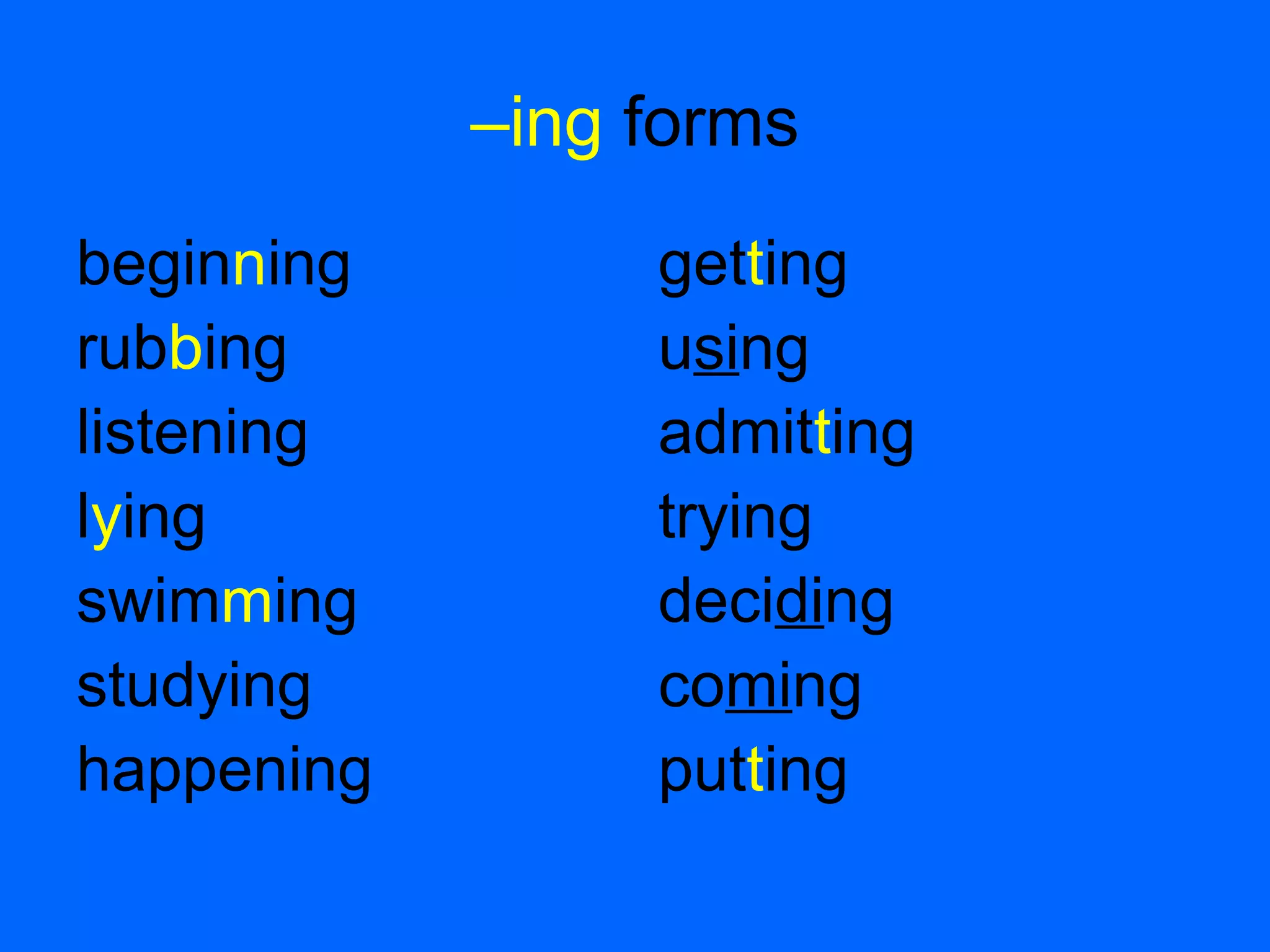
–ing forms 
beginning 
rubbing 
listening 
lying 
swimming 
studying 
happening 
getting 
using 
admitting 
trying 
deciding 
coming 
putting
The Present Continuous Tense 
is used for 
1. Actions which are happening at or 
around the moment of speaking. 
• Now I’m doing the washing up. 
• She is working very hard 
nowadays. 
2. Temporary situations. 
• I’m staying with a friend at the 
moment.
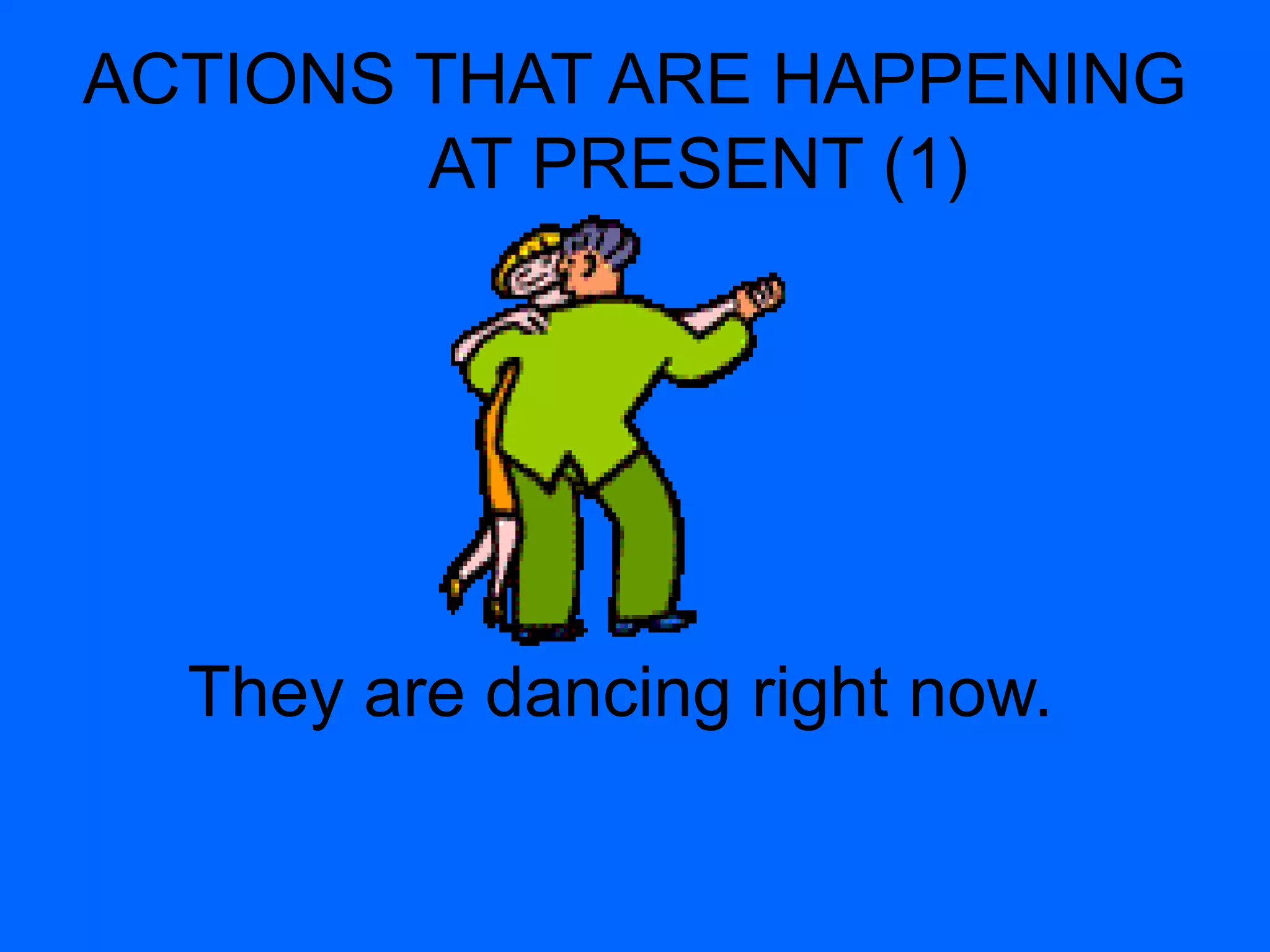
ACTIONS THAT ARE HAPPENING 
AT PRESENT (1) 
They are dancing right now.
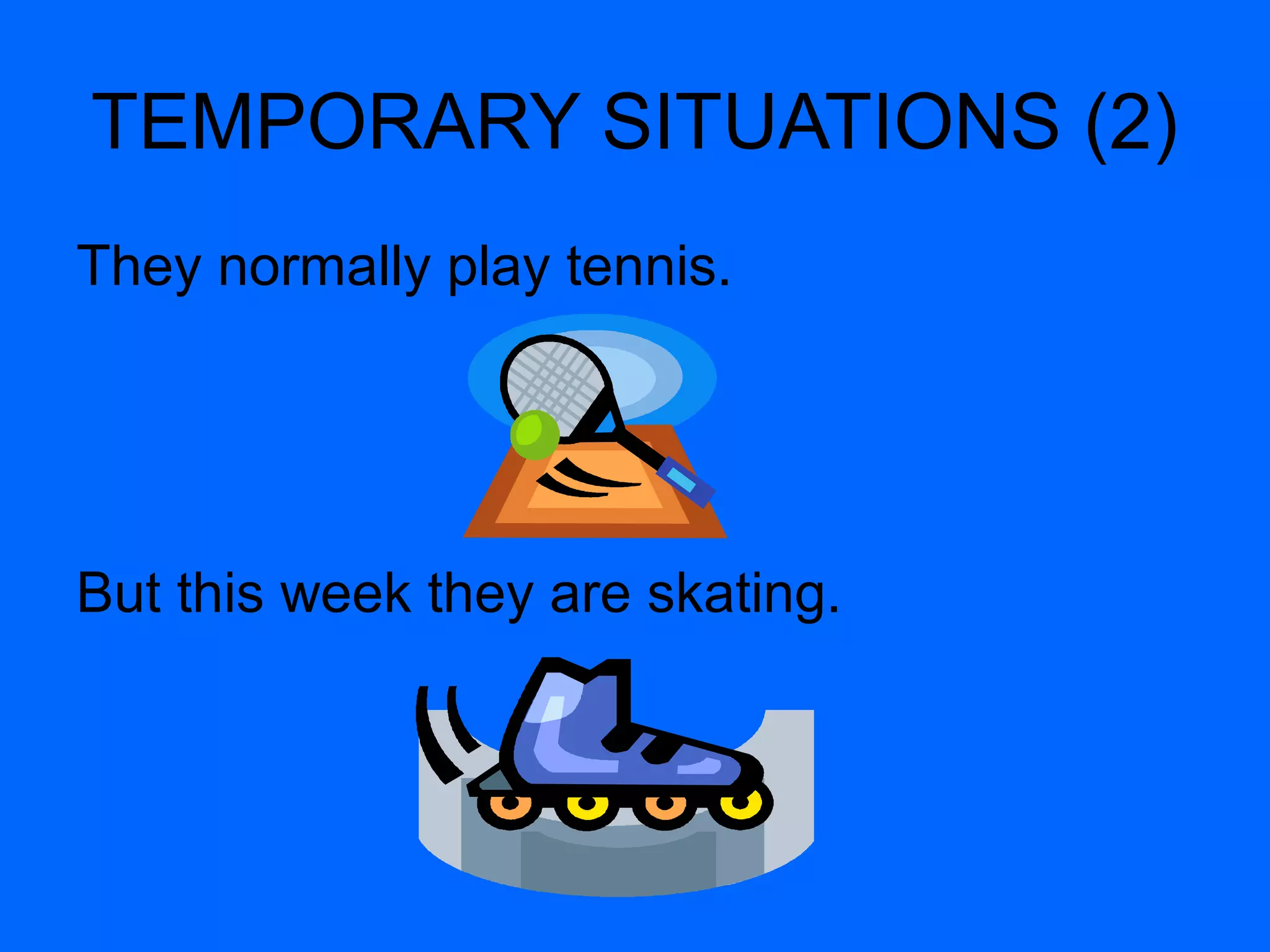
TEMPORARY SITUATIONS (2) 
They normally play tennis. 
But this week they are skating.
The Present Continuous Tense 
is used for 
3. Changing or developing situations. 
• His English is getting better. 
• It’s getting colder. 
4. Fixed arrangements in the near 
future. 
• They are getting married next week.
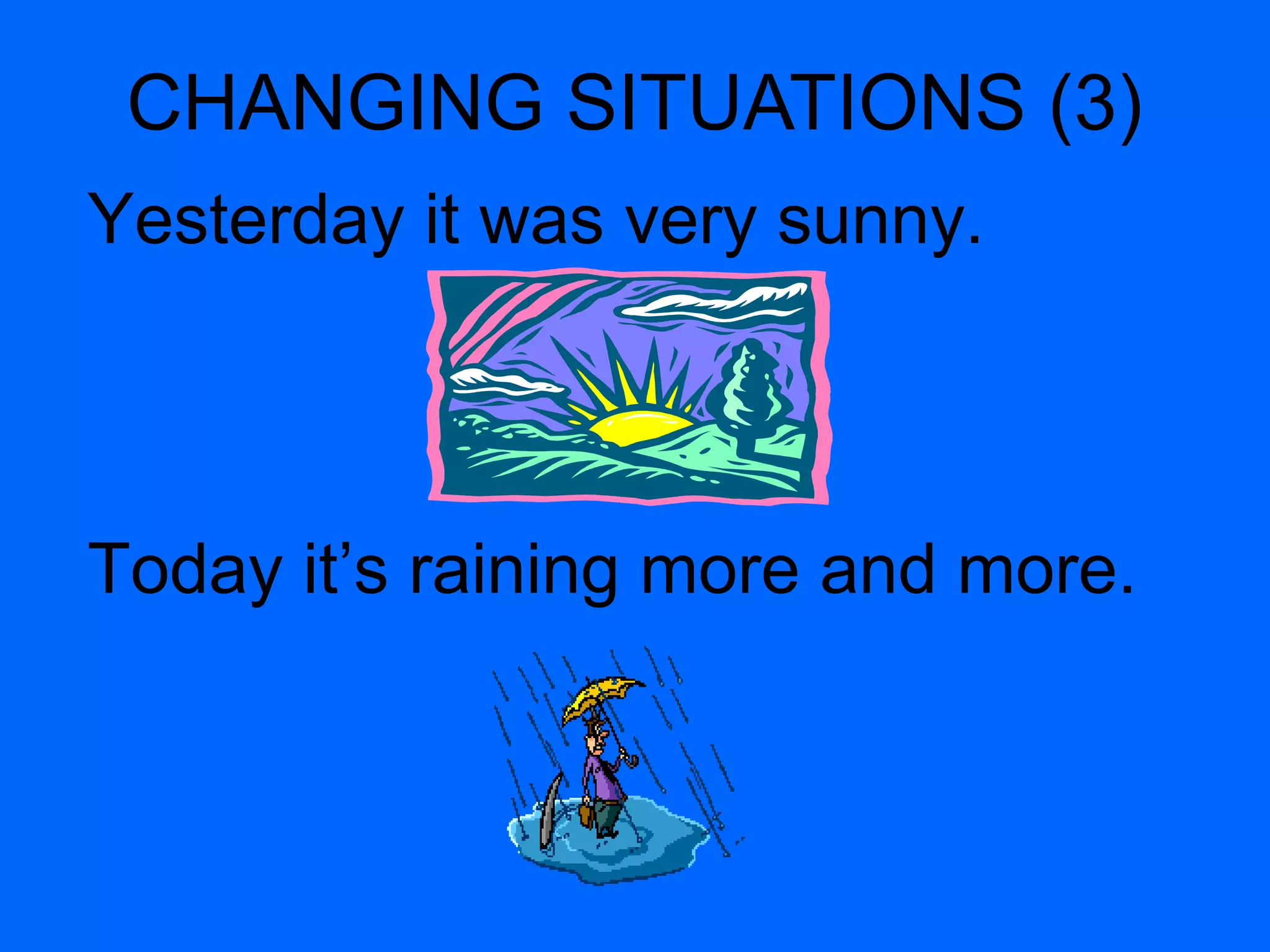
CHANGING SITUATIONS (3) 
Yesterday it was very sunny. 
Today it’s raining more and more.
FUTURE ARRANGEMENTS (4) 
They are celebrating a party next weekend.
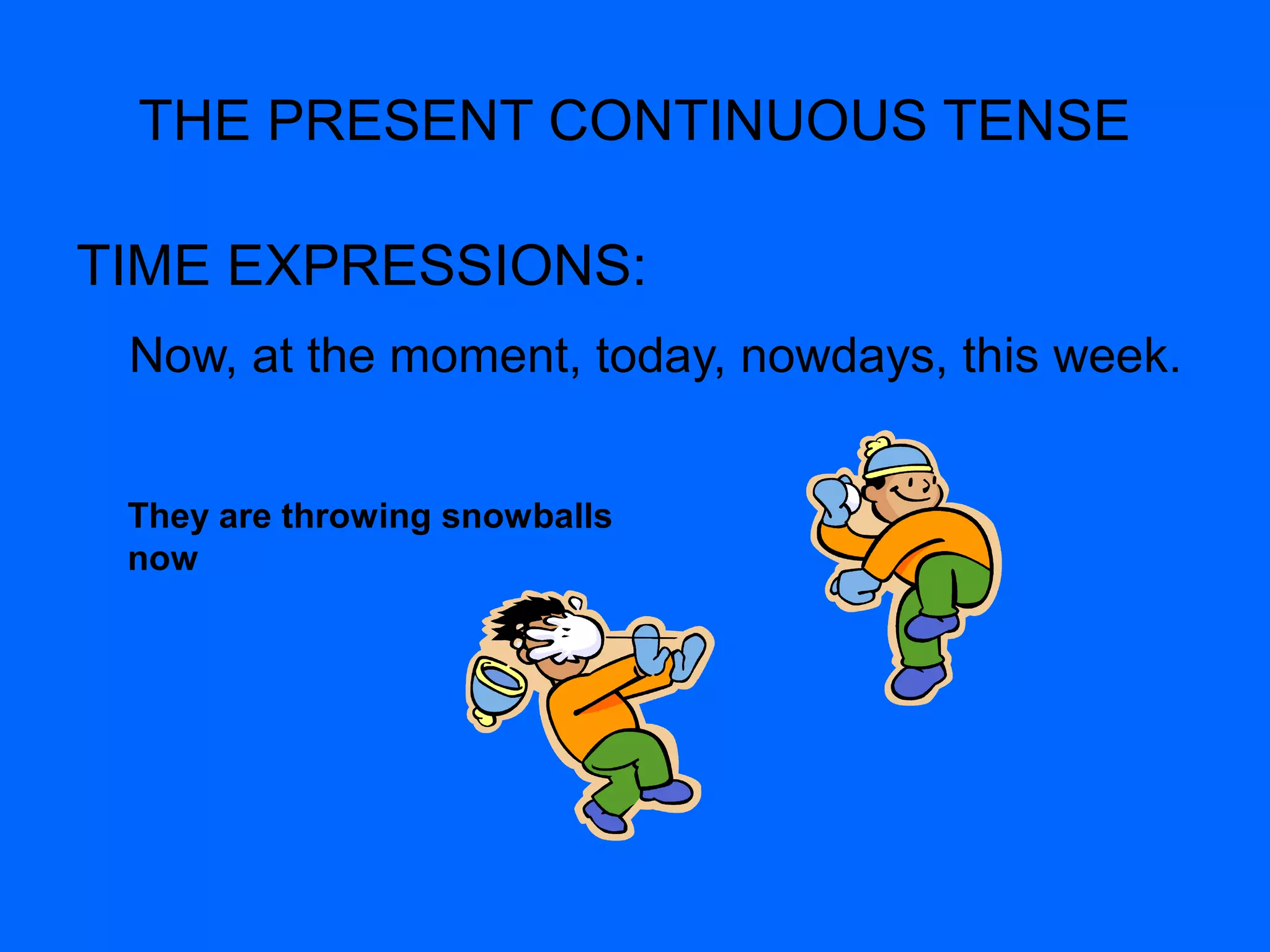
THE PRESENT CONTINUOUS TENSE 
TIME EXPRESSIONS: 
Now, at the moment, today, nowdays, this week. 
They are throwing snowballs 
now
Now, 
Do the exercise called “ Present Continuous 
VS. Simple Present Practice” 
www.teacherluisvega.com 
Beg. Grammar

Presentsimplevspresentcontinuous 110926111722-phpapp02

  • 1.
    THE PRESENT SIMPLETENSE (Affirmative) She watches TV after dinner every day.
  • 2.
    THE PRESENT SIMPLETENSE AFFIRMATIVE: WORK I YOU WORK SHE HE IT Lily WORKS WE YOU THEY WORK
  • 3.
    3rd person singular- spelling 1. In general, the third person singular is formed by adding an s to the base verb. work He works 2. Verbs ending in ss,x,ch,sh,o add “es” to the third person singular. dress She dresses fix He fixes watch She watches T.V. wash She washes go It goes ! 3. Verbs ending in consonant + y, changes the y to i and add “es” Consonant + y  i + es: cry – cries, fly – flies, terrify - terrifies
  • 4.
    What’s the 3rdperson singular? 1. push  pushes 2. sneeze  sneezes 3. glorify  glorifies 4. annoy  annoys 5 . kiss  kisses 6. deny  denies 7. marry  marries
  • 5.
    THE PRESENT SIMPLETENSE (Interrogative) DDOOEESS HHEE WWOORRKK AS A DOCTOR? YES, HE DOES
  • 6.
    THE PRESENT SIMPLETENSE INTERROGATIVE: WORK DO I YOU WORK? DOES SHE HE IT Damon WORK? DO WE YOU THEY WORK?
  • 7.
    THE PRESENT SIMPLETENSE (Negative) HE DOESN’T WORK AS A DOCTOR, HE WORKS AS A TAXI DRIVER
  • 8.
    THE PRESENT SIMPLETENSE NEGATIVE: WORK I YOU DO NOT DON’T WORK SHE HE IT DOES NOT DOESN’T WORK WE YOU THEY DO NOT DON’T WORK
  • 9.
    The Present SimpleTense is used to describe: 1. Facts which are always true – general truths, e.g. facts in science and geographical descriptions. Water freezes at 0 degrees. 0º
  • 10.
    The Present SimpleTense is used to describe: 2. Actions that happen regularly (Habitual actions). A frequency adverb is often used. They usually take a walk with their son
  • 11.
    The Present SimpleTense is used to describe: 3. Opinions, likes and feelings. She likes making snowmen
  • 12.
    THE PRESENT SIMPLETENSE TIME EXPRESSIONS: FREQUENCY ADVERBS: ALWAYS, OFTEN, GENERALLY, USUALLY, NORMALLY, SOMETIMES, NEVER. HE NORMALLY COOKS PASTA OTHER TIME EXPRESSIONS: EVERY DAY, EVERY MONTH, EVERY YEAR, ON SUNDAYS, AT THE WEEKENDS ETC. MUSICIANS SOMETIMES WORK ON SUNDAYS
  • 13.
    THE PRESENT CONTINUOUSTENSE play At the moment I’m playing football.
  • 14.
    THE PRESENT CONTINUOUSTENSE I am ‘m playing You We They are ‘re He She It The Teacher is ‘s AFFIRMATIVE: Play
  • 15.
    THE PRESENT CONTINUOUSTENSE Is he playing football at the moment? No, he isn’t. He is running.
  • 16.
    THE PRESENT CONTINUOUSTENSE INTERROGATIVE: Play NEGATIVE: Play Am I playing? Are you we they Is he she it I am not ‘m not playing You We They are not aren’t He She It is not isn’t
  • 17.
    WHAT IS SHEDOING? draw She is drawing a picture at the moment
  • 18.
    WHAT IS TWEETY DOING? IT’S FLYING
  • 19.
    VERB + ing(spelling rules) listen + ing = listening die (-iey) + ing = dying write + ing = writing hop + p + ing = hopping travel + l + ing = travelling
  • 20.
    Make –ing formsof each verb given. begin get rub use listen admit lie try swim decide study come happen put
  • 21.
    –ing forms beginning rubbing listening lying swimming studying happening getting using admitting trying deciding coming putting
  • 22.
    The Present ContinuousTense is used for 1. Actions which are happening at or around the moment of speaking. • Now I’m doing the washing up. • She is working very hard nowadays. 2. Temporary situations. • I’m staying with a friend at the moment.
  • 23.
    ACTIONS THAT AREHAPPENING AT PRESENT (1) They are dancing right now.
  • 24.
    TEMPORARY SITUATIONS (2) They normally play tennis. But this week they are skating.
  • 25.
    The Present ContinuousTense is used for 3. Changing or developing situations. • His English is getting better. • It’s getting colder. 4. Fixed arrangements in the near future. • They are getting married next week.
  • 26.
    CHANGING SITUATIONS (3) Yesterday it was very sunny. Today it’s raining more and more.
  • 27.
    FUTURE ARRANGEMENTS (4) They are celebrating a party next weekend.
  • 28.
    THE PRESENT CONTINUOUSTENSE TIME EXPRESSIONS: Now, at the moment, today, nowdays, this week. They are throwing snowballs now
  • 29.
    Now, Do theexercise called “ Present Continuous VS. Simple Present Practice” www.teacherluisvega.com Beg. Grammar