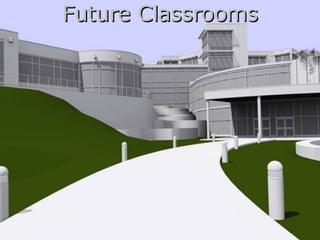
Future Classrooms
Vision Our vision includes: children as our country’s most  valuable resource Education as an institution with both  unlimited potential and unrealized  reward Today’s schools as unsafe
Organizational Changes No more small community control County or larger school districts State curricula designed to  engage students in learning  activities and problem solving Diversified school population  based on learning and teaching  styles
Physical Setup of School Smaller schools! Fingerprint security entry system Student tracking system Secure one-way windows and  doors Common spaces centrally located  surrounded by classrooms Master schedules designed to  accommodate curricula
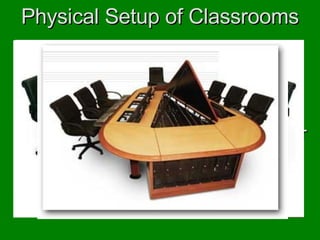
Physical Setup of Classrooms Interior walls constructed of high  impact abs bulletproof  interactive whiteboard material Central Teaching/instructional  area with surrounding clusters  for small group problem solving Conference tables with built in  work stations
Technologies Advanced interactive eco-friendly  white boards Wireless electricity & connectivity Personal input control devices  allowing instantaneous display  of work Storage/listening/communication  devices integrated in schools Exabit Technology (10 24 )
Additional Resources for Students Primary sources (real live people) Greater access to libraries and  museums Greater access to training in    work related trades Career counseling to help  students  realize self actualization
Types of Activities Centering and grounding activities  to start and end school day Collaborative learning group  projects Team teaching and learning with  blurring of boundaries between  content areas, school hours,  and student ability levels
Teachers’ and Students’ Roles Teachers involve students in  lesson development Teachers as learning facilitators Students intellectually and  emotionally invested in learning  activities
Class Size Number of learners is flexible  depending upon teaching style,  learning style, and educational  program Overall, class size and schools  are  smaller
B C B rittany  A ndrew  lack  arriero  & Presented By

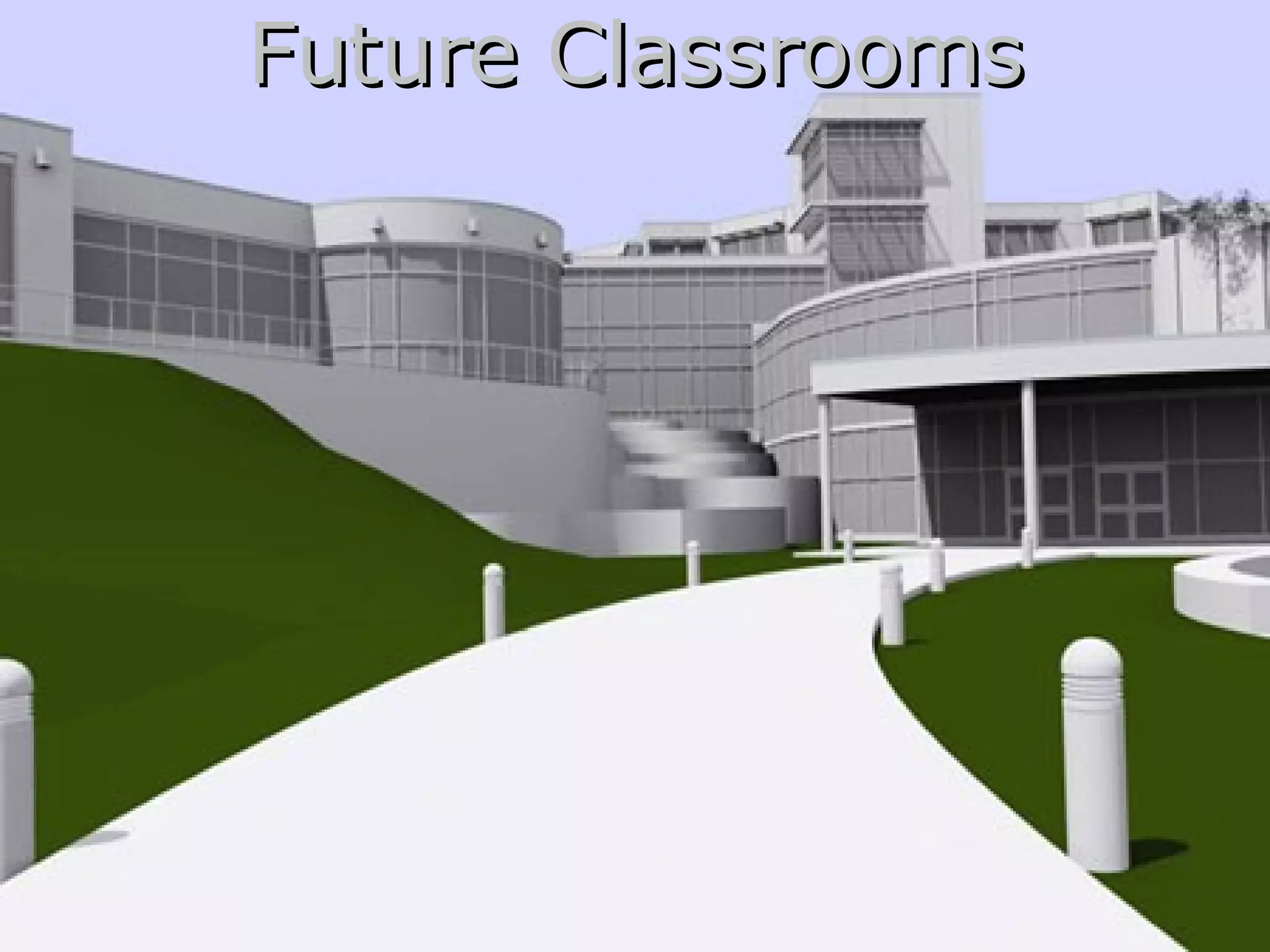
Future Classrooms

  • 1.
  • 2.
    Vision Our visionincludes: children as our country’s most valuable resource Education as an institution with both unlimited potential and unrealized reward Today’s schools as unsafe
  • 3.
    Organizational Changes Nomore small community control County or larger school districts State curricula designed to engage students in learning activities and problem solving Diversified school population based on learning and teaching styles
  • 4.
    Physical Setup ofSchool Smaller schools! Fingerprint security entry system Student tracking system Secure one-way windows and doors Common spaces centrally located surrounded by classrooms Master schedules designed to accommodate curricula
  • 5.
    Physical Setup ofClassrooms Interior walls constructed of high impact abs bulletproof interactive whiteboard material Central Teaching/instructional area with surrounding clusters for small group problem solving Conference tables with built in work stations
  • 6.
    Technologies Advanced interactiveeco-friendly white boards Wireless electricity & connectivity Personal input control devices allowing instantaneous display of work Storage/listening/communication devices integrated in schools Exabit Technology (10 24 )
  • 7.
    Additional Resources forStudents Primary sources (real live people) Greater access to libraries and museums Greater access to training in work related trades Career counseling to help students realize self actualization
  • 8.
    Types of ActivitiesCentering and grounding activities to start and end school day Collaborative learning group projects Team teaching and learning with blurring of boundaries between content areas, school hours, and student ability levels
  • 9.
    Teachers’ and Students’Roles Teachers involve students in lesson development Teachers as learning facilitators Students intellectually and emotionally invested in learning activities
  • 10.
    Class Size Numberof learners is flexible depending upon teaching style, learning style, and educational program Overall, class size and schools are smaller
  • 11.
    B C Brittany A ndrew lack arriero & Presented By