Have a funday
at work J
Tathagat Varma
VP, Strategic Process Innovations and HR,
[24]7 Innovation Labs
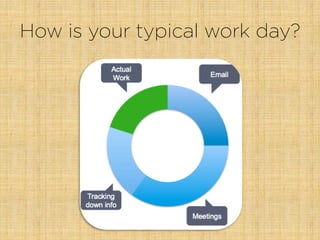
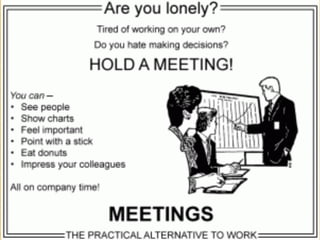
How is your typical work day?
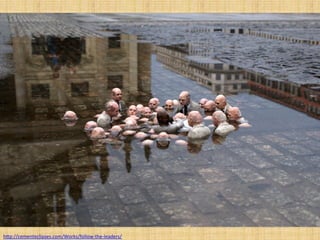
h"p://cementeclipses.com/Works/follow-­‐the-­‐leaders/	
  	
  
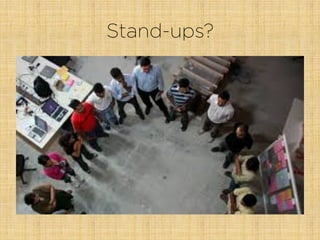
Stand-ups?
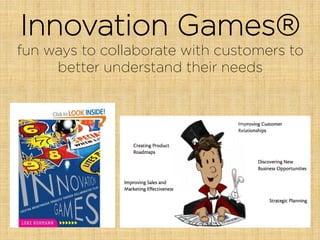
Innovation Games®
fun ways to collaborate with customers to
better understand their needs
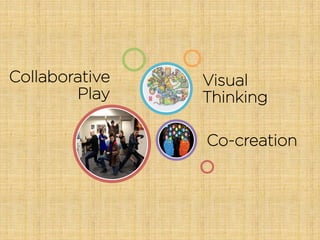
Collaborative
Play
Co-creation
Visual
Thinking
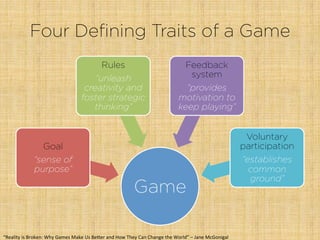
Four Defining Traits of a Game
Game
Goal
“sense of
purpose”
Rules
“unleash
creativity and
foster strategic
thinking”
Feedback
system
“provides
motivation to
keep playing”
Voluntary
participation
“establishes
common
ground”
“Reality	
  is	
  Broken:	
  Why	
  Games	
  Make	
  Us	
  Be"er	
  and	
  How	
  They	
  Can	
  Change	
  the	
  World”	
  –	
  Jane	
  McGonigal	
  
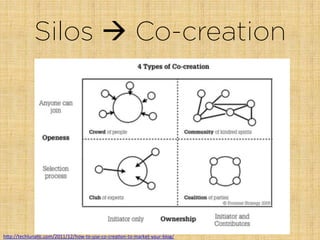
Silos à Co-creation
h"p://techlunaHc.com/2011/12/how-­‐to-­‐use-­‐co-­‐creaHon-­‐to-­‐market-­‐your-­‐blog/	
  	
  
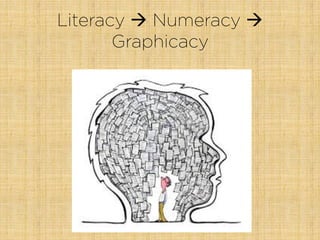
Literacy à Numeracy à
Graphicacy
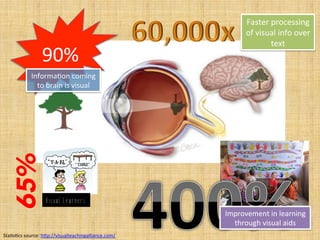
65%
Visual Learners
Faster	
  processing	
  
of	
  visual	
  info	
  over	
  
text	
  
90%	
  
InformaHon	
  coming	
  
to	
  brain	
  is	
  visual	
  
StaHsHcs	
  source:	
  h"p://visualteachingalliance.com/	


Improvement	
  in	
  learning	
  
through	
  visual	
  aids	
  
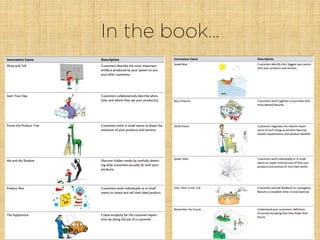
In the book…
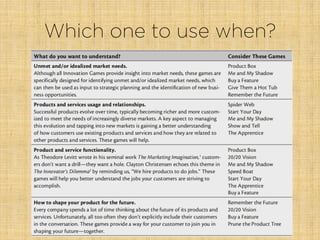
Which one to use when?
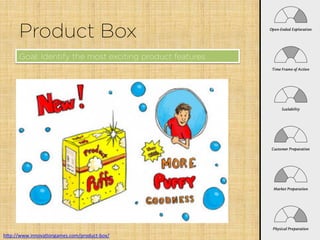
Product Box
h"p://www.innovaHongames.com/product-­‐box/	
  	
  
Goal: Identify the most exciting product features
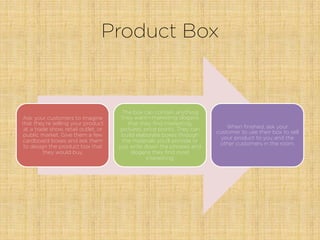
Product Box
Ask your customers to imagine
that they’re selling your product
at a trade show, retail outlet, or
public market. Give them a few
cardboard boxes and ask them
to design the product box that
they would buy.
The box can contain anything
they want—marketing slogans
that they find interesting,
pictures, price points. They can
build elaborate boxes through
the materials you’ll provide or
just write down the phrases and
slogans they find most
interesting.
When finished, ask your
customer to use their box to sell
your product to you and the
other customers in the room.
Show and Tell
Goal: Identify the most important artifacts created by your
product
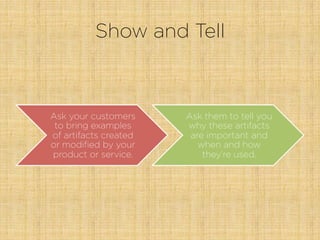
Show and Tell
Ask your customers
to bring examples
of artifacts created
or modified by your
product or service.
Ask them to tell you
why these artifacts
are important and
when and how
they’re used.
Bodystorming
•  Goal: To help designers derive new ideas and
unexpected ideas by physically experiencing a
situation.
•  Bodystorming is a unique method that spans
empathy work, ideation, and prototyping. 
•  Bodystorming is technique of physically
experiencing a situation to derive new ideas. It
requires setting up an experience - complete with
necessary artifacts and people - and physically
“testing” it.
•  Bodystorming can also include physically
changing your space during ideation. What you're
focused on here is the way you interact with your
environment and the choices you make while in it.
Why Bodystorm?
•  We bodystorm to generate unexpected ideas that
might not be realized by talking or sketching.
•  We bodystorm to help create empathy in the
context of possible solutions for prototyping. If
you're stuck in your ideation phase, you can
bodystorm in the context of a half-baked concept
to get you thinking about alternative ideas.
•  Designing a coffee bar? Set up a few foam cubes
and "order" a coffee! Bodystorming is also
extremely useful in the context of prototyping
concepts. Have a couple concepts you're testing?
Bodystorm with both of them to help you
evaluate them. Developing any sort of physical
environment demands at least a few bodystorms…
How to Bodystorm?
•  Let’s do it J …
Wrap-up
Make meetings optional
Make them short
Make people get up
Visualize your ideas
Play games
Have funday at work J
References
•  https://dschool.stanford.edu/groups/
k12/wiki/48c54/Bodystorming.html
•  https://www.wickedproblems.com/
6_bodystorming.php
•  http://dux.typepad.com/dux/2011/04/
uxd-method-11-of-100-
bodystorming.html
•  https://www.atlassian.com/time-
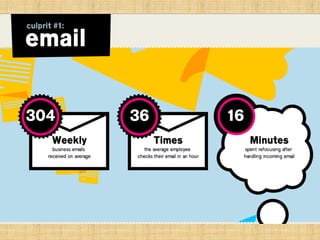
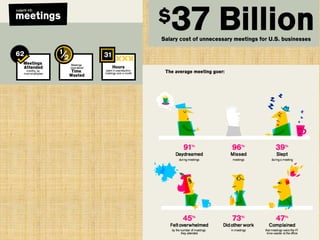
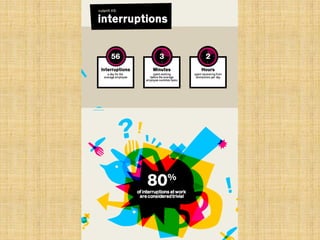
wasting-at-work-infographic

Have a funday at work

  • 1.
    Have a funday atwork J Tathagat Varma VP, Strategic Process Innovations and HR, [24]7 Innovation Labs
  • 2.
    How is yourtypical work day?
  • 7.
  • 9.
  • 11.
    Innovation Games® fun waysto collaborate with customers to better understand their needs
  • 12.
  • 13.
    Four Defining Traitsof a Game Game Goal “sense of purpose” Rules “unleash creativity and foster strategic thinking” Feedback system “provides motivation to keep playing” Voluntary participation “establishes common ground” “Reality  is  Broken:  Why  Games  Make  Us  Be"er  and  How  They  Can  Change  the  World”  –  Jane  McGonigal  
  • 14.
  • 15.
    Literacy à Numeracyà Graphicacy
  • 16.
    65% Visual Learners Faster  processing   of  visual  info  over   text   90%   InformaHon  coming   to  brain  is  visual   StaHsHcs  source:  h"p://visualteachingalliance.com/       Improvement  in  learning   through  visual  aids  
  • 17.
  • 18.
    Which one touse when?
  • 20.
    Product Box h"p://www.innovaHongames.com/product-­‐box/     Goal: Identify the most exciting product features
  • 21.
    Product Box Ask yourcustomers to imagine that they’re selling your product at a trade show, retail outlet, or public market. Give them a few cardboard boxes and ask them to design the product box that they would buy. The box can contain anything they want—marketing slogans that they find interesting, pictures, price points. They can build elaborate boxes through the materials you’ll provide or just write down the phrases and slogans they find most interesting. When finished, ask your customer to use their box to sell your product to you and the other customers in the room.
  • 22.
    Show and Tell Goal:Identify the most important artifacts created by your product
  • 23.
    Show and Tell Askyour customers to bring examples of artifacts created or modified by your product or service. Ask them to tell you why these artifacts are important and when and how they’re used.
  • 24.
    Bodystorming •  Goal: Tohelp designers derive new ideas and unexpected ideas by physically experiencing a situation. •  Bodystorming is a unique method that spans empathy work, ideation, and prototyping.  •  Bodystorming is technique of physically experiencing a situation to derive new ideas. It requires setting up an experience - complete with necessary artifacts and people - and physically “testing” it. •  Bodystorming can also include physically changing your space during ideation. What you're focused on here is the way you interact with your environment and the choices you make while in it.
  • 25.
    Why Bodystorm? •  Webodystorm to generate unexpected ideas that might not be realized by talking or sketching. •  We bodystorm to help create empathy in the context of possible solutions for prototyping. If you're stuck in your ideation phase, you can bodystorm in the context of a half-baked concept to get you thinking about alternative ideas. •  Designing a coffee bar? Set up a few foam cubes and "order" a coffee! Bodystorming is also extremely useful in the context of prototyping concepts. Have a couple concepts you're testing? Bodystorm with both of them to help you evaluate them. Developing any sort of physical environment demands at least a few bodystorms…
  • 26.
    How to Bodystorm? • Let’s do it J …
  • 27.
    Wrap-up Make meetings optional Makethem short Make people get up Visualize your ideas Play games Have funday at work J
  • 28.
    References •  https://dschool.stanford.edu/groups/ k12/wiki/48c54/Bodystorming.html •  https://www.wickedproblems.com/ 6_bodystorming.php • http://dux.typepad.com/dux/2011/04/ uxd-method-11-of-100- bodystorming.html •  https://www.atlassian.com/time- wasting-at-work-infographic