MANAGING FAST-EVOLVING
GENAI TECHNOLOGY
ADOPTIONS
Dr. TathagatVarma
“Cognitive Chasms:A GroundedTheory of GenAI Adoption”
PhD, Indian School of Business (ISB), Hyderabad
DISCLAIMER
THESE ARE MY PERSONAL VIEWS
BASED ON MY DOCTORAL
RESEARCH.
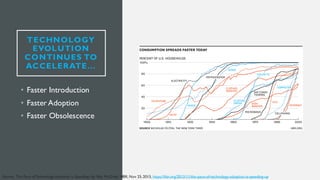
TECHNOLOGY
EVOLUTION
CONTINUES TO
ACCELERATE…
• Faster Introduction
• Faster Adoption
• Faster Obsolescence
Source: The Pace ofTechnology Adoption is Speeding Up: Rita McGrath, HBR, Nov 25, 2013, https://hbr.org/2013/11/the-pace-of-technology-adoption-is-speeding-up
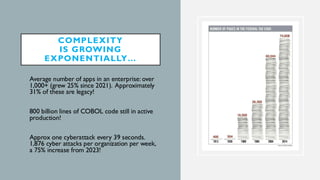
COMPLEXITY
IS GROWING
EXPONENTIALLY…
• Average number of apps in an enterprise: over
1,000+ (grew 25% since 2021). Approximately
31% of these are legacy!
• 800 billion lines of COBOL code still in active
production!
• Approx one cyberattack every 39 seconds.
1,876 cyber attacks per organization per week,
a 75% increase from 2023!
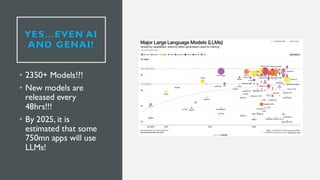
YES…EVEN AI
AND GENAI!
• 2350+ Models!?!
• New models are
released every
48hrs!!!
• By 2025, it is
estimated that some
750mn apps will use
LLMs!
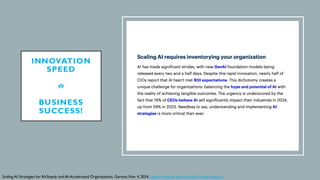
INNOVATION
SPEED
⇏
BUSINESS
SUCCESS!
Scaling AI: Strategies for AI-Steady and AI-Accelerated Organizations, Gartner, Nov 4, 2024, https://www.gartner.com/en/articles/scaling-ai
HARD REALITIES!!!
• IT failure rates continue to be very
high ~70-85%, including Digital
Transformation and now AI too!
• 25% of mobile apps are abandoned
after just one usage, 71% are
uninstalled after 3 months, and
99.5% of Consumer apps fail!
• AI projects failure rates: 80%
(HBR), 80% RAND), 85%(Gartner),
90% (VentureBeat)
• AI Startup Failure Rates: 85% will
be out of business in 3 years (YC);
92% (AI4SP) – 38% had no market
need and 54% operational
challenges
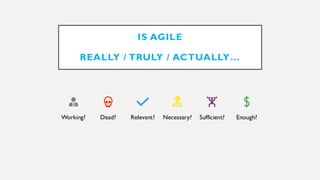
IS AGILE
REALLY / TRULY / ACTUALLY…
Working? Dead? Relevant? Necessary? Sufficient? Enough?
LET’S
UNDERSTAND
THE BASICS
FIRST…
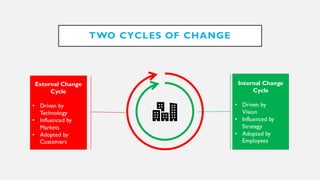
TWO CYCLES OF CHANGE
External Change
Cycle
• Driven by
Technology
• Influenced by
Markets
• Adopted by
Customers
Internal Change
Cycle
• Driven by
Vision
• Influenced by
Strategy
• Adopted by
Employees
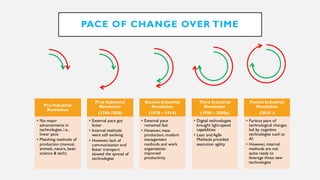
PACE OF CHANGE OVER TIME
Pre-Industrial
Revolution
• No major
advancements in
technologies, i.e.,
linear pace
• Matching methods of
production (manual,
animals, nature, basic
science & tech)
First Industrial
Revolution
(1760-1830)
• External pace got
faster
• Internal methods
were still evolving
• However, lack of
communication and
faster transport
slowed the spread of
technologies
Second Industrial
Revolution
(1870 – 1914)
• External pace
remained fast
• However, mass
production,modern
management
methods and work
organization
improved
productivity
Third Industrial
Revolution
(1950 – 2000s)
• Digital technologies
brought light-speed
capabilities
• Lean and Agile
Methods provided
execution agility
Fourth Industrial
Revolution
(2010 -)
• Furious pace of
technological changes
led by cognitive
technologies such as
AI
• However, internal
methods are not
quite ready to
leverage these new
technologies
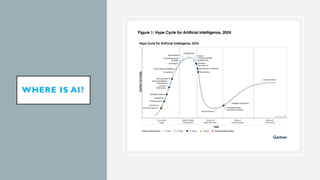
WHERE IS AI?
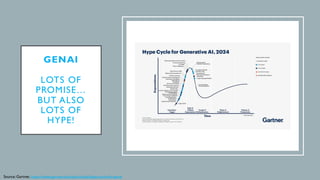
GENAI
LOTS OF
PROMISE…
BUT ALSO
LOTS OF
HYPE!
Source: Gartner, https://www.gartner.com/en/articles/hype-cycle-for-genai
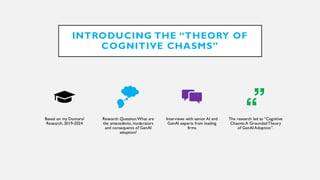
INTRODUCING THE “THEORY OF
COGNITIVE CHASMS”
Based on my Doctoral
Research, 2019-2024
Research Question:What are
the antecedents, moderators
and consequents of GenAI
adoption?
Interviews with senior AI and
GenAI experts from leading
firms
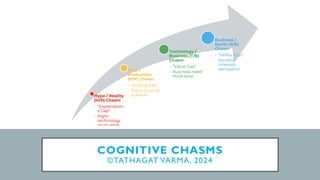
The research led to “Cognitive
Chasms:A GroundedTheory
of GenAI Adoption”.
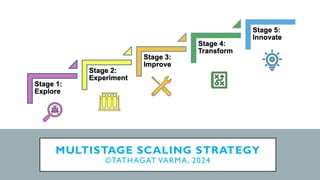
MULTISTAGE SCALING STRATEGY
©TATHAGAT VARMA, 2024
COGNITIVE CHASMS
©TATHAGAT VARMA, 2024
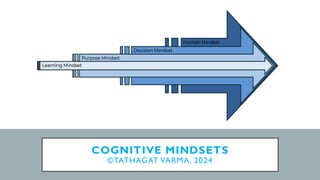
COGNITIVE MINDSETS
©TATHAGAT VARMA, 2024
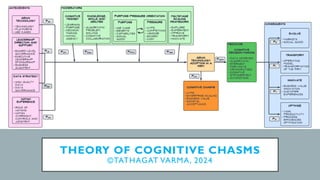
THEORY OF COGNITIVE CHASMS
©TATHAGAT VARMA, 2024
Theory
- of -
Cognitive
Chasms©
Coming in
2025…
Follow updates at: https://www.linkedin.com/company/cognitivechasm
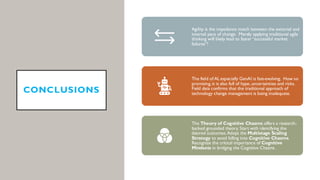
CONCLUSIONS
Agility is the impedance match between the external and
internal pace of change. Merely applying traditional agile
thinking will likely lead to faster“successful market
failures”!
The field of AI, especially GenAI is fast-evolving. How so
promising,it is also full of hype,uncertainties and risks.
Field data confirms that the traditional approach of
technology change management is being inadequate.
The Theory of Cognitive Chasms offers a research-
backed grounded theory. Start with identifying the
desired outcomes.Adopt the Multistage Scaling
Strategy to avoid falling into Cognitive Chasms.
Recognize the critical importance of Cognitive
Mindsets in bridging the Cognitive Chasms.