FUNDAMENTALS OF THE
JUMPS
COMMON EVENT GROUP PRINCIPLES
Chandrakanta Barik
NS NIS Yoga Coach
OSD Kalinga Stadium Cum Yoga Coach
Mob: 7008606143
Email:chandrakantayoga@yahoo.co.in
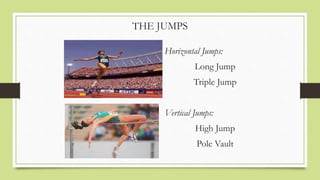
THE JUMPS
Horizontal Jumps:
Long Jump
Triple Jump
Vertical Jumps:
High Jump
Pole Vault
BASIC BIOMECANICS
The length (height) of a
jump depends on:
a. Take-off speed
b. Take-off angle
c. Height of CM at take off
d. Landing / Clearance efficiency of
(The Key Factor is to achieve high
take-off speed)
Basic Jumping Principles
• Apply forces in the direction of the jump
• Freeze take off position
• Use appropriate swing of free limbs
• Use appropriate muscle actions
• Control rotations in the air
• Set up an efficient landing
The Fundamental Phases
of Jumping
1. The approach run
Entry
Acceleration phase
Preparation for take-off
2. The take-off
Foot plant
Muscle action
Free limb movements
3. The flight phase
Initial wait – holding the take-off position
Control of rotations
Clearance / preparation for landing
4. The landing
Safety
Efficiency
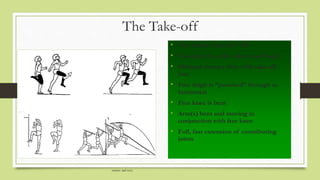
The Take-off
• The athlete must be “tall’
• Foot plant is active (down and back)
• Minimal contact time with take-off
foot
• Free thigh is “punched” through to
horizontal
• Free knee is bent
• Arm(s) bent and moving in
conjunction with free knee
• Full, fast extension of contributing
joints
source: iaaf-cecs
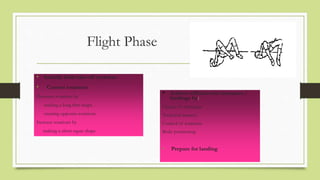
Flight Phase
• Initially hold take-off position
• Control rotations
Decrease rotations by
- making a long thin shape
- creating opposite rotations
Increase rotations by
- making a short squat shape
• Achieve efficient bar clearance /
landings by:
Choice of technique
Technical mastery
Control of rotations
Body positioning
• Prepare for landing
Control of Rotations
Long thin shape – slow rotation
Short squat shape – high rotation
Arm & Legs rotate forward – Torso rotates back
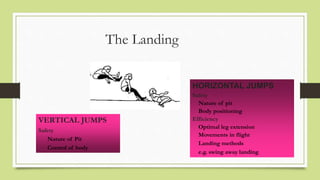
The Landing
VERTICAL JUMPS
Safety
Nature of Pit
Control of body
HORIZONTAL JUMPS
Safety
Nature of pit
Body positioning
Efficiency
Optimal leg extension
Movements in flight
Landing methods
e.g. swing away landing
THANK YOU

Fundamental-of-Jumps.ppt

  • 1.
    FUNDAMENTALS OF THE JUMPS COMMONEVENT GROUP PRINCIPLES Chandrakanta Barik NS NIS Yoga Coach OSD Kalinga Stadium Cum Yoga Coach Mob: 7008606143 Email:chandrakantayoga@yahoo.co.in
  • 2.
    THE JUMPS Horizontal Jumps: LongJump Triple Jump Vertical Jumps: High Jump Pole Vault
  • 3.
    BASIC BIOMECANICS The length(height) of a jump depends on: a. Take-off speed b. Take-off angle c. Height of CM at take off d. Landing / Clearance efficiency of (The Key Factor is to achieve high take-off speed)
  • 4.
    Basic Jumping Principles •Apply forces in the direction of the jump • Freeze take off position • Use appropriate swing of free limbs • Use appropriate muscle actions • Control rotations in the air • Set up an efficient landing
  • 5.
    The Fundamental Phases ofJumping 1. The approach run Entry Acceleration phase Preparation for take-off 2. The take-off Foot plant Muscle action Free limb movements 3. The flight phase Initial wait – holding the take-off position Control of rotations Clearance / preparation for landing 4. The landing Safety Efficiency
  • 6.
    The Take-off • Theathlete must be “tall’ • Foot plant is active (down and back) • Minimal contact time with take-off foot • Free thigh is “punched” through to horizontal • Free knee is bent • Arm(s) bent and moving in conjunction with free knee • Full, fast extension of contributing joints source: iaaf-cecs
  • 7.
    Flight Phase • Initiallyhold take-off position • Control rotations Decrease rotations by - making a long thin shape - creating opposite rotations Increase rotations by - making a short squat shape • Achieve efficient bar clearance / landings by: Choice of technique Technical mastery Control of rotations Body positioning • Prepare for landing
  • 8.
    Control of Rotations Longthin shape – slow rotation Short squat shape – high rotation Arm & Legs rotate forward – Torso rotates back
  • 9.
    The Landing VERTICAL JUMPS Safety Natureof Pit Control of body HORIZONTAL JUMPS Safety Nature of pit Body positioning Efficiency Optimal leg extension Movements in flight Landing methods e.g. swing away landing
  • 10.