TRACK & FIELD
Hammer Throw
Introduction
• A hammer is a tool consisting of a
weighted "head" fixed to a long handle
that is swung to deliver an impact to a
small area of an object.
History
• The hammer the hammer throw is one of the
oldest of Olympic Games competitions, first
included at the 1900 games in Paris, France
(the second Olympiad of the modern era). Its
history since the late 1960s and legacy prior
to inclusion in the Olympics have been
dominated by European and Eastern
European influence, which has affected
interest in the event in other parts of the
world.
Safety suggestions
• During the performance, all the retrievers and
officials are ordered not to turn their back to the
area of playing. This is because in the worst case,
if any practitioner loses his/her balance, some
hazard may happen.
• Soon after bringing the implement to the
athletic area, the retrievers are advised to walk
backward or on the side of their head.
• Officials and other judges should always stand at
the back side of the net.
• Always inspect the ground before
practicing because maximum times during
rainy season or in winter season, the
ground becomes wet and slippery.
• The ground should be clear from any
foreign objects.
• Before throwing, make sure that no one is
present on the landing area.
Technique
1. Grip
2. Initial stance
3. Preliminary swing
4. The turns
5. The delivery(release)
6. The recovery
The grip
• The hammer is placed between the first and
second ridge of the left hand. The fingers of
the left hand curl in and the right hand is
placed over the left hand.
Initial stance
• The thrower will set up with both feet flat,
shoulder width apart and knees bent in a
quarter squat position. The bodyweight
should be equally distributed. The right
hand thrower grips the hammer handle
with the left hand.
Preliminary swings
• The preliminary swings are used to
commence momentum of the throw. The
athlete, in general, uses two swings, but
more or less can be used. The swing starts
from behind the right side of the body,
taking the hammer forward away from the
body and over the head.
The Turns
-Single support phase
• Single support on outer edge of the left
foot.
• Left knee bend
• Hips in opposition to hammer
• Arms should be extended
• Hammer high point over head
- Double support phase
• Right foot lands actively on ball of the foot
• Left foot contact on ball of the foot
• Feet shoulder feet apart
• Both knee clearly bend
• Hammer still over the head behind the body
• Arms extended
The Delivery
• Right foot turns on ball of the foot in direction
of turn
• Left foot on entire sole
• Left side of body blocked
• Trunk lean back slightly
• Arms extended
• Complete body extension (feet, knees, hip,
trunk)
• Arms pull forward and upward
The Recovery
• After releasing the hammer, the thrower
concentrate to staying in the ring and not to
fouling the throw.
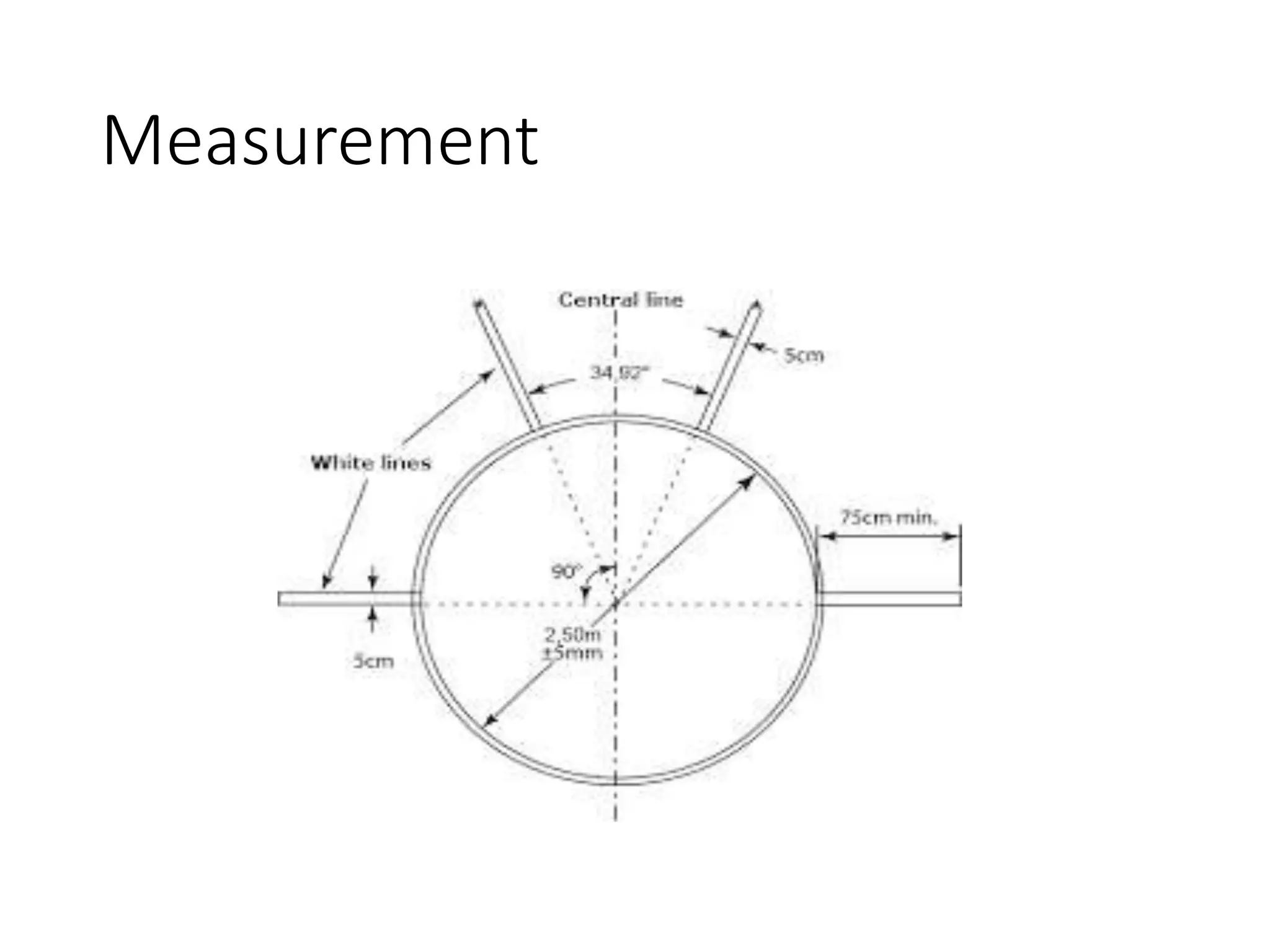
Measurement
• The men's hammer weighs 16 pounds
(7.26 kg) and the women's hammer
weighs 8.82 lb (4 kg)
• The hammer is thrown from a circle with
a 2.135-meter diameter (7 feet).
Hammer throw

Hammer throw

  • 1.
  • 3.
    Introduction • A hammeris a tool consisting of a weighted "head" fixed to a long handle that is swung to deliver an impact to a small area of an object.
  • 4.
    History • The hammerthe hammer throw is one of the oldest of Olympic Games competitions, first included at the 1900 games in Paris, France (the second Olympiad of the modern era). Its history since the late 1960s and legacy prior to inclusion in the Olympics have been dominated by European and Eastern European influence, which has affected interest in the event in other parts of the world.
  • 5.
    Safety suggestions • Duringthe performance, all the retrievers and officials are ordered not to turn their back to the area of playing. This is because in the worst case, if any practitioner loses his/her balance, some hazard may happen. • Soon after bringing the implement to the athletic area, the retrievers are advised to walk backward or on the side of their head. • Officials and other judges should always stand at the back side of the net.
  • 6.
    • Always inspectthe ground before practicing because maximum times during rainy season or in winter season, the ground becomes wet and slippery. • The ground should be clear from any foreign objects. • Before throwing, make sure that no one is present on the landing area.
  • 7.
    Technique 1. Grip 2. Initialstance 3. Preliminary swing 4. The turns 5. The delivery(release) 6. The recovery
  • 8.
    The grip • Thehammer is placed between the first and second ridge of the left hand. The fingers of the left hand curl in and the right hand is placed over the left hand.
  • 9.
    Initial stance • Thethrower will set up with both feet flat, shoulder width apart and knees bent in a quarter squat position. The bodyweight should be equally distributed. The right hand thrower grips the hammer handle with the left hand.
  • 10.
    Preliminary swings • Thepreliminary swings are used to commence momentum of the throw. The athlete, in general, uses two swings, but more or less can be used. The swing starts from behind the right side of the body, taking the hammer forward away from the body and over the head.
  • 11.
    The Turns -Single supportphase • Single support on outer edge of the left foot. • Left knee bend • Hips in opposition to hammer • Arms should be extended • Hammer high point over head
  • 12.
    - Double supportphase • Right foot lands actively on ball of the foot • Left foot contact on ball of the foot • Feet shoulder feet apart • Both knee clearly bend • Hammer still over the head behind the body • Arms extended
  • 13.
    The Delivery • Rightfoot turns on ball of the foot in direction of turn • Left foot on entire sole • Left side of body blocked • Trunk lean back slightly • Arms extended • Complete body extension (feet, knees, hip, trunk) • Arms pull forward and upward
  • 14.
    The Recovery • Afterreleasing the hammer, the thrower concentrate to staying in the ring and not to fouling the throw.
  • 15.
  • 16.
    • The men'shammer weighs 16 pounds (7.26 kg) and the women's hammer weighs 8.82 lb (4 kg) • The hammer is thrown from a circle with a 2.135-meter diameter (7 feet).