Marketing
functions
What is Marketing?
What does the term marketing mean? Marketing
must be understood not in the
old sense of making a sale - 'selling'
'selling' - but in the
new sense of satisfying customer
needs.
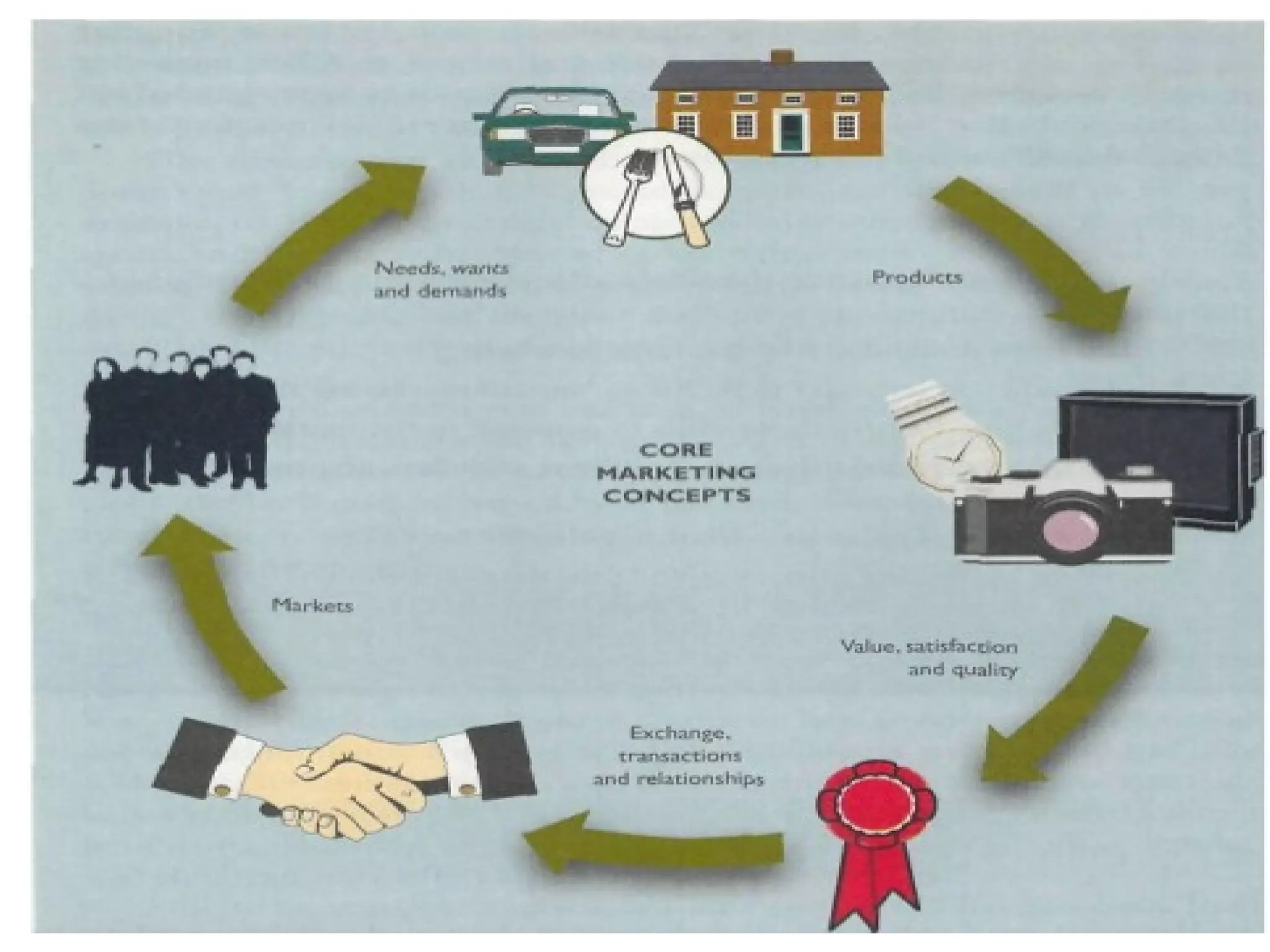
Needs. Wants and Demands

The most basic concept underlying
marketing is that of human needs. A
human need is a state of felt
deprivation. Humans have many
complex needs. These include basic
physical needs for food, clothing,
warmth and safety; social needs for
belonging and affection; and
individual needs for knowledge and
self-expression.
Products and Services
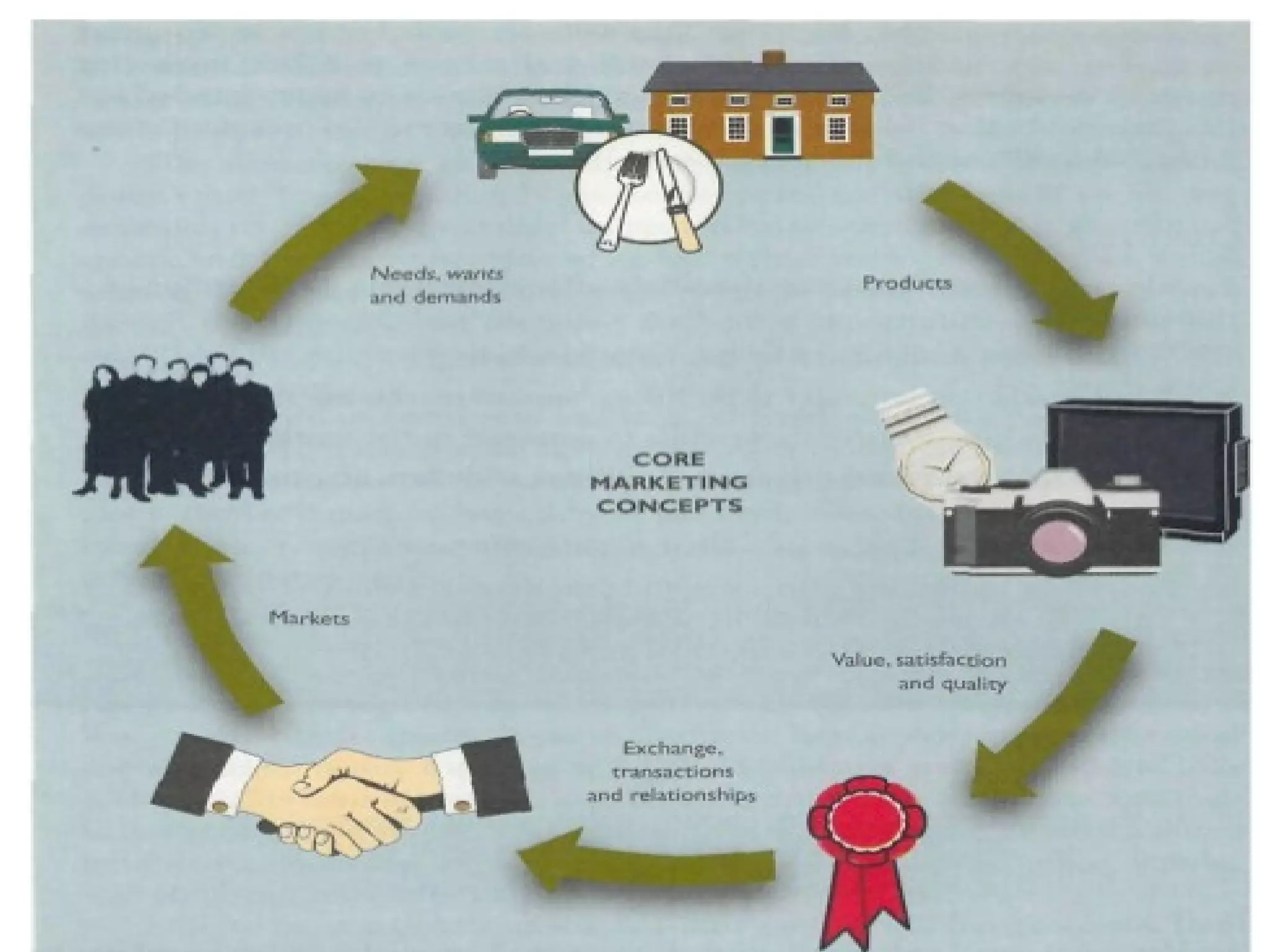
People satisfy their needs and wants
with products
products. A product is anything
that can he offered to a market to
satisfy a need or want. Usually, the
word product suggests a physical
physical
object,
object, such as a car, a television set
or a bar of soap. However, the
concept of product is not limited to
physical objects - anything capable of
satisfying a need can be called a
Value, Satisfaction and Quality

Consumers usually face a broad array
of products
products and services
services that might
satisfy a given need. How do they
choose among these many products?
Consumers make buying choices
based on their perceptions of the
value that various products and
sendees deliver.
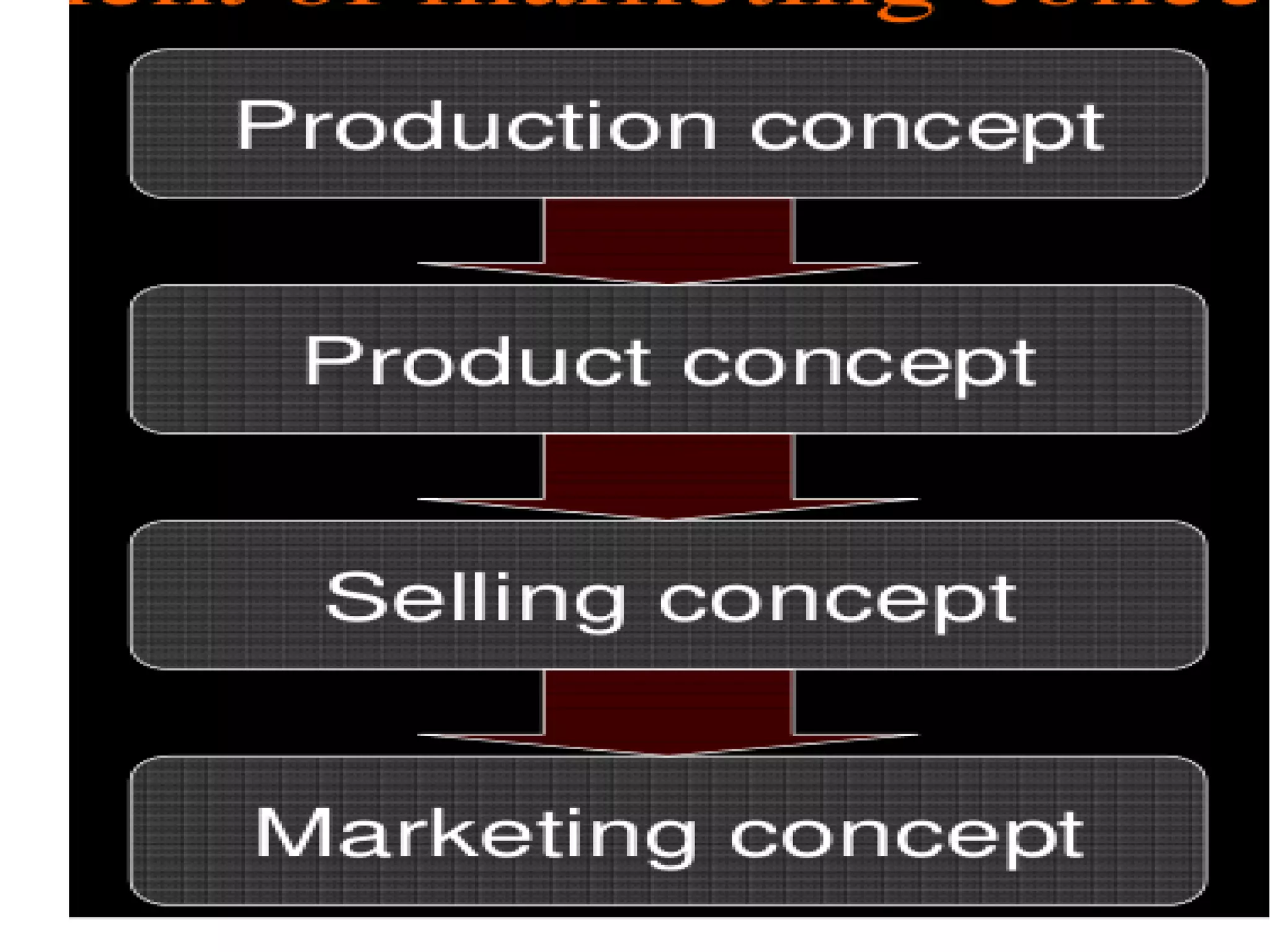
marketing concept
marketing concept
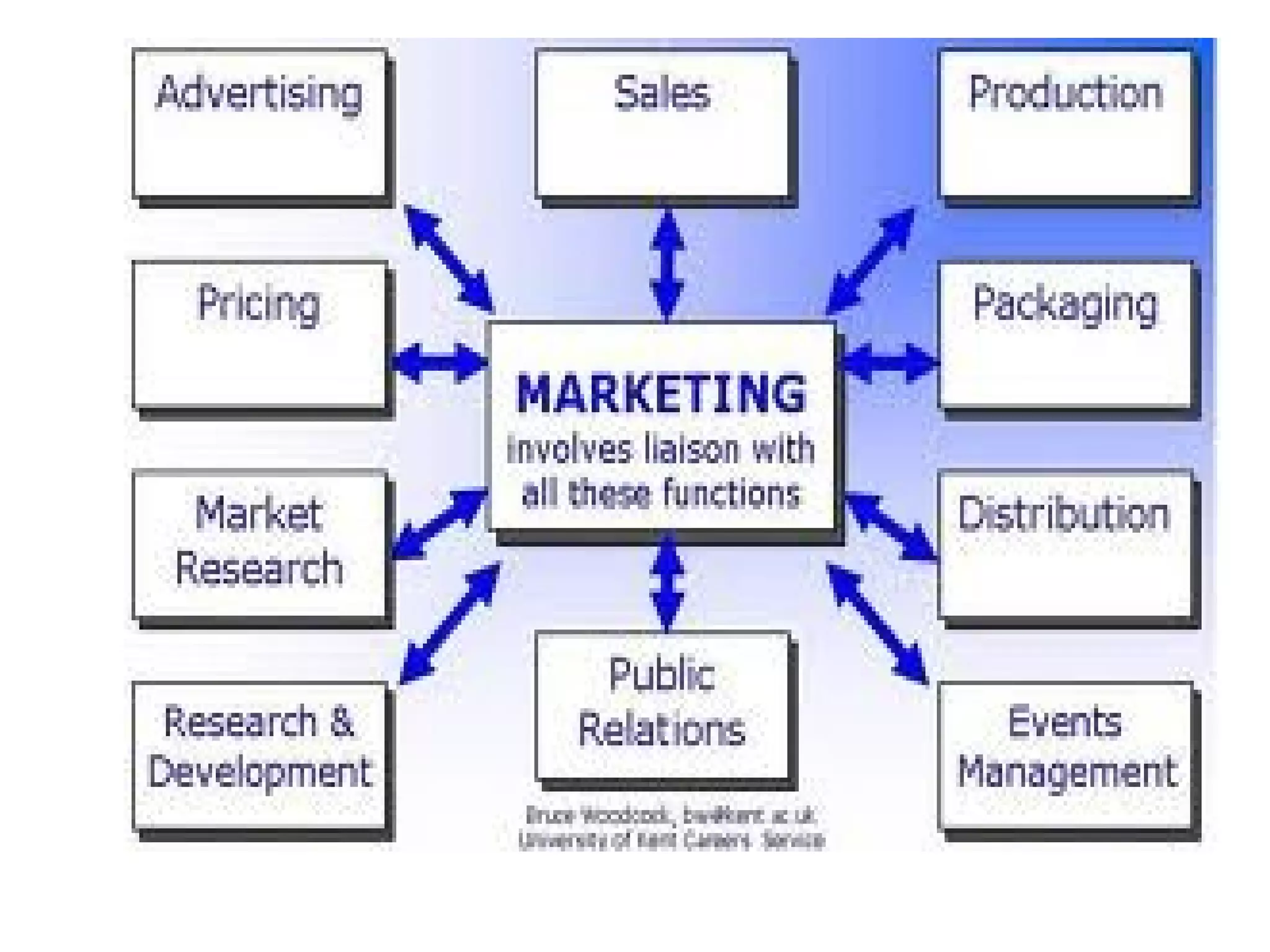
marketing functions
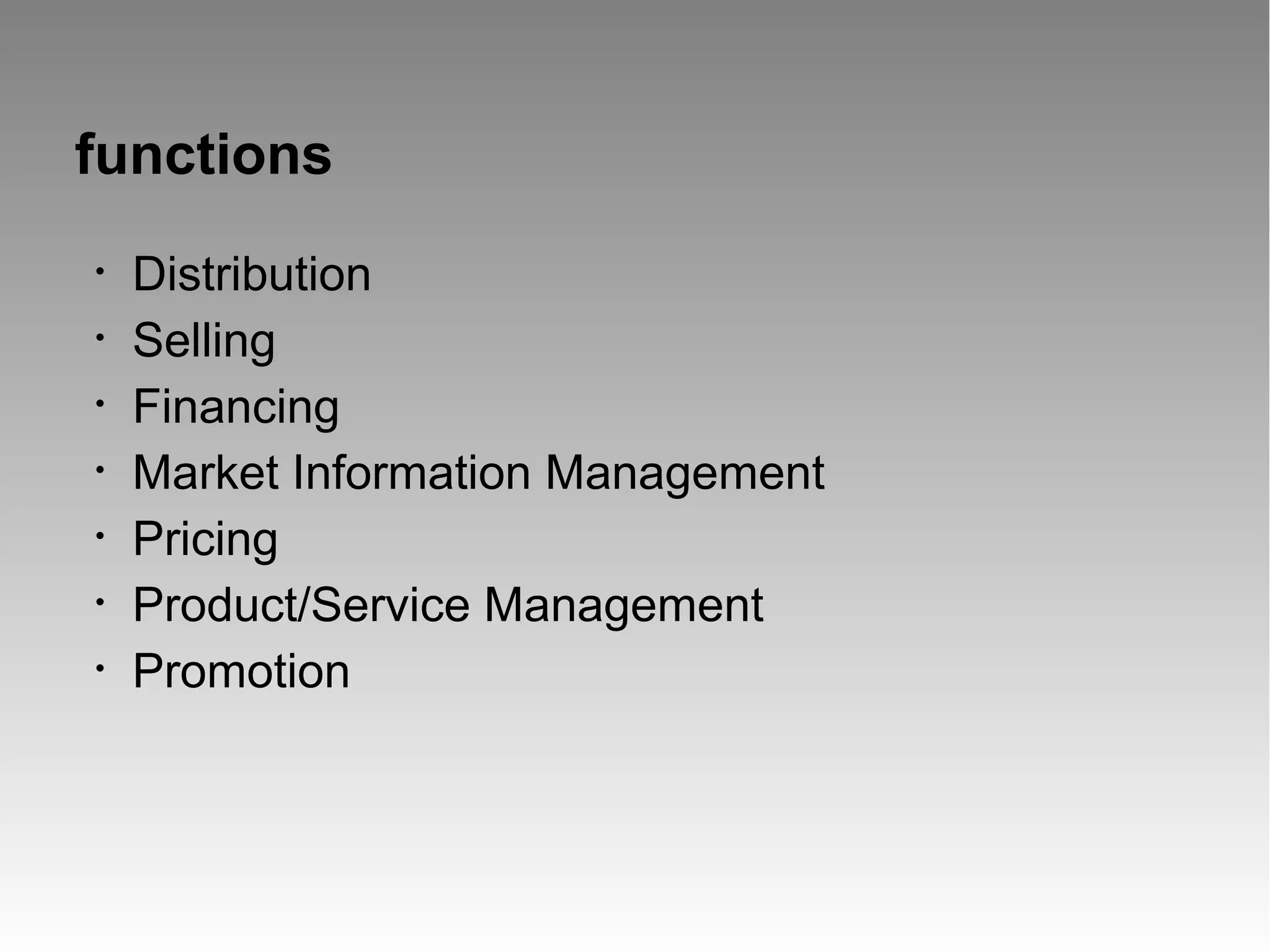
functions
• Distribution
• Selling
• Financing
• Market Information Management
• Pricing
• Product/Service Management
• Promotion
FUNCTIONS
In order for the marketing bridge to work
correctly -- providing consumers with
opportunities to purchase the products
and services they need -- the marketing
process must accomplish nine important
functions
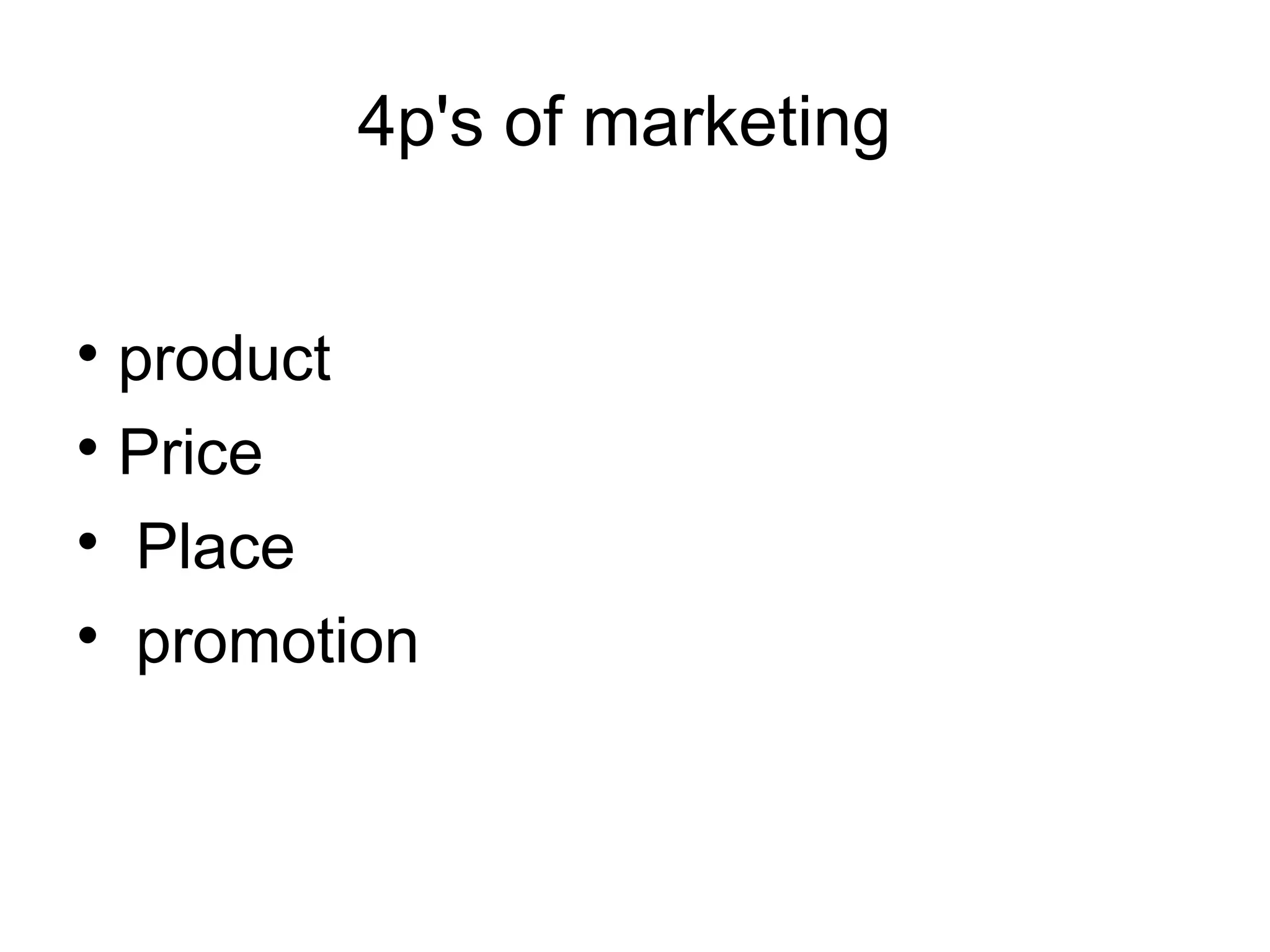
4p's of marketing

product

Price

Place

promotion

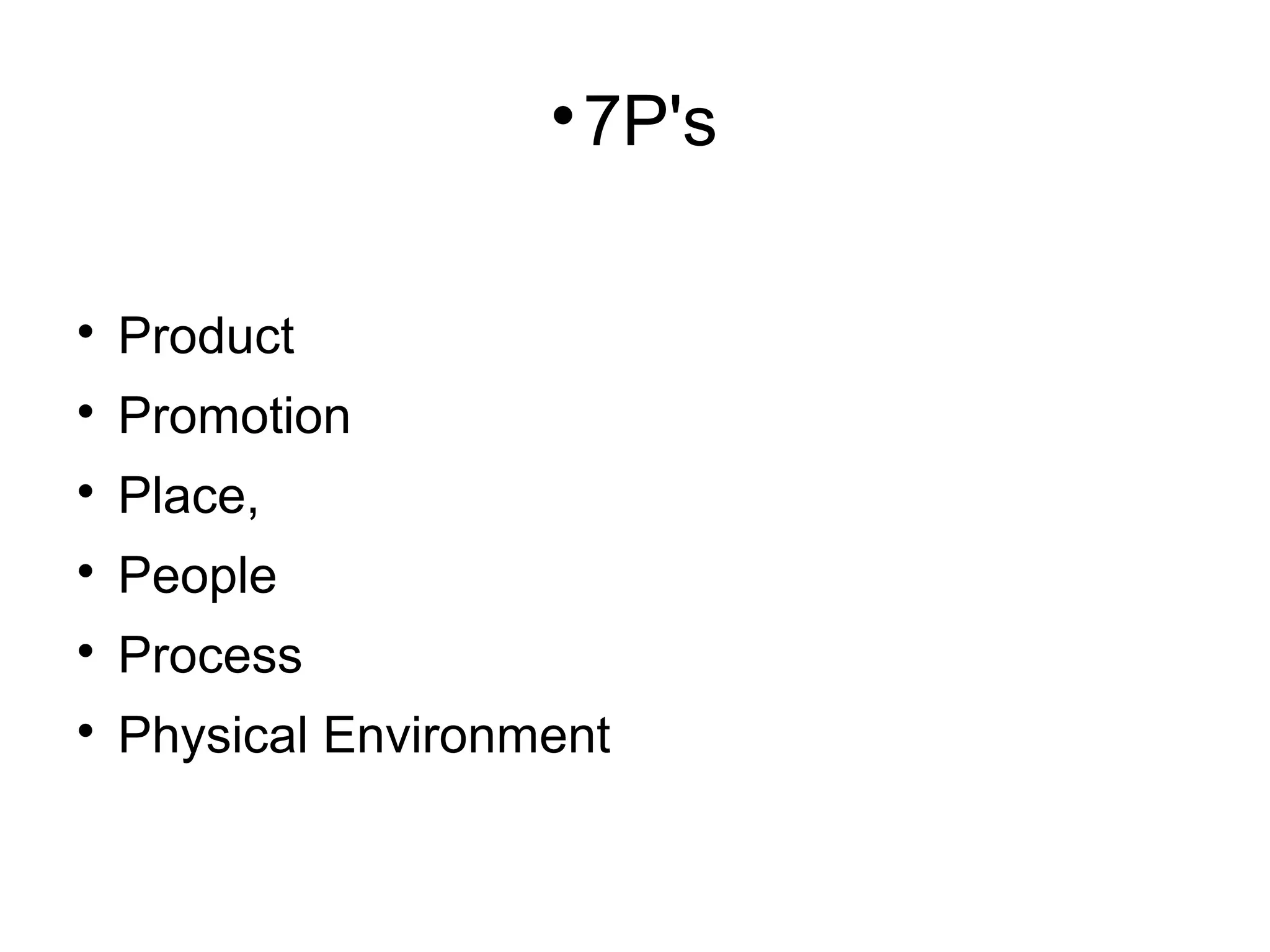
7P's

Product

Promotion

Place,

People

Process

Physical Environment
Buying

people have the the opportunity to buy products
that they want.
Selling

producers function within a free market to sell
products to consumers.
Financing
banks and other financial institutions provide
money for the production and marketing of
products.
Storage

products must be stored and protect ed until
they are needed. This function is especially
important for perishable products such as fruits
and vegetables.
Transportation
products must be physically relocated to the
locations where consumers can buy them. This
is a very important function. Transportation
includes rail road, ship, airplane, truck, and
telecommunications for non-tangible products
such as market information.
Processing
processing involves turning a raw product, like
wheat, into something The consumer can use --
for example, bread.
Risk-Taking
Insurance companies provide coverage
provide coverage to
protect producers and marketers from loss
due to fire, theft, or natural disasters.
Market Information
Information from around the world
about market conditions
market conditions, weather,
price movements, and political
changes, can affect the marketing
process. Market information is
provided by all forms of
telecommunication
telecommunication, such as
television, the internet, and phone.
Grading and Standardizing
Many products are graded in order to conform to
previously determined standards of quality. For
example, when you purchase US No. 1
Potatoes, you know you are buying the best
best
potatoes
potatoes on the market.
Thank you
Functions of Marketing.pdf

Functions of Marketing.pdf

  • 1.
  • 2.
    What is Marketing? Whatdoes the term marketing mean? Marketing must be understood not in the old sense of making a sale - 'selling' 'selling' - but in the new sense of satisfying customer needs.
  • 4.
    Needs. Wants andDemands  The most basic concept underlying marketing is that of human needs. A human need is a state of felt deprivation. Humans have many complex needs. These include basic physical needs for food, clothing, warmth and safety; social needs for belonging and affection; and individual needs for knowledge and self-expression.
  • 5.
    Products and Services Peoplesatisfy their needs and wants with products products. A product is anything that can he offered to a market to satisfy a need or want. Usually, the word product suggests a physical physical object, object, such as a car, a television set or a bar of soap. However, the concept of product is not limited to physical objects - anything capable of satisfying a need can be called a
  • 6.
    Value, Satisfaction andQuality  Consumers usually face a broad array of products products and services services that might satisfy a given need. How do they choose among these many products? Consumers make buying choices based on their perceptions of the value that various products and sendees deliver.
  • 8.
  • 11.
  • 12.
    functions • Distribution • Selling •Financing • Market Information Management • Pricing • Product/Service Management • Promotion
  • 13.
    FUNCTIONS In order forthe marketing bridge to work correctly -- providing consumers with opportunities to purchase the products and services they need -- the marketing process must accomplish nine important functions
  • 14.
  • 15.
  • 16.
    Buying  people have thethe opportunity to buy products that they want.
  • 17.
    Selling  producers function withina free market to sell products to consumers.
  • 18.
    Financing banks and otherfinancial institutions provide money for the production and marketing of products.
  • 19.
    Storage  products must bestored and protect ed until they are needed. This function is especially important for perishable products such as fruits and vegetables.
  • 20.
    Transportation products must bephysically relocated to the locations where consumers can buy them. This is a very important function. Transportation includes rail road, ship, airplane, truck, and telecommunications for non-tangible products such as market information.
  • 21.
    Processing processing involves turninga raw product, like wheat, into something The consumer can use -- for example, bread.
  • 23.
    Risk-Taking Insurance companies providecoverage provide coverage to protect producers and marketers from loss due to fire, theft, or natural disasters.
  • 24.
    Market Information Information fromaround the world about market conditions market conditions, weather, price movements, and political changes, can affect the marketing process. Market information is provided by all forms of telecommunication telecommunication, such as television, the internet, and phone.
  • 25.
    Grading and Standardizing Manyproducts are graded in order to conform to previously determined standards of quality. For example, when you purchase US No. 1 Potatoes, you know you are buying the best best potatoes potatoes on the market.
  • 26.