FUNCTIONAL STRATEGIES
PRESENTED BY:
Narendra Kumar
Central University of Raj
Dept- commerce 3r batch
2014MCOM009
FUNCTIONAL STRATEGIES
• Functional strategy is the approach, a
functional area takes to achieve corporate and
business unit objectives and strategies by
maximizing resource productivity.
• It helps managers in focusing company’s major
functional areas of activity.
FUNCTIONAL STRATEGIES OBJECTIVE
• Profitability:- Producing at a net profit in
business.
• Market share:- Gaining and holding a specific
share of a product market.
• Human talent:- Recruiting and maintaining a
high- quality workforce.
• Financial health:- Acquiring financial capital and
earning positive returns.
• Cost efficiency:-Using resources well to operate
at low cost.
• Product quality:- Producing high-quality goods
or services.
• Innovation:- developing new products and /or
processes.
• Social responsibility- Making a positive control
of society.
TYPES OF FUNCTIONAL STRATEGIES
• MANUFACTURING STRATEGY
• MARKETING STRATEGY
• HUMAN RESOURCE STRATEGY
• RESEARCH AND DEVELOPMENT STRATEGY
• FINANCIAL MANAGEMENT STRATEGY
MANUFACURING STRATEGY
• Manufacturing Strategy determines how and
where a product or service is to be
manufactured, the level of vertical integration
in the production process.
• Deals with the development of method for
improving performance.
CLASIFICATION AS PER PRODUCT
• Allocation of Input/Resource
• Available Resource
• Evaluation of manufacturing product
• Feedback
• Control
MARKETING STRATEGY
• According to A.M.A. “marketing is the
performance of Business activities that direct
the flow of goods and serviced from the
producer to the customer.”
• Marketing strategy is the most element of the
functional structure, for the company trying to
gain a loyal customer.
MARKETING FUNCTIONAL STRATEGY
• Survey of the Market
• Selection of target market
• Study of Customer expectations
• Grouping of the Customer as per need
• Linking manufacturing activities with customer
• Fulfilled the requirement of Customer
• Feedback
• Controlling of functional marketing strategy
HUMAN RESOURCE STRATEGY
• HRM strategies are an organization’s plans for
managing people, culture, structure and
training and development and for determining
how people fit into an organization’s future
growth.
Functional HR STRATEGY
• Identify Need of the Organisation
• Ensure required Manforce available or not
• Selection procedures
• Training
• Placing an right employee at right job
• Evolution performance
• Control of HR strategy
RESEARCH AND DEVELOPMENT STRATEGY
• Mainly deals with the product development.
Involves decisions regarding the modification
on the basic of the existing product.
• It is also focused on the licensing and conduct
of the patent policy for the prevention of the
use of developed models or generated
revenue for their sale.
FUNCTIONAL R &D STATEGY
• Survey of Market
• Analysis of Existing Business
• Technology
• Evolution the stockholders expectations
• Feedback
• Controll
FINANCIAL MANAGEMENT STATEGY
• Financial Management involves the Enterprise
Asset Management. In order to generate
optimal revenue, the company establishes the
structure of the investment of previously
accumulated cash.
FUNCTIONAL STRATEGY OF FINANCIAL MANAGEMENT
• Recording proper
• Transaction record
• All transaction taking place
• Timely close all accounting books
• Accounting procedures & Rules
• Time to time training
• Ensure the accounting system reducing of
fraud
• Proper evaluate Accounting Books
• Feedback
• Control
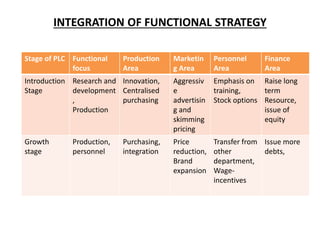
INTEGRATION OF FUNCTIONAL STRATEGY
Stage of PLC Functional
focus
Production
Area
Marketin
g Area
Personnel
Area
Finance
Area
Introduction
Stage
Research and
development
,
Production
Innovation,
Centralised
purchasing
Aggressiv
e
advertisin
g and
skimming
pricing
Emphasis on
training,
Stock options
Raise long
term
Resource,
issue of
equity
Growth
stage
Production,
personnel
Purchasing,
integration
Price
reduction,
Brand
expansion
Transfer from
other
department,
Wage-
incentives
Issue more
debts,
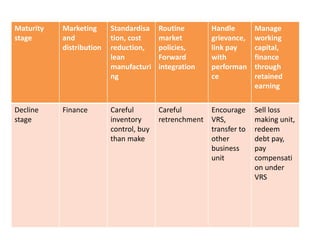
Maturity
stage
Marketing
and
distribution
Standardisa
tion, cost
reduction,
lean
manufacturi
ng
Routine
market
policies,
Forward
integration
Handle
grievance,
link pay
with
performan
ce
Manage
working
capital,
finance
through
retained
earning
Decline
stage
Finance Careful
inventory
control, buy
than make
Careful
retrenchment
Encourage
VRS,
transfer to
other
business
unit
Sell loss
making unit,
redeem
debt pay,
pay
compensati
on under
VRS
THANK YOU

Functional strategies

  • 1.
    FUNCTIONAL STRATEGIES PRESENTED BY: NarendraKumar Central University of Raj Dept- commerce 3r batch 2014MCOM009
  • 2.
    FUNCTIONAL STRATEGIES • Functionalstrategy is the approach, a functional area takes to achieve corporate and business unit objectives and strategies by maximizing resource productivity. • It helps managers in focusing company’s major functional areas of activity.
  • 3.
    FUNCTIONAL STRATEGIES OBJECTIVE •Profitability:- Producing at a net profit in business. • Market share:- Gaining and holding a specific share of a product market. • Human talent:- Recruiting and maintaining a high- quality workforce. • Financial health:- Acquiring financial capital and earning positive returns. • Cost efficiency:-Using resources well to operate at low cost.
  • 4.
    • Product quality:-Producing high-quality goods or services. • Innovation:- developing new products and /or processes. • Social responsibility- Making a positive control of society.
  • 5.
    TYPES OF FUNCTIONALSTRATEGIES • MANUFACTURING STRATEGY • MARKETING STRATEGY • HUMAN RESOURCE STRATEGY • RESEARCH AND DEVELOPMENT STRATEGY • FINANCIAL MANAGEMENT STRATEGY
  • 6.
    MANUFACURING STRATEGY • ManufacturingStrategy determines how and where a product or service is to be manufactured, the level of vertical integration in the production process. • Deals with the development of method for improving performance.
  • 7.
    CLASIFICATION AS PERPRODUCT • Allocation of Input/Resource • Available Resource • Evaluation of manufacturing product • Feedback • Control
  • 8.
    MARKETING STRATEGY • Accordingto A.M.A. “marketing is the performance of Business activities that direct the flow of goods and serviced from the producer to the customer.” • Marketing strategy is the most element of the functional structure, for the company trying to gain a loyal customer.
  • 9.
    MARKETING FUNCTIONAL STRATEGY •Survey of the Market • Selection of target market • Study of Customer expectations • Grouping of the Customer as per need • Linking manufacturing activities with customer • Fulfilled the requirement of Customer • Feedback • Controlling of functional marketing strategy
  • 10.
    HUMAN RESOURCE STRATEGY •HRM strategies are an organization’s plans for managing people, culture, structure and training and development and for determining how people fit into an organization’s future growth.
  • 11.
    Functional HR STRATEGY •Identify Need of the Organisation • Ensure required Manforce available or not • Selection procedures • Training • Placing an right employee at right job • Evolution performance • Control of HR strategy
  • 12.
    RESEARCH AND DEVELOPMENTSTRATEGY • Mainly deals with the product development. Involves decisions regarding the modification on the basic of the existing product. • It is also focused on the licensing and conduct of the patent policy for the prevention of the use of developed models or generated revenue for their sale.
  • 13.
    FUNCTIONAL R &DSTATEGY • Survey of Market • Analysis of Existing Business • Technology • Evolution the stockholders expectations • Feedback • Controll
  • 14.
    FINANCIAL MANAGEMENT STATEGY •Financial Management involves the Enterprise Asset Management. In order to generate optimal revenue, the company establishes the structure of the investment of previously accumulated cash.
  • 15.
    FUNCTIONAL STRATEGY OFFINANCIAL MANAGEMENT • Recording proper • Transaction record • All transaction taking place • Timely close all accounting books • Accounting procedures & Rules • Time to time training • Ensure the accounting system reducing of fraud
  • 16.
    • Proper evaluateAccounting Books • Feedback • Control
  • 17.
    INTEGRATION OF FUNCTIONALSTRATEGY Stage of PLC Functional focus Production Area Marketin g Area Personnel Area Finance Area Introduction Stage Research and development , Production Innovation, Centralised purchasing Aggressiv e advertisin g and skimming pricing Emphasis on training, Stock options Raise long term Resource, issue of equity Growth stage Production, personnel Purchasing, integration Price reduction, Brand expansion Transfer from other department, Wage- incentives Issue more debts,
  • 18.
    Maturity stage Marketing and distribution Standardisa tion, cost reduction, lean manufacturi ng Routine market policies, Forward integration Handle grievance, link pay with performan ce Manage working capital, finance through retained earning Decline stage FinanceCareful inventory control, buy than make Careful retrenchment Encourage VRS, transfer to other business unit Sell loss making unit, redeem debt pay, pay compensati on under VRS
  • 19.