GONADOTROPHINS
CHEMICAL STRUCTURE OF FSH & LH
 Water soluble glycoprotein
 Molecular weight:30,000 Daltons
 Protein molecule with a sugar attached to it
 Protein dimer contain two polypeptide
unit:alpha & beta subunit
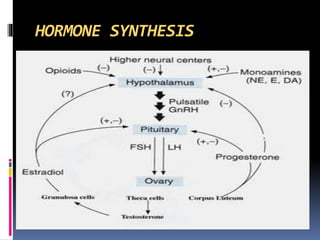
HORMONE SYNTHESIS
ACTION OF FSH AND LH IN
FEMALES
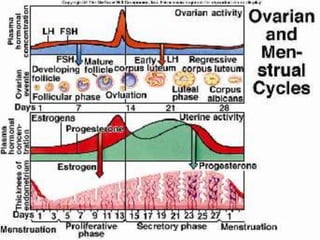
 Estradiol production
 Follicular development
 Cellular action of FSH and LH
 Effects on ovulation
 Effects on corpus luteal formation
 Oocyte maturation
 Corpus luteal funtion
 Ovarian blood flow
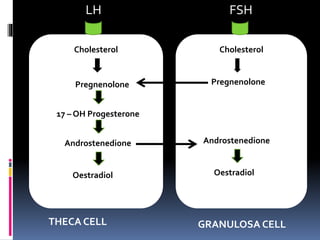
LH FSH
Cholesterol
Pregnenolone
17 – OH Progesterone
Androstenedione
Oestradiol
Cholesterol
Pregnenolone
Androstenedione
Oestradiol
THECA CELL GRANULOSA CELL
FOLLICULAR DEVELOPMENT
 Influences proliferation and development of
granulosa cells
 Follicular phase divided into 3 phases
Early
Mid follicular
Late follicular
 At the end of this phase large no of granulosa
cells are present
 Which then produce sufficient estradiol
CELLULAR ACTONS
 Both binds G-protein coupled receptors n
granulosa and theca cells
 Activates adenyl cyclase increases the
expression of p450c17
 Increased concentratin of cyclic AMP
activates protein kinase
 Which catalyses phosphorylation of CREB
and other plasmic proteins transcription
of genes
OVULATION
 LH is the physiolgical signal for ovulation
 Events of follicular rupture are initiated by
production of cyclicAMP in response to LH
 Plasmin accumulates in the follicular fluid and
produces plasminogen
 Granulosa cells secreates plasminogen
activator
 Cells begin to secrete progesterone
 Aromatase activity gets lost
CORPUS LUTEUM FORMATION
 LH plays an important role
 The lutein cells secrete large amount of
progesterone and less estrogen
 Progesterone secreted have a strong
negative feedback on anterior pituitary to
decrease FSH and LH
OOCYTE MATURATION
 Granulsa cells prevent the ovum from
completing its mieotic division by a substance
oocyte maturation inhibitor
 LH triggers the resumption of mieosis by
blocking the production of this factor
OVARIAN BLOOD FLOW
 LH increases the blood flow to the ovary and
produces ovarian hyperemia
DISORDERS
Precocious puberty
Delayed or absent puberty
Infertility
Amenorrhea
THANK U 

FSH and LH.pptx

  • 1.
  • 2.
    CHEMICAL STRUCTURE OFFSH & LH  Water soluble glycoprotein  Molecular weight:30,000 Daltons  Protein molecule with a sugar attached to it  Protein dimer contain two polypeptide unit:alpha & beta subunit
  • 3.
  • 4.
    ACTION OF FSHAND LH IN FEMALES  Estradiol production  Follicular development  Cellular action of FSH and LH  Effects on ovulation  Effects on corpus luteal formation  Oocyte maturation  Corpus luteal funtion  Ovarian blood flow
  • 5.
    LH FSH Cholesterol Pregnenolone 17 –OH Progesterone Androstenedione Oestradiol Cholesterol Pregnenolone Androstenedione Oestradiol THECA CELL GRANULOSA CELL
  • 6.
    FOLLICULAR DEVELOPMENT  Influencesproliferation and development of granulosa cells  Follicular phase divided into 3 phases Early Mid follicular Late follicular  At the end of this phase large no of granulosa cells are present  Which then produce sufficient estradiol
  • 7.
    CELLULAR ACTONS  Bothbinds G-protein coupled receptors n granulosa and theca cells  Activates adenyl cyclase increases the expression of p450c17  Increased concentratin of cyclic AMP activates protein kinase  Which catalyses phosphorylation of CREB and other plasmic proteins transcription of genes
  • 8.
    OVULATION  LH isthe physiolgical signal for ovulation  Events of follicular rupture are initiated by production of cyclicAMP in response to LH  Plasmin accumulates in the follicular fluid and produces plasminogen  Granulosa cells secreates plasminogen activator  Cells begin to secrete progesterone  Aromatase activity gets lost
  • 10.
    CORPUS LUTEUM FORMATION LH plays an important role  The lutein cells secrete large amount of progesterone and less estrogen  Progesterone secreted have a strong negative feedback on anterior pituitary to decrease FSH and LH
  • 11.
    OOCYTE MATURATION  Granulsacells prevent the ovum from completing its mieotic division by a substance oocyte maturation inhibitor  LH triggers the resumption of mieosis by blocking the production of this factor
  • 12.
    OVARIAN BLOOD FLOW LH increases the blood flow to the ovary and produces ovarian hyperemia
  • 13.
    DISORDERS Precocious puberty Delayed orabsent puberty Infertility Amenorrhea
  • 14.