


Adrenal
  Glands
Rañola, Anna Patricia Jo
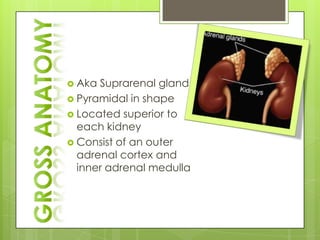
 Aka Suprarenal gland
 Pyramidal in shape
 Located superior to
  each kidney
 Consist of an outer
  adrenal cortex and
  inner adrenal medulla
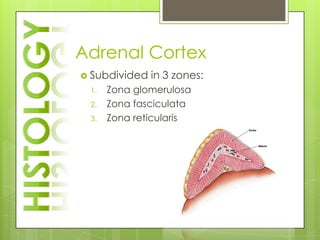
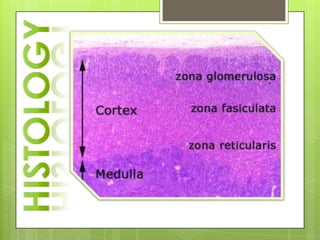
Adrenal Cortex
 Subdivided   in 3 zones:
 1.   Zona glomerulosa
 2.   Zona fasciculata
 3.   Zona reticularis
Hormones, Regulation
and uses
Aldosterone
 Regulates homeostasis of
  two mineral ions: Na+ & K+
 Helps adjust blood pressure
  and blood volume.
Promotes     excretion of H+
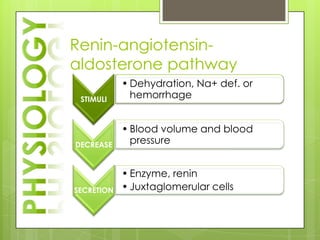
Renin-angiotensin-
aldosterone pathway
            • Dehydration, Na+ def. or
 STIMULI      hemorrhage


            • Blood volume and blood
DECREASE      pressure


            • Enzyme, renin
SECRETION   • Juxtaglomerular cells
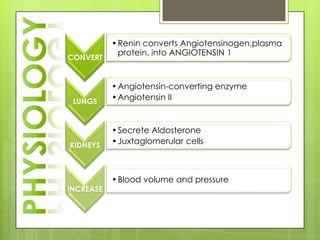
• Renin converts Angiotensinogen,plasma
             protein, into ANGIOTENSIN 1
CONVERT


           • Angiotensin-converting enzyme
 LUNGS
           • Angiotensin II


           • Secrete Aldosterone
KIDNEYS
           • Juxtaglomerular cells


           • Blood volume and pressure
INCREASE
GLUCOCORTICOIDS
Synthesized   by Zona
 Fasciculata
Affects glucose
 homeostasis
Regulates metabolism
 and resistance to stress
GLUCOCORTICOIDS
Cortisol, corticosterone
 and cortisone.
Cortisol is most abundant
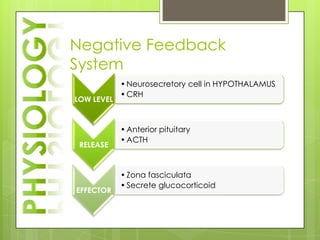
Negative Feedback
System
            • Neurosecretory cell in HYPOTHALAMUS
            • CRH
LOW LEVEL


            • Anterior pituitary
            • ACTH
 RELEASE


            • Zona fasciculata
            • Secrete glucocorticoid
EFFECTOR
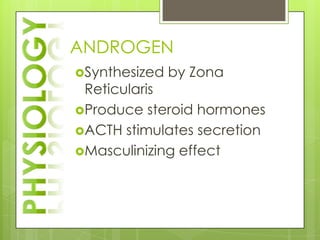
ANDROGEN
Synthesized   by Zona
 Reticularis
Produce steroid hormones
ACTH stimulates secretion
Masculinizing effect
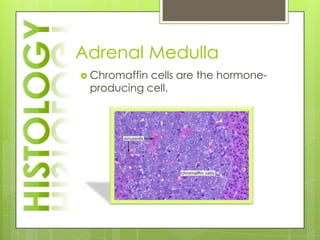
Adrenal Medulla
 Chromaffincells are the hormone-
 producing cell.
Hormones, Regulation
and uses
CATECHOLAMINE
Norepinephrine,  epineph
 rine, and small amounts
 of dopamine.
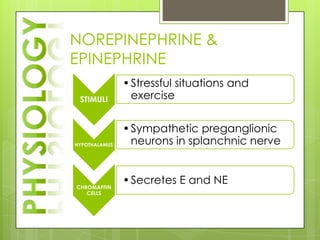
NOREPINEPHRINE &
EPINEPHRINE
               • Stressful situations and
 STIMULI         exercise

               • Sympathetic preganglionic
HYPOTHALAMUS     neurons in splanchnic nerve


CHROMAFFIN
               • Secretes E and NE
   CELLS
NOREPINEPHRINE &
EPINEPHRINE
 Increase  blood flow to the heart,
  liver, and skeletal muscles, and
  adipose tissue
 Dilates airways to the lungs
 Increase blood levels of glucose
  and fatty acids
Pancreatic
  Islets
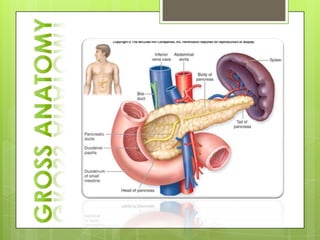
 Pancreas   is a flattened
  organ
 Located in the curve of
  the duodenum
 Consist of a head, body,
  and tail
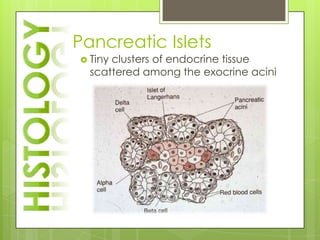
Pancreatic Islets
 Tinyclusters of endocrine tissue
  scattered among the exocrine acini
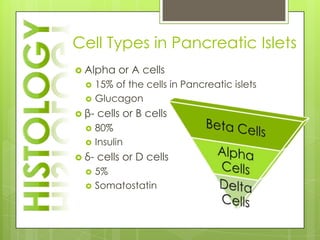
Cell Types in Pancreatic Islets
 Alpha     or A cells
      15% of the cells in Pancreatic islets
      Glucagon
 β-   cells or B cells
      80%
      Insulin
 δ-   cells or D cells
      5%
      Somatostatin
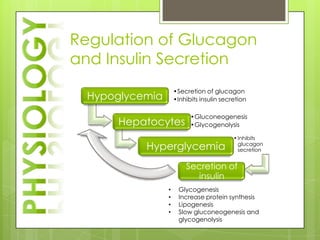
Regulation of Glucagon
and Insulin Secretion
                     •Secretion of glucagon
  Hypoglycemia       •Inhibits insulin secretion

                           •Gluconeogenesis
      Hepatocytes          •Glycogenolysis

                                           • Inhibits
           Hyperglycemia                     glucagon
                                             secretion


                         Secretion of
                            insulin
                 •    Glycogenesis
                 •    Increase protein synthesis
                 •    Lipogenesis
                 •    Slow gluconeogenesis and
                      glycogenolysis
Ovaries
&Testes
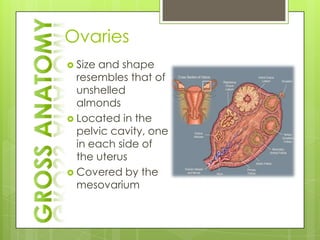
Ovaries
 Sizeand shape
  resembles that of
  unshelled
  almonds
 Located in the
  pelvic cavity, one
  in each side of
  the uterus
 Covered by the
  mesovarium
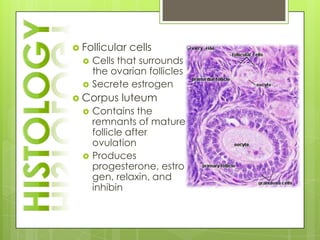
 Follicular   cells
     Cells that surrounds
      the ovarian follicles
     Secrete estrogen
 Corpus    luteum
     Contains the
      remnants of mature
      follicle after
      ovulation
     Produces
      progesterone, estro
      gen, relaxin, and
      inhibin
Hormones and Uses
 Progesterone
    Helps prepare the endometrium for
     implantation
    Prepare the Mammary glands for milk
     secretion
 Estrogen
    Feminizing sex hormone
    For the development of oocytes
    Maintenance of female reproductive
     structures and
    Secondary sex characteristics
Hormones and Uses
 Relaxin
     Increases pubic symphysis during
      pregnancy
     Dilate uterine cervix during labor and
      delivery
 Inhibin
     Inhibits the production of FSH
Testes
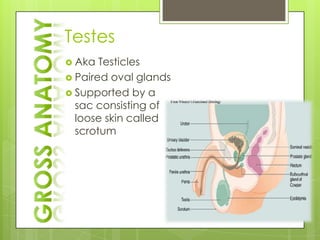
 Aka  Testicles
 Paired oval glands
 Supported by a
  sac consisting of
  loose skin called
  scrotum
Leydig Cells
 Aka  interstitial cell of leydig or
  interstitial endocrinocyte
 Located in the interstitial tissue
  between the convuluted seminiferous
  tubules
 Secretes testosterone
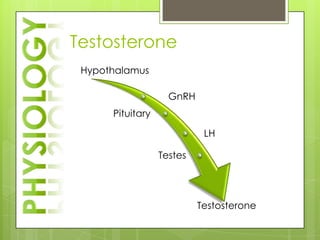
Testosterone
 Hypothalamus

                    GnRH
      Pituitary

                            LH

                  Testes


                           Testosterone
Testosterone
   Regulates sperm
    production
   Promotes
    development and
    maintenance of
    masculine secondary
    sex characteristics

Adrenal glands

  • 1.
    Adrenal Glands Rañola,Anna Patricia Jo
  • 2.
     Aka Suprarenalgland  Pyramidal in shape  Located superior to each kidney  Consist of an outer adrenal cortex and inner adrenal medulla
  • 3.
    Adrenal Cortex  Subdivided in 3 zones: 1. Zona glomerulosa 2. Zona fasciculata 3. Zona reticularis
  • 5.
  • 6.
    Aldosterone  Regulates homeostasisof two mineral ions: Na+ & K+  Helps adjust blood pressure and blood volume. Promotes excretion of H+
  • 7.
    Renin-angiotensin- aldosterone pathway • Dehydration, Na+ def. or STIMULI hemorrhage • Blood volume and blood DECREASE pressure • Enzyme, renin SECRETION • Juxtaglomerular cells
  • 8.
    • Renin convertsAngiotensinogen,plasma protein, into ANGIOTENSIN 1 CONVERT • Angiotensin-converting enzyme LUNGS • Angiotensin II • Secrete Aldosterone KIDNEYS • Juxtaglomerular cells • Blood volume and pressure INCREASE
  • 9.
    GLUCOCORTICOIDS Synthesized by Zona Fasciculata Affects glucose homeostasis Regulates metabolism and resistance to stress
  • 10.
    GLUCOCORTICOIDS Cortisol, corticosterone andcortisone. Cortisol is most abundant
  • 11.
    Negative Feedback System • Neurosecretory cell in HYPOTHALAMUS • CRH LOW LEVEL • Anterior pituitary • ACTH RELEASE • Zona fasciculata • Secrete glucocorticoid EFFECTOR
  • 12.
    ANDROGEN Synthesized by Zona Reticularis Produce steroid hormones ACTH stimulates secretion Masculinizing effect
  • 13.
    Adrenal Medulla  Chromaffincellsare the hormone- producing cell.
  • 14.
  • 15.
    CATECHOLAMINE Norepinephrine, epineph rine, and small amounts of dopamine.
  • 16.
    NOREPINEPHRINE & EPINEPHRINE • Stressful situations and STIMULI exercise • Sympathetic preganglionic HYPOTHALAMUS neurons in splanchnic nerve CHROMAFFIN • Secretes E and NE CELLS
  • 17.
    NOREPINEPHRINE & EPINEPHRINE  Increase blood flow to the heart, liver, and skeletal muscles, and adipose tissue  Dilates airways to the lungs  Increase blood levels of glucose and fatty acids
  • 18.
  • 19.
     Pancreas is a flattened organ  Located in the curve of the duodenum  Consist of a head, body, and tail
  • 21.
    Pancreatic Islets  Tinyclustersof endocrine tissue scattered among the exocrine acini
  • 22.
    Cell Types inPancreatic Islets  Alpha or A cells  15% of the cells in Pancreatic islets  Glucagon  β- cells or B cells  80%  Insulin  δ- cells or D cells  5%  Somatostatin
  • 23.
    Regulation of Glucagon andInsulin Secretion •Secretion of glucagon Hypoglycemia •Inhibits insulin secretion •Gluconeogenesis Hepatocytes •Glycogenolysis • Inhibits Hyperglycemia glucagon secretion Secretion of insulin • Glycogenesis • Increase protein synthesis • Lipogenesis • Slow gluconeogenesis and glycogenolysis
  • 24.
  • 25.
    Ovaries  Sizeand shape resembles that of unshelled almonds  Located in the pelvic cavity, one in each side of the uterus  Covered by the mesovarium
  • 26.
     Follicular cells  Cells that surrounds the ovarian follicles  Secrete estrogen  Corpus luteum  Contains the remnants of mature follicle after ovulation  Produces progesterone, estro gen, relaxin, and inhibin
  • 27.
    Hormones and Uses Progesterone  Helps prepare the endometrium for implantation  Prepare the Mammary glands for milk secretion  Estrogen  Feminizing sex hormone  For the development of oocytes  Maintenance of female reproductive structures and  Secondary sex characteristics
  • 28.
    Hormones and Uses Relaxin  Increases pubic symphysis during pregnancy  Dilate uterine cervix during labor and delivery  Inhibin  Inhibits the production of FSH
  • 29.
    Testes  Aka Testicles  Paired oval glands  Supported by a sac consisting of loose skin called scrotum
  • 30.
    Leydig Cells  Aka interstitial cell of leydig or interstitial endocrinocyte  Located in the interstitial tissue between the convuluted seminiferous tubules  Secretes testosterone
  • 31.
    Testosterone Hypothalamus GnRH Pituitary LH Testes Testosterone
  • 32.
    Testosterone Regulates sperm production  Promotes development and maintenance of masculine secondary sex characteristics

Editor's Notes

  • #24 Glycogenolysis- glycogen to glucoGluconeogenesis- fatty acid and amino acids to glucose