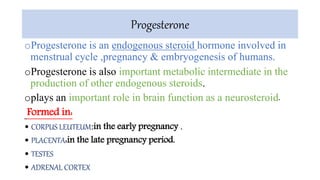
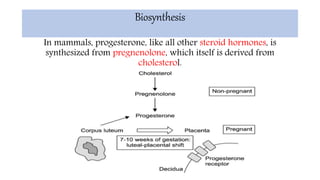
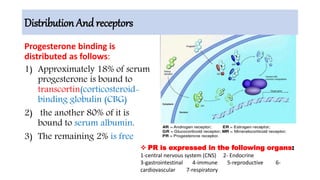
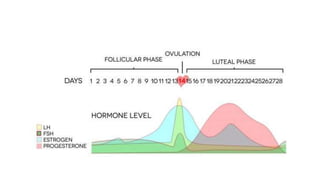
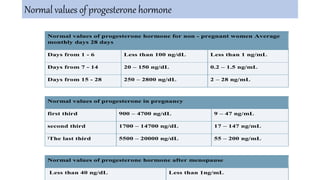
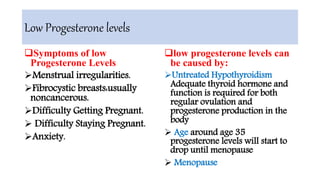
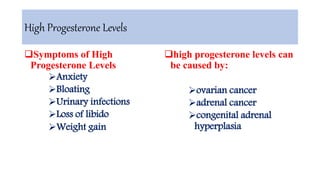
Progesterone is a steroid hormone involved in the menstrual cycle, pregnancy, and embryo development in humans. It is formed in the corpus luteum during early pregnancy and the placenta during late pregnancy. Progesterone binds to receptors found throughout the body, including the central nervous system, endocrine system, and reproductive system. Physiologically, progesterone prepares the uterus for pregnancy, prevents uterine contractions, and supports the corpus luteum until the placenta can secrete progesterone in later stages of pregnancy. Normal progesterone levels fluctuate throughout the menstrual cycle and pregnancy. Both low and high progesterone can cause various symptoms and may be due to conditions like hypothyroidism, menopause, or cancers.