From places to connections (Image: http://web.archive.org/web/20030708194456/http://microdoc-news.info/blogger/2003/05/20.html) Jill Walker / Dept of Humanistic Informatics / University of Bergen [email_address] http://jilltxt.net Games, New Media and Democracy Seminar Bergen, 16-17 Oct, 2006
Changes in our sense of identity? Nation, place: The canonisation of Dutch history - “to improve the cohesion of Dutch society”  (- Joost’s talk yesterday) Placebound In flux, based on families, friendships, relationships, individuals, interests... Connection-oriented
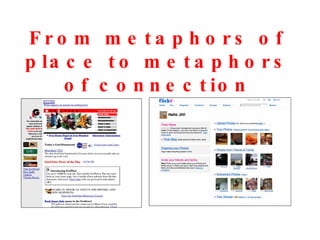
From metaphors of place to metaphors of connection
...a virtual space populated by projections of our real selves.. (prosthetic selves?) Initial idea of cyberspace --
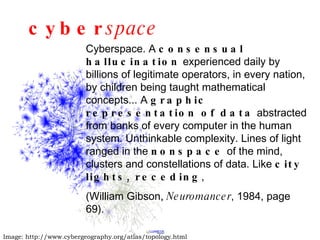
cyber space Image: http://www.cybergeography.org/atlas/topology.html Cyberspace. A  consensual hallucination  experienced daily by billions of legitimate operators, in every nation, by children being taught mathematical concepts... A  graphic representation of data  abstracted from banks of every computer in the human system. Unthinkable complexity. Lines of light ranged in the  nonspace  of the mind, clusters and constellations of data. Like  city lights, receding ,  (William Gibson,  Neuromancer , 1984, page 69).
Information  architecture Navigate Surf Web site URL - uniform resource  location (Placebased way of thinking)
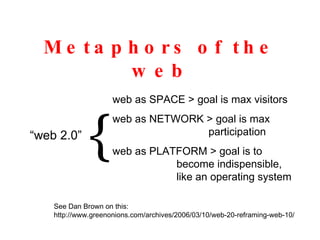
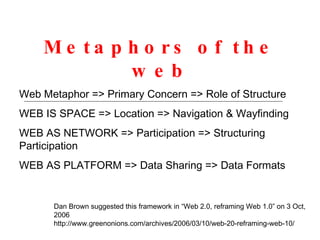
Metaphors of the web web as SPACE > goal is max visitors web as NETWORK > goal is max  participation web as PLATFORM > goal is to  become indispensible,  like an operating system { “ web 2.0” See Dan Brown on this:  http://www.greenonions.com/archives/2006/03/10/web-20-reframing-web-10/
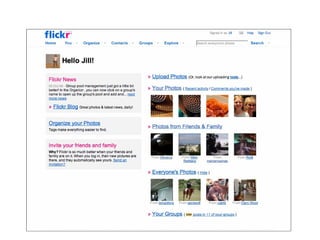
Flickr
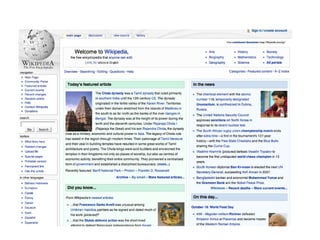
Wikipedia
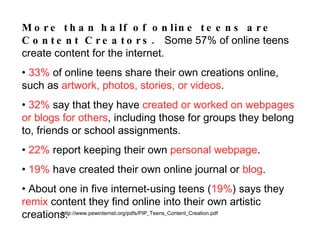
Teen content creators More than half of online teens are Content Creators.  Some 57% of online teens create content for the internet. 33%  of online teens share their own creations online, such as  artwork, photos, stories, or videos .  32%  say that they have  created or worked on webpages or blogs for others , including those for groups they belong to, friends or school assignments.  22%  report keeping their own  personal webpage .  19%  have created their own online journal or  blog .  About one in five internet-using teens ( 19% ) says they  remix  content they find online into their own artistic creations.  http://www.pewinternet.org/pdfs/PIP_Teens_Content_Creation.pdf
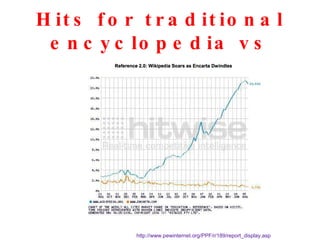
Hits for traditional encyclopedia vs Wikipedia http://www.pewinternet.org/PPF/r/189/report_display.asp
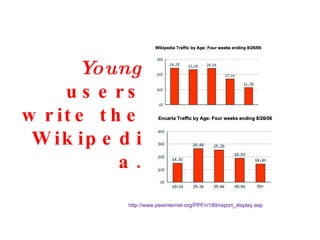
Young  users write the Wikipedia. http://www.pewinternet.org/PPF/r/189/report_display.asp
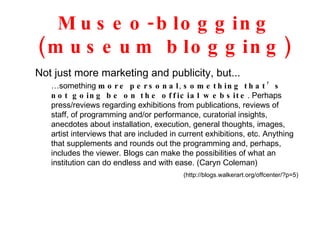
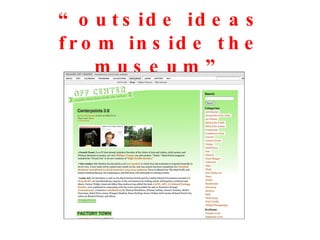
Museo-blogging (museum blogging) Not just more marketing and publicity, but... … something  more personal ,  something that’s not going be on the official website . Perhaps press/reviews regarding exhibitions from publications, reviews of staff, of programming and/or performance, curatorial insights, anecdotes about installation, execution, general thoughts, images, artist interviews that are included in current exhibitions, etc. Anything that supplements and rounds out the programming and, perhaps, includes the viewer. Blogs can make the possibilities of what an institution can do endless and with ease. (Caryn Coleman) (http://blogs.walkerart.org/offcenter/?p=5)
“outside ideas from inside the museum”
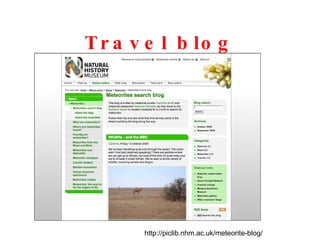
Travel blog http://piclib.nhm.ac.uk/meteorite-blog/
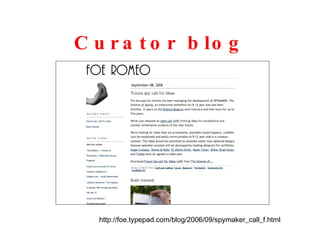
Curator blog http://foe.typepad.com/blog/2006/09/spymaker_call_f.html
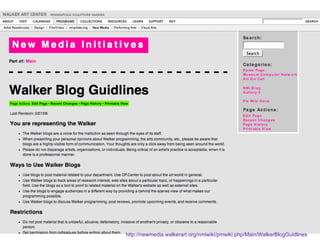
Vær varsomplakat for institusjonsblogger http://newmedia.walkerart.org/nmiwiki/pmwiki.php/Main/WalkerBlogGuidlines
Hvor mange? “ Det fins ikke mer enn et tjuetalls aktive museumsblogger.” -- Jim Spadaccini, mars 2006 http://www.ideum.com/chin/museums-web2.pdf
Metaphors of the web Dan Brown suggested this framework in “Web 2.0, reframing Web 1.0” on 3 Oct, 2006 http://www.greenonions.com/archives/2006/03/10/web-20-reframing-web-10/ Web Metaphor => Primary Concern => Role of Structure WEB IS SPACE => Location => Navigation & Wayfinding WEB AS NETWORK => Participation => Structuring Participation WEB AS PLATFORM => Data Sharing => Data Formats
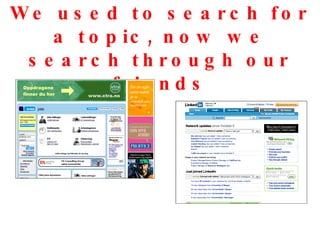
We used to search for a topic, now we search through our friends
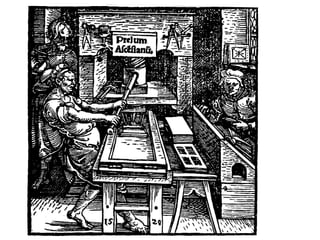
gutenberg
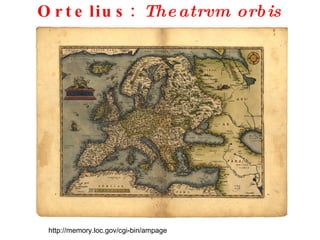
Ortelius:  Theatrvm orbis terrarvm http://memory.loc.gov/cgi-bin/ampage
..  the ferment engendered by access to more books.. 'All the world is full of learned men, of most skilled preceptors, of vast libraries. . .neither in Plato's time nor in Cicero's was there ever such opportunity for studying. . .’ (Rabelais)
Changes engendered by print Wide dissemination - increased output and altered intake. Standardization Reorganizing texts and reference guides: rationalizing, codifying and cataloguing data Data collection - From Corrupted copy to improved edition, Collaboration Preservation  Amplification and reinforcement -- Elizabeth Eisenstein
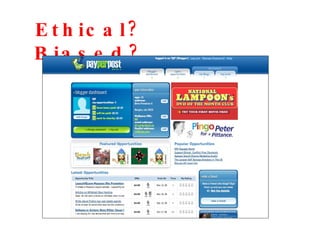
Ethical? Biased?
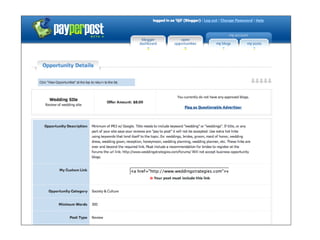
Eksempel på betalt bloggpost
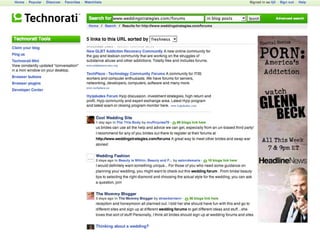
Technorati-søk på URLen
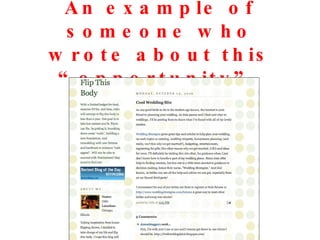
An example of someone who wrote about this “opportunity”.
(over 2000 new blogs have been started since the beginning of this talk...) http://technorati.com/weblog/2006/04/96.html
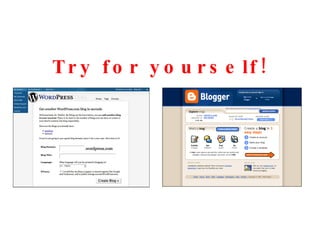
Try for yourself!
jilltxt.net

From Places to Connections

  • 1.
    From places toconnections (Image: http://web.archive.org/web/20030708194456/http://microdoc-news.info/blogger/2003/05/20.html) Jill Walker / Dept of Humanistic Informatics / University of Bergen [email_address] http://jilltxt.net Games, New Media and Democracy Seminar Bergen, 16-17 Oct, 2006
  • 2.
    Changes in oursense of identity? Nation, place: The canonisation of Dutch history - “to improve the cohesion of Dutch society” (- Joost’s talk yesterday) Placebound In flux, based on families, friendships, relationships, individuals, interests... Connection-oriented
  • 3.
    From metaphors ofplace to metaphors of connection
  • 4.
    ...a virtual spacepopulated by projections of our real selves.. (prosthetic selves?) Initial idea of cyberspace --
  • 5.
    cyber space Image:http://www.cybergeography.org/atlas/topology.html Cyberspace. A consensual hallucination experienced daily by billions of legitimate operators, in every nation, by children being taught mathematical concepts... A graphic representation of data abstracted from banks of every computer in the human system. Unthinkable complexity. Lines of light ranged in the nonspace of the mind, clusters and constellations of data. Like city lights, receding , (William Gibson, Neuromancer , 1984, page 69).
  • 6.
    Information architectureNavigate Surf Web site URL - uniform resource location (Placebased way of thinking)
  • 7.
    Metaphors of theweb web as SPACE > goal is max visitors web as NETWORK > goal is max participation web as PLATFORM > goal is to become indispensible, like an operating system { “ web 2.0” See Dan Brown on this: http://www.greenonions.com/archives/2006/03/10/web-20-reframing-web-10/
  • 8.
  • 9.
  • 10.
    Teen content creatorsMore than half of online teens are Content Creators. Some 57% of online teens create content for the internet. 33% of online teens share their own creations online, such as artwork, photos, stories, or videos . 32% say that they have created or worked on webpages or blogs for others , including those for groups they belong to, friends or school assignments. 22% report keeping their own personal webpage . 19% have created their own online journal or blog . About one in five internet-using teens ( 19% ) says they remix content they find online into their own artistic creations. http://www.pewinternet.org/pdfs/PIP_Teens_Content_Creation.pdf
  • 11.
    Hits for traditionalencyclopedia vs Wikipedia http://www.pewinternet.org/PPF/r/189/report_display.asp
  • 12.
    Young userswrite the Wikipedia. http://www.pewinternet.org/PPF/r/189/report_display.asp
  • 13.
    Museo-blogging (museum blogging)Not just more marketing and publicity, but... … something more personal , something that’s not going be on the official website . Perhaps press/reviews regarding exhibitions from publications, reviews of staff, of programming and/or performance, curatorial insights, anecdotes about installation, execution, general thoughts, images, artist interviews that are included in current exhibitions, etc. Anything that supplements and rounds out the programming and, perhaps, includes the viewer. Blogs can make the possibilities of what an institution can do endless and with ease. (Caryn Coleman) (http://blogs.walkerart.org/offcenter/?p=5)
  • 14.
    “outside ideas frominside the museum”
  • 15.
  • 16.
  • 17.
    Vær varsomplakat forinstitusjonsblogger http://newmedia.walkerart.org/nmiwiki/pmwiki.php/Main/WalkerBlogGuidlines
  • 18.
    Hvor mange? “Det fins ikke mer enn et tjuetalls aktive museumsblogger.” -- Jim Spadaccini, mars 2006 http://www.ideum.com/chin/museums-web2.pdf
  • 19.
    Metaphors of theweb Dan Brown suggested this framework in “Web 2.0, reframing Web 1.0” on 3 Oct, 2006 http://www.greenonions.com/archives/2006/03/10/web-20-reframing-web-10/ Web Metaphor => Primary Concern => Role of Structure WEB IS SPACE => Location => Navigation & Wayfinding WEB AS NETWORK => Participation => Structuring Participation WEB AS PLATFORM => Data Sharing => Data Formats
  • 20.
    We used tosearch for a topic, now we search through our friends
  • 21.
  • 22.
    Ortelius: Theatrvmorbis terrarvm http://memory.loc.gov/cgi-bin/ampage
  • 23.
    .. theferment engendered by access to more books.. 'All the world is full of learned men, of most skilled preceptors, of vast libraries. . .neither in Plato's time nor in Cicero's was there ever such opportunity for studying. . .’ (Rabelais)
  • 24.
    Changes engendered byprint Wide dissemination - increased output and altered intake. Standardization Reorganizing texts and reference guides: rationalizing, codifying and cataloguing data Data collection - From Corrupted copy to improved edition, Collaboration Preservation Amplification and reinforcement -- Elizabeth Eisenstein
  • 25.
  • 26.
  • 27.
  • 28.
    An example ofsomeone who wrote about this “opportunity”.
  • 29.
    (over 2000 newblogs have been started since the beginning of this talk...) http://technorati.com/weblog/2006/04/96.html
  • 30.
  • 31.