Building the right thing
      Marko Taipale @ TGA2012
Marko Taipale
•   Principal consultant with agile/lean mindset, CTO, Advisor

•   15+ years of software development

•   Capabilities to deliver products from concept to cash

•   Tens of public speaking appearances
International online gaming company (TO 100+ Meur) improved time-to-market from 24
months to 3 months

Finnish energy company purchased process control system and got the delivery 4 times faster
than expected.The system secured the business for next 2 years.

Finnish software product company saved 1,3 Meur / year in management and administration.

Software company validated new business model for new product in 2 months.
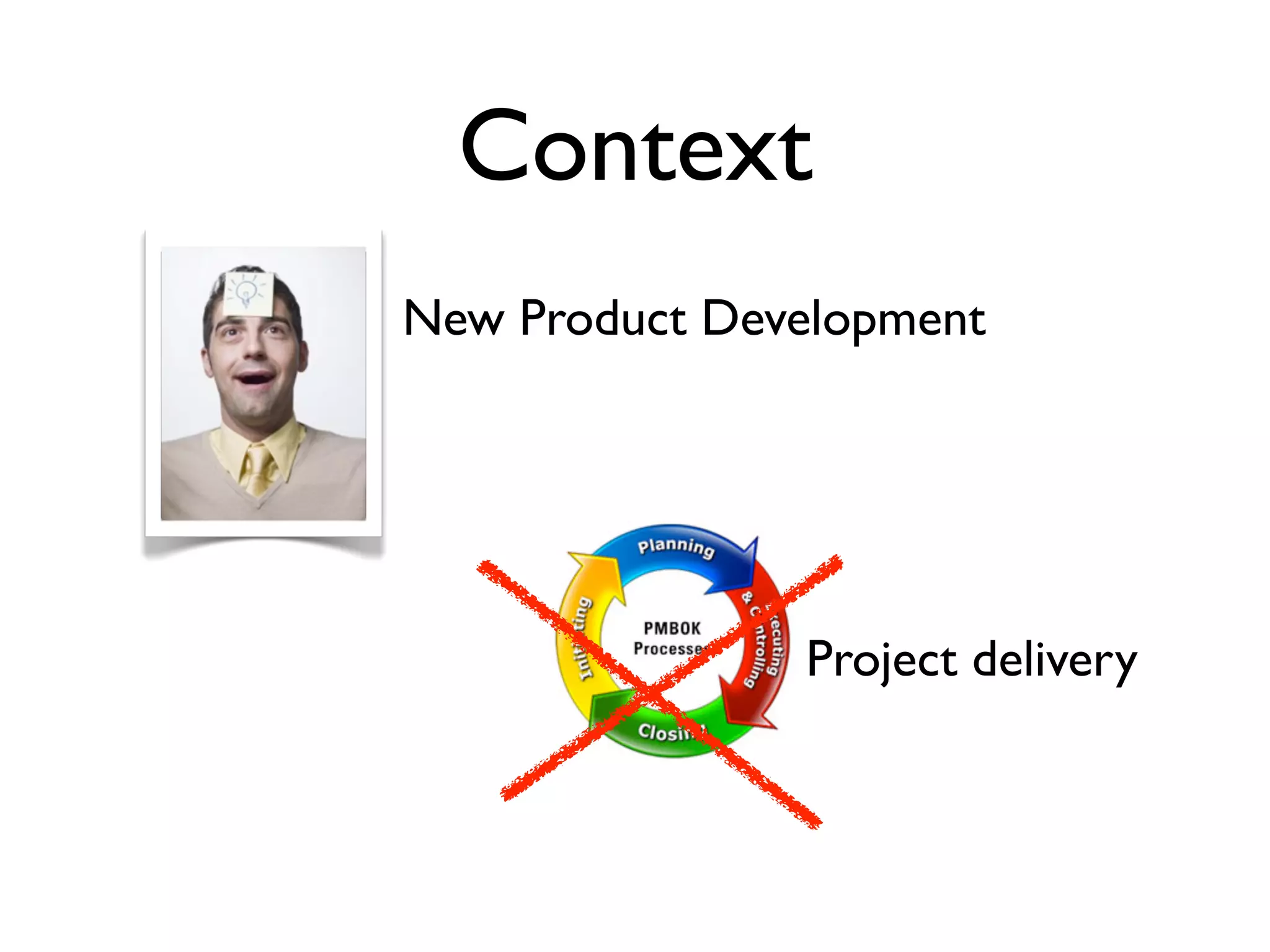
Context
New Product Development


               Project delivery
the RIGHT thing?
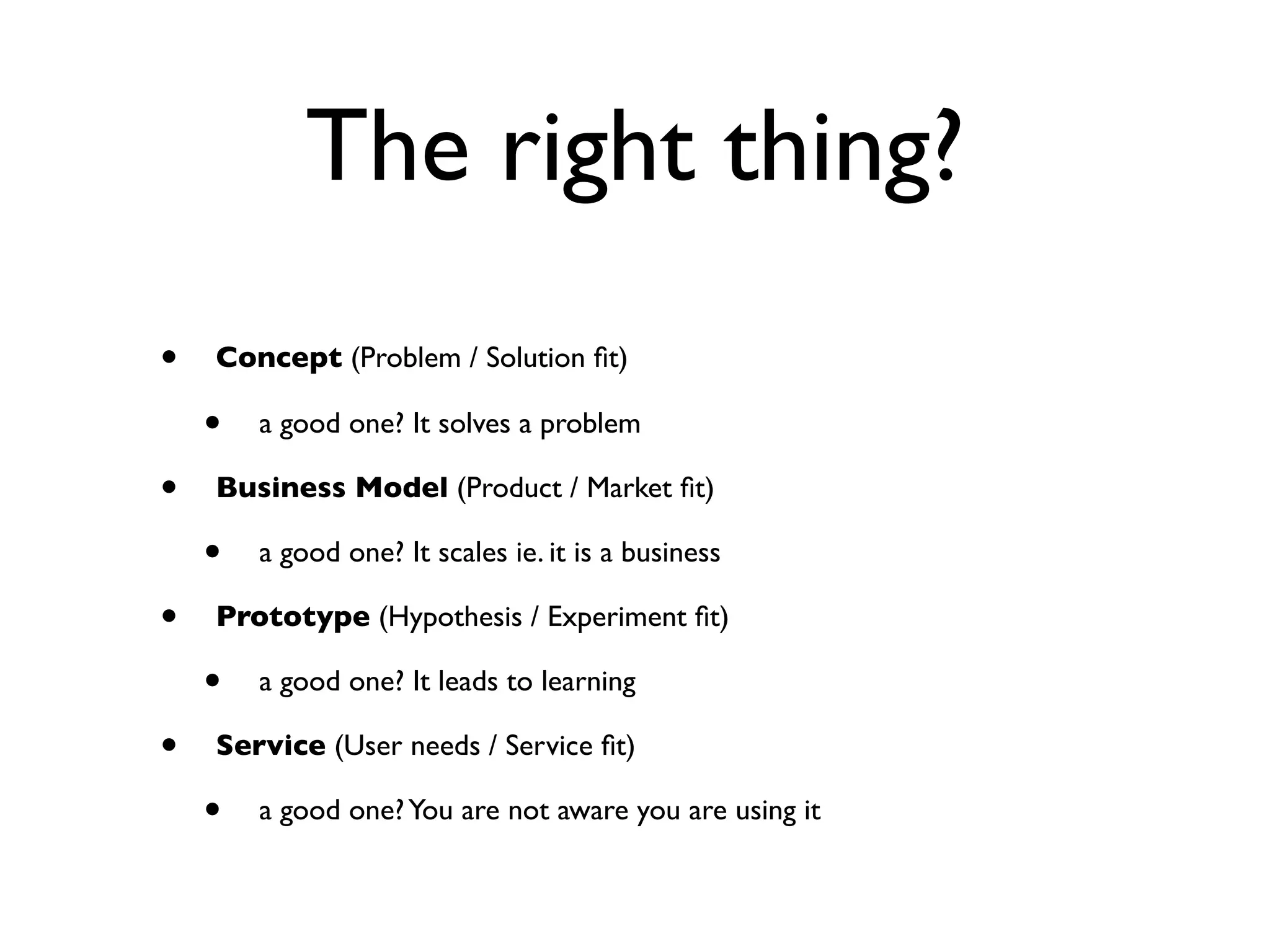
The right thing?
•   Concept (Problem / Solution fit)

    •   a good one? It solves a problem

•   Business Model (Product / Market fit)

    •   a good one? It scales ie. it is a business

•   Prototype (Hypothesis / Experiment fit)

    •   a good one? It leads to learning

•   Service (User needs / Service fit)

    •   a good one? You are not aware you are using it
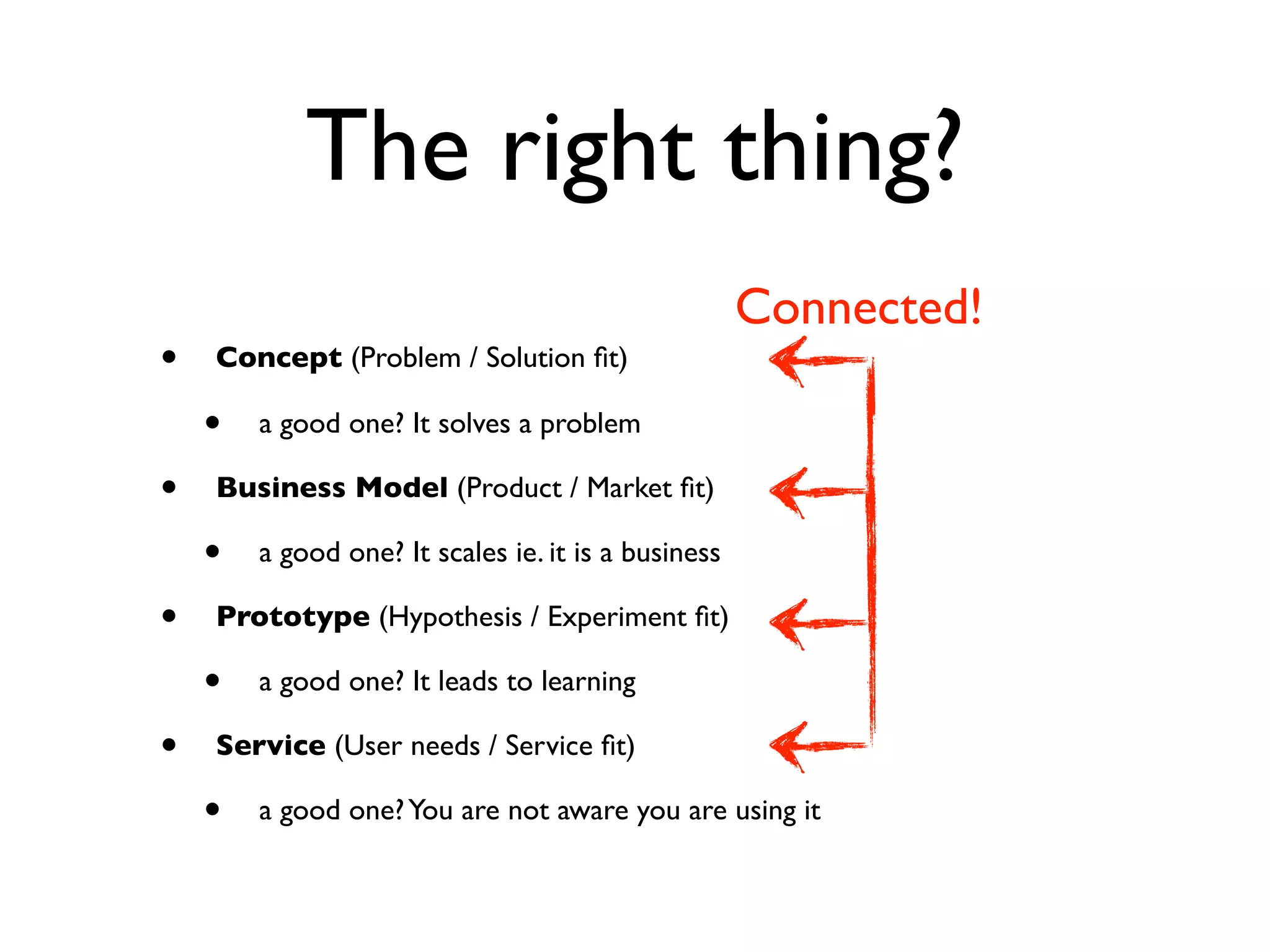
The right thing?
                                                     Connected!
•   Concept (Problem / Solution fit)

    •   a good one? It solves a problem

•   Business Model (Product / Market fit)

    •   a good one? It scales ie. it is a business

•   Prototype (Hypothesis / Experiment fit)

    •   a good one? It leads to learning

•   Service (User needs / Service fit)

    •   a good one? You are not aware you are using it
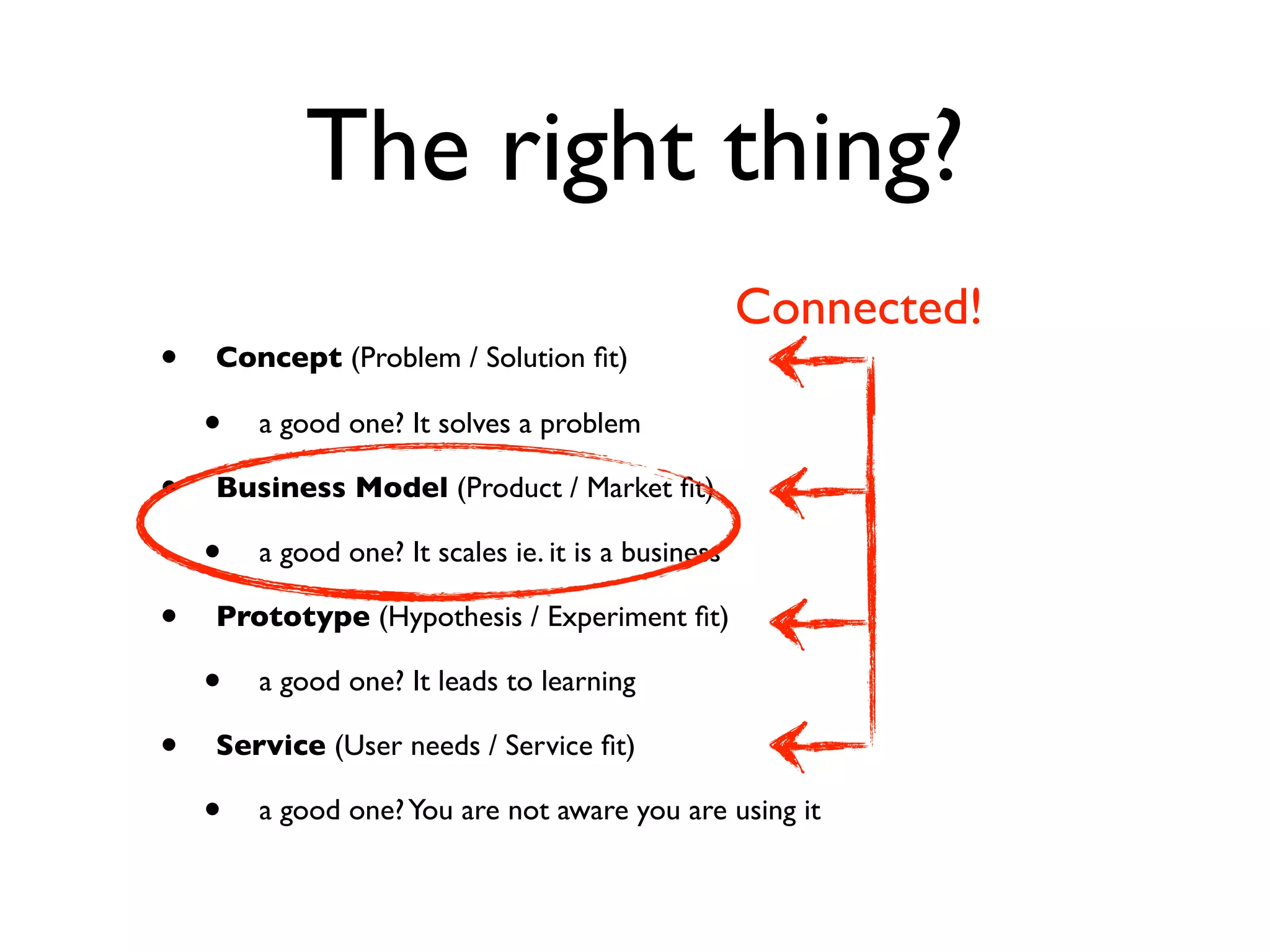
The right thing?
                                                     Connected!
•   Concept (Problem / Solution fit)

    •   a good one? It solves a problem

•   Business Model (Product / Market fit)

    •   a good one? It scales ie. it is a business

•   Prototype (Hypothesis / Experiment fit)

    •   a good one? It leads to learning

•   Service (User needs / Service fit)

    •   a good one? You are not aware you are using it
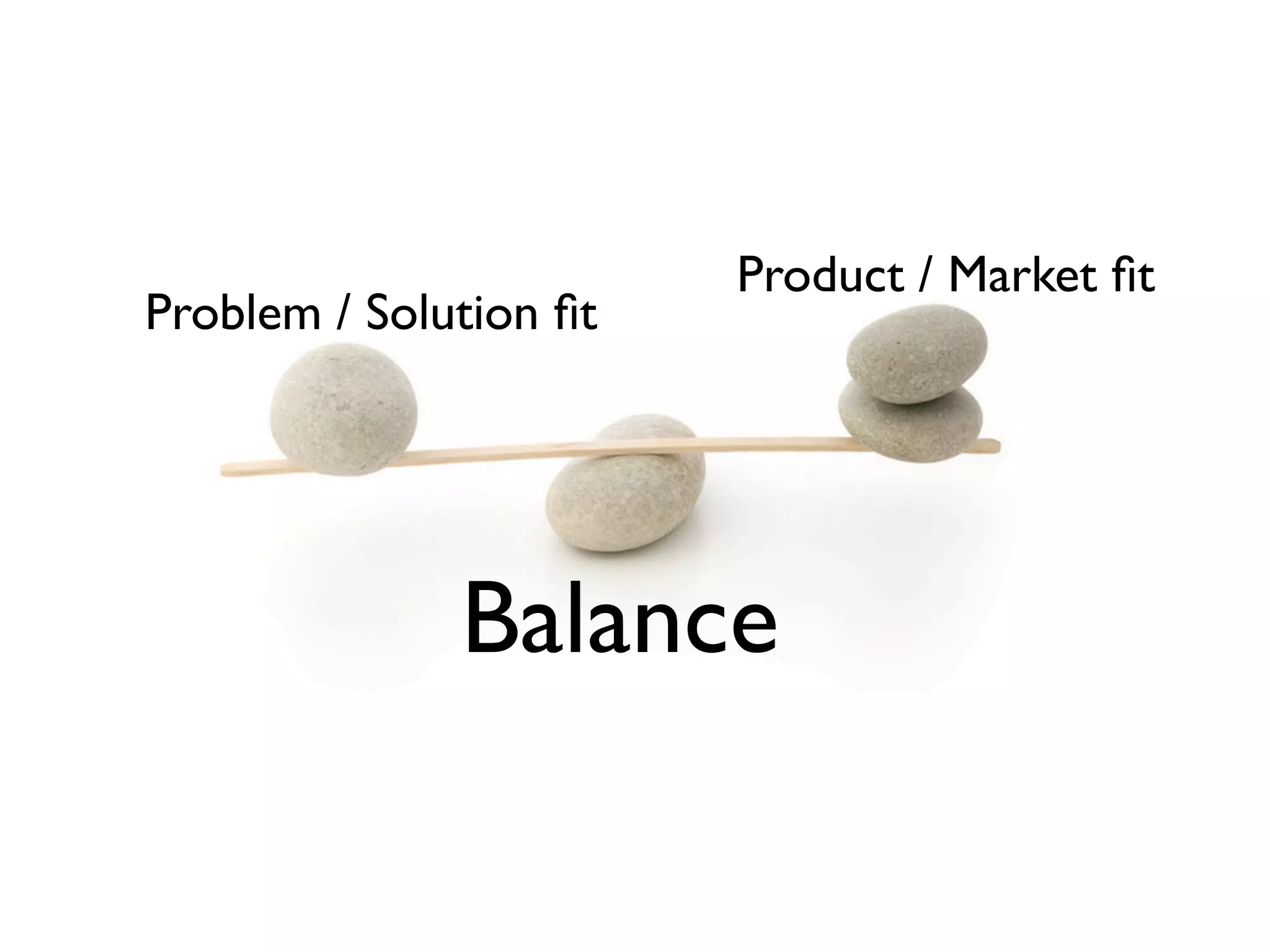
Product / Market fit
Problem / Solution fit


              Balance
How to ensure you are
 doing the right thing?
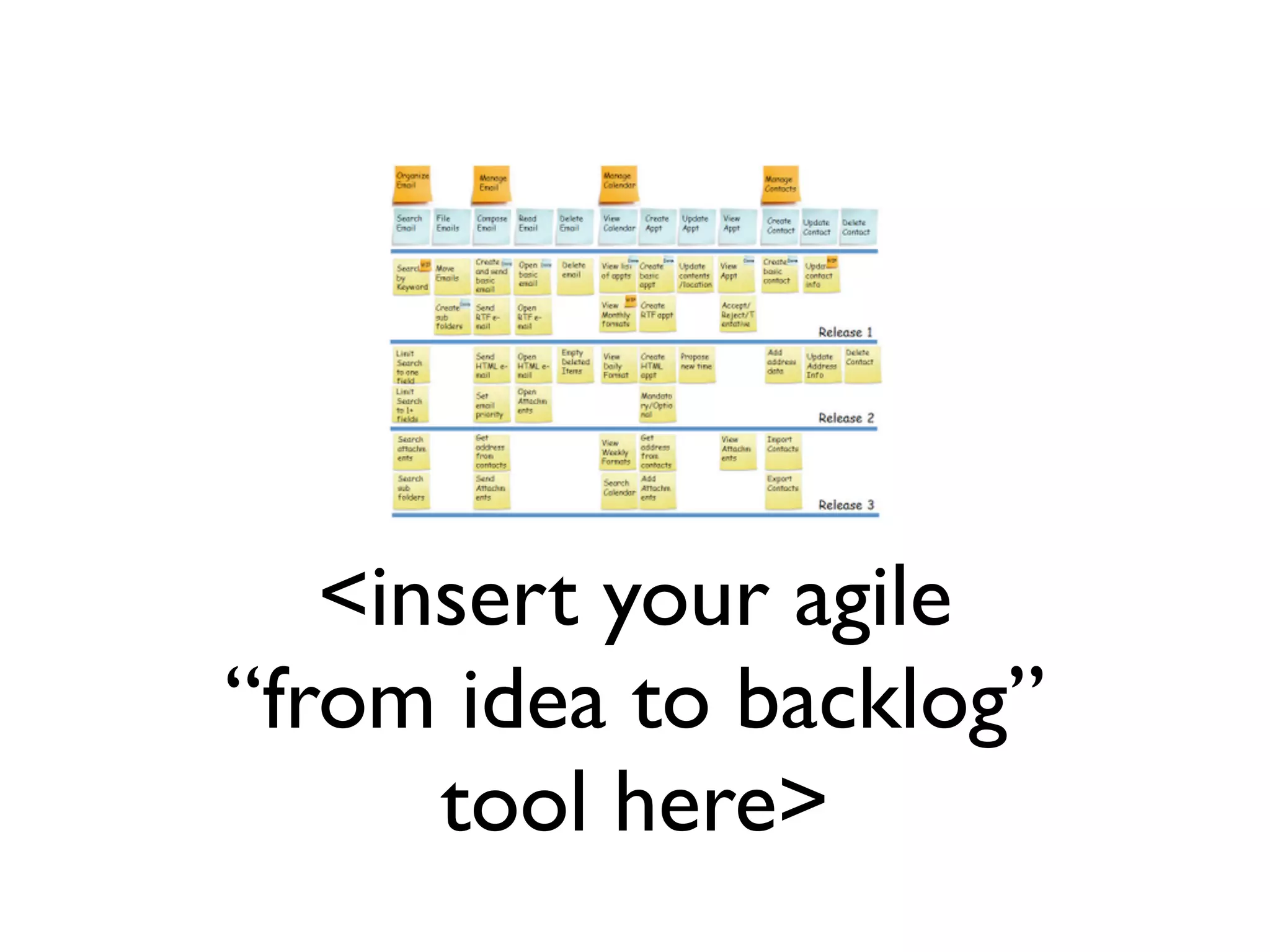
<insert your agile
“from idea to backlog”
      tool here>
But that is just stupid!
        (why?)
Cause it expects that you
            know the requirements


And that there is money to be made
In new product development
    the requirements are
       unknown
... and the business is unknown
In order to do the right thing
        you need to...

•   Model your business

•   Understand your market

•   State your guesses, create tests, validate

    •   by talking to your customer

    •   by measuring (and build the measures in)
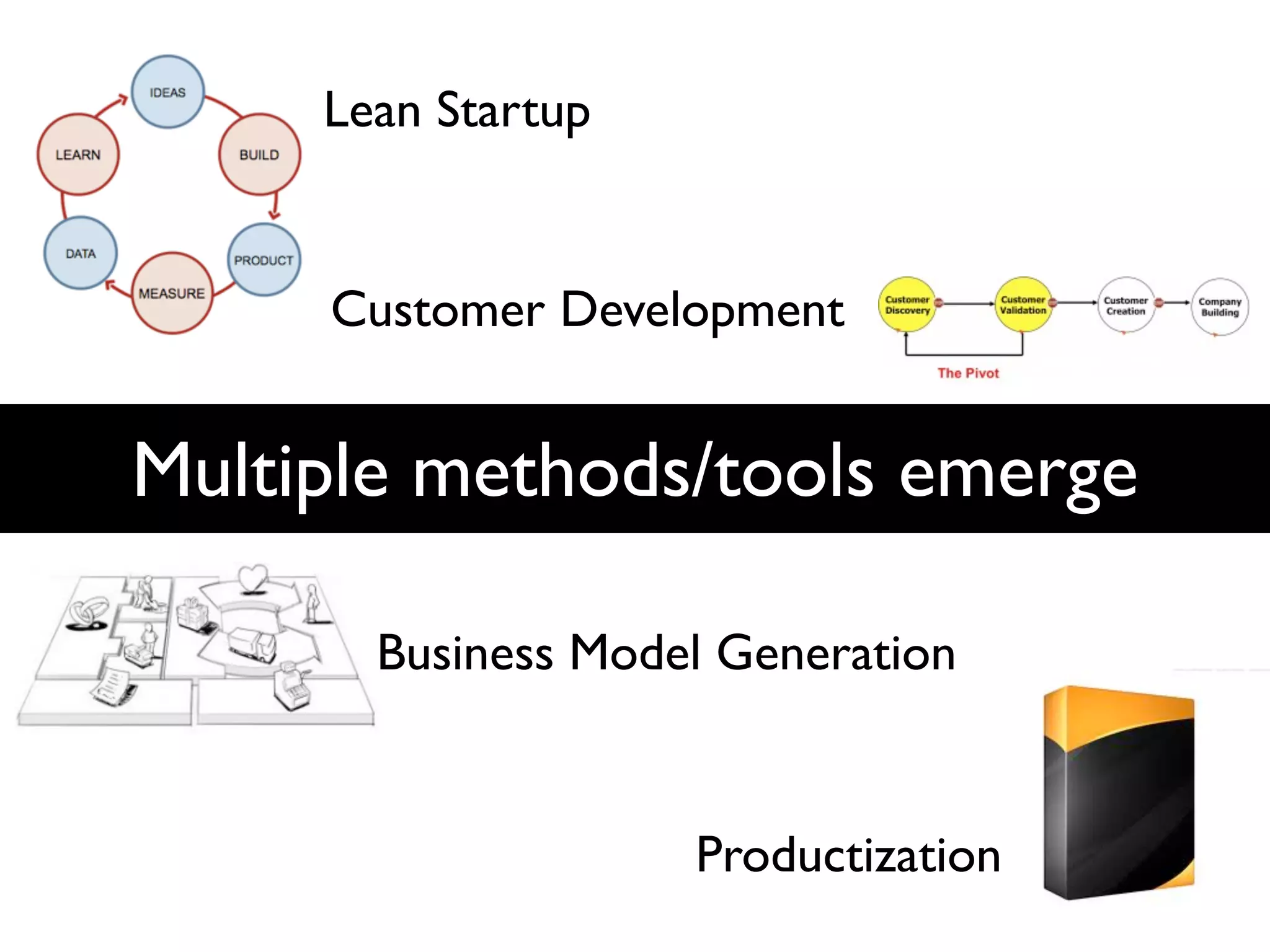
Lean Startup


     Customer Development


Multiple methods/tools emerge

       Business Model Generation


                    Productization
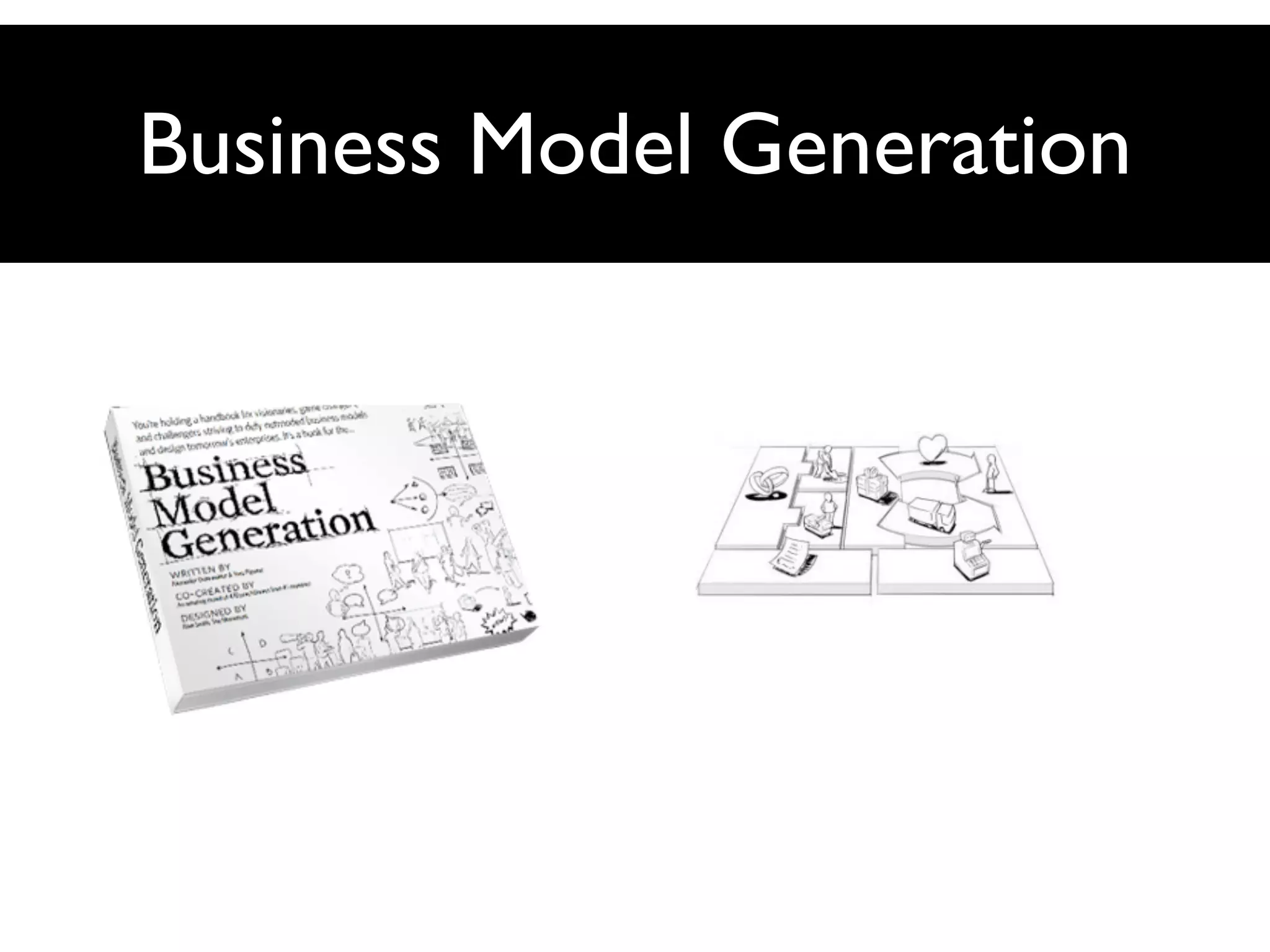
Business Model Generation
“A business model describes
the rationale of how an
organization creates, delivers,
and captures value”
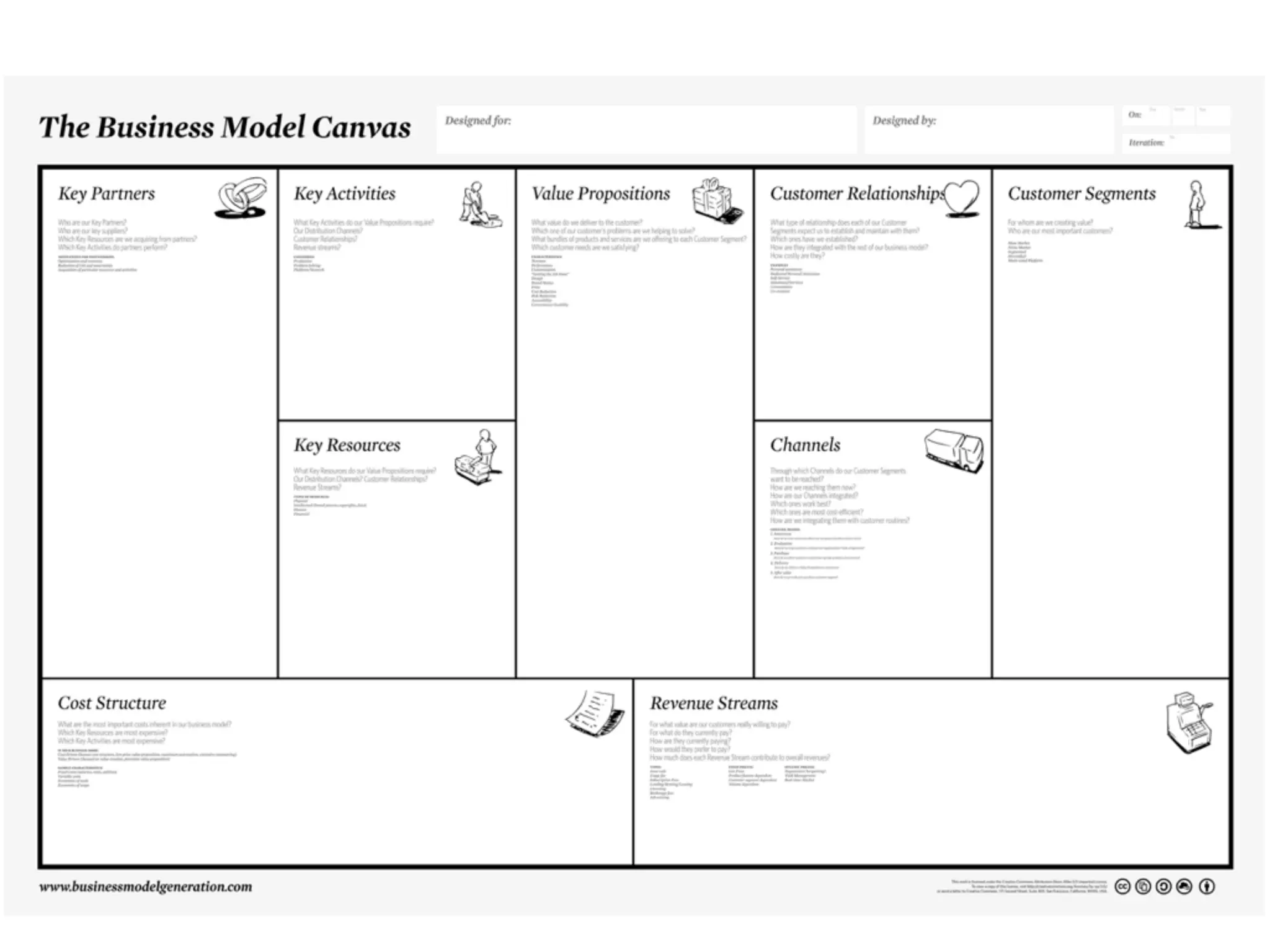
9 blocks of business
       model
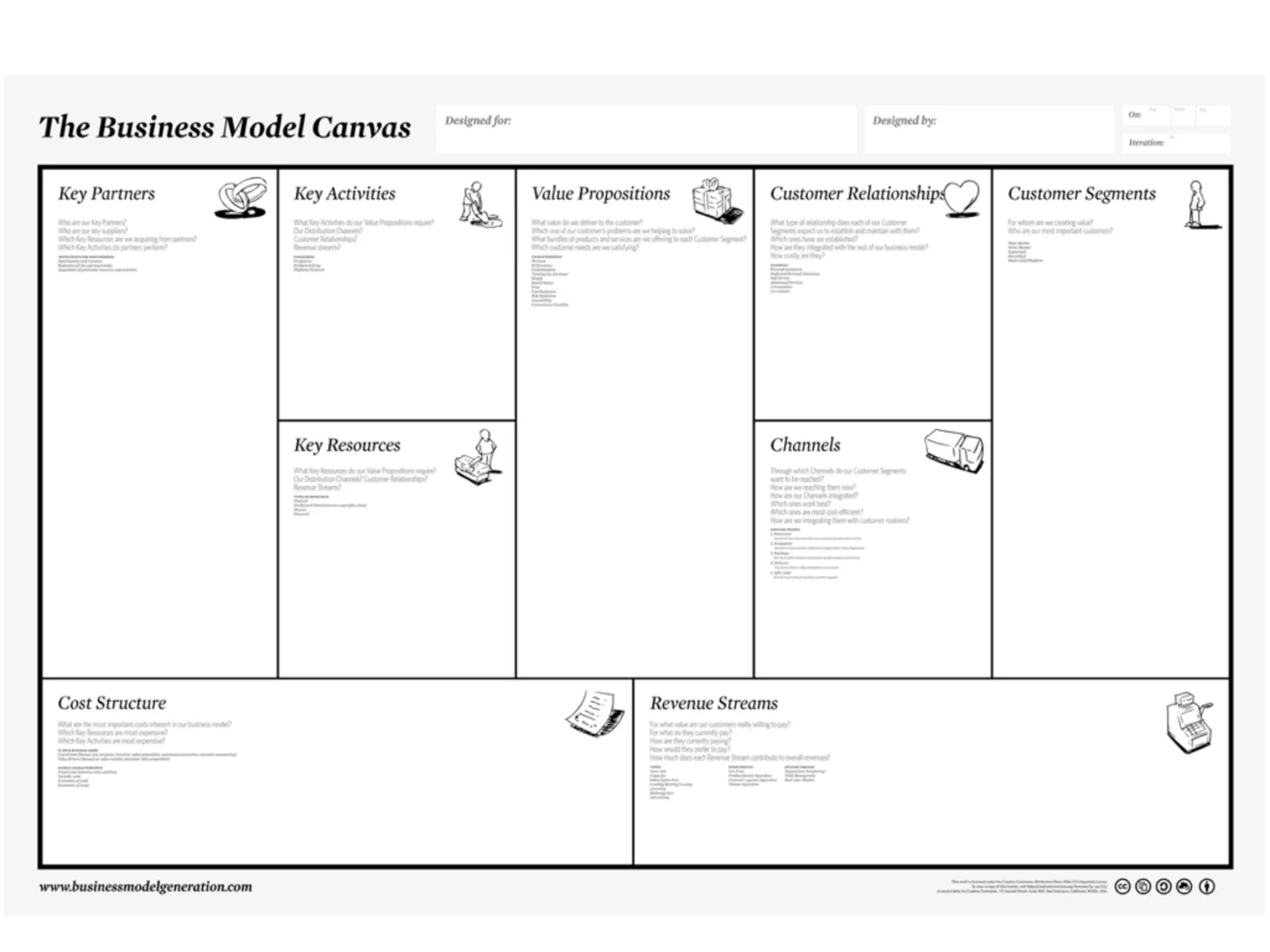
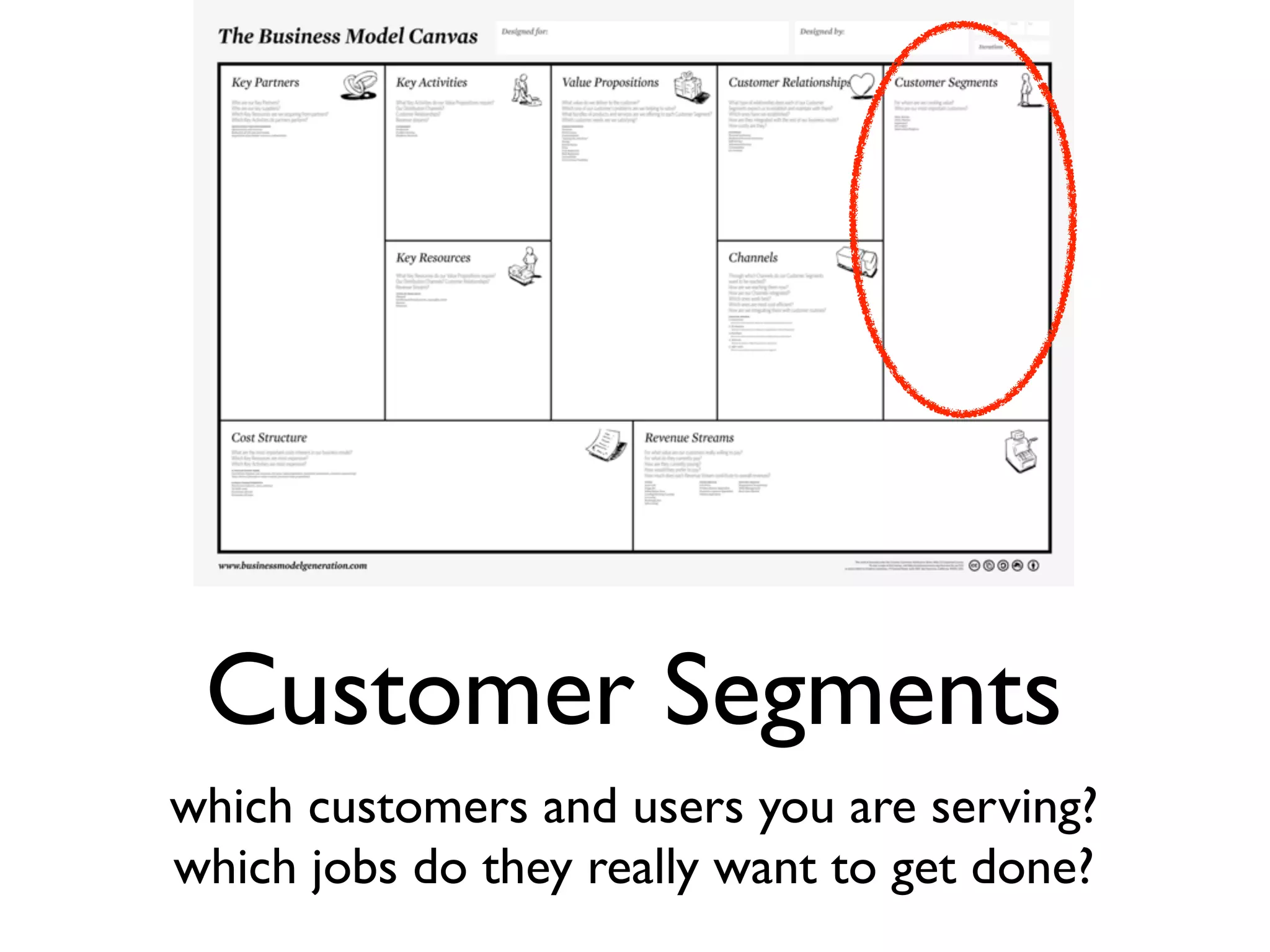
Customer Segments
which customers and users you are serving?
which jobs do they really want to get done?
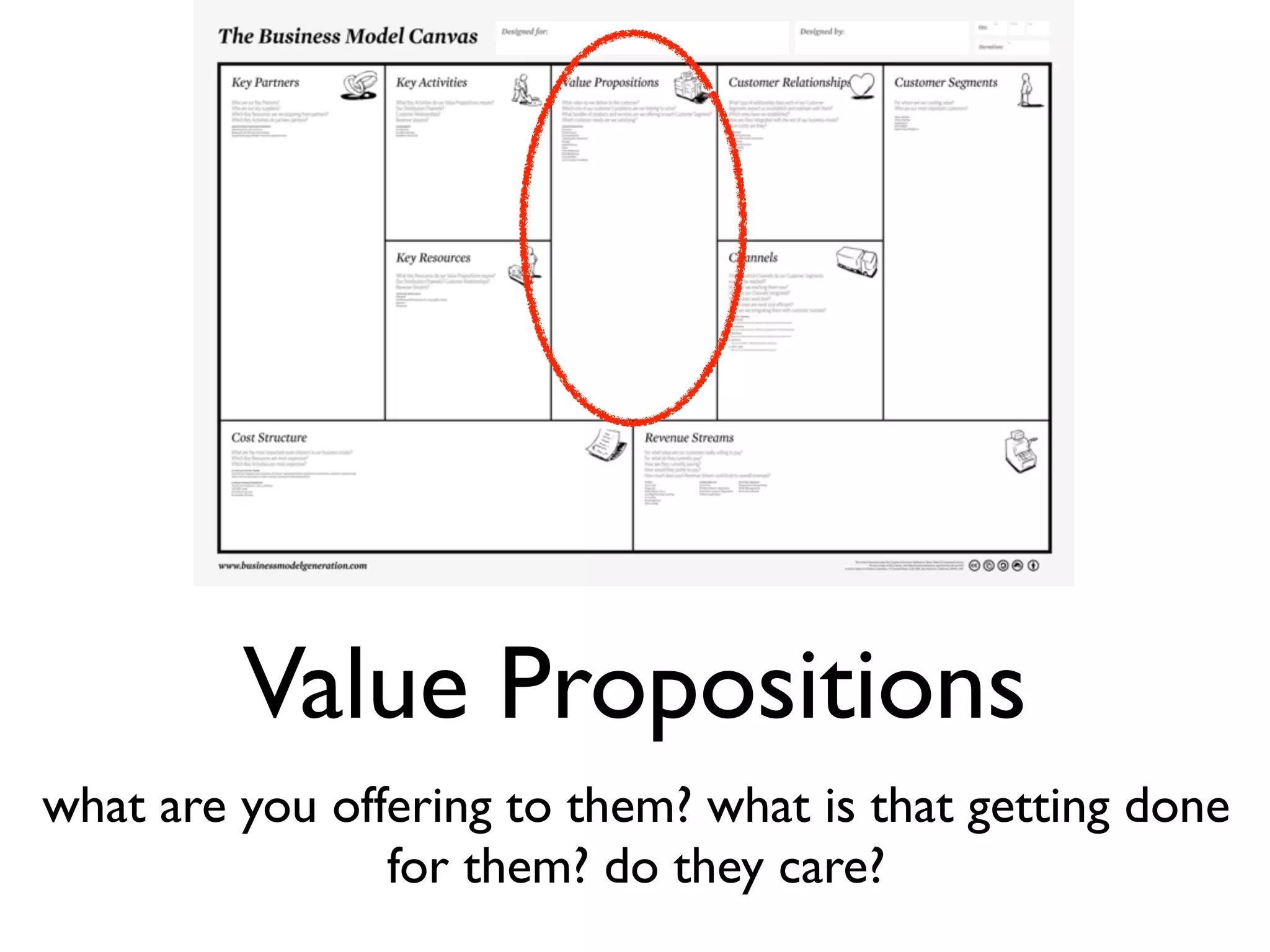
Value Propositions
what are you offering to them? what is that getting done
                for them? do they care?
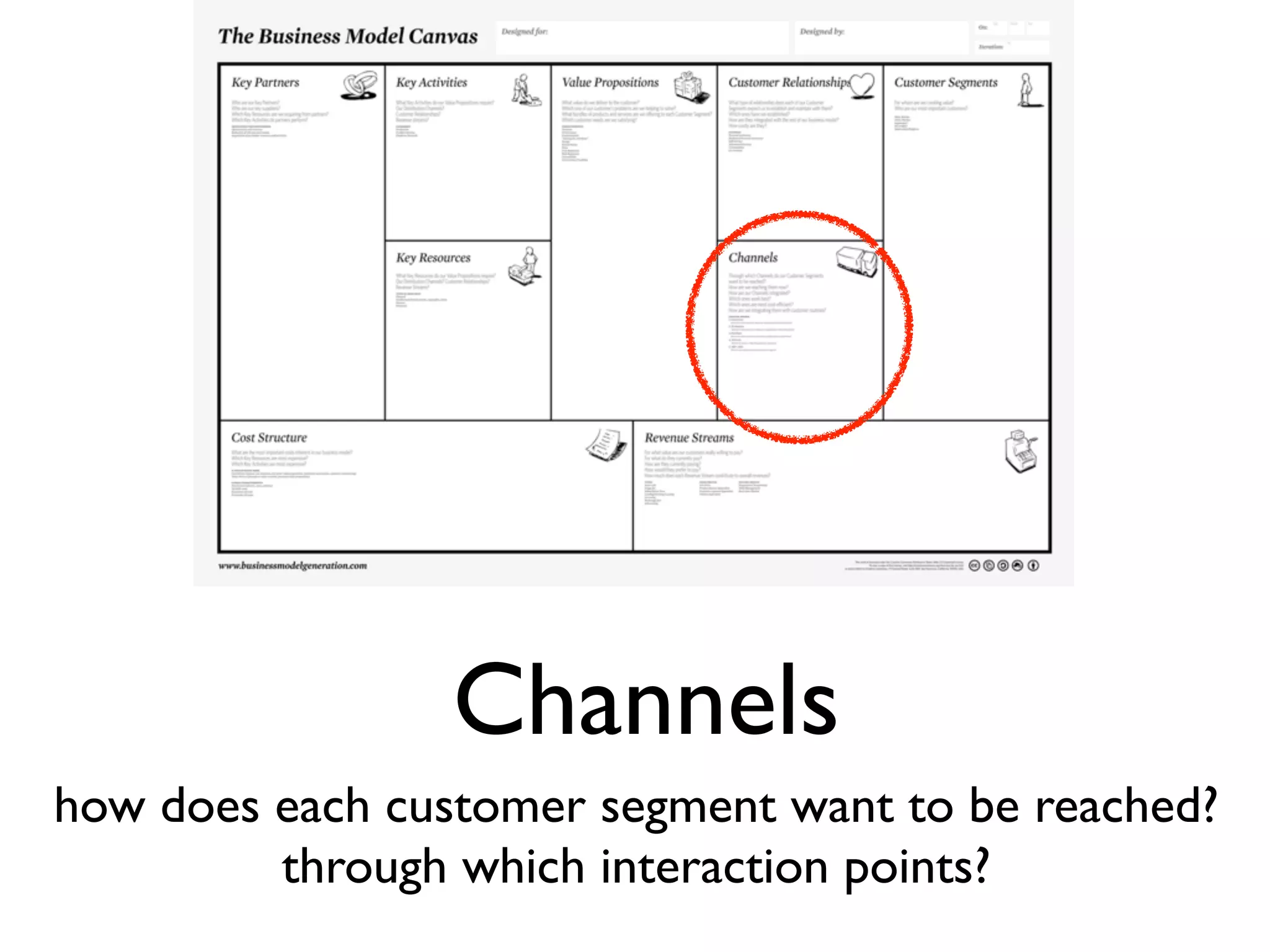
Channels
how does each customer segment want to be reached?
         through which interaction points?
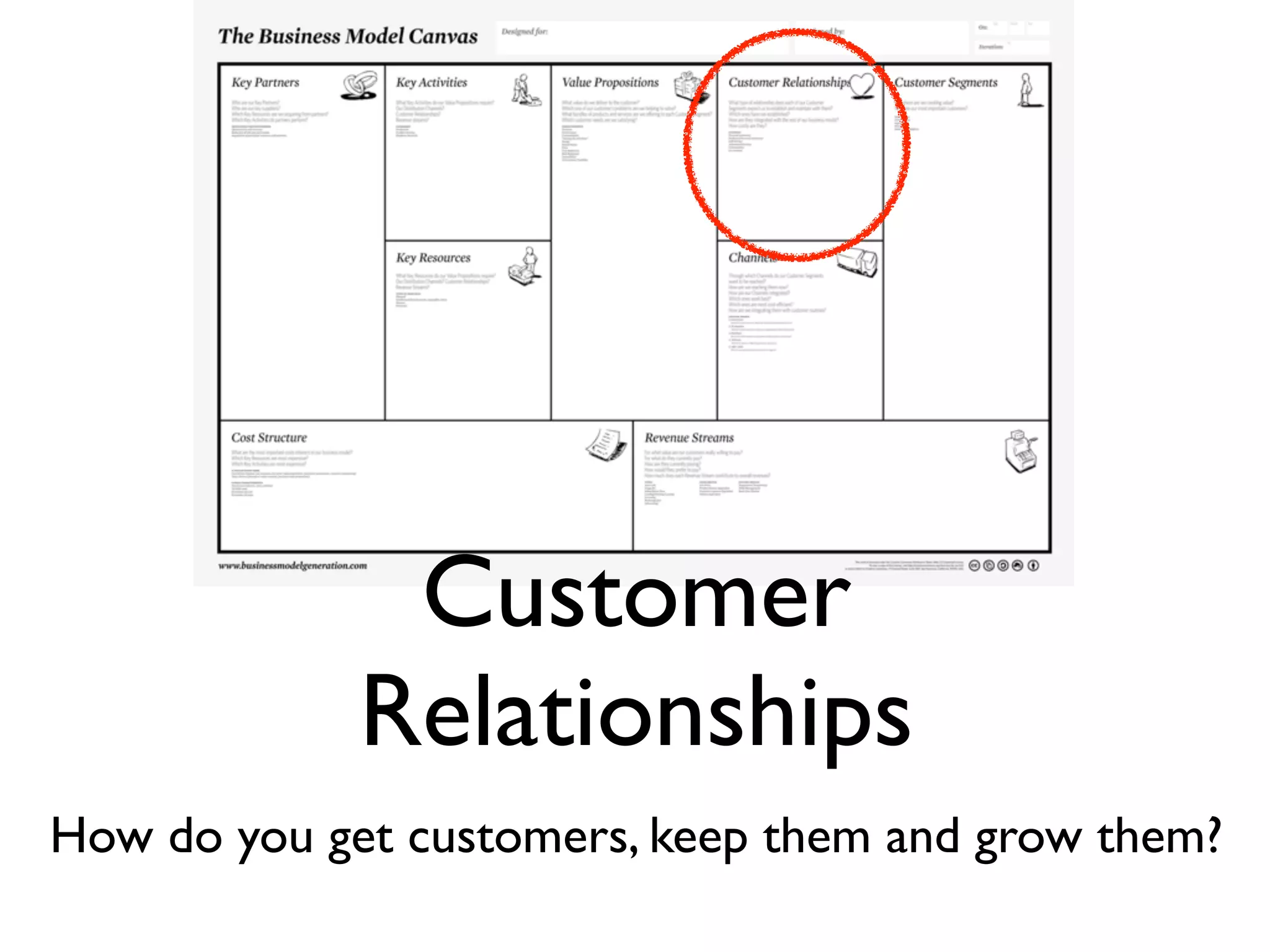
Customer
             Relationships
How do you get customers, keep them and grow them?
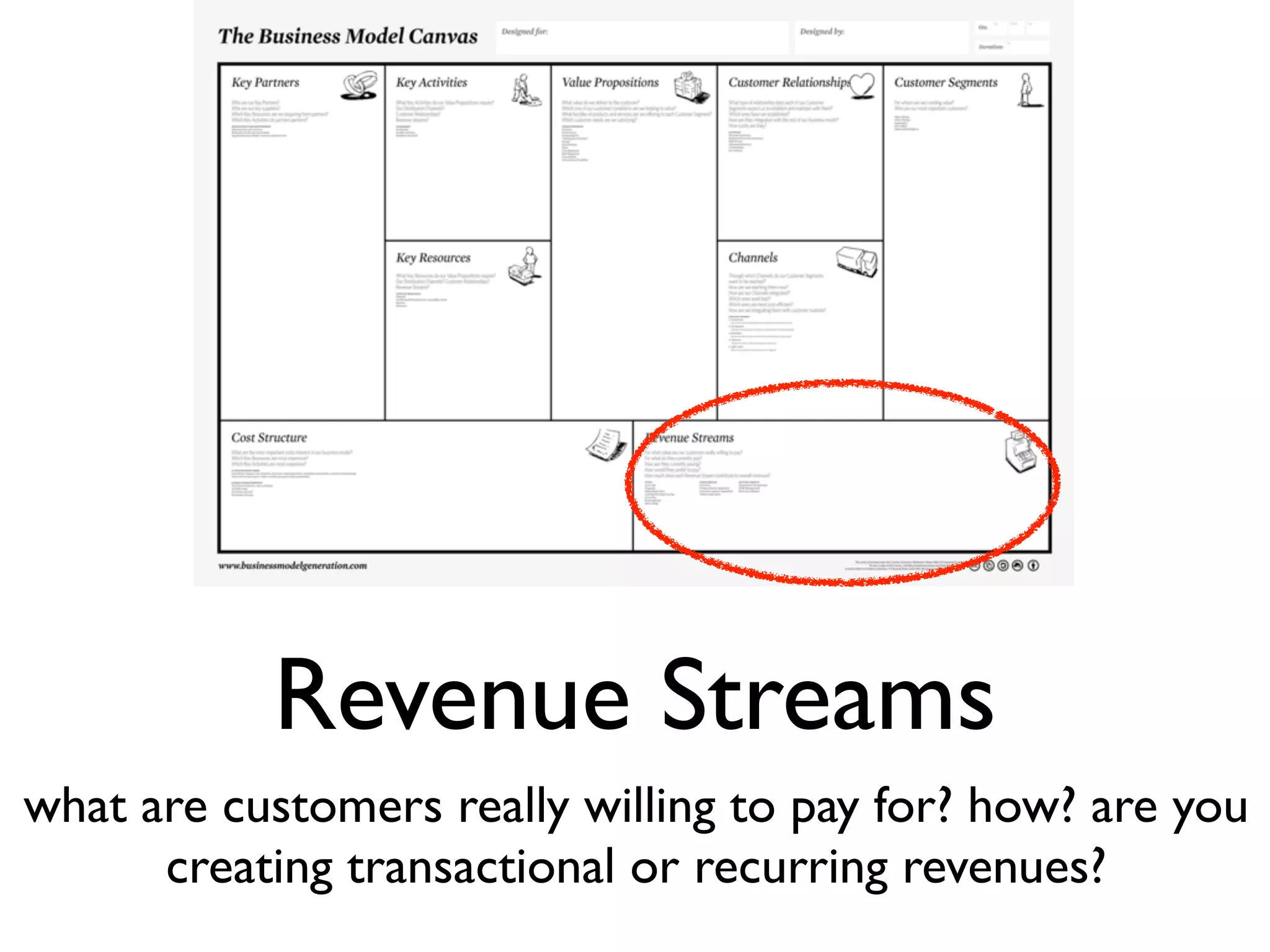
Revenue Streams
what are customers really willing to pay for? how? are you
      creating transactional or recurring revenues?
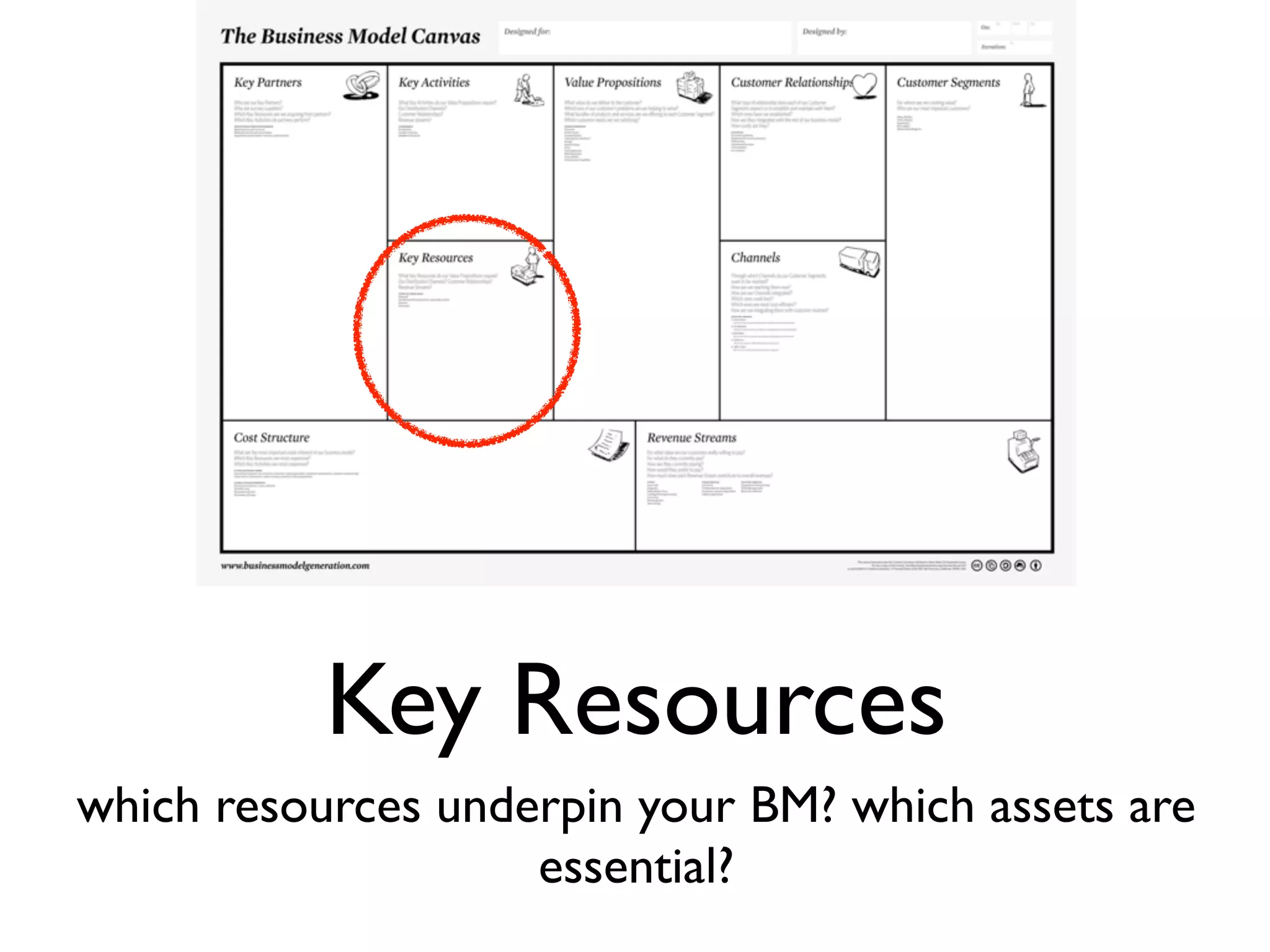
Key Resources
which resources underpin your BM? which assets are
                    essential?
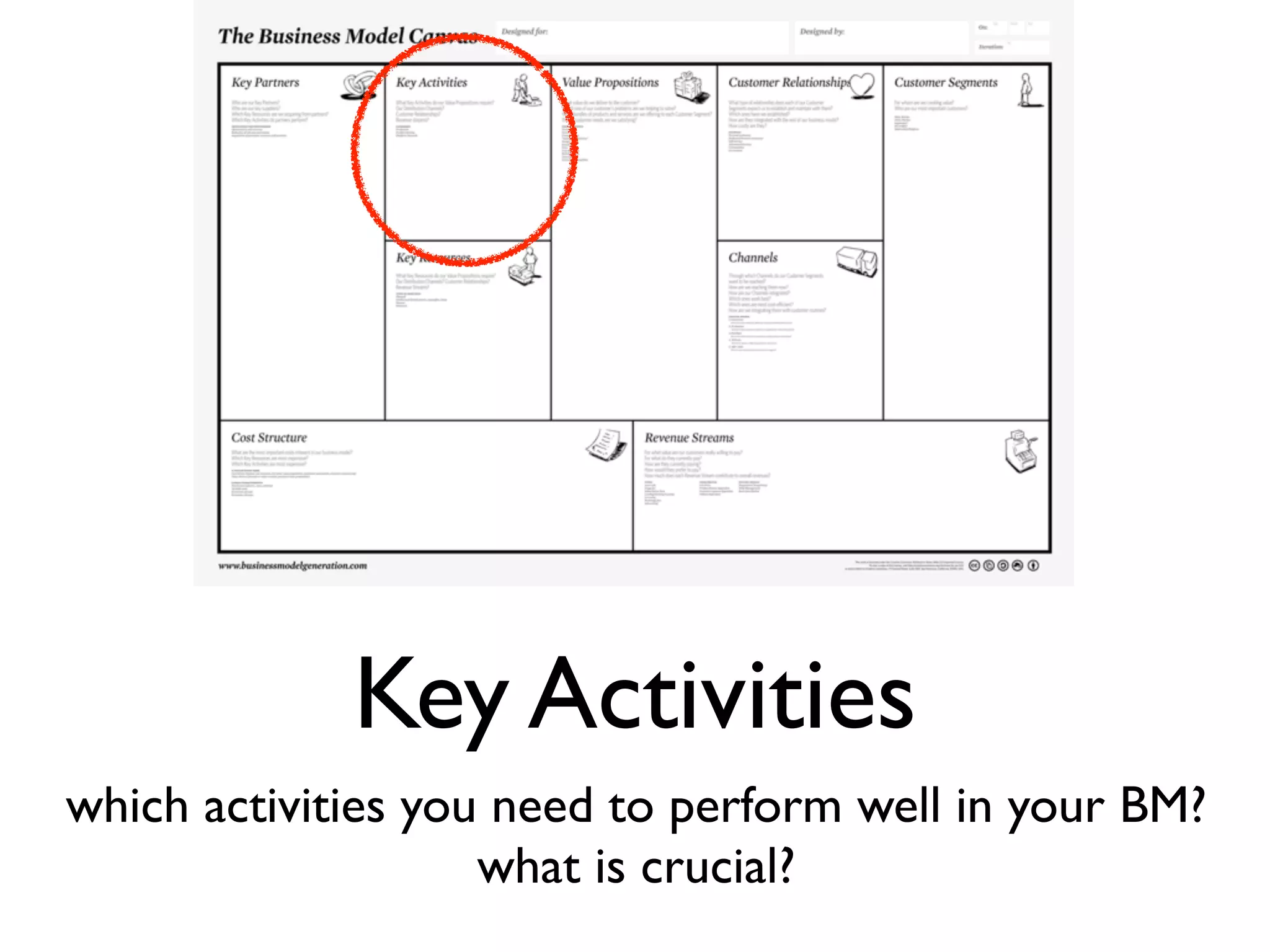
Key Activities
which activities you need to perform well in your BM?
                    what is crucial?
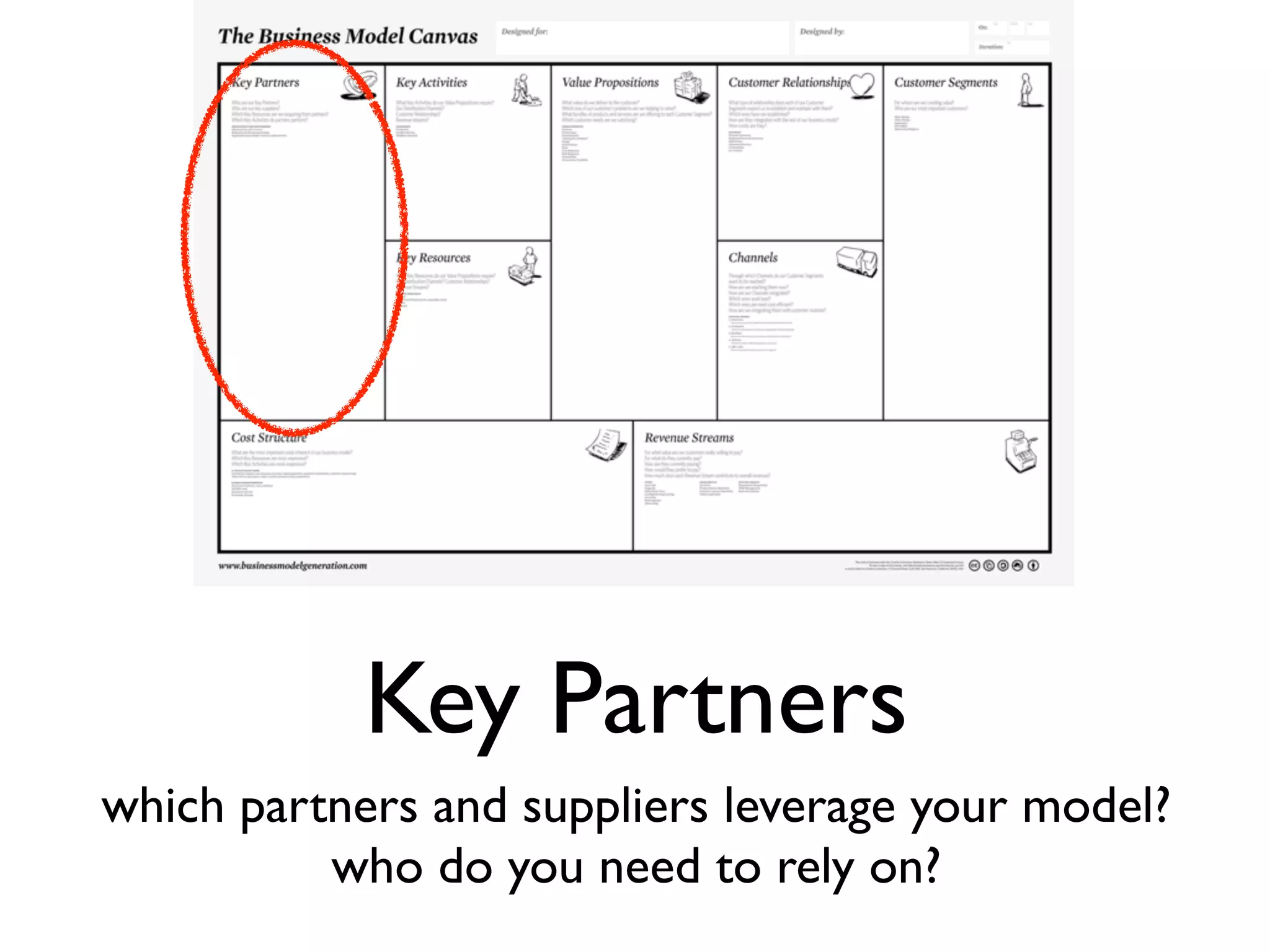
Key Partners
which partners and suppliers leverage your model?
          who do you need to rely on?
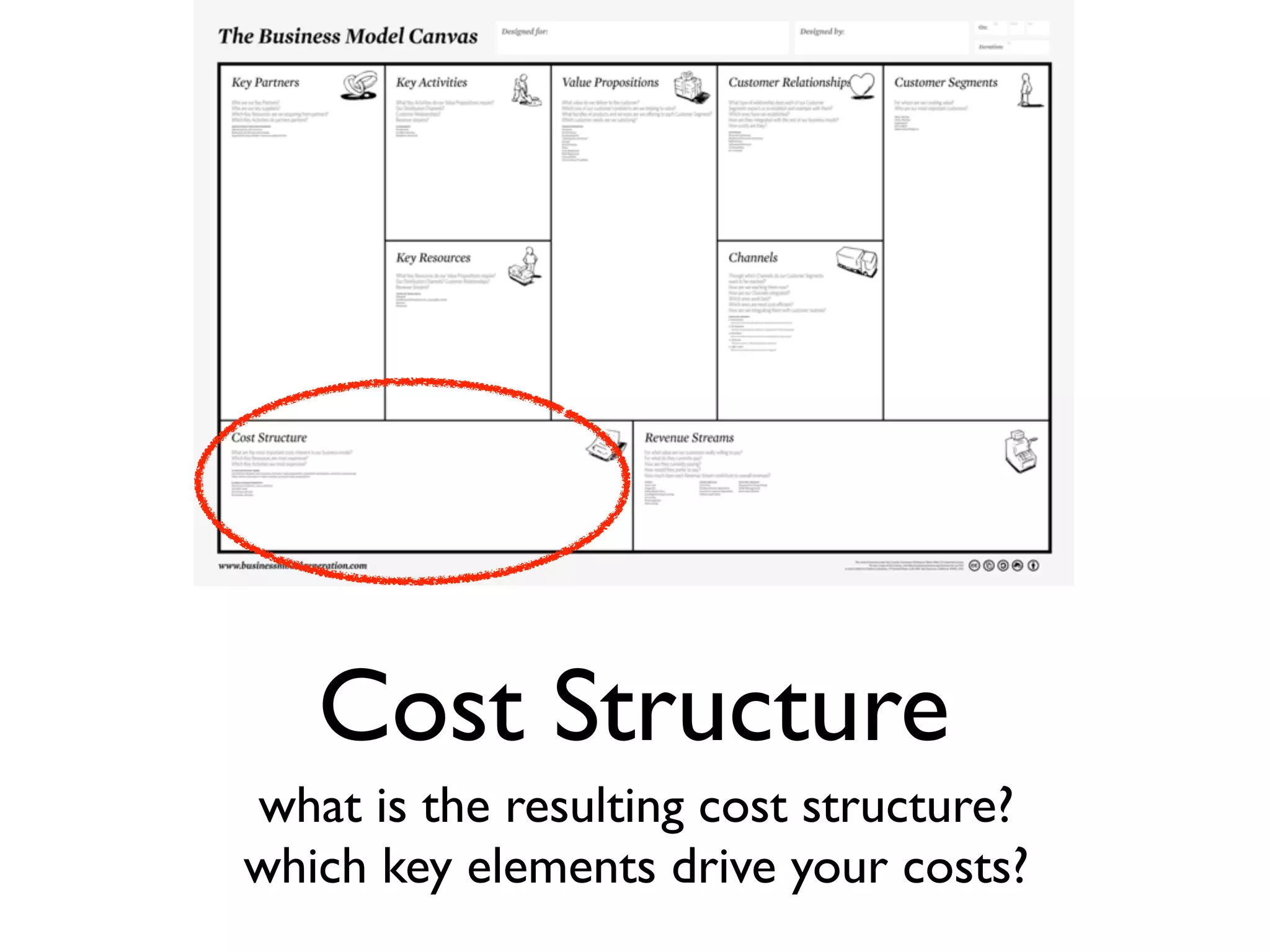
Cost Structure
what is the resulting cost structure?
which key elements drive your costs?
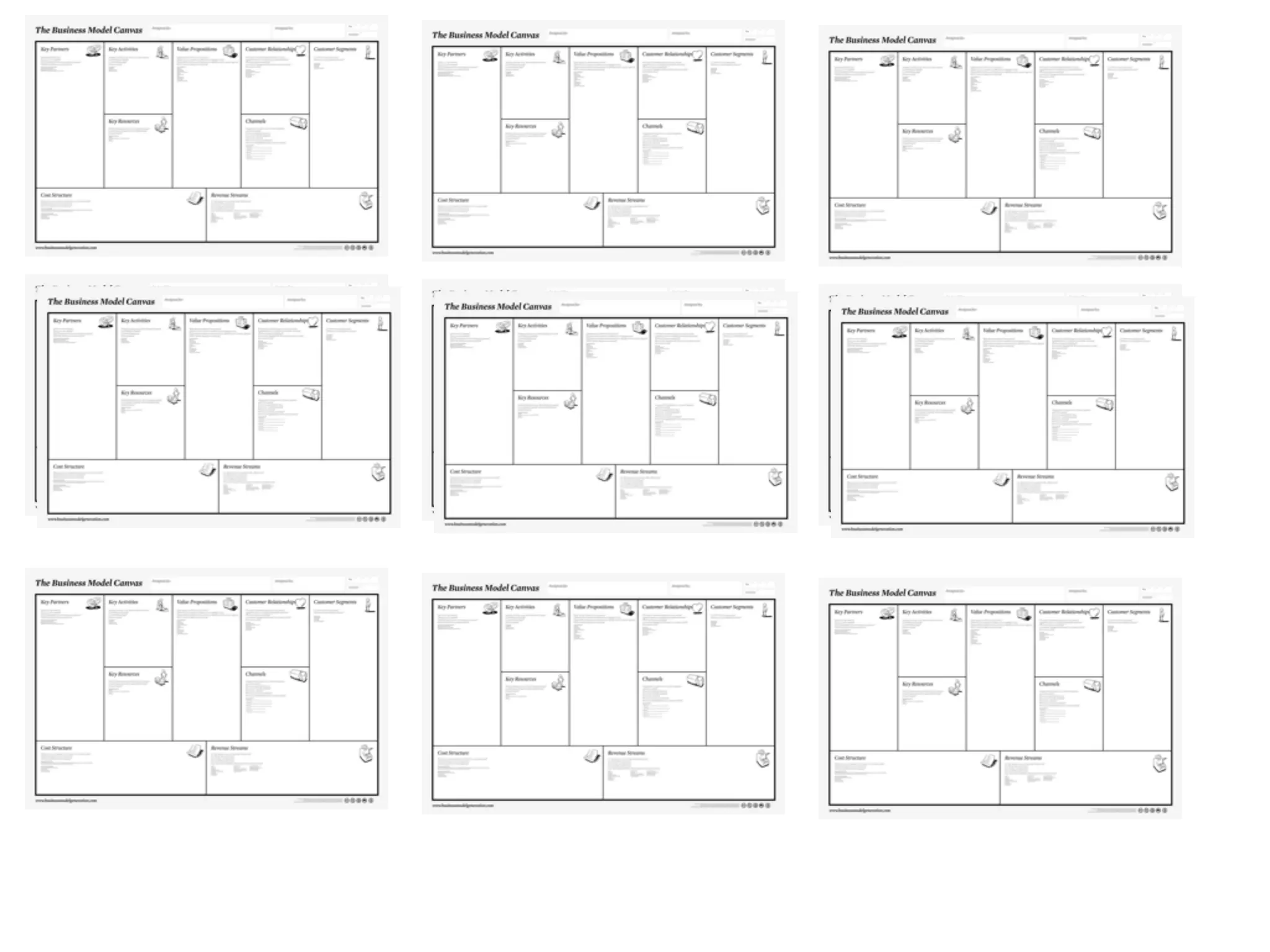
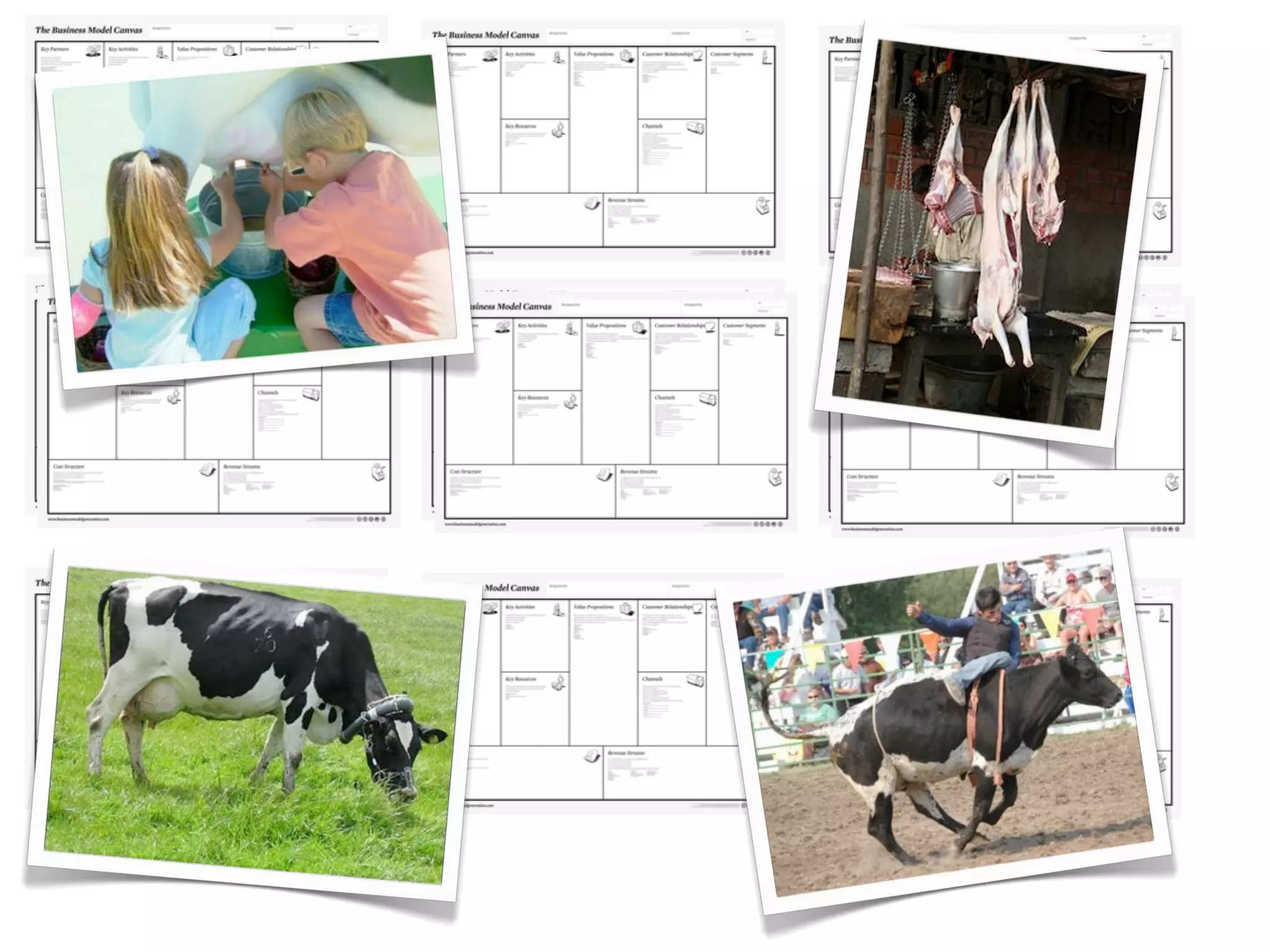
the same technology,
product, or service can
   have numerous
 business models
alternatives: ask
    yourself..
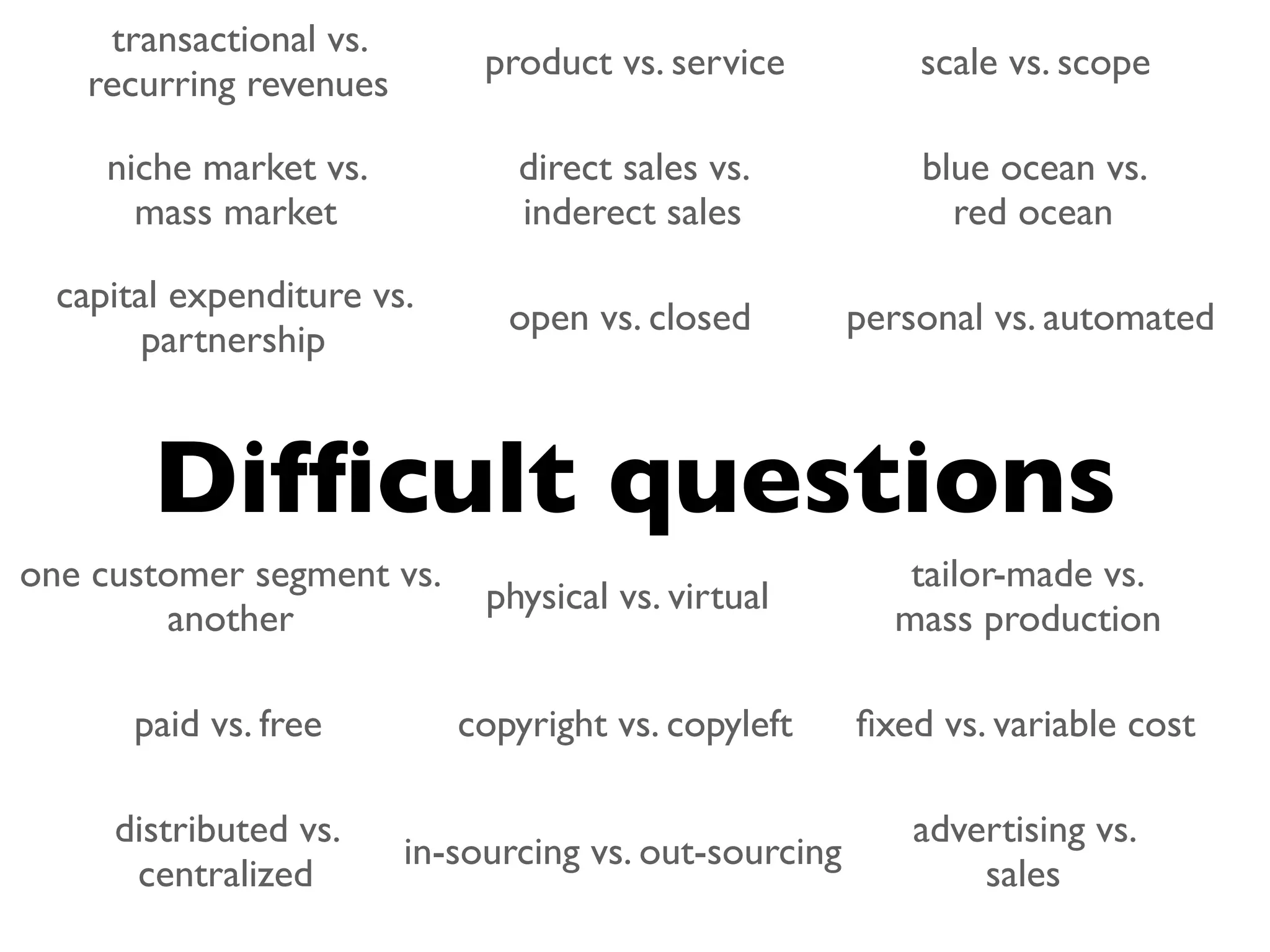
transactional vs.
                              product vs. service           scale vs. scope
    recurring revenues

     niche market vs.           direct sales vs.            blue ocean vs.
       mass market              inderect sales                red ocean

  capital expenditure vs.
                               open vs. closed          personal vs. automated
        partnership


        Difficult questions
one customer segment vs.                                   tailor-made vs.
                              physical vs. virtual
        another                                           mass production

       paid vs. free        copyright vs. copyleft      fixed vs. variable cost

     distributed vs.                                       advertising vs.
                         in-sourcing vs. out-sourcing
      centralized                                              sales
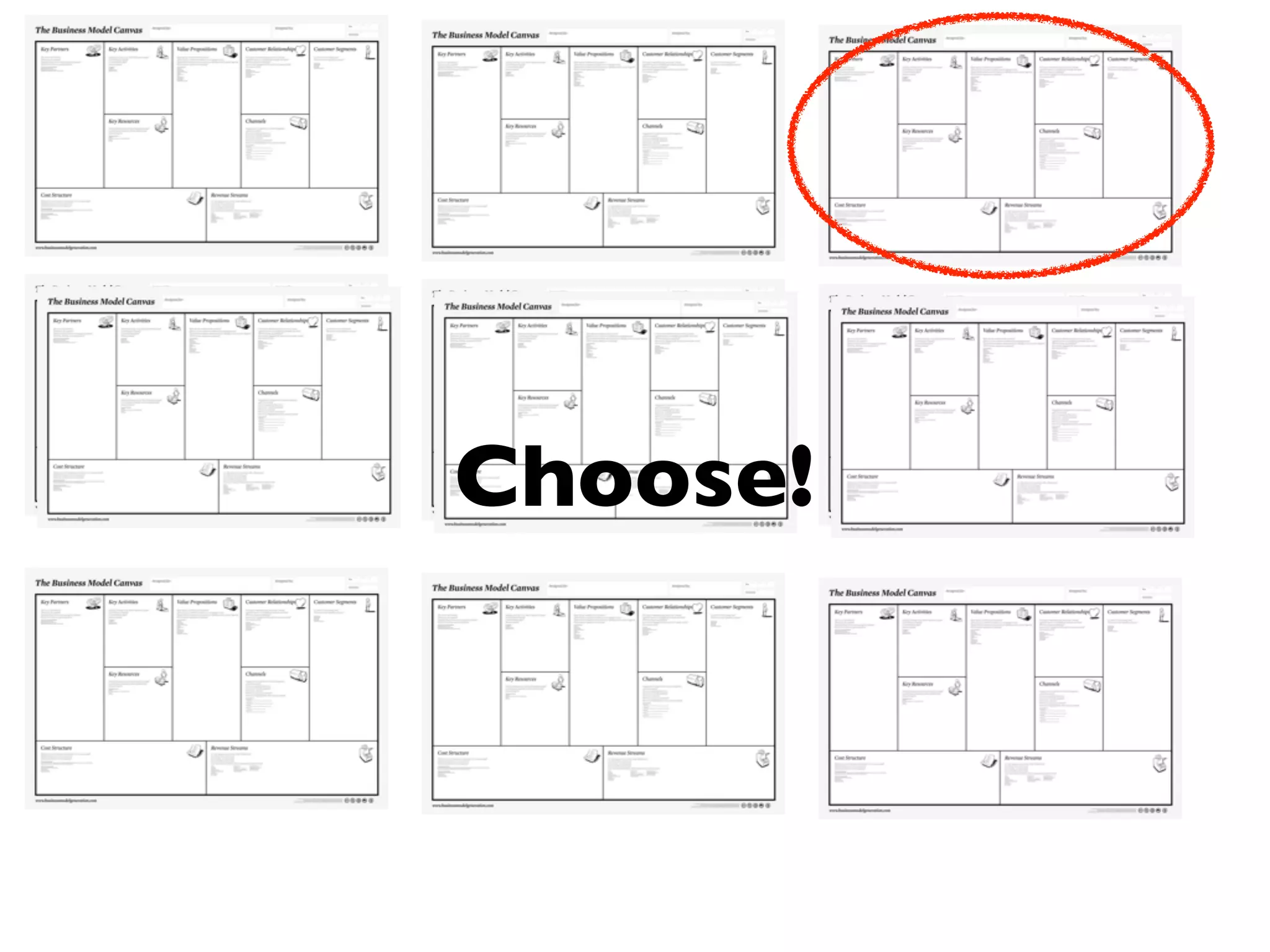
Choose!
Business Model can
look great on paper...
but it is just series of
        guesses!
get out of the
building and test
  each hypothesis

 with real, breathing customer!
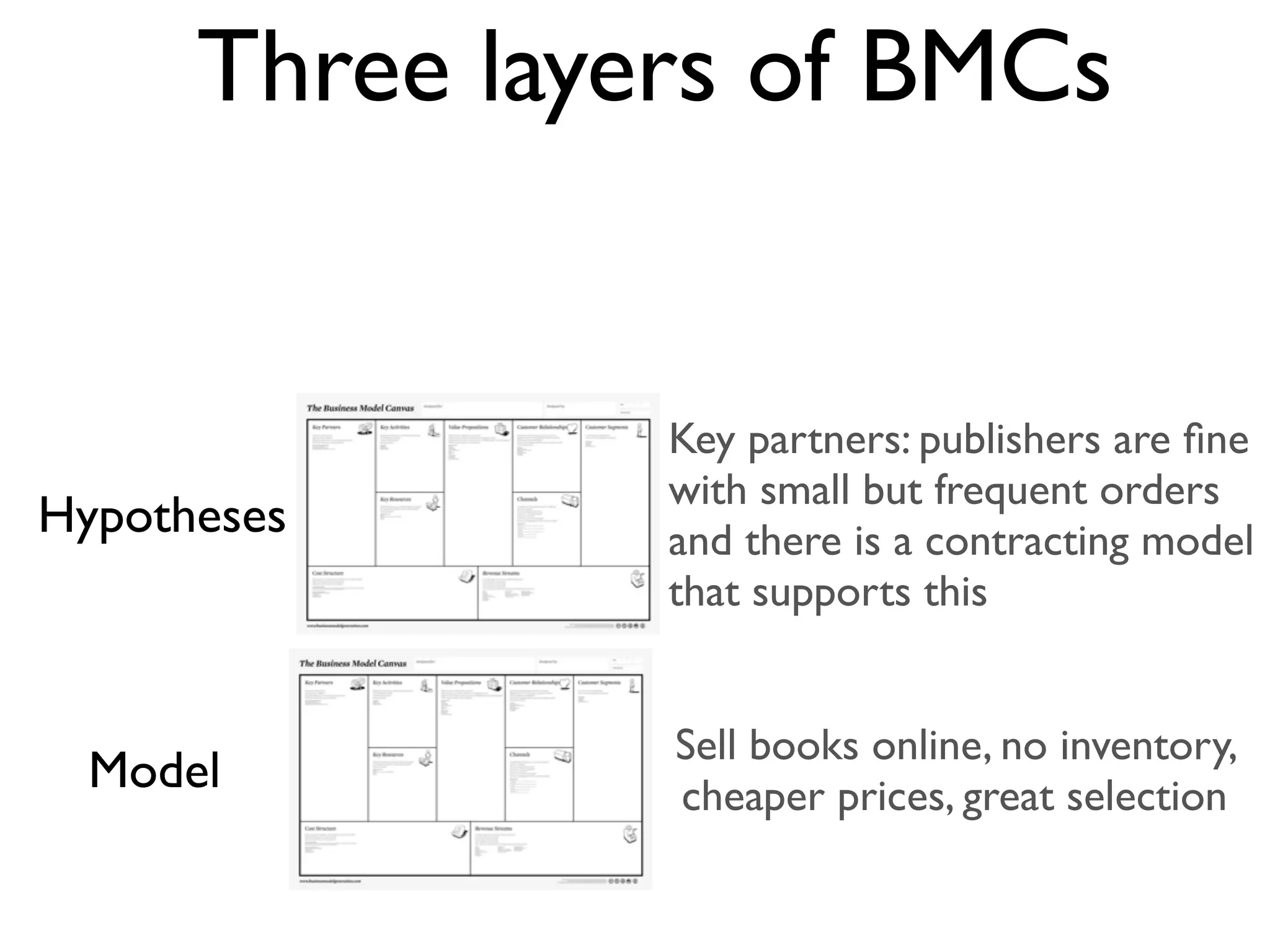
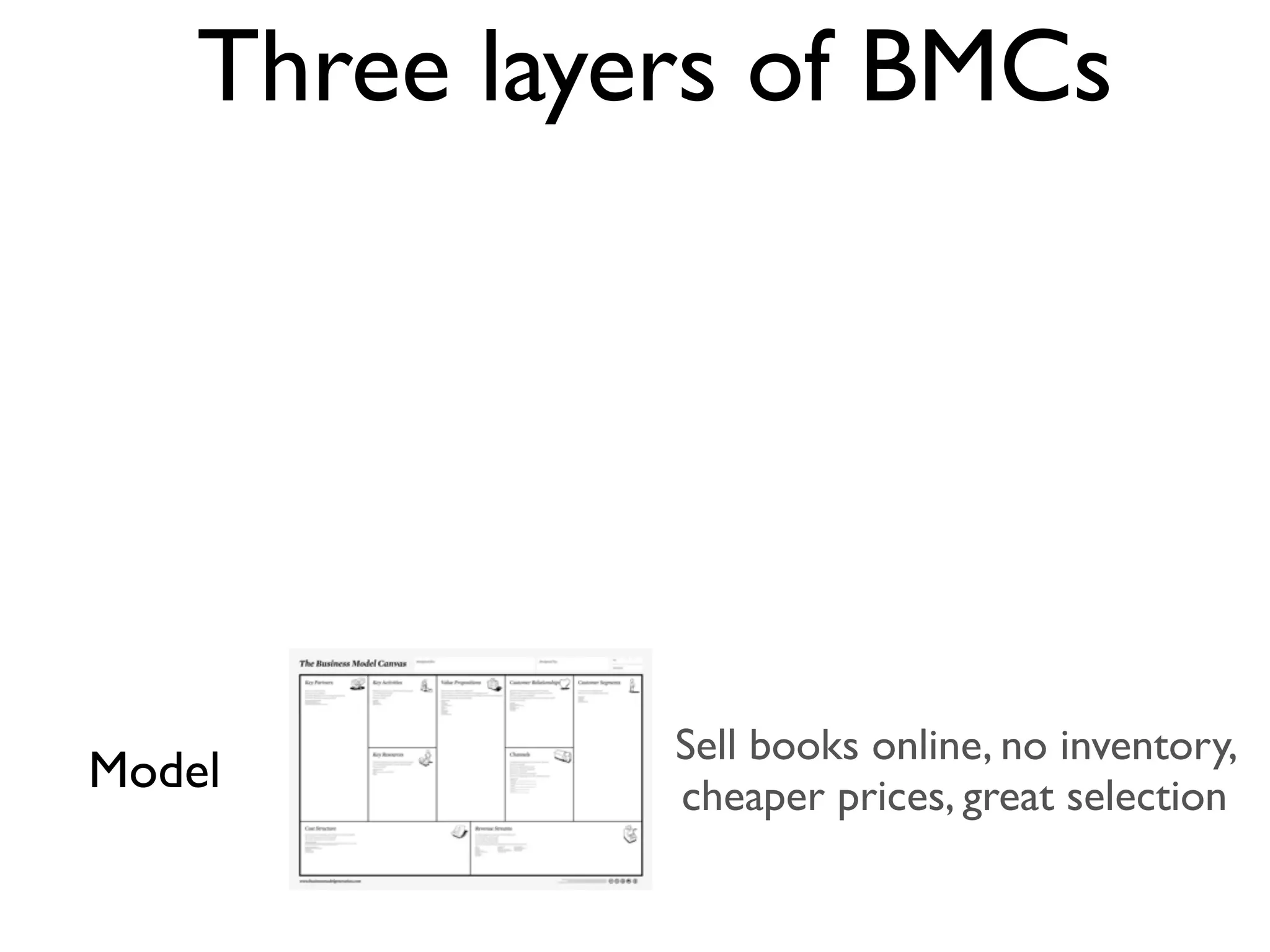
Three layers of BMCs


              Sell books online, no inventory,
Model         cheaper prices, great selection
Three layers of BMCs


                Key partners: publishers are fine
                with small but frequent orders
Hypotheses      and there is a contracting model
                that supports this


                Sell books online, no inventory,
  Model         cheaper prices, great selection
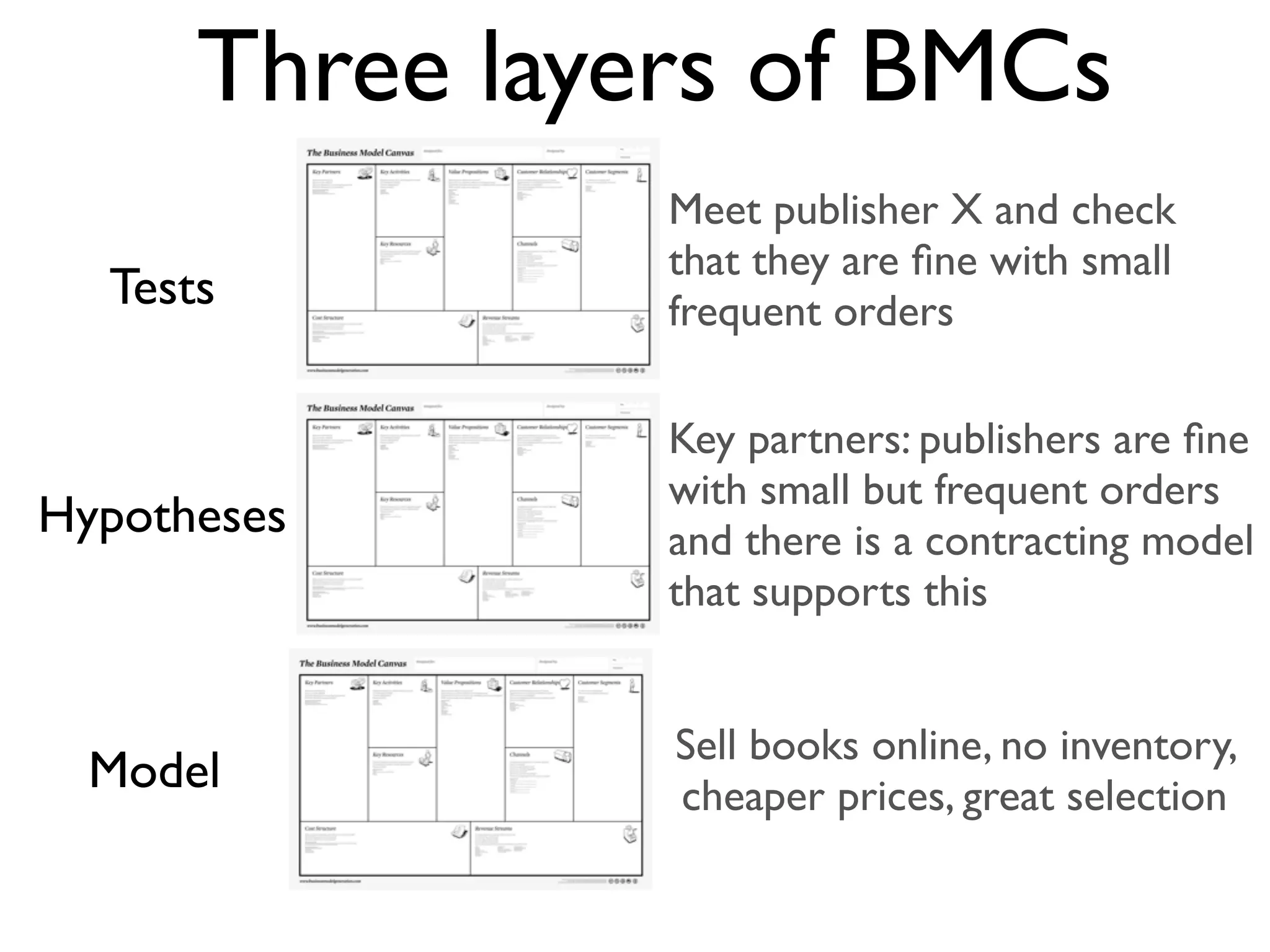
Three layers of BMCs
                Meet publisher X and check
                that they are fine with small
  Tests         frequent orders

                Key partners: publishers are fine
                with small but frequent orders
Hypotheses      and there is a contracting model
                that supports this


                Sell books online, no inventory,
  Model         cheaper prices, great selection
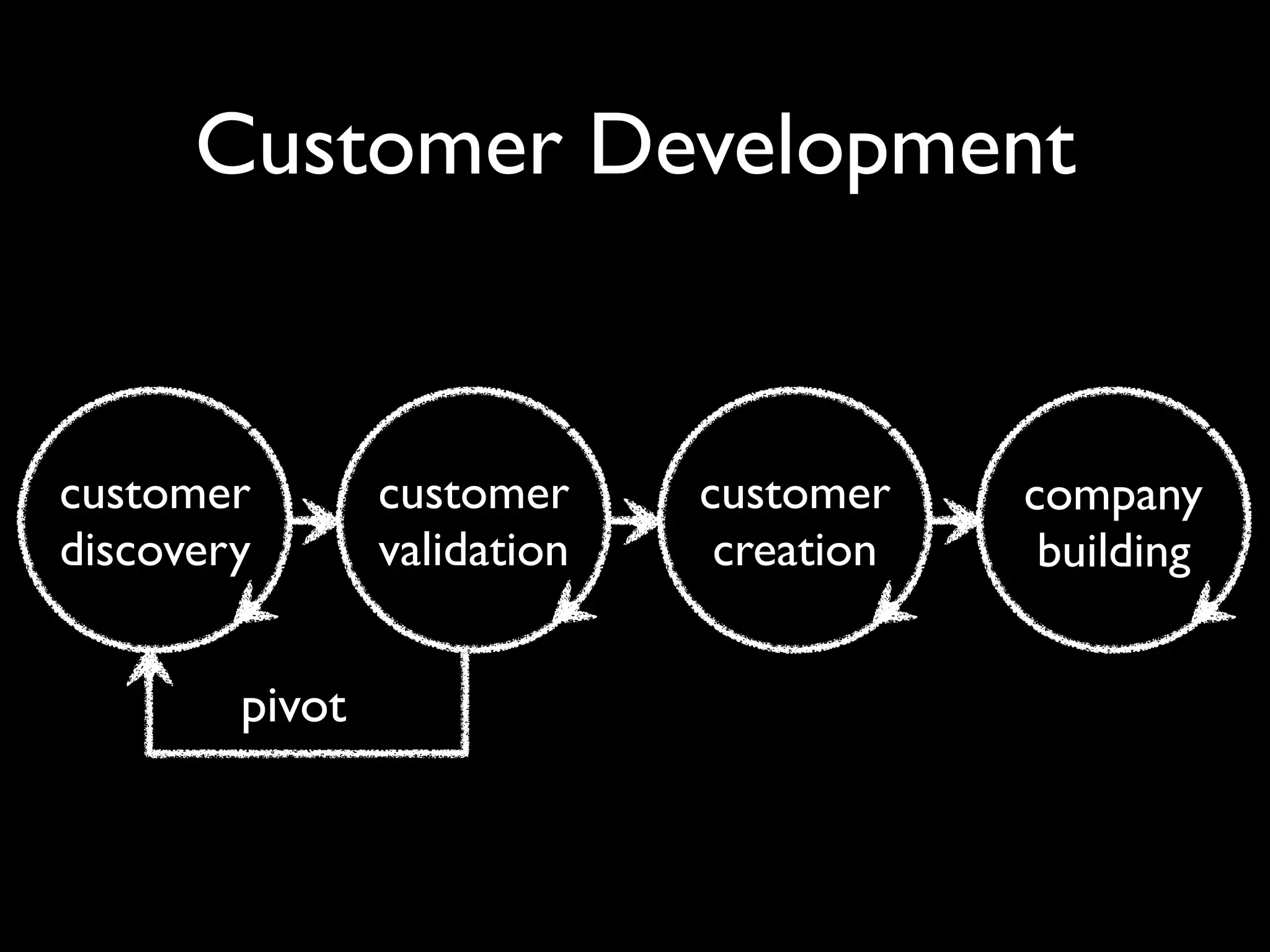
Customer Development


customer        customer     customer    company
discovery       validation    creation    building


        pivot
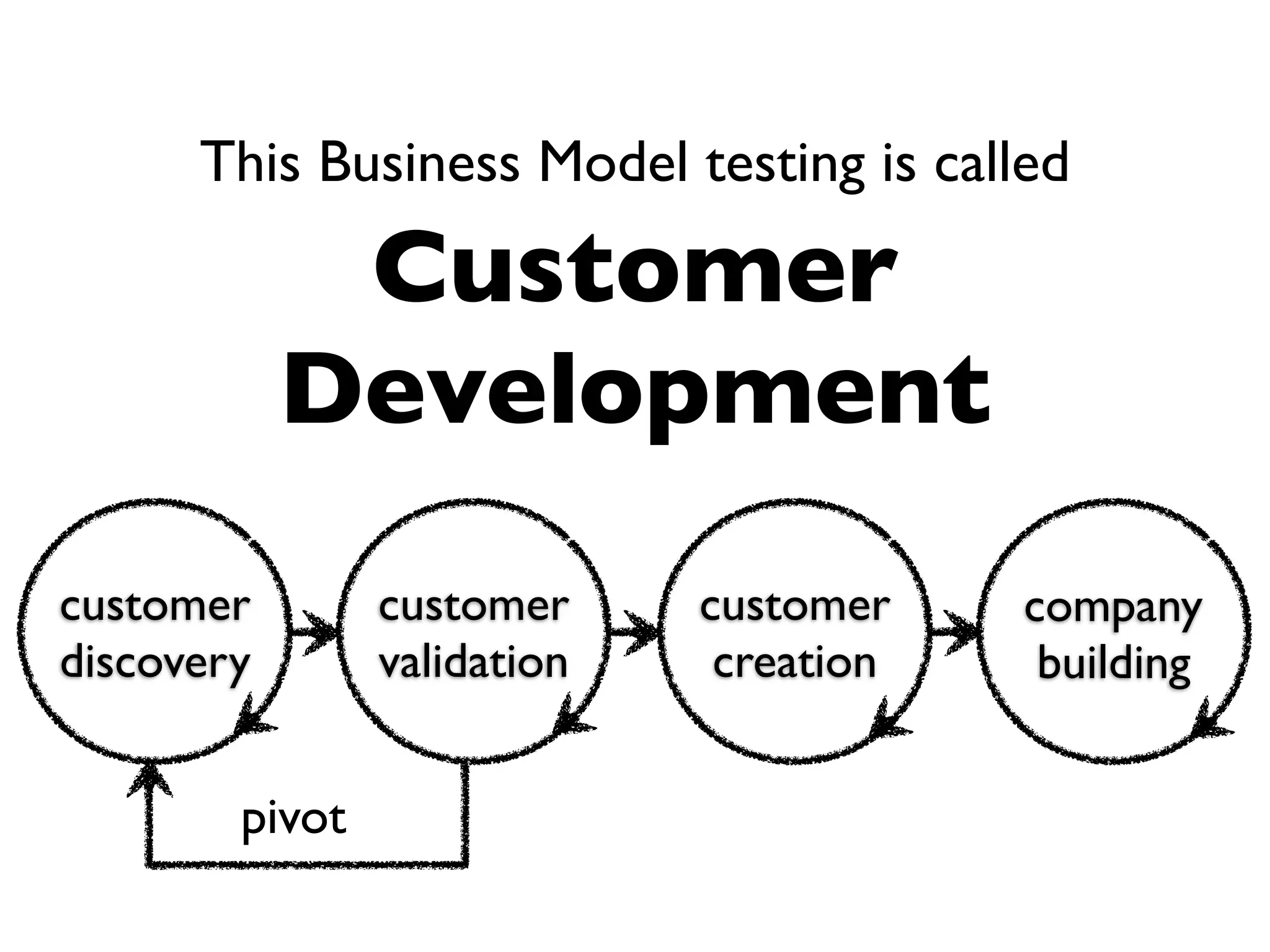
This Business Model testing is called

             Customer
            Development
customer        customer     customer    company
discovery       validation    creation    building


        pivot
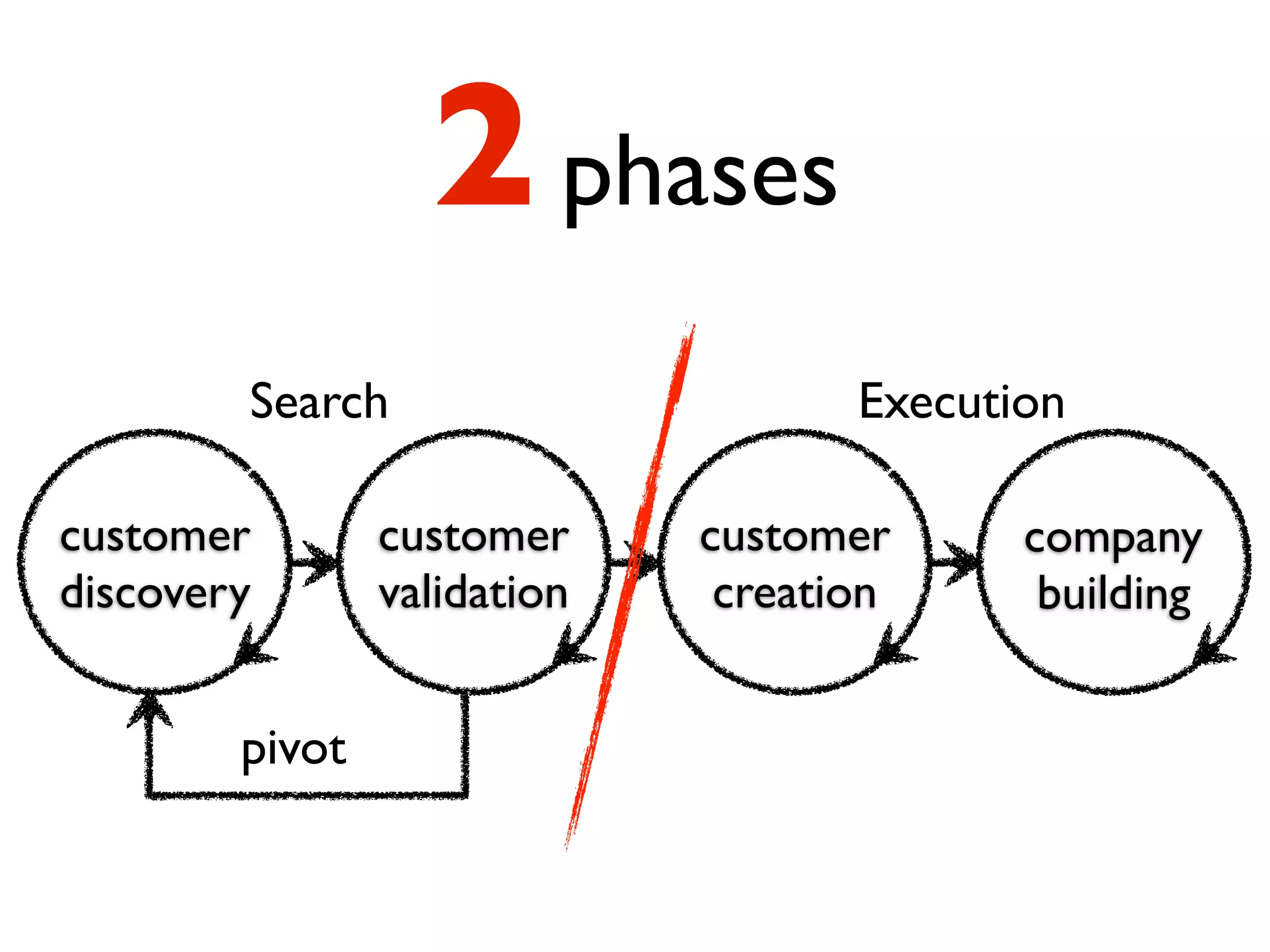
2 phases
        Search                      Execution

customer        customer     customer      company
discovery       validation    creation      building


        pivot
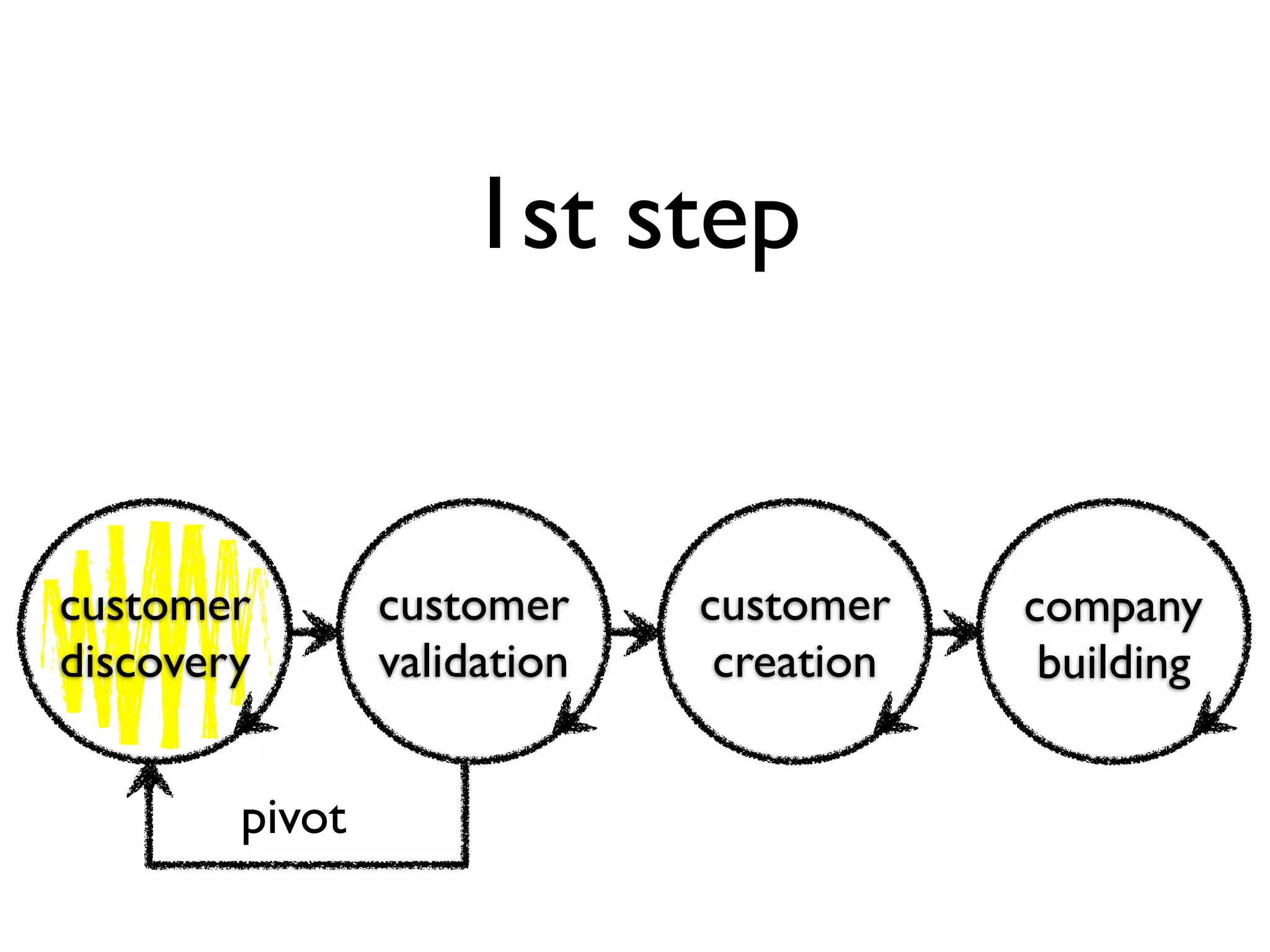
1st step


customer        customer     customer    company
discovery       validation    creation    building


        pivot
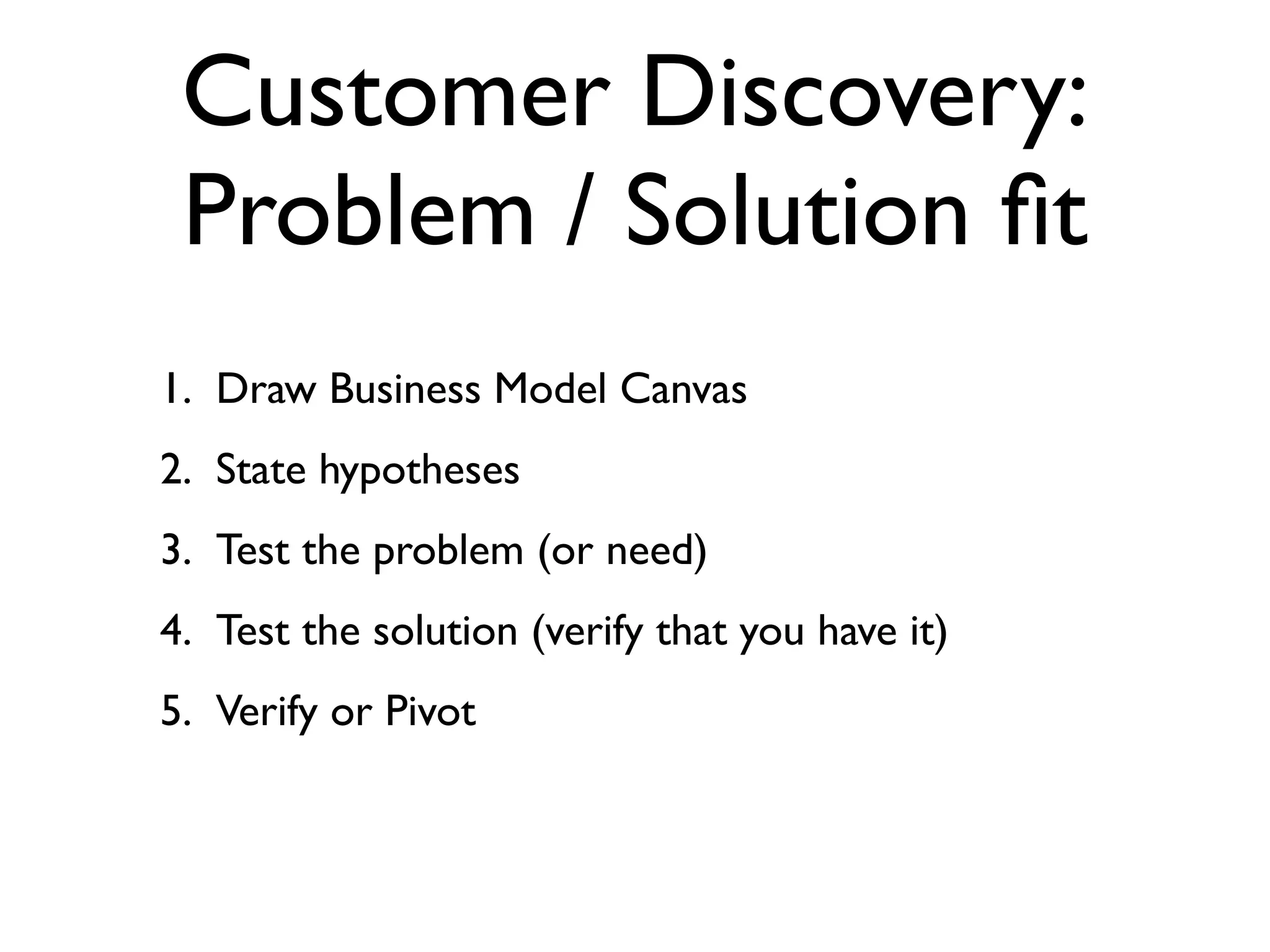
Customer Discovery:
 Problem / Solution fit
1. Draw Business Model Canvas
2. State hypotheses
3. Test the problem (or need)
4. Test the solution (verify that you have it)
5. Verify or Pivot
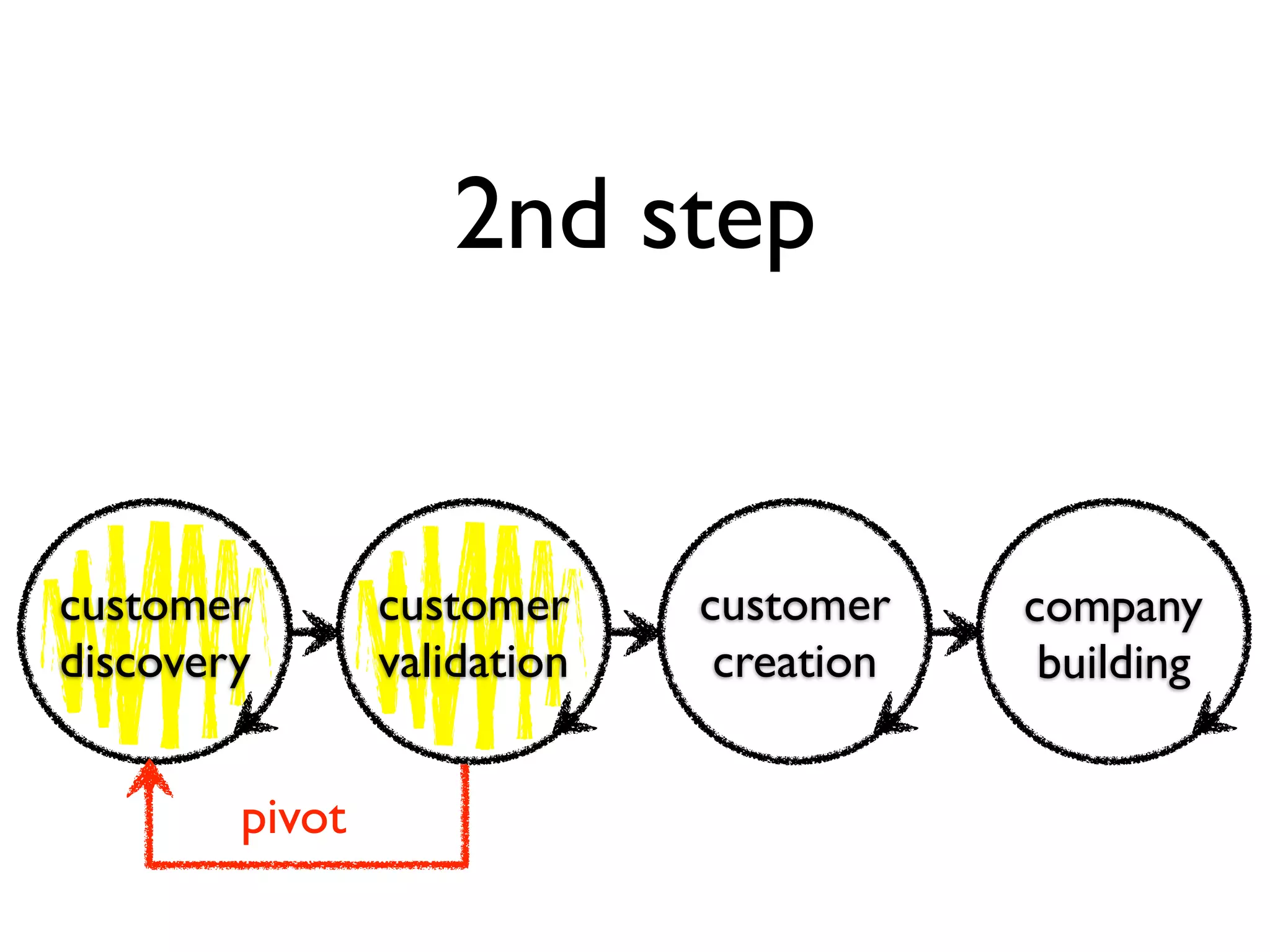
2nd step


customer        customer     customer    company
discovery       validation    creation    building


        pivot
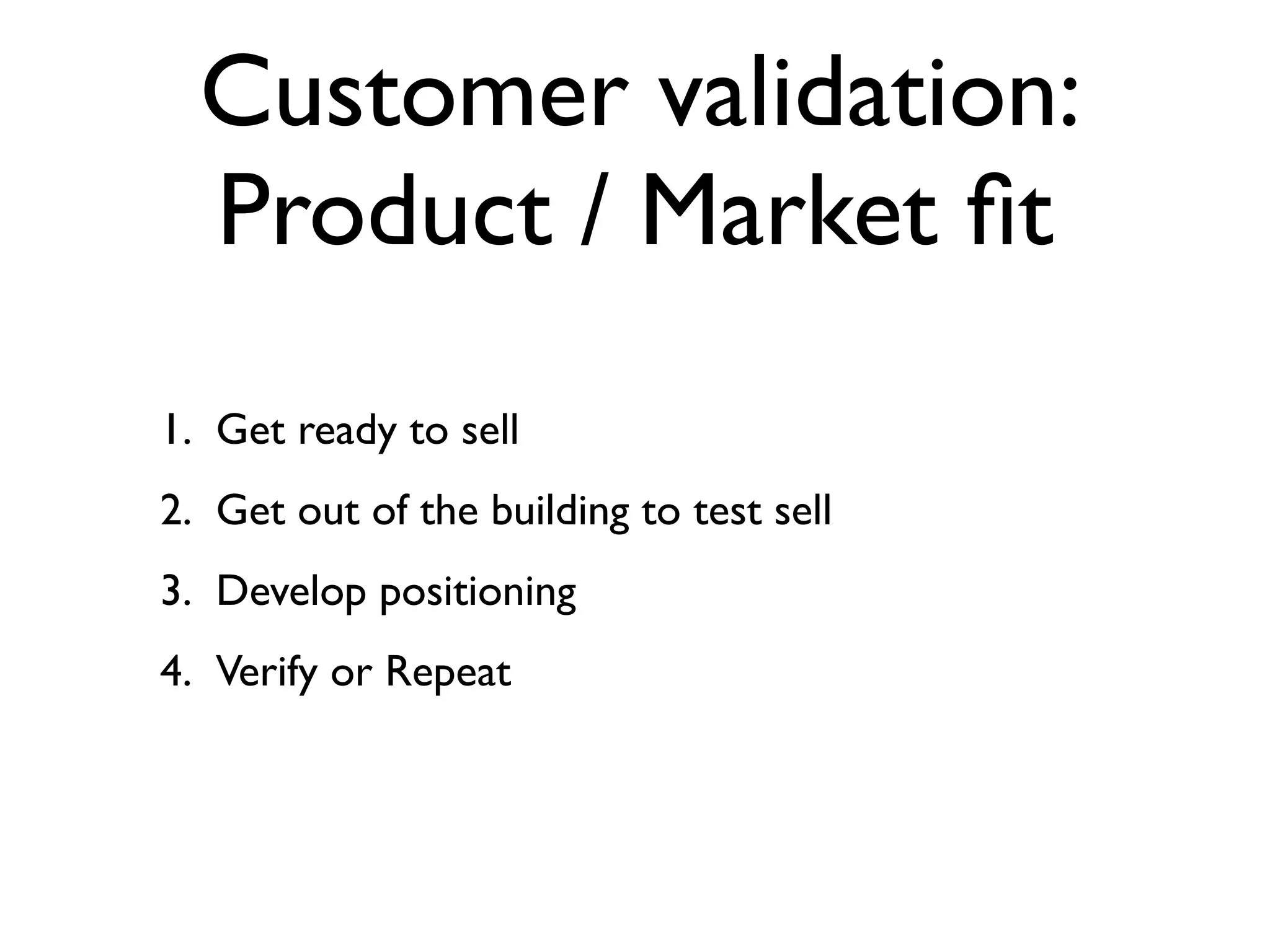
Customer validation:
  Product / Market fit
1. Get ready to sell
2. Get out of the building to test sell
3. Develop positioning
4. Verify or Repeat
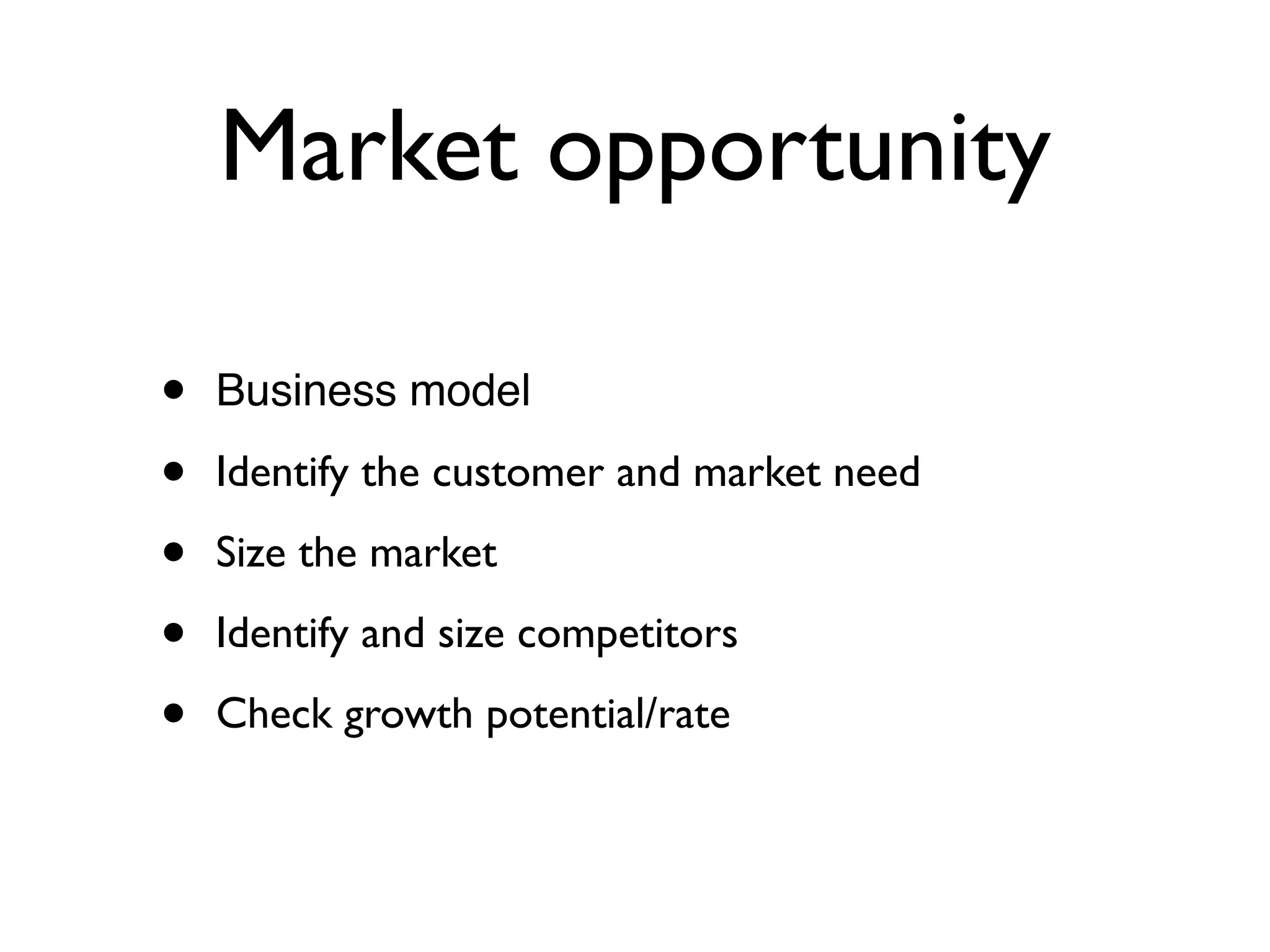
Market opportunity

•   Business model

•   Identify the customer and market need

•   Size the market

•   Identify and size competitors

•   Check growth potential/rate
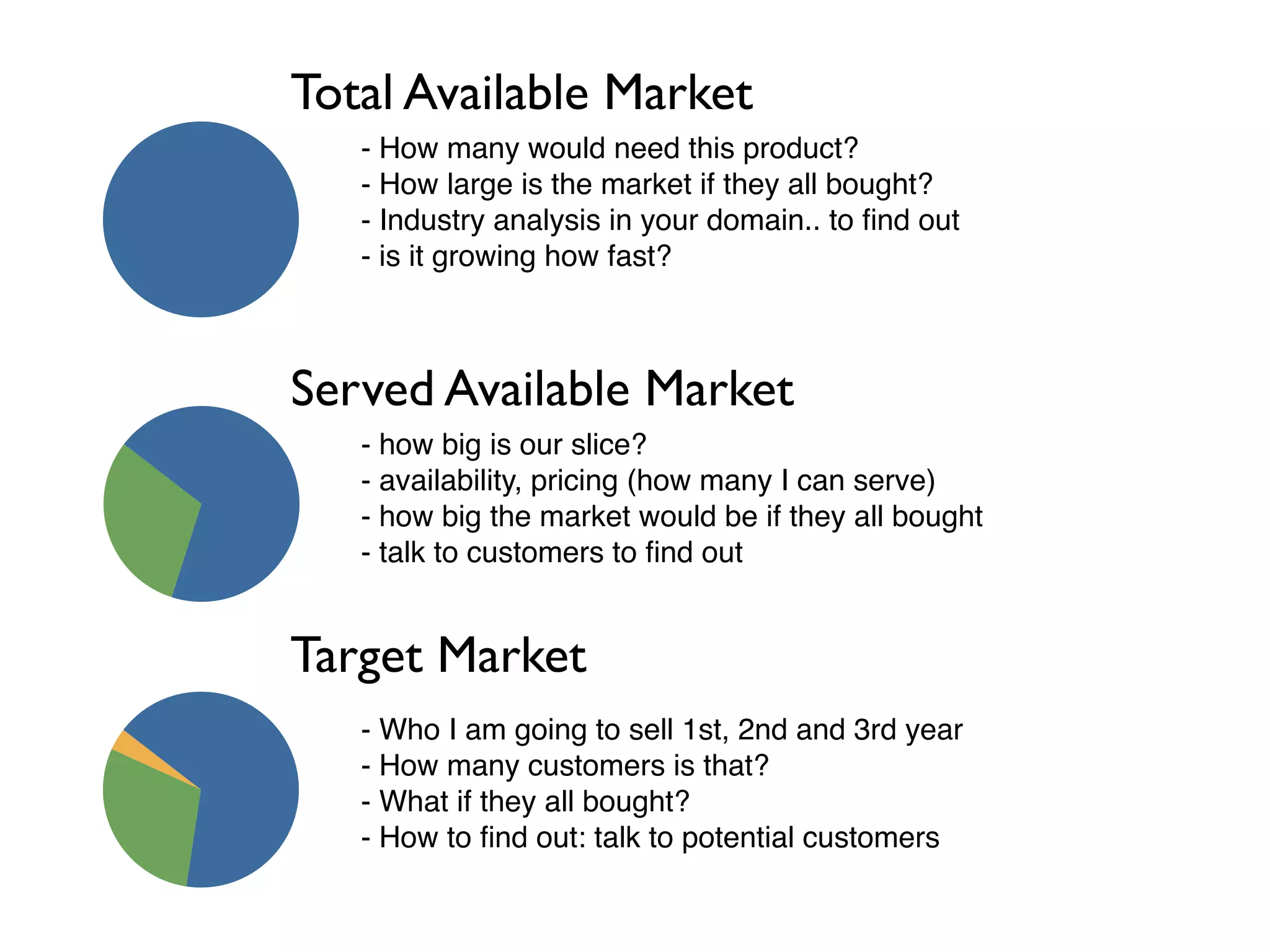
Total Available Market
   - How many would need this product?
   - How large is the market if they all bought?
   - Industry analysis in your domain.. to find out
   - is it growing how fast?


Served Available Market
   - how big is our slice?
   - availability, pricing (how many I can serve)
   - how big the market would be if they all bought
   - talk to customers to find out


Target Market
   - Who I am going to sell 1st, 2nd and 3rd year
   - How many customers is that?
   - What if they all bought?
   - How to find out: talk to potential customers
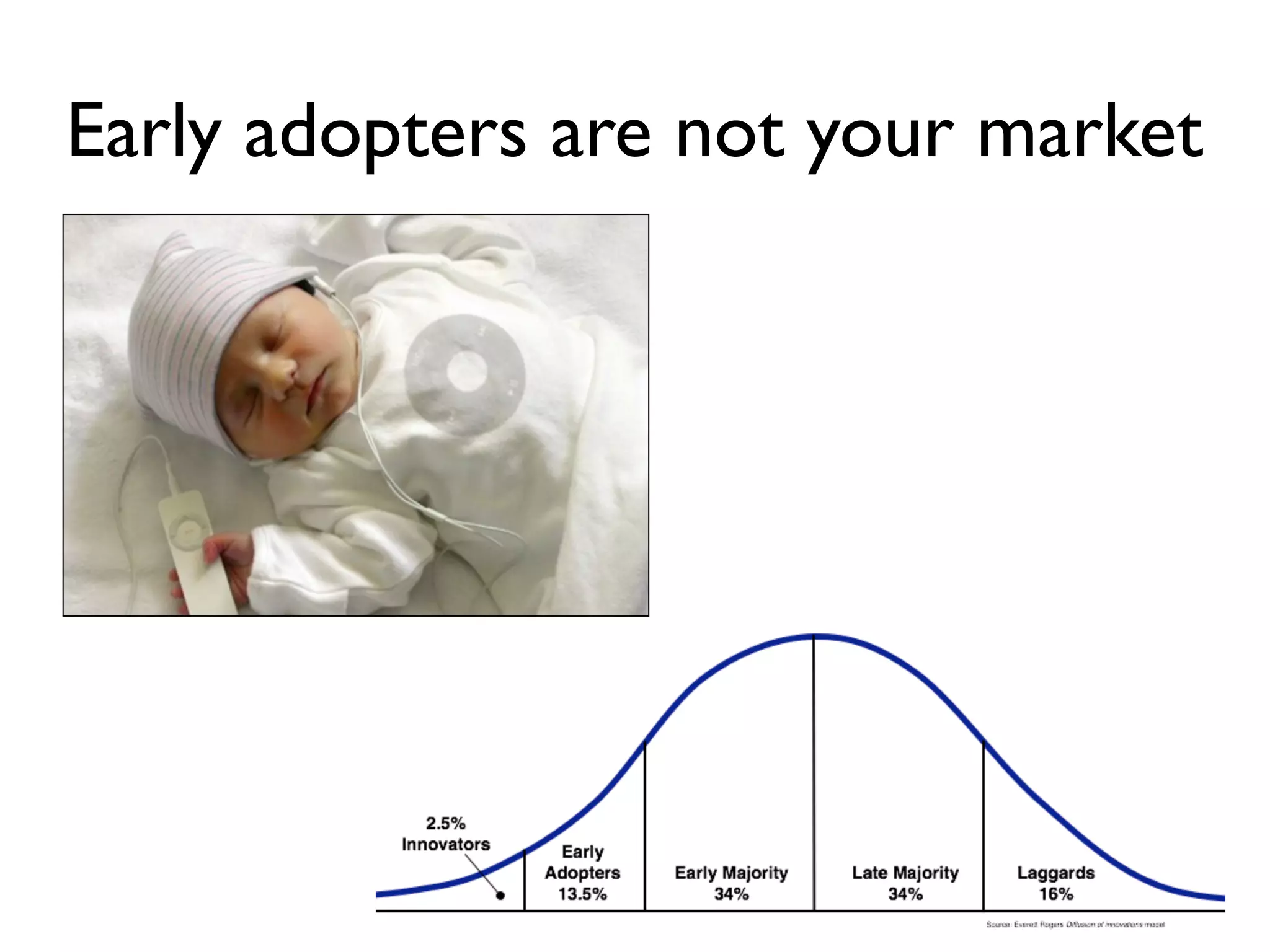
Early adopters are not your market
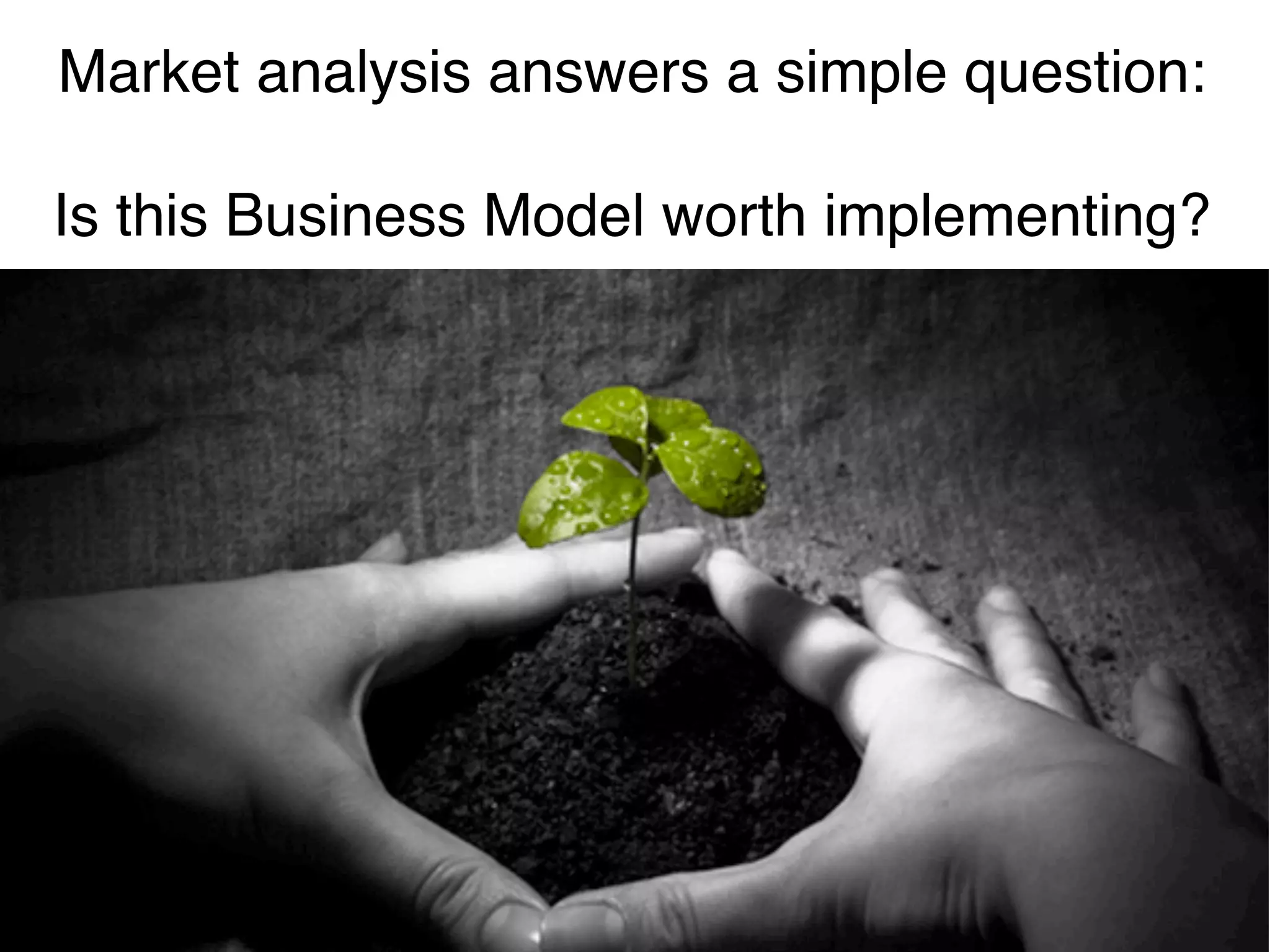
Market analysis answers a simple question:

Is this Business Model worth implementing?
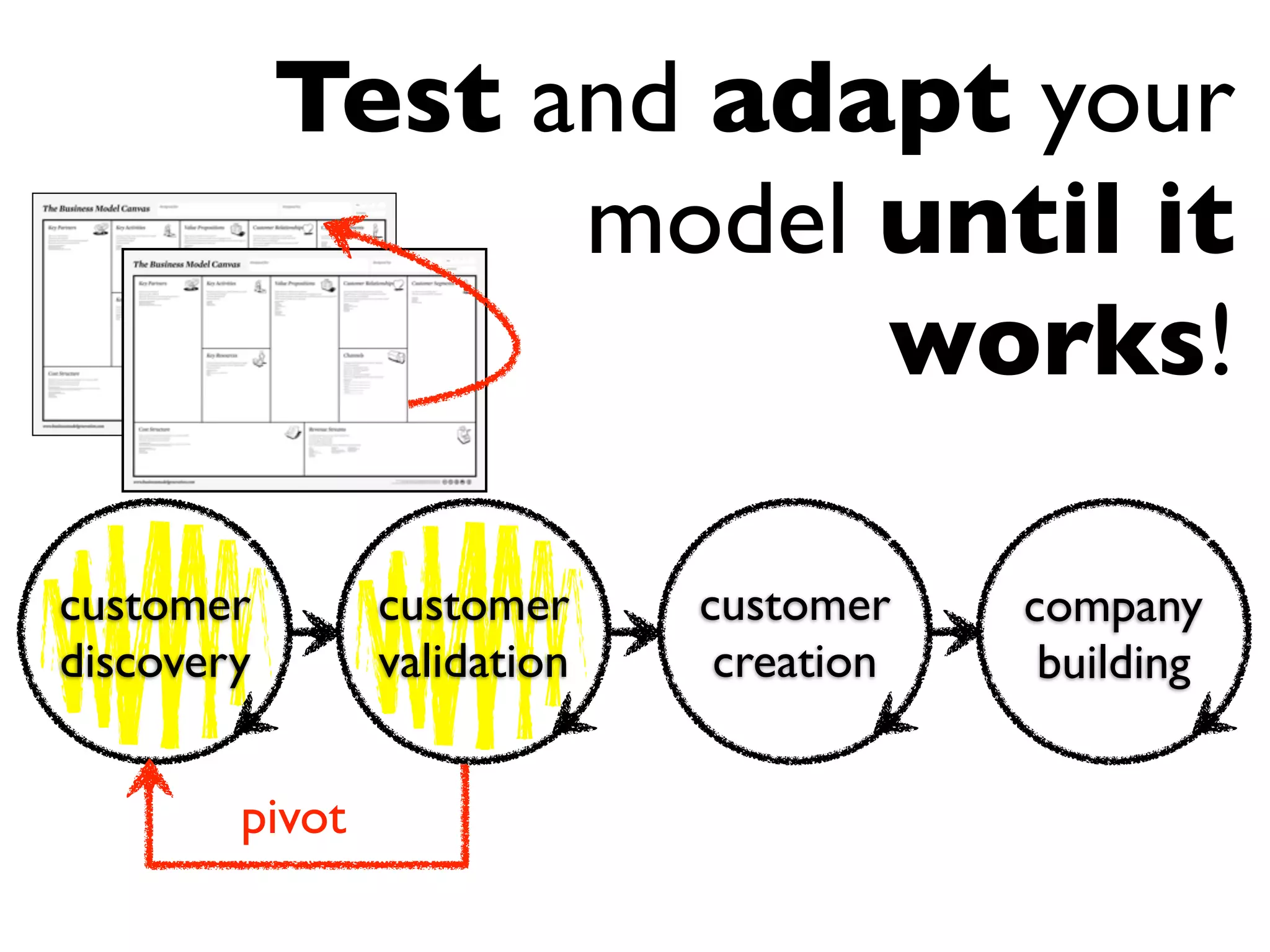
Test and adapt your
                  model until it
                        works!

customer        customer     customer    company
discovery       validation    creation    building


        pivot
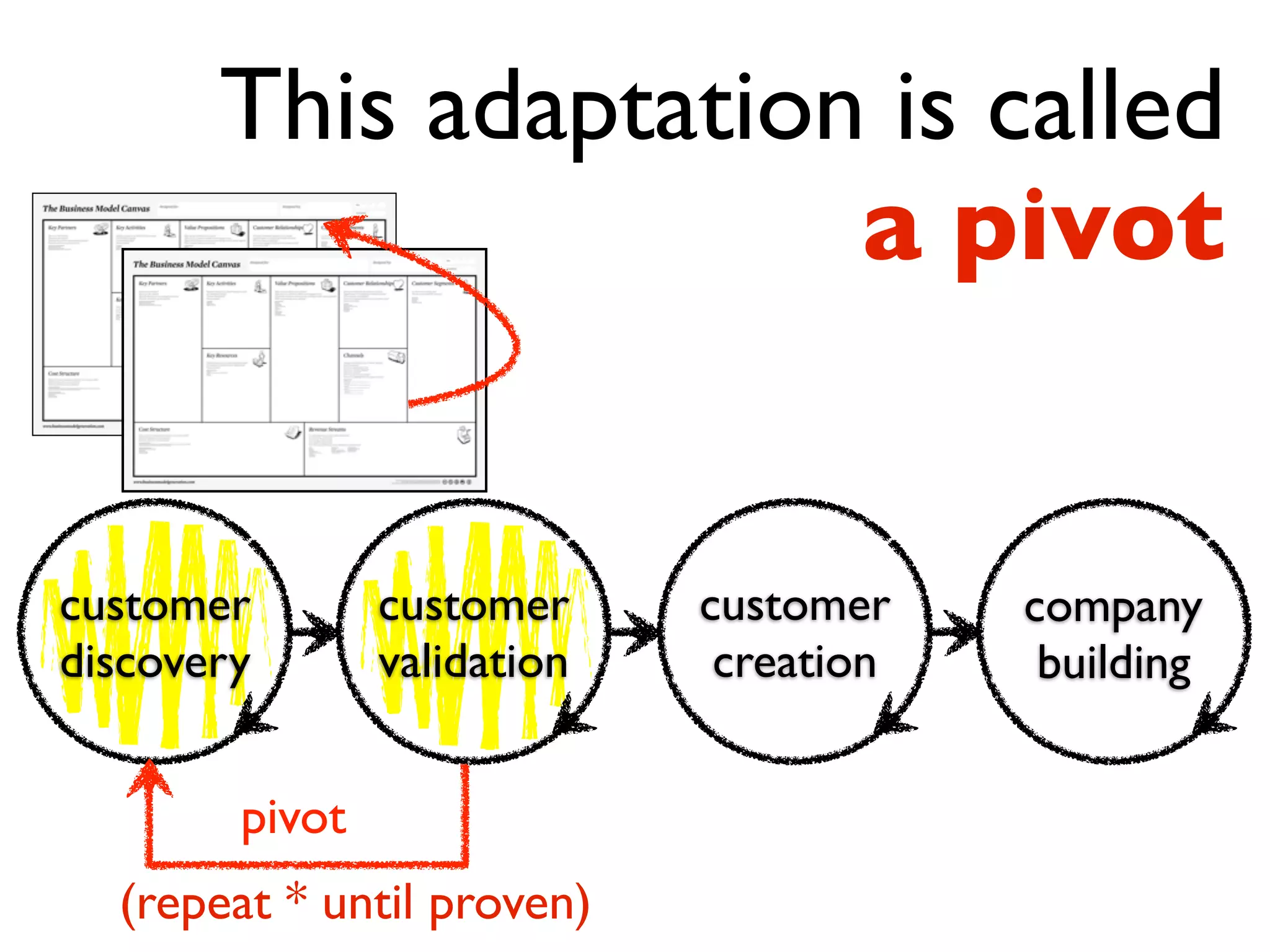
This adaptation is called
                      a pivot


customer        customer     customer    company
discovery       validation    creation    building


        pivot
  (repeat * until proven)
Don’t scale execution
until you’ve verified
 the business model
Execution is not search!
Build the measures in
          (+ quality in)

Techies: Continuous Delivery with ATDD is not enough!
Hard part:
from measures to learning
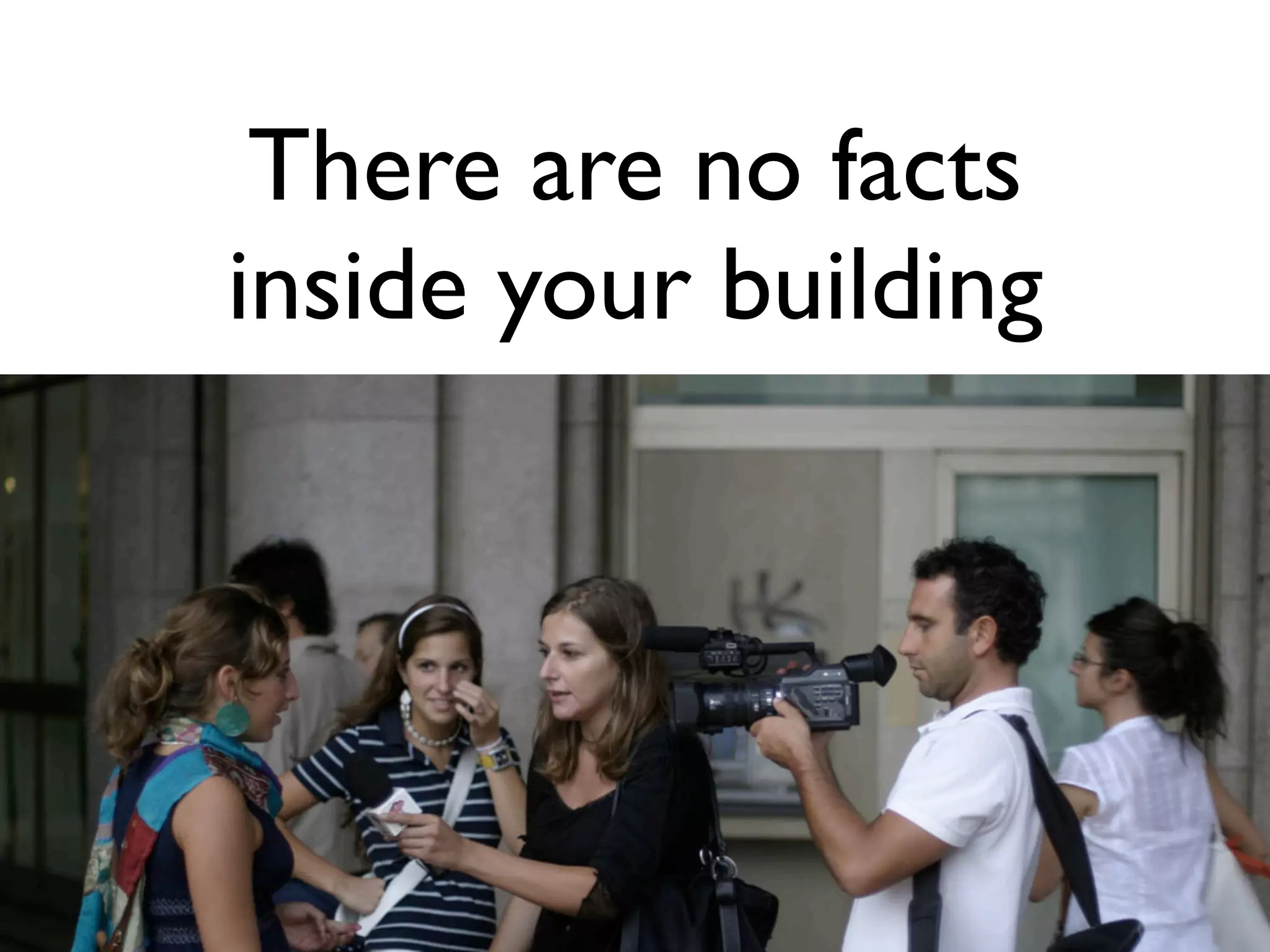
There are no facts
inside your building
You still need a vision
   and a purpose
Why big companies are
 in such a trouble?
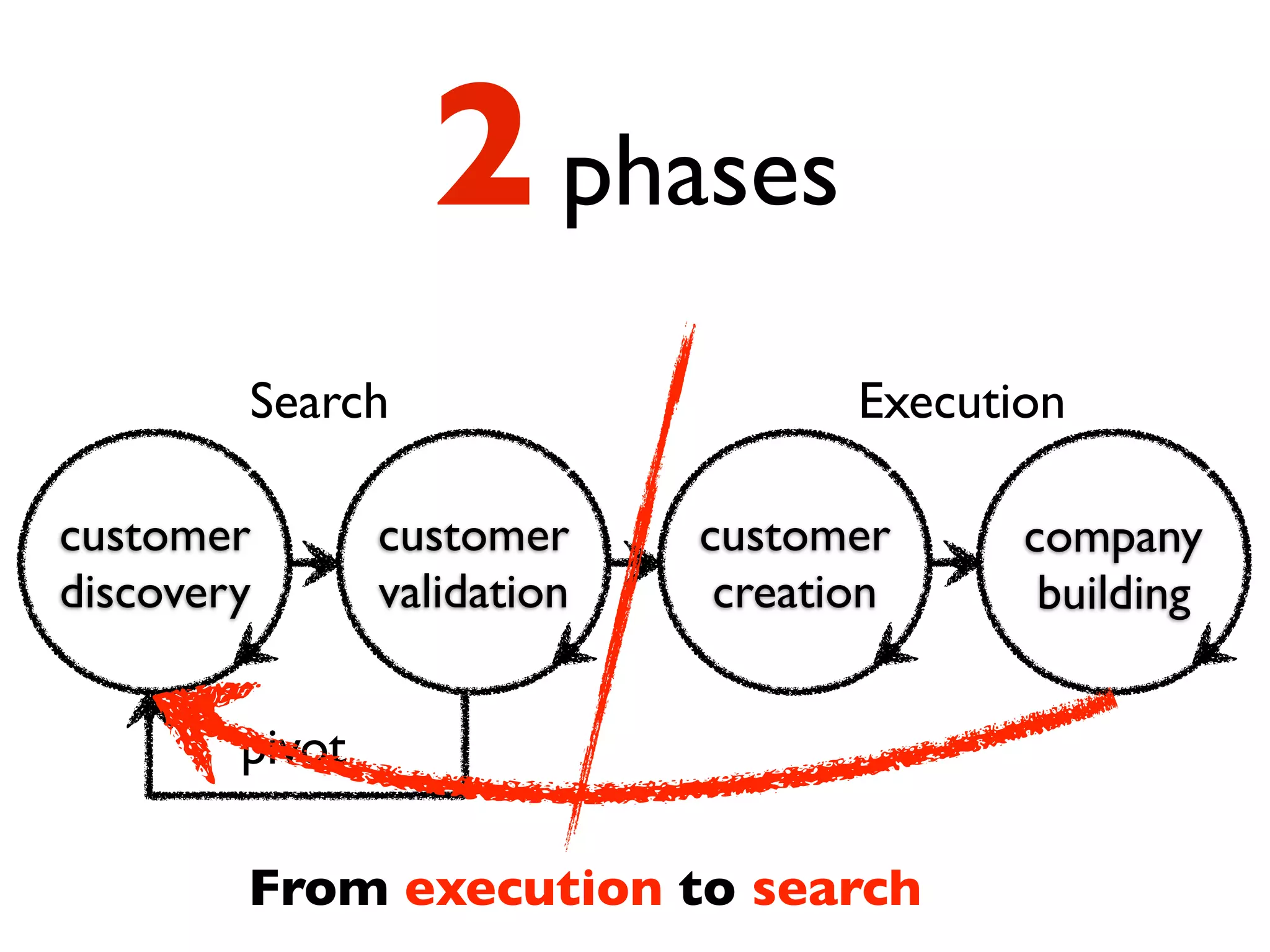
2 phases
        Search                      Execution

customer        customer     customer      company
discovery       validation    creation      building


        pivot

        From execution to search
So..
We need to interface the business, design
and engineering in order to create successful
businesses


Business is the driver: if you cannot make a
business case for it, it has no (business)
value.
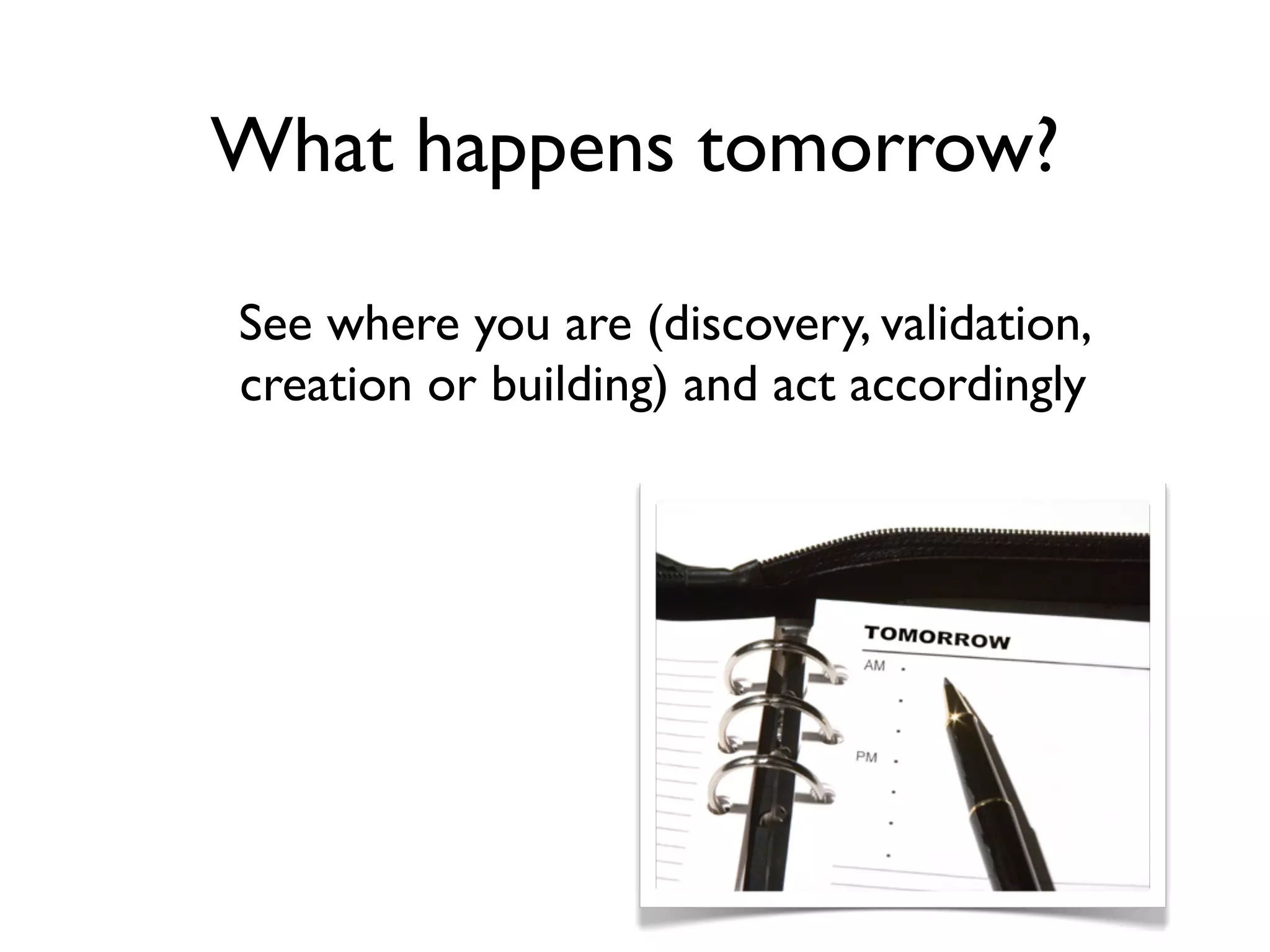
What happens tomorrow?

See where you are (discovery, validation,
creation or building) and act accordingly
All we do...
is match the demand
.. of understanding and solving a problem
.. of a business
.. of learning
.. of users
Disclaimer
Exercising this does not guarantee success
... but it ensures you fail fast and often


          More chances to succeed!
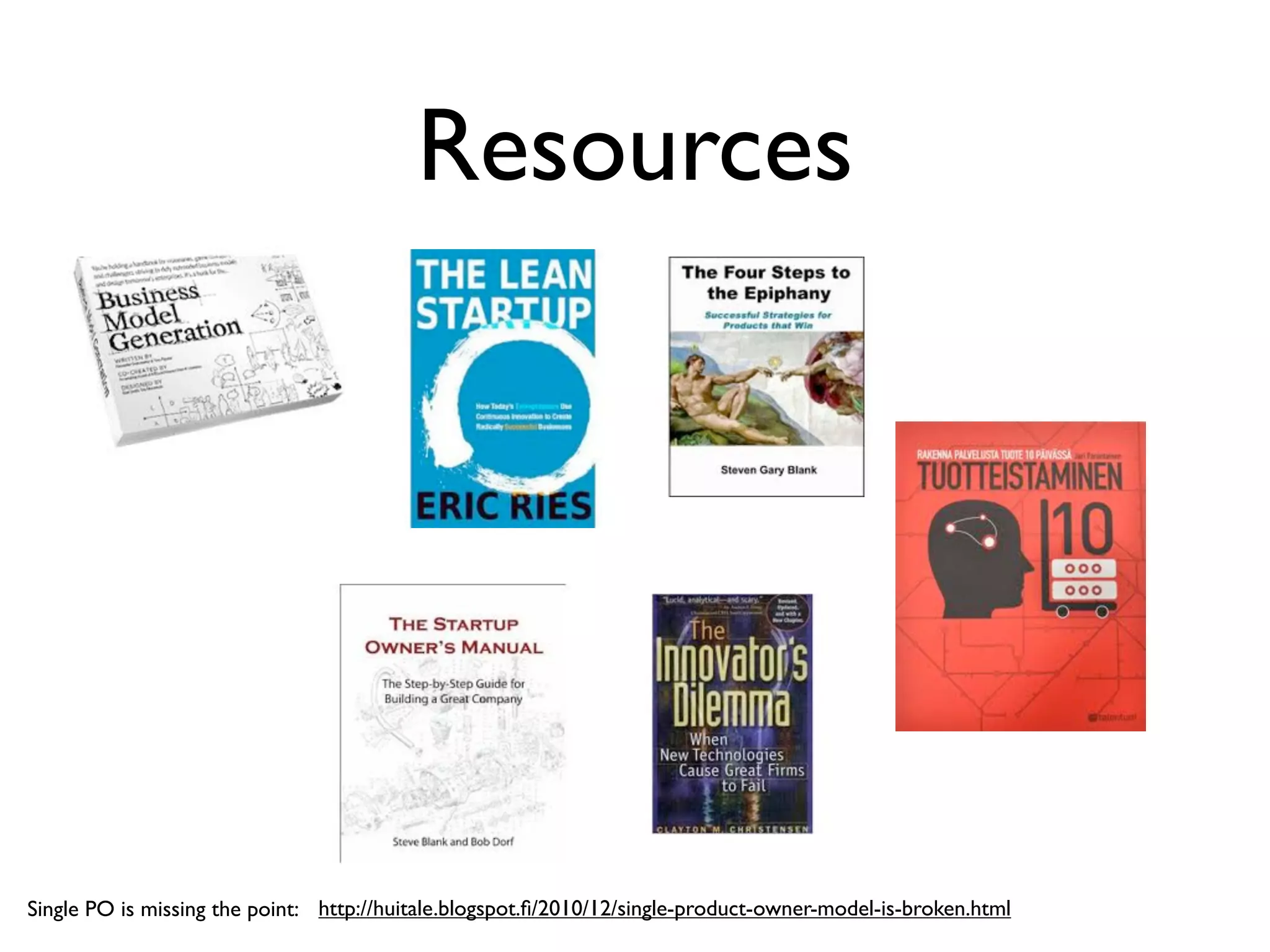
Resources


Single PO is missing the point: http://huitale.blogspot.fi/2010/12/single-product-owner-model-is-broken.html

From a concept to viable business — How do we know if we are building the right thing?

  • 1.
    Building the rightthing Marko Taipale @ TGA2012
  • 2.
    Marko Taipale • Principal consultant with agile/lean mindset, CTO, Advisor • 15+ years of software development • Capabilities to deliver products from concept to cash • Tens of public speaking appearances International online gaming company (TO 100+ Meur) improved time-to-market from 24 months to 3 months Finnish energy company purchased process control system and got the delivery 4 times faster than expected.The system secured the business for next 2 years. Finnish software product company saved 1,3 Meur / year in management and administration. Software company validated new business model for new product in 2 months.
  • 3.
  • 4.
  • 5.
    The right thing? • Concept (Problem / Solution fit) • a good one? It solves a problem • Business Model (Product / Market fit) • a good one? It scales ie. it is a business • Prototype (Hypothesis / Experiment fit) • a good one? It leads to learning • Service (User needs / Service fit) • a good one? You are not aware you are using it
  • 6.
    The right thing? Connected! • Concept (Problem / Solution fit) • a good one? It solves a problem • Business Model (Product / Market fit) • a good one? It scales ie. it is a business • Prototype (Hypothesis / Experiment fit) • a good one? It leads to learning • Service (User needs / Service fit) • a good one? You are not aware you are using it
  • 7.
    The right thing? Connected! • Concept (Problem / Solution fit) • a good one? It solves a problem • Business Model (Product / Market fit) • a good one? It scales ie. it is a business • Prototype (Hypothesis / Experiment fit) • a good one? It leads to learning • Service (User needs / Service fit) • a good one? You are not aware you are using it
  • 8.
    Product / Marketfit Problem / Solution fit Balance
  • 9.
    How to ensureyou are doing the right thing?
  • 10.
    <insert your agile “fromidea to backlog” tool here>
  • 11.
    But that isjust stupid! (why?)
  • 12.
    Cause it expectsthat you know the requirements And that there is money to be made
  • 13.
    In new productdevelopment the requirements are unknown ... and the business is unknown
  • 14.
    In order todo the right thing you need to... • Model your business • Understand your market • State your guesses, create tests, validate • by talking to your customer • by measuring (and build the measures in)
  • 15.
    Lean Startup Customer Development Multiple methods/tools emerge Business Model Generation Productization
  • 16.
  • 17.
    “A business modeldescribes the rationale of how an organization creates, delivers, and captures value”
  • 18.
    9 blocks ofbusiness model
  • 20.
    Customer Segments which customersand users you are serving? which jobs do they really want to get done?
  • 21.
    Value Propositions what areyou offering to them? what is that getting done for them? do they care?
  • 22.
    Channels how does eachcustomer segment want to be reached? through which interaction points?
  • 23.
    Customer Relationships How do you get customers, keep them and grow them?
  • 24.
    Revenue Streams what arecustomers really willing to pay for? how? are you creating transactional or recurring revenues?
  • 25.
    Key Resources which resourcesunderpin your BM? which assets are essential?
  • 26.
    Key Activities which activitiesyou need to perform well in your BM? what is crucial?
  • 27.
    Key Partners which partnersand suppliers leverage your model? who do you need to rely on?
  • 28.
    Cost Structure what isthe resulting cost structure? which key elements drive your costs?
  • 30.
    the same technology, product,or service can have numerous business models
  • 33.
  • 34.
    transactional vs. product vs. service scale vs. scope recurring revenues niche market vs. direct sales vs. blue ocean vs. mass market inderect sales red ocean capital expenditure vs. open vs. closed personal vs. automated partnership Difficult questions one customer segment vs. tailor-made vs. physical vs. virtual another mass production paid vs. free copyright vs. copyleft fixed vs. variable cost distributed vs. advertising vs. in-sourcing vs. out-sourcing centralized sales
  • 35.
  • 36.
    Business Model can lookgreat on paper...
  • 37.
    but it isjust series of guesses!
  • 38.
    get out ofthe building and test each hypothesis with real, breathing customer!
  • 39.
    Three layers ofBMCs Sell books online, no inventory, Model cheaper prices, great selection
  • 40.
    Three layers ofBMCs Key partners: publishers are fine with small but frequent orders Hypotheses and there is a contracting model that supports this Sell books online, no inventory, Model cheaper prices, great selection
  • 41.
    Three layers ofBMCs Meet publisher X and check that they are fine with small Tests frequent orders Key partners: publishers are fine with small but frequent orders Hypotheses and there is a contracting model that supports this Sell books online, no inventory, Model cheaper prices, great selection
  • 42.
    Customer Development customer customer customer company discovery validation creation building pivot
  • 43.
    This Business Modeltesting is called Customer Development customer customer customer company discovery validation creation building pivot
  • 44.
    2 phases Search Execution customer customer customer company discovery validation creation building pivot
  • 45.
    1st step customer customer customer company discovery validation creation building pivot
  • 46.
    Customer Discovery: Problem/ Solution fit 1. Draw Business Model Canvas 2. State hypotheses 3. Test the problem (or need) 4. Test the solution (verify that you have it) 5. Verify or Pivot
  • 47.
    2nd step customer customer customer company discovery validation creation building pivot
  • 48.
    Customer validation: Product / Market fit 1. Get ready to sell 2. Get out of the building to test sell 3. Develop positioning 4. Verify or Repeat
  • 49.
    Market opportunity • Business model • Identify the customer and market need • Size the market • Identify and size competitors • Check growth potential/rate
  • 50.
    Total Available Market - How many would need this product? - How large is the market if they all bought? - Industry analysis in your domain.. to find out - is it growing how fast? Served Available Market - how big is our slice? - availability, pricing (how many I can serve) - how big the market would be if they all bought - talk to customers to find out Target Market - Who I am going to sell 1st, 2nd and 3rd year - How many customers is that? - What if they all bought? - How to find out: talk to potential customers
  • 51.
    Early adopters arenot your market
  • 52.
    Market analysis answersa simple question: Is this Business Model worth implementing?
  • 53.
    Test and adaptyour model until it works! customer customer customer company discovery validation creation building pivot
  • 54.
    This adaptation iscalled a pivot customer customer customer company discovery validation creation building pivot (repeat * until proven)
  • 55.
    Don’t scale execution untilyou’ve verified the business model
  • 56.
  • 57.
    Build the measuresin (+ quality in) Techies: Continuous Delivery with ATDD is not enough!
  • 58.
  • 59.
    There are nofacts inside your building
  • 60.
    You still needa vision and a purpose
  • 61.
    Why big companiesare in such a trouble?
  • 62.
    2 phases Search Execution customer customer customer company discovery validation creation building pivot From execution to search
  • 63.
    So.. We need tointerface the business, design and engineering in order to create successful businesses Business is the driver: if you cannot make a business case for it, it has no (business) value.
  • 64.
    What happens tomorrow? Seewhere you are (discovery, validation, creation or building) and act accordingly
  • 65.
    All we do... ismatch the demand .. of understanding and solving a problem .. of a business .. of learning .. of users
  • 66.
    Disclaimer Exercising this doesnot guarantee success ... but it ensures you fail fast and often More chances to succeed!
  • 68.
    Resources Single PO ismissing the point: http://huitale.blogspot.fi/2010/12/single-product-owner-model-is-broken.html