Inspiration from
business model classics

     Kimmo Koivisto
       CEO, Tellyo
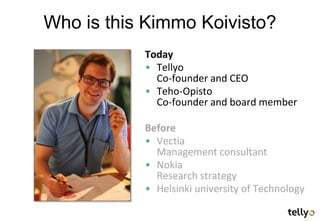
Who is this Kimmo Koivisto?
           Today
           • Tellyo
             Co-founder and CEO
           • Teho-Opisto
             Co-founder and board member

           Before
           • Vectia
             Management consultant
           • Nokia
             Research strategy
           • Helsinki university of Technology
Tellyo converts 2nd screen to a smart TV remote for
              spontaneous discovery, interaction and sharing


@TellyoTV
Who is this Kimmo Koivisto?
           Today
           • Tellyo
             Co-founder and CEO
           • Teho-Opisto
             Co-founder and board member

           Before
           • Vectia
             Management consultant
           • Nokia
             Research strategy
           • Helsinki university of Technology
Agenda

• What is business model
• Why business model matters
• Classic cases for inspiration
Agenda

• What is business model
• Why business model matters
• Classic cases for inspiration
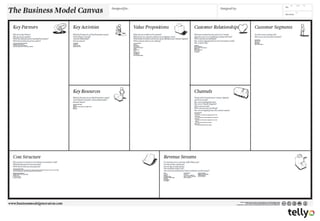
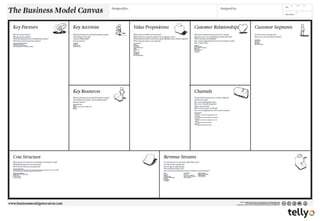
”A business model describes
the rationale of how an organization
creates, delivers, and captures value”
Agenda

• What is business model
• Why business model matters
• Classic cases for inspiration
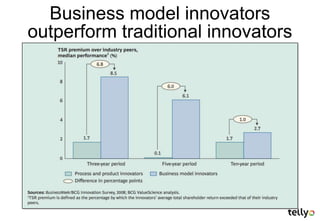
Business model innovators
outperform traditional innovators
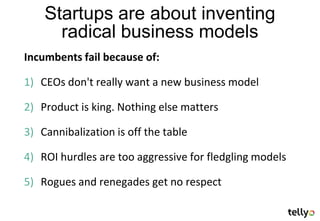
Startups are about inventing
      radical business models
Incumbents fail because of:

1) CEOs don't really want a new business model

2) Product is king. Nothing else matters

3) Cannibalization is off the table

4) ROI hurdles are too aggressive for fledgling models

5) Rogues and renegades get no respect
Agenda

• What is business model
• Why business model matters
• Classic cases for inspiration
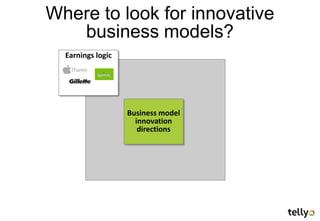
Where to look for innovative
   business models?
  Earnings logic


                   Business model
                     innovation
                      directions
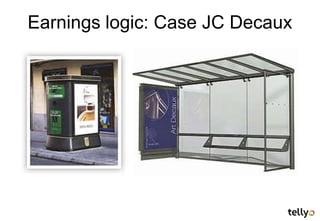
Earnings logic: Case JC Decaux
Where to look for innovative
   business models?
  Earnings logic     Low cost


                   Business model
                     innovation
                      directions
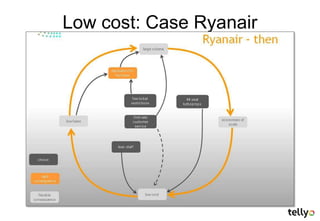
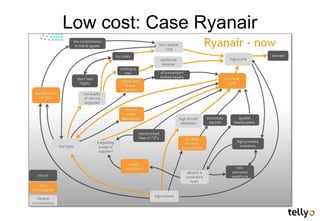
Low cost: Case Ryanair
Where to look for innovative
   business models?
  Earnings logic     Low cost       As a service


                   Business model
                     innovation
                      directions
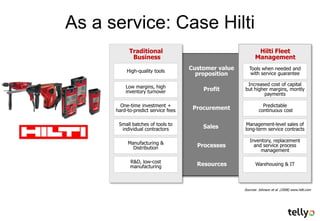
As a service: Case Hilti
            Traditional                                       Hilti Fleet
             Business                                        Management

           High-quality tools
                                     Customer value      Tools when needed and
                                       proposition       with service guarantee

          Low margins, high                            Increased cost of capital
          inventory turnover             Profit       but higher margins, montly
                                                              payments

        One-time investment +                                    Predictable
      hard-to-predict service fees    Procurement              continuous cost

       Small batches of tools to                       Management-level sales of
        individual contractors           Sales        long-term service contracts

           Manufacturing &                               Inventory, replacement
             Distribution              Processes           and service process
                                                              management

            R&D, low-cost
            manufacturing              Resources             Warehousing & IT


                                                      Sources: Johnson et al. (2008) www.hilti.com
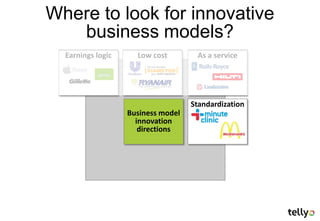
Where to look for innovative
   business models?
  Earnings logic     Low cost        As a service


                                    Standardization
                   Business model
                     innovation
                      directions
Standardization: Case Minute
           Clinic
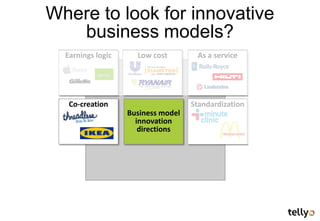
Where to look for innovative
   business models?
  Earnings logic     Low cost        As a service


   Co-creation                      Standardization
                   Business model
                     innovation
                      directions
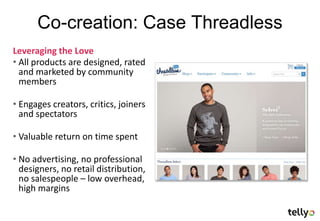
Co-creation: Case Threadless
Leveraging the Love
• All products are designed, rated
  and marketed by community
  members

• Engages creators, critics, joiners
  and spectators

• Valuable return on time spent

• No advertising, no professional
  designers, no retail distribution,
  no salespeople – low overhead,
  high margins
Where to look for innovative
   business models?
  Earnings logic     Low cost        As a service


   Co-creation                      Standardization
                   Business model
                     innovation
                      directions

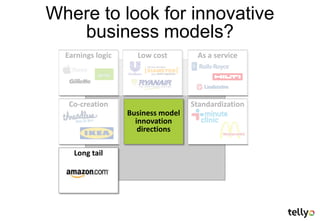
    Long tail
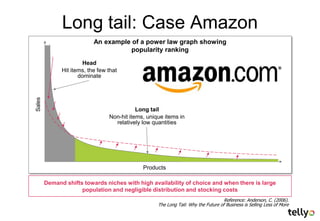
Long tail: Case Amazon
                           An example of a power law graph showing
                                      popularity ranking
                       Head
              Hit items, the few that
                     dominate
Sales


                                            Long tail
                                 Non-hit items, unique items in
                                   relatively low quantities


                                              Products

        Demand shifts towards niches with high availability of choice and when there is large
                     population and negligible distribution and stocking costs
                                                                                    Reference: Anderson, C. (2006).
                                                    The Long Tail: Why the Future of Business is Selling Less of More
Where to look for innovative
   business models?
  Earnings logic     Low cost        As a service


   Co-creation                      Standardization
                   Business model
                     innovation
                      directions

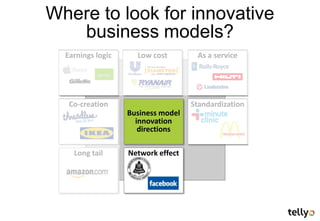
    Long tail      Network effect
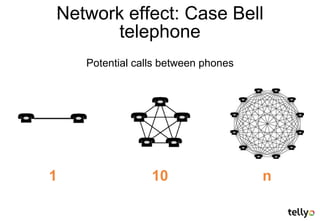
Network effect: Case Bell
      telephone
    Potential calls between phones


1                10                  n
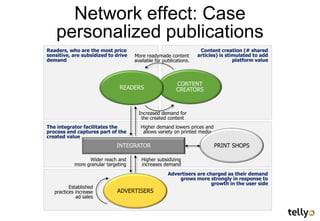
Network effect: Case
    personalized publications
Readers, who are the most price                                      Content creation (# shared
sensitive, are subsidized to drive    More readymade content        articles) is stimulated to add
demand                                available for publications.                   platform value


                                                          CONTENT
                                READERS                   CREATORS


                                        Increased demand for
                                         the created content
The integrator facilitates the           Higher demand lowers prices and
process and captures part of the          allows variety on printed media
created value
                              INTEGRATOR                                    PRINT SHOPS

                  Wider reach and        Higher subsidizing
            more granular targeting      increases demand
                                                      Advertisers are charged as their demand
                                                          grows more strongly in response to
                                                                        growth in the user side
          Established
   practices increase         ADVERTISERS
             ad sales
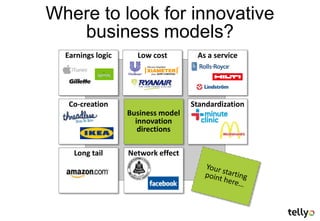
Where to look for innovative
   business models?
  Earnings logic     Low cost        As a service


   Co-creation                      Standardization
                   Business model
                     innovation
                      directions

    Long tail      Network effect
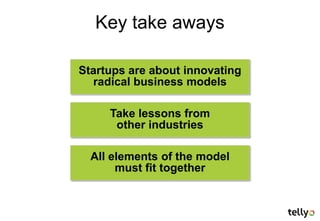
Key take aways

Startups are about innovating
  radical business models

     Take lessons from
      other industries

  All elements of the model
       must fit together
Thank you
 Lets get in touch
kimmo@tellyo.com

Business model innovation

  • 1.
    Inspiration from business modelclassics Kimmo Koivisto CEO, Tellyo
  • 2.
    Who is thisKimmo Koivisto? Today • Tellyo Co-founder and CEO • Teho-Opisto Co-founder and board member Before • Vectia Management consultant • Nokia Research strategy • Helsinki university of Technology
  • 3.
    Tellyo converts 2ndscreen to a smart TV remote for spontaneous discovery, interaction and sharing @TellyoTV
  • 5.
    Who is thisKimmo Koivisto? Today • Tellyo Co-founder and CEO • Teho-Opisto Co-founder and board member Before • Vectia Management consultant • Nokia Research strategy • Helsinki university of Technology
  • 6.
    Agenda • What isbusiness model • Why business model matters • Classic cases for inspiration
  • 7.
    Agenda • What isbusiness model • Why business model matters • Classic cases for inspiration
  • 9.
    ”A business modeldescribes the rationale of how an organization creates, delivers, and captures value”
  • 11.
    Agenda • What isbusiness model • Why business model matters • Classic cases for inspiration
  • 12.
  • 13.
    Startups are aboutinventing radical business models Incumbents fail because of: 1) CEOs don't really want a new business model 2) Product is king. Nothing else matters 3) Cannibalization is off the table 4) ROI hurdles are too aggressive for fledgling models 5) Rogues and renegades get no respect
  • 14.
    Agenda • What isbusiness model • Why business model matters • Classic cases for inspiration
  • 16.
    Where to lookfor innovative business models? Earnings logic Business model innovation directions
  • 17.
  • 18.
    Where to lookfor innovative business models? Earnings logic Low cost Business model innovation directions
  • 19.
  • 20.
  • 21.
    Where to lookfor innovative business models? Earnings logic Low cost As a service Business model innovation directions
  • 22.
    As a service:Case Hilti Traditional Hilti Fleet Business Management High-quality tools Customer value Tools when needed and proposition with service guarantee Low margins, high Increased cost of capital inventory turnover Profit but higher margins, montly payments One-time investment + Predictable hard-to-predict service fees Procurement continuous cost Small batches of tools to Management-level sales of individual contractors Sales long-term service contracts Manufacturing & Inventory, replacement Distribution Processes and service process management R&D, low-cost manufacturing Resources Warehousing & IT Sources: Johnson et al. (2008) www.hilti.com
  • 23.
    Where to lookfor innovative business models? Earnings logic Low cost As a service Standardization Business model innovation directions
  • 24.
  • 25.
    Where to lookfor innovative business models? Earnings logic Low cost As a service Co-creation Standardization Business model innovation directions
  • 26.
    Co-creation: Case Threadless Leveragingthe Love • All products are designed, rated and marketed by community members • Engages creators, critics, joiners and spectators • Valuable return on time spent • No advertising, no professional designers, no retail distribution, no salespeople – low overhead, high margins
  • 27.
    Where to lookfor innovative business models? Earnings logic Low cost As a service Co-creation Standardization Business model innovation directions Long tail
  • 28.
    Long tail: CaseAmazon An example of a power law graph showing popularity ranking Head Hit items, the few that dominate Sales Long tail Non-hit items, unique items in relatively low quantities Products Demand shifts towards niches with high availability of choice and when there is large population and negligible distribution and stocking costs Reference: Anderson, C. (2006). The Long Tail: Why the Future of Business is Selling Less of More
  • 29.
    Where to lookfor innovative business models? Earnings logic Low cost As a service Co-creation Standardization Business model innovation directions Long tail Network effect
  • 30.
    Network effect: CaseBell telephone Potential calls between phones 1 10 n
  • 31.
    Network effect: Case personalized publications Readers, who are the most price Content creation (# shared sensitive, are subsidized to drive More readymade content articles) is stimulated to add demand available for publications. platform value CONTENT READERS CREATORS Increased demand for the created content The integrator facilitates the Higher demand lowers prices and process and captures part of the allows variety on printed media created value INTEGRATOR PRINT SHOPS Wider reach and Higher subsidizing more granular targeting increases demand Advertisers are charged as their demand grows more strongly in response to growth in the user side Established practices increase ADVERTISERS ad sales
  • 32.
    Where to lookfor innovative business models? Earnings logic Low cost As a service Co-creation Standardization Business model innovation directions Long tail Network effect
  • 33.
    Key take aways Startupsare about innovating radical business models Take lessons from other industries All elements of the model must fit together
  • 34.
    Thank you Letsget in touch kimmo@tellyo.com

Editor's Notes

  • #14 1) CEOs don't really want a new business model.The most obvious reason companies fail at business model innovation is because CEOs and their senior leadership teams don't want to explore new business models. They are content with the current one and want everyone in the organization focused on how to improve its performance. The clearest indication that a company and its leaders aren't interested in business model innovation is when any discussion about emerging business models and disruptive technology is viewed and treated solely as a competitive threat.2) Product is king. Nothing else matters. The lines are blurring between product and service. Business models that are exclusively focused on products are vulnerable to being disrupted by models that blend both product and service to significantly change the value proposition. Think iPod. Apple didn't bring the first mp3 player to the market. It changed the way we experienced music by delivering on a value proposition that bundled product (iPod) and service (iTunes). Industrial era thinking and NAICS industry codes reinforce the habit of characterizing a business model as being either product or service focused, but this is a false choice constraining business model innovation. Sometimes a proud product heritage can get in the way.3) Cannibalization is off the table. Part of the thinking by line executives in most organizations goes like this: "the last thing we want to do is risk any of our current business. It's hard enough being at war with the competition in a battle for market share. Why would we want to compete against ourselves?" These sentiments tend to be voiced whenever new business model ideas threaten to cannibalize existing sales. When executives look at new opportunities they see them through the lens of the current business model and view them as competing with the current way the organization creates, delivers, and captures value. Organizations fail at business model innovation because they blindly take cannibalization off the table even if a new business model may have significant upside potential.4) ROI hurdles are too aggressive for fledgling models.There's no easier way to prevent business model innovation than to assess potential new models using the same economics and financial metrics as projects to improve the performance of the current business model. Financial metrics utilized to assess alternative projects to improve the current business model reflect the cost structure and required returns to sustain and grow in the context of today's model. New business models are likely to have very different economics and must be assessed in that context. Most new business models will be dismissed out of hand if judged by the economics and constrained by the ROI requirements of the current model. Organizations fail at business model innovation because they apply the wrong financial lens in assessing the attractiveness and feasibility of new business models.5) Rogues and renegades get no respect. Many organizations fail at business model innovation because they shoot their renegades. Or, if they don't shoot them, they wear them down until they leave. Business model innovators go against the corporate grain. They see entirely new ways to create, deliver, and capture value. If those that are tasked with sustaining and growing today's business models are allowed to reject those with the perspective and insight to help design the next one, business model innovation efforts will fail. Organizations must learn to celebrate and support people within the organization who are willing to challenge the status quo, to bring totally different perspectives on delivering value to the table, and to take experimental risks to explore new models.