FRICTIONAL PROPERTIES OF TEXTILE FIBERS
Kh Nurul Anam
ID: 1721046
Dr. Md. Ismail Hossain
B. Sc. In Textile Tech. (DU), PhD
Assistant Professor, Dept. of TE, KUET
PRESENTING TO
PRESENTING BY
Md. Habibullah
ID: 1721047
Md. Ahsanul Mobin
ID: 1721048
Sajidur Rahman
ID: 1721049
Md. Nadim Mahmud
ID: 1721050
OUTLINE OF PRESENTATION
• Introduction
• Friction
• What Would Happen if Friction Stopped Working?
• Types Of Friction
• Description
• Factors Affecting Of Frictional Intensity Of Textile Materials
• Importance Of Friction In Textile Industry
• Effects Of Lubricant On Frictional Force
• Minimization Of Frictional Intensity Of Textile Materials
• Findings
• Conclusion
FRICTION
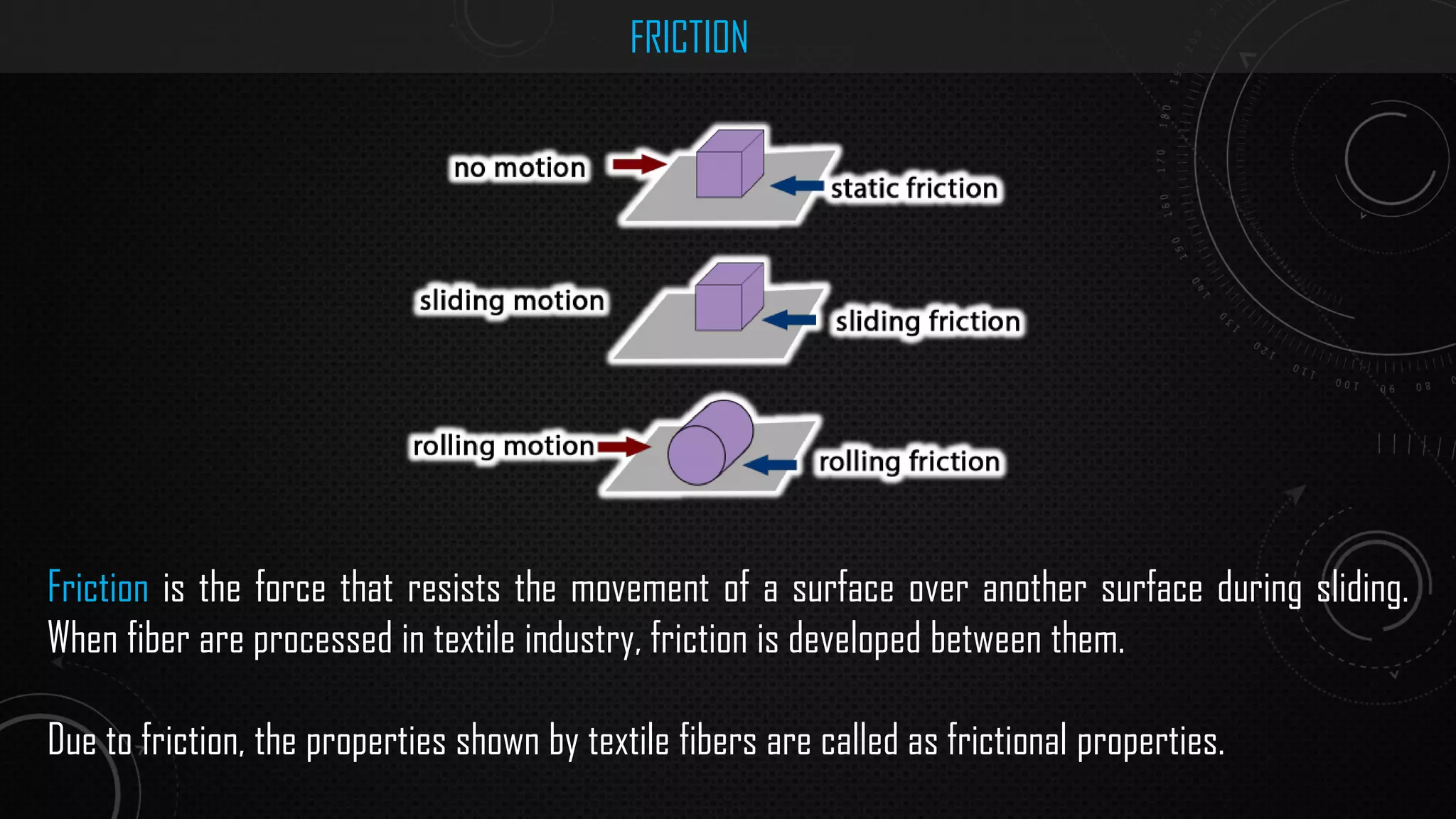
Friction is the force that resists the movement of a surface over another surface during sliding.
When fiber are processed in textile industry, friction is developed between them.
Due to friction, the properties shown by textile fibers are called as frictional properties.
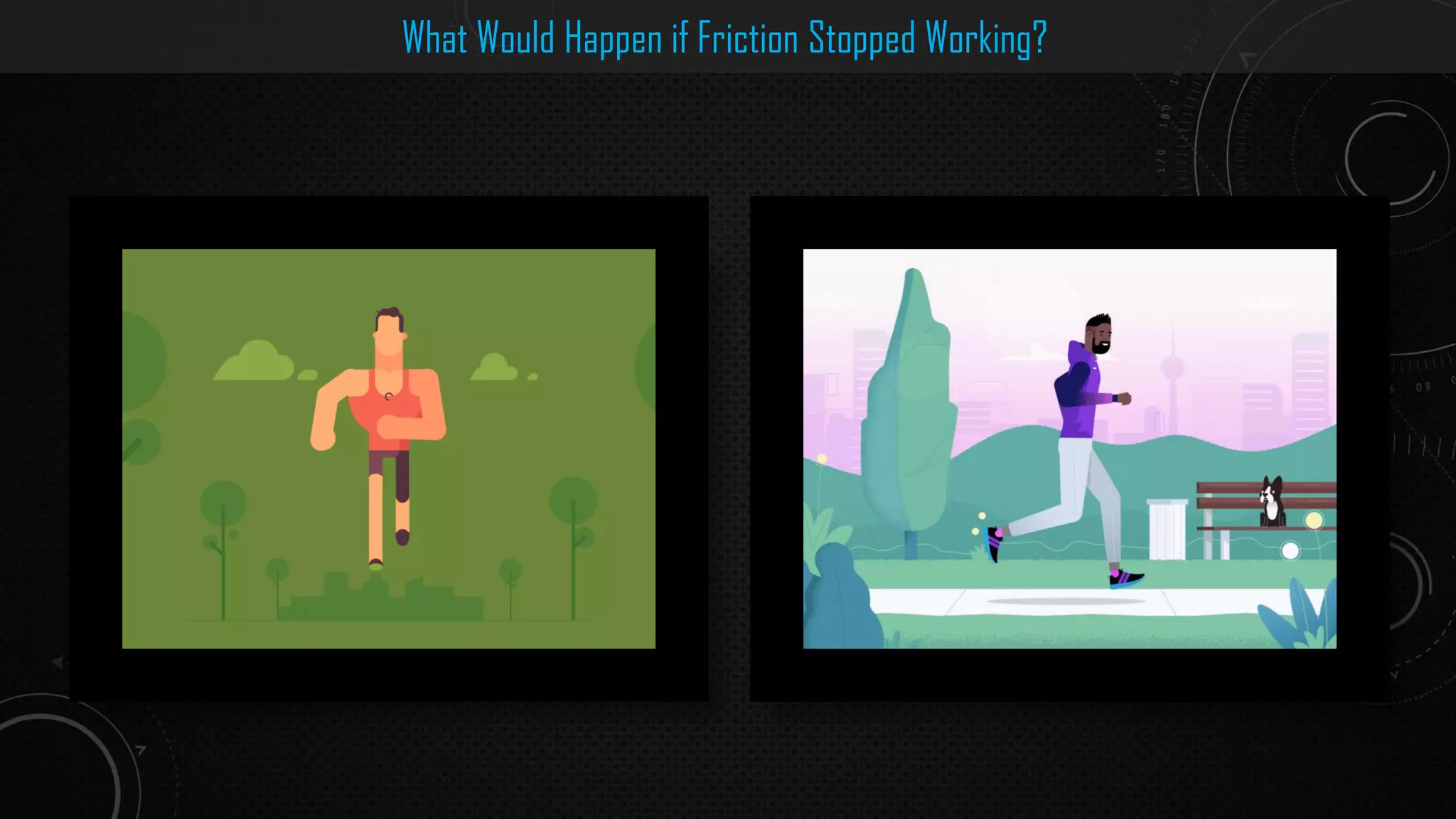
What Would Happen if Friction Stopped Working?
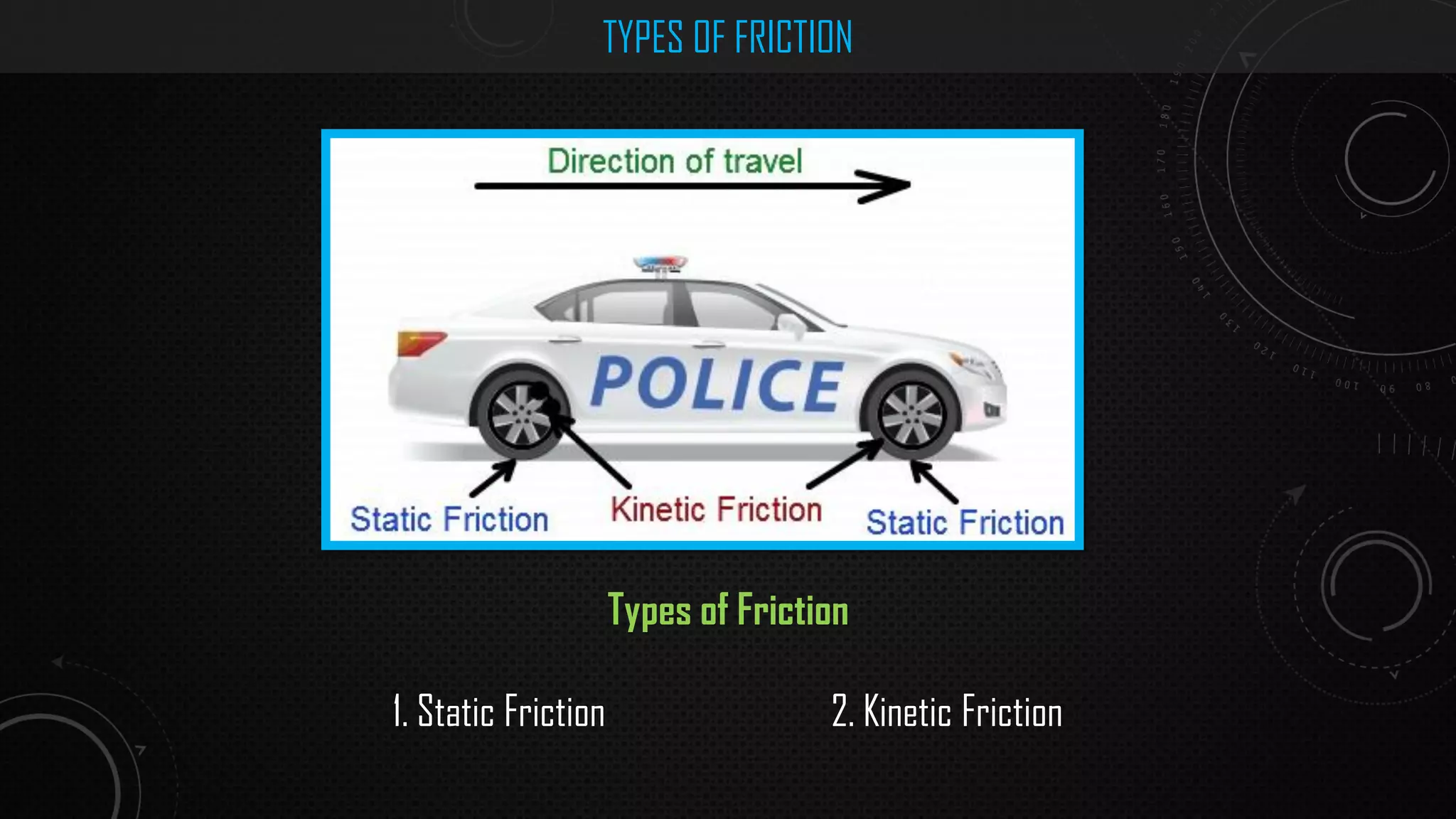
TYPES OF FRICTION
Types of Friction
1. Static Friction 2. Kinetic Friction
FACTORS AFFECTING OF FRICTIONAL INTENSITY OF TEXTILE MATERIALS
1. Composition of the material (natural/synthetic)
2. The state of the surface (slippery/rough surface)
3. Weight of the fiber
4. Pressure between two surfaces
5. Area of contact or angle of contact
6. Speed of sliding of one surface over another
7. Temperature & Relative humidity (%)
8. Water absorption of fiber
9. Cross-sectional area of fiber
IMPORTANCE OF FRICTION IN TEXTILE INDUSTRY
• To give twist during spinning
• Drawing & Drafting
• Holding the fibers together in sliver
• Production of clean & fresh yarn
• Modification of lusture qualities
• Uniform tension maintenance
EFFECTS OF LUBRICANT ON FRICTIONAL FORCE
A lubricant is a substance, usually organic, introduced to reduce friction between surfaces in
mutual contact, which ultimately reduces the heat generated when the surfaces move. It may also
have the function of transmitting forces, transporting foreign particles, or heating or cooling the
surfaces.
Lubricants reduce the frictional force between two surfaces at a certain level.
In case metals, lubricant reduces the value of μ from 1.0 to 0.05 but in case of fibers, it has
comparatively little effects and usually reduces value between 0.2 to 0.7
MINIMIZATION OF FRICTIONAL INTENSITY OF TEXTILE MATERIALS
• Sizing on warp yarn
• Emulsion, oil, lubricants used during batching of Jute fibers
• Chemical treatment to avoid scale formation of wool fibers
• Using softeners
• Calendaring
• Resin finish or Anti-crease finish
FINDINGS
• By knowing the properties of friction, we can maintenance any kinds of production
• Acknowledging this, we can control friction within our optimum limit
• By using different kinds of lubricants, we can reduce the friction
• Minimization of friction intensity had been learned
CONCLUSION
So, friction is mandatory for being exist in this world. Besides it’s necessity in
textile industry cannot be described in a word. Without it, the material would lost
it’s properties, factors and so on. Maybe all the dimension of this universe would
impact on this criteria. So, it’s such a blessing for us to feel the friction among the
creations of our creator.
Frictional Properties of Textile Fibers

Frictional Properties of Textile Fibers

  • 1.
    FRICTIONAL PROPERTIES OFTEXTILE FIBERS Kh Nurul Anam ID: 1721046 Dr. Md. Ismail Hossain B. Sc. In Textile Tech. (DU), PhD Assistant Professor, Dept. of TE, KUET PRESENTING TO PRESENTING BY Md. Habibullah ID: 1721047 Md. Ahsanul Mobin ID: 1721048 Sajidur Rahman ID: 1721049 Md. Nadim Mahmud ID: 1721050
  • 2.
    OUTLINE OF PRESENTATION •Introduction • Friction • What Would Happen if Friction Stopped Working? • Types Of Friction • Description • Factors Affecting Of Frictional Intensity Of Textile Materials • Importance Of Friction In Textile Industry • Effects Of Lubricant On Frictional Force • Minimization Of Frictional Intensity Of Textile Materials • Findings • Conclusion
  • 3.
    FRICTION Friction is theforce that resists the movement of a surface over another surface during sliding. When fiber are processed in textile industry, friction is developed between them. Due to friction, the properties shown by textile fibers are called as frictional properties.
  • 4.
    What Would Happenif Friction Stopped Working?
  • 5.
    TYPES OF FRICTION Typesof Friction 1. Static Friction 2. Kinetic Friction
  • 6.
    FACTORS AFFECTING OFFRICTIONAL INTENSITY OF TEXTILE MATERIALS 1. Composition of the material (natural/synthetic) 2. The state of the surface (slippery/rough surface) 3. Weight of the fiber 4. Pressure between two surfaces 5. Area of contact or angle of contact 6. Speed of sliding of one surface over another 7. Temperature & Relative humidity (%) 8. Water absorption of fiber 9. Cross-sectional area of fiber
  • 7.
    IMPORTANCE OF FRICTIONIN TEXTILE INDUSTRY • To give twist during spinning • Drawing & Drafting • Holding the fibers together in sliver • Production of clean & fresh yarn • Modification of lusture qualities • Uniform tension maintenance
  • 8.
    EFFECTS OF LUBRICANTON FRICTIONAL FORCE A lubricant is a substance, usually organic, introduced to reduce friction between surfaces in mutual contact, which ultimately reduces the heat generated when the surfaces move. It may also have the function of transmitting forces, transporting foreign particles, or heating or cooling the surfaces. Lubricants reduce the frictional force between two surfaces at a certain level. In case metals, lubricant reduces the value of μ from 1.0 to 0.05 but in case of fibers, it has comparatively little effects and usually reduces value between 0.2 to 0.7
  • 9.
    MINIMIZATION OF FRICTIONALINTENSITY OF TEXTILE MATERIALS • Sizing on warp yarn • Emulsion, oil, lubricants used during batching of Jute fibers • Chemical treatment to avoid scale formation of wool fibers • Using softeners • Calendaring • Resin finish or Anti-crease finish
  • 10.
    FINDINGS • By knowingthe properties of friction, we can maintenance any kinds of production • Acknowledging this, we can control friction within our optimum limit • By using different kinds of lubricants, we can reduce the friction • Minimization of friction intensity had been learned
  • 11.
    CONCLUSION So, friction ismandatory for being exist in this world. Besides it’s necessity in textile industry cannot be described in a word. Without it, the material would lost it’s properties, factors and so on. Maybe all the dimension of this universe would impact on this criteria. So, it’s such a blessing for us to feel the friction among the creations of our creator.