
MANJUSHA LAKSHMI
Msc.optometry
Using the wearers old frame
 The reason for these are
 Cost
 Comfort to the old frame
Frame shape and face shape
 Generally there are 7 basic shape
 Oval
 Oblong
 Round
 Square
 Triangular
 Inverted triangular
 diamond
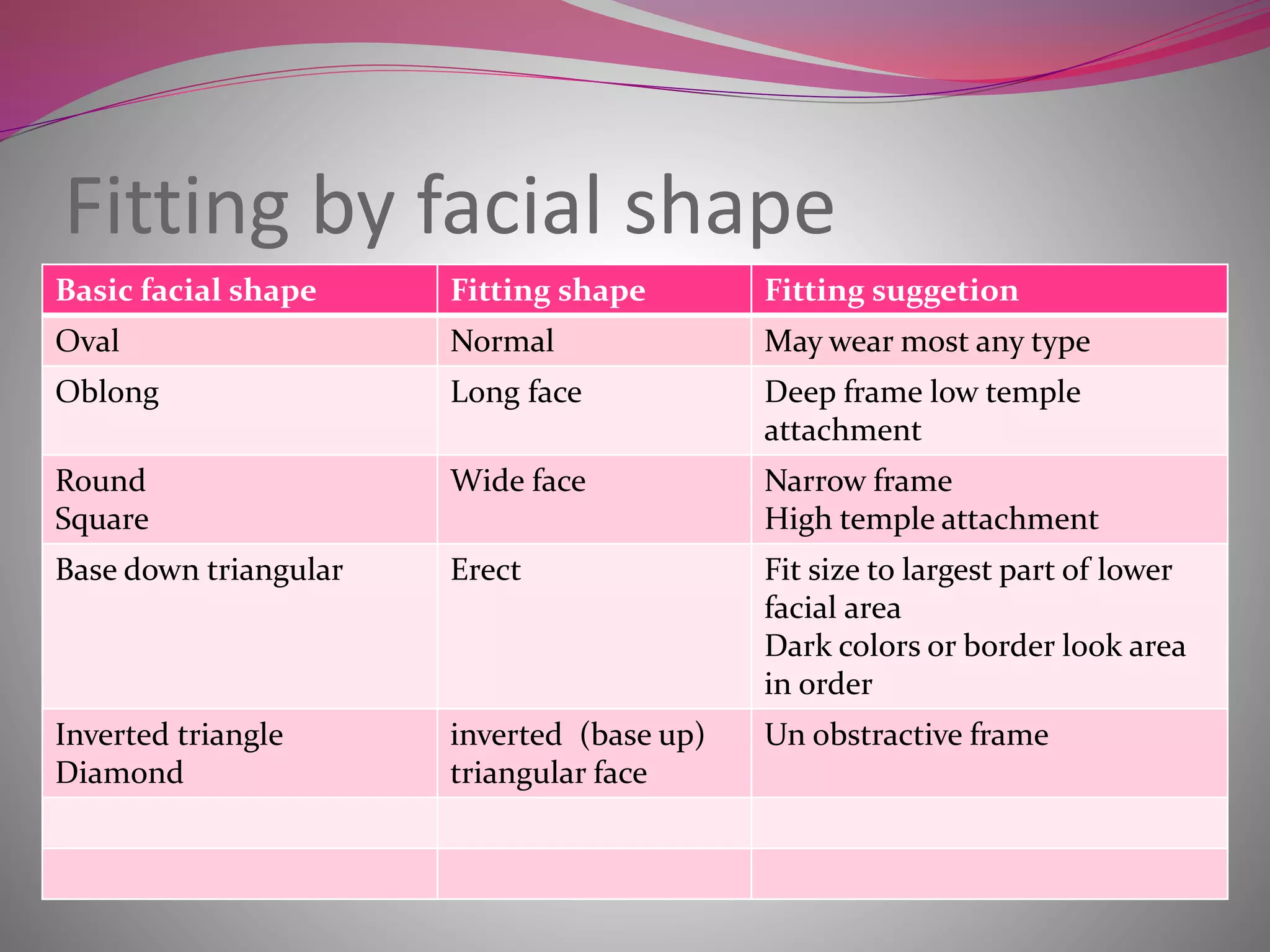
Fitting by facial shape
Basic facial shape Fitting shape Fitting suggetion
Oval Normal May wear most any type
Oblong Long face Deep frame low temple
attachment
Round
Square
Wide face Narrow frame
High temple attachment
Base down triangular Erect Fit size to largest part of lower
facial area
Dark colors or border look area
in order
Inverted triangle
Diamond
inverted (base up)
triangular face
Un obstractive frame
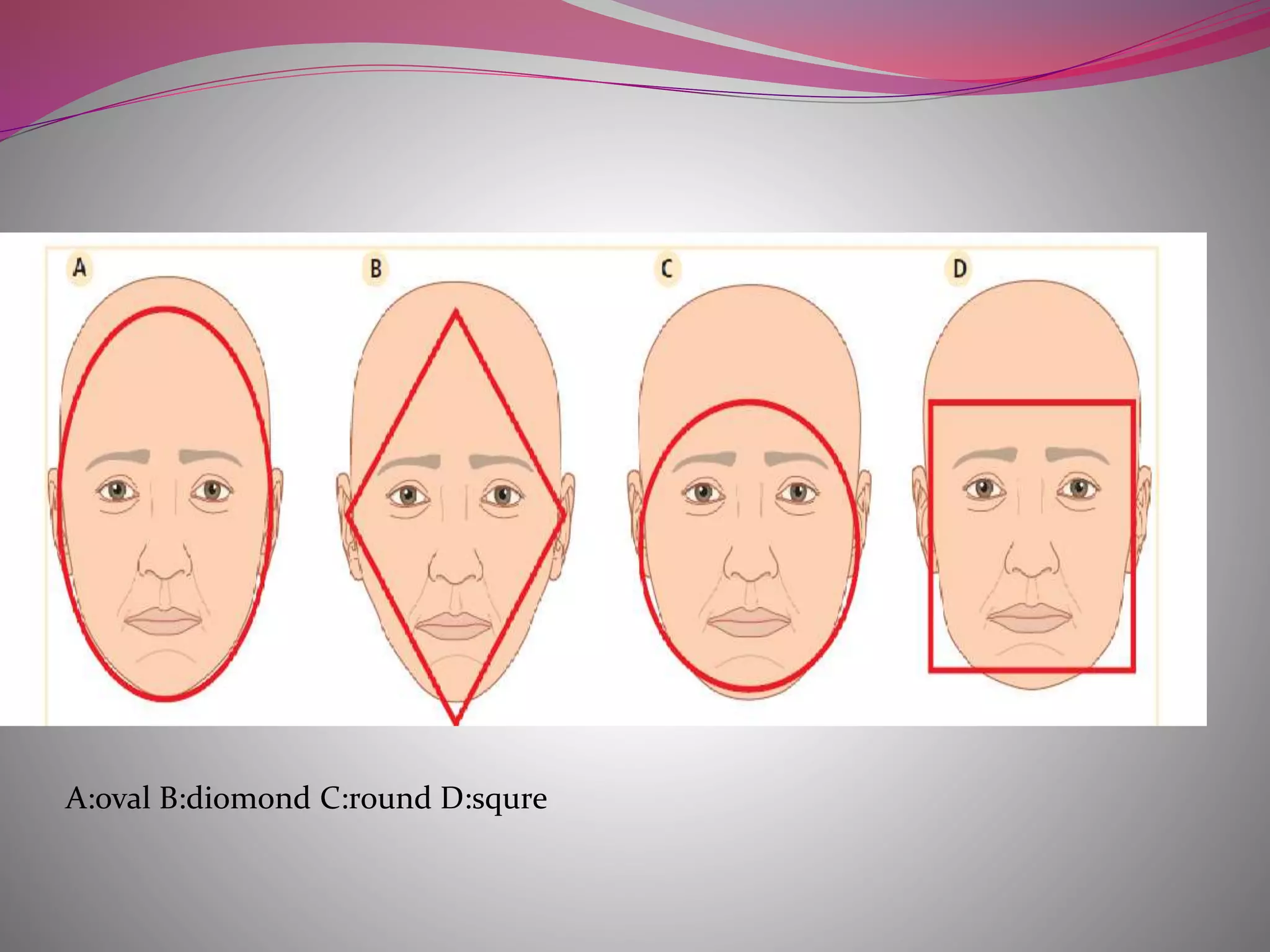
A:oval B:diomond C:round D:squre
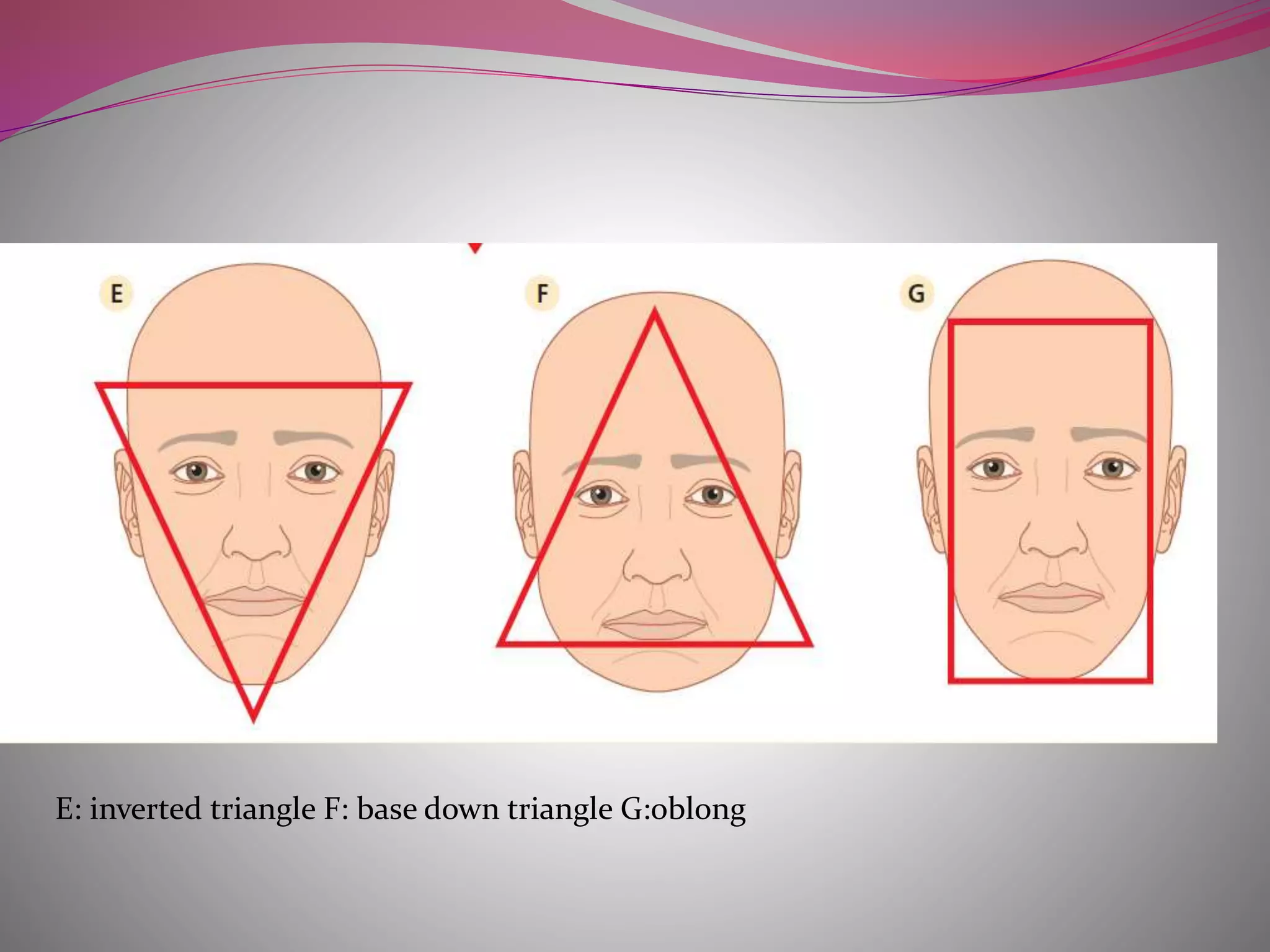
E: inverted triangle F: base down triangle G:oblong
Affecting the length of face
 Shape of a frame suitability is broken into two categories
 Dimension: concerned with width and depth of the frame
 Shape: concerned with angularity and roundness of face and
eye brow line
 Shorter face has smaller vertical depth so use narrower
frame. a frame with a darker upper rim section and a lower
rimless or nylon cord section have a face lengthening effect
 Longer face has grater vertical depth so use deeper frame.a
darker colored frame will aid the effect of shortening a long
face
 For longer face ,a frame front with lower end pieces use
 For wide face, a frame with high end piece uses
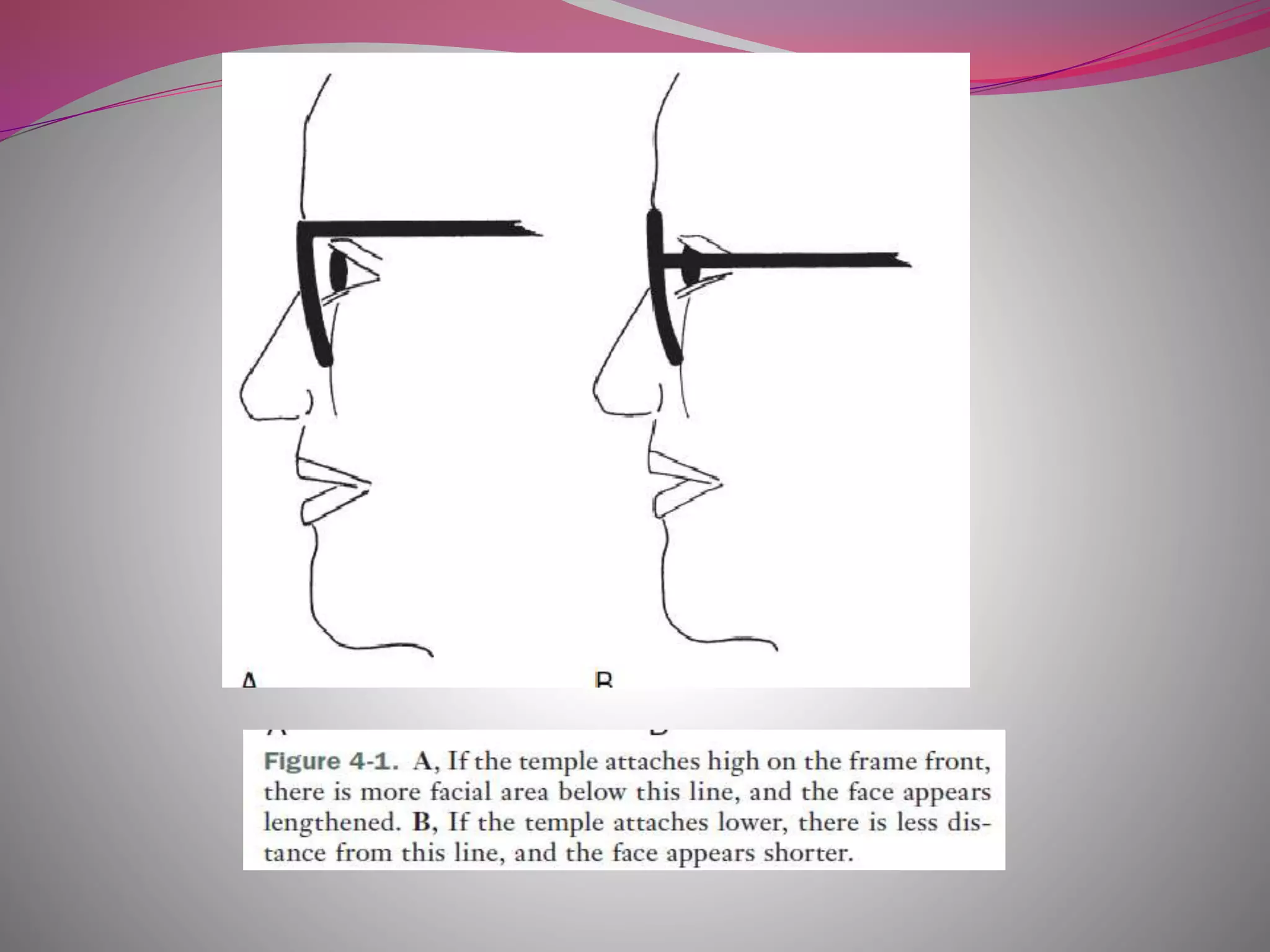
When a frame is viewed from the side it divided by the
temple
 Temple attach high on a frame:
 More facial area below the line, lengthening effect
 Temple attach lower on a frame
 Less facial area below the line , shortening effect
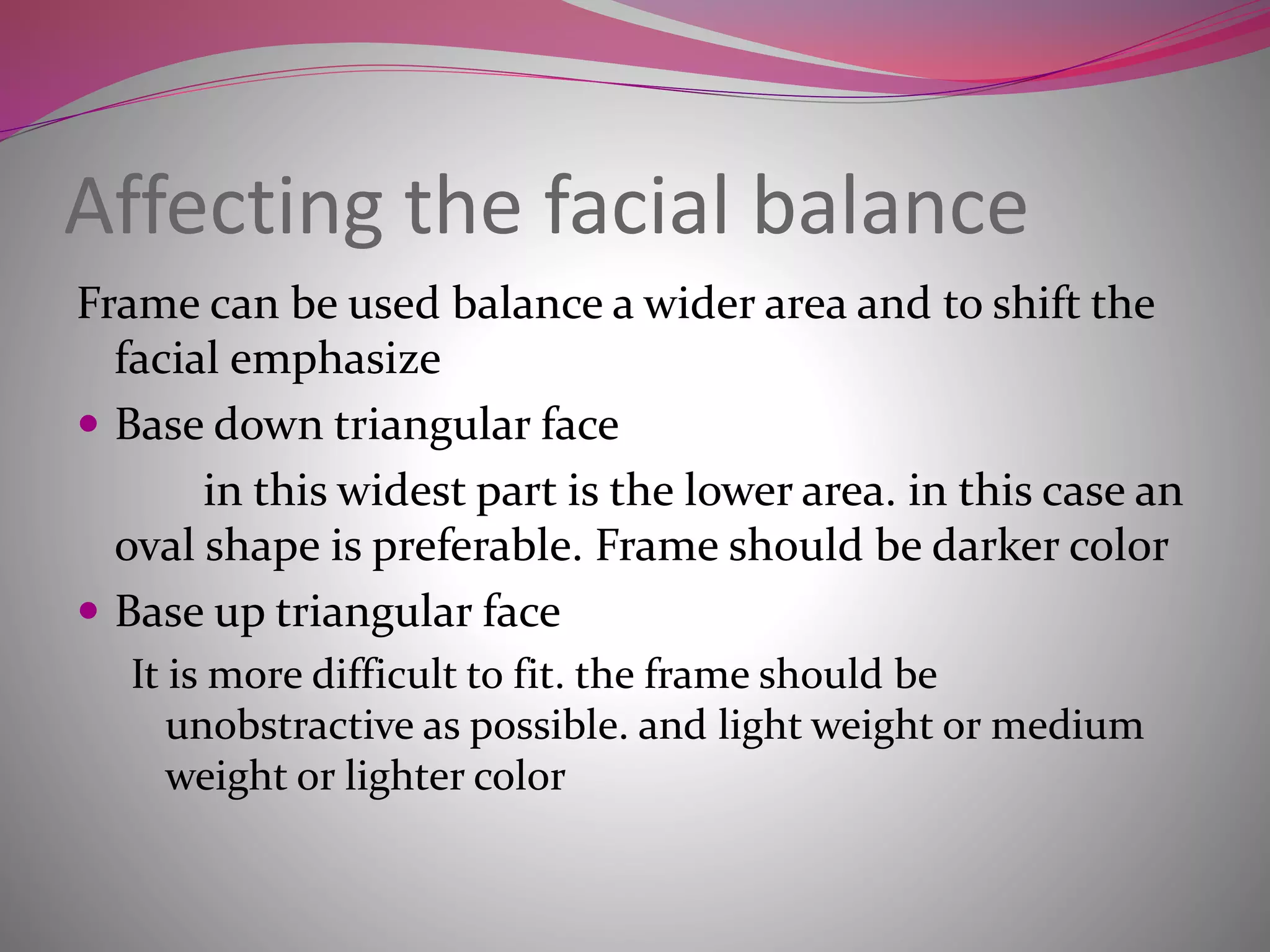
Affecting the facial balance
Frame can be used balance a wider area and to shift the
facial emphasize
 Base down triangular face
in this widest part is the lower area. in this case an
oval shape is preferable. Frame should be darker color
 Base up triangular face
It is more difficult to fit. the frame should be
unobstractive as possible. and light weight or medium
weight or lighter color
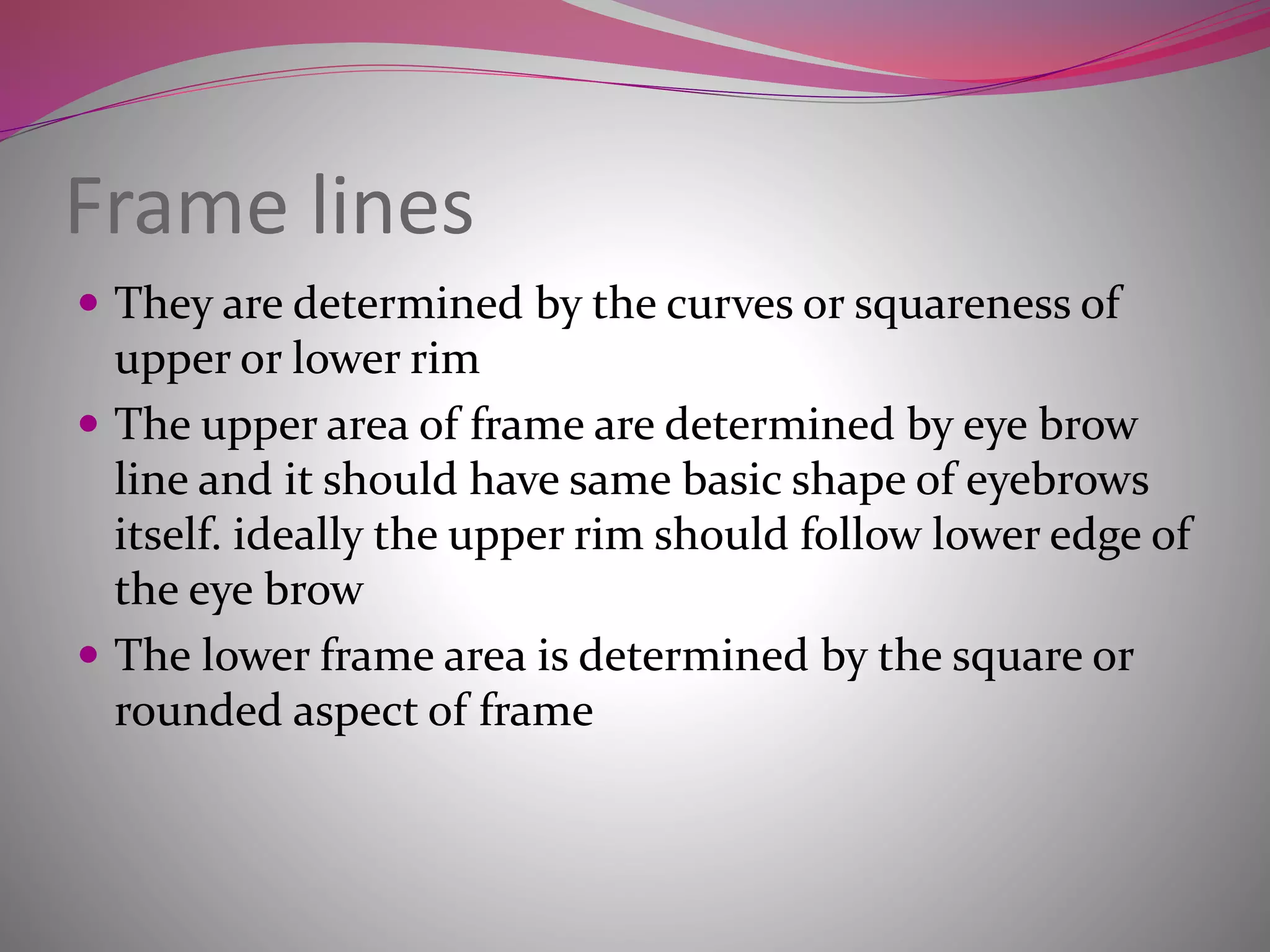
Frame lines
 They are determined by the curves or squareness of
upper or lower rim
 The upper area of frame are determined by eye brow
line and it should have same basic shape of eyebrows
itself. ideally the upper rim should follow lower edge of
the eye brow
 The lower frame area is determined by the square or
rounded aspect of frame
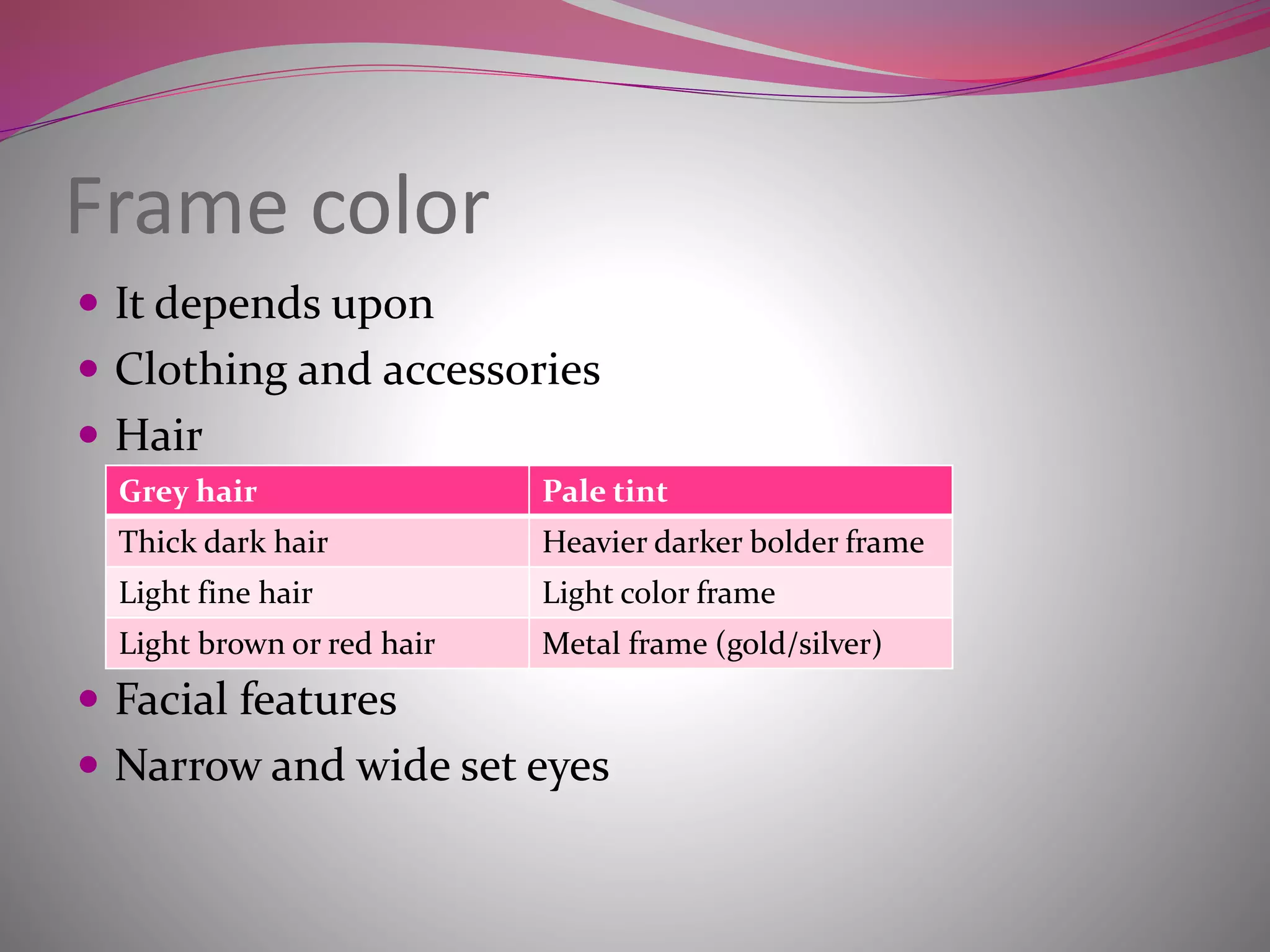
Frame color
 It depends upon
 Clothing and accessories
 Hair
 Facial features
 Narrow and wide set eyes
Grey hair Pale tint
Thick dark hair Heavier darker bolder frame
Light fine hair Light color frame
Light brown or red hair Metal frame (gold/silver)
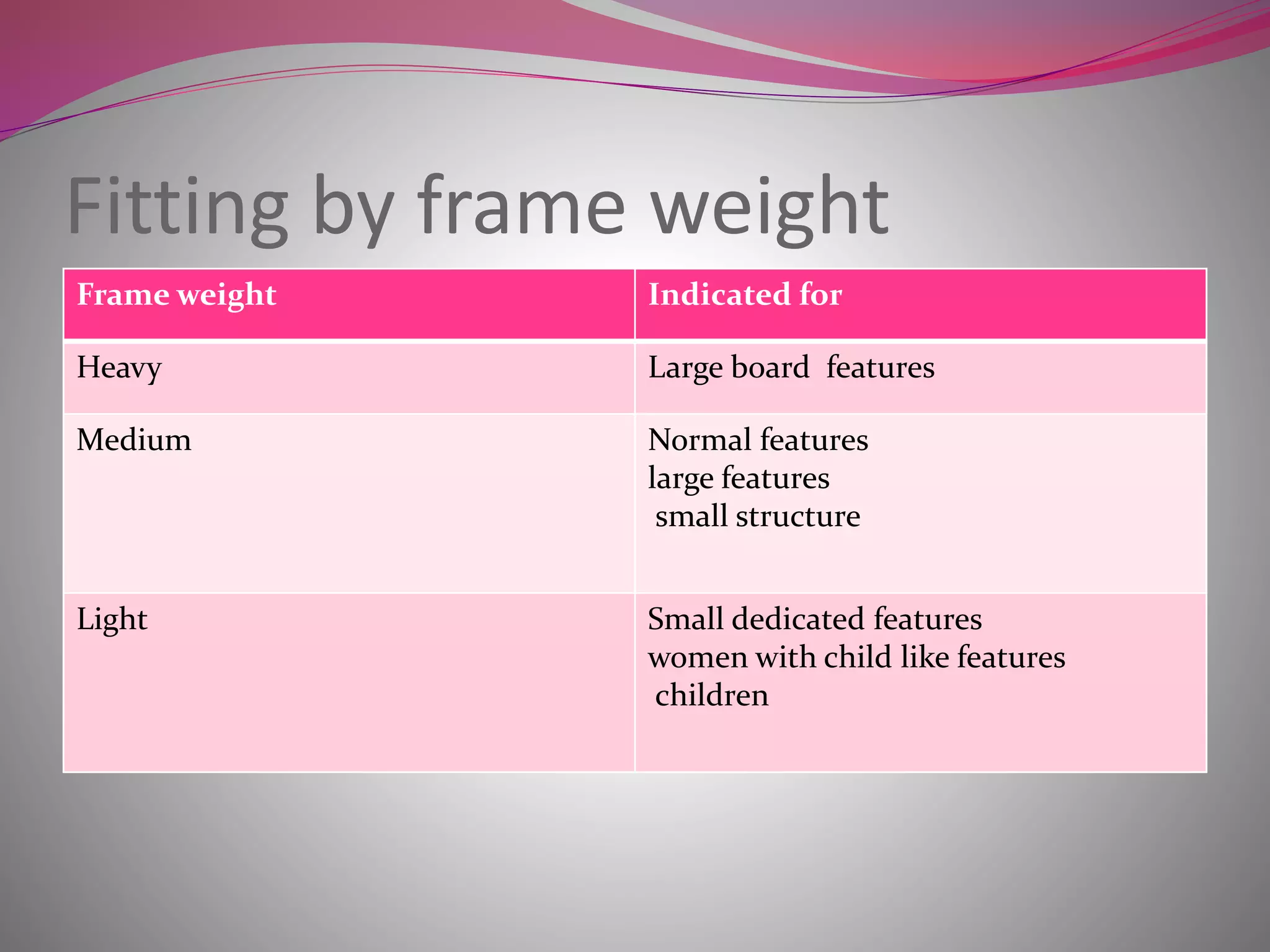
Fitting by frame weight
Frame weight Indicated for
Heavy Large board features
Medium Normal features
large features
small structure
Light Small dedicated features
women with child like features
children
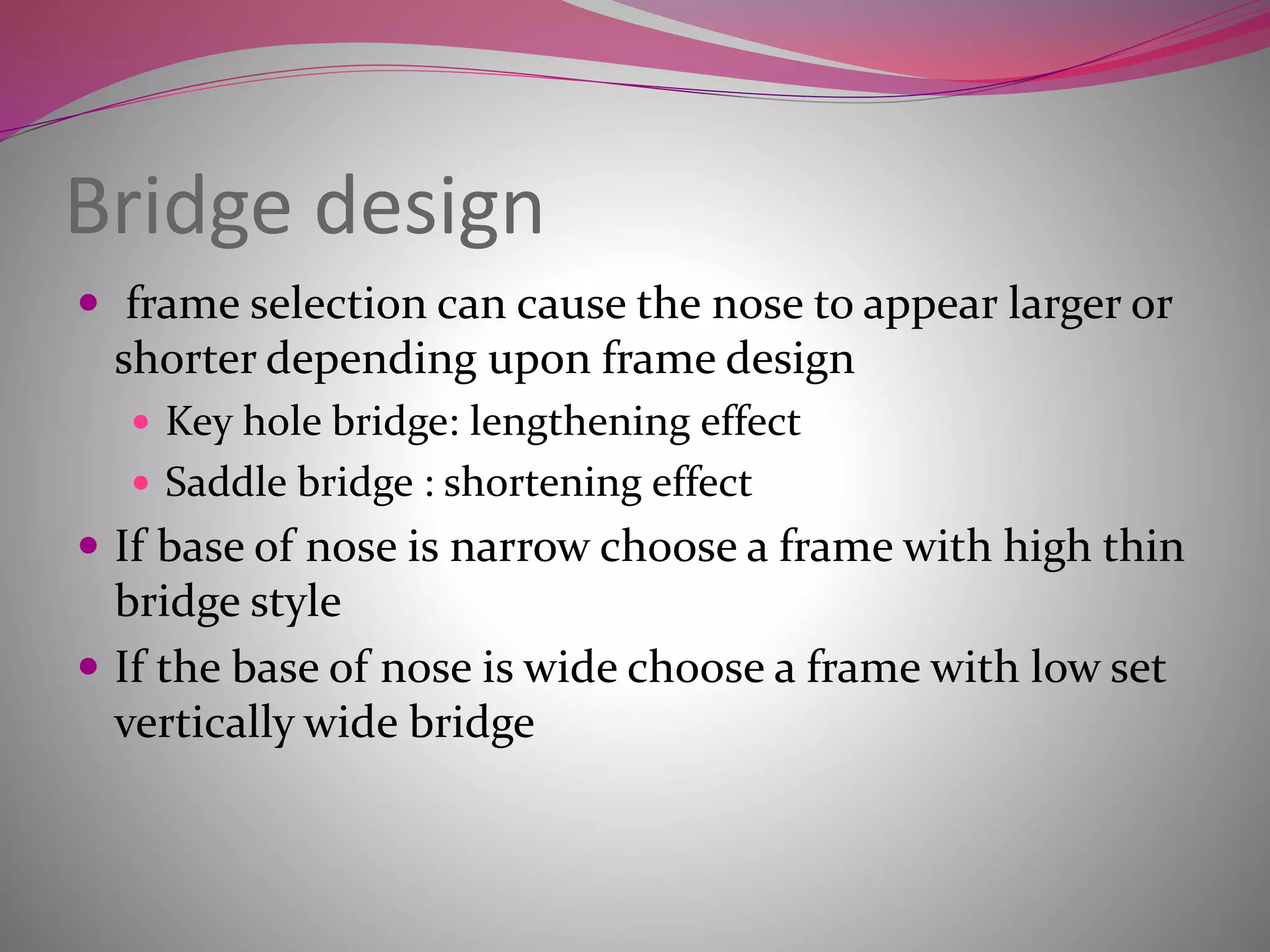
Bridge design
 frame selection can cause the nose to appear larger or
shorter depending upon frame design
 Key hole bridge: lengthening effect
 Saddle bridge : shortening effect
 If base of nose is narrow choose a frame with high thin
bridge style
 If the base of nose is wide choose a frame with low set
vertically wide bridge
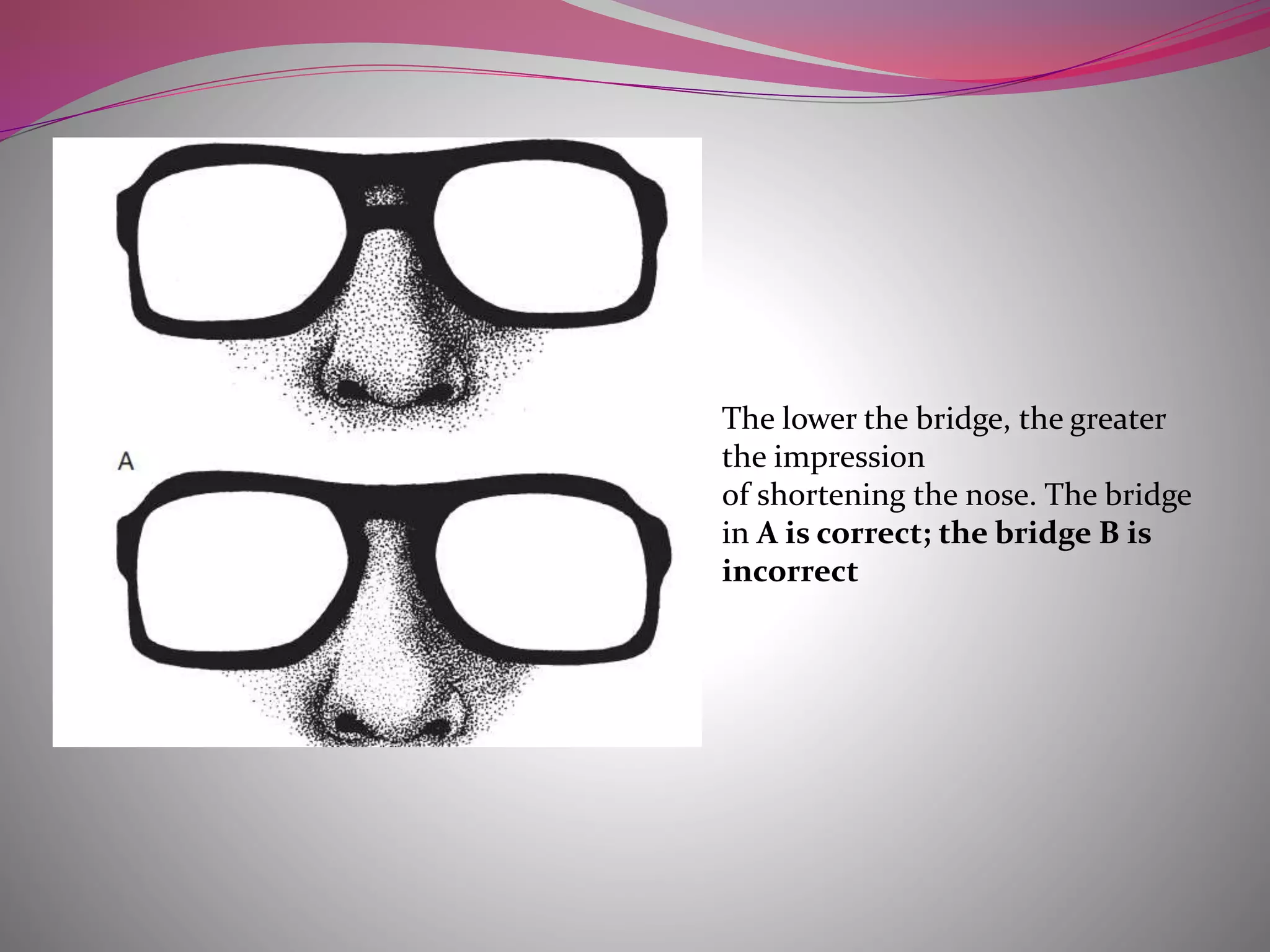
The lower the bridge, the greater
the impression
of shortening the nose. The bridge
in A is correct; the bridge B is
incorrect
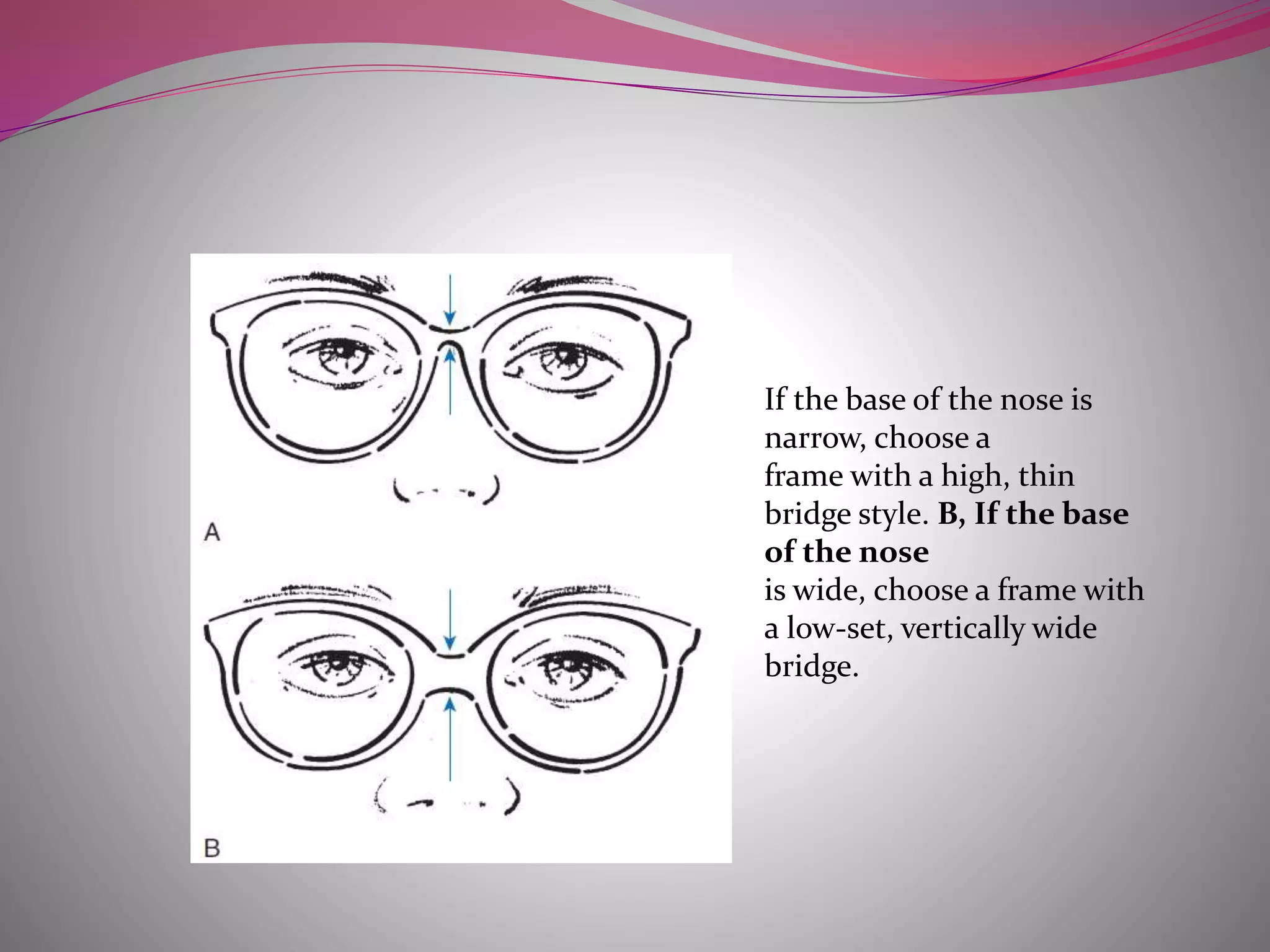
If the base of the nose is
narrow, choose a
frame with a high, thin
bridge style. B, If the base
of the nose
is wide, choose a frame with
a low-set, vertically wide
bridge.
Fitting consideration
 The bridge
the appropriate bridge is determined by
 its width
 the position of it pad
 the frontal angle of bridge at the pads
 The flare or splay angle
 Both frontal angle and splay angle are of prime
importance to the proper fit of frame.
 These angle may vary gently among individuals
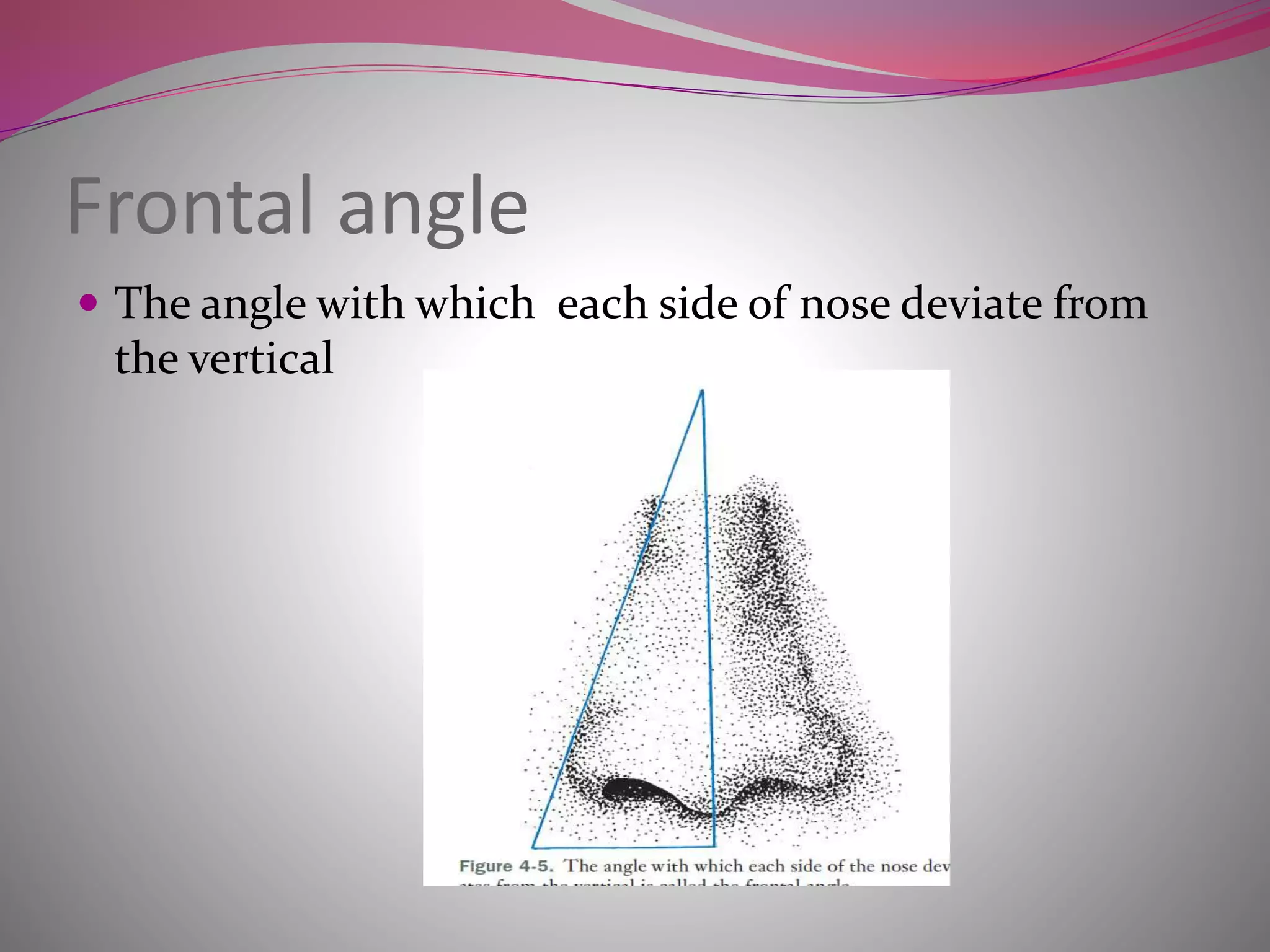
Frontal angle
 The angle with which each side of nose deviate from
the vertical
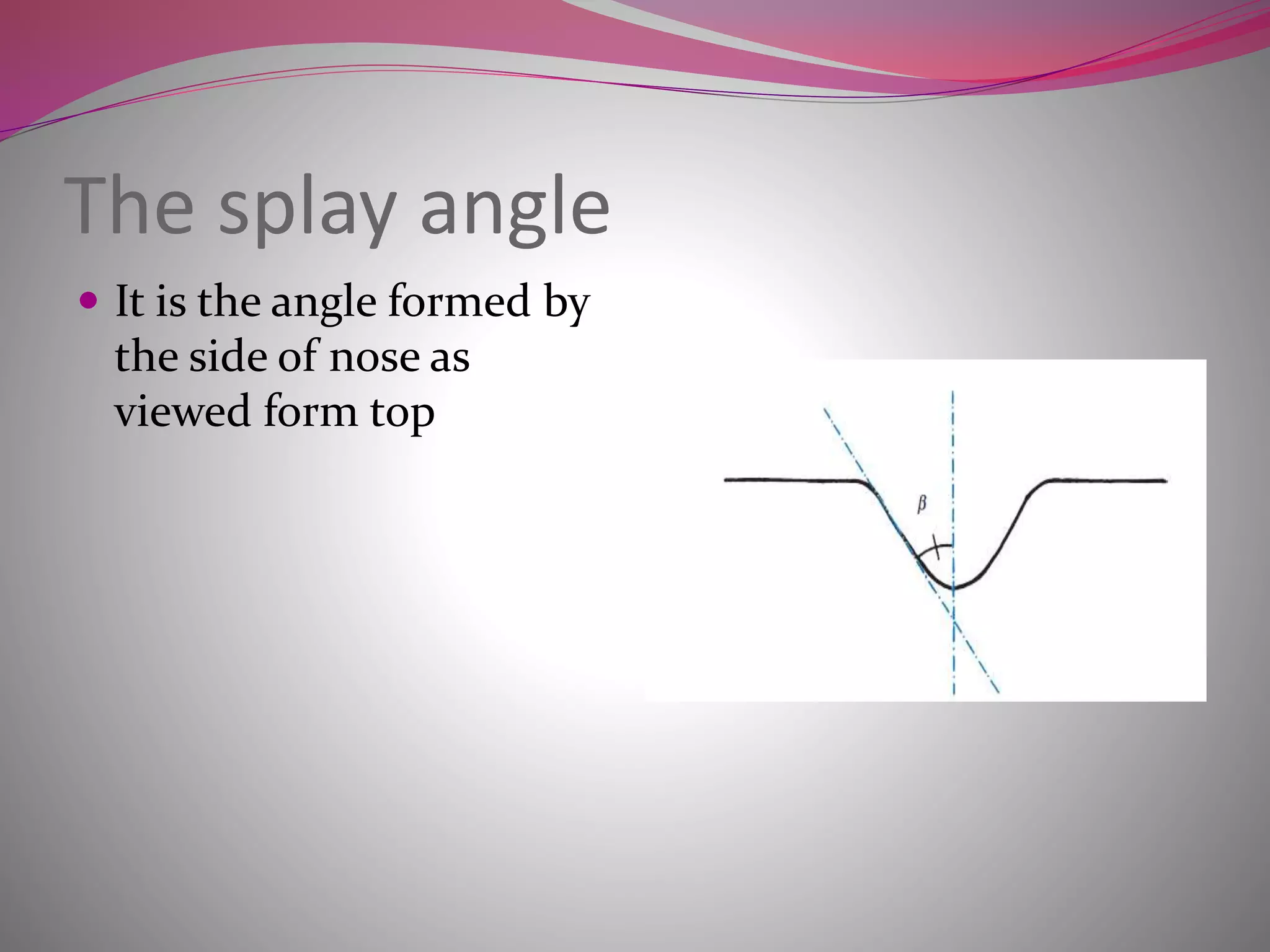
The splay angle
 It is the angle formed by
the side of nose as
viewed form top
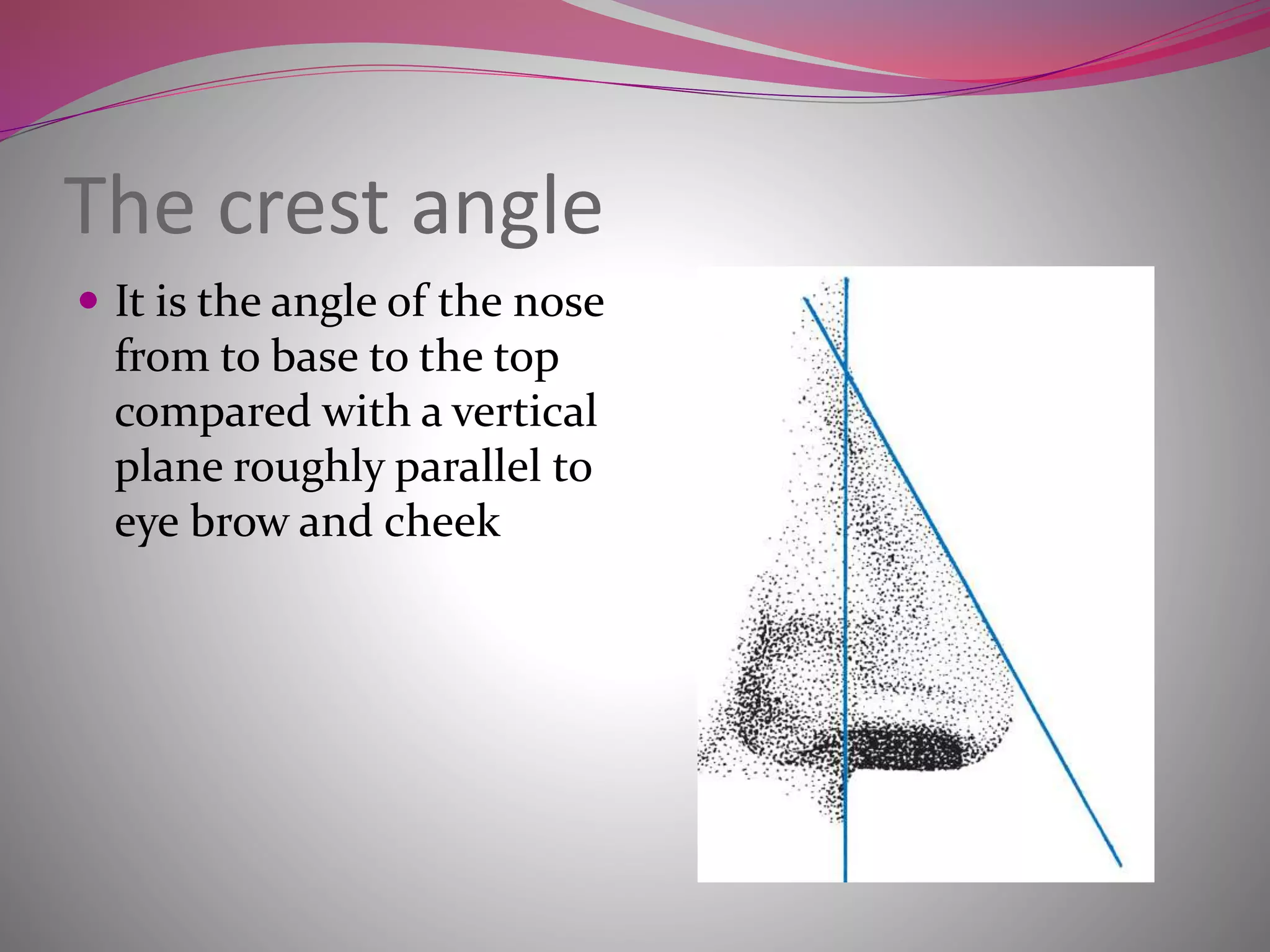
The crest angle
 It is the angle of the nose
from to base to the top
compared with a vertical
plane roughly parallel to
eye brow and cheek
 Adjustable pads
 The full flat surface of
pad should rest on the
nose
 The pad can adjust
individually for each
surface of nose
 Children bridges
 More support at the
bottom of nose area
 Larger splay angle
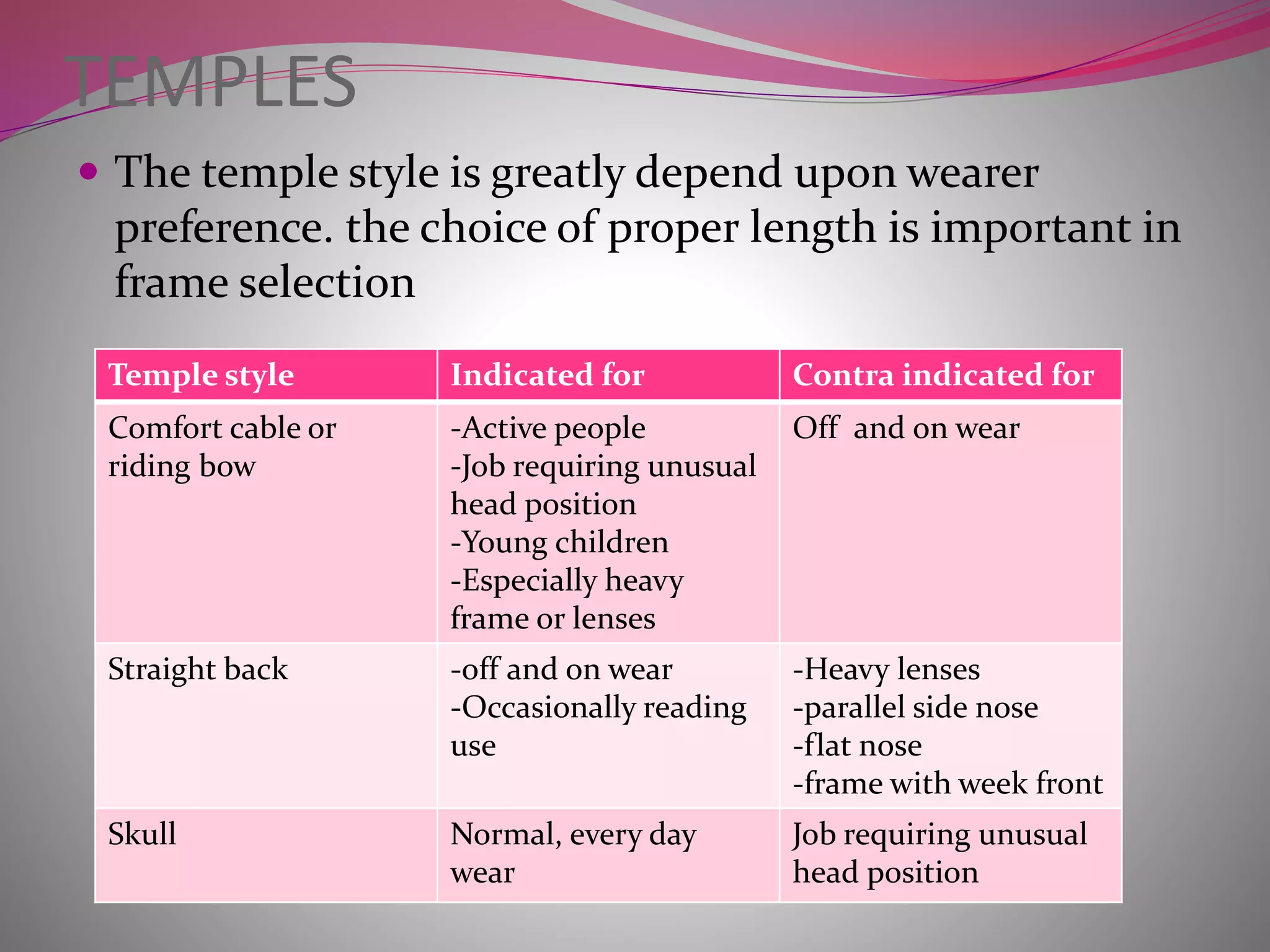
TEMPLES
 The temple style is greatly depend upon wearer
preference. the choice of proper length is important in
frame selection
Temple style Indicated for Contra indicated for
Comfort cable or
riding bow
-Active people
-Job requiring unusual
head position
-Young children
-Especially heavy
frame or lenses
Off and on wear
Straight back -off and on wear
-Occasionally reading
use
-Heavy lenses
-parallel side nose
-flat nose
-frame with week front
Skull Normal, every day
wear
Job requiring unusual
head position
Frame selection

Frame selection

  • 1.
  • 2.
    Using the wearersold frame  The reason for these are  Cost  Comfort to the old frame
  • 3.
    Frame shape andface shape  Generally there are 7 basic shape  Oval  Oblong  Round  Square  Triangular  Inverted triangular  diamond
  • 4.
    Fitting by facialshape Basic facial shape Fitting shape Fitting suggetion Oval Normal May wear most any type Oblong Long face Deep frame low temple attachment Round Square Wide face Narrow frame High temple attachment Base down triangular Erect Fit size to largest part of lower facial area Dark colors or border look area in order Inverted triangle Diamond inverted (base up) triangular face Un obstractive frame
  • 5.
  • 6.
    E: inverted triangleF: base down triangle G:oblong
  • 7.
    Affecting the lengthof face  Shape of a frame suitability is broken into two categories  Dimension: concerned with width and depth of the frame  Shape: concerned with angularity and roundness of face and eye brow line  Shorter face has smaller vertical depth so use narrower frame. a frame with a darker upper rim section and a lower rimless or nylon cord section have a face lengthening effect  Longer face has grater vertical depth so use deeper frame.a darker colored frame will aid the effect of shortening a long face
  • 8.
     For longerface ,a frame front with lower end pieces use  For wide face, a frame with high end piece uses When a frame is viewed from the side it divided by the temple  Temple attach high on a frame:  More facial area below the line, lengthening effect  Temple attach lower on a frame  Less facial area below the line , shortening effect
  • 10.
    Affecting the facialbalance Frame can be used balance a wider area and to shift the facial emphasize  Base down triangular face in this widest part is the lower area. in this case an oval shape is preferable. Frame should be darker color  Base up triangular face It is more difficult to fit. the frame should be unobstractive as possible. and light weight or medium weight or lighter color
  • 11.
    Frame lines  Theyare determined by the curves or squareness of upper or lower rim  The upper area of frame are determined by eye brow line and it should have same basic shape of eyebrows itself. ideally the upper rim should follow lower edge of the eye brow  The lower frame area is determined by the square or rounded aspect of frame
  • 12.
    Frame color  Itdepends upon  Clothing and accessories  Hair  Facial features  Narrow and wide set eyes Grey hair Pale tint Thick dark hair Heavier darker bolder frame Light fine hair Light color frame Light brown or red hair Metal frame (gold/silver)
  • 13.
    Fitting by frameweight Frame weight Indicated for Heavy Large board features Medium Normal features large features small structure Light Small dedicated features women with child like features children
  • 14.
    Bridge design  frameselection can cause the nose to appear larger or shorter depending upon frame design  Key hole bridge: lengthening effect  Saddle bridge : shortening effect  If base of nose is narrow choose a frame with high thin bridge style  If the base of nose is wide choose a frame with low set vertically wide bridge
  • 15.
    The lower thebridge, the greater the impression of shortening the nose. The bridge in A is correct; the bridge B is incorrect
  • 16.
    If the baseof the nose is narrow, choose a frame with a high, thin bridge style. B, If the base of the nose is wide, choose a frame with a low-set, vertically wide bridge.
  • 17.
    Fitting consideration  Thebridge the appropriate bridge is determined by  its width  the position of it pad  the frontal angle of bridge at the pads  The flare or splay angle  Both frontal angle and splay angle are of prime importance to the proper fit of frame.  These angle may vary gently among individuals
  • 18.
    Frontal angle  Theangle with which each side of nose deviate from the vertical
  • 19.
    The splay angle It is the angle formed by the side of nose as viewed form top
  • 20.
    The crest angle It is the angle of the nose from to base to the top compared with a vertical plane roughly parallel to eye brow and cheek
  • 21.
     Adjustable pads The full flat surface of pad should rest on the nose  The pad can adjust individually for each surface of nose  Children bridges  More support at the bottom of nose area  Larger splay angle
  • 22.
    TEMPLES  The templestyle is greatly depend upon wearer preference. the choice of proper length is important in frame selection Temple style Indicated for Contra indicated for Comfort cable or riding bow -Active people -Job requiring unusual head position -Young children -Especially heavy frame or lenses Off and on wear Straight back -off and on wear -Occasionally reading use -Heavy lenses -parallel side nose -flat nose -frame with week front Skull Normal, every day wear Job requiring unusual head position