Foundational Principles of Morality
The term “morality” can be used either
descriptively to refer to some codes of conduct put forward

by a society or,
some other group, such as a religion, or
accepted by an individual for her own behavior or
normatively to refer to a code of conduct that, given
specified conditions, would be put forward by all rational
persons
Moral Principles of Education
The teacher needs to understand public opinion and the

social order, as much as the public needs to comprehend the
nature of expert educational service. – John Dewey
Moral Purpose of School
Moral ideas vs. Ideas about Morality
“Moral ideas” are ideas of any sort whatsoever which take

effect in conduct and improve it, make it better than it
otherwise would be
“ideas about morality” may be morally indifferent or immoral
or moral.
There is nothing in the nature of ideas about morality, of
information about honesty or purity or kindness which
automatically transmutes such ideas into good character or
good conduct.
The moral responsibility of the school, and of those who

conduct it, is to society.
The school is fundamentally an institution erected by society
to do a certain specific work,—to exercise a certain specific
function in maintaining the life and advancing the welfare of
society.
The child is an organic whole, intellectually, socially, and
morally, as well as physically. We must take  the child as a
member of society in the broadest sense, and demand for and
from the schools whatever is necessary to enable the child
intelligently to recognize all his social relations and take his
part in sustaining them.
Teachers as Role Models
What should they be modeling?
Teacher’s were expected to be morally upright

individuals who displayed good character
They were expected to teach and discipline students
The public expects teachers to display behaviours
such as
Fairness
Honesty
Adherence
Virtue ,Moral and Character
Virtue is a quality the person has
It is socially valued
Morals are behavior
Moral virtue like honesty is morally valued

Character
the mental and moral qualities distinctive to an

individual
it is who we are even when no one is watching
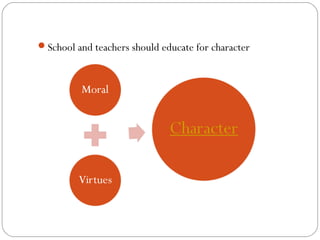
School and teachers should educate for character
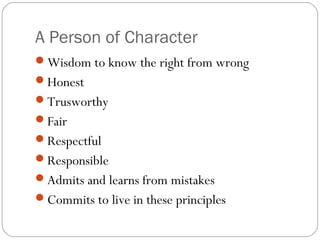
A Person of Character
Wisdom to know the right from wrong
Honest
Trusworthy
Fair
Respectful
Responsible
Admits and learns from mistakes
Commits to live in these principles
Teachers as they interact should exemplify

models of character by making professional
judgment and decisions based on societal
and moral values
Teaching for and with Integrity
Integrity should be embodied or reflected

in the character of an individual
It is the consistency of character regardless
of religion, race , or ethnicity
Modeling Integrity
Teachers model integrity by doing the right thing even when

no one is looking
Consistently doing what is right even it would be easier to do
the other side and much more beneficial
Teachers should emphasize the importance of exercising self
control and restraint when challenged into some
compromising situation
Teachers integrity or lack of it is highly observable for

students
They evaluate the character of their teachers based on how
they are being taught
They know when teacher are genuinely concern and cares
for them
How can teachers serve as role
models?
Honesty
Telling the truth and acting in an honorable

way
Compliance to rules and laws
Fulfilling promises and commitments
Maintaining confidentiality of student records
Not lying, cheating or stealing
Trust
An honest person can be trusted
Trust replaces apprehension and fear
When students trust their teachers they are helping

them trust in themselves as well
It develops when students are told what the
expectations are, meets them and received the
promised reward
It is effectively taught when lived
Fairness
All opportunity to meet the standards
Absence of discrimination
Sometimes fairness also means treating the

student differently because this is the right thing
to do so
Respect
Means showing regard and appreciation for the worth

of someone or something.
It means honor and esteem
Responsibility
Being morally accountable for their actions and

fulfilling their duties
Well prepared for their class
When they model health-related physical
fitness, good nutrition and absence of drug
abuse
Teaching how to reason morally
First step is to learn moral principles
Principles are universal rules of conduct and are based on

moral virtues and values
Moral reasoning is the systematic process of evaluating
personal virtues
Stages
 Moral knowing
 Moral valuing
 Moral acting
Help students differentiate on themselves what is

right or wrong
Guide them to go through the usual notions
such as
There is no rule against it
Everyone else does it
No one will ever find out
The situation calls for me to act this way
Teachers should educate students not to justify or rationalize

their decisions or behaviors but rather to use the moralreasoning process when making decisions.
Moral knowing
Cognitive phase
Learning about the issue and how to

resolve them
They shouldn’t justify wrong actions so
that it would seem right
Moral valuing
Internalization of values
This can be taught by modeling it

themselves
Moral acting
Sometime difficult because it requires the courage to stand

out from the crowd and different
Even under pressure, the students should still be able the
correct choices
“Moral reasoning does not promise behavioral

change, but it promises individual soul searching
and reflection on personal beliefs, values and
principles. Without this process cognitive moral
growth will not increase, behavior change will
not occur and the potential for consistent moral
action becomes little more than a hit or miss
proposition.”–Stoll and beller
Foundational principles of morality

Foundational principles of morality

  • 1.
  • 2.
    The term “morality”can be used either descriptively to refer to some codes of conduct put forward by a society or, some other group, such as a religion, or accepted by an individual for her own behavior or normatively to refer to a code of conduct that, given specified conditions, would be put forward by all rational persons
  • 3.
    Moral Principles ofEducation The teacher needs to understand public opinion and the social order, as much as the public needs to comprehend the nature of expert educational service. – John Dewey
  • 4.
    Moral Purpose ofSchool Moral ideas vs. Ideas about Morality “Moral ideas” are ideas of any sort whatsoever which take effect in conduct and improve it, make it better than it otherwise would be “ideas about morality” may be morally indifferent or immoral or moral. There is nothing in the nature of ideas about morality, of information about honesty or purity or kindness which automatically transmutes such ideas into good character or good conduct.
  • 5.
    The moral responsibilityof the school, and of those who conduct it, is to society. The school is fundamentally an institution erected by society to do a certain specific work,—to exercise a certain specific function in maintaining the life and advancing the welfare of society. The child is an organic whole, intellectually, socially, and morally, as well as physically. We must take  the child as a member of society in the broadest sense, and demand for and from the schools whatever is necessary to enable the child intelligently to recognize all his social relations and take his part in sustaining them.
  • 6.
    Teachers as RoleModels What should they be modeling? Teacher’s were expected to be morally upright individuals who displayed good character They were expected to teach and discipline students The public expects teachers to display behaviours such as Fairness Honesty Adherence
  • 7.
    Virtue ,Moral andCharacter Virtue is a quality the person has It is socially valued Morals are behavior Moral virtue like honesty is morally valued Character the mental and moral qualities distinctive to an individual it is who we are even when no one is watching
  • 8.
    School and teachersshould educate for character
  • 9.
    A Person ofCharacter Wisdom to know the right from wrong Honest Trusworthy Fair Respectful Responsible Admits and learns from mistakes Commits to live in these principles
  • 10.
    Teachers as theyinteract should exemplify models of character by making professional judgment and decisions based on societal and moral values
  • 11.
    Teaching for andwith Integrity Integrity should be embodied or reflected in the character of an individual It is the consistency of character regardless of religion, race , or ethnicity
  • 12.
    Modeling Integrity Teachers modelintegrity by doing the right thing even when no one is looking Consistently doing what is right even it would be easier to do the other side and much more beneficial Teachers should emphasize the importance of exercising self control and restraint when challenged into some compromising situation
  • 13.
    Teachers integrity orlack of it is highly observable for students They evaluate the character of their teachers based on how they are being taught They know when teacher are genuinely concern and cares for them
  • 14.
    How can teachersserve as role models? Honesty Telling the truth and acting in an honorable way Compliance to rules and laws Fulfilling promises and commitments Maintaining confidentiality of student records Not lying, cheating or stealing
  • 15.
    Trust An honest personcan be trusted Trust replaces apprehension and fear When students trust their teachers they are helping them trust in themselves as well It develops when students are told what the expectations are, meets them and received the promised reward It is effectively taught when lived
  • 16.
    Fairness All opportunity tomeet the standards Absence of discrimination Sometimes fairness also means treating the student differently because this is the right thing to do so
  • 17.
    Respect Means showing regardand appreciation for the worth of someone or something. It means honor and esteem
  • 18.
    Responsibility Being morally accountablefor their actions and fulfilling their duties Well prepared for their class When they model health-related physical fitness, good nutrition and absence of drug abuse
  • 19.
    Teaching how toreason morally First step is to learn moral principles Principles are universal rules of conduct and are based on moral virtues and values Moral reasoning is the systematic process of evaluating personal virtues Stages  Moral knowing  Moral valuing  Moral acting
  • 20.
    Help students differentiateon themselves what is right or wrong Guide them to go through the usual notions such as There is no rule against it Everyone else does it No one will ever find out The situation calls for me to act this way
  • 21.
    Teachers should educatestudents not to justify or rationalize their decisions or behaviors but rather to use the moralreasoning process when making decisions.
  • 22.
    Moral knowing Cognitive phase Learningabout the issue and how to resolve them They shouldn’t justify wrong actions so that it would seem right
  • 23.
    Moral valuing Internalization ofvalues This can be taught by modeling it themselves
  • 24.
    Moral acting Sometime difficultbecause it requires the courage to stand out from the crowd and different Even under pressure, the students should still be able the correct choices
  • 25.
    “Moral reasoning doesnot promise behavioral change, but it promises individual soul searching and reflection on personal beliefs, values and principles. Without this process cognitive moral growth will not increase, behavior change will not occur and the potential for consistent moral action becomes little more than a hit or miss proposition.”–Stoll and beller