Joshua O. Japitan
BSTE-IE 3
Teaching
as a
Vocation
 Etymology of Vocation
◦ It comes from the Latin word “vocare” which
means “to call”
 Vocation is a strong feeling of suitability for a
particular career or occupation
Teacher Mark is treated as a teacher for
teaching his students the lessons every day.
He teaches everything he knows, showing off
his mastery of the subject, but not even
considering the feelings of his students
towards difficult topics. On the other hand, a
volunteer named Joy is addressed as a
teacher for teaching and serving the children
of a far rural community. She travels almost
20 kilometers everyday for the sake of her
students learning and development.
 What is the difference between the teaching
practices of Teacher Mark and Joy?
 The main difference lies in their dedication to
the service.
 When someone practices teaching as a
vocation, they teach with dedication.
 A teacher who practices teaching as his
vocation responds to the strong feeling, or
calling, for service, just like the historic
biblical figures, with utmost dedication.
 In summary, Vocation is only for some who
are really dedicated not just to work but also
to serve other people.
Teaching
as a
Mission
 Etymology:
◦ It comes from the Latin word “misio” which is “to
send”
 Mission refers to any task that is assigned,
allotted, or self-imposed.
 Every teacher has its own purpose, or
objective, that they need to accomplish.
 Every teacher has its own unique mission to
accomplish.
 We are expected to contribute to the
betterment of this world in our unique way.
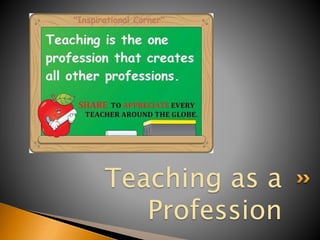
Teaching as a
Profession
“The term professional is one of the most
exalted in the English language, denoting as
it does, long and arduous years of
preparation, a striving for excellence, a
dedication to the public interest, and
commitment to moral and ethical values.”
-Hermogenes P. Pobre, Ph.D
 Why does a profession require “long and
arduous years of preparation” and a “striving
for excellence”?
For us to be able to be able to give more
(service), which is the end goal of a
profession, continuing professional education
is a must.
 Our service to the public as a professional
turns out to be dedicated when out moral,
ethical and religious values serve as out
bedrock foundation.
 If you take teaching as your profession, this
means that you must be willing to go through
a long period of preparation and a continuing
professional development.
 Striving for excellence – another element of
profession.
 This element brings us to the issue of “pwede
na”
 “Pwede na” is inimical to excellence
 It is expressed in other ways like “talagang
ganyan ‘yan”, “wala na tayong magawa”, etc.
 All of these are indicators of defeatism and
mediocrity.
 If we stick to this complacent mentality,
excellence would not be within reach.
 DON’T SETTLE FOR LESS! STRIVE FOR
EXCELLENCE!
“Teaching may not be a lucrative position.
It cannot guarantee financial security. It even
means investing your personal time, energy,
and resources. Sometimes it means
disappointments, heartaches, and pains. But
touching the hearts of people and opening the
minds of children can give you joy and
contentment which money could not buy. These
are the moments I teach for. These are the
moments I live for.”
- Josette T. Biyo, Ph.D
THANKSFOR
LISTENING!!!!

Teaching as a Vocation, Mission and Profession

  • 1.
  • 2.
  • 3.
     Etymology ofVocation ◦ It comes from the Latin word “vocare” which means “to call”  Vocation is a strong feeling of suitability for a particular career or occupation
  • 4.
    Teacher Mark istreated as a teacher for teaching his students the lessons every day. He teaches everything he knows, showing off his mastery of the subject, but not even considering the feelings of his students towards difficult topics. On the other hand, a volunteer named Joy is addressed as a teacher for teaching and serving the children of a far rural community. She travels almost 20 kilometers everyday for the sake of her students learning and development.
  • 5.
     What isthe difference between the teaching practices of Teacher Mark and Joy?  The main difference lies in their dedication to the service.  When someone practices teaching as a vocation, they teach with dedication.
  • 6.
     A teacherwho practices teaching as his vocation responds to the strong feeling, or calling, for service, just like the historic biblical figures, with utmost dedication.  In summary, Vocation is only for some who are really dedicated not just to work but also to serve other people.
  • 7.
  • 8.
     Etymology: ◦ Itcomes from the Latin word “misio” which is “to send”  Mission refers to any task that is assigned, allotted, or self-imposed.  Every teacher has its own purpose, or objective, that they need to accomplish.
  • 9.
     Every teacherhas its own unique mission to accomplish.  We are expected to contribute to the betterment of this world in our unique way.
  • 10.
  • 11.
    “The term professionalis one of the most exalted in the English language, denoting as it does, long and arduous years of preparation, a striving for excellence, a dedication to the public interest, and commitment to moral and ethical values.” -Hermogenes P. Pobre, Ph.D
  • 12.
     Why doesa profession require “long and arduous years of preparation” and a “striving for excellence”? For us to be able to be able to give more (service), which is the end goal of a profession, continuing professional education is a must.
  • 13.
     Our serviceto the public as a professional turns out to be dedicated when out moral, ethical and religious values serve as out bedrock foundation.  If you take teaching as your profession, this means that you must be willing to go through a long period of preparation and a continuing professional development.
  • 14.
     Striving forexcellence – another element of profession.  This element brings us to the issue of “pwede na”  “Pwede na” is inimical to excellence  It is expressed in other ways like “talagang ganyan ‘yan”, “wala na tayong magawa”, etc.  All of these are indicators of defeatism and mediocrity.
  • 15.
     If westick to this complacent mentality, excellence would not be within reach.  DON’T SETTLE FOR LESS! STRIVE FOR EXCELLENCE!
  • 16.
    “Teaching may notbe a lucrative position. It cannot guarantee financial security. It even means investing your personal time, energy, and resources. Sometimes it means disappointments, heartaches, and pains. But touching the hearts of people and opening the minds of children can give you joy and contentment which money could not buy. These are the moments I teach for. These are the moments I live for.” - Josette T. Biyo, Ph.D
  • 17.