GLOBAL ISSUES THAT CONCERN SCHOOLS AND SOCIETY
CHAPTER 5
AT THE END OF THIS CHAPTER, YOU SHOULD BE
ABLE TO:
Explain proposed solutions to the social problems
Discuss at least two global issues in society
INTRODUCTION
The world has become a global village. We become
a citizen of a global community. What takes place in
one part of the globe no matter how far affects us. It
is a “small world after all” so goes the song. In this
chapter, we will discuss global issues that affect
schools and us.
Importance of Learning Global Issues
So why is it important to learn Global Issues?
• Encourage awareness and critical thinking about
issues.
• Student who learns about global issues are more
than twice likely to see the importance of
personally taking social actions.
• Studying current event is empowering.
Advantage of being aware
Studying current event is empowering. being globally
aware person has knowledge, competencies, values,
and dispositions to act in an informed manner,
demonstrate empathy, engage in effective
intergroup communication, and build community
across social, cultural, political, environmental ,
geographic, and economic boundaries. students can
understand the perspective of other students and
become accustomed to the environment around
them. It helps reduce disturbing behaviour in the
classroom and maintain a conducive environment.
Top 10 world issues according to millenials based on
world economic forum’s global shapers survey in 2017
▪ Climate change/destruction of nature (48.8%)
▪ Large scale conflict/ wars (38.9%)
▪ Inequality (income, discrimination) (30.8%)
▪ Poverty (29.2)
▪ Religious conflict (23.9%)
▪ Government accountability and transparency/ corruption
(22.7%)
▪ Food and water security (18.2%)
▪ Lack of education (15.9%)
▪ Safety/ security/ well being (14.1%)
▪ Lack of economic opportunity and employment (12.1%)
Top 10 Current Global Issues according to
Chloe Turner
▪ Climate change
▪ Pollution
▪ Violence
▪ Security and well being
▪ Lack of education
▪ Unemployment
▪ Government corruption
▪ Malnourishment & Hunger
▪ Substance Abuse
▪ Terrorism
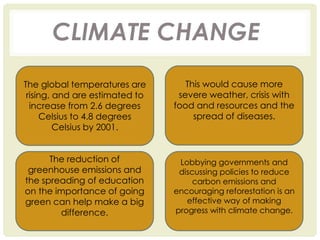
CLIMATE CHANGE
The global temperatures are
rising, and are estimated to
increase from 2.6 degrees
Celsius to 4.8 degrees
Celsius by 2001.
This would cause more
severe weather, crisis with
food and resources and the
spread of diseases.
The reduction of
greenhouse emissions and
the spreading of education
on the importance of going
green can help make a big
difference.
Lobbying governments and
discussing policies to reduce
carbon emissions and
encouraging reforestation is an
effective way of making
progress with climate change.
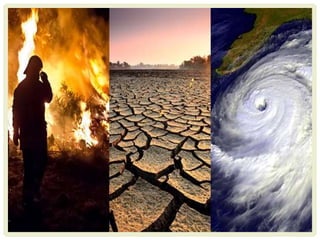
• Increased heat, drought and insect outbreaks, all
linked to climate change, have increased wildfires.
Declining water supplies, reduced agricultural
yields, health impacts in cities due to heat, and
flooding and erosion in coastal areas are
additional concerns.
• Climate Change is the defining issue of our time
and we are at a defining moment.
• From shifting weather patterns that threaten food
production, to rising sea levels that increase the risk
of catastrophic flooding, the impacts of climate
change are global in scope and unprecedented
in scale.
POLLUTION
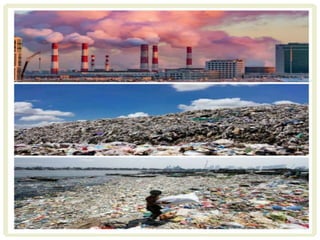
Pollution includes ocean
litter, pesticides and
fertilizers, air, light and
noise pollution.
Clean water is essential
for humans and animals
, but more than one
billion people don’t
have access to clean
water due to pollution
from toxic substances ,
sewage or industrial
waste.
Pollution is one of the greatest problems that the
world is facing today, which is causing grave
irreparable damage to the natural world and human
society with about 40% of deaths worldwide caused
by water, air and soil pollution.
VIOLENCE
Violence can be found
in the social, cultural
and economic aspects
of the world.
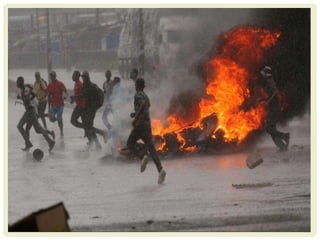
Whether it is conflict that has
broken out in a city, hatred at a
certain group of people or sexual
harassment occurring on the
street , violence is a preventable
problem that has been an issue
for longer than necessary.
Those who experience or witness
violence may develop a variety of
problems, including anxiety,
depression, insecurity, anger, poor
anger management, poor social skills,
pathological lying, manipulative
behaviour, impulsiveness, and lack of
empathy.
VARIOUS FORMS OF VIOLENCE
PHYSICAL VIOLENCE
Physical violence occurs
when someone uses a
part of their body or an
object to control a
person’s actions.
SEXUAL VIOLENCE
Sexual violence occurs
when a person is forced
to unwillingly take part in
sexual activity.
EMOTIONAL VIOLENCE
Emotional Violence
occurs when someone
says or does something
make a person stupid or
worthless.
PSYCHOLOGICAL
VIOLENCE
Psychological violence
occurs when someone
uses threats and causes
fear in an individual to
gain control.
SPIRITUAL VIOLENCE
Spiritual (or religious)
violence occurs when
someone uses an
individual’s spiritual
beliefs to manipulate,
dominate or control that
person.
CULTURAL VIOLENCE
Cultural violence occurs
when an individual is
harmed as a result of
practices that are part of
her or his culture, religion
or tradition.
VARIOUS FORMS OF VIOLENCE
SECURITY AND WELL BEING
The U.N is a perfect example
of what should be done to
prevent the lack of security
and well being a serious
global issue. Through its efforts with
regional organizations and
representatives that are
skilled in security, the U.N is
working toward increasing
the well being of people
throughout the world.
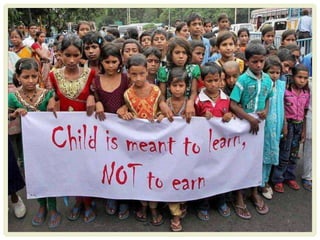
LACK OF EDUCATION
More than 72 million
children throughout
the globe that are the
age to be in primary
education are not
enrolled in school.
Fortunately, there are
many organizations
that work directly with
the issue of education
in providing the
proper tools and
resources to aid
schools.
This can be attributed
to inequality and
marginalization as well
poverty.
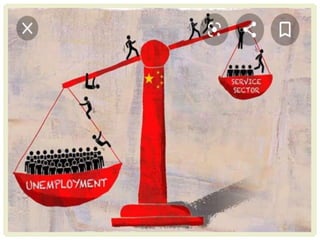
UNEMPLOYMENT
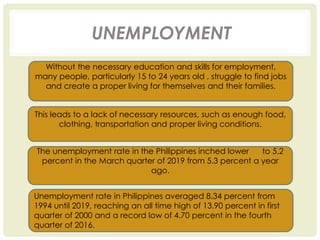
Unemployment rate in Philippines averaged 8.34 percent from
1994 until 2019, reaching an all time high of 13.90 percent in first
quarter of 2000 and a record low of 4.70 percent in the fourth
quarter of 2016.
Without the necessary education and skills for employment,
many people, particularly 15 to 24 years old , struggle to find jobs
and create a proper living for themselves and their families.
This leads to a lack of necessary resources, such as enough food,
clothing, transportation and proper living conditions.
The unemployment rate in the Philippines inched lower to 5.2
percent in the March quarter of 2019 from 5.3 percent a year
ago.
GOVERNMENT CORRUPTION
Means of corruption include graft, bribery, embezzlement, backdoor
deals, nepotism, and patronage.
Corruption is a major cause of poverty considering how it affects the
poor the most, eroding political and economic development,
democracy and more.
Corruption can be detrimental to the safety and well being of citizens
living within the corrupted vicinity, and can cause an increase in violence
and physical threats without as much regulation in the government.
The Philippines ranked 94th out of 177 countries in Transparency
International’s 2013 corruption index.
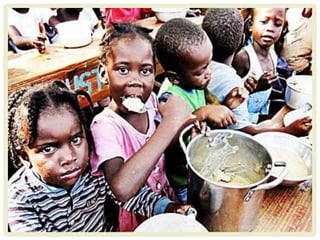
MALNOURISHMENT AND HUNGER
Currently there are 795 million people who do not have enough to eat.
Long-term success to ending world hunger starts with ending poverty.
Fighting poverty through proper training for employment, education and
the teaching of cooking and gardening skills, people who are suffering
will be more likely to get jobs, earn enough money to buy food and even
learn how to make their own food to save money.
By Malnutrition, in all its forms, includes under nutrition, inadequate
vitamins or minerals, overweight, obesity, and resulting diet-related non-
communicable disease.
.
Malnutrition is not the same thing as hunger, although they
often go together. People who are chronically malnourished
lack the nutrients needed for proper health and
development. Someone can be malnourished for a long or
short period of time, and the condition may be mild or
severe.
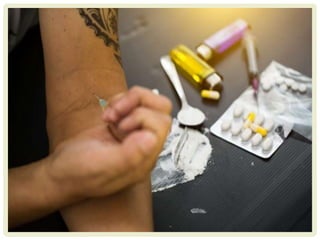
SUBSTANCE ABUSE
Substance abuse is the “ the harmful or hazardous
use of psychoactive substances, including alcohol
and illicit drugs” (WORLD HEALTH ORGANIZATION).
The United Nations reports that, by the beginning of
the 21st century, an estimated 185 million people over
the age of 15 were consuming drugs globally.
The drugs most commonly used are marijuana,
cocaine, alcohol, amphetamine stimulants, opiates
and volatile solvents. Different classes of people,
both poor and rich, partake in substance abuse,
and it is a persistent issue throughout the world,
marginalized groups and communities are the most
vulnerable to this reality.
The Philippines faces this huge problem on substance
abuse.
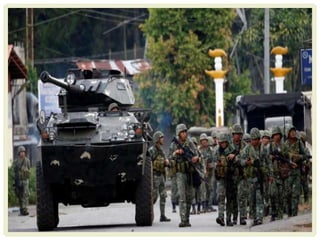
TERRORISM
Terrorism is an issue throughout the world that causes
fear and insecurity, violence and death.
Across the globe, terrorists attack innocent people,
often without warning.
This makes civilians feel defenseless in their everyday
lives.
Making national security a higher priority is key in
combating terrorism, as well as promoting justice in
wrongdoings to illustrate the enforcement of the law
and the serious punishments for terror crimes.
Terrorism is, in the broadest sense, the use of intentional
violence to achieve political aims. It is used in this regard
primarily to refer to violence during peacetime or in the
context of war against non-combatants (mostly civilians
and neutral military personnel). It's a unlawful use of force
or violence against persons or property to intimidate or
coerce a government or its citizens to further certain
political or social objectives.
17 Sustainable Development Goals for the
period 2015-2030
▪ End poverty in all its forms everywhere.
▪ End hunger, achieve food security and improved
nutrition and promote sustainable agriculture.
▪ Ensure healthy lives and promote well-being for all
at all ages.
▪ Ensure inclusive and equitable quality education
and promote life-long learning opportunities for all.
▪ Achieve gender equality and empower all women
and girls.
▪ Ensure availability and sustainable management of
water and sanitation for all.
▪ Ensure access to affordable, reliable, sustainable,
and modern energy for all.
▪ Promote sustained, inclusive and sustainable
economic growth, full and productive employment
and decent work for all.
▪ Build resilient infrastructure, promote inclusive and
sustainable industrialization and among countries.
▪ Reduce inequality within and among countries.
▪ Make cities and human settlements inclusive, safe,
resilient and sustainable.
▪ Ensure sustainable consumption and production
patterns.
▪ Take urgent action to combat climate change and
its impacts.
▪ Conserve and sustainably use the oceans, seas and
marine resources for sustainable development.
▪ Protect, restore and promote sustainable use of
terrestrial ecosystems, sustainably manage forests,
combat desertification, and halt and reverse land
degradation and half biodiversity loss.
▪ Promote peaceful and inclusive societies for
sustainable development, provide access to justice
for all and build effective, accountable and
inclusive institutions at all levels.
▪ Strengthen the means of implementation and
revitalize the global partnership for sustainable
development.

Chapter 5-global-issues

  • 1.
    GLOBAL ISSUES THATCONCERN SCHOOLS AND SOCIETY CHAPTER 5
  • 2.
    AT THE ENDOF THIS CHAPTER, YOU SHOULD BE ABLE TO: Explain proposed solutions to the social problems Discuss at least two global issues in society
  • 3.
    INTRODUCTION The world hasbecome a global village. We become a citizen of a global community. What takes place in one part of the globe no matter how far affects us. It is a “small world after all” so goes the song. In this chapter, we will discuss global issues that affect schools and us.
  • 4.
    Importance of LearningGlobal Issues So why is it important to learn Global Issues? • Encourage awareness and critical thinking about issues. • Student who learns about global issues are more than twice likely to see the importance of personally taking social actions. • Studying current event is empowering.
  • 5.
    Advantage of beingaware Studying current event is empowering. being globally aware person has knowledge, competencies, values, and dispositions to act in an informed manner, demonstrate empathy, engage in effective intergroup communication, and build community across social, cultural, political, environmental , geographic, and economic boundaries. students can understand the perspective of other students and become accustomed to the environment around them. It helps reduce disturbing behaviour in the classroom and maintain a conducive environment.
  • 6.
    Top 10 worldissues according to millenials based on world economic forum’s global shapers survey in 2017 ▪ Climate change/destruction of nature (48.8%) ▪ Large scale conflict/ wars (38.9%) ▪ Inequality (income, discrimination) (30.8%) ▪ Poverty (29.2) ▪ Religious conflict (23.9%) ▪ Government accountability and transparency/ corruption (22.7%) ▪ Food and water security (18.2%) ▪ Lack of education (15.9%) ▪ Safety/ security/ well being (14.1%) ▪ Lack of economic opportunity and employment (12.1%)
  • 7.
    Top 10 CurrentGlobal Issues according to Chloe Turner ▪ Climate change ▪ Pollution ▪ Violence ▪ Security and well being ▪ Lack of education ▪ Unemployment ▪ Government corruption ▪ Malnourishment & Hunger ▪ Substance Abuse ▪ Terrorism
  • 8.
    CLIMATE CHANGE The globaltemperatures are rising, and are estimated to increase from 2.6 degrees Celsius to 4.8 degrees Celsius by 2001. This would cause more severe weather, crisis with food and resources and the spread of diseases. The reduction of greenhouse emissions and the spreading of education on the importance of going green can help make a big difference. Lobbying governments and discussing policies to reduce carbon emissions and encouraging reforestation is an effective way of making progress with climate change.
  • 10.
    • Increased heat,drought and insect outbreaks, all linked to climate change, have increased wildfires. Declining water supplies, reduced agricultural yields, health impacts in cities due to heat, and flooding and erosion in coastal areas are additional concerns. • Climate Change is the defining issue of our time and we are at a defining moment. • From shifting weather patterns that threaten food production, to rising sea levels that increase the risk of catastrophic flooding, the impacts of climate change are global in scope and unprecedented in scale.
  • 11.
    POLLUTION Pollution includes ocean litter,pesticides and fertilizers, air, light and noise pollution. Clean water is essential for humans and animals , but more than one billion people don’t have access to clean water due to pollution from toxic substances , sewage or industrial waste.
  • 13.
    Pollution is oneof the greatest problems that the world is facing today, which is causing grave irreparable damage to the natural world and human society with about 40% of deaths worldwide caused by water, air and soil pollution.
  • 14.
    VIOLENCE Violence can befound in the social, cultural and economic aspects of the world. Whether it is conflict that has broken out in a city, hatred at a certain group of people or sexual harassment occurring on the street , violence is a preventable problem that has been an issue for longer than necessary. Those who experience or witness violence may develop a variety of problems, including anxiety, depression, insecurity, anger, poor anger management, poor social skills, pathological lying, manipulative behaviour, impulsiveness, and lack of empathy.
  • 16.
    VARIOUS FORMS OFVIOLENCE PHYSICAL VIOLENCE Physical violence occurs when someone uses a part of their body or an object to control a person’s actions. SEXUAL VIOLENCE Sexual violence occurs when a person is forced to unwillingly take part in sexual activity. EMOTIONAL VIOLENCE Emotional Violence occurs when someone says or does something make a person stupid or worthless. PSYCHOLOGICAL VIOLENCE Psychological violence occurs when someone uses threats and causes fear in an individual to gain control. SPIRITUAL VIOLENCE Spiritual (or religious) violence occurs when someone uses an individual’s spiritual beliefs to manipulate, dominate or control that person. CULTURAL VIOLENCE Cultural violence occurs when an individual is harmed as a result of practices that are part of her or his culture, religion or tradition. VARIOUS FORMS OF VIOLENCE
  • 17.
    SECURITY AND WELLBEING The U.N is a perfect example of what should be done to prevent the lack of security and well being a serious global issue. Through its efforts with regional organizations and representatives that are skilled in security, the U.N is working toward increasing the well being of people throughout the world.
  • 18.
    LACK OF EDUCATION Morethan 72 million children throughout the globe that are the age to be in primary education are not enrolled in school. Fortunately, there are many organizations that work directly with the issue of education in providing the proper tools and resources to aid schools. This can be attributed to inequality and marginalization as well poverty.
  • 20.
    UNEMPLOYMENT Unemployment rate inPhilippines averaged 8.34 percent from 1994 until 2019, reaching an all time high of 13.90 percent in first quarter of 2000 and a record low of 4.70 percent in the fourth quarter of 2016. Without the necessary education and skills for employment, many people, particularly 15 to 24 years old , struggle to find jobs and create a proper living for themselves and their families. This leads to a lack of necessary resources, such as enough food, clothing, transportation and proper living conditions. The unemployment rate in the Philippines inched lower to 5.2 percent in the March quarter of 2019 from 5.3 percent a year ago.
  • 22.
    GOVERNMENT CORRUPTION Means ofcorruption include graft, bribery, embezzlement, backdoor deals, nepotism, and patronage. Corruption is a major cause of poverty considering how it affects the poor the most, eroding political and economic development, democracy and more. Corruption can be detrimental to the safety and well being of citizens living within the corrupted vicinity, and can cause an increase in violence and physical threats without as much regulation in the government. The Philippines ranked 94th out of 177 countries in Transparency International’s 2013 corruption index.
  • 24.
    MALNOURISHMENT AND HUNGER Currentlythere are 795 million people who do not have enough to eat. Long-term success to ending world hunger starts with ending poverty. Fighting poverty through proper training for employment, education and the teaching of cooking and gardening skills, people who are suffering will be more likely to get jobs, earn enough money to buy food and even learn how to make their own food to save money. By Malnutrition, in all its forms, includes under nutrition, inadequate vitamins or minerals, overweight, obesity, and resulting diet-related non- communicable disease. .
  • 26.
    Malnutrition is notthe same thing as hunger, although they often go together. People who are chronically malnourished lack the nutrients needed for proper health and development. Someone can be malnourished for a long or short period of time, and the condition may be mild or severe.
  • 27.
    SUBSTANCE ABUSE Substance abuseis the “ the harmful or hazardous use of psychoactive substances, including alcohol and illicit drugs” (WORLD HEALTH ORGANIZATION). The United Nations reports that, by the beginning of the 21st century, an estimated 185 million people over the age of 15 were consuming drugs globally. The drugs most commonly used are marijuana, cocaine, alcohol, amphetamine stimulants, opiates and volatile solvents. Different classes of people, both poor and rich, partake in substance abuse, and it is a persistent issue throughout the world, marginalized groups and communities are the most vulnerable to this reality. The Philippines faces this huge problem on substance abuse.
  • 29.
    TERRORISM Terrorism is anissue throughout the world that causes fear and insecurity, violence and death. Across the globe, terrorists attack innocent people, often without warning. This makes civilians feel defenseless in their everyday lives. Making national security a higher priority is key in combating terrorism, as well as promoting justice in wrongdoings to illustrate the enforcement of the law and the serious punishments for terror crimes.
  • 31.
    Terrorism is, inthe broadest sense, the use of intentional violence to achieve political aims. It is used in this regard primarily to refer to violence during peacetime or in the context of war against non-combatants (mostly civilians and neutral military personnel). It's a unlawful use of force or violence against persons or property to intimidate or coerce a government or its citizens to further certain political or social objectives.
  • 32.
    17 Sustainable DevelopmentGoals for the period 2015-2030 ▪ End poverty in all its forms everywhere. ▪ End hunger, achieve food security and improved nutrition and promote sustainable agriculture. ▪ Ensure healthy lives and promote well-being for all at all ages. ▪ Ensure inclusive and equitable quality education and promote life-long learning opportunities for all.
  • 33.
    ▪ Achieve genderequality and empower all women and girls. ▪ Ensure availability and sustainable management of water and sanitation for all. ▪ Ensure access to affordable, reliable, sustainable, and modern energy for all. ▪ Promote sustained, inclusive and sustainable economic growth, full and productive employment and decent work for all.
  • 34.
    ▪ Build resilientinfrastructure, promote inclusive and sustainable industrialization and among countries. ▪ Reduce inequality within and among countries. ▪ Make cities and human settlements inclusive, safe, resilient and sustainable. ▪ Ensure sustainable consumption and production patterns.
  • 35.
    ▪ Take urgentaction to combat climate change and its impacts. ▪ Conserve and sustainably use the oceans, seas and marine resources for sustainable development. ▪ Protect, restore and promote sustainable use of terrestrial ecosystems, sustainably manage forests, combat desertification, and halt and reverse land degradation and half biodiversity loss.
  • 36.
    ▪ Promote peacefuland inclusive societies for sustainable development, provide access to justice for all and build effective, accountable and inclusive institutions at all levels. ▪ Strengthen the means of implementation and revitalize the global partnership for sustainable development.