

FORENSIC BOTANY
Presented By:-
Divyaraman.R
AFRS Volunteer
Contents:
 Introduction
 History of Forensic Botany
 How forensic botany is used to solve case?
 Botanical crime-scene analysis
 Searching and Mapping of botanical evidences
 Conclusion
Introduction:
 Forensic botany is the application of the plant science to crime-scene
analysis for use in legal cases.
 Here, the term macroscopic plant remains is given to those plant
materials which are not included within forensic palynology or
microbiology.
 Research centered on spores, pollen and certain microorganisms is
well developed.
History of Forensic Botany
 One of the early documented cases of forensic botany connected with
macroscopic plant materials was the suicide death of Socrates.
 Plato’s Phaedo (Plato and Gallop 2009), we read of Socrates’
symptoms after he drank the fatal brew as of poison hemlock.
 Richard “Bruno” Hauptmann was convicted of the kidnapping of
Charles Lindbergh’s son. This was the first time that forensic botany
evidence was accepted as legal evidence during a trial.
How Forensic Botany is used to solve
cases?
Plants grow in assemblages:
Assemblages are groups of plants usually dominated by one species.
Drowning Victims:
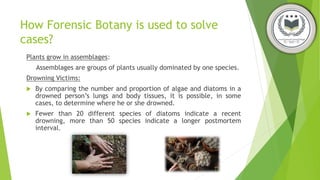
 By comparing the number and proportion of algae and diatoms in a
drowned person’s lungs and body tissues, it is possible, in some
cases, to determine where he or she drowned.
 Fewer than 20 different species of diatoms indicate a recent
drowning, more than 50 species indicate a longer postmortem
interval.
Botanical Crime-Scene Analysis
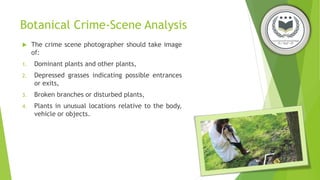
 The crime scene photographer should take image
of:
1. Dominant plants and other plants,
2. Depressed grasses indicating possible entrances
or exits,
3. Broken branches or disturbed plants,
4. Plants in unusual locations relative to the body,
vehicle or objects.
Searching & Mapping of Botanical
Evidences
Pollen and Spores in forensics:
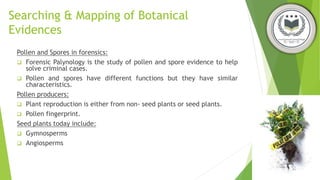
 Forensic Palynology is the study of pollen and spore evidence to help
solve criminal cases.
 Pollen and spores have different functions but they have similar
characteristics.
Pollen producers:
 Plant reproduction is either from non- seed plants or seed plants.
 Pollen fingerprint.
Seed plants today include:
 Gymnosperms
 Angiosperms
Conclusion:
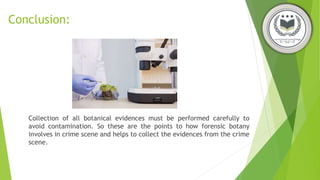
Collection of all botanical evidences must be performed carefully to
avoid contamination. So these are the points to how forensic botany
involves in crime scene and helps to collect the evidences from the crime
scene.
THANK YOU

Forensic Botany

  • 2.
  • 3.
    Contents:  Introduction  Historyof Forensic Botany  How forensic botany is used to solve case?  Botanical crime-scene analysis  Searching and Mapping of botanical evidences  Conclusion
  • 4.
    Introduction:  Forensic botanyis the application of the plant science to crime-scene analysis for use in legal cases.  Here, the term macroscopic plant remains is given to those plant materials which are not included within forensic palynology or microbiology.  Research centered on spores, pollen and certain microorganisms is well developed.
  • 5.
    History of ForensicBotany  One of the early documented cases of forensic botany connected with macroscopic plant materials was the suicide death of Socrates.  Plato’s Phaedo (Plato and Gallop 2009), we read of Socrates’ symptoms after he drank the fatal brew as of poison hemlock.  Richard “Bruno” Hauptmann was convicted of the kidnapping of Charles Lindbergh’s son. This was the first time that forensic botany evidence was accepted as legal evidence during a trial.
  • 6.
    How Forensic Botanyis used to solve cases? Plants grow in assemblages: Assemblages are groups of plants usually dominated by one species. Drowning Victims:  By comparing the number and proportion of algae and diatoms in a drowned person’s lungs and body tissues, it is possible, in some cases, to determine where he or she drowned.  Fewer than 20 different species of diatoms indicate a recent drowning, more than 50 species indicate a longer postmortem interval.
  • 7.
    Botanical Crime-Scene Analysis The crime scene photographer should take image of: 1. Dominant plants and other plants, 2. Depressed grasses indicating possible entrances or exits, 3. Broken branches or disturbed plants, 4. Plants in unusual locations relative to the body, vehicle or objects.
  • 8.
    Searching & Mappingof Botanical Evidences Pollen and Spores in forensics:  Forensic Palynology is the study of pollen and spore evidence to help solve criminal cases.  Pollen and spores have different functions but they have similar characteristics. Pollen producers:  Plant reproduction is either from non- seed plants or seed plants.  Pollen fingerprint. Seed plants today include:  Gymnosperms  Angiosperms
  • 9.
    Conclusion: Collection of allbotanical evidences must be performed carefully to avoid contamination. So these are the points to how forensic botany involves in crime scene and helps to collect the evidences from the crime scene.
  • 10.