Knowledge, Risk Perception, and Behavior on Foodborne 
Diseases among People in High and Low Diarrheal Incident 
Areas of Northern Thailand 
A. Unahalekhaka 1, T. Meeyam2, F. Unger 3 and D. Pichpol 2 
1 Faculty of Nursing, Chiang Mai University, 2 Faculty of Veterinary Medicine, Chiang Mai University, 3 International Livestock Research Institute 
Introduction 
Foodborne diseases are one of the most important public health problems in Thailand. During 2003‐2012, the diarrheal incidence in humans increased continuously 
with highest incidences in the northern region since 2005. This study aimed to determine the differences in diarrhea preventive knowledge and perceptions regarding 
the risk of contracting diarrheal diseases, food consumption habits and potential risk behaviors among people in high and low diarrheal incident areas in northern 
Thailand. The study was designed and conducted under the EcoHealth Resource Center by different faculties of the ChiangMai University (CMU). 
Materials and methods 
Four villages, two in a high and two in a low diarrheal incident area in Chiang Mai 
were selected by using information from provincial and district disease surveillance 
system. In each area 200 (high) and 124 (low) household members were included in 
the survey (Dec 2012 ‐ Jun 2013). Various tools for data collection were used such as 
semi‐structure questionnaire, focus group discussions or village mapping developed 
and implemented by a trans‐disciplinary research team from different faculties of 
CMU, Thailand. Data were analyzed using descriptive statistics and chi‐square test. 
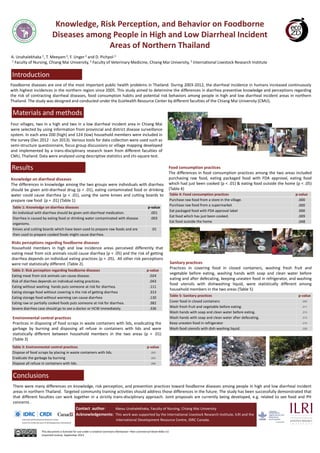
Knowledge on diarrheal diseases 
The differences in knowledge among the two groups were individuals with diarrhea 
should be given anti‐diarrheal drug (p < .01), eating contaminated food or drinking 
water could cause diarrhea (p < .01), using the same knives and cutting boards to 
prepare raw food (p = .01) (Table 1) 
Table 1: Knowledge on diarrhea diseases p‐value 
An individual with diarrhea should be given anti‐diarrheal medication. .001 
Diarrhea is caused by eating food or drinking water contaminated with disease 
organisms. 
Pictures 
Food consumption practices 
The differences in food consumption practices among the two areas included 
purchasing raw food, eating packaged food with FDA approval, eating food 
which had just been cooked (p < .01) & eating food outside the home (p < .05) 
(Table 4) 
This document is licensed for use under a Creative Commons Attribution –Non commercial‐Share Alike 3.0 
Unported License September 2014 
Results 
Conclusions 
.003 
Knives and cutting boards which have been used to prepare raw foods and are 
then used to prepare cooked foods might cause diarrhea. 
.01 
Risks perceptions regarding foodborne diseases 
Household members in high and low incidence areas perceived differently that 
eating meat from sick animals could cause diarrhea (p < .05) and the risk of getting 
diarrhea depends on individual eating practices (p < .05). All other risk perceptions 
were not statistically different (Table 2). 
Table 2: Risk perception regarding foodborne diseases p‐value 
Eating meat from sick animals can cause disease. .024 
Risk of diarrhea depends on individual eating practices. .043 
Eating without washing hands puts someone at risk for diarrhea. .111 
Eating storage food without covering is the risk of getting diarrhea .313 
Eating storage food without warming can cause diarrhea .130 
Eating raw or partially cooked foods puts someone at risk for diarrhea. .382 
Severe diarrhea case should go to see a doctor or HCW immediately. .336 
Table 4: Food consumption practices p‐value 
Purchase raw food from a store in the village. .000 
Purchase raw food from a supermarket. .000 
Eat packaged food with FDA approval label .000 
Eat food which has just been cooked. .009 
Eat food outside the home. .048 
Sanitary practices 
Practices in covering food in closed containers, washing fresh fruit and 
vegetable before eating, washing hands with soap and clean water before 
eating and after defecating, keeping uneaten food in refrigerator, and washing 
food utensils with dishwashing liquid, were statistically different among 
householdmembers in the two areas (Table 5) 
Environmental control practices 
Practices in disposing of food scraps in waste containers with lids, eradicating the 
garbage by burning and disposing all refuse in containers with lids and were 
statistically different between household members in the two areas (p < .01) 
(Table 3) 
Table 3: Environmental control practices p‐value 
Dispose of food scraps by placing in waste containers with lids. .000 
Eradicate the garbage by burning .004 
Dispose all refuse in containers with lids. .006 
Table 5: Sanitary practices p‐value 
Cover food in closed containers .000 
Wash fresh fruit and vegetable before eating. .011 
Wash hands with soap and clean water before eating. .013 
Wash hands with soap and clean water after defecating. .013 
Keep uneaten food in refrigerator .015 
Wash food utensils with dish washing liquid. .026 
There were many differences on knowledge, risk perception, and prevention practices toward foodborne diseases among people in high and low diarrheal incident 
areas in northern Thailand. Targeted community training activities should address those differences in the future. The study has been successfully demonstrated that 
that different faculties can work together in a strictly trans‐disciplinary approach. Joint proposals are currently being developed, e.g. related to see food and PH 
concerns . 
Contact author: Akeau Unahalekhaka, Faculty of Nursing, Chiang Mai University 
Acknowledgements: This work was supported by the International Livestock Research Institute, ILRI and the 
International Development Resource Centre, IDRC Canada.

Knowledge, risk perception and behaviour on foodborne diseases among people in high and low diarrhoeal incident areas of northern Thailand

  • 1.
    Knowledge, Risk Perception,and Behavior on Foodborne Diseases among People in High and Low Diarrheal Incident Areas of Northern Thailand A. Unahalekhaka 1, T. Meeyam2, F. Unger 3 and D. Pichpol 2 1 Faculty of Nursing, Chiang Mai University, 2 Faculty of Veterinary Medicine, Chiang Mai University, 3 International Livestock Research Institute Introduction Foodborne diseases are one of the most important public health problems in Thailand. During 2003‐2012, the diarrheal incidence in humans increased continuously with highest incidences in the northern region since 2005. This study aimed to determine the differences in diarrhea preventive knowledge and perceptions regarding the risk of contracting diarrheal diseases, food consumption habits and potential risk behaviors among people in high and low diarrheal incident areas in northern Thailand. The study was designed and conducted under the EcoHealth Resource Center by different faculties of the ChiangMai University (CMU). Materials and methods Four villages, two in a high and two in a low diarrheal incident area in Chiang Mai were selected by using information from provincial and district disease surveillance system. In each area 200 (high) and 124 (low) household members were included in the survey (Dec 2012 ‐ Jun 2013). Various tools for data collection were used such as semi‐structure questionnaire, focus group discussions or village mapping developed and implemented by a trans‐disciplinary research team from different faculties of CMU, Thailand. Data were analyzed using descriptive statistics and chi‐square test. Knowledge on diarrheal diseases The differences in knowledge among the two groups were individuals with diarrhea should be given anti‐diarrheal drug (p < .01), eating contaminated food or drinking water could cause diarrhea (p < .01), using the same knives and cutting boards to prepare raw food (p = .01) (Table 1) Table 1: Knowledge on diarrhea diseases p‐value An individual with diarrhea should be given anti‐diarrheal medication. .001 Diarrhea is caused by eating food or drinking water contaminated with disease organisms. Pictures Food consumption practices The differences in food consumption practices among the two areas included purchasing raw food, eating packaged food with FDA approval, eating food which had just been cooked (p < .01) & eating food outside the home (p < .05) (Table 4) This document is licensed for use under a Creative Commons Attribution –Non commercial‐Share Alike 3.0 Unported License September 2014 Results Conclusions .003 Knives and cutting boards which have been used to prepare raw foods and are then used to prepare cooked foods might cause diarrhea. .01 Risks perceptions regarding foodborne diseases Household members in high and low incidence areas perceived differently that eating meat from sick animals could cause diarrhea (p < .05) and the risk of getting diarrhea depends on individual eating practices (p < .05). All other risk perceptions were not statistically different (Table 2). Table 2: Risk perception regarding foodborne diseases p‐value Eating meat from sick animals can cause disease. .024 Risk of diarrhea depends on individual eating practices. .043 Eating without washing hands puts someone at risk for diarrhea. .111 Eating storage food without covering is the risk of getting diarrhea .313 Eating storage food without warming can cause diarrhea .130 Eating raw or partially cooked foods puts someone at risk for diarrhea. .382 Severe diarrhea case should go to see a doctor or HCW immediately. .336 Table 4: Food consumption practices p‐value Purchase raw food from a store in the village. .000 Purchase raw food from a supermarket. .000 Eat packaged food with FDA approval label .000 Eat food which has just been cooked. .009 Eat food outside the home. .048 Sanitary practices Practices in covering food in closed containers, washing fresh fruit and vegetable before eating, washing hands with soap and clean water before eating and after defecating, keeping uneaten food in refrigerator, and washing food utensils with dishwashing liquid, were statistically different among householdmembers in the two areas (Table 5) Environmental control practices Practices in disposing of food scraps in waste containers with lids, eradicating the garbage by burning and disposing all refuse in containers with lids and were statistically different between household members in the two areas (p < .01) (Table 3) Table 3: Environmental control practices p‐value Dispose of food scraps by placing in waste containers with lids. .000 Eradicate the garbage by burning .004 Dispose all refuse in containers with lids. .006 Table 5: Sanitary practices p‐value Cover food in closed containers .000 Wash fresh fruit and vegetable before eating. .011 Wash hands with soap and clean water before eating. .013 Wash hands with soap and clean water after defecating. .013 Keep uneaten food in refrigerator .015 Wash food utensils with dish washing liquid. .026 There were many differences on knowledge, risk perception, and prevention practices toward foodborne diseases among people in high and low diarrheal incident areas in northern Thailand. Targeted community training activities should address those differences in the future. The study has been successfully demonstrated that that different faculties can work together in a strictly trans‐disciplinary approach. Joint proposals are currently being developed, e.g. related to see food and PH concerns . Contact author: Akeau Unahalekhaka, Faculty of Nursing, Chiang Mai University Acknowledgements: This work was supported by the International Livestock Research Institute, ILRI and the International Development Resource Centre, IDRC Canada.