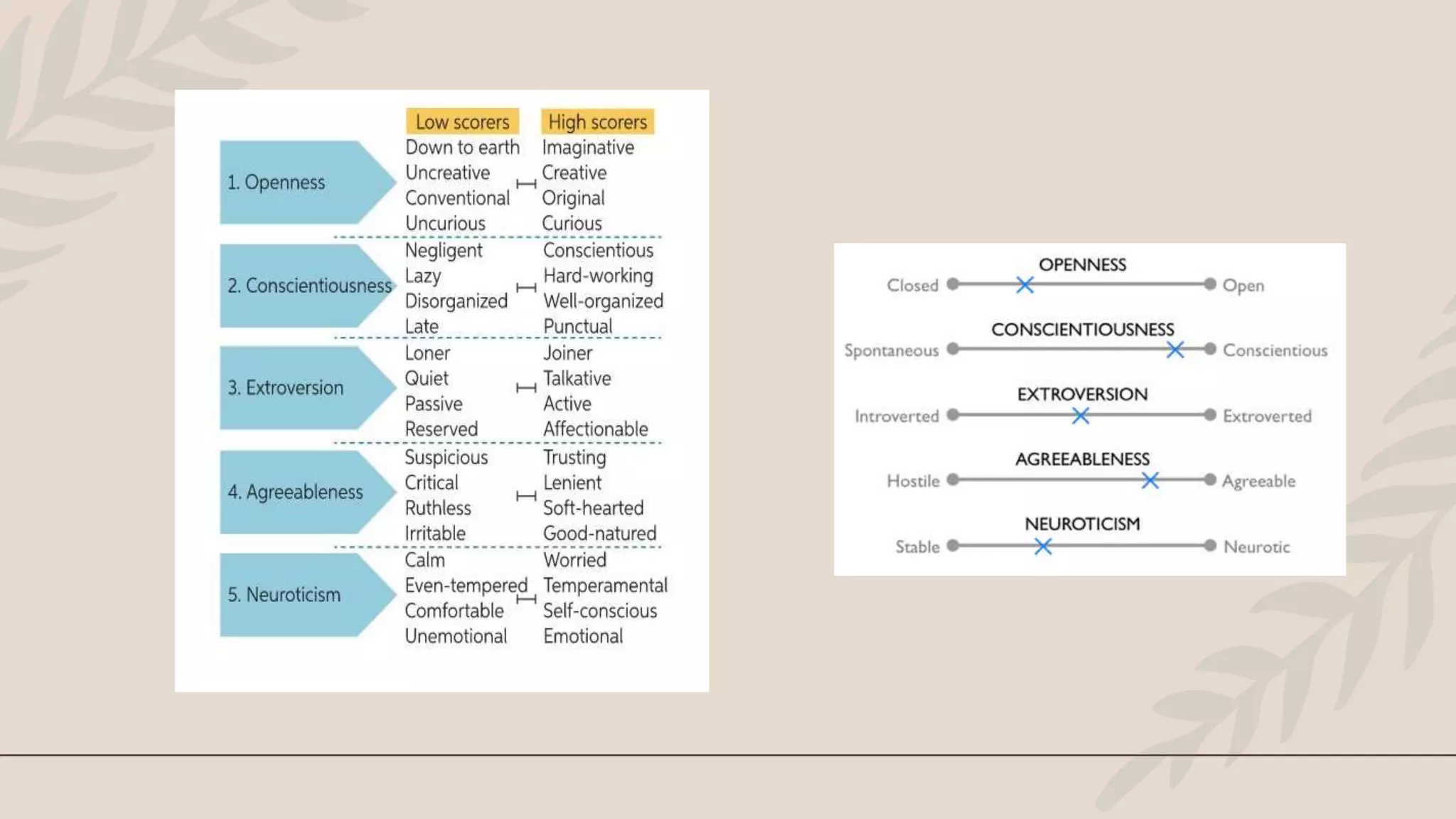
 The five-factor model has been developed by a
number of researchers. Raymond Cattell and Gordon
Allport have influenced its development. Robert
McCrae and Paul Costa consolidating and adding on
to these works developed the five-factor model in the
1990’s.
 Since the late 20th Century, these factors have been
used to measure, and develop a better understanding
of, individual differences in personality.
 Each of these traits falls on a continuum from low to
high.
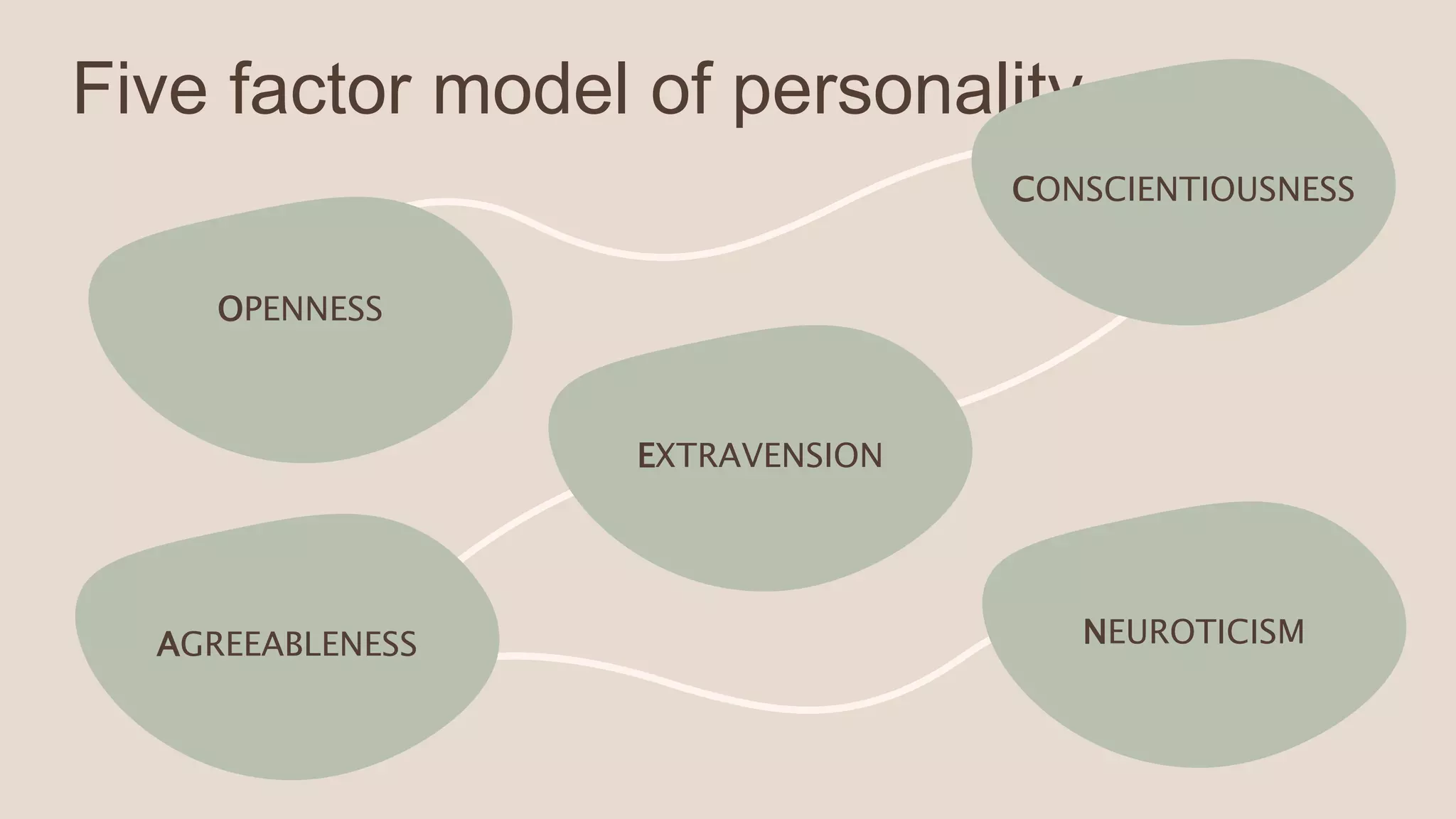
 The five factors may be easily remembered using the
acronym ‘OCEAN’.
FIVE FACTOR MODEL OF
PERSONALITY
Five factor model of personality
OPENNESS
CONSCIENTIOUSNESS
EXTRAVENSION
AGREEABLENESS NEUROTICISM
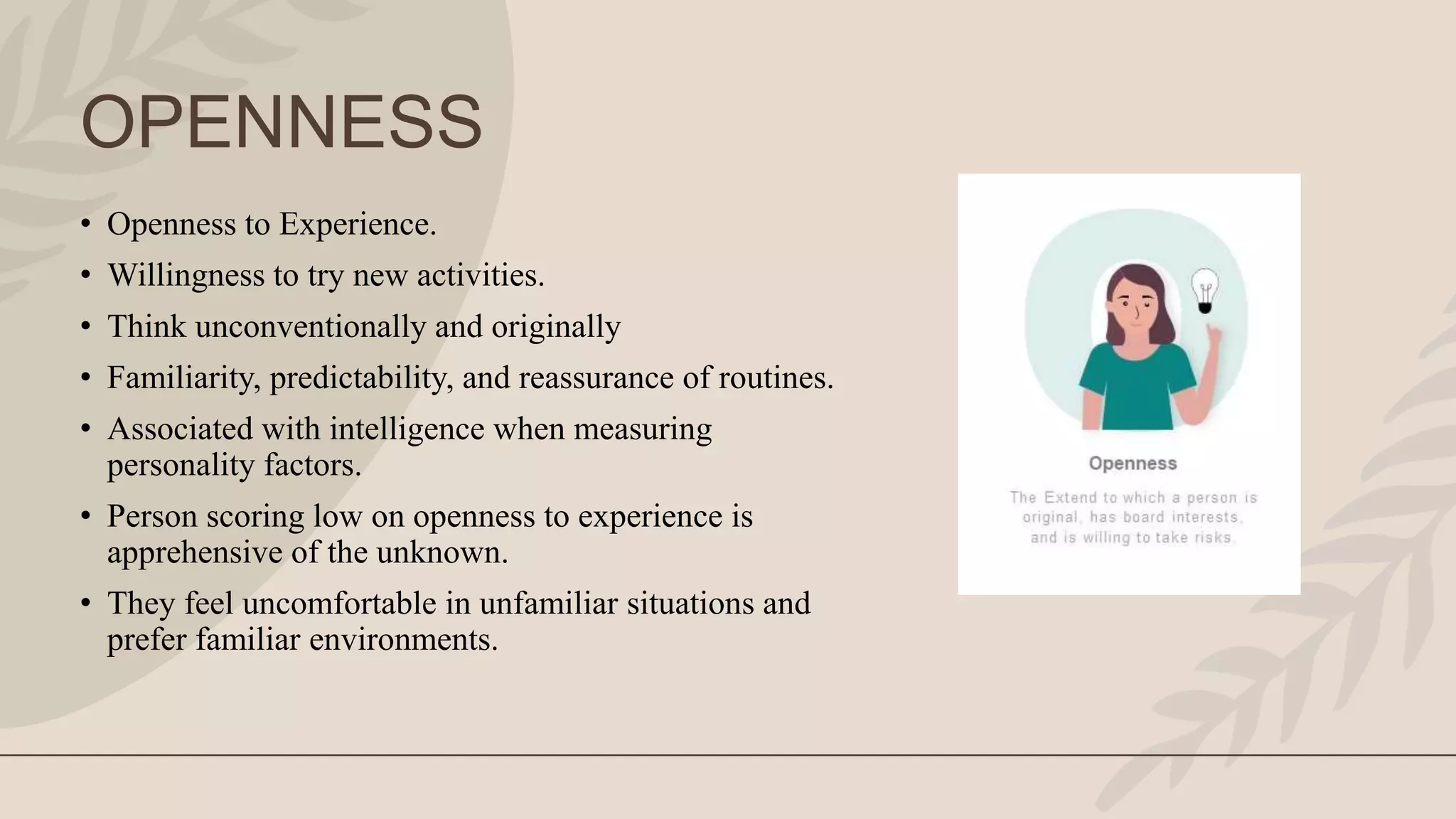
OPENNESS
• Openness to Experience.
• Willingness to try new activities.
• Think unconventionally and originally
• Familiarity, predictability, and reassurance of routines.
• Associated with intelligence when measuring
personality factors.
• Person scoring low on openness to experience is
apprehensive of the unknown.
• They feel uncomfortable in unfamiliar situations and
prefer familiar environments.
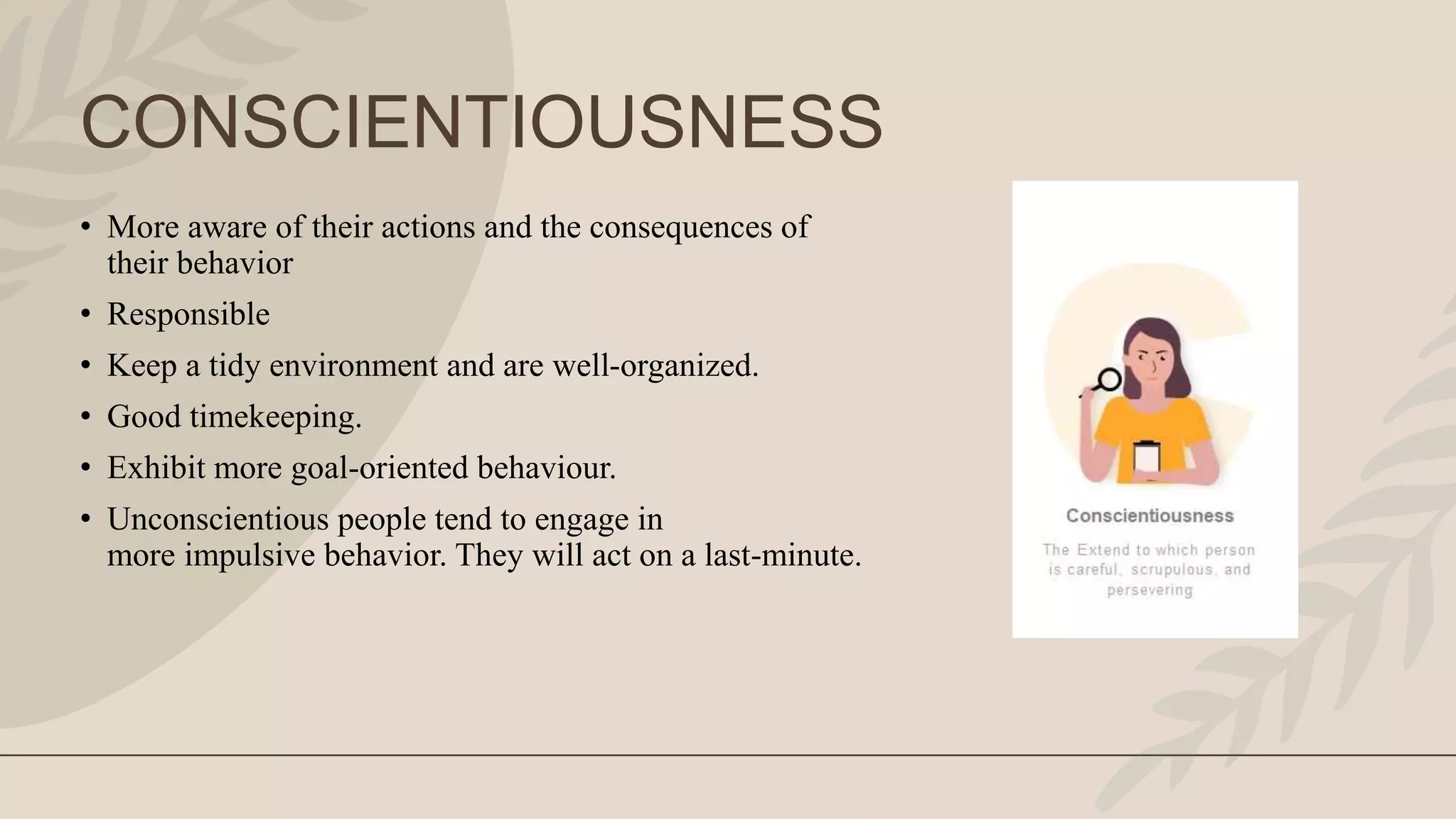
CONSCIENTIOUSNESS
• More aware of their actions and the consequences of
their behavior
• Responsible
• Keep a tidy environment and are well-organized.
• Good timekeeping.
• Exhibit more goal-oriented behaviour.
• Unconscientious people tend to engage in
more impulsive behavior. They will act on a last-minute.
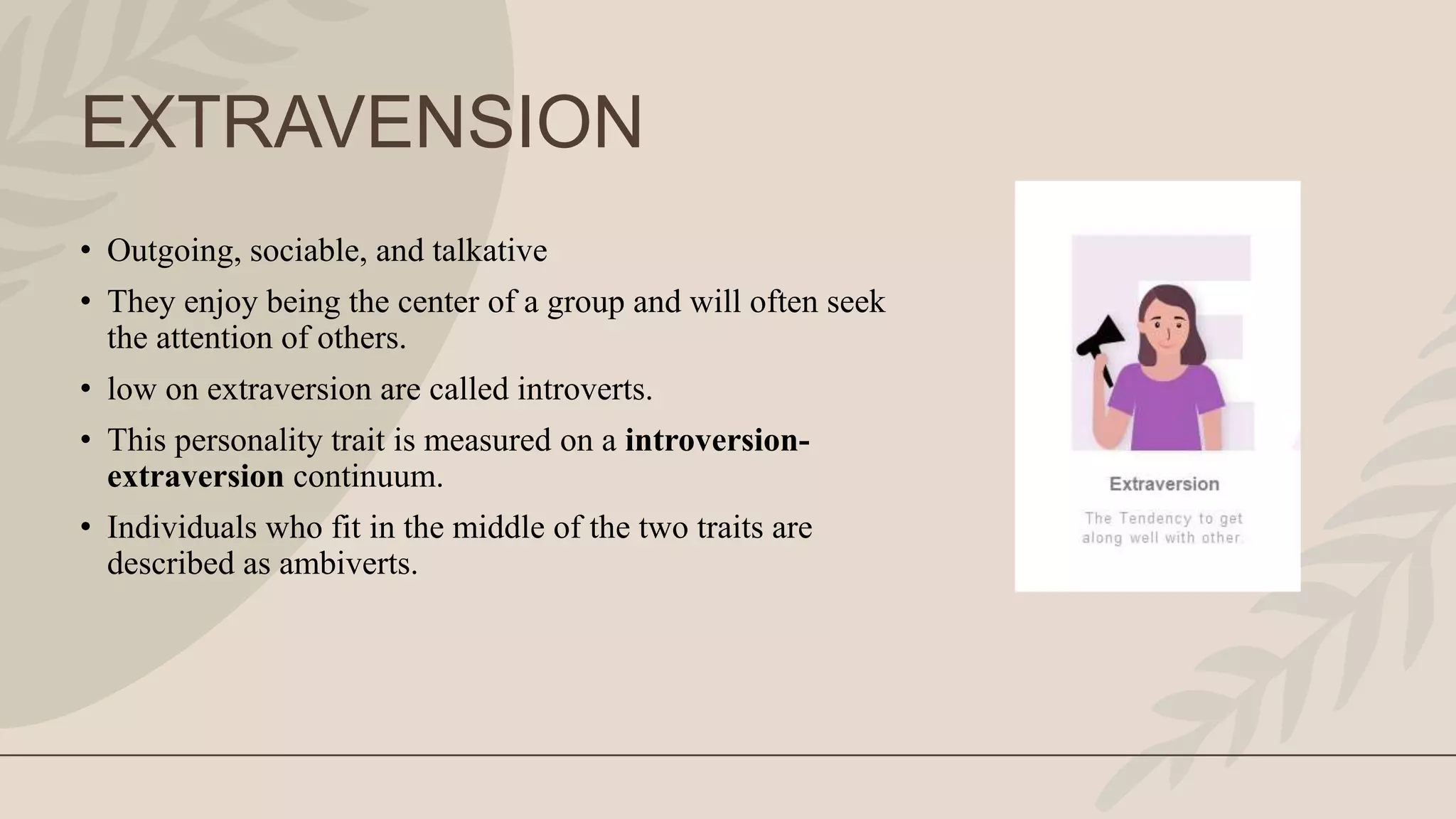
EXTRAVENSION
• Outgoing, sociable, and talkative
• They enjoy being the center of a group and will often seek
the attention of others.
• low on extraversion are called introverts.
• This personality trait is measured on a introversion-
extraversion continuum.
• Individuals who fit in the middle of the two traits are
described as ambiverts.
AGREEABLENESS
• Friendly and well-liked by people
• Help others and appear pleasing to those around them
• Dislike conflicts and very often seek the role of mediators
in groups
• Low on agreeableness are not very concerned with being
liked or appearing nice to others.
• They distrust others and are more suspicious of the
actions of other people.
• They are motivated by fulfilling their own personal
needs.
20XX presentation title 7
NEUROTICISM
• This personality dimension is measured on a continuum
ranging from emotional stability to emotional
instability
• Anxious, fearful, and worry a lot, Over-thinking their
problems and exaggerating their significance.
• Low on neuroticism tend to be more calm and collected
in the face of any stress
• A person’s neuroticism can have repercussions in terms
of their relationship with others.
o The five-factor model is used in many research studies
to correlate scores on this test with the learning styles of
people.
o Openness as a trait has been found to be linked to
academic success.
o Leadership has been linked to high level of openness
and balanced levels of conscientiousness and
extraversion and low levels of neuroticism.
o High levels of conscientiousness are found to be related
to better work performance.
o In marriages where one partner scores lower than the
other on agreeableness, stability, and openness, there is
likely to be marital dissatisfaction
20XX presentation title 9
Uses of the Five-Factor Model:

FIVE FACTOR MODEL OF PERSONALITY.pptx

  • 1.
     The five-factormodel has been developed by a number of researchers. Raymond Cattell and Gordon Allport have influenced its development. Robert McCrae and Paul Costa consolidating and adding on to these works developed the five-factor model in the 1990’s.  Since the late 20th Century, these factors have been used to measure, and develop a better understanding of, individual differences in personality.  Each of these traits falls on a continuum from low to high.  The five factors may be easily remembered using the acronym ‘OCEAN’. FIVE FACTOR MODEL OF PERSONALITY
  • 2.
    Five factor modelof personality OPENNESS CONSCIENTIOUSNESS EXTRAVENSION AGREEABLENESS NEUROTICISM
  • 3.
    OPENNESS • Openness toExperience. • Willingness to try new activities. • Think unconventionally and originally • Familiarity, predictability, and reassurance of routines. • Associated with intelligence when measuring personality factors. • Person scoring low on openness to experience is apprehensive of the unknown. • They feel uncomfortable in unfamiliar situations and prefer familiar environments.
  • 4.
    CONSCIENTIOUSNESS • More awareof their actions and the consequences of their behavior • Responsible • Keep a tidy environment and are well-organized. • Good timekeeping. • Exhibit more goal-oriented behaviour. • Unconscientious people tend to engage in more impulsive behavior. They will act on a last-minute.
  • 5.
    EXTRAVENSION • Outgoing, sociable,and talkative • They enjoy being the center of a group and will often seek the attention of others. • low on extraversion are called introverts. • This personality trait is measured on a introversion- extraversion continuum. • Individuals who fit in the middle of the two traits are described as ambiverts.
  • 6.
    AGREEABLENESS • Friendly andwell-liked by people • Help others and appear pleasing to those around them • Dislike conflicts and very often seek the role of mediators in groups • Low on agreeableness are not very concerned with being liked or appearing nice to others. • They distrust others and are more suspicious of the actions of other people. • They are motivated by fulfilling their own personal needs.
  • 7.
    20XX presentation title7 NEUROTICISM • This personality dimension is measured on a continuum ranging from emotional stability to emotional instability • Anxious, fearful, and worry a lot, Over-thinking their problems and exaggerating their significance. • Low on neuroticism tend to be more calm and collected in the face of any stress • A person’s neuroticism can have repercussions in terms of their relationship with others.
  • 9.
    o The five-factormodel is used in many research studies to correlate scores on this test with the learning styles of people. o Openness as a trait has been found to be linked to academic success. o Leadership has been linked to high level of openness and balanced levels of conscientiousness and extraversion and low levels of neuroticism. o High levels of conscientiousness are found to be related to better work performance. o In marriages where one partner scores lower than the other on agreeableness, stability, and openness, there is likely to be marital dissatisfaction 20XX presentation title 9 Uses of the Five-Factor Model: