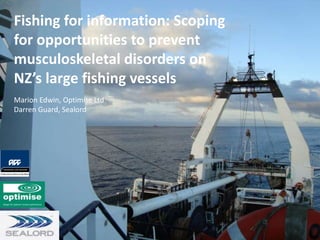
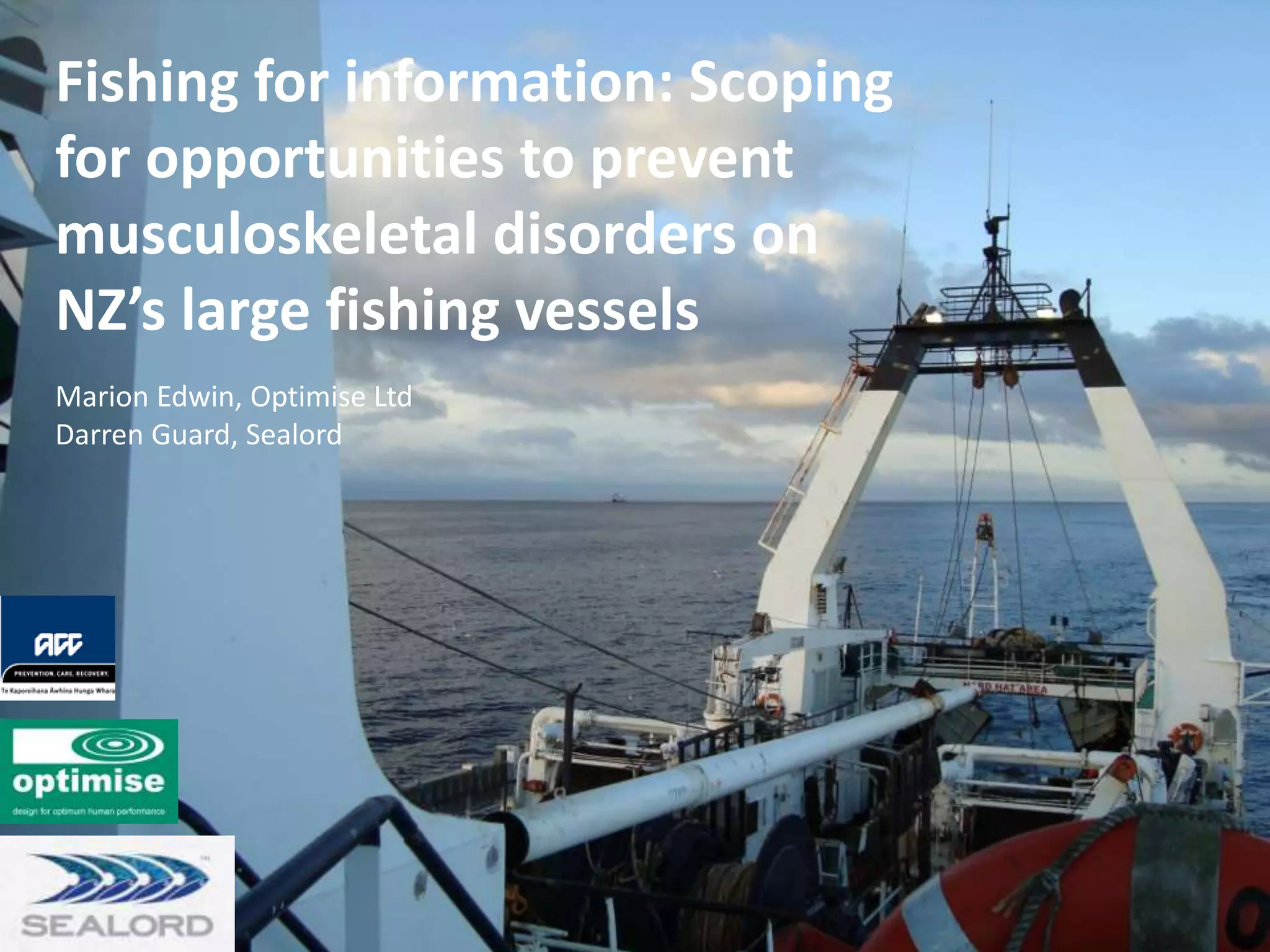
Fishing for information: Scoping 
for opportunities to prevent 
musculoskeletal disorders on 
NZ’s large fishing vessels 
Marion Edwin, Optimise Ltd 
Darren Guard, Sealord
In the beginning... 2012 
• MBIE/ACC – fishing one of 5 priority sectors 
needing to improve H and S performance/reduce 
work toll 
• Target for 25% minimum reduction in workplace 
serious harm and fatalities by 2020 (10% by 2016) 
-Fishing Sector Action Plan (MNZ, FishSafe, ACC, 
DoL April 2012) and ‘The State of Workplace 
Health in NZ’ (MBIE Sept 2012) 
• Sealord recognised that ergonomics has 
relevance, approached Optimise
Industry data 
• 2012 MNZ data, marine fishing/aquaculture 
highest injury rate all sectors (2001-09) 
• Fishing work-related injury rate 7.29%, mining 
and quarrying 4.47%, construction 3.29% 
• MBIE 2012, previous 10 years fishing with 
highest ACC entitlement claim rate per sector, 
only less than forestry in 2008 
• Statistics NZ 2013, 1 in 4 fishery workers made 
work-related claim, equal with agriculture, 
highest rate by occupation 
• Similar international trends, ? Under-reporting
Starting points 
• Key work by ACC – ‘Study of personal damage in NZ 
Maritime Industry’ Kahler and Chau (2012) 
• Taxonomy identified cause of incidences in >24 m 
vessels: 
– 37% manual handling type (human energy) 
– 21% slips, trips, falls type (gravitational energy) 
• FishSafe targeted <24 m vessels as most fatal accidents 
• But >24 m vessels greatest risk for injuries
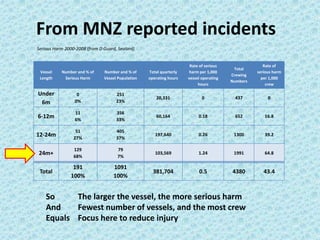
From MNZ reported incidents 
Vessel 
Length 
Number and % of 
Serious Harm 
Number and % of 
Vessel Population 
Total quarterly 
operating hours 
Rate of serious 
harm per 1,000 
vessel operating 
hours 
Total 
Crewing 
Numbers 
Rate of 
serious harm 
per 1,000 
crew 
Under 
6m 
0 
0% 
251 
23% 
20,331 0 437 0 
6-12m 
11 
6% 
356 
33% 
60,164 0.18 652 16.8 
12-24m 
51 
27% 
405 
37% 
197,640 0.26 1300 39.2 
24m+ 
129 
68% 
79 
7% 
103,569 1.24 1991 64.8 
Total 
191 
100% 
1091 
100% 
381,704 0.5 4380 43.4 
Serious Harm 2000-2008 (from D Guard, Sealord) 
So The larger the vessel, the more serious harm 
And Fewest number of vessels, and the most crew 
Equals Focus here to reduce injury
Plan... 
• To have the greatest impact on the fishing 
industry work toll, efforts must focus on manual 
handling tasks and interventions for crews on 24+ 
metre vessels 
• ACC-funded ‘ergonomics scoping assessment’ 
May-Sept 2013, liaison AUT 
• Including initial literature review, on vessel 
experience 
• Link with new Fishing Safety Forum – 3 key 
employers
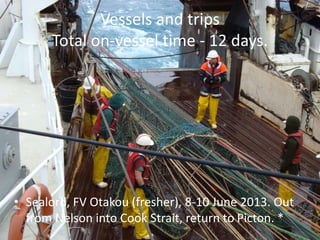
Vessels and trips 
Total on-vessel time - 12 days. 
• Sealord, FV Otakou (fresher), 8-10 June 2013. Out 
from Nelson into Cook Strait, return to Picton. *
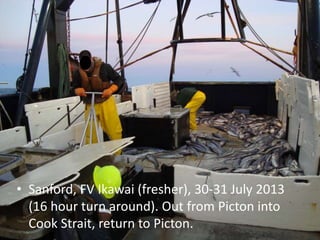
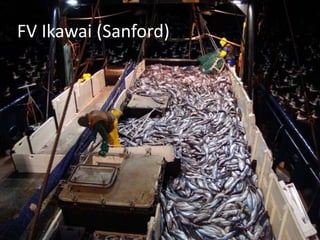
• Sanford, FV Ikawai (fresher), 30-31 July 2013 
(16 hour turn around). Out from Picton into 
Cook Strait, return to Picton.
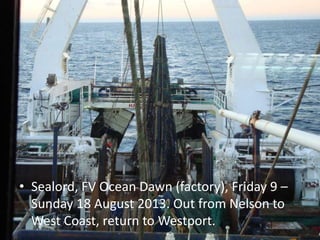
• Sealord, FV Ocean Dawn (factory), Friday 9 – 
Sunday 18 August 2013. Out from Nelson to 
West Coast, return to Westport.
Waves... 
• Sometimes gentle, rhythmic, but often unexpected 
• Seasickness 
• Tiring, muscularly fatiguing 
• Relentless, frustrating 
• Impact on everything – sleep, moving about the vessel, 
brushing teeth, showering... 
• For some, a real endorphin rush 
• Question: What do we know of how wave motion 
impacts on manual handling risks and therefore injury 
risks?
Behavioural observations 
• Personal space diminishes – small spaces, shared 
rooms, close living/working quarters 
• Frequent bumping into people due to wave action 
• Requires a matching increase in tolerance for 
others 
• Questions: Are HR finding the right sort of 
people for work on vessels? What skills/attributes 
make for a ‘good’ worker on vessels? 
(psychological/physical)
Shifts 
• 6 hours on, 6 hours off, 7 days, 6 weeks 
• 12 hours on, 6 hours off, 7 days, 3 weeks 
• Fatiguing in all ways 
• Circadian rhythms? 
• And there is little else to do on the vessel so you 
may as well work... 
• Questions: What does this do to manual 
handling exposure and recovery time? And 
what is really happening in regards to sleep?
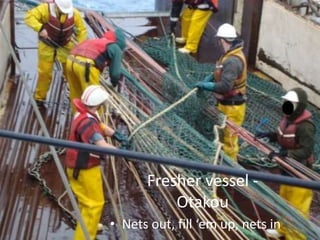
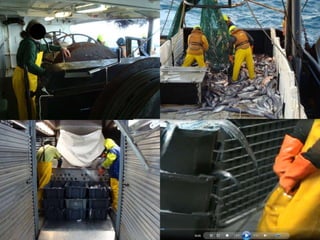
Fresher vessel - 
Otakou 
• Nets out, fill ‘em up, nets in
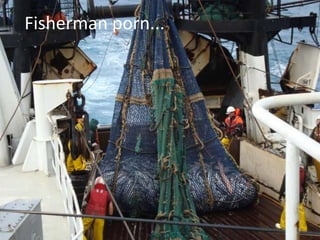
Fisherman porn...
FV Ikawai (Sanford)
Vessel Tasks 
• Repetitive 
• Often in sustained/constrained/awkward postures 
• Always in a moving environment 
• With some exceptions, most do not involve much 
cardiovascular activity 
• Wet, slimy, dangerous spines 
• Question: What do fishers and their employing 
organisations know of manual handling risks and how 
to manage them to prevent discomfort (and manage 
discomfort/injury)?
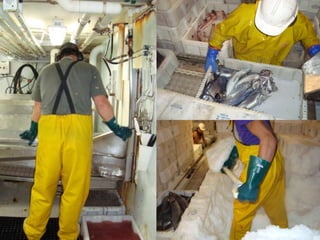
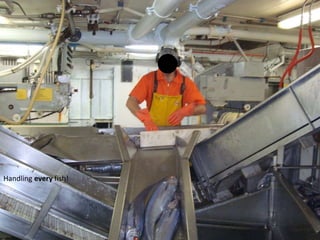
Handling every fish!
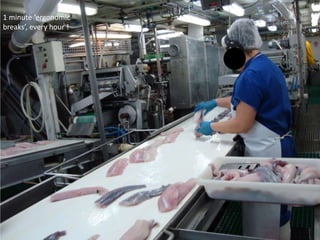
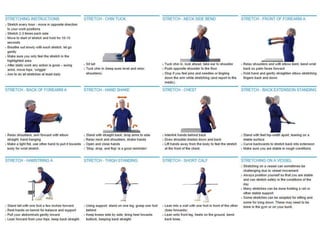
1 minute ‘ergonomic 
breaks’, every hour !
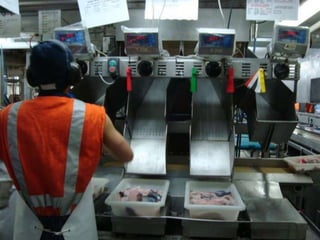
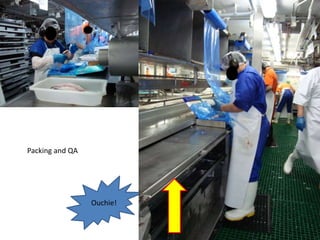
Packing and QA 
Ouchie!
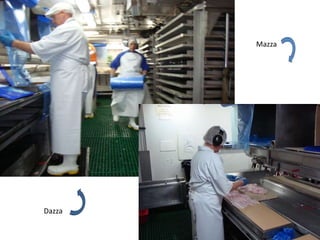
Mazza 
Dazza
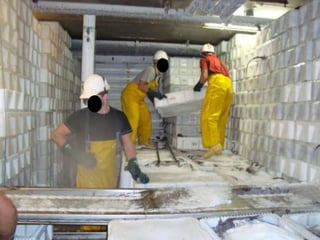
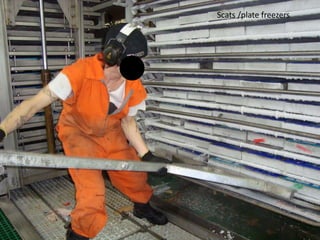
Scats /plate freezers
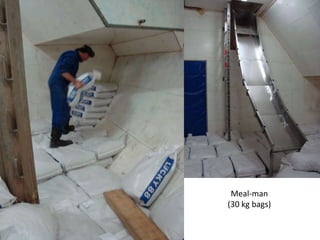
Meal-man 
(30 kg bags)
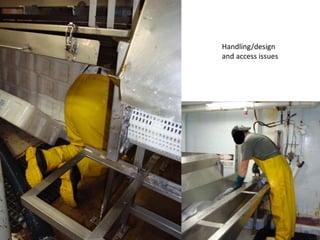
Handling/design 
and access issues
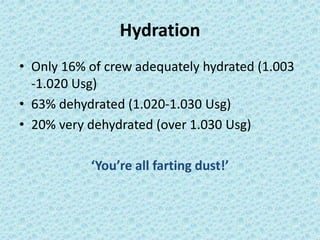
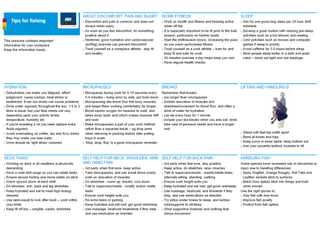
Hydration 
• Only 16% of crew adequately hydrated (1.003 
-1.020 Usg) 
• 63% dehydrated (1.020-1.030 Usg) 
• 20% very dehydrated (over 1.030 Usg) 
‘You’re all farting dust!’
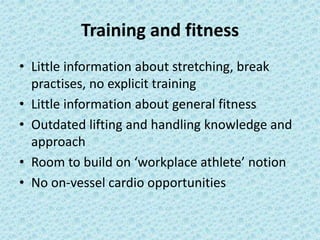
Training and fitness 
• Little information about stretching, break 
practises, no explicit training 
• Little information about general fitness 
• Outdated lifting and handling knowledge and 
approach 
• Room to build on ‘workplace athlete’ notion 
• No on-vessel cardio opportunities
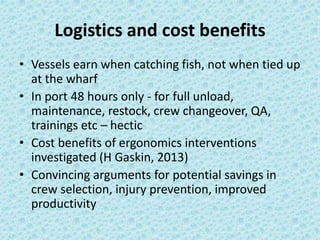
Logistics and cost benefits 
• Vessels earn when catching fish, not when tied up 
at the wharf 
• In port 48 hours only - for full unload, 
maintenance, restock, crew changeover, QA, 
trainings etc – hectic 
• Cost benefits of ergonomics interventions 
investigated (H Gaskin, 2013) 
• Convincing arguments for potential savings in 
crew selection, injury prevention, improved 
productivity
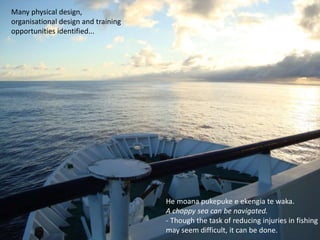
He moana pukepuke e ekengia te waka. 
A choppy sea can be navigated. 
- Though the task of reducing injuries in fishing 
may seem difficult, it can be done. 
Many physical design, 
organisational design and training 
opportunities identified...
Online in 
June!
Fishing for information - an ergonomics scoping assessment

Fishing for information - an ergonomics scoping assessment

  • 1.
    Fishing for information:Scoping for opportunities to prevent musculoskeletal disorders on NZ’s large fishing vessels Marion Edwin, Optimise Ltd Darren Guard, Sealord
  • 2.
    In the beginning...2012 • MBIE/ACC – fishing one of 5 priority sectors needing to improve H and S performance/reduce work toll • Target for 25% minimum reduction in workplace serious harm and fatalities by 2020 (10% by 2016) -Fishing Sector Action Plan (MNZ, FishSafe, ACC, DoL April 2012) and ‘The State of Workplace Health in NZ’ (MBIE Sept 2012) • Sealord recognised that ergonomics has relevance, approached Optimise
  • 3.
    Industry data •2012 MNZ data, marine fishing/aquaculture highest injury rate all sectors (2001-09) • Fishing work-related injury rate 7.29%, mining and quarrying 4.47%, construction 3.29% • MBIE 2012, previous 10 years fishing with highest ACC entitlement claim rate per sector, only less than forestry in 2008 • Statistics NZ 2013, 1 in 4 fishery workers made work-related claim, equal with agriculture, highest rate by occupation • Similar international trends, ? Under-reporting
  • 4.
    Starting points •Key work by ACC – ‘Study of personal damage in NZ Maritime Industry’ Kahler and Chau (2012) • Taxonomy identified cause of incidences in >24 m vessels: – 37% manual handling type (human energy) – 21% slips, trips, falls type (gravitational energy) • FishSafe targeted <24 m vessels as most fatal accidents • But >24 m vessels greatest risk for injuries
  • 5.
    From MNZ reportedincidents Vessel Length Number and % of Serious Harm Number and % of Vessel Population Total quarterly operating hours Rate of serious harm per 1,000 vessel operating hours Total Crewing Numbers Rate of serious harm per 1,000 crew Under 6m 0 0% 251 23% 20,331 0 437 0 6-12m 11 6% 356 33% 60,164 0.18 652 16.8 12-24m 51 27% 405 37% 197,640 0.26 1300 39.2 24m+ 129 68% 79 7% 103,569 1.24 1991 64.8 Total 191 100% 1091 100% 381,704 0.5 4380 43.4 Serious Harm 2000-2008 (from D Guard, Sealord) So The larger the vessel, the more serious harm And Fewest number of vessels, and the most crew Equals Focus here to reduce injury
  • 6.
    Plan... • Tohave the greatest impact on the fishing industry work toll, efforts must focus on manual handling tasks and interventions for crews on 24+ metre vessels • ACC-funded ‘ergonomics scoping assessment’ May-Sept 2013, liaison AUT • Including initial literature review, on vessel experience • Link with new Fishing Safety Forum – 3 key employers
  • 7.
    Vessels and trips Total on-vessel time - 12 days. • Sealord, FV Otakou (fresher), 8-10 June 2013. Out from Nelson into Cook Strait, return to Picton. *
  • 8.
    • Sanford, FVIkawai (fresher), 30-31 July 2013 (16 hour turn around). Out from Picton into Cook Strait, return to Picton.
  • 9.
    • Sealord, FVOcean Dawn (factory), Friday 9 – Sunday 18 August 2013. Out from Nelson to West Coast, return to Westport.
  • 10.
    Waves... • Sometimesgentle, rhythmic, but often unexpected • Seasickness • Tiring, muscularly fatiguing • Relentless, frustrating • Impact on everything – sleep, moving about the vessel, brushing teeth, showering... • For some, a real endorphin rush • Question: What do we know of how wave motion impacts on manual handling risks and therefore injury risks?
  • 11.
    Behavioural observations •Personal space diminishes – small spaces, shared rooms, close living/working quarters • Frequent bumping into people due to wave action • Requires a matching increase in tolerance for others • Questions: Are HR finding the right sort of people for work on vessels? What skills/attributes make for a ‘good’ worker on vessels? (psychological/physical)
  • 12.
    Shifts • 6hours on, 6 hours off, 7 days, 6 weeks • 12 hours on, 6 hours off, 7 days, 3 weeks • Fatiguing in all ways • Circadian rhythms? • And there is little else to do on the vessel so you may as well work... • Questions: What does this do to manual handling exposure and recovery time? And what is really happening in regards to sleep?
  • 13.
    Fresher vessel - Otakou • Nets out, fill ‘em up, nets in
  • 14.
  • 17.
  • 19.
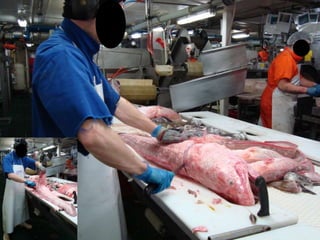
    Vessel Tasks •Repetitive • Often in sustained/constrained/awkward postures • Always in a moving environment • With some exceptions, most do not involve much cardiovascular activity • Wet, slimy, dangerous spines • Question: What do fishers and their employing organisations know of manual handling risks and how to manage them to prevent discomfort (and manage discomfort/injury)?
  • 20.
  • 21.
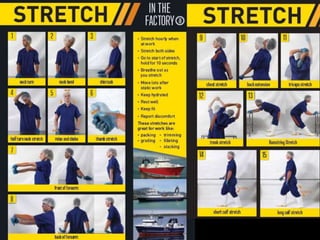
    1 minute ‘ergonomic breaks’, every hour !
  • 24.
  • 25.
  • 26.
  • 27.
  • 28.
  • 29.
    Hydration • Only16% of crew adequately hydrated (1.003 -1.020 Usg) • 63% dehydrated (1.020-1.030 Usg) • 20% very dehydrated (over 1.030 Usg) ‘You’re all farting dust!’
  • 30.
    Training and fitness • Little information about stretching, break practises, no explicit training • Little information about general fitness • Outdated lifting and handling knowledge and approach • Room to build on ‘workplace athlete’ notion • No on-vessel cardio opportunities
  • 31.
    Logistics and costbenefits • Vessels earn when catching fish, not when tied up at the wharf • In port 48 hours only - for full unload, maintenance, restock, crew changeover, QA, trainings etc – hectic • Cost benefits of ergonomics interventions investigated (H Gaskin, 2013) • Convincing arguments for potential savings in crew selection, injury prevention, improved productivity
  • 32.
    He moana pukepukee ekengia te waka. A choppy sea can be navigated. - Though the task of reducing injuries in fishing may seem difficult, it can be done. Many physical design, organisational design and training opportunities identified...
  • 33.

Editor's Notes

  • #2 Working with Darren Guard, Sealord, from Oct 2012 – recognised potential benefit of ergonomics assessment/intervention project on vessels to address high injury rates
  • #3 Lead in to how this came about
  • #7 Scoping assessment – gain an idea of what needs to be done, how we might be able to do it, and general industry background and knowledge
  • #8 Flick through 3 slides of vessel experience
  • #11 Mention made of 3 key areas of note waves, behavioural obs, and shifts...
  • #14 Gained knowledge of the tasks on fresher vessels and factory vessels (flick through slide only)
  • #16 Learned of tasks... heavy and potentially dangerous gear, environmental conditions/exposure, cold, slippery, moving, leaning...
  • #18 Flick through of factory vessel tasks
  • #19 Learned of tasks... Manual, heavy, slippery underfoot, old gear...
  • #20 Noted some key aspects of work tasks, and another general question about manual handling.
  • #22 Repetition, speed (3 x faster than on land..) leaning, and great 1 minute per hour stretch stop aka ‘micropauses’, but it needs re-labelling...
  • #24 These fish move around on the table with the waves... Solution?
  • #25 Check out some of the skilled packing personnel... And the pelvic bruiser
  • #27 Measured the forces for moving trays – up to 30+ kg per tray, and awkward, but unpredictable...