
SDS’s – now and 
the future 
(M)Prepared for the 
OHSIG Conference 2014 
Dr. Birgit Rahm 
Datachem LTD
SDS’s – now and in the future 
SDS’s and regulatory compliance 
Current requirements 
Possible new Requirements 
Keeping up to date
Purpose of a Safety Data Sheet 
- Health and Safety for users and the environment 
• A SDS is an important part of the responsibility 
of an employer to ensure a safe working 
environment 
• SDS provides information on safe use and 
emergency management of a substance. 
• Must be available in 10 Minutes. (HSNO)
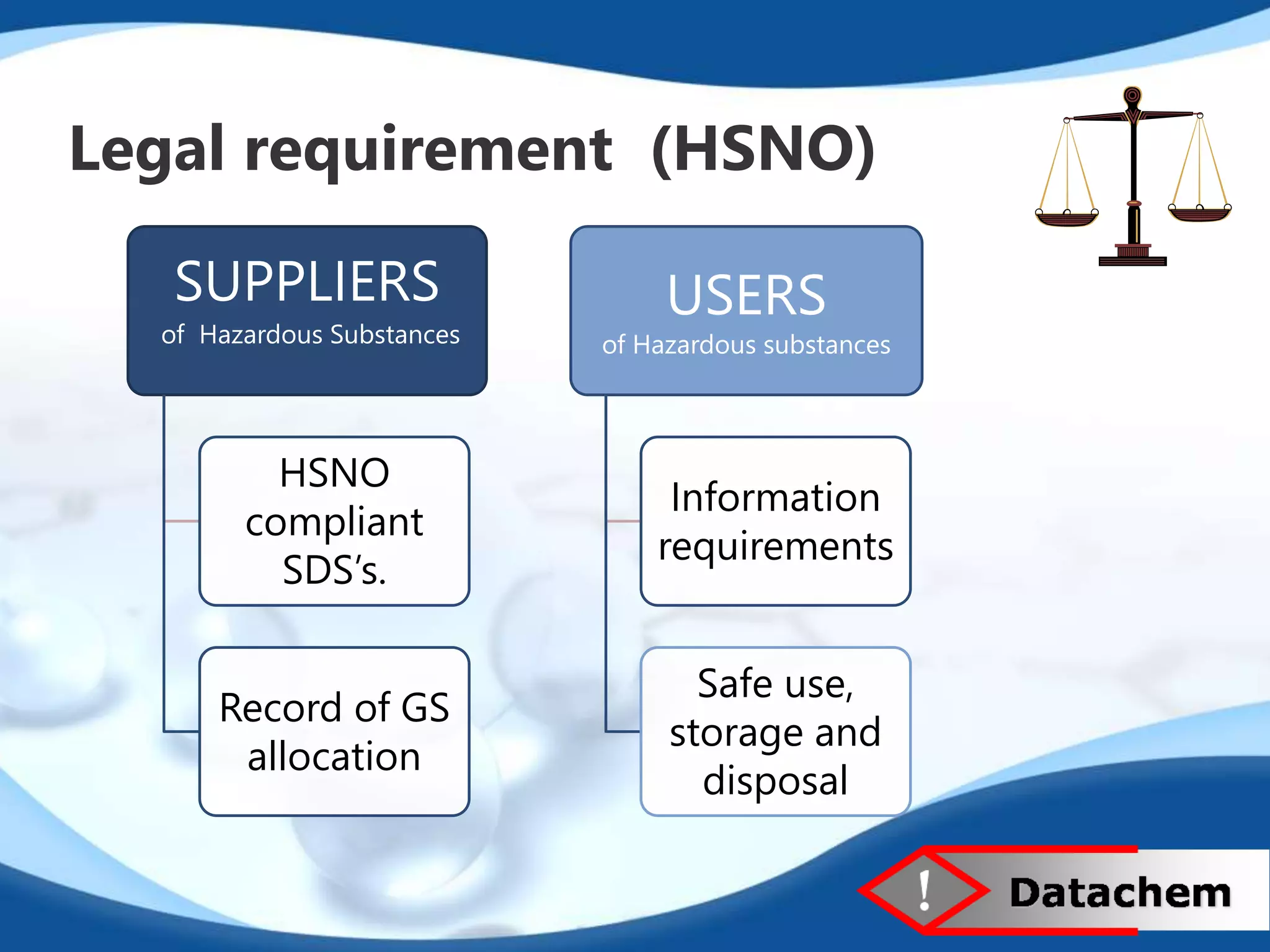
Legal requirement (HSNO) 
SUPPLIERS 
of Hazardous Substances 
HSNO 
compliant 
SDS’s. 
Record of GS 
allocation 
USERS 
of Hazardous substances 
Information 
requirements 
Safe use, 
storage and 
disposal
Responsibility as a Supplier of 
Hazardous Substances 
Regulations: 
Hazardous Substances (Identification) Regulations 2001 
Hazardous Substances (Emergency Management) 
Regulations 2001 
Hazardous Substances (Disposal) Regulations 2001 
Health and Safety in Employment Act 1992 
HSNO 
HSE 
How to? 
Code of Practice – NZCIC 
16 Header SDS 
Comply with Group Standards
Who has the responsibility? 
From Group standard: 
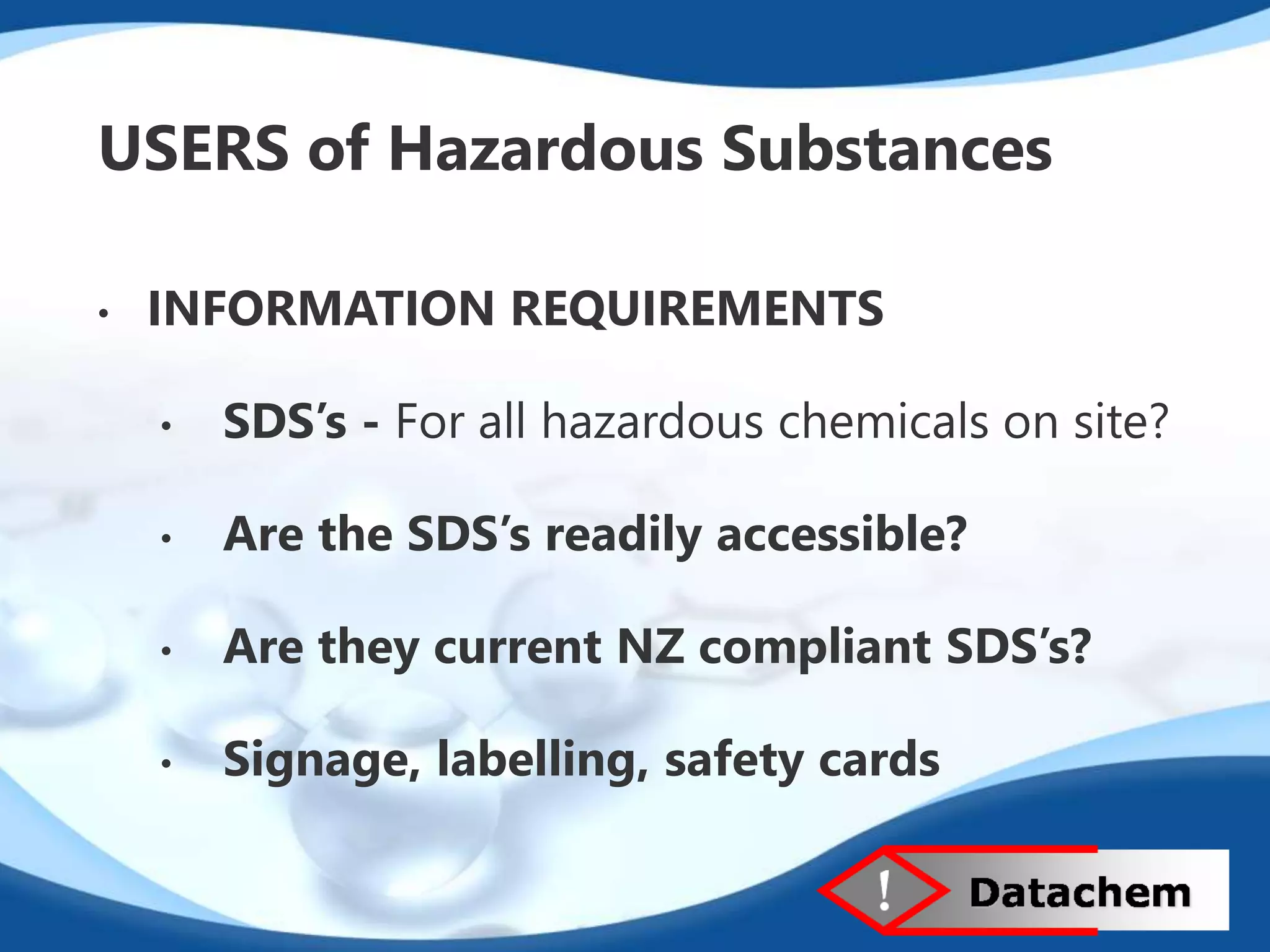
In each place of work where the substance is 
manufactured, stored or used, the person in charge 
of the place must ensure that every person handling 
the substance has access to a safety data sheet of 
that substance
USERS of Hazardous Substances 
• INFORMATION REQUIREMENTS 
• SDS’s - For all hazardous chemicals on site? 
• Are the SDS’s readily accessible? 
• Are they current NZ compliant SDS’s? 
• Signage, labelling, safety cards
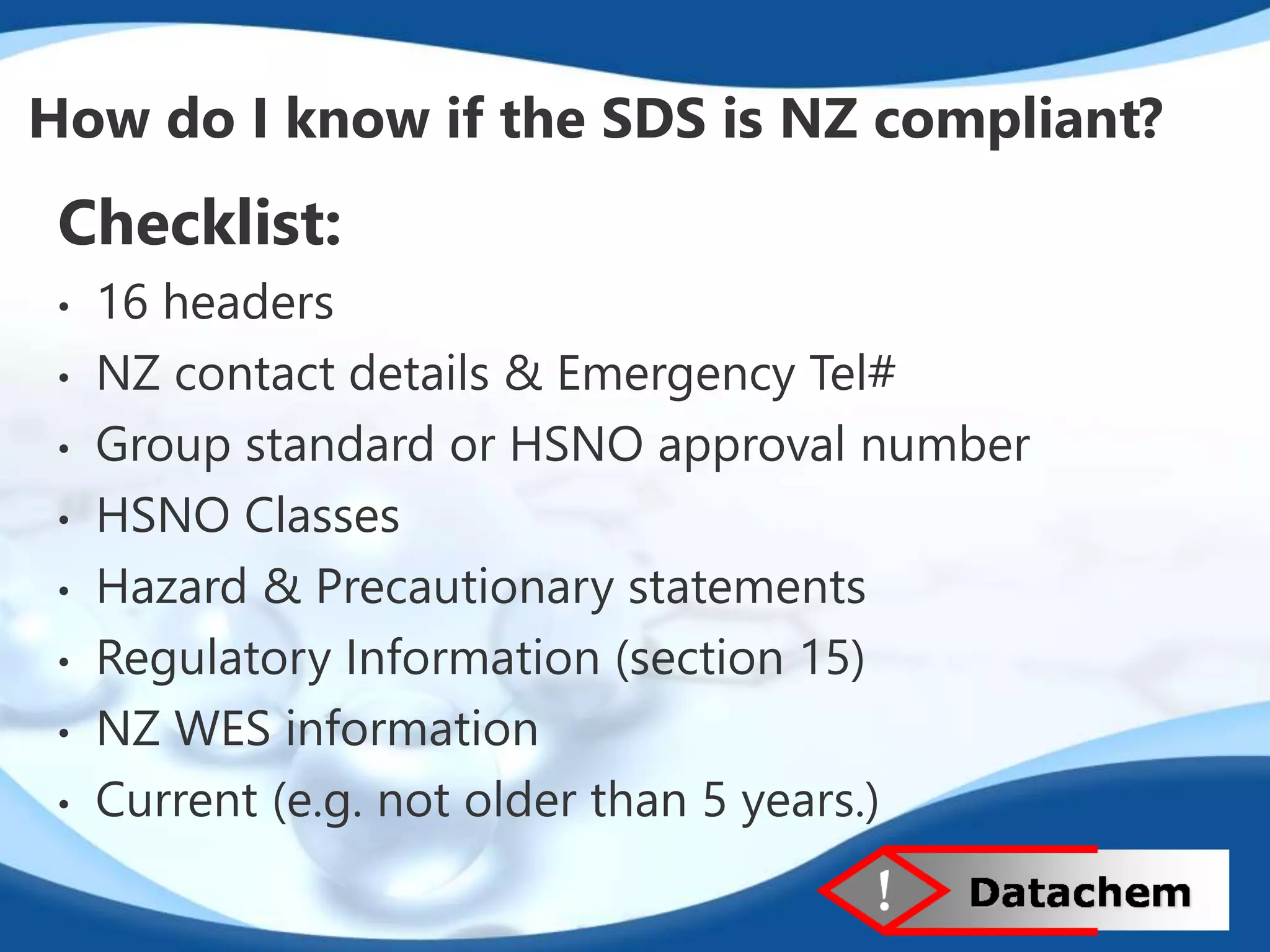
How do I know if the SDS is NZ compliant? 
Checklist: 
• 16 headers 
• NZ contact details & Emergency Tel# 
• Group standard or HSNO approval number 
• HSNO Classes 
• Hazard & Precautionary statements 
• Regulatory Information (section 15) 
• NZ WES information 
• Current (e.g. not older than 5 years.)
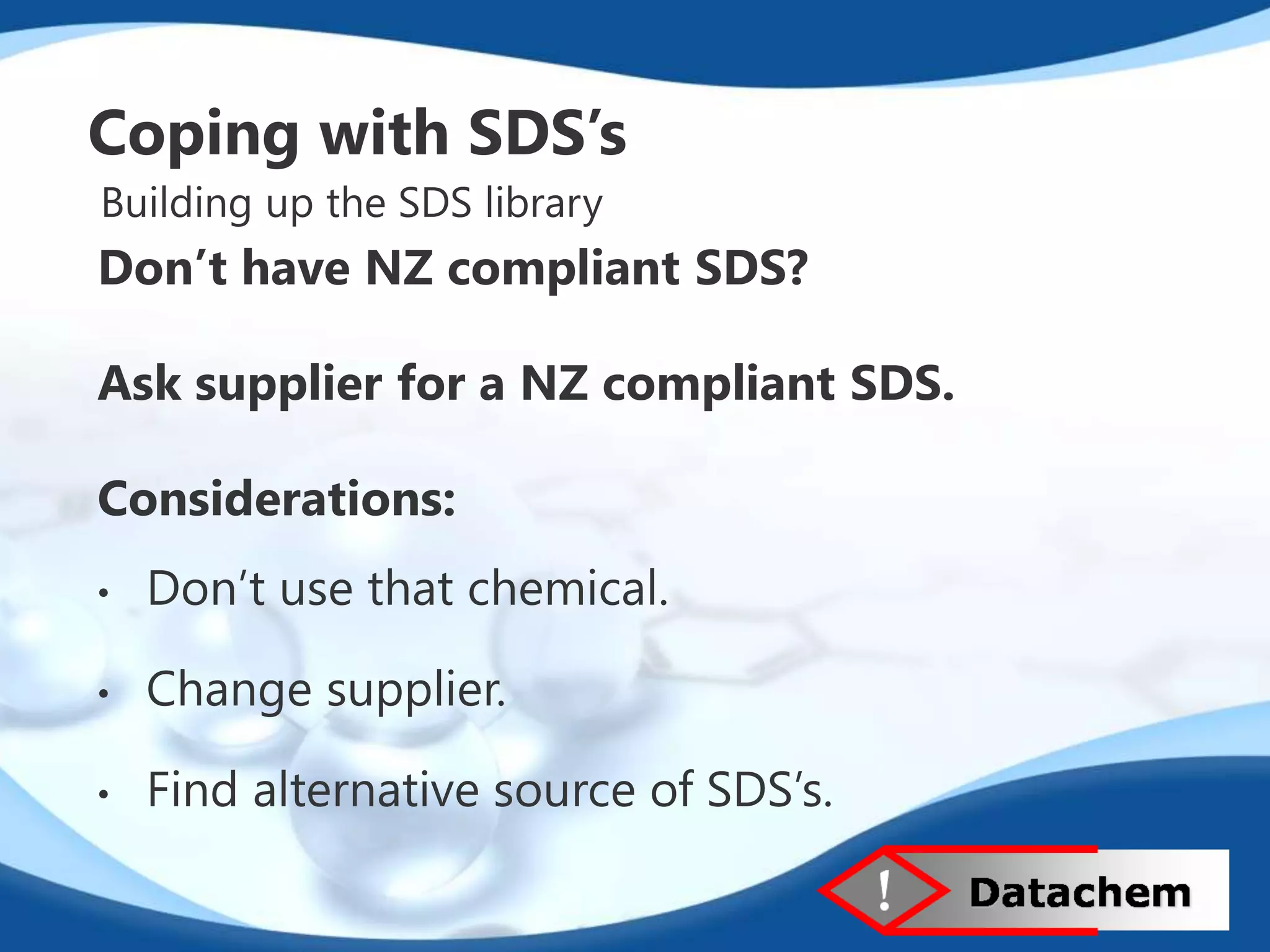
Coping with SDS’s 
Building up the SDS library 
Don’t have NZ compliant SDS? 
Ask supplier for a NZ compliant SDS. 
Considerations: 
• Don’t use that chemical. 
• Change supplier. 
• Find alternative source of SDS’s.
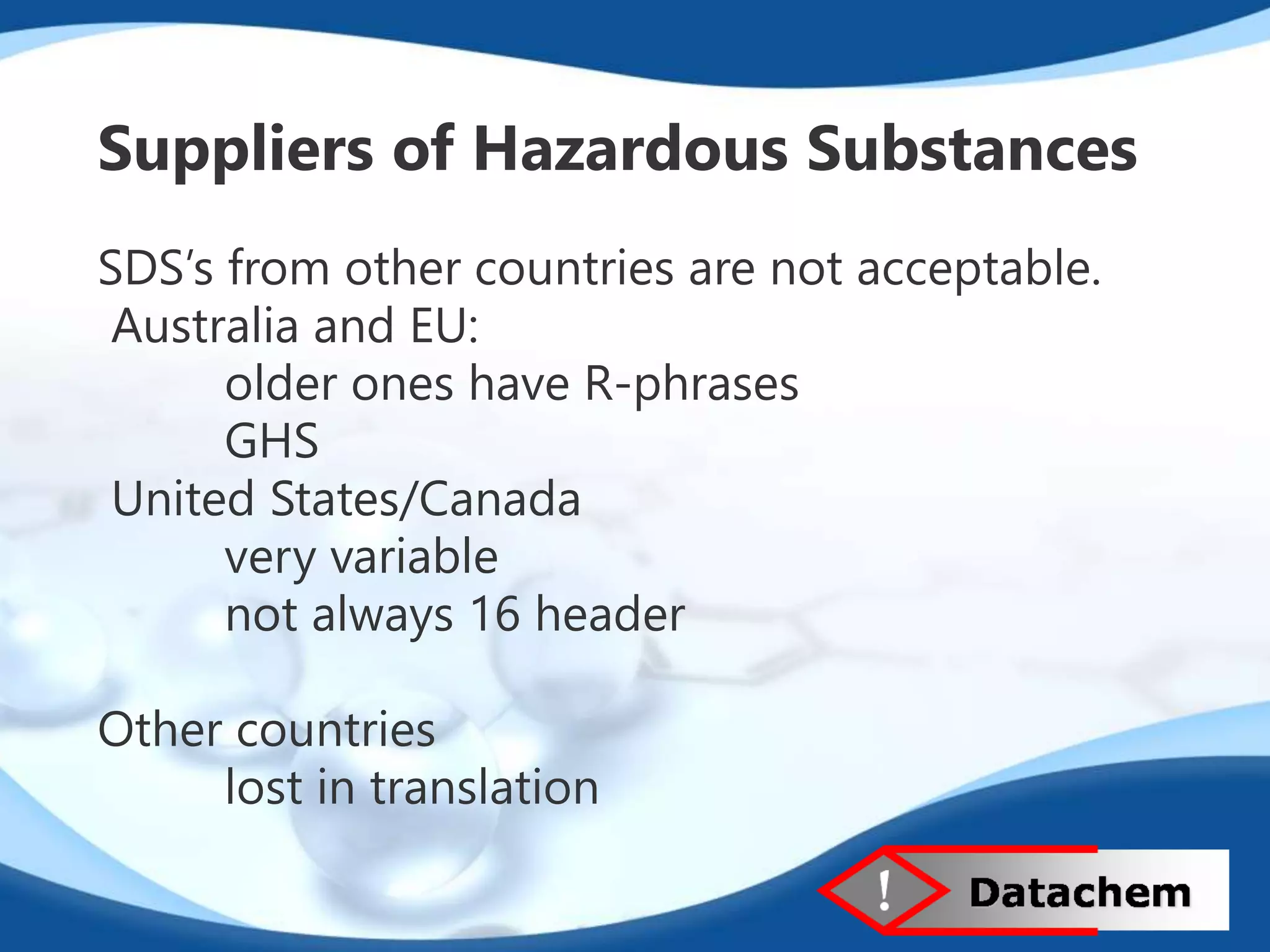
Suppliers of Hazardous Substances 
SDS’s from other countries are not acceptable. 
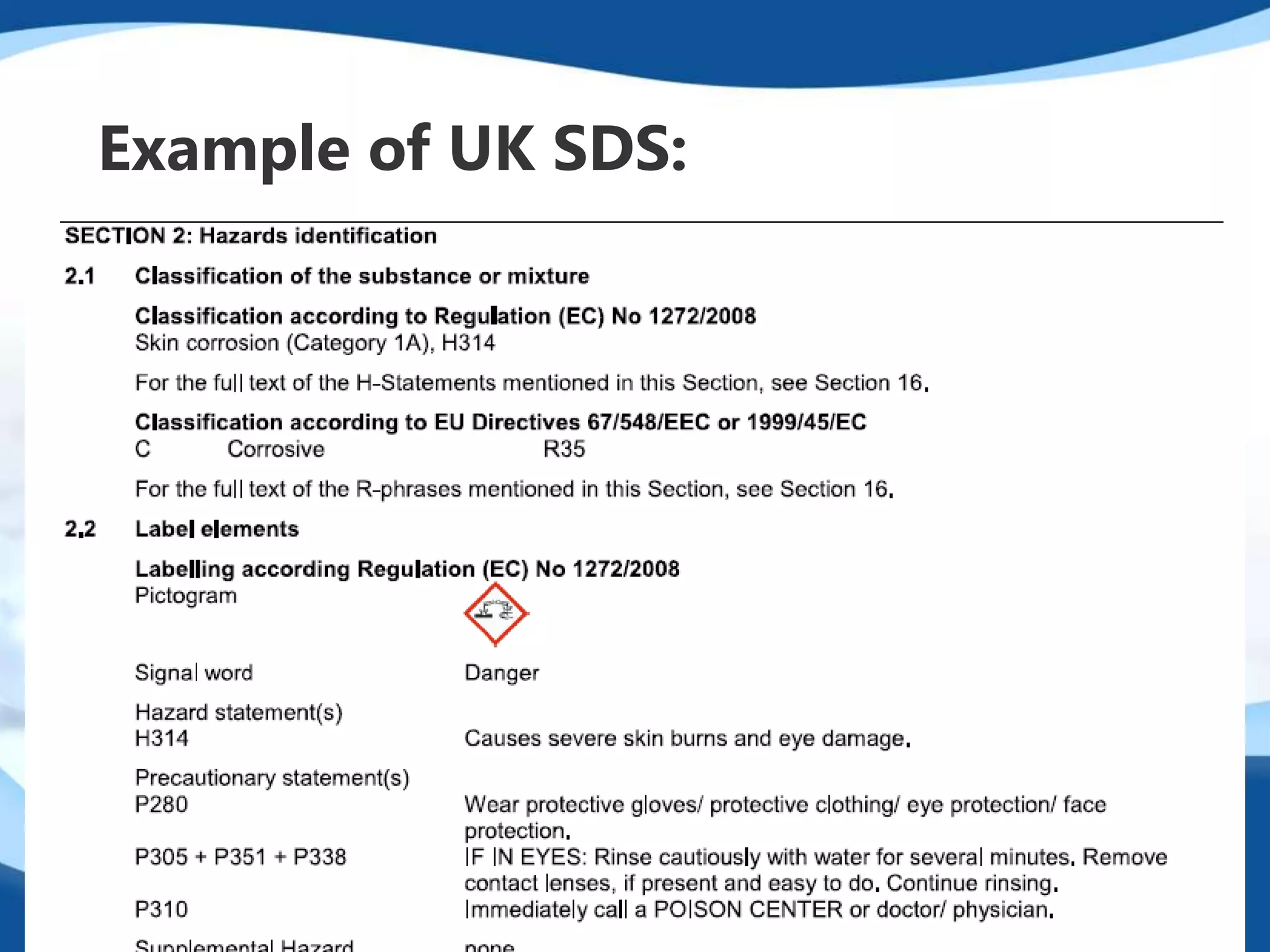
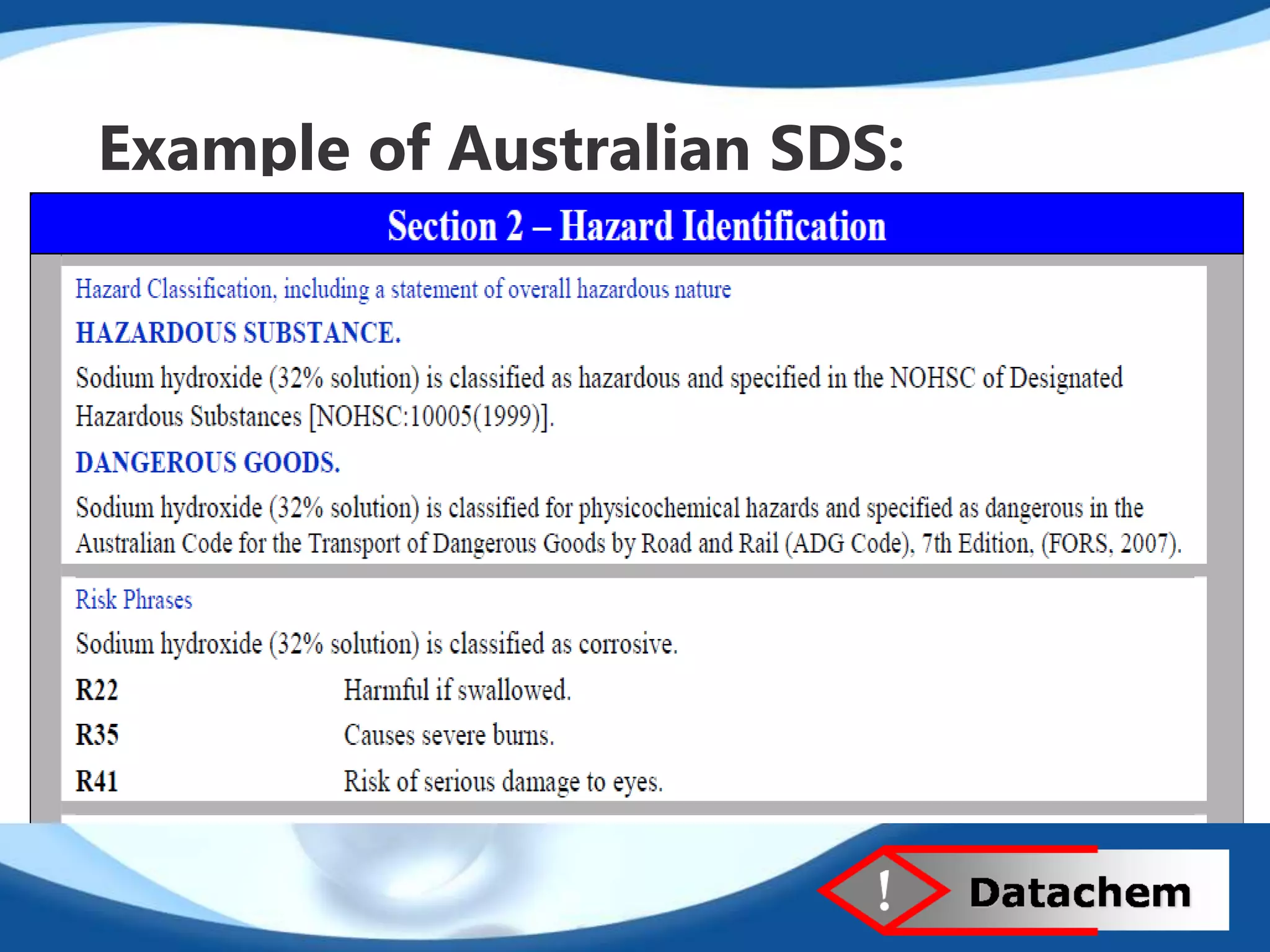
Australia and EU: 
older ones have R-phrases 
GHS 
United States/Canada 
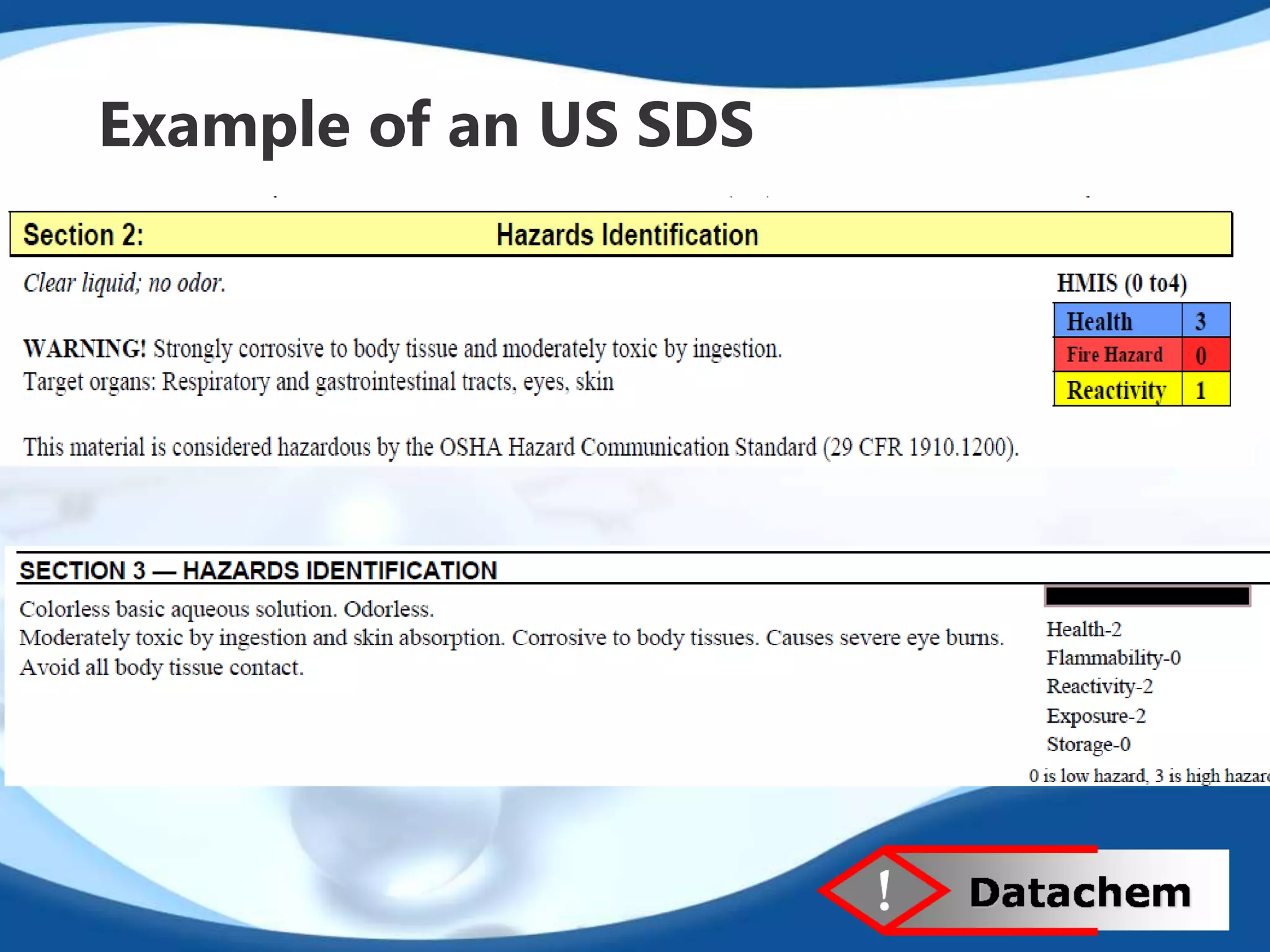
very variable 
not always 16 header 
Other countries 
lost in translation
Example of UK SDS:
Example of Australian SDS:
Example of an US SDS
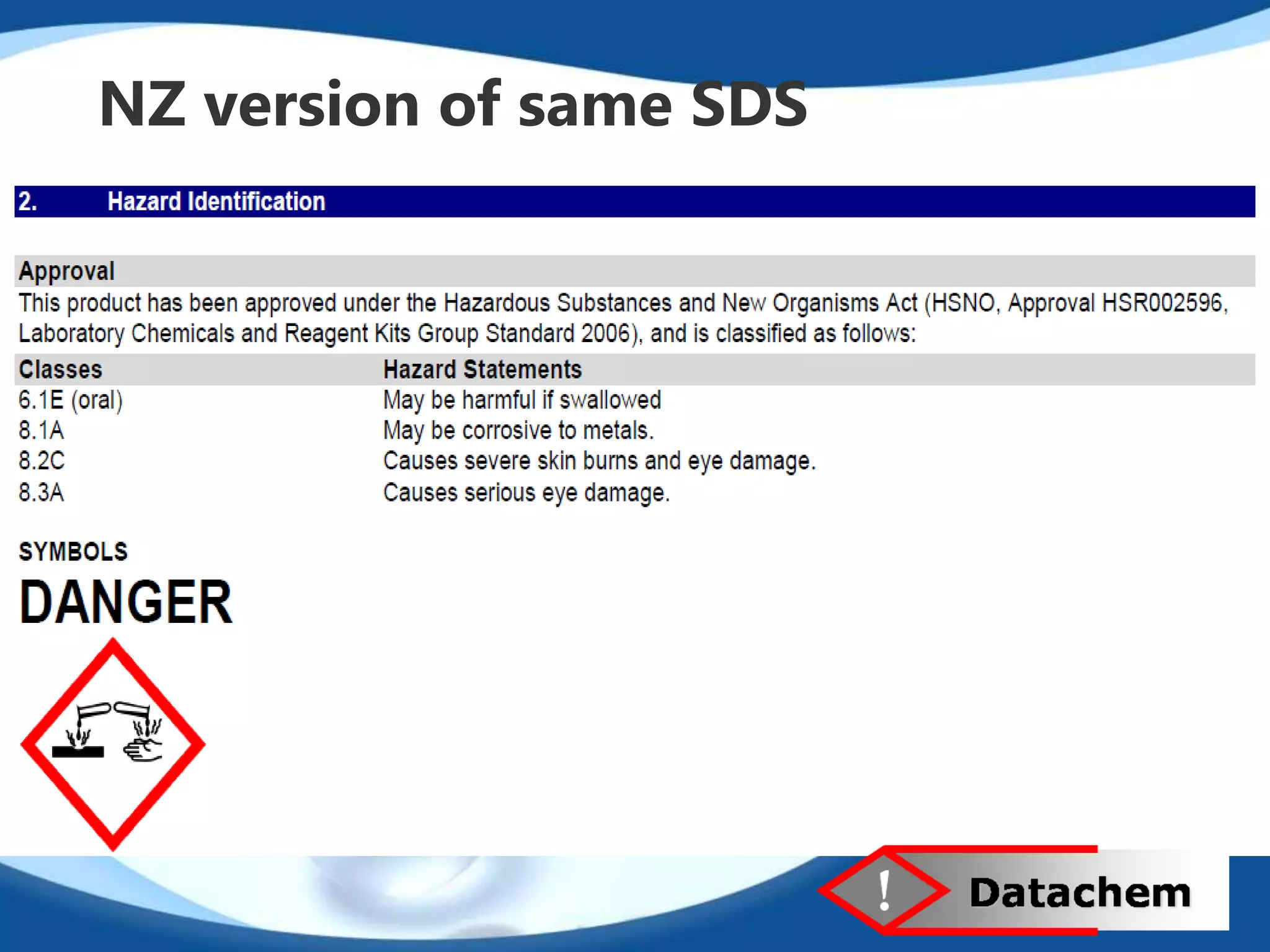
NZ version of same SDS
Record of Group Standard allocation 
“Compliance Record” 
Record of how HSNO classification has been 
assigned ( e.g. LD50 calculations) 
Must be available for inspection if requested 
by a HSNO enforcement officer. 
Include HSNO approval (approval number, 
group standard)
Currently 
Limited enforcement of 
HSNO. 
Low level of compliance for 
SDS’s (EPA) 
Focus on SDS’s in the 
workplace (WorkSafe)
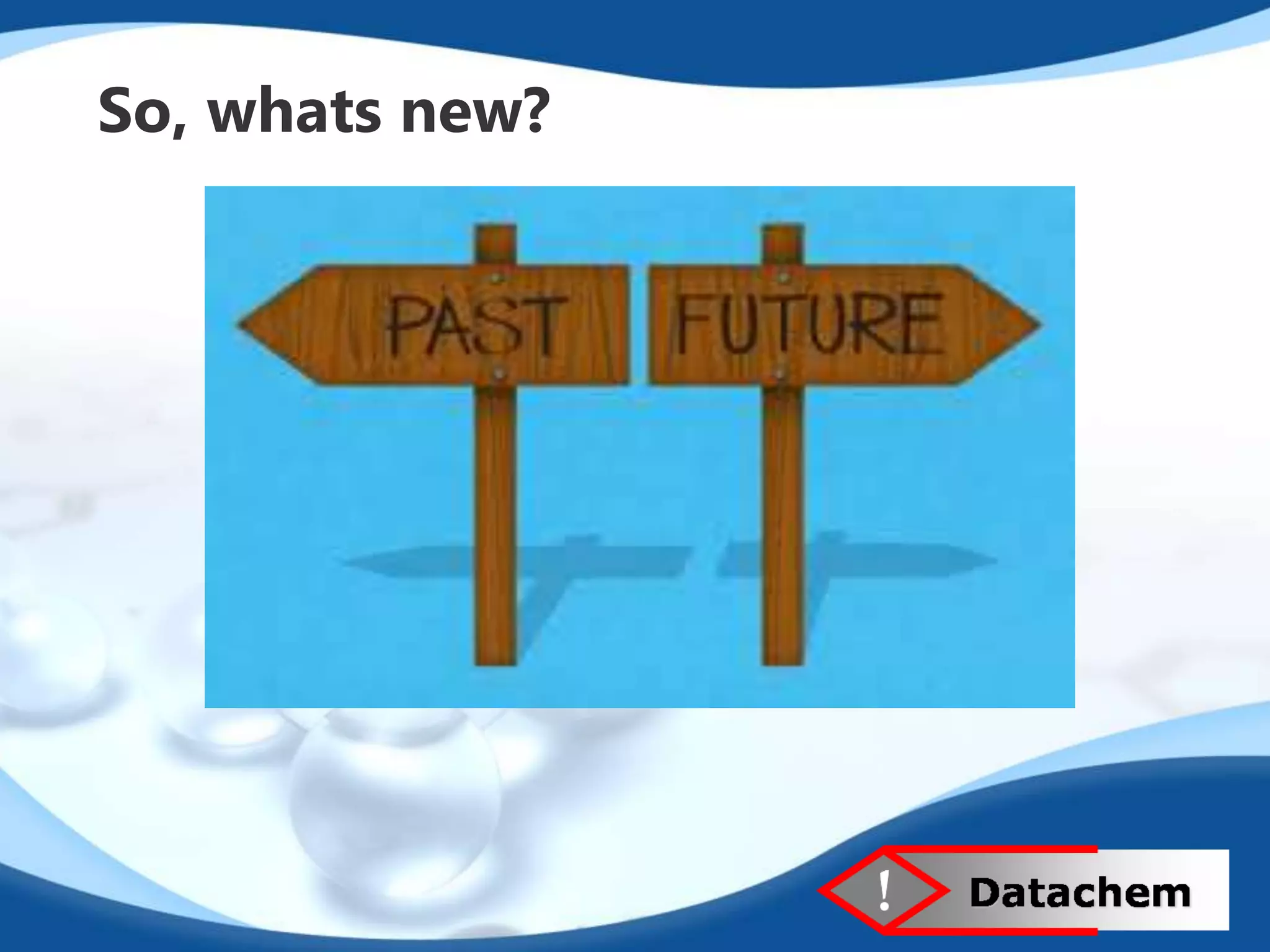
So, whats new?
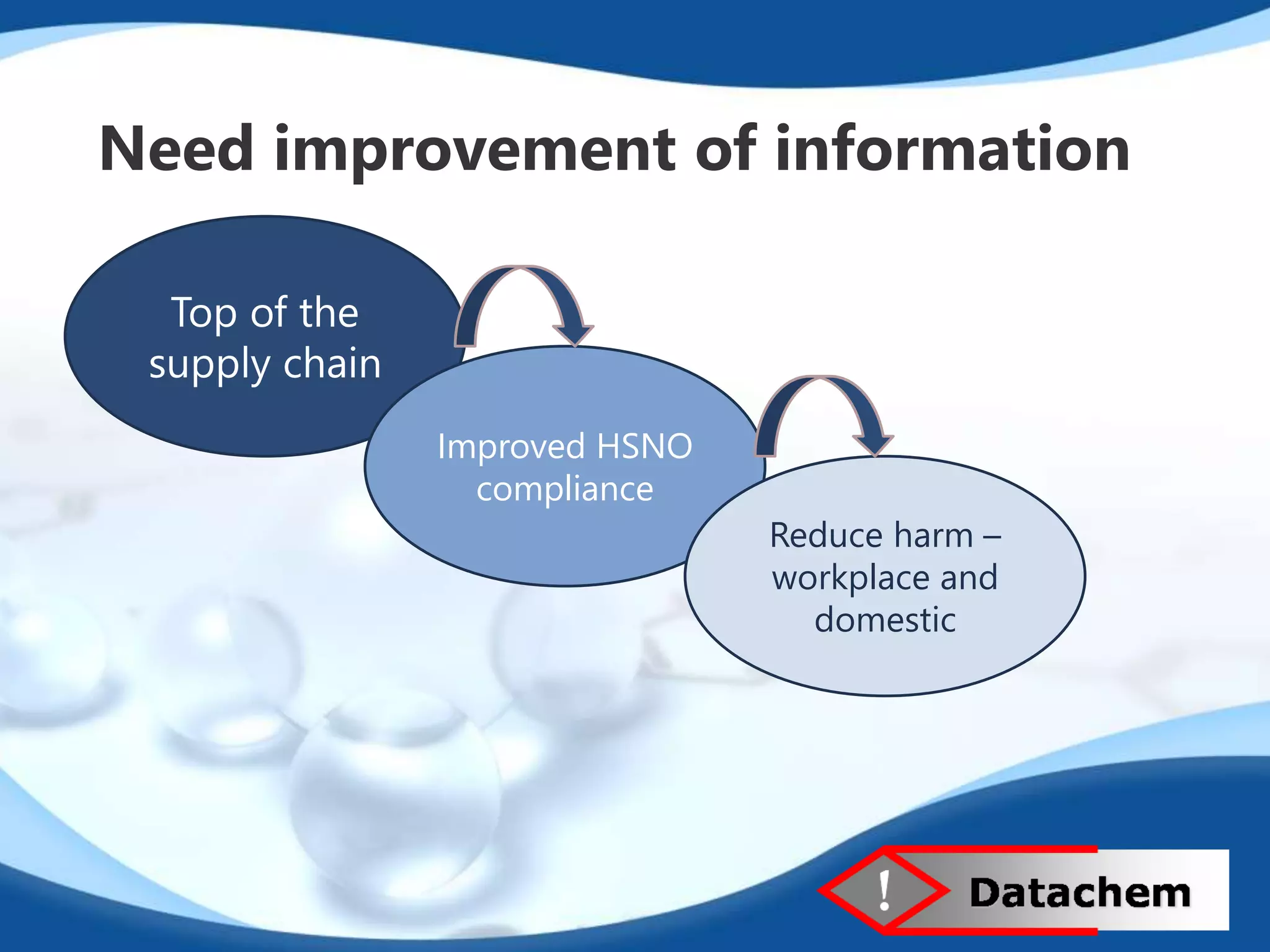
Need improvement of information 
Top of the 
supply chain 
Improved HSNO 
compliance 
Reduce harm – 
workplace and 
domestic
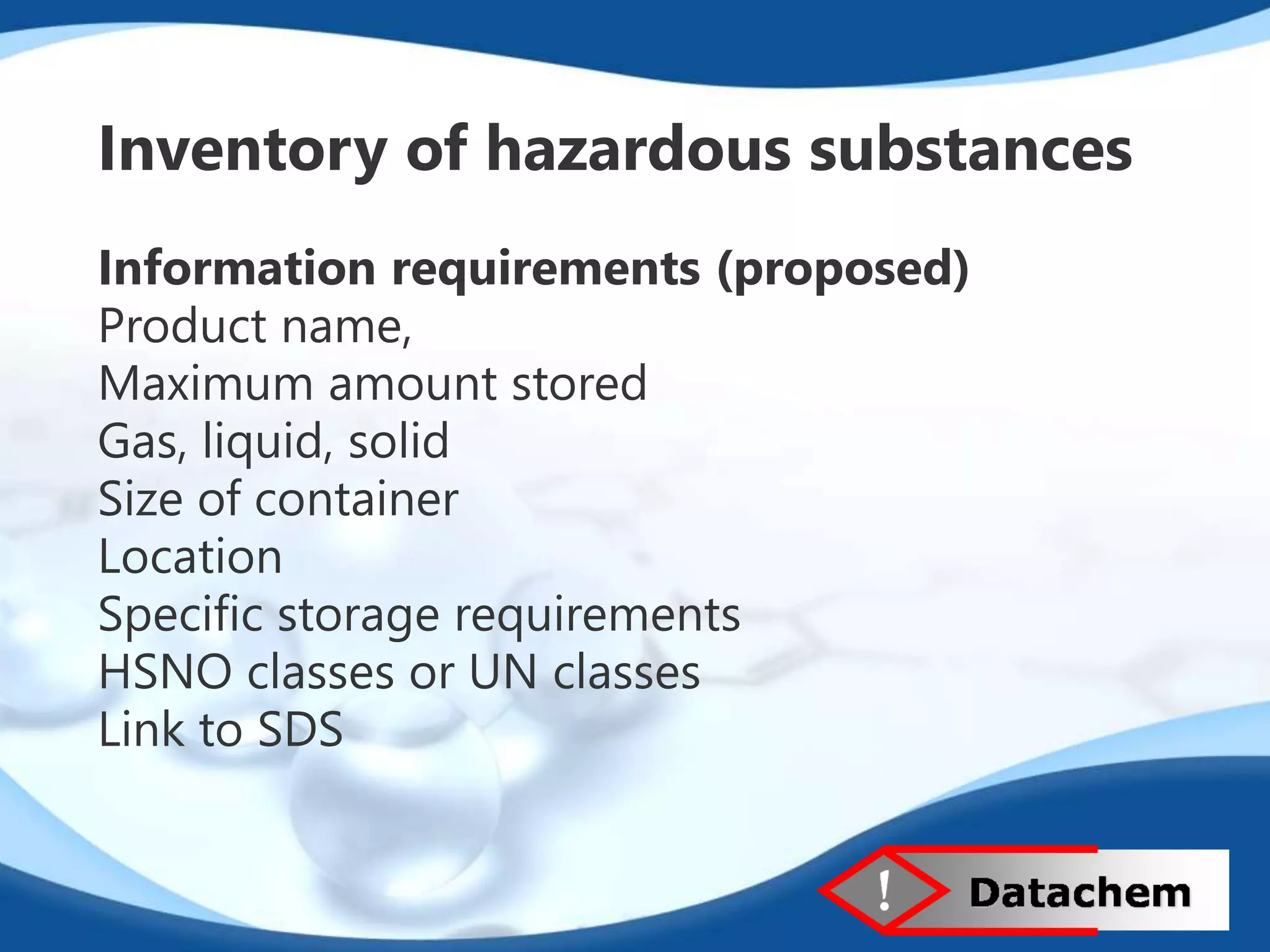
Inventory of hazardous substances 
Information requirements (proposed) 
Product name, 
Maximum amount stored 
Gas, liquid, solid 
Size of container 
Location 
Specific storage requirements 
HSNO classes or UN classes 
Link to SDS
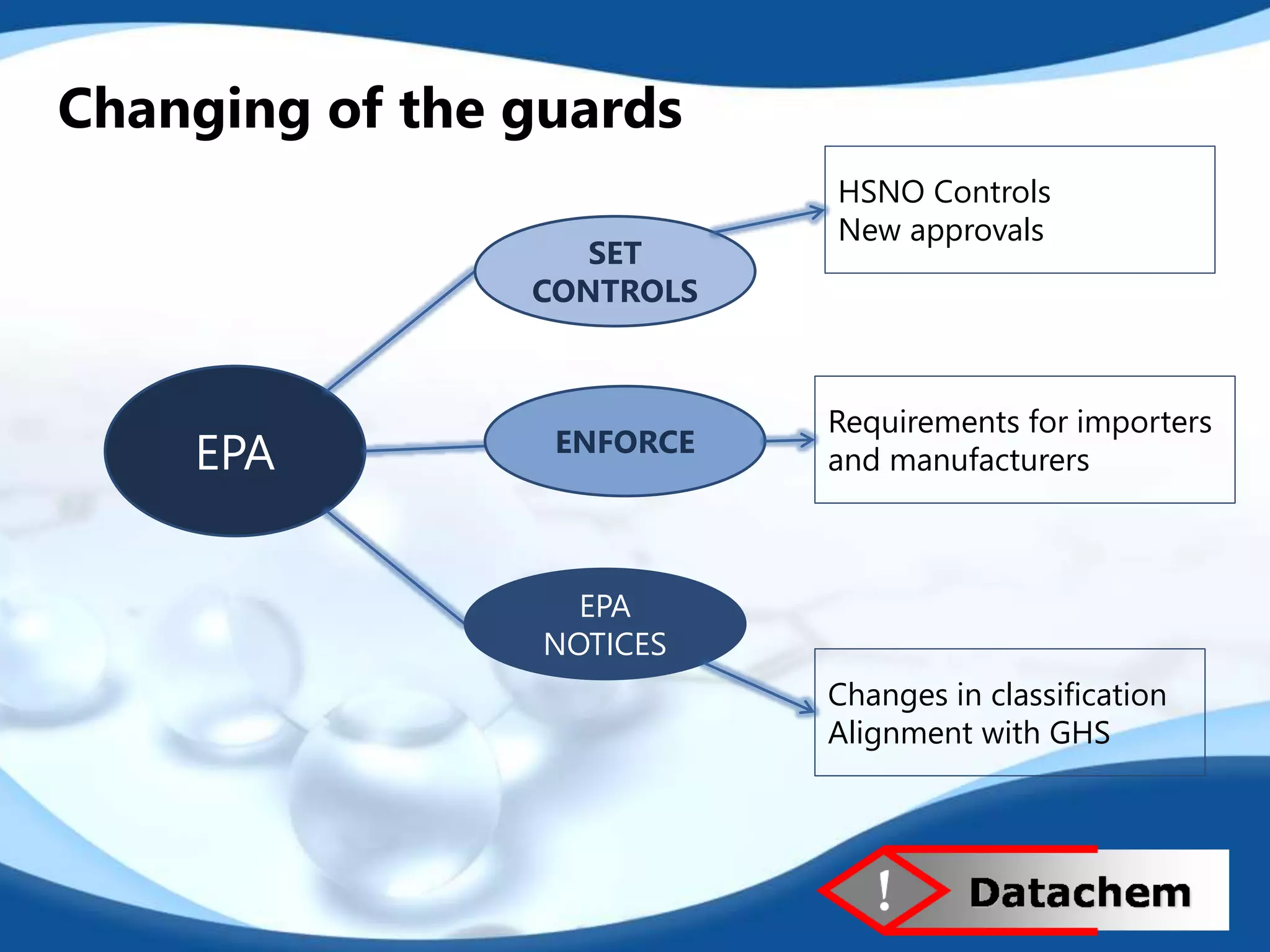
EPA 
SET 
CONTROLS 
ENFORCE 
EPA 
NOTICES 
HSNO Controls 
New approvals 
Requirements for importers 
and manufacturers 
Changes in classification 
Alignment with GHS 
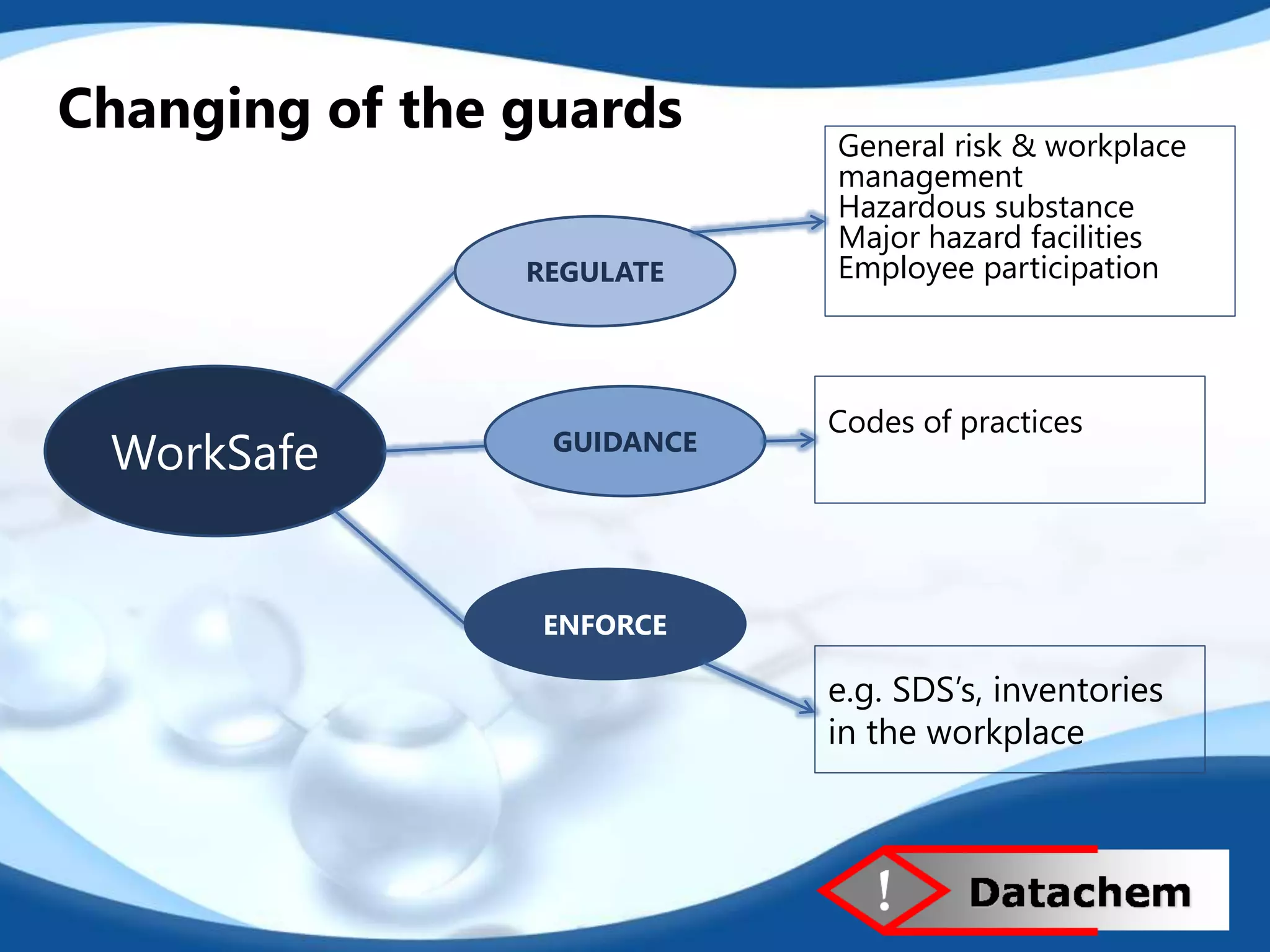
Changing of the guards
WorkSafe 
REGULATE 
GUIDANCE 
ENFORCE 
General risk & workplace 
management 
Hazardous substance 
Major hazard facilities 
Employee participation 
Changing of the guards 
Codes of practices 
e.g. SDS’s, inventories 
in the workplace
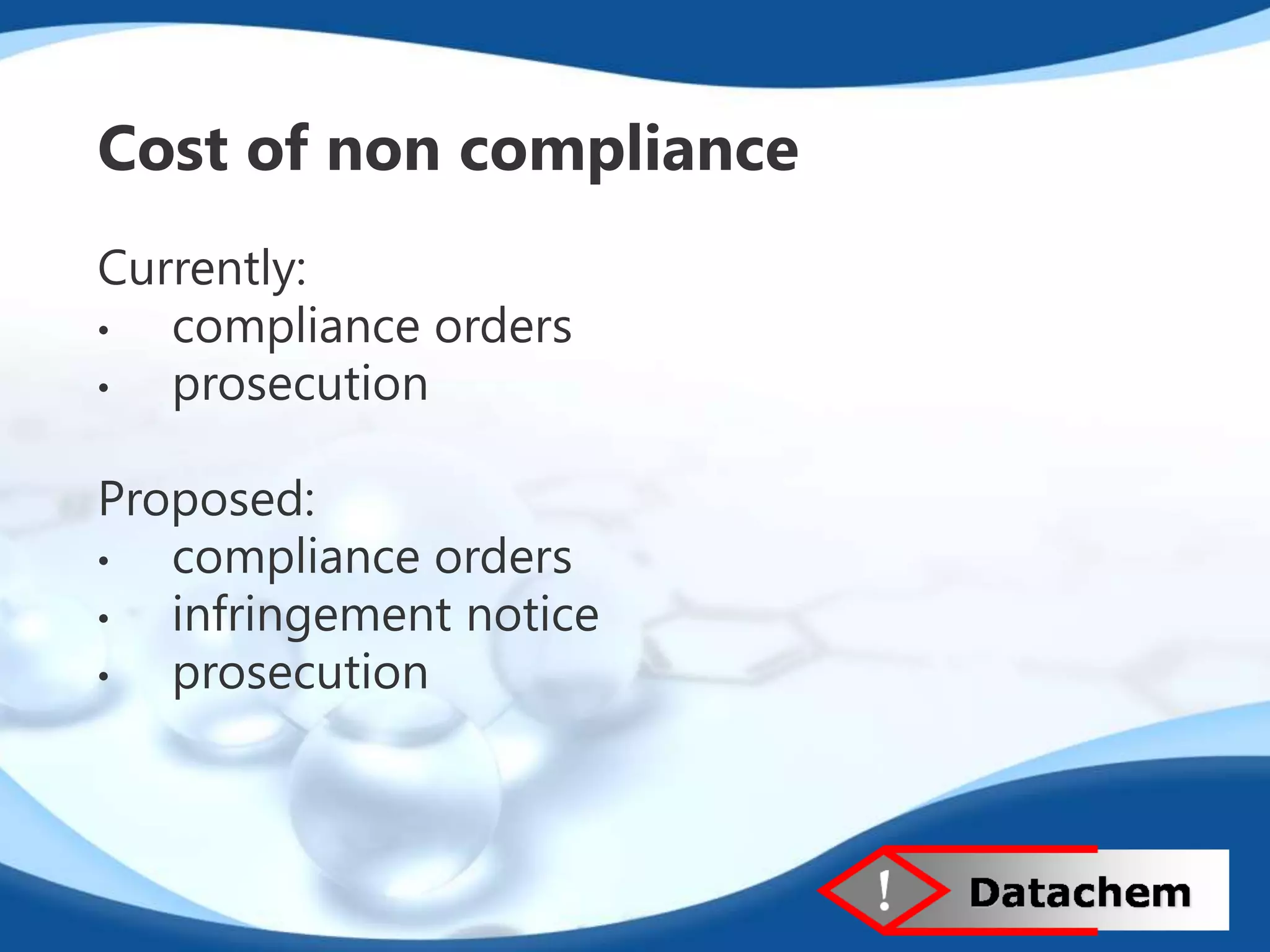
Cost of non compliance 
Currently: 
• compliance orders 
• prosecution 
Proposed: 
• compliance orders 
• infringement notice 
• prosecution
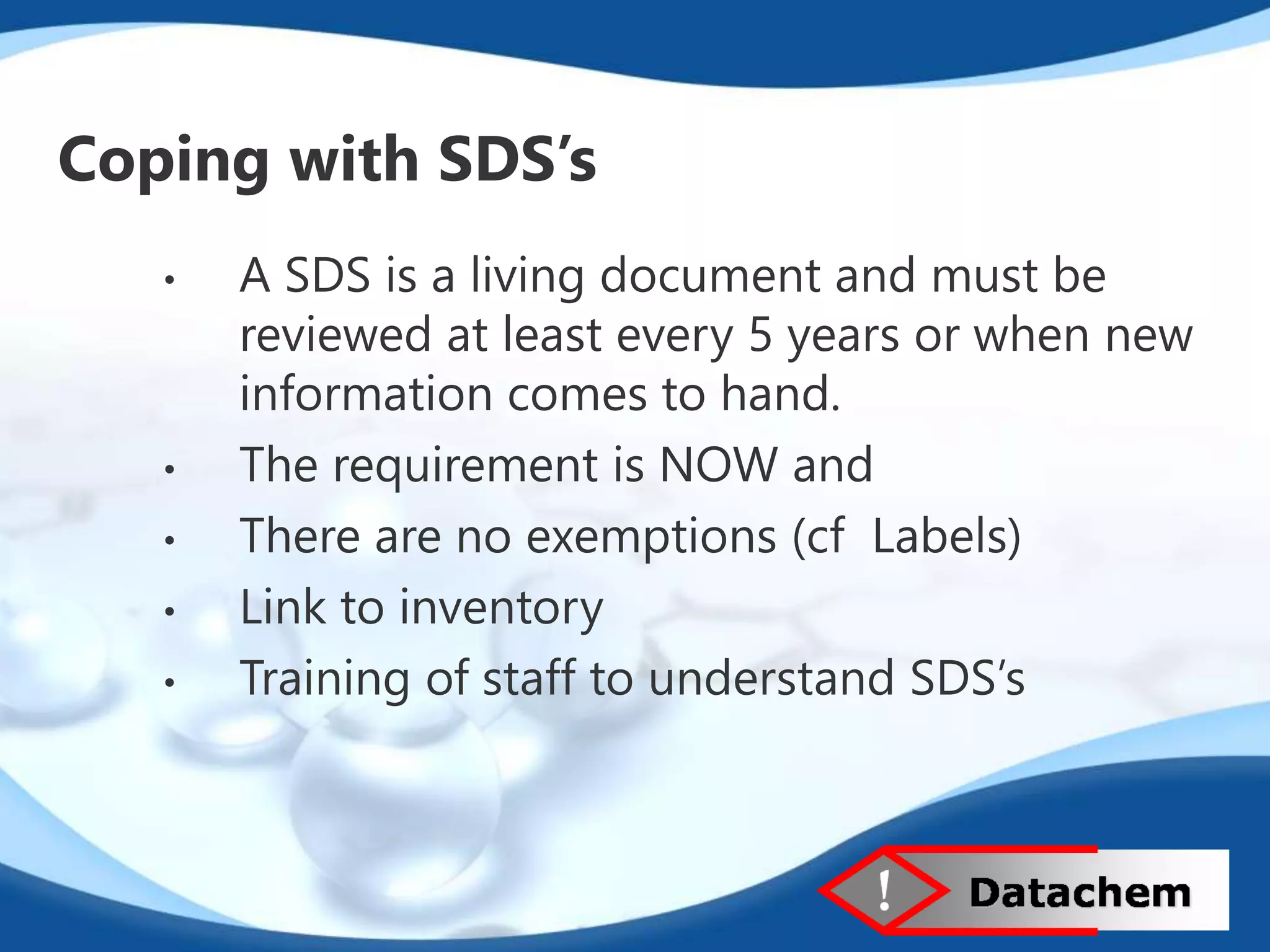
Coping with SDS’s 
• A SDS is a living document and must be 
reviewed at least every 5 years or when new 
information comes to hand. 
• The requirement is NOW and 
• There are no exemptions (cf Labels) 
• Link to inventory 
• Training of staff to understand SDS’s
Thank you for your attention! 
www.datachem.co.nz
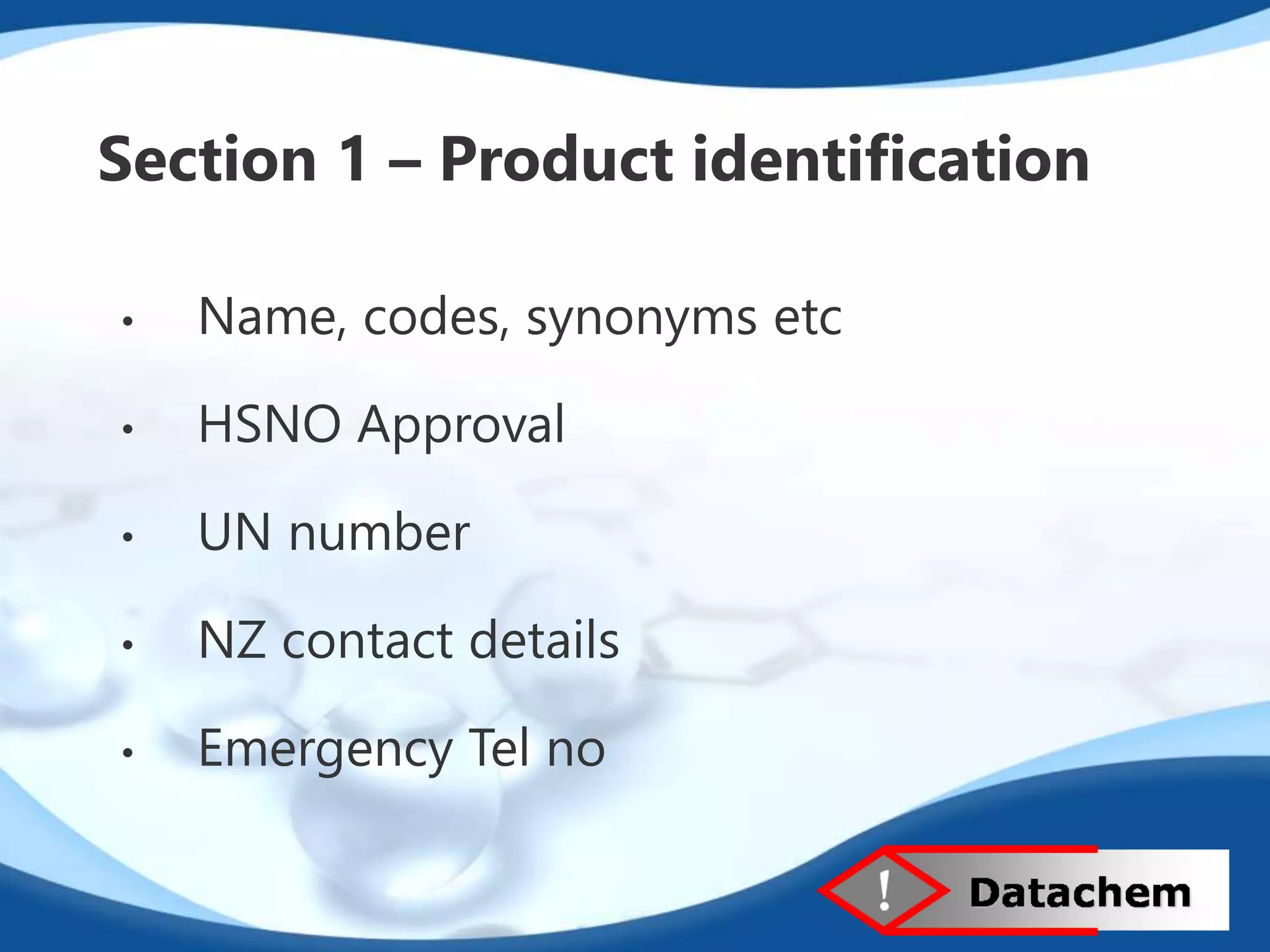
Section 1 – Product identification 
• Name, codes, synonyms etc 
• HSNO Approval 
• UN number 
• NZ contact details 
• Emergency Tel no
Section 2 – Hazard Identification 
• HSNO classes 
• HSNO approval No 
• Signal words 
• Hazard Phrases 
• Precautionary Phrases
Section 3 – Compositional Information 
• How much Information 
• All hazardous ingredients 
• Common name, synonym, CAS number 
• Concentration range 
• Possible impurities (esp hazardous ones)
Section 4, 5, 6 
• What to do in an Emergency 
• First Aid 
• Fire Fighting Measures 
• Accidental release measures
Section 7, 8 and 10 
• How to prevent an Emergency 
• Handling and Storage 
• Exposure Control/Personal Protection 
• Stability and Reactivity
Sections 9, 11-14 
• Further Information 
• Physical Properties 
• Toxicological Properties 
• Ecotoxicological Properties 
• Disposal Information 
• Transport Information
Section 15 
Regulatory Information 
• Which approval number 
• Other approvals eg ACVM, NZFSA 
• Which controls apply? 
eg Approved Handler, Tracking, Test 
Certificates, Signage, Emergency 
Management
Preparing your own SDS 
First steps 
Collect information 
• International SDS available? 
• Full Formulation available? 
• Physical data (flashpoint, appearance etc) 
• Specific risks and hazards of the substance
Preparing your own SDS 
Assign HSNO Classification 
• Information on each ingredient 
• Assign a group standard. 
• Compliance record
Preparing your own SDS 
Further Information 
• Workplace Exposure standards 
• PPE 
• Spill procedures 
• HAZCHEM code 
• Disposal 
• Transport Information
Considerations 
• Grouping your substances 
• What happens to two pack substances? 
• Combining International & NZ information 
• Safety information (Safety Cards)

(M)SDSs now and in the future

  • 1.
    SDS’s – nowand the future (M)Prepared for the OHSIG Conference 2014 Dr. Birgit Rahm Datachem LTD
  • 2.
    SDS’s – nowand in the future SDS’s and regulatory compliance Current requirements Possible new Requirements Keeping up to date
  • 3.
    Purpose of aSafety Data Sheet - Health and Safety for users and the environment • A SDS is an important part of the responsibility of an employer to ensure a safe working environment • SDS provides information on safe use and emergency management of a substance. • Must be available in 10 Minutes. (HSNO)
  • 4.
    Legal requirement (HSNO) SUPPLIERS of Hazardous Substances HSNO compliant SDS’s. Record of GS allocation USERS of Hazardous substances Information requirements Safe use, storage and disposal
  • 5.
    Responsibility as aSupplier of Hazardous Substances Regulations: Hazardous Substances (Identification) Regulations 2001 Hazardous Substances (Emergency Management) Regulations 2001 Hazardous Substances (Disposal) Regulations 2001 Health and Safety in Employment Act 1992 HSNO HSE How to? Code of Practice – NZCIC 16 Header SDS Comply with Group Standards
  • 6.
    Who has theresponsibility? From Group standard: In each place of work where the substance is manufactured, stored or used, the person in charge of the place must ensure that every person handling the substance has access to a safety data sheet of that substance
  • 7.
    USERS of HazardousSubstances • INFORMATION REQUIREMENTS • SDS’s - For all hazardous chemicals on site? • Are the SDS’s readily accessible? • Are they current NZ compliant SDS’s? • Signage, labelling, safety cards
  • 8.
    How do Iknow if the SDS is NZ compliant? Checklist: • 16 headers • NZ contact details & Emergency Tel# • Group standard or HSNO approval number • HSNO Classes • Hazard & Precautionary statements • Regulatory Information (section 15) • NZ WES information • Current (e.g. not older than 5 years.)
  • 9.
    Coping with SDS’s Building up the SDS library Don’t have NZ compliant SDS? Ask supplier for a NZ compliant SDS. Considerations: • Don’t use that chemical. • Change supplier. • Find alternative source of SDS’s.
  • 10.
    Suppliers of HazardousSubstances SDS’s from other countries are not acceptable. Australia and EU: older ones have R-phrases GHS United States/Canada very variable not always 16 header Other countries lost in translation
  • 11.
  • 12.
  • 13.
  • 14.
    NZ version ofsame SDS
  • 15.
    Record of GroupStandard allocation “Compliance Record” Record of how HSNO classification has been assigned ( e.g. LD50 calculations) Must be available for inspection if requested by a HSNO enforcement officer. Include HSNO approval (approval number, group standard)
  • 16.
    Currently Limited enforcementof HSNO. Low level of compliance for SDS’s (EPA) Focus on SDS’s in the workplace (WorkSafe)
  • 17.
  • 18.
    Need improvement ofinformation Top of the supply chain Improved HSNO compliance Reduce harm – workplace and domestic
  • 19.
    Inventory of hazardoussubstances Information requirements (proposed) Product name, Maximum amount stored Gas, liquid, solid Size of container Location Specific storage requirements HSNO classes or UN classes Link to SDS
  • 20.
    EPA SET CONTROLS ENFORCE EPA NOTICES HSNO Controls New approvals Requirements for importers and manufacturers Changes in classification Alignment with GHS Changing of the guards
  • 21.
    WorkSafe REGULATE GUIDANCE ENFORCE General risk & workplace management Hazardous substance Major hazard facilities Employee participation Changing of the guards Codes of practices e.g. SDS’s, inventories in the workplace
  • 22.
    Cost of noncompliance Currently: • compliance orders • prosecution Proposed: • compliance orders • infringement notice • prosecution
  • 23.
    Coping with SDS’s • A SDS is a living document and must be reviewed at least every 5 years or when new information comes to hand. • The requirement is NOW and • There are no exemptions (cf Labels) • Link to inventory • Training of staff to understand SDS’s
  • 24.
    Thank you foryour attention! www.datachem.co.nz
  • 25.
    Section 1 –Product identification • Name, codes, synonyms etc • HSNO Approval • UN number • NZ contact details • Emergency Tel no
  • 26.
    Section 2 –Hazard Identification • HSNO classes • HSNO approval No • Signal words • Hazard Phrases • Precautionary Phrases
  • 27.
    Section 3 –Compositional Information • How much Information • All hazardous ingredients • Common name, synonym, CAS number • Concentration range • Possible impurities (esp hazardous ones)
  • 28.
    Section 4, 5,6 • What to do in an Emergency • First Aid • Fire Fighting Measures • Accidental release measures
  • 29.
    Section 7, 8and 10 • How to prevent an Emergency • Handling and Storage • Exposure Control/Personal Protection • Stability and Reactivity
  • 30.
    Sections 9, 11-14 • Further Information • Physical Properties • Toxicological Properties • Ecotoxicological Properties • Disposal Information • Transport Information
  • 31.
    Section 15 RegulatoryInformation • Which approval number • Other approvals eg ACVM, NZFSA • Which controls apply? eg Approved Handler, Tracking, Test Certificates, Signage, Emergency Management
  • 32.
    Preparing your ownSDS First steps Collect information • International SDS available? • Full Formulation available? • Physical data (flashpoint, appearance etc) • Specific risks and hazards of the substance
  • 33.
    Preparing your ownSDS Assign HSNO Classification • Information on each ingredient • Assign a group standard. • Compliance record
  • 34.
    Preparing your ownSDS Further Information • Workplace Exposure standards • PPE • Spill procedures • HAZCHEM code • Disposal • Transport Information
  • 35.
    Considerations • Groupingyour substances • What happens to two pack substances? • Combining International & NZ information • Safety information (Safety Cards)

Editor's Notes

  • #2  3 Safety data sheets (1) A person, when selling or supplying a substance at any quantity shall provide a safety data sheet for the substance supplied to the recipient if— (a) the substance is likely to be used in a place of work; and (b) they have not previously supplied a safety data sheet for that substance to the recipient.
  • #5 One means of complying with the documentation requirements (Level 2) is a Safety Data Sheet. While there may be other means to provide such documentation, Safety Data Sheets are a very practical way of meeting these Requirements. Suppliers must provide Safety Data Sheets the first time they sell a hazardous substance to a person and on request thereafter. The Person in Charge of the place of work must ensure that Safety Data Sheets are present and available (to workers) where the trigger quantities are exceeded. The information is required now.
  • #8 Inventory should be part of Hazard register. SDS must be part of Hazard Register – need to be able to access within 10 minutes of an emergency (different from label, 2 second information)
  • #9 Or recent change
  • #10 SDS authoring service: Must have knowledge of HSNO, Must use NZ databases, ask them to show you some examples of their work or references, They must have knowledge of HSNO. Must be able to provide a compliance record of their substances
  • #11 Unlike labels – there are no exemptions!! No if’s, but’s or maybe’s!
  • #17 Difficulty is lack of training of enforcement officers – not knowing what to look out for. Complexity of the HSNO regime Highly technical – its in the too hard basket. Ensuring substances are correctly labeled with the appropriate safety information and are safely packaged before being distributed to New Zealand users. Ensuring the correct information is attached to a particular substance requires a specific hazardous substance skill-set not present within MBIE. A lack of focus in this area means that substances with incorrect safety information and packaging may be being distributed to many New Zealand users – in workplaces as well as around the home. The complexity of the HSNO regime also makes it difficult for MBIE to enforce, given the highly technical nature of some HSNO controls. This difficulty is especially evident in the limited capability for, and thus focus on, the enforcement of controls for substances that are being introduced into the market e.g. ensuring substances are correctly labeled with the appropriate safety information and are safely packaged before being distributed to New Zealand users. Ensuring the correct information is attached to a particular substance requires a specific hazardous substance skill-set not present within MBIE. A lack of focus in this area means that substances with incorrect safety information and packaging may be being distributed to many New Zealand users – in workplaces as well as around the home.
  • #19 improved HSNO compliance - can have in reducing harm across all aspects of the regime – workplace and domestic users, in relation to human health and environmental harm.
  • #20 Must be available to workers, emergency services, anyone else who may be affected by the hazardous substance. Does not apply to: Hazardous substances in transit Hazardous substances that are household products and used in the workplace in the same way, e.g. Cleaner in the smoko room, or air freshener in the bathroom. (consumer product)
  • #22 One regulator who will enforce the proposed new ACT and regs as well as the HSNO environmental controls that apply within the workplace One set of rules for work health and safety One set of guidance for hazardous substances
  • #23 An infringement system that sits between soft-line compliance orders (warning letters) and hard-line prosecution is needed to have a deterrent effect on users who choose not to comply with key HSNO controls. Enforcement officers would still have the ability to prosecute for more serious instances of offending.
  • #26 Emergency Tel – use poison centre if domestic cleaning chemical, highly flammable – probably should use another server
  • #27  Hazards identification— (i) a description of the hazards of the substance, which may include its HSNO hazard classification; and (ii) hazard information, including signal words, hazard statement(s) and precautionary statement(s);
  • #28  (c) Composition/information on ingredients— (i) in the case of single component substances, their chemical identity, including common names and synonyms, CAS number and any impurities that are themselves hazardous; or (ii) in the case of substances that are mixtures, the chemical identity of each hazardous ingredient, their CAS number and their concentration ranges;